
Sophisticated Elegance to a Public Facility in Norway

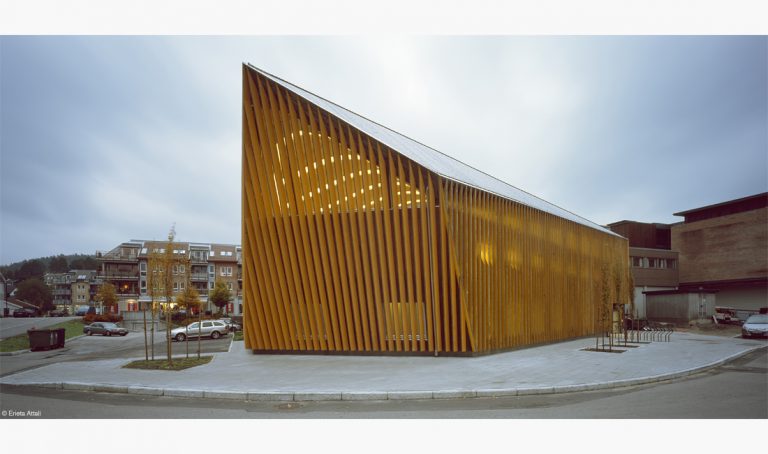
The library in Vennesla, north of Kristiansand in Norway, comprises a library, a café, meeting places and administrative areas and links an existing community house and learning center together. Helen & Hard Architects has supported the idea of an inviting public space. All main public functions have been gathered into one generous space allowing the structure combined with furniture and multiple spatial interfaces to be visible in the interior and from the exterior. The result is a sophisticated elegance to a public facility in Norway.

An integrated passage brings the city life into and through the building. Furthermore, the new building is open and easily accessible from the main city square, knitting together the existing urban fabric. This was achieved by a large glass facade and urban loggia providing a protected outdoor seating area.

A Sophisticated Elegance to a Public Facility in Norway
The new building is open and easily accessible from the main city square

Related: The Unique Energy Design Hotel in Norway

Expressive ribs
The expressive ribs combine structure, technical infrastructure, and functionality into one architectonic element that creates a dynamic aesthetic identity for the project to meet the client’s original intent to mark the city’s cultural center.

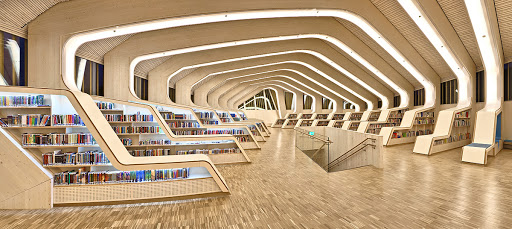
The whole library consists of 27 ribs made of prefabricated glue-laminated timber elements and CNC cut plywood boards. These ribs inform the geometry of the roof, as well as the undulating orientation of the generous open space, with personal study zones nestled along the perimeter. The offset construction of the ribs allows the curves to function as spatial interfaces with inset lighting elements to provide a soft glow to the interiors and acoustic absorbents which contain the air conditioning ducts.

Related: Exporting Norwegian Architecture  
A Sophisticated Elegance to a Public Facility in Norway
The whole library consists of 27 ribs made of prefabricated glue-laminated timber elements and CNC cut plywood boards

Adapting two adjacent buildings
“In this project, we developed a rib concept to create useable hybrid structures that combine a timber construction with all technical devices and the interior,” explains the architects.

The gradually shifting shapes of the ribs are generated through adapting to the two adjacent buildings and also through spatial quality and functional demands for the different compartments of the library. Each end façade has been shaped according to the specific requirements of the site. At the main entrance, the rib forms the loggia which spans the width of the entire square.

Sophisticated Elegance to a Public Facility in Norway
The rib spans the entire width of the building and then slowly condense to create more intimate rooms.  While the building’s roof is formed by the geometry of the curves, the massing along traces the natural lines of the site and responds to the main street by folding down towards it.

A Sophisticated Elegance to a Public Facility in Norway
The rib spans the entire width of the building and then slowly condense to create more intimate rooms

Related: Magnificent International Interest around New Norwegian Tourist Attraction

Typical of Helen & Hard’s work, a main intention has also been to reduce the energy need for all three buildings through the infill concept and the use of high standard energy saving solutions in all new parts. The library is a “low-energy” building, defined as class “A” in the Norwegian energy-use definition system.

The library opened in 2012.


About Helen & Hard
Helen & Hard was founded in 1996 in Stavanger on the west coast of Norway by Norwegian architect Siv Helene Stangeland and Austrian architect Reinhard Kropf. Today, the company has a youthful staff of 26 people drawn from 10 countries, with offices both in Stavanger and Oslo.

The last 10 years Helen & Hard has specialized in using timber as construction material and has developed a close collaboration with the ingenieur Hermann Blumer in Creation Holz. Inventing building systems in timber together with site specific spatial conceptions, which mutually inform each other has resulted in novel spatial designs such as, the Pulpit Rock Mountain Lodge, the Navet Museum and the Vennesla Library.

Sophisticated Elegance to a Public Facility in Norway, edited by Tor Kjoberg based on text description provided by the architects


6 Reasons Why Swedish School Education is Better

0

The main thing about school education in Sweden is to identify and develop each child’s talents and abilities, and to teach students how to set and achieve goals. While working with children, the teacher takes on the role of an assistant rather than a strict teacher with a pointer. Essay writing service EssayShark conducted a study on the advantages of the Swedish education system. Find out more about the 6 reasons why Swedish school education is better.

Personalized Approach and Respect from the Cradle
Formally, the educational process starts literally at the nursery: the vast majority of Swedish children start kindergarten already at the age of 1.5-2 years. Pre-school education is an essential part of the Swedish educational system and is available to all, regardless of the income level. Swedish pre-school education emphasizes the importance of the game in a child’s development. Gender-based education is becoming increasingly popular, with the primary goal of giving children equal opportunities in life, regardless of gender. Every child at the age of 6 is guaranteed a place in the preparatory class, where children are introduced to the first steps of general education.

6 Reasons Why Swedish School Education is Better
Everything about a child’s performance or behavior at school is discussed individually with the child and his/her parents

A child’s personality and dignity are untouchable, and children in Sweden have the same right to be respected and treated equally as adults.

Related: Best Colleges With Scandinavian Studies Degrees

Therefore, despite the fact that most classes at school are in group form, the teacher will never praise some and scold others in public. Everything about a child’s performance or behavior at school is discussed individually with the child and his/her parents. All teachers working in schools, both subject teachers and those working outside the classroom with children, have specialized pedagogical training and are required to be certified. By the way, several top essay writers from essayservice also work in these schools and help not only children but also students from the USA.

No Marks Until the Sixth Grade
Until the sixth grade, students in Swedish schools are not given any marks at all, so as not to interfere with individual development and not to cause a sense of competition and stress. Over the last hundred years, Sweden has tried out many knowledge assessment systems. In 2011, Swedish schools moved from a three-point scale to a six-point scale. Pupils can be given the following grades: A (Exemplary), B (Excellent), C (Good), D (Adequate), E (Acceptable), and F (Fail, not passed).

The student assessment and evaluation system is an eternal subject of heated debate among both politicians and school staff. The Swedes believe that any scoring system is always imperfect and unfair. Therefore, new approaches to the assessment of pupils are regularly discussed in the Riksdag and municipal authorities.

6 Reasons Why Swedish School Education is Better
Until the sixth grade, students in Swedish schools are not given any marks at all, so as not to interfere with individual development and not to cause a sense of competition and stress

Related: Gender-neutral Swedish Preschools Produce More Successful Children

Education as a Game
From first grade to third, the school curriculum is based on mathematics, Swedish, housekeeping, social studies, and natural sciences. Lessons are mostly in the form of a game. Already at the age of 7-10, children are actively involved in social science lessons to discuss what is happening in the world, for example, after watching the children’s news program together. This show is called Lilla Aktuellt and is broadcast daily on Swedish television. It introduces the youngest viewers to the main events of Sweden and the world simply and clearly.

From the third grade, students start learning English. They are not yet bothered with grammar and cramming. They learn simple songs, how to count, and are introduced to some words and expressions in a game form. Physical education is also present in the schedule, but more in the form of mobile games and trips to nature if the weather allows. Housekeeping classes are one of the most favorite. Boys and girls together learn to sew and knit, make toys and uncomplicated household appliances with their own hands, as well as cook and bake with simple recipes.

6 Reasons Why Swedish School Education is Better
Lessons are mostly in the form of a game

Related: 12 Scandinavian Universities Rank Among the 300 Best in the World

From secondary school onwards, the workload and the knowledge and skills requirements of schoolchildren are increasing considerably. There are more homework and opportunities for independent choice of subjects. For example, from sixth grade, you can choose a second language besides English. The most popular languages are German, French, and Spanish.

Psychological Comfort is a Priority
The psychological well-being of children is a priority for Swedish schools. Each school has a supervisor whom children can approach to talk about, for example, their academic performance problems, difficulties with their family or their peers. In addition, teachers regularly have individual conversations with each child, during which they try to find out how comfortable the child feels in class, among classmates, whether he or she has time to learn the material, whether the school or parents need additional help.

At the beginning and the end of each school year, pupils are assessed. It takes place individually, in the form of a conversation with the child and his parents. The aim is to help the child to identify problem areas in his or her studies and to understand what needs to be worked on in the future. The teacher acts only as a moderator, asks leading questions, helps the child to formulate a thought, but does not impose his opinion.

6 Reasons Why Swedish School Education is Better
The psychological well-being of children is a priority for Swedish schools

Prove The Answer If You Know It
When solving problems, for example, in Mathematics, Physics, or Chemistry, the Swedish school pays special attention to how the student thinks and analyzes the problem. In other words, it is essential not only to give the right answer but also to show how you come to a solution.

Education for Everyone
Pupils who find it difficult to read and/or write are entitled to additional individual assistance from teachers. For some children, it can be challenging to focus on what the teacher says. Statistically, almost every class has a child diagnosed with ADHD (Attention Deficit Hyperactivity Disorder). These children need special support to learn to concentrate and not be distracted. An individual learning plan is developed for them so that they can catch up with their peers and open up to the full.

6 Reasons Why Swedish School Education is Better is written for Daily Scandinavian by the EssayShark team.

5 Most Common Mistakes Scandinavians Make When Speaking English

There’s plenty of info on the web on how good Scandinavians are when it comes to the English language. The school systems in these countries employ several top-notch strategies. Those include not only an early focus on communication but also daily exposure to English on campus and outside. Nevertheless, here are the 5 most common mistakes Scandinavians make when speaking English.

During the final year of study, young students receive special career-oriented language instructions, whether that is a vocational school or university.
Even such popular writing services like EssayPro claim that among their customers, there are a few Scandinavian students who tend to order essays in English. Essay Pro is generally quite popular among Scandinavians. Read this Essay Pro review to find out why. This fact is rather revealing that young adults are pretty good at their language skills.

5 Most Common Mistakes Scandinavian Make When Speaking English
In this article we try to figure out some common errors that Norwegians, Swedes, and Danes repeat

Old habits
Nevertheless, there are still many people whose English is far away from profound. This is the case predominantly with adults, who grew up when the education system was less effective.

Now, they simply don’t have enough time to reskill and continue to make the same mistakes. So, let’s try to figure out some common errors that Norwegians, Swedes, and Danes repeat.

Related: Scandinavian Translation Service Gets Your Message Across in Any Major Languag

Translating Idioms
The first one is translating idioms directly.

Idioms are phrases or expressions that we use in our everyday life that don’t necessarily make sense when directly translated. If you are just learning English, try to avoid them.

For example, in Danish, there is a common tragic-comic idiom “At gå agurk,” which means “to go mad,” and is translated as “to go cucumber”. It is hardly possible that someone will get the meaning if this idiom is translated literally.

A word-for-word translation cannot be applied when English is a target language. No doubt, the best way here would be finding an analog or providing explanatory translation.

5 Most Common Mistakes Scandinavian Make When Speaking English
A word-for-word translation cannot be applied when English is a target language

Translating Interrogative Forms
Another common mistake many Scandinavians make is not structuring the questions properly. Many can say, “take your credit card?” instead of, “did you take your credit card?”

They simply forget that the verb needs “do” in the interrogative form.

Misinterpretation of Words
As Scandinavian languages “gave birth” to Old English, many of the words and their meaning are confusing.

For example, the Danish word “sjov” means either fun or funny. When Danes speak English they tend to say “I had a very funny time this morning” or “That was a day full of funny.” With almost everyone being so good at English, it is quite interesting to spot such funny flaws.

5 Most Common Mistakes Scandinavian Make When Speaking English
As Scandinavian languages “gave birth” to Old English, many of the words and their meaning are confusing

Another good example is the Danish verb “lære” means either learn or teach. Many Danes can propose you “to learn to speak Danish,” meaning that they are ready to teach you their mother tongue.

Related: Top Norwegian Words and Phrases for Travelers

Mispronunciation
Probably this kind of mistake is the most common among non-native English speakers. Many tend to calque the voices and sounds from the source language to the target language.

Let’s get over some particular cases of Scandinavian mispronunciation:

Found vs. Phoned. This is a very common mistake you may hear a lot of times. Scandinavians do not distinguish the past participle of “to find” and “to phone”;

Vine vs. Wine. In Scandinavian countries, there is only one sound for “v,” and both of these words could be read (and pronounced) similarly. While in English, the meaning is quite different;

5 Most Common Mistakes Scandinavian Make When Speaking English
Many tend to calque the voices and sounds from the source language to the target language

Fin versus Thin. This is especially hard for all French and German people opting to speak English, but Scandinavians make the same mistake as well;

Free vs. Tree vs. Three. It remains one of the most prevalent pronunciation mistakes you may hear from Scandinavians;

Use vs. Juice. Swedes are the ones who make this mistake most commonly, pronouncing both of the words with the “j” sound;

Wash vs. Watch or Cash vs. Catch. This one is not so prevalent but is still worth mentioning.

Misemphasizing
Putting an emphasis properly is really hard for Scandinavians. It derives from the peculiarity of their languages.

5 Most Common Mistakes Scandinavian Make When Speaking English
Putting an emphasis properly is really hard for Scandinavians

In these countries, people don’t really have emphases in words. For example, saying “economy” in English, we put stress to the second syllable, while in “økonomi” the stressed one is the usual last syllable. The same happens with “democracy” or “anatomy.”

It basically goes for the majority of the English words that derived from Latin or Greek. In Scandinavian languages, these are words that end on “en”, “om”, “am”, “i” like “økonomi” or the words which end on “t” or “et” like “universitet”.

These are the most confusing endings in which Scandinavian put the stresses incorrectly.

5 most common mistakes Scandinavians make when speaking English – Wrapping Up
In this article top five mistakes Scandinavians make while speaking English have been mentioned. Even with the highest results of the Language Proficiency Test, there are still many adults whose English is hardly understandable.

The good news is that Scandinavians do not neglect the issue. Many take several courses of skills development to enrich their knowledge of the second language and be rightfully named as the best non-native English speakers in the world.

5 Most Common Mistakes Scandinavian Make When Speaking English
Michael Brand

5 Most Common Mistakes Scandinavians Make When Speaking English, written for Daily Scandinavian by Michael Brand. Michael is an observer of educational achievements and goals, motivated with the wishing to encourage people exploring the world around and break their limits. Strong educational background and a wide work and life experiences helped to collect a great foundation of knowledges to share with young minds having insecurities in their studies.

Explore The Oslo Fjord Islands

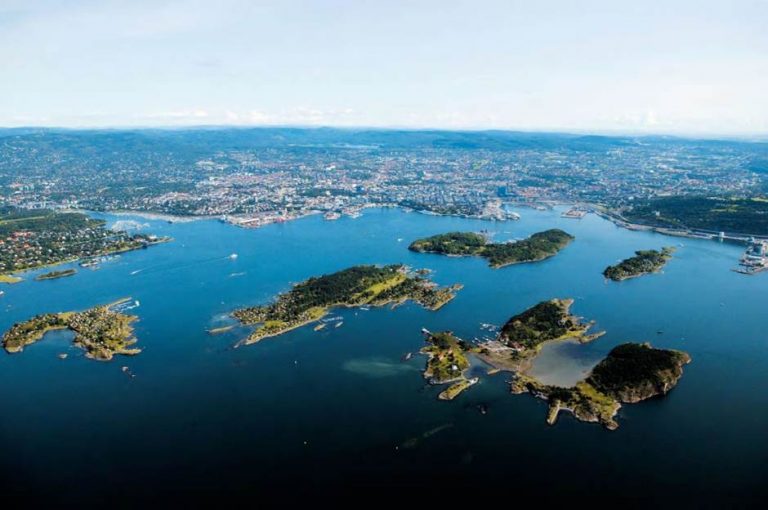
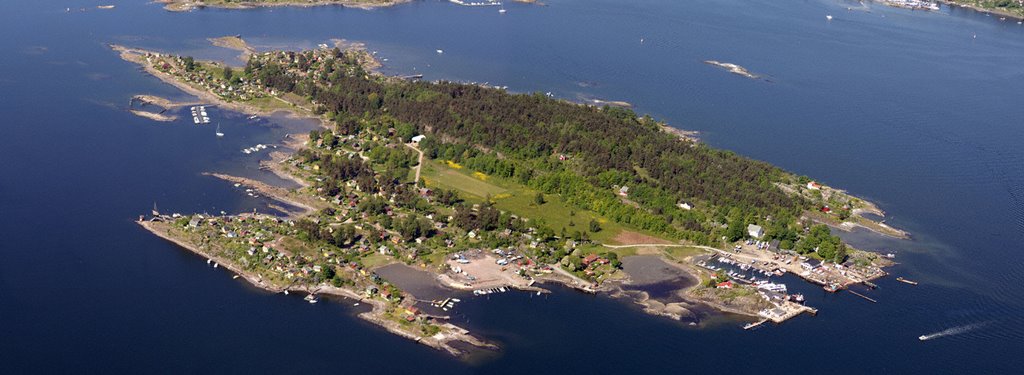
Easily reached from Oslo and filled with wonderful walking trails, great beaches for swimming and historical sites and museums, the islands in Oslo Fjord are well worth a visit. Each island has a distinctive feel and has something to offer every visitor, so be sure to explore the Oslo Fjord islands.

Getting to the islands couldn’t be simpler. There are ferries all year round, leaving from the pier in front of Oslo City Hall. As long as you have a regular ticket from Ruter (the public transport system in Oslo) or an Oslo pass, you can take a Ruter boat to any of the islands from the city.

Explore The Oslo Fjord Islands
Monastery ruins at Hovedøya. Photo: Christian Rafn/Visit Oslo

Hovedøya
Hovedøya is one of the most popular islands because it is the largest and only 600m from the city center. It is well-known for its sheltered climate and great beaches for swimming. Most of the island is a nature reserve and protected conservation area, which is ideal for walking, as well as seeing some rare plants that grow on the island.

Related: Oslo Fjord Cruises

“If you’re interested in visiting historic sites, then visit Hovedøya,” says Joan Gooding, a travel writer at Top European Writing Services and UKWritings. “You can wander around the ruins of a 12th century Cistercian monastery which was built by English monks. The island also has cannon batteries, dating back to the 19th century, which remain from the years that the island was used by the Norwegian military. It’s worth popping into the Lavetthuset, which now houses a gallery, studios, as well as a monastery library.”

Explore The Oslo Fjord Islands
Langøyene. Photo: Visit Oslo

Langøyene
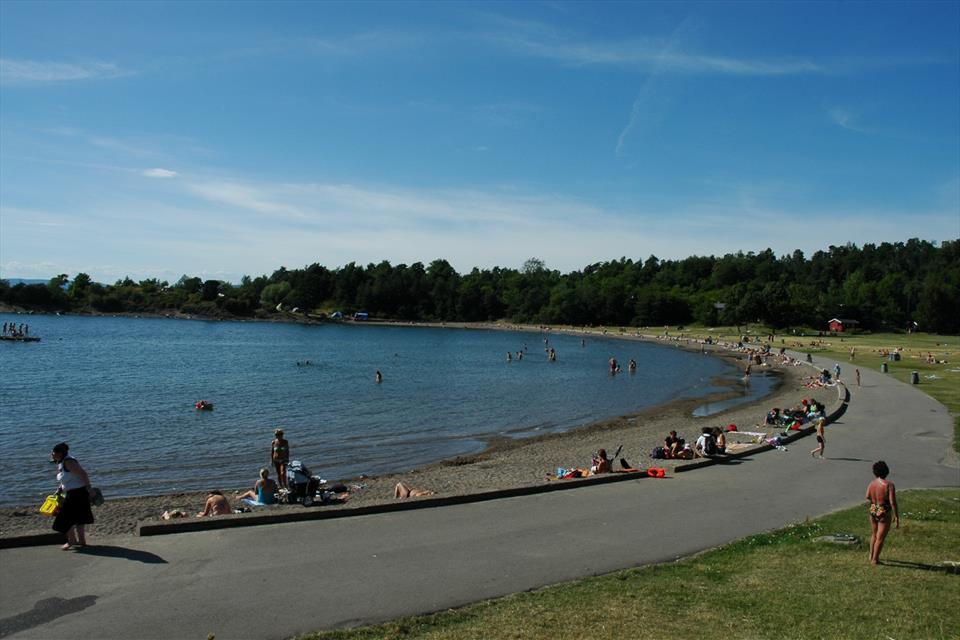
Langøyene is best known for being the only island in the fjord on which you can camp overnight. Until 1952, Langøyene was a landfill site, but once the municipality opened a new bathing place, it became very popular with locals and tourists alike. Today, it attracts tourists with its large grassy areas (ideal for sports, such as soccer), as well as its beaches and some fantastic walking trails.

Explore The Oslo Fjord Islands
Cabins on Bleikøya

Bleikøya
Bleikøya is one of the most popular cabin islands in the fjord. The northern part of the island is a nature reserve, where you can find some rare flora. It is also home to the largest population of barnacle geese in the fjord, as well as nesting sites for herring gulls, black-headed gulls and common eider.

Explore The Oslo Fjord Islands
Ferry arriving Gressholmen. Photo: Oslofjorden

Gressholmen
Further out in the fjord, you will find the trio of islands Gressholmen, Rambergøya and Heggholmen. Gressholmen is connected to the other two islands via causeways, which are particularly important as they form a bay for sea birds. Gressholmen housed the main airport for the city, which was used to land seaplanes between the First and Second World Wars. Now, the airport is used as a boatyard.

“You can walk to one of the oldest lighthouses in the fjord, which is based in Heggholmen,” explains Alan Overby, a journalist at Essay Writing Service and Big Assignments. “The views back to the city are wonderful and part of the reason this is such a popular destination. If you get a chance, you can also stop in at Gressholmen Kro. It was originally built as a meeting room in 1883 by the Christiana Shooting Club, but now it’s one of the oldest eateries in the fjord.”

Explore The Oslo Fjord Islands
Oscarshall summer palace. Photo: Rolf Thoresen/Visit Oslo

Bygdøy
Bygdøy is a peninsula to the west of the city center and is easily reached by taking either a bus or a boat. It is a popular destination for both its beaches as well as its walking trails. Bygdøy also houses many of the most popular museums and historic attractions, including the Norwegian Folk Museum, the Viking Ship Museum, the Royal Estate, the Holocaust Centre, Oscarshall and the Fram Museum.

Explore The Oslo Fjord Islands
Lindøya. Photo: Lasse Tur/Mapio

Lindøya
Lindøya is a popular island, especially in the summer, as it has about 300 more summer cabins than any of the other islands. It is the only island which has two ferry stops which are served by different routes. This makes it more accessible and affords greater flexibility when visiting. Lindøya’s southwestern corner is especially popular for swimming.

Explore The Oslo Fjord Islands
Whether you are looking to relax on a beach, spend time exploring the nature reserves or playing sports, there is an island for you. Remember to pack some food and drink, as some of the islands only have a small kiosk or shop that may only be open during the summer months. So, which Oslo Fjord island will you visit first?

Explore The Oslo Fjord Islands
Beatrix Potter

Explore The Oslo Fjord Islands is written for Daily Scandinavian by Beatrix Potter. Bea is a professional writer at both Write My Assignment and Cursework Writing services. She writes extensively about traveling, which she enjoys undertaking in her spare time. Bea also tutors students at all stages of education at College Assignment Help website.

Feature image (on top): Norway.no

Car Rental Company in Norway Awarded International Prize

0

Hertz Car Rental in Kongsberg, Norway has been awarded the «Hertz Best Image License 2019” by its licensee Hertz International. “For a long time, Hertz in Kongsberg has been loyal to the brand and making it visible,” wrote the jury. The car rental company in Norway, awarded the international prize, is proud to be the winner.

“We are happy to be recognized with such an award,” says station manager in Kongsberg Bjørn Erik Lund.

The jury emphasized that Hertz Kongsberg has a good reputation in its region and has been proactive in seeking advice from Hertz’s marketing department. The branch has shown an interest in learning more about marketing and has taken its own initiative to promote the brand and services it offers.

Car Rental Company in Norway Awarded International Prize
“We are happy to be recognized with such an award,” says station manager in Kongsberg Bjørn Erik Lund.

Related: Spectacular Driving in Norway

Building an image
The jury wrote the following about Lund and the job he has done in Kongsberg:

“Hertz Kongsberg has invested money and resources to build an image while being both creative and innovative. In addition, they have taken international ideas and made it their own. They have lived up to the slogan ‘Think global and act local’.”

Car Rental Company in Norway Awarded International Prize
Atlantic Ocean Road, Norway; Shutterstock/Hertz 

Driving in Norway
Norway is home to some of the most cultured and charming cities in the world, this destination is also a must-visit for those who love spending time in the great outdoors, as there’s a myriad of exciting things to do on your Norwegian adventure.

Related: The Adventure Road in Norway

From extreme sports to wildlife safaris and taking in the Midnight Sun, the options can seem endless. And then there are the famous fjords.

Car Rental Company in Norway Awarded International Prize
Planning a road trip? Hertz in Norway has a wide number of convenient pick-up locations where you can collect your rental car. The company has more than 100 branches across the nation, at both major cities and airports, so whether you want to pick up a rental car in  Oslo or BergenTrondheim or Leknes, Hertz has you covered in .

Related: First Car Tourist in Norway

Enhancing your travel experience
In the past six years, Hertz has increased its overall customer satisfaction score more than any other car rental brand in an annual study by J.D. Power, which surveys leisure and business customers in North America. Earning this year’s No. 1 overall ranking is a result of Hertz’s commitment to delivering caring, personalized service, offering top-rated vehicles, and investing in customer-centric technologies that enhance the travel experience.

Car Rental Company in Norway Awarded International Prize
Norway is a must-visit destination for those who love spending time in the great outdoors

About Hertz
Hertz, one of the most recognized brands in the world and currently ranked #1 in Customer Satisfaction by J.D. Power, has a long-standing legacy of providing a fast and easy experience designed to make every journey special. It starts with top-rated vehicles to fit every traveler’s needs, delivered with a caring touch and personalized services including its award-winning Hertz Gold Plus Rewards loyalty program, Ultimate Choice, Hertz Fast Lane powered by CLEAR, Mobile Wi-Fi, and more. Beyond car rental, Hertz is one of the top 10 sellers of pre-owned vehicles in the U.S. with more than 80 Hertz Car Sales retail locations nationwide. Wherever and whenever you need to go, at Hertz, we’re here to get you there. To learn more or reserve a vehicle, visit Hertz.com.

Hertz pioneered the car rental industry more than 100 years ago and today is owned by Hertz Global Holdings, Inc. which includes Dollar and Thrifty vehicle rental brands and fleet management leader Donlen Corporation. (Source: The Hertz Corporation)

Car Rental Company in Norway Awarded International Prize, compiled by Tor Kjolberg

The Swedish Emigrants

0

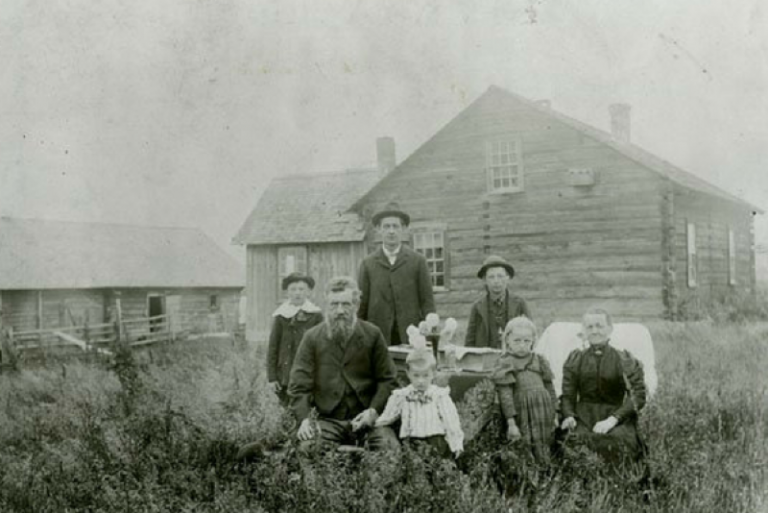
During the 19th and early 20th century, Sweden’s population exploded, and many families could no longer eke out a living on the land. So began the years of migration to North America. Read more about the Swedish emigrants.

About 1.3 million Swedes left Sweden for the United States of America. The land of the U.S. frontier was a magnet for the rural poor all over Europe, but some factors encouraged Swedish emigration in particular since the Lutheran State Church practiced social conservation and class snobbery. Population growth and crop failures were other reasons.

The Swedish Emigrants
About 1.3 million Swedes left Sweden for the United States of America

Related: The Great Scandinavian Exodus

Mass exodus
The trans-Atlantic mass exodus is one of the major events in Swedish history during the last two centuries, and the immense network of contacts that was established across the Atlantic has proven very important for the way in which Swedish society then and now has been oriented towards the United States.

Utvandrernes Hus (House of the Emigrants) in Växjö, 70 km (43 miles) west of Kalmar in Sweden, tells the story of the exodus.

Swedish migration to the United States peaked in the decades after the American Civil War (1861–65). Most immigrants became pioneers, clearing and cultivating the prairie, but some forces pushed the new immigrants towards the cities, particularly Chicago.

The Swedish Emigrants
Utvandrernes Hus (House of the Emigrants) in Växjö, 70 km (43 miles) west of Kalmar in Sweden, tells the story of the exodus

Related: Immigration Tensions in Scandinavia

A second generation of Swedish emigrants
As the decades of Swedish immigration to the United States progressed, a second generation of Swedish Americans entered the scene. This second generation was first recorded by the Census in 1890, when some 250,000 persons in the Unites States were classified as second-generation Swedish Americans. During the next decades, this figure increased quickly and by 1910 the second generation had passed the first and numbered 700,000. In 1920, the figure was 824,000.

End of the Swedish emigrants
This caused a national alarm in Sweden and a broad-based parliamentary emigration commission was instituted in 1907, recommending social and economic reform in order to reduce emigration by “bringing the best sides of America to Sweden”. From the mid-1920s, there was no longer a Swedish mass emigration.

Related: New Nordic Heritage Museum in Seattle

The Swedish Emigrants
The trans-Atlantic mass exodus is one of the major events in Swedish history during the last two centuries

Swedish language played an important role
Much of the Swedish American community was centered on the Swedish language. This was seen as a key factor for the culture’s creation and maintenance. The Swedish-language press played an important role in this respect, and it has been estimated that between 600 and 1,000 Swedish language newspapers were published in the United States. The Swedish American press was the second largest foreign-language press in the United States with a total circulation over 650,000 copies in 1910.

The Swedish Emigrants, written by Tor Kjolberg

Coronavirus: What It Means For Your Visit to Scandinavia Or Elsewhere

Since we’re a promotor of traveling to Scandinavia, we feel committed to inform our readers about what the coronavirus means to you and your travels. As the situation evolves the article Coronavirus: What It Means For Your Visit to Scandinavia Or Elsewhere is the best place to stay informed.

Our team has been closely monitoring official news and guidance about the coronavirus outbreak in order to support our global community. Prearranged itineraries are continuing to go ahead however, and if you have an upcoming arrangement and you are unsure whether to travel please follow the guidance below:

Coronavirus: What It Means For Your Visit to Scandinavia Or Elsewhere
Given the health and safety risks posed by the virus, we ask all travelers to review local authorities’ travel guidance and health advisories related to this outbreak

Ensure you stay informed
Our focus right now is how we can best support our readers with planned travel. Given the health and safety risks posed by the virus, we ask all travelers to review local authorities’ travel guidance and health advisories related to this outbreak, in addition to global guidance from the World Health Organization. A list of reputable sources can be found below:

https://www.who.int/emergencies/diseases/novel-coronavirus-2019

https://www.gov.uk/guidance/coronavirus-covid-19-information-for-the-public

https://www.cdc.gov/coronavirus/2019-ncov/index.html

https://www.ecdc.europa.eu/en/novel-coronavirus-china

Related: Create a Healthier Lifestyle – the Swedish Way

Keep up communication
As the situation evolves it is more important than ever that if you have private arrangements, both parties communicate their status and travel plans.

Coronavirus: What It Means For Your Visit to Scandinavia Or Elsewhere
Outbreak of coronavirus per 11 March 2020

Make sure you have a plan B
We always advise that all travelers have a plan B before departure date in case there are any unforeseen circumstances. Given that the coronavirus situation is evolving daily, it is important to make sure you have a plan B which you can rely on if for any reason you are unable to travel.

Check your travel provider
We advise travelers to check that planned transport is going ahead with their travel provider. Due to lack of demand some travel providers have cancelled flights or arranged alternative routes which may result in unexpected delays.

Related: Successful Norwegian-lead Ebola Study 

Make sure you have travel insurance
You are also encouraged to arrange any additional insurance you feel is necessary. We strongly advise you look into relevant travel and health insurance.

Make sure your emergency contact is updated
This is important in case you do start to feel unwell while you are away, or if you become delayed as a result of the virus. Keep a note with your emergency contact.

Coronavirus: What It Means For Your Visit to Scandinavia Or Elsewhere
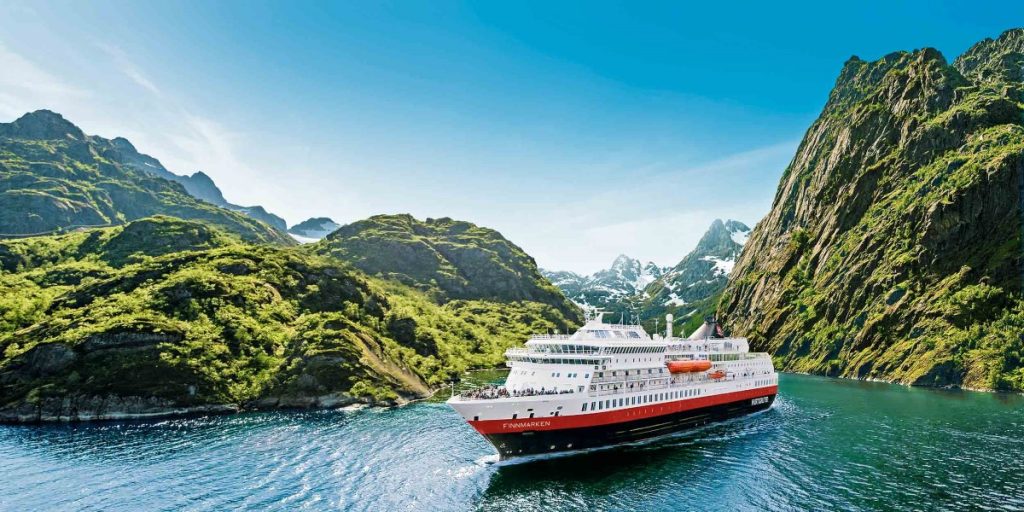
M/S Finnmark (Hurtigruten)

Hurtigruten
Hurtigruten introduces a risk-free flexible rebooking-policy – allowing guests to change their bookings to any Hurtigruten cruise until the summer of 2021.

Coronavirus: What It Means For Your Visit to Scandinavia Or Elsewhere, compiled by Tor Kjolberg

House of Hegelund – Authentic Arctic Food

Since the first Hegelund arrived in Norway in 1635, the family has adapted and refined both their own traditions and the culture they came into. When the 35-year old hailing from Denmark, Morten C. Hegelund, travelled north to Norway and settled in the area of Karlshøy, well above the Arctic circle, the event marked the beginning of a near four-century long history for the Hegelund family. Read the fascinating story about House of Hegelund and authentic Arctic food.

Together with the Figenschou family, the Hegelunds soon became one of the leading families in Karlsøy. The gathering of Hegelunds and Figenschous essentially turned into a sort of integrated social system that formed the center of local society.

House of Hegelund - Authentic Arctic Food
Kvitnes farm house

Related: Norwegian Food Traditions -A Living Museum in Oslo

The trading post on Vannøya
At that time, the northern part of Troms was already a busy place for trade and business. The Kvitnes trading post on Vannøya in the Arctic was established by Jeremias Figenschou towards the end of the 1600s. Kvitnes would become one of the most important farms in the district, in part because it was located on the sailing route to Bergen.

Towards the end of the 19th century, a number of factors lead to the economic weakening of trading posts like Kvitnes and in 1929 the family had to sell the estate, which then came into the possession of the Giæver family. In 1944 the German army burned down most of the North Troms and Finnmark regions in an attempt to slow the Russian forces at the border, and the house played an important role as housing for refugees. Today, the Kvitnes estate has been re-erected at the southern end of Tromsø Island and is managed by the town’s Perspective museum.

House of Hegelund - Authentic Arctic Food
Kvitnes would become one of the most important farms in the district, in part because it was located on the sailing route to Bergen

Related: What is Norwegian Brown Cheese?

While the Museum will never be able to recreate a living and breathing North Norwegian trading post in this day and age, the old stories of Kvitnes are kept alive with the help of volunteers, artists and others.

Arctic ingredients in old recipes
As soon as Morten Hegelund arrived in the Arctic, he started experimenting with food. Hailing from an educated family in Denmark, he was used to preparing his food not only for survival, but also for culinary experience. He started adapting and innovating his old recipes to fit the new ingredients from the north.

House of Hegelund - Authentic Arctic Food
House of Hegelund’s food innovation processes are led by Frode Klingenberg (left) and Erik Rosen (right).

Frode Klingenberg, a direct descendant of Morten Hegelund, has the same thoughts and ideas as Morten, only this time he is able to take advantage of how the food science has come in developing possibilities for preservation and innovation. Frode Klingenberg is the founder and CEO of House of Hegelund,  which goal is to become part of the food innovation industry with emphasize on Arctic food.

Related: The Norwegian Asparagus Land

House of Hegelund - Authentic Arctic Food
The cold coast of Karlsøy in North Tromsø region abounds with fish like cod, pollock, salmon, monkfish, and especially halibut (picture)

The Arctic kitchen
The Arctic is a region overflowing with ingredients, both on land and sea, and Norway being responsible for about 54% of the global production of Atlantic salmon and only 2% of the cloudberries harvested in the Arctic, there is plenty of room for innovation. “The Arctic is such a respected brand in the world, we should be able to bring this to a finish in our own region,” says Klingenberg.

Within the next few years, House of Hegelund will strive to become part of a market that works to innovate food production by hitting ingredients up the food chain, helping the environment and producing more nutritious food at the same time.

House of Hegelund - Authentic Arctic Food
House of Hegeøund 3 pack Gourmet jam

“In ten years the Arctic kitchen is going to be recognized across the world,” concludes Klingenberg, “and House of Hegelund will be the go-to company for quality ingredients and consumer-adopted food.”

Even now, you can sample some of the company’s quality products by visiting their online shop.

House of Hegelund – Authentic Arctic Food, written by Tor Kjolberg

All images © House of Hegelund

A Family Road Trip from Bergen to Flåm

Every year, more than 11 million people visit Norway to take in the country’s incredible scenery. If you have a young family, one of the best ways to do this is by road, so you can set your own agenda and take a pitstop whenever you fancy. The family road trip from Bergen to Flåm takes around three hours without stopping, or you can make lots of little detours to take in the sights.

There are some beautiful farming villages along the way, hundreds of strawberry fields packed with fruit, and of course the incredible Geirangerfjord. Plus, the whole journey is looked over by the impressive peaks of Trollstigen.

A Family Road Trip from Bergen to Flåm
From Bryggen, Bergen

Related: Cruising the Fjords in Norway

Finding your way
From Bergen airport, follow the signs towards Arna and get onto the E16. This is the road that will take you all the way to Flåm. The roads are narrow and scenic, so you will want to take plenty of stops along the way. If you are travelling with young children, taking regular breaks is also important to prevent travel sickness. Around a third of people are actually affected by motion sickness, so breaking up your journey will help greatly with the symptoms. If you are hiring a car, choose one that is compact and easy to drive — the road from Bergen to Flåm is extremely narrow and windy.

A Family Road Trip from Bergen to Flåm
From Flåm (Photo: Visit Bergen)

Related: 5 Must-See Destinations in Norway

The Geiranger Fjord Area
The scenery in the Geirangerfjord area is going to be the highlight of your road trip. This UNESCO-protected fjord has crystal-clear blue waters that will take your breath away. The fjord is 260 meters deep, surrounded by dramatic mountains that are 1700 meters tall. Your children will be excited by the impressive waterfalls carved out by the glaciers. Look out for the Seven Sisters fall about halfway on your trip. There are also some amazing lookout falls at Flydalsjuvet and Dalsnibba.

Related: The Adventure Road in Norway  

A Family Road Trip from Bergen to Flåm
Jorsbærstova, Valldal (Photo: Fjord NorwaY)

Stopping for lunch
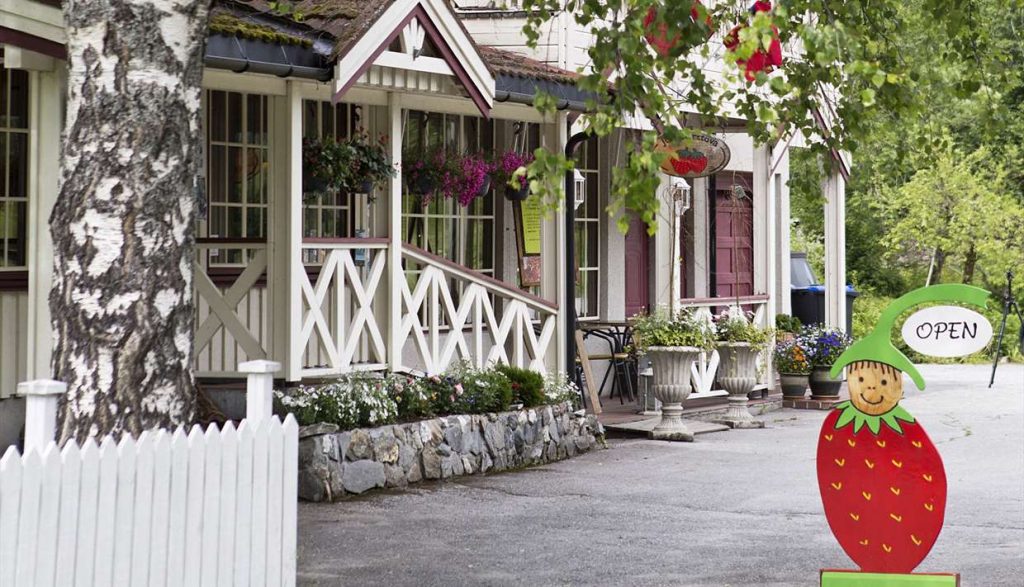
Young children need regular sustenance and there are plenty of places to stop for a bite to eat along the way – particularly some of the fruit farms, where strawberries grow enormous in the fresh Norwegian air. Try one of the farms at Valldal like Jordbærstova, where you can try some beautiful homemade dishes, including the popular strawberry cake, all made using local produce, and the Sunday lunch buffet is definitely worth stopping for.

A Family Road Trip from Bergen to Flåm
The narrow road from Bergen to Flåm is an amazing road trip for the whole family. The fjords and waterfalls are magnificent and there are plenty of lookouts where you can stop and admire the view.

Feature image (on top): Geirangjer fjord and Skageflå waterfall. Photo: Visit Norway.

A Family Road Trip from Bergen to Flåm
Karoline Gore

A Family Road Trip from Bergen to Flåm is written for Daily Scandinavian by Karoline Gore. Karoline is a freelance writer who left the corporate grind when she started a family and has never looked back. She enjoys contributing to a range of online publications on the topics that are important to her and is a regular contributor to Daily Scandinavian.


Scandinavia Among the Most Cyber-Secure Countries in the World

With so much of our personal data stored online, cybersecurity is of the utmost importance. According to a Comparitech report, Denmark is the most cyber-secure country in the world. Other top-performing countries included Sweden, Finland, Germany, Ireland, Canada and Japan. So, Scandinavia ranks among the most cyber-secure countries in the world.

The rankings released earlier this month suggests Denmark, Sweden, Ireland, Germany, Japan, Canada and Finland are closely ranked at the top of the 72- country study. At the bottom are Algeria, Tajikistand, Turkmenistan, Syria and Iran.

Scandinavia Among the Most Cyber-Secure Countries in the World
The lowest number of financial malware attacks was in Denmark, Ireland, and Sweden. Image: Flickr

Related: Scandinavia Ranks On Top On The List Of World’s Most Reputable Countries

Lowest number of financial malware attacks
The lowest number of financial malware attacks was in Denmark, Ireland and Sweden. In all of these countries, this kind of cyberattacks concerned only 0.1 percent of users.

The study revealed Denmark to be the most cyber-secure country in the world, taking over from Japan, which dropped four places to the fifth most cyber-secure country. Last year’s fourth most cyber-secure country, Denmark, scored incredibly low across the majority of categories, only scoring a little higher in the legislation category due to it not having specific laws that cover content and cybercrime.

Related: Scandinavia Ranked as One of the Safest Areas in the World

Scandinavia Among the Most Cyber-Secure Countries in the World
The study revealed Denmark to be the most cyber-secure country in the world

Improvement since last year
“We found most countries’ scores improved since last year,” says a summary of the report. “But due to greater cybersecurity efforts from the majority of countries, this means some of the best performers from last year have dropped down the rankings”.

Related: Danish Happiness Explained

Scandinavia among the most cyber-secure countries in the World
The new report includes 72 countries while the former study included 60 countries.

Scandinavia among the most cyber-secure countries in the World, compiled by Tor Kjolberg based on a press release.