In recent years, Sweden has become a new favourite holiday destination among global travellers. Speaking with TT news agency, Visit Sweden CEO Ewa Lagerqvist said that it’s mostly Sweden’s natural scenery that is attracting people all over the world. Find out all the reasons why Sweden is a haven for retirees.
Older tourists are also flocking to the country to check out its potential as a retirement place. This is because Sweden has been recognized as a dream retirement destination.
Last year, the Research Network on an Ageing Society placed Sweden in the top 5 best places in the world to live out your later years. Apart from the gorgeous and unique scenery and relaxed way of life, Sweden is a haven for people in their golden years for a number of reasons.
You can freely enjoy Sweden’s nature If you’re an outdoorsy type and love spending time in nature, Sweden is the perfect place for your retirement. The country’s Right of Public Access means that you can access any land (except private properties) and roam freely in the countryside, as long as you don’t destroy or cause damage to trees, plants, or wildlife.
This also means that you can put up a tent anywhere, and more importantly, you can forage for mushrooms, berries, and even catch fish in the five major lakes along the country’s coastline. Being able to catch or find your own food for free can be a calming experience that can even help you save money during retirement. Moreover, these kinds of activities allow you to access fresh and seasonal ingredients that are essential to a healthy diet as a senior.
Last year, the Research Network on an Ageing Society placed Sweden in the top 5 best places in the world to live out your later years
The country has one of the lowest crime rates in the world It’s no secret that seniors are often targeted by burglars and scam artists, which is why finding a safe place to retire should be a top priority. Thankfully, Sweden has one of the lowest crime rates in Europe. In fact, Stockholm is considered to be one of the safest cities in the world because of its nearly crime-free neighbourhoods.
While you can certainly rest easy in Sweden, it still pays to be on the lookout for your wellbeing. It may be worthwhile to install CCTV cameras outside your property and keep a list of local hospital and police hotlines within reach, just in case of an emergency.
Sweden has a thriving coffee culture There is an ongoing debate about whether older adults should skip coffee, but studies have shown that coffee won’t cause any health impairments if consumed moderately. Moreover, drinking coffee when you’re older has many health benefits, as it may reduce the risks of developing Parkinson’s and Alzheimer’s Disease.
Since Sweden has a thriving coffee culture, you can boost your health and get your coffee fix anywhere while partaking in a tradition called fika, which means to meet colleagues or loved ones over a cup of coffee. Most Swedes often have at least one fika per day, as it gives them the opportunity to talk and bond with their favourite people.
If you’re an outdoorsy type and love spending time in nature, Sweden is the perfect place for your retirement
Make new friends
As a retiree, being part of this coffee-centered tradition can give you the opportunity to make new friends. Moreover, having fika with someone helps prevent isolation, which is something that seniors often cope with during retirement.
Rediscover yourself by spending your golden years in Sweden. Choosing to retire in one of Sweden’s many beautiful cities means you can be safe, look after your health, and make new friends as you bask in the natural scenery of this country.
All The Reasons Why Sweden Is A Haven For Retirees, written for Daily Scandinavian by Karoline Gore
Oslo Byleksikon (The Oslo City Encyclopedia), was published by the Oslo Society (Oslo Byes Vel) for the first time in 1938. Now, The Oslo Society has published a digital edition with close to 7,000 entries making its content more accessible than ever. Here we dive into the vaults of this veritable digital masterpiece and present some samples, which will be constantly evolving as Norway’s capital changes. This is a tribute to Oslo – the capital of Norway in words and images.
The Oslo Society (Oslo Byes Vel) was founded in 1811 and is an independent membership organization focusing on the capital’s urban development, urban culture and participation.
Through cultural activities, the journal St. Hallvard and the blue plaques on dedicated building facades, the Oslo Society urges its members to become better acquainted with the capital and take an active part in its development.
The Oslo City encyclopedia
The encyclopedia includes close to 7,000 entries covering images, maps, main categories as well as sensible and searchable sub categories. Topics span the wide range of history, architecture and everyday life, from arts to sports and recreation. Each entry defines the concept, provides historical background and in some instances explains why the site is marked with blue plaques.
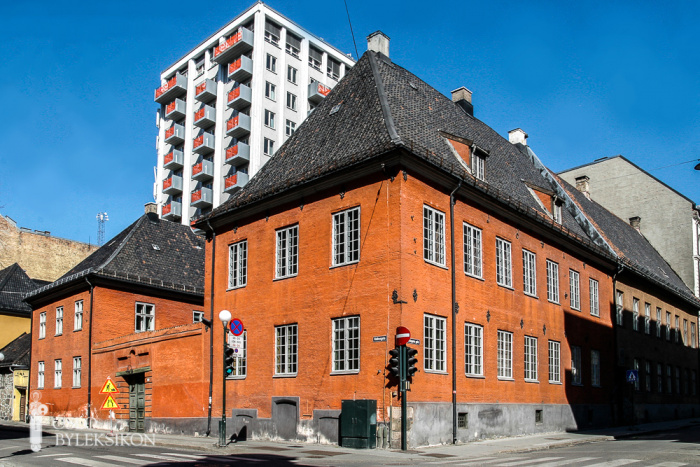
Rådhusgata 7 was the second City Hall of Oslo. – Foto: Astrid Ledang / Oslo Byleksikon
Rådhusgata 7
is the second city hall of Oslo (1734-1843) and one of its oldest preserved structures. The oldest section dates from ca. 1625-30, the year 1647 on the anchor plates of the facade may possibly refer to an extension in connection with the land commissioner Johann Garmann taking over the house that year as a private dwelling. Read more
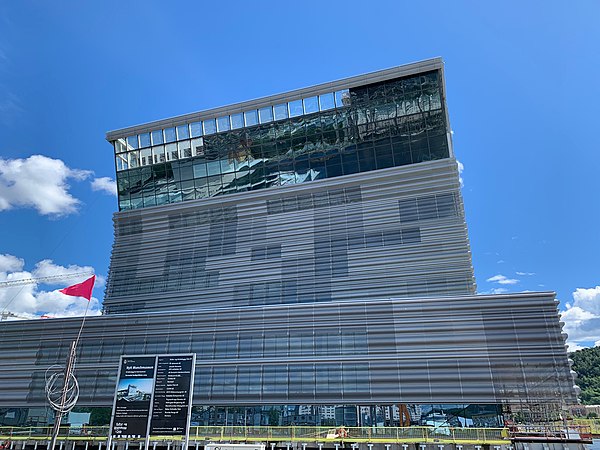
The new Munch Museum under construction in Bjørvika. Photo: Annikdance
New Munch Museum
The city council approved the removal of the Munch Museum from Tøyen to Bjørvika in 2011 after four years of political wrangling. An architectural competition held in 2009 was won by the Spanish entry Juan Herreros Arquitecto. The winning proposal ‘Lambda’, a 40-meter-high block with a lopsided section at the top, created a great deal of controversy. The new building is due to be completed in 2020.
The museum building at Tøyen will be used from 2020 onwards by National Theatre.
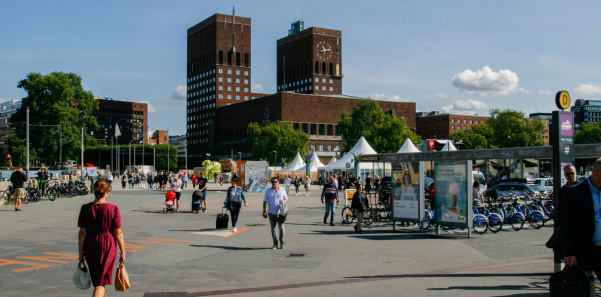
Oslo City Hall. Foto: Astrid Ledang / Oslo Byleksikon
Oslo City Hall (Rådhuset) Oslo City Hall (Rådhuset) is seat of the city’s central administrative bodies and a number of municipal offices, designed by the architects Arnstein Arneberg and Magnus Poulsson. The City Hall was officially opened in 1950, after a planning and construction period of approximately 30 years. Read more
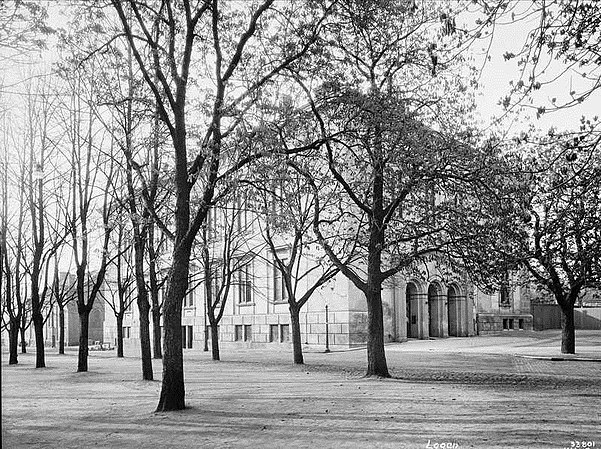
Former masonic lodge in 1929. Photo: Anders Beer Wilse / Oslo Museum
Former masonic lodge
The former masonic lodge played an important role in the development of Norwegian cultural identity in the 19th century. Among the cultural figures who were active here were Edvard Grieg, Henrik Ibsen, Ole Bull, Johan Svendsen, Halfdan Kierulf and Bjørnstjerne Bjørnson. In the 20th century, Filharmonisk Selskaps Orkester (now: Oslo Philharmonic) held its opening concert here in 1909. Read more
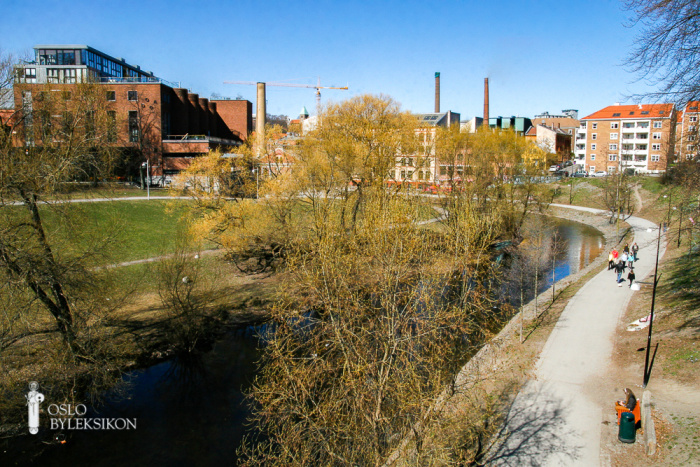
Aker River. Photo: Astrid Ledang / The Oslo City Encyclopedia
Aker River (Akerselva)
The idea of making use of the banks of the Akerselva as a green belt through the city was proposed by Major Jacob Høe in 1915, as a countermove against plans to canalize and cover over sections of the river. At the opening of Sannerbrua in 1917, the municipal mayor, Carl Jeppesen, spoke these famous words: ‘May Akerselven become a broad smile and not an ugly furrow in the face of the capital.’ Read more
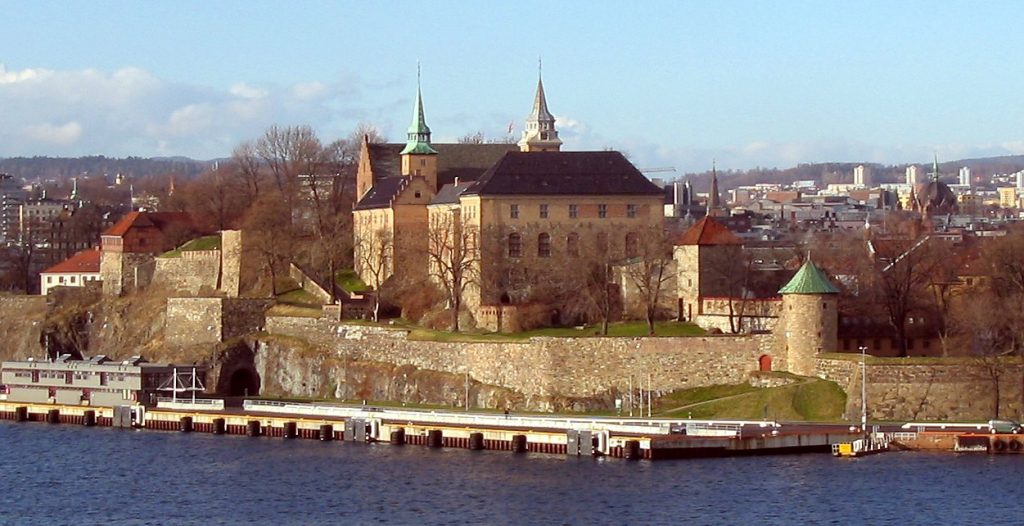
Image: Akershus Castle and Fortress. Photo: Bjørtvedt / Creative Commons
Akershus Castle and Fortress. Photo: Bjørtvedt / Creative Commons
Akershus Castle and Fortress
The fortification was originally begun by Håkon V, probably in the 1299-1304 period, and in 1308 it was a strong fortified castle that could withstand the attacks of the Swedish Count Erik. In the medieval period, it was a large-scale fortified complex that fully met contemporary requirements. The individual functions such as ladies’ bower, servants’ hall, pantry, etc. were organized around two buildings south and north of the main tower Vågehals (Daredevil) and the smaller tower Fuglesang (Birdsong). Read more
Oslo Society logo
A Tribute to Oslo – The Capital of Norway in Words and Images
“Without the dedication and hard work by the editorial council, consisting of different subject editors, the result would not have been so successful,” says a spokeswoman for the Oslo Society. The team has been working on the digitization process since the fall of 2014.
Translation from Norwegian has also been demanding because it is time consuming as well as expensive.
“The biggest challenges ahead will be to keep the encyclopedia updated and keep the web platform up to date. We also want to add new illustrations, which will be a demanding, but fun, process,” says one of the staff members to Daily Scandinavian.
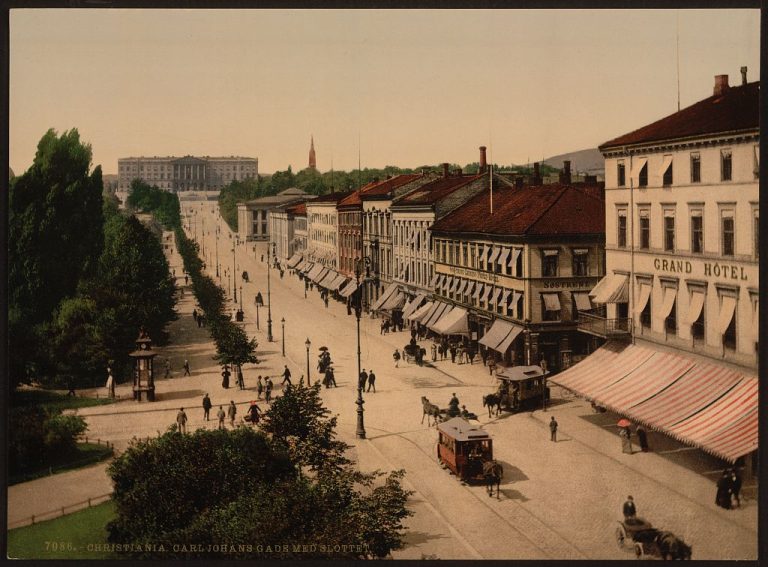
Feature image (on top): The Library of Congress Carl Johans Gade with Castle Christinia Norway LOC Wikipedia
A Tribute to Oslo – The Capital of Norway in Words and Images, compiled by Tor Kjolberg
Norwegian professional photographer Terje Rakke founded Nordic Life Photography in 2001 after Scandinavian advertising agencies had complained they had to plough through far too much irrelevant material. His mission was to offer them a library of images free of burgers and cowboys riding into the sunset. Read more about the Norwegian Image Library – Nordic Life.
Since the very beginning, Nordic Life has become a high-end photo agency with a state-of-the-art system based on English keywords.
Silhuets in the air – from Tyrifjorden outside Oslo
Everything that surrounds us, from great landscapes down to the tiniest molecular level, had to be retrievable by entering a relevant keyword into an efficient and functional search system. So, the Nordic Life collection has a distinct fingerprint, a refined and subtle splash of color that distinguishes it from what is readily available elsewhere. It really is a pleasure for users to search the website and discover hidden treasures.
A unique identity
The people behind Nordic Life has struggled, challenged all sorts of weather, from rain and sleet to fog and snow, and cheered at the results. With passion and enthusiasm, the Nordic Life staff have travelled far and wide, growing with each step of an exciting journey. That journey has been taken from urban jungles to the outermost barren islands. Call it patriotism if you will. In a competitive market, Nordic Life insists on choosing quality, integrity and character over the commonplace, triviality and quantity.
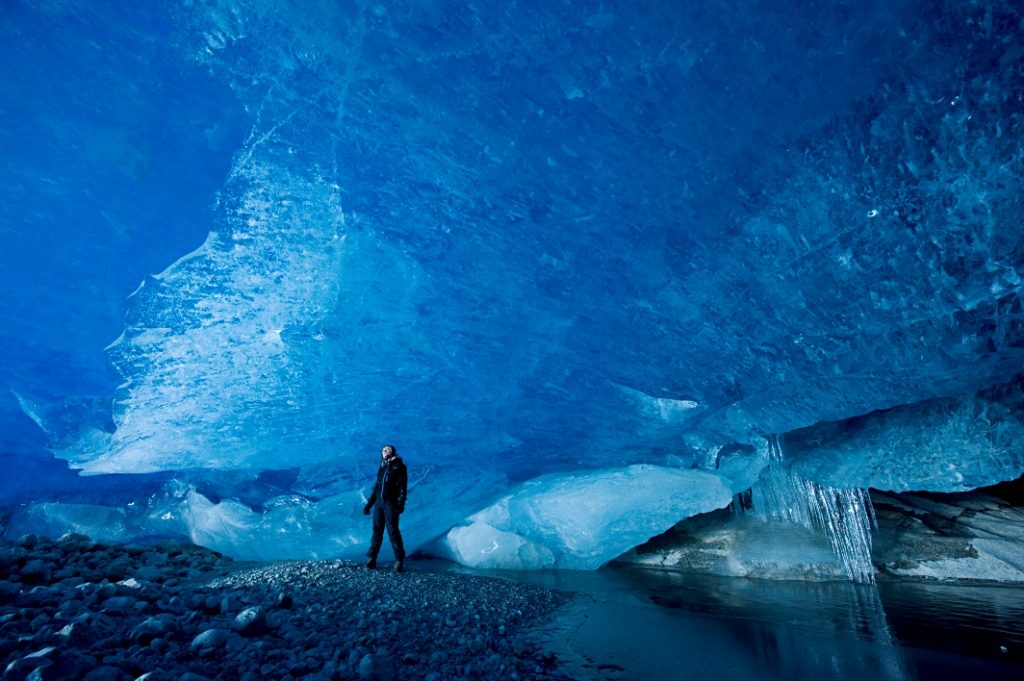
Under Glacier – Nigardsbreen, West Norway
Inspiration and creativity
A true professional photographer is always searching for creative solutions. A part of this is the search for magnificent locations and models with natural charisma. It can be a challenge to do this without being overwhelmed by anxiety. However, Nordic Life works closely with sophisticated image users who prefer illustrative photography over mass-produced imagery.
Today, Nordic Life offers 75 000 photographs that have been collected over the past 30 years. The priority has not been to be all-inclusive with regard to subject matter, but rather to offer a wide-ranging collection of creative, colorful photographs. In a way Nordic Life unites all of Norway at one website. The visual preferences and uncompromising focus on quality satisfy the strictest demands of international customers.
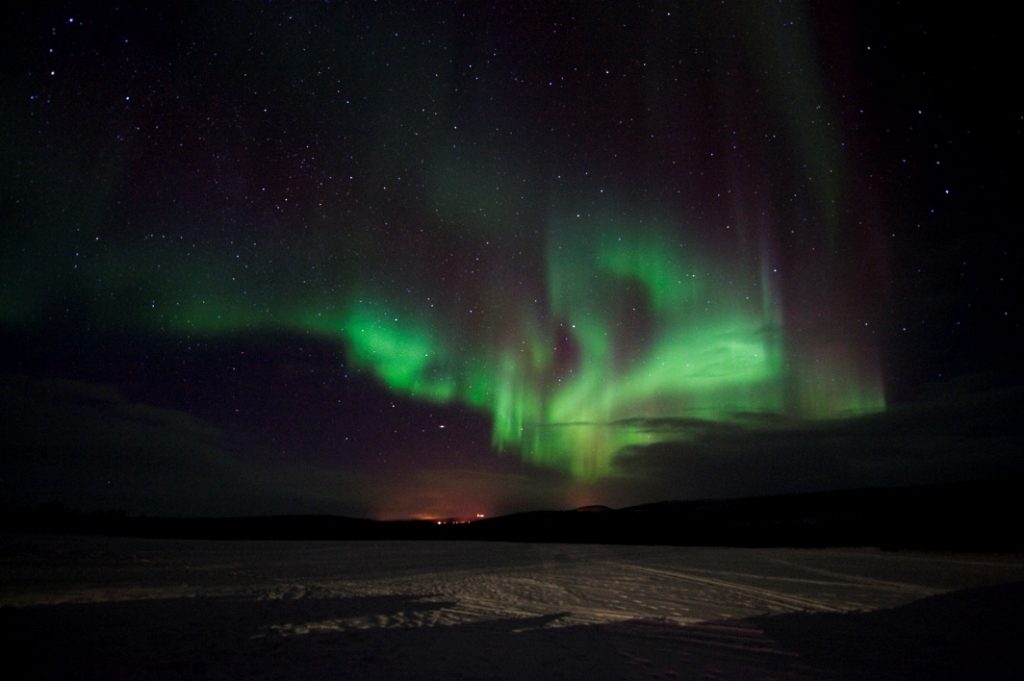
Northern lights, Kautokeino
Values and identity
“Aesthetic preference is for the genuine and soulful over the superficial, commercial and cynical, which in our time are increasingly pervasive. Our heritage is a source of joy and inspiration. The active use and accessibility of our cultural heritage is vital so that our descendants may be able to enjoy it and draw nourishment from it,” says Terje Rakke and adds, “Each of us has a responsibility to preserve and perpetuate our shared cultural heritage. We must bear in mind the diversity of influences that form personal and national identity.”
Visibility
The exciting visual recordings of the landscapes that surround us may capture their earthly beauty, but also raise fundamental questions about our perception of progress, development and values. Ideally the traces we leave behind should help a new generation build their faith in the future. In order to gain attention, the current photographs must capture light and render man and nature in a way that captivates audiences far beyond our own secluded outskirts of this world. The Nordic Life collection of photographs is created in order to promote Norway on the international arena and will continue to be an essential part of the profiling and international marketing of Norway as an outstanding destination.
Musk ox
Daily Scandinavian is proud of having Terje Rakke as part of our team. For over 20 years, many of his photographs have been available through the world’s foremost agencies American Getty Images and German Plainpicture, successfully competing with the work of the best photographers of our generation. The cooperation with leading international agencies allows Nordic Life to feel the pulse of market trends and to recognize what customers throughout the world want.
Formation of the land
Norway’s topography reflects the interplay of numerous natural forces, and the land we see today was sculpted during a process that took millions of years. The cycle between periods of tropical climate and periods of ice age has repeatedly remade the landscape. The vast ice cap that covered the land during this series of ice ages was a powerful tool for sculpting the land. Glacial erosion, and later river erosion, created the rugged coastline that Norway has today, with fjords and deep valleys, a myriad of islands, islets and skerries, towering peaks and steep mountainsides.
The people behind Nordic Life has struggled, challenged all sorts of weather, from rain and sleet to fog and snow, and cheered at the results
The ceaseless pounding of waves and the sporadic howling wind also played their part in the wear and tear. As the ice retreated, and the mountains and bedrock were broken down, the scattered debris was invaded by plants, first a few pioneering growths, and then a lushly varied flora that over time created the soil. This became a fertile habitat for animals and the humans that migrated north along the coast. About 18 000 years ago, the area we know as Norway was still completely covered by this vast ice mass, which was up to three kilometers thick. It was not much different from the ice cap that today covers Greenland and Antarctica. The most recent ice age lasted roughly 100 000 years; Norway first became free of ice about 8800 years ago.
Heritage
Commitment to conservation is not aimed at moving heaven and earth, but rather focuses on the story that enables us to better understand our roots and origins. We are increasingly distancing ourselves from the conditions that are basic to all life. We must learn to listen to the stories that mountains, ice and water can tell us.
Lavvo, Beitostølen
Finely tuned senses are required to perceive nature’s perfect harmony. Only by consciously being present can we see clearly what is needed to save our species. We finally seem to have accepted the theory of evolution, as well as the notion that human activity is changing our environment and the living conditions on our planet.
According to Norse mythology, Yggdrasil, the World Tree, reaches throughout all the world and across the heavens. Yggdrasil dates from the time Odin created the world, but that is so long ago that no one really can fathom how everything is interconnected. If this tree is healthy, then the world is healthy; if the tree is ill, then the world be ailing.
Nordic Life Professional photographer Terje Rakke has created a Norwegian image library, featuring top quality images of Norwegian nature, heritage, living, architecture and a lot of details. Travel images and destinations include photographs searchable on themes like people in leisure, sport and work, architecture and design, symbols and religion, transport, roads and traffic, beauty of decay, underwater and seascapes and many more.
Terje Rakke has been a photographer for over 30 years with 20 years of experience photographing nature, animals and details underwater as well as in high mountains.
Throughout these years Terje has built up an ever-expanding library consisting of more than 75,000 images carefully categorized into minute details, easy for professional publishers to search for. These are now being incorporated into Nordic Life which is constantly being updated with fresh images.
Terje has also participated in several public art decoration projects for hospitals, organizations, companies, airports and contributed at Norway’s pavilion with World Expo in Lisbon/ Portugal 1998, Shanghai/ China 2010, Yeosu/ South Korea 2012. He has performed audiovisual solo exhibitions with specially composed sound settings and music by Knut Halmrast.
Recent studies have shown residents of Denmark, Sweden, and Norway are sleeping better, living longer, and rating themselves as feeling happier than the populations of many other countries. But why Do Scandinavians Sleep So Well?
An article published on SleepJunkie in 2019 compares the work-life balance and sleeping habits of different countries across the world. In this study, working hours, minimum annual leave, good sleep, happiness rating, sleep difficulty score, and life expectancy all played a role in determining which countries rank where. Denmark ranks number 3 on their list, followed by Norway at number 4, and Sweden at number 6.
The U.S., however, comes in at a sad number 87 on this list. Considering the significant gap between these countries’ quality of living, Americans can certainly take some advice from the Scandanavians.
Keep it dark
Why Do Scandinavians Sleep So Well? But why are Scandinavians sleeping so well? In our post, we discuss the philosophy of living “lagom” as well as tips for sleeping the Scandinavian way.
The lagom lifestyle
Lagom is a Swedish term for “just the right amount,” and the philosophy of lagom revolves around balance. Many people relate living lagom to taking the Goldilocks approach to life— having not too little or too much and living in moderation.
While living lagom applies to all facets of life, keeping this philosophy in mind while assessing your sleeping habits can help you pinpoint areas for improvement that don’t require buying a whole new mattress or visiting a sleep specialist. Let’s talk about the simple tricks Scandinavians swear by to get a better night’s sleep.
Two duvet system, separate split comforter
Sleep with Double Duvets Sleeping with two duvets is now coined as sleeping “the Scandinavian way.” If you share your mattress with a partner, opting for two twin duvets instead of one large comforter can help both you and your partner get undisturbed rest. Recent studies have found that couples who sleep in the same bed with the same comforter have their sleep interrupted 30% more than couples who sleep apart.
While many couples don’t want to sleep in a whole separate bed than their partner — as two beds take up ample space and can be costly — sleeping with two duvets can be just as effective. And to truly sleep the Scandinavian way, ditch the top sheet, too. Top sheets can keep you warm, but extra bedding can cause disturbed sleep, and investing in two twin bed sets merely for a flat sheet costs you unnecessary money. Instead, choose a seasonal duvet that allows you to modify its thickness and coziness for the summer and winter months.
Assessing your sleeping habits can help you pinpoint areas for improvement that don’t require buying a whole new mattress or visiting a sleep specialist
Sleeping with double duvets helps you get better sleep because it eliminates the tug of war most couples play with their comforters and bed sheets. If you share the bed with a blanket hog, you’re probably familiar with this battle.
Plus, having your own duvet allows you to toss and turn and readjust as much as you want throughout the night without disturbing your partner. If you’re an especially cold or hot sleeper, having the freedom to modify your duvet as you deem fit helps you get the most comfortable sleep, too. If your partner is cozied up with a thick duvet on one side of the bed, a hot sleeper can still get good rest with a thinner, more breathable duvet on their side of the mattress.
Having your own duvet allows you to toss and turn and readjust as much as you want throughout the night without disturbing your partner
Be Mindful of Pajamas Wearing too thick of pajamas can lead to overheating and night sweats. Even if you turn the thermostat down to a chilly 60 degrees, sleeping in flannel pajamas can cause your internal temperature to rise. This can lead to sleepers kicking off the blankets or waking up in a puddle of their own sweat— which is not necessarily conducive for a good night’s sleep.
For a better night’s rest, choose lighter, more breathable pajamas. Pajamas made from cotton or linen are ideal for keeping you warm in the winter months but cool in the summer months.
Cut the Lights Light in any form can impede sleep. While it’s a given that staring at your cell phone in the hours leading up to bedtime isn’t the best habit, lights from devices such as alarm clocks can mess with your sleep, too. To sleep the Scandinavian way, make your bedroom as dark as it possibly can be (without causing you to stub your toe and trip during a middle-of-the-night bathroom break).
Sleep myths. Image: Sleep Council GB
To truly eliminate all light, keep electronic devices such as televisions, laptops, tablets, and cell phones out of the bedroom, as they all emit sleep-hindering blue light. We also recommend unplugging any nightlights and covering up any light coming from your alarm clock. It doesn’t hurt to invest in black-out curtains, too, as they prevent early morning sunlight from waking you up at the crack of dawn.
Eliminate Clutter A messy bedroom can lead to feelings of anxiety and stress, especially if the clutter is laundry that needs to be folded and homework that needs to be finished. Keep your room free of anything that does not contribute to a good night’s rest. Walking into a clean, clutter-free bedroom at the end of the night keeps you in a relaxed state and helps you drift off to sleep peacefully.
Waking up fresh
Make Your Bedroom a Haven for Sleep In addition to eliminating clutter, there are steps you can take to make your bedroom more soothing for sleep. Following the lagom philosophy, and using Swedish decor for inspiration, you can easily create a calm, stress-free sleeping space.
Your bedroom should have pale colors, think white and light grey, and be simple in design. Trying to squeeze too much furniture into one room can create chaos in and of itself. Your comforters and bedding should be neutral in color, also, as bright colors can elicit emotions not conducive to sleep.
With these tips, you’ll be sleeping like a Scandinavian in no time!
Why Do Scandinavians Sleep So Well? written for Daily Scandinavian by the editorial team at SleepJunkie
The documentary Northern Disco Lights is the story of Norwegian electronica music which has been realized, thanks to a Brit and crowd funding. Read the exciting story about the making of the film with its subtitle The Rise and Rise of Norwegian Dance Music.
It’s no secret that Norway is a phenomenally hot spot when it comes to the creation of electronic music of all kinds. Northern Disco Lights tells the untold story of a group of teenagers in the arctic city of Tromsø, who set off a chain of events that would go on to transform their country.
“Norwegian electronica is exotic,” says director Ben Davis of Paper Recordings
Norwegian electronica is exotic
“Norwegian electronica is exotic,” says director Ben Davis of Paper Recordings, who has documented its history. To escape the boredom of growing up in a remote outpost a group of young people created their own music scene, setting up radio stations, parties, building synthesizers and making tunes.
The film offers stunning footage of memorable artist performances alongside insightful interviews and not least, the magnificent surroundings that molded the sound. “Because Norway is on the edge of Europe, I do not think Norwegians have had the need to embrace what is the latest fashion in music. Disco was completely outdated more than ten years ago, but producers like Prins Thomas, Lindstrøm and Todd Terje attached a coolness to it that still resonates,” says Davis.
Spotlight on Norwegian electronica
When the film was released in 2017, the word spread as like-minded souls recognized the call to arms and inspired a generation of kids who would go on to change dance music and Norway forever. Davis says he think it had been the most under-appreciated music scenes and it seemed like a good time to shine a spotlight on it.
It took over 30 months to produce the film. The team travelled Europe to interview 67 contributors including Bryan Ferry, Bjørn Torske, Prins Thomas, DJ Strangefuit, Nemone, Mental Overdrive, Idjut Boys, Lindstrøm, Annie and Bill Brewster.
Northern Disco Lights tells the untold story of a group of teenagers in the arctic city of Tromsø, who set off a chain of events that would go on to transform their country.
Not a history lesson The original idea was to tell the story in an engaging way without it becoming a history lesson. The editor Otto Burnham has done a fantastic job pulling more than 100 hours of footage together. The aim was not only to tell about the music, but also the culture, people and landscape.
Together with Pete Jenkinson and Terje Rafaelsen, Davis made the partially crowd-financed documentary film about Norwegian electronica. Over two hundred stills and videos were unearthed including exclusive unseen archives, jaw dropping drone footage and eye-popping animations and graphics.
Northern Disco Light Poster
An almost 30-year story of musical innovation
It took three years to interview key players from Oslo, Bergen and Tromsø. The result is an almost 30-year story of musical innovation that moves beyond the boundaries of music documentary through struggle, tragedy, inspiration, discovery and pure hedonism. The film takes us from teen bedrooms in Norway to dance venues across Europe.
The film has caught the zeitgeist of a globalized world united by music. It was screening at over 40 film and music-festivals during 2016/17 visiting Oslo, London, LA, Jakarta, Tbilisi, Baku, Berlin, Glasgow, Bergen, Trondheim, Manchester, New York, Copenhagen, Hull, Rome, Tromsø, Moscow, Lisbon, Warsaw, Prague, Stavanger, Budapest, Gotheburg, Bucharest, Liverpool, Frankfurt and Paris.
The making of Northern Disco Lights
A refreshing lack of irony
Davis says that the highlights for him was being able to travel around Norway and getting to know the people who live there. Plus of course interviewing DJs and producers whom he has a huge admiration for. “It’s been a massive learning curve for us all and we’ve had pretty anxious moments, mainly about funding!”
“There is an extraterrestrial and psychedelic aspect of Norwegian electronica. Its ability to switch between avant-garde, underground and pop makes it very accessible,” he says and adds, “And then there is a refreshing lack of irony.”
The Rise and Rise of Norwegian Dance Music, written by Tor Kjolberg
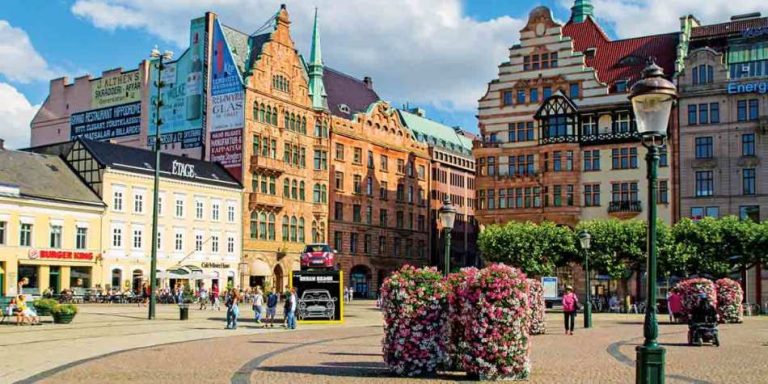
Malmö is Sweden’s third city, a lively, multicultural place with a population of about 320,000 and a bubbling restaurant scene. In the 16th century, Malmö competed with Copenhagen to be Scandinavia’s leading capital. Read more about Malmö – Sweden’s lively multicultural city.
Malmö was an important port, not far from rich fishing grounds. Today, the harbor is still busy and many of the old buildings remain. Malmöhus, the dominating castle built by King Christian III when Skåne was still part of Denmark, is Scandinavia’s oldest remaining Renaissance castle. It houses the Malmö Museer (Malmö Museums), which include the Art Museum, history exhibitions, an aquarium, the Science and Technology/Maritime Museum and the Kommendants Hus (Commander’s House).
Malmöhus is Scandinavia’s oldest remaining Renaissance castle
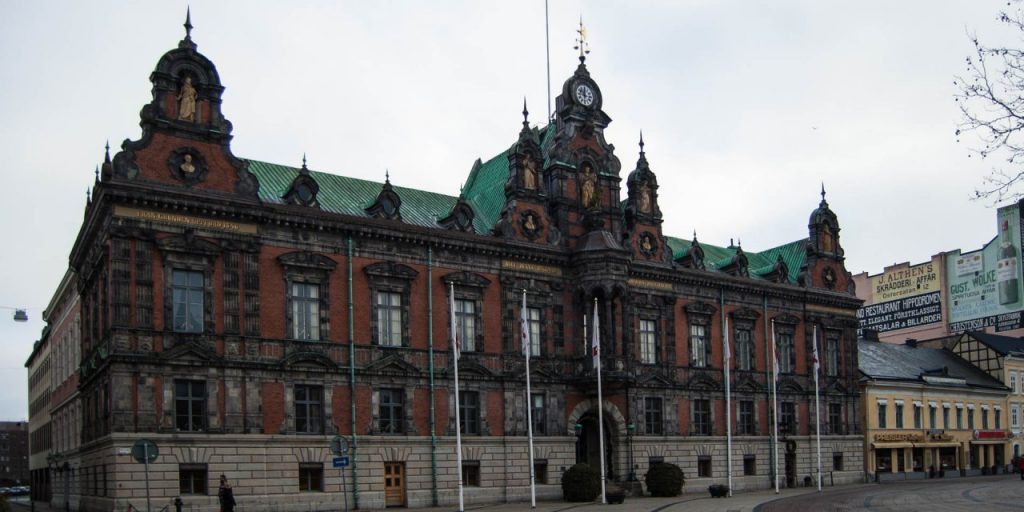
Malmö City Hall
From the same period is Rådhus (City Hall), which you will find in Stortorget, one of the largest squares in Scandinavia. It was built in 1546 in genuine Dutch Renaissance style. In 1860 it was given a facelift with niches, bays, allegorical paintings and colonnades.
Northeast from Stortorget is St. Petri Kyrka (St Peter’s Church), built in the Baltic Gothic style and dating from the 15th century, although its towers were built in the 15th century and its copper spires in 1890. This elegant cathedral features a beautiful altar area created by sculptors in 1611.
Malmö City Hall was built in 1546 in genuine Dutch Renaissance style
The Small Square
A particular idyllic place to sit and relax is Lilla Torg, with its cobblestones, carefully restored houses and 16th-century charm. Through an arch on the south side of the square is Hedmanska Gården. Once a merchant’s home and trading yard, it now houses the Form/Design Center, where Swedish industrial design and handcrafts are displayed.
Hedmanska Gården houses the Form/Design Center, where Swedish industrial design and handcrafts are displayed
Walking east from Lilla Torg, make sure you don’t miss Malmö’s exciting new cultural hub, the Moderna Museet, which opened at the end of 2009. This former power station now contains one of the most comprehensive 20th century art collections in Scandinavia, and host-changing exhibitions of local and international artists.
Turning Torso is Sweden’s tallest building at 190 meters (620 ft), designed by Spanish architect Santiago Calatrava
Malmö – Sweden’s Lively Multicultural City Malmö’s most impressive modern building is without doubt the Turning Torso. Sweden’s tallest building at 190 meters (620 ft), designed by Spanish architect Santiago Calatrava. This unique structure, which twists 90 degrees from bottom to top, has revitalized the West Harbor area of the city, now a popular summer dining spot.
Read the fascinating story about the Norwegian dance-pop-wizard Bearson (Jacob Bjørn Hansen) who moved to Los Angeles, got a record deal with America’s most important publisher of electronic music and wrote songs in Nicuragua’s jungle with Carly Rae and Tove Lo.
The producer of pop-oriented dance music, Bearson, made his first steps during the mid-2010s as a teenager. His music is characterized by relaxed rhythms and colorful melodies. He was first noticed with remixes by artists such as Susie Suh, James Bay, the Lighthouse and the Whale and Benjamin Francis Leftwich. His first two hit recordings were “Pink Medicine” (2015) and Imposter (2015).
Bearson’s music is characterized by relaxed rhythms and colorful melodies
A sought-after remix producer
However, Bearson was particularly successful with the 2016 singles “Want You” (featuring Cal) and “One Step at a Time” (featuring Nat Dunn), both of which were released through the Sony-distributed Ultra Music. Since then, he has become a sought-after remix producer for the likes of Susie Suh (“Here with Me”), Ghost Loft (“Talk to Me”), and Tove Styrke (“Ego”).
In collaboration with Utah-based teen producer, Ford, he tackled his previous track, ‘Get Lost’ (feat. Ashe). The original partnership with EDM-pop songstress Ashe occupied a tropical-pop setting that featured a soaring spectacle of Bearson’s ultra-sleek productions commanded by the pop singer’s yearning vocals.
Melding the worlds of disco, dance and electronic
In 2018, he received a co-writing credit for BØRNS’ “Second Night of Summer” and continued issuing singles through Ultra, including “Go to Sleep” and “Get Lost,” which added Kailee Morgue and Ashe to his list of vocal collaborators.
In 2018, he received a co-writing credit for BØRNS’ “Second Night of Summer”
Earlier this year, Chicago producer Whethan made his first release in a collaboration with Bearson on the single “Win you over” which enlists Irish singer SOAK. The song carries a contagious groove throughout its duration, melding the worlds of disco, dance and electronic into a smooth cohesion.
The Norwegian Dance-Pop Wizard
Not content to merely work with other artists, Bjørn-Hansen has supported like-minded talent through his Next Wave label.
The Norwegian Dance-Pop Wizard, written by Tor Kjolberg
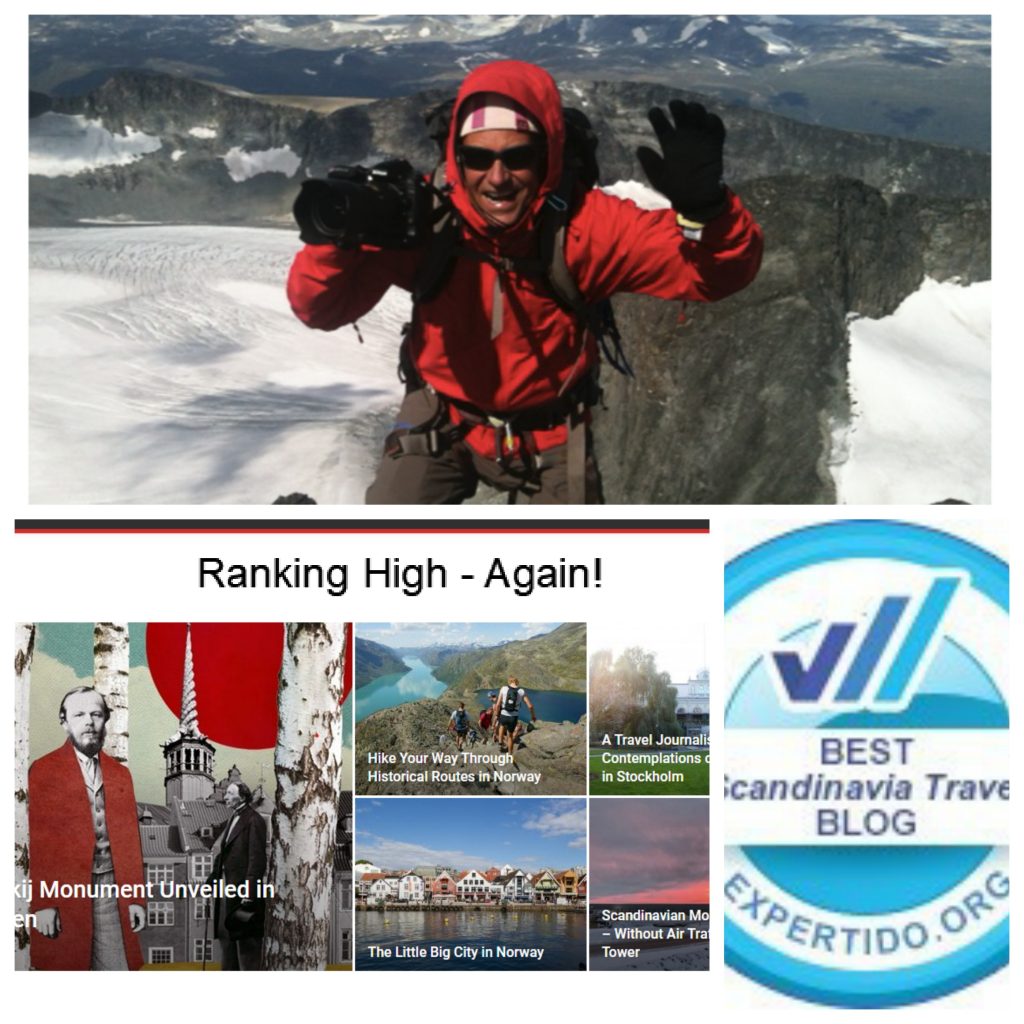
Our hard work pays. Last year Daily Scandinavian was awarded the 3rd ranking award on “Top 50 Scandinavia Travel Blog” by Feedspot. This week, it was proclamimed that we were accepted on the Expertido’s list of the 25 Best Scandinavia Travel Blogs.
Expertido’s 70-person strong team of professionals has researched and collated over 192 blogs to see which would fit their customers high hopes. “It’s not surprising that only 32 were able to reach that goal, as we only give the best suggestions,” says a spokesperson for the company.
According to Expertido, there are about 25,716 Scandinavian travel blogs on Facebook alone
The team is looking through a number of factors, and among the most crucial questions are the following:
– How well does the site protect your data?
– Is it easy to read, with proper spelling and language use?
– Is the interface clean and user-friendly?
– What kind of promotions are on the site?
– What is their social media presence like?
Although we (Daily Scandinavia) feel we have a long way to go (and several new ideas will be realized in the coming months), it is inspiring to receive an honor like this.
Travelblogs in a competitive market
According to Expertido, there are about 25,716 Scandinavian travel blogs on Facebook alone. Twitter, which is always a top choice for bloggers, has an average follower count of about 912.
Expertido’s editorial team (from top, clockwise: Julia J. Cohen, Jeff Smith, Carmen Schantz and Claudia Vergara
In its announcement, Expertido says, “We heartily recommend all the blogs listed here, as they have impressed our professionals and met our golden seal of approval, which means they can use our seal free of charge for good.”
The selected few
The company adds that it looks into many different elements other than appearance in social media and follower counts, but this metric is an important one to think about. “To synopsize, we’ve made sure that the blogs we’ve favored are highly popular on social media and will continue to grow. Expertido wishes these great blogs the best”!
Daily Scandinavian’s editor-in-chief interviewing founder of Fotografiska, Stockholm, Janne Bromann
Expertido US based Expertido was launched in 2019. The company is aiming to be one of the largest and most comprehensive product review sites in the United States, with tens of thousands of reviews and rankings in categories that include travel, fitness & outdoor equipment, personal care, infant care, electronics, home & garden, household appliances and much more.
«Unlike many other consumer portals, we focus entirely on digital commerce. We regularly browse the largest online shops such as Amazon and eBay for new product ranges, which we examine for our readers».
It’s inspiring to receive an honor like this
The winners have earned their titles
The company is not dependent on any manufacturer, brand or laboratory. Its comparison and award winners have earned these titles due to their outstanding product features – but never bought them. If there is a cooperation with a retailer, this will be clearly communicated by means of information.
The Expertido teams spend more than 5,000 hours a year, reviewing, analyzing, researching, and testing new products to provide recommendations, reviews, and guides to keep you informed.
Feature image (on top): Our photographer Terje Rakke/Nordic Life in action.
Daily Scandinavian Ranking High – Again! based on information from Expertido
Nord-Sjælland (North Zealand), north of Copenhagen, has been named the Danish Riviera. There are many reasons for this. Stunning landscapes, castles and museums combined with endless sandy beaches make North Zealand an all year-round favorite. When you add the world-renowned culinary scene and countless cultural lures, the name ‘the Danish Riviera’ is well and truly earnt.
Both locals and visitors enjoy the world-famous Louisiana Museum of Modern art as well as the traditional thatched cottages along the way. Zealand is Denmark’s biggest island and it is easy to fall in love with the northern part with scenic villages like Gilleleje, Helsingør and Hillerød. This part of Denmark has so much to offer; in addition to top art museums and historic castles you can enjoy award-winning restaurants and chic shops.
Fredensborg Castle. Photo: Kim Wyon/Visit Copenhagen
Attractions Louisiana Museum of Modern art is situated on Road 152 in Humlebæk. It is the most visited museum in Denmark, built in the 1950s. It displays artworks by renowned Danish and international artists with both permanent and temporary exhibitions. Its unique location is a reason on its own to visit the museum.
Three of Denmark’s most spectacular castles are nestled here; Fredriksborg Castle is called Denmark’s Versailles. Another spectacular building is Fredensborg Palace with its Baroque Gardens and the Valley of the Norsemen. And not least the UNESCO World Heritage site Kronborg Castle, widely known for being the set of Shakespeare’s Hamlet. In the summer there is the annual Shakespeare’s Theatre Festival.
The Maritime Museum of Denmark (adjacent to the Kronborg Castle) offers a unique experience to its visitors. The several exhibitions and installations that present the 600 years of Denmark’s maritime story must be seen from a subterranean showroom, conceived in 2013 by the renowned architects the Bjarke Ingels Group.
The old shipyard in Helsingør has been repurposed into a sprawling library and arts space, the Culture Yard.
Frederiksborg Castle is a structure built in the first decades of the 17th century by the Danish king Christian IV, is situated in Hillerød, just north of Copenhagen. Photo: Courtesy of Frederiksborg Castle/Daniel Rasmussen
On summer Saturdays, artisans, craftspeople, and farmers sell their handmade and homegrown goods at the Tisvilde flea market.
Beaches, Lakes and Forests On the northernmost coast you find three of Denmark’s most popular beaches; Tisvildeleje Beach, Dronningmølle Beach and Gudmindrup Beach. The largest beach in North Zealnad is Hornbæk Beach.
Two beautifulk gems worth visiting are Denmark’s second-largest lake, Esrum Sø surrounding Fredensborg Castle and Hornbæk lake which is in the homonymous city.
Denmark’s fourt-largest forest is Grib Forest at Bribskov. Here you should discover the hidden paths of Troldeskoven (Troll’s Forest). Enjoy the wooed nature trails in Teglstrup and Hellebæk Forest.
Where to stay The star of North Zealand is Helenekilde Badehotel, located in the charming seaside town of Tisvildeleje overlooking the Kattegat. It was built as a private summer home by a construction magnate in 1896 and acquired in 2001 by former ballet dancer Alexander Kølpin. It underwent a complete renovation in 2008 and is famous for its dynamic restaurant serving modern Nordic cuisine.
The elegant but understated inn Tisvildeleje Strandhotel offers an enjoyable stay for couples as well as for families.
Originally constructed in 1904, Hotel Hornbækhus is a beloved seaside sanctuary with 36 recently renovated whimsically decorated rooms by Danish design studio EEN. The hotel’s sister property Villa Strand with 15 rooms offers direct beach access.
Blink and you’ll miss the quaint town of Tisvilde. The sleepy hamlet has two elegant but understated inns, the Tisvildeleje Strandhotel and the Helenekilde Badehotel. The latter is the sister to Copenhagen’s buzzy Hotel Sanders. Curl up on the sprawling back deck to watch the sunset over the waves.
Cafe Hammermøllen
Wining and dining Restaurant Sletten in the idyllic town of Sletten is helmed by the chef duo behind the Michelin-starred Formel B. It offers an inventive a la carte menu of small plates that showcase seasonal local ingredients. Enjoy seasonal dishes like poached oysters, white asparagus and cod.
In a pink building standing on top of the hill in Tisvilde, you find Restaurant Tisvilde Kro. This restaurant is the work of Danish entrepreneur and multimillionaire Thorvald Stigsen (known for founding travel brands Skygate and Momondo). Two years of painstaking renovations saved this dilapidated building from demolition and made it into a swanky restaurant. On the menu: fresh-shucked oysters; zucchini blossoms stuffed with mozzarella and anchovies; burrata panzanella; white asparagus with fjord shrimp; and lingonberry sorbet.
Rabarbergaarden has a constantly changing limited menu based on produce harvested from the restaurant’s organic farm. Meat and fish dishes are available throughout the season.
Café Hammermøllen in Teglstrup is housed in a 1765 water mill in the park.
Unlike the French and Italian Riviera, the ‘Danish Riviera’ isn’t as touristic so prices haven’t hit the roof yet. It is also always the choice of finding a quieter place away from the crowd.
The Danish Riviera, compiled and written by Tor Kjolberg
In the dark November month in Stockholm, the capital of Sweden gives us many sparkly and enlightened ways to have fun and keep our minds away from the gloomy weather conditions. Read more about the glittering seasonal events in Stockholm.
The streets of Stockholm start glittering when they are dressed with the Christmas decorations, and even the Swedish movie stars shine on the red carpets of the capital’s cinemas during the Stockholm Film Festival. The light of the projectors on the screens in the theatres takes us to worlds we only have dreamed of. November in Stockholm is far from a dark time. It’s a time to see the light in different shapes.
The streets of Stockholm start glittering when they are dressed with the Christmas decorations
One million LED light
One million LED lights in over 40 streets, places and squares is launched on the 16 November. In addition, the city offers a wonderful Christmas atmosphere. Enjoy the Christmas Market at Skansen which has been an annual tradition since 1903. From 30 November, the market square is filled with food, treats and decorations and the bonfires are lit.
Christmas in Stockholm. Stockholm, Sweden
All the historical houses and farmsteads are decorated and in the town quarters you can meet skilled craftsmen. On the opening day, there will be craft demonstrations and live music in the buildings where the tables are also set for Christmas dinner. Young and old can participate in dancing around the Christmas tree and make their own Christmas decorations in the workshop.
There are several Christmas markets in Stockholm, just find the events here.
For visitors and citizens alike, a traditional Swedish Christmas buffet, “julbord”, in Stockholm is a must during the season
The traditional Swedish Christmas buffet
For visitors and citizens alike, a traditional Swedish Christmas buffet, “julbord”, in Stockholm is a must during the season. Here are our top tips on restaurants offering Christmas buffet, and some restaurants that are open for dinner during the Christmas holidays. Enjoy meatballs, Jansson’s temptation, lutfisk, gingerbread, hot glögg and much more. The season starts in late November.
For the second year in a row, Herman’s Restaurant & Trädgårdscafé is holding a 100% vegan Christmas market, filled to the brim with delicious treats, healthy products, artworks, books and much more!
Glittering Seasonal Events in Stockholm Why not come into the holiday spirit with some classic Christmas carols? Or why not design and build your own a gingerbread house? Here’s are some exciting things to do in Stockholm when Christmas comes rolling in.
Feature image (on top): Photo – Your Living City – MIKAEL SJÖBERG
Glittering Seasonal Events in Stockholm, based on material from Stockholm tourist boards