If roads could speak the Danish Hærvejen (Oxen Trail) would recount tales like few others. Throughout history this route, which starts just the other side of the German border and runs down the spine of Jutland, has borne the weight of Danish hopes – as well as livestock.
A source of great pride for modern day Denmark, many of its secrets still lie by the roadside, yet to be discovered. It is probable that the route has been trodden for millennia and an air of historical significance hangs over every part of it.
On Foot or by Bike on the Oxen Trail in Denmark For much of the way it seems little more than a dirt track, while other sections are more like modern roads. Famous for its magnificent stone bridges, the Hærvejen is ideal for hiking or biking vacations. The route is open all year, but the weather is best from May to September. The route takes about five days by hiking or two days by bike.
Whichever mode of transport you choose, you will want to stop and marvel at sights both ancient and modern. Runic stones, burial mounds and monoliths line the route and offer cryptic clues to the region’s antediluvian past.
Highligts
The historic town of Vejen – the only major settlement on the route is worth a stop. Røde Kro (the Red Inn) is a resource center for the region, and the Hairull Stone is a splendid inscribed standing stone.
The stone bridge at Immervand is symmetrical and symbolic.
For much of the way it seems little more than a dirt track, while other sections are more like modern roads
More recent history is displayed in the German World War I bunkers and the Froslev Concentration Camp, where Danish communists were imprisoned during World War II.
The tranquil Jutish countryside
The road’s elevation of some 92 m (3oo feet) in places, gives you excellent wide views of the countryside and the ridge forms the source of Denmark’s two longest rivers, the Skjernå and the Gudenå. It’s important to know that only a small part of the road is paved, and much of the rest of it makes for a pretty bumpy bicycle ride. So, make sure you have good suspension, or better still, make the journey in the manner of the ancients and walk.
The road’s elevation of some 92 m (3oo feet) in places, gives you excellent wide views of the countryside
All in all, this is a journey which can be relished as a trek through the tranquil Jutish countryside, or studied deeply like an ancient text. The choice is yours.
On Foot or by Bike on the Oxen Trail in Denmark, written by Tor Kjolberg
The Norwegian Trekking Association, established by the Norwegian banker and philanthropist Thomas Heftye, have promoted trekking for more than 150 years. Today, Den norske Turistforening is Norway’s largest outdoor life organization, with more than 260,000 members in 57 local member organizations across the country. Enjoy a spectacular Autumn in a Norwegian High Mountain Tourist Lodge
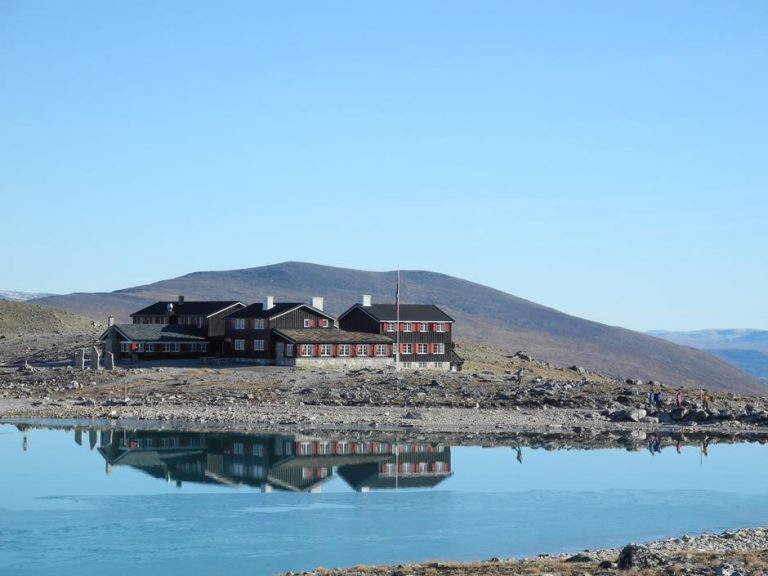
The local member associations operate 550 cabins across the country, mark routes and ski tracks. At the tourist cottage Snøheim (Snowhome), you can wander on Norway’s roof, and gather strength in authentic 1950s interiors.
Snoheim map
Popular hikes
Big brother Snøhetta towers strong three hours away and with nine 2000 meters (6,562 feet) of peaks in walking distance, Snøheim has become an institution in less than ten years.
“United and true until Dovre falls,” said the men at Eidsvold; a statement that bears witness to the importance of the mountain range in Norwegian identity and cultural history. Snøhetta rises to 2,286 meters (7,500 feet) above sea level, the highest point in Norway outside of Jotunheimen National Park. On a sunny day, the route to the top is a popular hike with views of the surrounding Dovrefjell mountain range and beyond.
Moskus in Jotunheimen
Three months’ season
Snøheim is open three months a year and has 5,000 overnight guests during that period. In addition, there are about 10,000 daily visitors. The 2019 season is from 28 June to 6 October.
Reinheim Turisthytte was built by The Norwegian Trekking Association (DNT) in 1952. When the Norwegian army developed its Hjerkinn shooting field in 1959, the military forces took over the lodge. In the autumn of 2007 DNT got the lodge back from the Army. The lodge re-opened in 2012, and the name was changed to Snøkeim. Today it is a DNT lodge with 80 bunks, in rooms with two and four bunks.
Snohheim Lodge with rainbow
Going there
Driving to the lodge is not allowed, but during the season, there is a shuttle bus from Hjerkinn, leaving five times per day in each direction.
Spectacular Autumn in a Norwegian High Mountain Tourist Lodge, written by Tor Kjolberg
The globally recognized brand Douchebags was founded by Swedish freeski legend Jon Olsson and Norwegian product designer Truls Brataas in 2012. The black, grey and red bags with thick seams and a hip look have been popular around the globe. They have been awarded internationally for both design and functionality. We wish you happy travels with award-winning Scandinavian travel gear
The history starts back in 2009, when a chance meeting in the surf at Stadt in Norway between the two founders brought the ski world something it didn’t know it needed.
The bags were an improvement to the existing bulky, heavy and awkward gear bags.
The bags with a terrible name The idea of the bags with its really terrible name was born. The Douchebags are intended to be your do-everything and go-everywhere workhorse bag. The name, to my knowledge, means a basic jerk, a person that does shitty, insensitive, and hurtful things without caring. However, the bags were an improvement to the existing bulky, heavy and awkward gear bags.
“Based on our roots in the action sports community, we are merging an urban and active lifestyle to challenge the traditional approach of luggage. Our mission is to make better journeys through smarter travel gear,” claims the Douchebags’ homepage.
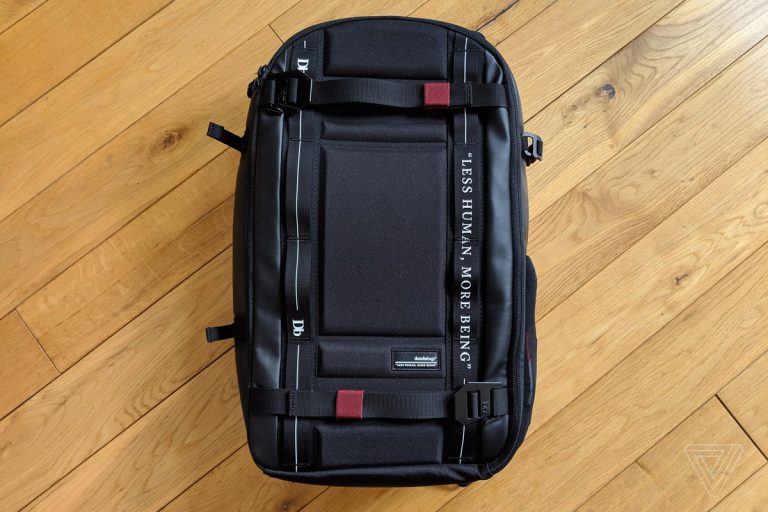
The Douchebags Backpack The Douchebags Backpack is made of hard-wearing polyester on both the inside and outside and the YKK zippers travels smoothly and easily. The exterior’s leather-like appearance is just made for looks.
While most modern backpacks have too many pockets and too many customization options, The Douchebags Backpack sidesteps all of that. With a few intelligent bits of organization, you can utilize the one enormous pocket to your own requirements. Even CES and airport security checks have been facilitated with this bag.
Happy Travels With Award-Winning Scandinavian Travel Gear
All 21 liters of this bag’s space are easily accessible and usable. Mesh pockets on the sides of the interior and inside the front flap give space for any professional’s gear that being various small tidbits or professional photographic equipment.
The Douchebags ski and board bags While most ski and board bags are bulky and heavy, the Douchebag uses the skis or boards for its skeleton–cutting 7 pounds compared to other bags. The daisy chain roll-up means you can size the bag down to the exact length of your gear, or roll it up entirely once you’re done traveling.
“We want people to be able to travel however they want, whilst bringing whatever they need,” say the founders.
The Douchebags Ski bag has knocked off nearly seven pounds compared to the typical padded and wheeled double ski bag while maintaining the protective structure.
A success story “We develop travel gear for the long journeys as well as the short ones – for the passionate people who travel the world in search of adventure,” claim the designer and ski pro.
“From the very beginning, our plan was to be a global company,” says Norwegian designer Brataas. “We knew we were entering a rigid segment without a lot of innovation. All our other gear was so developed: skis and boards – but not how you travel with it,” he adds.
Norwegian product designer Truls Brataas
Seemingly the two entrepreneurs have succeeded. The turnover last year passed NOK 100 mill (USD 11 mill). The gear is well thought-out, well-made and has proven to withstand the rigors of hurried and uncaring use.
Forgive the name, appreciate the everyday carry game. Happy travels.
Happy Travels With Award-Winning Scandinavian Travel Gear, written by Tor Kjolberg
The Sognefjord in Western Norway is the longest navigable fjord in the world and has been nicknamed “The King of the Fjords”.
Fjord is a Norwegian word which per definition is a long, narrow, deep inlet of the sea between high cliffs, typically formed by submergence of a glaciated valley. The Sognefjord is over 200 kilometers (127 miles) long, 1,308 meters (4291 feet) deep, and is surrounded by snow-capped cliffs, cascading waterfalls, emerald green lakes, fertile farmland and brightly painted houses.
The Sognefjord, map
The “Land of the Fjords” should be on every nature enthusiast’s bucket list. Norway’s fjords differ to those in other parts of the world. Due to the warming Gulf Stream, they offer a milder climate, making their waters the perfect ice-free home for fish, seals and porpoises.
King of the Fjords – in Norway
Norway has more than 1,000 fjords, the most of any country in the world. The Sognefjord holds an impressive location. It runs through many municipalities, including Solund, Hyllestad, Balestrand, Aurland and Luster.
From Gudvangen
The Sognefjord begins in the Atlantic Ocean in western Norway and winds its way inland past small, idyllic villages, fruit farms and popular hiking trails.
The Sognefjord highlights
The beautiful Gudvangen is a Unesco World Heritage site at the base of Nærøyfjord, one of the narrowest fjords in Europe and a mere branch of the spectacular Sognefjord. It measures 20 km (13 mi) in length, is only 620 feet wide at its narrowest point and is surrounded by mountains reaching 1160 meters (3805 feet). Nærøyfjord was an inspiration for the 2013 Disney movie “Frozen”.
From Nærøyfjord, Norway
The trip down Nærøyfjord is one of the most dramatic fjord trips in Europe. A sightseeing boat service runs between Gudvangen-Flåm and Aurland all year round. There is also a car ferry between Gudvangen-Kaupanger and Laerdal.
Another branch of Sognefjord is Aurlandsfjord, 29 kilometer (18 miles) long. Along the Aurlandsfjord we have the villages Undredal, Aurland and Flåm. The Aurlandsfjord continues 18 kilometer inwards to Flåm where it ends.
Flåm railway in the green nature
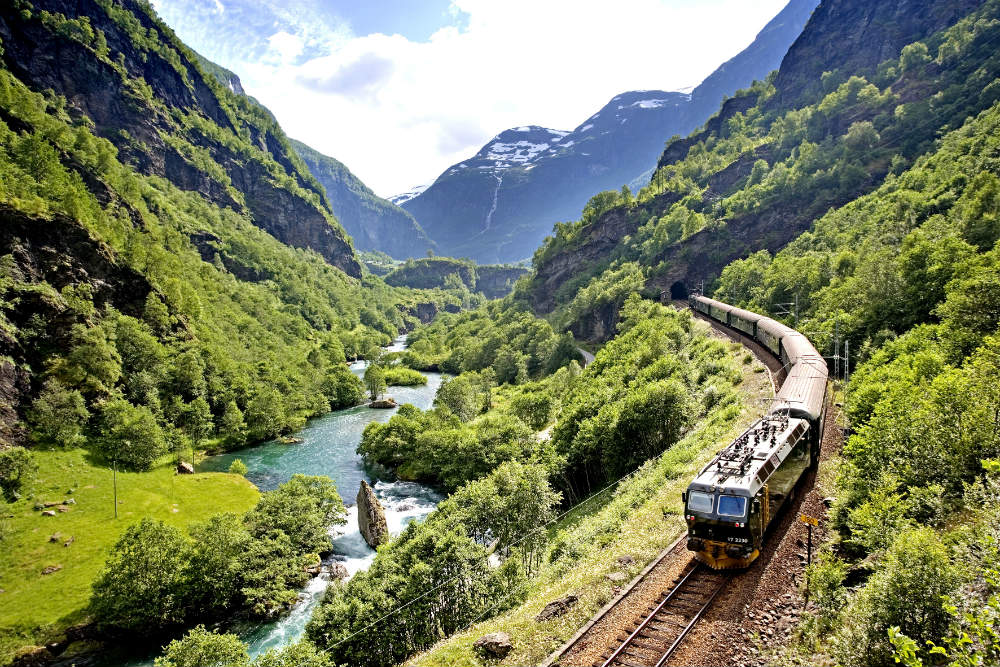
Experience the Flåm Railway, built in 1924 and first opened for steam trains in 1940 and for electric locomotives in 1944. It’s an incredible train journey from the mountain station at Myrdal on the Bergen Railway and all the way down to Flåm station on the Aurland Fjord.
Solvorn is home of Urnes Stave Church, the oldest in Norway, another UNESCO World Heritage Site and the country’s oldest hotel.
The tranquil village of Skjolden, with a population of only 200, is one of the smallest ports in the world visited by large cruise ships. It is nestled between Norways highest mountain range, Jotunheimen National Park, and two spectacular glaciers, the Nigards Glacier and the Jostedal Glacier. The park is a one-hour bus ride – through hairpin bends and steep, winding roads – from Skjolden.
The Sognefjord is over 200 kilometers (127 miles) long and, 1,308 meters deep
The power of nature The major attraction of the Sognefjord area is of course the power of its nature and all that is connected to it. You can experience it by ship, train, bus or car. The innermost half of the Sognefjord is located in southern Norway near the unofficial border between east and west.
In the olden days, the fjord itself was virtually the only thoroughfare for those wanting to come here, but modern roads have now made it easier to access the area from all corners of the country. These days if you choose the shortest routes to the fjords, you could be there within a 2-3 hour drive from Bergen, 4-5 hours from Oslo and 5-6 hours from Trondheim.
King of the Fjords – in Norway, compiled by Tor Kjolberg
Stavanger is traditionally known as the oil capital of Norway or the city closest to the Pulpit Rock. But few know that Stavanger is also Norway’s Capital of Street Art and home to the international contemporary street and urban art festival, Nuart, held annually in the city.
Since 2001, the non-profit Nuart Festival is widely considered the world’s leading celebration of Street Art among its peers. Stavanger lies on the northwest coast of the North Sea and is the fourth largest city in Norway, but as all places in the country, it’s rather small and cozy compared to other major cities in Europe. The discovery of oil in the North Sea near Stavanger changed the city enormously, not only economically but also culturally and made it a real hotspot for street art. Some of the world’s most influential artists now have their works in Stavanger.
Stavanger street art, Ella Pitr
The festival is hosted in the first week of September each year and aims to gather artists from all over the world to create new street art in the city and, more importantly, to create a discourse about art.
Norway’s Capital of Street Art
One might be struck by the high amount of street art present in and around this small town dominated by old-fashioned wooden architecture. While walking through the streets downtown, it’s impossible not to notice the many murals, paste-ups and stencils. Each year international artists leave their mark on the city’s walls, both indoor and out. The festival has turned out to be one of Europe’s most dynamic and constantly evolving public art events.
The festival is hosted in the first week of September each year and aims to gather artists from all over the world
In contradiction to the short lifespan of much street art in bigger cities, the artworks in Stavanger are often left untouched. One can still find work on the street dating back to 2006, and an evocative wheat-paste by the Brooklyn-based artist Swoon has even survived the heavy coastal weather of rain, snow and wind since 2009.
One of the biggest festivals of its kind in the world
During the festival, 5 – 8 September this year, you’ll be able to attend workshops, movie screenings, art talks, exhibitions and performances, and, of course, also watch how new street art is in the making. NuArt has become one of the biggest festivals of its kind in the world. NuArt’s consistent activity and effort to reflect the culture, as well as participate in defining it, has not only given Stavanger a global reputation for street art, but has also made the city’s population familiar with the steadily growing art form.
One might be struck by the high amount of street art present in and around this small town dominated by old-fashioned wooden architecture
The Festival raises the question, what is art? Or more importantly, what can art be? Today, artists as well as students, gallery goers and public alike find the festival a challenging and dynamic annual event. The city center is walkable and a simple stroll along the heart of town reveals some of the city’s most famous pieces.
Appreciated by the city’s population However, the festival has not been without controversies, but in general the urban artworks are widely appreciated. A survey made by the urban design company Leva back in 2010, revealed that many people in the eastern part of town, where most of the murals can be found, went so far as to change their walking patterns to pass the murals in their daily routines.
The educational aspect of the festival must also not be neglected. NuArt artists have for many years taught for one or two weeks at the Rogaland School of Art. Artist talks and workshops have been arranged together with the school and several private organizations. The national education program The Cultural Rucksack has visited hundreds of schoolchildren between the ages of 10 to 18.
Each year international artists leave their mark on the city’s walls
NuArt continues to pioneer a new breed of art exhibition that is neither institutionalized nor commercial. Without the usual restraints of curatorial and corporate preferences, the event consistently brings out the best in its invited guests.
In The NuArt gallery in town you’ll be able to find changing temporary exhibitions, as well as a shop where you can buy prints of former and existing NuArt street art.
An artist overview Among the artists that have visited Stavanger and created artwork under the auspices of Nuart are Blu, Vhils, Ron English, Blek le Rat, Aiko, C215, David Choe, Swoon, Logan Hicks, Faith 47, Martha Cooper, M-City, Word to Mother, Herakut, Dotmasters, Ernest Zacharevich, Aakash Nihalani, Evol, Strøk, Hush, Roa, Dolk, Graffiti Research Lab, Karolina Sobecka, Nick Walker, Sten & Lex, Chris Stain, Charles Krafft, Skewville, Brad Downey, Dan Witz, Ben Eine and many more.
Eloquent vandals, book-cover
Eloquent Vandals
The book Eloquent Vandals, published in 2011 by Kontur Forlag, tells the story of how the Nuart festival grew from a small underground festival in 2006 to an internationally acclaimed street art event in 2010. In addition to extensive visual material, the book contains commissioned essays and texts by Carlo McCormick, Tristan Manco, Logan Hicks, Steven Harrington & Jaime Rojo, Leon Cullinane and Martyn Reed.
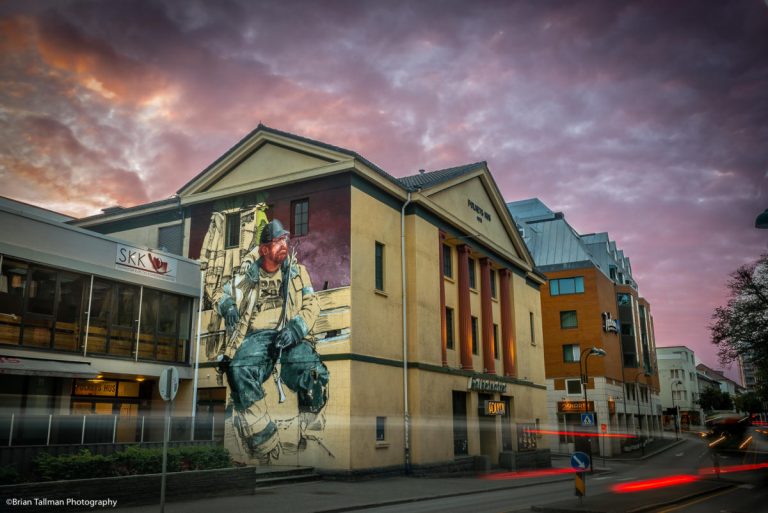
Norway’s Capital of Street Art, written by Tor Kjolberg / Feature image on top: Fintan Magee Brian Tallman Photography, copyright NuArt
Oslo Pax 2019 is a new annual peace conference and a meeting place for the development of new political ideas and strategies being established in Oslo, Norway. Today and tomorrow, the Nobel Peace Center in Oslo are bringing together young activists, politicians, scientists and Nobel Peace Prize Laureates to discuss peace and climate issues.
This year’s topic is peace and climate change, and the aim of the conference is to draw up a set of recommendations for the UN’s Climate Action Summit later this month.
Oslo Pax is a new, annual peace gather in Oslo, presented by the Nobel Peace Center and supported by the Norwegian Ministry of Foreign Affairs
A New Annual Peace Conference Established in Oslo, Norway
The conference will be chaired by Christiana Figueres, the former UN diplomat who was a driving force behind the Paris Agreement of 2015. In Oslo, she will meet young activists, political leaders and experts in a variety of fields.
The conference will be chaired by Christiana Figueres, the former UN diplomat who was a driving force behind the Paris Agreement of 2015
Together they will propose ways to reduce the negative effects of climate change on peace and security in the world. The Oslo Pax final communique will be presented to UN Secretary-General António Guterres during the Climate Action Summit on 23 September.
Important to involve young people
“The worldwide wave of climate strikes has shown that it is the younger generation who are succeeding in putting the climate on the global agenda. It is important that young people are involved in both discussions about and the formulation of the policies that will shape the future,” says Liv Tørres, executive director of the Nobel Peace Center.
The young Norwegian climate activist Penelope Lea is one the speakers
Important to identify solutions
The young Norwegian climate activist Penelope Lea is one the speakers who will take to the stage during the two-day conference. Another is Kelsey Juliana. who have sued the US government over the climate change crises. Nobel Peace Prize laureate Tawakkol Karman, the president of the Norwegian Red Cross Robert Mood and Kristin Halvosen, head of Cicero – the Centre for International Climate Research will be joining these two for discussions.
Nobel Peace Prize laureate Tawakkol Karman will be joining for discussions
It is important to identify solutions that can stop climate change leading to more war and conflict. Members of the audience will be invited to participate in the formulation of a final communique that will be presented at the UN’s Climate Action Summit on 23 September.
A different kind of peace conference
“We want to stage a different kind of peace conference – with the aim of creating real change and results. We hope that everyone who is concerned about climate change and wants to help prevent it causing more war and conflict in the world will join in this call for action.”
Oslo Pax Oslo Pax is a new, annual peace gather in Oslo, presented by the Nobel Peace Center and supported by the Norwegian Ministry of Foreign Affairs.
Nobel Peace Center is one of Norway’s most visited museums, with approximately 250.000 visitors per year. It presents the story of Alfred Nobel, the Nobel Peace Prize laureates and their work and is situated in the heart of Oslo, near the City Hall.
A New Annual Peace Conference Established in Oslo, Norway, based on a press release from the Nobel Peace Center.
A major highlight of Danish Zealand is the town of Roskilde, the island’s second-largest town, 20 minutes by train west of Copenhagen. The wonderful Cathedral, built in 1170, is the burial place of generations of Danish monarchs and a Unesco World Heritage site. The Danish Viking Town is therefore an appropriate description of Roskilde.
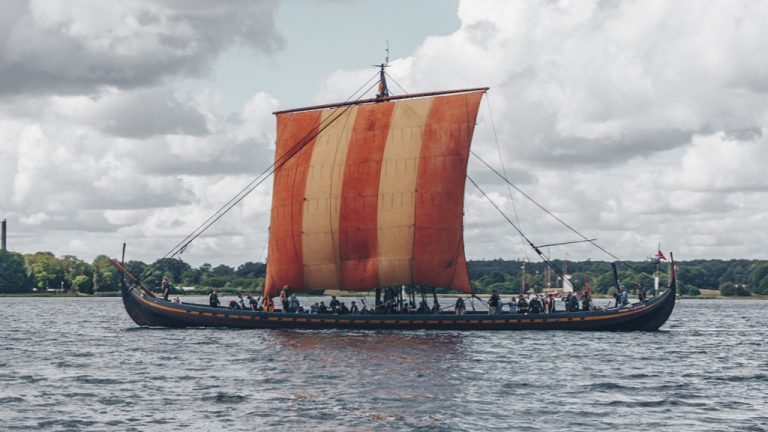
The Danish Viking Town The Viking Ship Museum has five superbly restored ships, including a dreaded Viking man of war, found in 1962 at the mouth of Roskildefjord – they were sunk by the 11th-century defenders of Roskilde to block the fjord against enemy attack.
Educating researches
The Viking Ship Museum also conducts research and educates researchers in the fields of maritime history, marine archaeology and experimental archaeology. Various academic conferences are held here and there is a research library in association with the museum.
Costumed recreators demonstrate Viking crafts and the restaurant has mjød (mead) to quaff.
The Viking Ship Museum has five superbly restored ships, including a dreaded Viking man of war, found in 1962
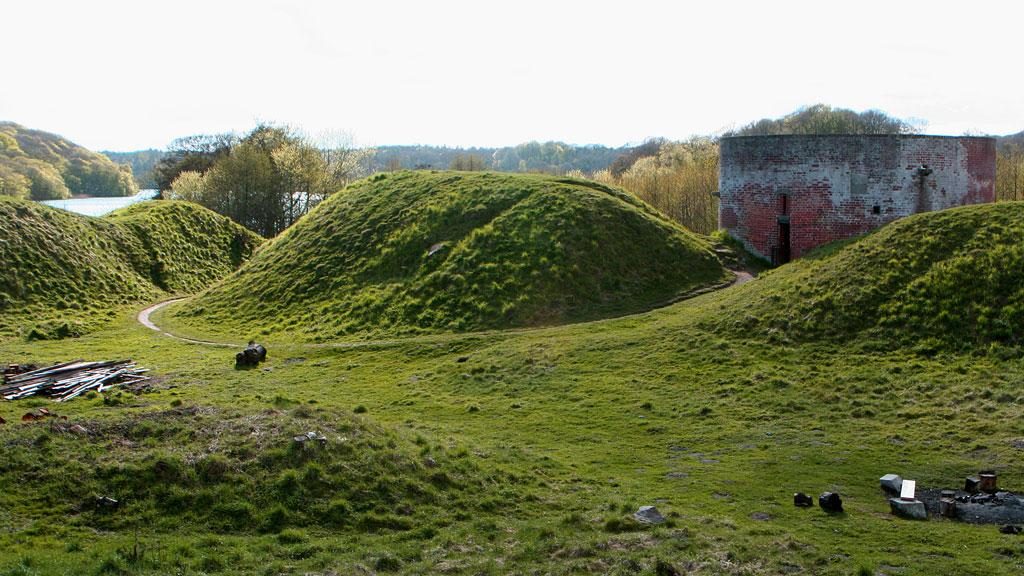
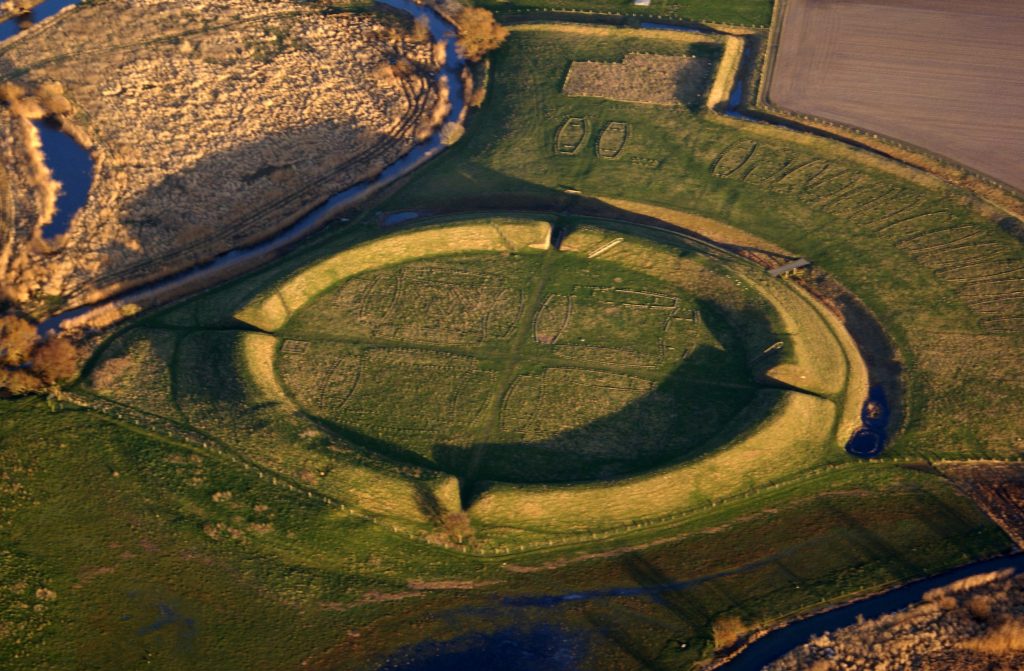
The Viking Fortress near Slagelse Vikingeborgen Trælleborg, near Slagelse in western Zealand, is an abandoned Viking fortress some 1,000 years old. It was once a huge fortified camp that housed 1,000 Vikings, and one of the houses has been reconstructed.
A Viking ring fortress, or Trelleborg-type fortress, is a type of circular fort of a special design, built in Scandinavia in the Viking Age. They are also known simply as Trelleborgs. All Trelleborgs have a strictly circular shape, with roads and gates pointing in the four cardinal directions. These common structures are sometimes partially encircled by advanced ramparts, but these additions are not always circular.
There are a total of seven known Viking ring fortresses at present, located in Denmark and Scania, Sweden. Most of the seven Trelleborgs have been dated to the reign of Harald Bluetooth of Denmark (died 986).
“We are the world’s only manned, amateur space program. We’re located in Copenhagen with followers from all over the world,” proclaims Copenhagen Suborbitals’ webpage. “One of us will fly into space.”
To send a human being past the Karman line, or 100km above sea level – the accepted boundary between Earth’s atmosphere and outer space – with a rocket built from scratch is Copenhagen Suborbitals’ ambitious volunteer space program.
World’s only amateur space program
The world’s only amateur space program was set up in 2008 with the aim of achieving a manned suborbital space flight. Since 2011, the group of volunteer space engineers has built and flown 6 homebuilt rockets and space capsules from a ship in the Baltic Sea.
The world’s only amateur space program was set up on 2008
One of its original founders was Peter Madsen, who was convicted last year of murdering Swdish journalist Kim Wall. He left Copenhagen Suborbitals in 2014 and was not involved with the project after this time.
Scandinavian DIY Rocket Scientists
The Copenhagen suborbitals are unpaid volunteers and funded by donations. Individual donators from all over the world share the members’ dreams of amateur spaceflights.
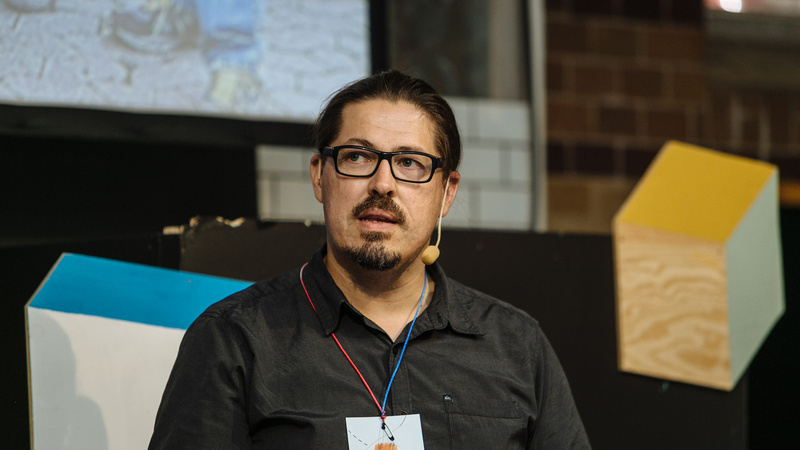
Mads Wilson, Communications Lead for Copenhagen Suborbitals.
“If you were to compare the way we operate with Nasa or ESA, or some of the big government agencies, the comparison is absurd,” says team member Mads Wilson, Communications Lead for Copenhagen Suborbitals. “Our total annual budget is less than ten per cent on what Nasa spends on coffee for their employees.”
50-plus volunteers
The non-profit program is staffed entirely by 50-60 volunteer specialists, and is wholly crowdfunded. For practical and cost reasons most of the test launches take place in the military test areas at sea.
Their control vessel M/V Vostok arrived a cold December morning in 2012 after a 30-hours and 200 nautical miles journey from Norway. During the tour the ship was boarded, during a check stop, by the Swedish coast guard.
. Copenhagen Suborbitals is the only space organization that launches rockets from a sailing platform in international waters
Launching rockets from sailing platforms
The plan is to fly a space capsule with a designated astronaut straight up to just over the Karman line, from where it falls free straight back and land by parachute in the sea. Copenhagen Suborbitals is the only space organization that launches rockets from a sailing platform in international waters, since it’s virtually impossible to get permission to do it from the ground in any country.
Mads Wilson has a degree in Physics and Computer Science and is an IT consultant. He has been in the advertising business for many years in the technical side of advertising. He heard about this project locally and had always been fascinated with space – the rest is history.
Guidelines
“Our guiding principle is to build space craft as simple and cheap as possible. The systems just need to be good enough, not extremely efficient, since we’ll fly a person only just over the edge of space. This allows us to use low-tech production methods in the workshop, and to avoid expensive, exotic materials,” proclaims their homepage.
Scandinavian DIY Rocket Scientists, written by Tor Kjolberg
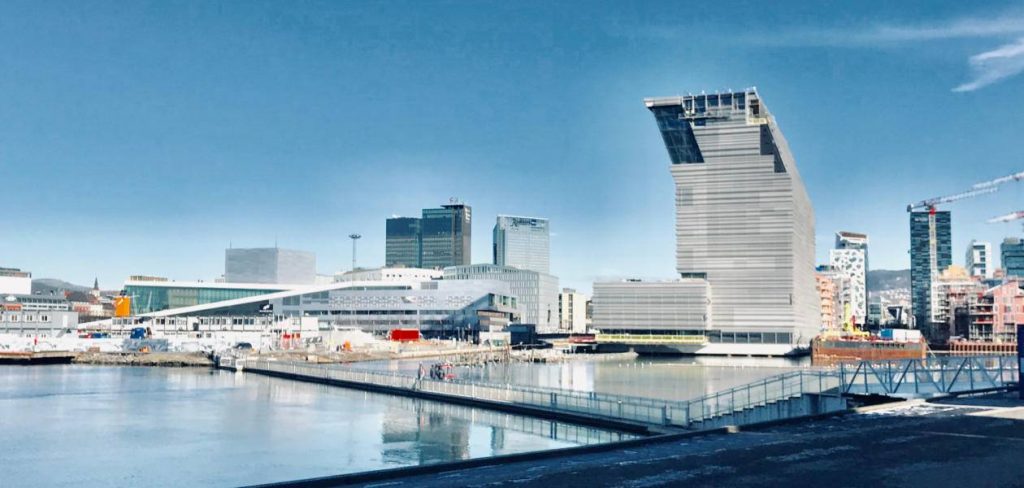
Large parts of the Munch collection have never been displayed in recent times. When the new Munch Museum opens in Oslo next year, old treasures from the Edvard Munch collection will be brought out of the vaults.
Among them are also sketches showing how “The Scream” looked before the world-famous version. Though the Norwegian artist is known for a single image, he was one of the most prolific, innovative and influential figures in modern art.
“The Scream quickly became a symbol of modern malaise after it was first painted in 1893. However, Edvard Munch made three more versions by 1910, one of which would go on to sell for a record-breaking $119.9 million at Sotheby’s in 2012.
The Munch Museum Oslo’s Collection The museum’s collection of Edvard Munch’s art counts over 25,000 works, of which well over half are collected at the Munch Museum at Tøyen in Oslo. When Edvard Munch, Norway’s only artist of international format, died in 1944 at the age of 80, it became known that he had bequeathed everything he owned to the City of Oslo. An intricate handwriting from 18 April 1940, proves that Edvard Munch leaves his entire art collection to Oslo municipality. Behind locked doors on the second floor of his house, the authorities discovered the document.
Some years ago, the museum also gathered pictures of all the artist’s drawings in a new database which now have been published for unrestricted use.
Edvard Munch, Death at the Helmet
His paintings were his children
Born in December 12, 1863 near rural Løten, Norway, the artist experienced a long and prolific career. Edvard Munch never married and hated to be separated from his paintings which he called his children. The last 27 years of his life he lived alone on his estate outside Oslo, increasingly revered and increasingly isolated. He surrounded himself with work that dated to the start of his long career.
The City of Oslo inherited 1,100 paintings, 15,500 prints, 4,700 drawings and six sculptures. Woodcuts, etchings, lithographs, lithographic stones, woodcut blocks, copperplates, notebooks, documents, photographs, tools, supplies and furniture were also part of the legacy. Edvard Munch’s reputation as one of the greatest visual artists in art history makes the collection unique.
In 1906, Munch painted a posthumous portrait of famous German philosopher Friedrich Nietzsche
A tragic childhood
The first years of Edvard’s life were a tragedy. His mother died from tuberculosis in 1868, when he was just five years old. His older sister, Sophia, died from the same disease nine years later. But life had to go on and initially he trained as an engineer at the Royal Technical College in Kristiania (now Oslo). After a year he dropped out to become a painter instead. He studied at the Kristiania Royal School of Art and Design, and in 1883 he made his debut at a local Industry and Art Exhibition. With financial support from his community, he managed to exhibit in Antwerp and study in Paris in his early twenties.
Edvard Munch, the artist From 1892 to 1896, Munch lived in Berlin. The city’s intellectual community, which included Swedish playwright August Strindberg and Norwegian sculptor Gustav Vigeland, furthered his interest in exploring the joys and disappointments of love. In 1906, Munch even painted a posthumous portrait of famous German philosopher Friedrich Nietzsche, whose nihilist beliefs coincide with the Scream’s depiction of existential dread.
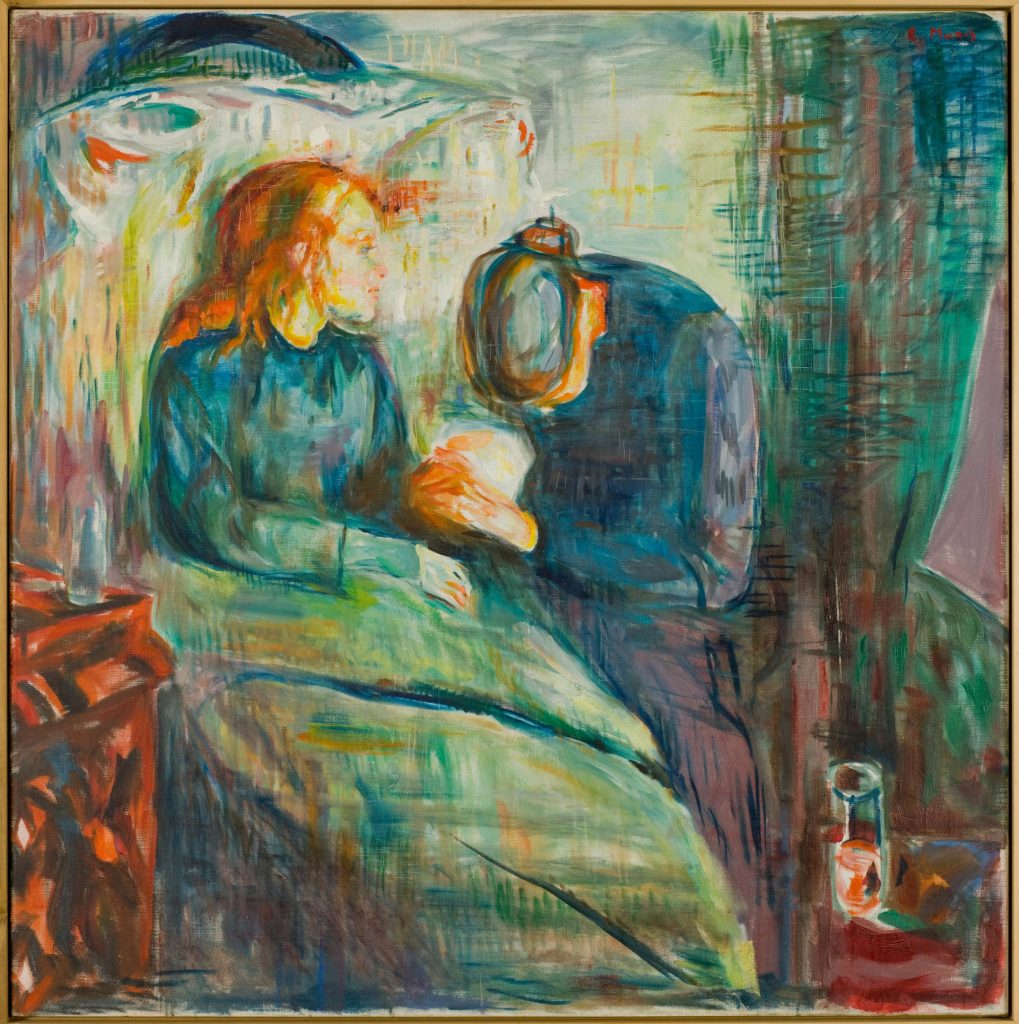
The artist’s father, a military physician, passed away in 1889. So, it is understandable that much of Munch’s work focuses on loss. “The Sick Child” (1885) for instance shows a woman kneeling at the bedside of a pale, red-haired girl, appearing to mourn an impending death.
The new Munch Museum makes it possible to display a larger part of the artist’s collection for national and international audiences
Days and nights among artists
In the book “Days and nights amongst artists”, Christian Skredsvig, artist and a friend of Edvard Munch, describes how Munch became frustrated by how people would only notice the clouds in his pictures and not the anxiety:
«He had long wanted to paint his memory of a sunset, red as blood. No, it was clotted blood. But no one would feel the same way as him. Everyone would think of clouds. He spoke with great sadness about this event that had struck him with fear. Sadness, because the means of art were inadequate…» wrote Skredsvig.
Munch wrote extensively
“My fear of life is necessary to me, as is my illness,” Edvard Munch once wrote. “Without anxiety and illness, I am a ship without a rudder….My sufferings are part of myself and my art. They are indistinguishable from me, and their destruction would destroy my art.” Much of Munch’s work can be seen as self-portraiture.
Munch wrote extensively on what was perhaps his favorite subject: himself. He penned some 13,000 pages of autobiographical notes, novel and short story fragments, prose, poems, correspondence, and meditations on art. Munch’s melancholy writings often focused on the same topics as many of his paintings: nature, isolation, and longing.
“Death at the helm” (1803) is one of Munch’s lesser-known motives, despite being painted the same year as “The Scream.” Nevertheless, the painting has thematic commonalities. Munch defined how we see our own age—wracked with anxiety and uncertainty.
The sick child, by Edvard Munch
The Edvard Munch Collection Out of the Vaults in Oslo
The new Munch Museum makes it possible to display a larger part of the artist’s collection for national and international audiences. An inspiration has been the Van Gogh Museum in Amsterdam, which has contributed a lot to Van Gogh’s fame.
The new Munch Museum will consist of three parts, one with permanent and changing exhibitions of Munch’s art, one with heavily relevant exhibitions by Munch’s contemporary artist colleagues and one with contemporary art by the model of the Stenersen Museum in Oslo.
The passionate museum director Stein-Olav Henrichen says that everything Edvard Munch ever created will be on display at the new museum – but of course not simultaneously.
The Edvard Munch Collection Out of the Vaults in Oslo, written by Tor Kjolberg
It all started in a small Danish town in 1929, just before the second world war. Holger Nielsen was newly married and owned a small engineering company that was not making much money. One day his wife asked him to make a rubbish bin for her newly opened hairdressing salon. Eventually, the Danish rubbish bin should conquer the world.
With only his wife’s need in mind he made just one pedal bin. But when both the local dentist and the doctor said they also wanted one, Holger Nielsen started mass producing them. They were called VIPP bins, and over the next 50 years the sturdy pedal bin became a familiar sight in Danish hairdressers, hospitals and surgeries.
The youngest daughter takes over the company
Holger Nielsen was a conservative man, who could never imagine that any of his daughters would take over his engineering workshop. When he died suddenly in 1992, his wife prepared to sell the company. But her youngest daughter, Jette Egelund, could not bear to see her father’s life work disappear.
She took over the company with no previous knowledge of engineering. The job was tough, both financially and personally. The problem mounted up. In the first difficult years she had only a couple of employees. Her marriage broke down, as did the metal press at the workshop. Butte Jette refused to give up.
For she had the vision: to see her father’s rubbish bin become a designer product.
Vipp in museum
Danish Rubbish Bin Conquers the World Jette’s perseverance was eventually rewarded. A visit to Terence Conran in London did not at first lead to a positive response. But Jette was stubborn. She left a bin behind at his office. A week later came the first order for 30 pedal bins!
After a fantastic period of growth, VIPP bins are now sold in designer stores in Europe and the USA. It has even ended up being put in a museum, side by side with other design icons. In 2009, the bin was accepted into the permanent design collection at the MoMA in New York – the only place in the world where the bin is just for decoration.
Danish Rubbish Bin Conquers the World, written by Tor Kjolberg