
A Train Journey from Trondheim to Bodø in Norway

0

The train journey from Trondheim to Bodø in Norway is an incredibly beautiful journey and, when taken in summer, the light evenings ensure that you miss nothing.

The train transports you through pine forests, across foothills and alongside fjords and rivers. The sea of green and blue is broken only by the occasional red wooden farmstead.

A Train Journey from Trondheim to Bodø in Norway
Arctic Circle in Northern Norway

The Arctic Circle
It is a curious feeling to head towards something that you will never see, but the Arctic Circle announces itself in many ways. As you head north, the light changes imperceptibly. The snow, which was confined to the mountain tops moves ever nearer, whilst on the track the wooden tunnels, constructed to protect the line from avalanches, grow more numerous.

A Train Journey from Trondheim to Bodø in Norway
As you head north, the light changes imperceptibly

As the sign of human habitation thin out and the mountains get more rugged, the landscape becomes ever more hypnotic. Thoughts turn to wildlife watching and there is every chance that you will spot a majestic reindeer in its natural surroundings.

Related: Cycling Vacation in Lofoten Islands

Curious Rituals occur on the train journey form Trondheim to Bodø in Norway
The Arctic Circle is heralded not only by a hoot of the train’s whistle and two cairns on the side of the track, but by curious rituals on the train. A party spirit suddenly erupts, some partake in illicit drinking, while others share food and sometimes kissing breaks out as though it were New Year’s Eve.

It does feel significant to have crossed ‘the line’ and it is always interesting to watch the impromptu ceremonies that mark it.

A Train Journey from Trondheim to Bodø in Norway
Train crossing the Arctic Circle

More than just a train journey
The final steep decent takes you from Arctic tundra towards the blue Atlantic Ocean. This is as far north as the railway goes and as the charming town of Bodø comes into view, you are left with the feeling that you have taken more than just a train journey.

The journey takes around ten hours and takes you over three marvelous mountain ranges. If you are lucky enough or stay long enough – you may experience the Northern Lights (September to March).

Related: Hard Core Fishing and Champagne in Norway

A Train Journey from Trondheim to Bodø in Norway
Bodø Cathedral

Don’t miss Bodø Domkirke, a modern cathedral in Gothic style and Nordlandsmuseet, a museum recording local life.

If you are travelling in high summer (June – August) the train can get crowded. Advance booking of a hotel room in Bodø is recommended.

A Train Journey from Trondheim to Bodø in Norway, written by Tor Kjolberg

Swedish Tomb Raider Star Alicia Vikander aka Mrs. Google

On a press tour earlier this year, Swedish Tomb Raider star and Oscar winner (2016) Alicia Vikander shared a lot if wacky facts about herself. Normally notoriously private about her personal life, on this tour the actress opened up about her physical attributes as well as her nicknames. One of her many nicknames has been Mrs. Google.

On the tour the former ballerina from Gothenburg gave countless of interviews on TV, for magazines and the general media that followed her wherever she went.

Swedish Tomb Raider Star Alicia Vikander aka Mrs. Google
Alicia Vikander as Anna Karenina

Vikander studied Danish for her role in “A Royal Affair”
Alicia Vikander got her break in Swedish TV-drama “Andrea Avenyn” and she learned Danish especially for her heartbreaking turn as Queen Caroline Mathilde in “A Royal Affair” in 2012. In 2012 she also played the role of Anna Karenina. In 2015 she kicked off with starring roles in “Testament of Youth”, a First World War memoir, and as a robot in Alex Garland’s directorial debut, “Ex Machina”.

Read also: The Best of Bergman

Swedish Tomb Raider Star Alicia Vikander aka Mrs. Google
Vikander admits that her friends sometimes call her “Mrs. Google”.

Later she appeared opposite Eddie Redmayne on “The Danish Girl”, a true story about the first ever sex change. After this it was time to get used to this face. She appeared opposite Michael Fassbender in “The Light Between Oceans”, in director Derek Cianfrance’s “Blue Valentine” and in Guy Ritchie’s “The Man form U.N.C.L.E.”


Swedish Tomb Raider Star Alicia Vikander

When she took her first action-hero role as Lara Croft in the game series “Tomb Raider” internet trolls immediately began to attack Vikander’s physique. Lara Croft was not known only for her daring and athleticism, but also for her status as a video game sex symbol with a sizeable bust. Vikander doesn’t exactly fit into the big-breast mold of the original character, which Angelina Jolie originated for the big-screen role in 2001, Twitter became home to a series of rude comments about her breasts being too small for the character.

Read also: Sweden’s Latest Hit Novel

Swedish Tomb Raider Star Alicia Vikander aka Mrs. Google
Alicia Vikander won an Oscar in 2016

Vikander is, however, good at logical thinking. In fact, she told the media that she once went to s school for three years to learn how to play chess.

Swedish Tomb Raider Star Alicia Vikander aka Mrs. Google
Alicia Vikander and her husband Michael Fassbender

Vikander was kidnapped
Usually Vikander keeps a low profile, but being attacked on Twitter, she openly told the media about her nicknames, her childhood dreams and even details about her bachelorette party.

In October 2017 in Ibiza, a bachelorette party was conducted in secret since the relationship between her and Michael Fassbender was so hush hush that not even Vikander herself knew about it. Vikander was in fact kidnapped by her friends for a full 24 hours.

Read also: A Mark Wahlberg Portrait

Swedish Tomb Raider Star Alicia Vikander aka Mrs. Google

Most people assume that Vikander met her now-husband Michael Fassbender on the set of “The Light Between Oceans”. But according to Wired’s Autocomplete interview, she met her betrothed on the dance floor.

Alicia Vikander aka Mrs. Google is good at planning
Vikander admits that her friends sometimes call her “Mrs. Google”. The reason, she says, is that she’s really good at Googling answers on anything, especially when planning travels. Alicia Vikander has always liked making plans. When she was 12 years old, she looked at the year 2018 on a calendar and thought about what her life would be like then.

Swedish Tomb Raider Star Alicia Vikander aka Mrs. Google
Alicia Vikander has been said to be the biggest Swedish export since IKEA.

In fact, she really thought she would have a career as a florist. But when she appeared on a Swedish lip sync talent show by the age of 8 and won first place, she was telling everyone she’d be acting or singing for the rest of her life.

“Life has only gone better than I’d imagined,” admits Vikander, who has been said to be the biggest Swedish export since IKEA.

Swedish Tomb Raider Star Alicia Vikander aka Mrs. Google, written by Tor Kjolberg

A Little Piece of Japan in Denmark

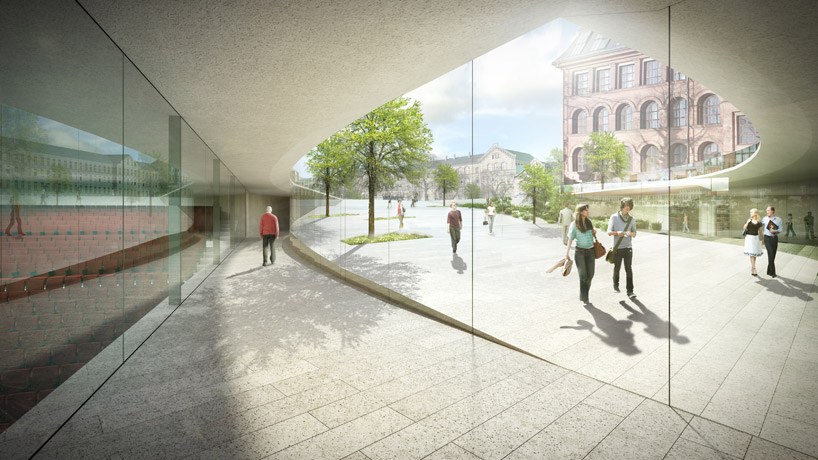
Japanese design studio Kengo Kuma & associates has recently won a competition to design a new waterfront aquatic center and harbor bath at Copenhagen’s Paper Island. It will be a little piece of Japan in Denmark.

The design aims to highlight the significance of water in the history, culture and vibrant urban life in the capital of Denmark. The Copenhagen City Council praises the project having a unique cone shaped form.

A Little Piece of Japan in Denmark
The Copenhagen City Council praises the project having a unique cone shaped form

The project combines facilities for sports associations, harbor baths and indoor pools framed by brick pyramids. The glazed base of the 5,000-square-metre building will afford indoor bathers panoramic views out to the harbor. An outdoor pool along the edge of the main canal terraces down to meet the sea at Copenhagen’s Paper Island.

A Little Piece of Japan in Denmark
The glazed base of the 5,000-square-metre building will afford indoor bathers panoramic views out to the harbor

Waterfront Cultural Center – a little piece of Japan in Denmark
With the Waterfront Culture Center the architects wanted to create an experience, and not just a standalone object; it will be a landscape combining art and architecture that are unified and defined by the water. An important element has been reflection of the water’s light and shadows, steam and flow that appeal to human senses.

Related: One Year Anniversary for Danish Design Hotel in Japan

A Little Piece of Japan in Denmark
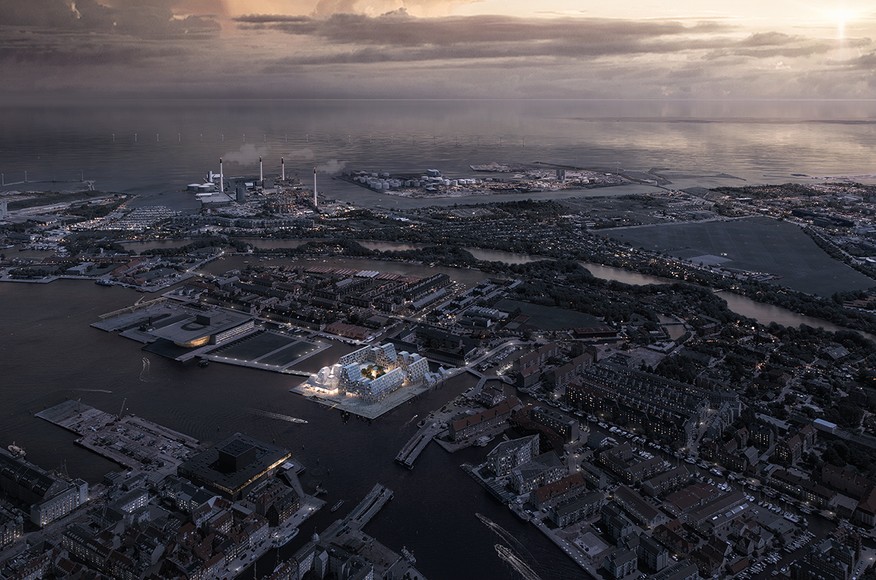
Christianholm is a part of COBE’s regeneration of the area, an artificial landmass known as Paper Island

The pyramid forms were a very deliberate choice by Kengo Kuma and Associates to work with the roof profile of Christianholm without mimicking it. However, the building will be multicultural with no single front, allowing it to be accessible from various directions.

A Little Piece of Japan in Denmark
“Our focus in design is to create an experience, and not just a standalone object, ” said the project’s lead architect Yuki Ikeguchi

The Paper Island ion Copenhagen
It offers a spontaneous, open and tangible space that carries the memory of the vibrant and dynamic nature pf the paper island. Christianholm is a part of COBE’s regeneration of the area, an artificial landmass known as Paper Island because it was once used by the Danish press to store their reams of newsprint.

The haptic texture of the interior and exterior will be further exaggerated by the use of brick and the warm, natural earthy tones that will relate to the traditional Danish crafts.

Related: Japonism in Scandinavia

A Little Piece of Japan in Denmark
The pyramid forms were a very deliberate choice by Kengo Kuma and Associates to work with the roof profile of Christianholm

Japanese-inspired architecture in Copenhagen
Kengo Kuma’s office won the competition to design Water Culture House, in collaboration with Danish architects Cornelius Vöge and engineers Søren Jensen.

Related: Nippon Art by a Norwegian Artist

“Our focus in design is to create an experience, and not just a standalone object, in the form of the landscape, art and architecture that are unified and defined by the water,” said the project’s lead architect Yuki Ikeguchi in a statement.

The Waterfront Cultural Center is scheduled to be opened in 2021.

A Little Piece of Japan in Denmark, written by Tor Kjolberg

Danish Royalty Opened the Dior 2019 Menswear Show

Prince Nicolai of Denmark was invited by fashion designer Kim Jones to open the Dior Spring 2019 menswear collection. The Danish royalty is a professional mannequin and made appearance on the catwalk dressed in exquisite Dior outfits.

British fashion designer Kin Jones, whose mother is Danish, had invited Prince Nicolai of Denmark to start the show dressed in the collection’s relaxed suiting.

Danish Royalty Opened the Dior 2019 Menswear Show
Prince Nicolai of Denmark at the catwalk for Dior

Prince and model
In 2017 Prince Nicolai signed with Scoop Models in Denmark and generated buzz when he walked for Burberry’s Christopher Bayley’s collection. Being a prince and a Danish Royalty doesn’t hurt but the tall, handsome young man would most likely have had success as a model without having the title Prince of Denmark.

As seventh in line for the throne, Prince Nicolai is free to mannequin full-time without having to fret about any of the restrictions generally related to royal life. This Dior job is probably only the beginning of a magnificent career.

About Prince Nicolai of Denmark
Prince Nikolai was born in Copenhagen on 28 August 1999. He is the eldest grandchild of Queen Margrethe II of Denmark and her husband, Prince Henrik. In addition, the prince is of Chinese descent, as he is a great-great-grandson of Mary Ho Li from Guangdong, China.

Danish Royalty Opened the Dior 2019 Menswear Show
Prince Nicolai of Denmark / Photo: Steen Borrgaard, Royal Danish Court

His godparents are the Crown Prince of Denmark (paternal uncle), Nicola Baird (maternal aunt), the Earl of Wessex, Peter Steenstrup, and Camilla Flint.

After their divorce, Prince Joachim and Alexandra had joint custody of Prince Nikolai and Prince Felix.

Danish Royalty Opened the Dior 2019 Menswear Collection, written by Tor Kjolberg

Scandinavian Mussel

Scandinavian mussel (Mytilus edulis) are regarded with some suspicion by most northerners; their strange, fleshy appearance, paired with ignorance of their sweet juiciness, salty flavory taste and relative cheapness keeps far too many from eating them.

And maybe, despite countless recipes, you have to know how – it’s daunting to attack a bag of mussels if you haven’t seen it done.

Scandinavian Mussel
Scandinavian mussel shell

Scandinavians love mussels
Stone age northerners were not such picky eaters; they amassed countless heaps of mollusc shells (the koeckenmoeddin), ample proof that we were dependent on  marine creatures; and ate just everything in the animal kingdom.

Related: Scandinavian Salmon

Scandinavian Mussel
There are lots of mussels in northern waters

But those of us who do eat mussels love them. Their flavor is indispensable in fish dishes, soups and sauces. They are cheap and easy to prepare, and a very sociable thing to eat. You fed a certain togetherness with the other people around the table or camp fire, everyone bathed in mussel juices, emptied shells heaping up in a deliciously uncivilized manner.

Wild Scandinavian mussels
There are lots of mussels in northern waters, including blue and knife mussels, sweet and fine from the cold waters that deduce the speed of their growth.

We pick wild mussels in tidal waters, from crevices, and poles, where you can gather as many as you can eat in a very short while. Wild mussels must be picked in areas where bathing is considered safe, which means far from sewers and polluting operations, as mussels can’t choose what they feed on, and can be full of nasty things.

Related: Norwegian Crow’s Balls

Knife mussels are abundant in some areas, but they are not gathered commercially. If you can catch them you have to be very quick about it, or they puff themselves deep into the sand, as they sense the vibrations of your feet on the ground.

Scandinavian Mussel
Blue wild mussels in water

Appearance and taste of Scandinavian mussel
Blue mussels are mostly farmed nowadays, attached to ropes where they feed on small larvae and plankton floating in the water. This means that there is no sand in them, and they are a uniform size. They also have thinner shells than the wild mussels. All mussels taste more or less the same – sweet, salty, fleshy and appetizing.

Buying and storing
The good thing is that cultivated mussels are available all year round and are also very safe, with none of the potential health risks of wild ones; being free of sand they are also much easier to clean.

Related: Scandinavian Fish Roe

Mussels must be alive when you buy them, if not necessarily when you eat them. The shells must be smooth, shiny and whole – cracked mussels are usually dead, and there is no telling for how long. Seaweed and other stuff on the shells does not matter.

Scandinavian Mussel
Scandinavian mussel party

Different species have very different shells, but what you must always look for in live mussels are shells that are tightly shut, or shut immediately if you tap them; if they don’t, they are not fit for eating and must be thrown away. Cooked mussels that have not opened up are probably filled with mud and must be thrown away.

Prepare mussels on the day that you buy or gather them. (Once cooked, they can keep in the fridge for a couple of days.) Wild mussels need a good scrub, and you’ll need to cut off all the fiddly little threads (beards), that they use to cling to the rocks. Cultivated or line mussels just need a quick wash in a bowl of cold water. Check that every single mussel is lightly closed before you cook them.

Avoid frozen mussels as they are always rubbery.

Scandinavian Mussel
Scandinavian mussel dish

Culinary uses
Mussels have two missions in the kitchen; the succulent flesh (well, succulent if not cooked for too long) and the juices. The latter, when boiled to a washing-up-water-colored essence, taste like a holiday at the seaside and are pure gold in any soup, risotto, stew or sauce containing any kind of marine creature. If it’s the juices you are after, you might have to surrender the mussels themselves, and boil them for too long to make good eating, in order to extract most of the taste.

Raw mussels are easy to hot smoke, and this is a lovely way to spend a summer evening on the beach. Or simply bake them on a bed of seaweed in a bonfire on the sand. Remember to bring lemon.

Feature image (on top) Photo: Jonas Ingman

Scandinavian Mussel, written by Tor Kjolberg

Aquavit Tasting in Copenhagen

At last – you can taste aquavits in a new cocktail-bar, Rastløs, in Copenhagen. Rastløs means Restless in English, but here you can relax and enjoy a wide selection of this Nordic spirit. It’s time for aquavit tasting in Copenhagen.

What is Aqvavit?
Akvavit or aquavit, also akevitt in Norwegian, is a distilled spirit that is principally produced in Scandinavia, where it has been produced since the 15th century. Akvavit is distilled from grain and potatoes, and is flavored with a variety of herbs. Akvavit is also popular in Germany and the American Midwest.

Aquavit Tasting in Copenhagen
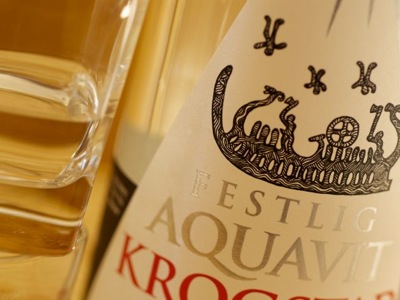
Danish aquavit

Related: Norwegian Christmas Aquavit

Akvavit gets its distinctive flavor from spices and herbs, and the main spice should (according to the European Union) be caraway or dill. It typically contains 40% alcohol by volume or 80 Proof (U.S.) The EU has established a minimum of 37.5% ABV for akvavit to be named as such.

Source: Wikipedia

Aquavit Tasting in Copenhagen
“Aquavit can be the same as gin,” says Krause. “In fact, a lot more,” he adds

An Ambassador of Aquavit
The owner of Rastløs, Frederick-Sebastian Krause, has one aim: to show the world that aquavit is a noble drink, and not like what many foreigners believe, a cheap Scandinavian homebrew. Therefore, he serves only carefully selected aquavits.

Related: Spirits of Norway

Aquavit Tasting in Copenhagen
Aquavit is a noble Nordic spirit

It is not important to have a huge number of brands, because Rastløs is not a museum, but a suitable selection for the guests to enjoy. The selection will be replaced from time to time, according to Kruse.

Aquavit Tasting in Copenhagen
Aquavit should be sipped, quietly in small siphon

Sip your aquavit like a good Cognac
Aquavit should be sipped, quietly in small siphon, like for instance a good Cognac, mostly at room temperature. “Aquavit must actually be sipped before the qualities come out,” explains Krause.

Aquavit is in fact also very suitable for cocktails. “I want to open people’s eyes to put the aquavit in a different light,” says Krause.

Related: Drinking in Scandinavia

Aquavit Tasting in Copenhagen
Frederick Sebastian Krause

Changing habits – Aquavit tasting in Copenhagen
We are normally afraid of trying new things or changing our habits. Kruse is however convinced he will be able to change the aquavit scene. He is sure that aquavit is going to explode within the next year. Scandinavians have loved aquavit for centuries, and several new versions have entered the market during recent years.

“We just need some people living far from Scandinavia telling the world how great aquavit really tastes,” says Krause. He believes that aquavit can get a renaissance in Scandinavia since we have seen similar tendencies in whisky, rum and gin.

“Aquavit can be the same as gin,” says Krause. “In fact, a lot more,” he adds.

Rastløs is a modern aquavit bar located in Nørrebro – created to break down barriers and delight patrons.

Aquavit is derived from the Latin term ‘aqua vita”, which means ‘water of life’.

Aquavit Tasting in Copenhagen, written by Tor Kjolberg

The Fascinating Arctic Through the Eyes of Irish Artist Blaise Drummond

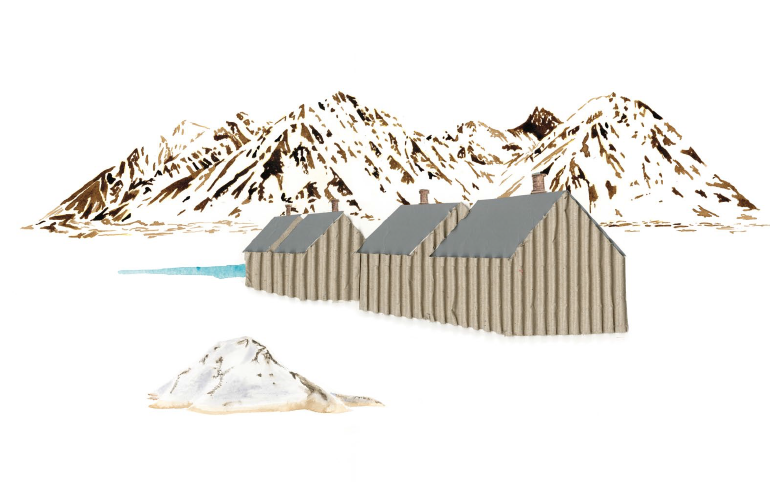
In 2015 the London New Bond store Louis Vuitton commissioned the Ireland-based artist Blaise Drummond to curate a book of some of his favorite works for their world travel series. He chose to vision the fascinating Arctic.

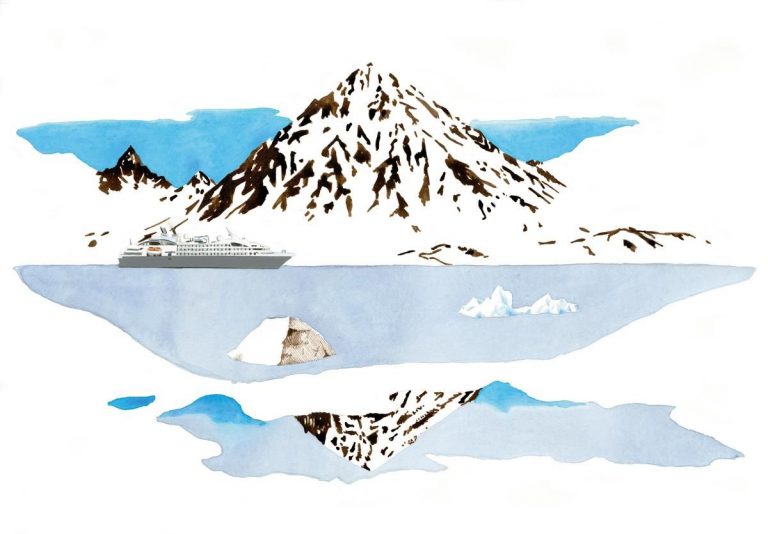
The Louis Vuitton Travel Book collection commissions young and established artists to discover new destinations to offer a contemporary vision of travel. Drummond’s minimalistic landscapes from the Arctic represent a relationship, or the comparative grandiosity, depending on one’s interpretation, between the form of nature and the opposing force of humanity.

Related: 5 Crazy Things You Didn’t Know About Antarctica

4000 photos depicting fascinating Arctic
Blaise Drummond is known for his precise works, often a mixture of watercolor, collage, ink and acrylic. Drummond spent three weeks hiking and kayaking in the Arctic, taking 4000 photos depicting glaciers, mountains, hikers, cabins, and Arctic animals, which he later used as a basis for his paintings for the book.

Fascinating Arctic
Drummond’s minimalistic landscapes from the Arctic represent a relationship, or the comparative grandiosity

Related: Norway’s Most Innovative Artist of Romanticism

Preparing for the book
Preparing for the book he went on a ship into a fjord and suddenly he was on icebergs walking around there nobody else had been. He spent three weeks there hiking and kayaking in the Arctic. For him it looked totally unreal, like polystyrene. He photographed and it still didn’t look real. “The icebergs are like cities,” he said, “but they change every day.”

Fascinating Arctic
Drummond spent three weeks hiking and kayaking in the Arctic

The illustrations in this book displays both delicacy and ingenuity.

Related: Spotting Polar Bears in the Arctic

Fascinating Arctic
Head to the Arctic with Louis Viutton and Blaise Drummond

About Blaise Drummond
Blaise Drummond was born to Irish parents in Liverpool in 1967 and studied Philosophy and Classical Art at the University of Edinburgh before attending the National College of Art and Design in Dublin for a BA in Fine Art Painting and the History of Art. In 1998 he graduated with an MA in Fine Art Painting from the Chelsea College of Art and Design in London.

He has had numerous exhibitions in galleries around the world and a number of museum shows dedicated to his work, including the Kunstmuseen Krefeld, Germany in 2009 and Musée de l’Abbaye Sainte-Croix, France in 2006.

The Fascinating Arctic Through the Eyes of Blaise Drummond, written by Tor Kjolberg

The Greenwich Village of Oslo

Experience Oslo’s multicultural environs by heading east if the center across the Akerselva River to Grønlandsleiret and Smalgangen in Grønland, known as the Greenwich Village of Oslo.

Here a wide variety if shops run by immigrants offer everything from exotic textiles and gold to kebabs, spices and saris.

The Greenwich Village of Oslo
Grønland Basar in the Greenwich Village of Oslo

The Grønland Bazaar at the corner of Tøyengata and Grønlandsleiret is a delight to all senses.

The Greenwich Village of Oslo
Intercultural museum in the Greenwich Village of Oslo

The Intercultural Museum
The newer addition to this lively quarter is the Intercultural Museum. Housed in a converted police station, it produces diverse exhibitions on the history if immigration and cultural changes in Norwegian society. Its aim to promote respect for cultural diversity.

Related: An Architectural Travel Guide to Oslo

The Greenwich Village of Oslo
Grunerløkka, the Greenwich Village of Oslo

The Greenwich Village of Oslo
Follow Storgata north to explore the neighborhood of Grünerløkka. Known as the Greenwich Village of Oslo, this former working-class area by the Akerselva River has been transformed in the last decade into a trendy quarter with cafés, restaurants, eclectic galleries and independent shops.

Oslo’s hippest bars and nightclubs are in the Grønland and Grünerløkka districts.

Related: The Coolest Region in Norway’s Capital

The Greenwich Village of Oslo
Center for Design and Architecture (DogA) occupies a restored power-station

The Norwegian Center fort Design and Architecture
Southwest of Grünerløkka across the river the Norwegian Center for Design and Architecture (DogA) occupies a restored power-station next to Jakob’s church. The changing exhibitions focus on design and architecture, and there is a shop, café and restaurant.

Related: Stumbling Stones in Norway

The Greenwich Village of Oslo
From the Jewish Museum in Oslo

The Jewish Museum
Housed in a former synagogue (1921), the Jewish Museum is both a cultural center and museum tracing the history of Jews in Norway.

The Greenwich Village of Oslo, written by Tor Kjolberg

The Swedish King of Sauces

One of Sweden’s most famous chefs, Erik Lallerstedt, produces genuine gourmet sauces you can buy in shops all over the Europe. There’s no longer an excuse for not serving your guests a high-quality savoury meal in the comfort of your own home.

Erik’s Sauces
Erik’s Sauces is a line of cold sauces aimed at complementing everything from a Swedish Smörgåsbord to a summer barbecue. The full range offers Aioli Lime, Bearnaise, Bearnaise Provencale, Chili Bearnaise, Bearnaise Rose, Graved Salmon Sauce, Hamburger Dressing, Hollandaise, Pepper Sauce, Remoulade and Apple Curry Sauce.

The Swedish King of Sauces
There’s no longer an excuse for not serving your guests a high-quality savoury meal in the comfort of your own home

Related: Scandinavian Master Chefs in New York City

Erik’s idea was to create products of handmade quality for people to enjoy without having to dine out.

The Swedish King of Sauces
Chef Erik Tallerstedt

Erik launched his sauces spring 2008. Today Erik’s Sauces are made and marketed by the Kavli Group. The company continue to provide customers around Europe with an alternative to powder sauces.

Related: A Taste of Stockholm

The Swedish King of Sauces
Erik’s idea was to create products of handmade quality for people to enjoy without having to dine out

Erik Lallerstedt – The Swedish King of Sauces
Chef Erik Lallerstedt was the first Swede to be awarded a Michelin star (1984). So, it’s not without reason people love Erik’s sauces and that he’s nicknamed the “King of Sauces”.

The Swedish King of Sauces
Erik has even written a book on sauces

Among the awards awarded to Erik are the King’s Gold Medal in high-blue bands and the Gold Medal of the Gourmet Academy.

Related: Scandinavian Cooking

Today, Erik administrates the Gondolen restaurant, the Wine Bar and Eriks Bakficka. Eriks began his career at Waldorf Astoria in New York, where he worked as a porter.

The Swedish King of Sauces, written by Tor Kjolberg

World’s Youngest Editor-in-Chief – From Norway

Norwegian Elise By Olsen started blogging aged eight and founded the glossy independent Recent Paper when she was 13.  Now 18, she has entered a new publishing venture, Wallet.
Recent Paper, first published in 2013, proved to be a powerful magazine and a publishing sensation, showcasing culture, art and fashion by and for young people with magnificent creativity. Now Elise has decided to step down to make way for the younger generation and to start another sensation, Wallet.

Related: Shame – The Successful Voice of Youth in Norway

World’s Youngest Editor-in-Chief – From Norway
Wallet, by Elise By Olsen

Dialogue between admins and authority
The new magazine is in fact sized like a wallet and explores the spaces where commerce, creativity and criticism overlap in fashion. The first issue was themed Admins and Authority and was a dialogue between people with authority and power in the fashion industry. The second issue is dedicated to the future of publishing, featuring interviews and features compiled by famous designers like Alyx Jacquemus and Telfar.

Related: Portrait of Teenage Celebrity Tavi Gevinson

Nomunated for Guinnes Book if Records
Norwegian by birth, she’s currently living in Portugal, in a converted warehouse space an hour north of Lisbon. For someone of her relatively tender years, her achievements are impressive. There is always a demand for a publication openly discussing fashion and brands in a critical forum.

Related: Portrait of a Norwegian Designer

World’s Youngest Editor-in-Chief – From Norway
Elise By Olsen’s achievements are impressive

Despite the publication’s compact size, it is meditative and thoughtful. Elise says that each issue will be treated as a separate publication and there will be two more issues this year. After 10 issues she believes her team can cover the same broad topics applied to other industries like art, music, food etc.

World’s Youngest Editor-in-Chief – From Norway, written by Tor Kjolberg