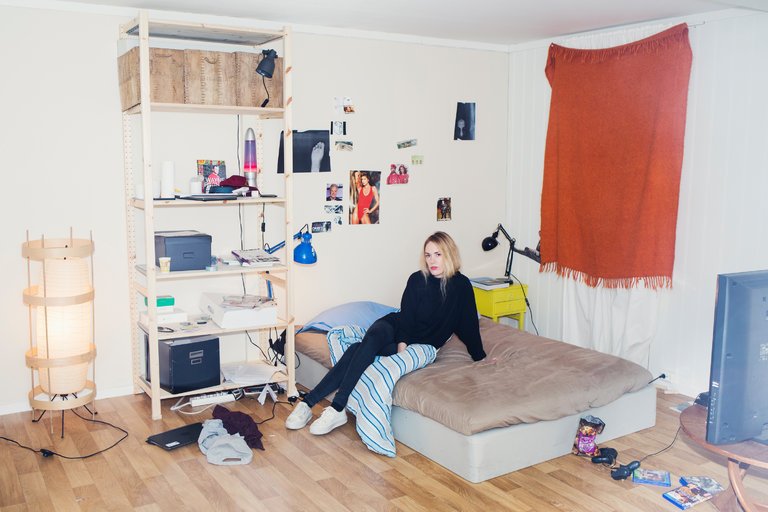
Julie Andem, the creator of the Norwegian web and television series Skam (Shame) intended to tell the stories about and to teenage girls only. It became a sensation across Scandinavia and Skam has now been remade in seven countries around the world, including an American remake that will be broadcast on Facebook’s new video streaming service.
This racy, emotionally intense, true-to-life Norwegian production, follows a group of Oslo teenagers as they navigate sex, school, drinking, depression, rape, religion and the pains of status anxiety in the real life and online.
Shame may be described as a mix between a traditional drama and a blog
Julie Andem believes the reason for the great success is due to the narrow target group and a tailor-made theme. “If you try to go wide and reach many, you reach nobody. If you are completely uncompromising on a target audience you can reach everyone,” she says.
Shame follows a cast of teenage characters, telling the story from their perspective
In the summer of 2014, Norway’s license-fee funded public sector broadcaster NRK wanted to make something that would bring teenagers back to the channel. They wanted to do something dramatic to make NRK cool to teenagers again. That’s how Shame, a global phenomenon, was born.
Shame may be described as a mix between a traditional drama and a blog. It follows a cast of teenage characters, telling the story from their perspective. Thanks to a clever multi-platform and social media strategy, Shame has reached viewers of many ages. Each week, four to six short scenes were posted on the broadcaster’s website, without warning, at the same time the scenes are set and then bundled into a full episode each Friday.
The show followed the lives of students at the prestigious Hartvig Nissen school in Oslo for four seasons
The show followed the lives of students at the prestigious Hartvig Nissen school in Oslo for four seasons, with each season focusing on a different protagonist. In season one, Shame centered on 16-year-old Eva and her friends Chris, Sana, Vilde and Noora, all first-year students. The series follows the girls through their heartbreak, parties and all the challenges young people face as they begin high school.
Shame found a global audience thanks to sheer dedication of its fans: Norwegian viewers created subtitled versions of new episodes in English or other languages, which were shared through a series of underground Google Drive networks. The new official English-language version will have new characters and actors but use the show’s format, and NRK will consult.
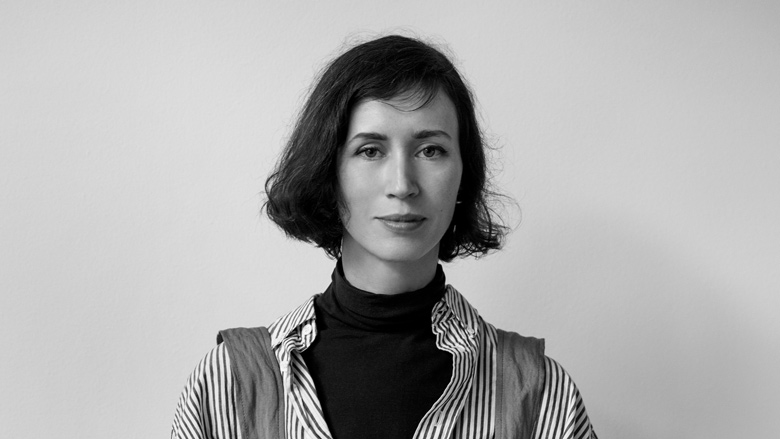
Julie Andem, the creator of Skam
Creator Julie Andem had previously made shows for NRK, including Girls, which was aimed at girls aged seven to 12. It was such a big success that the broadcaster asked her if she could write a show for a slightly older audience, specifically 16-year-old girls.
Shame – the Successful Voice of Youth in Norway, written by Tor Kjolberg
Oysters are the hallmark seafood of Grebbestad on the Swedish west coast. The shellfish season has started at Tanum Strand and the brothers Peter and Bengt Klemming from Grebbestad work as oyster divers and perform their craft from start to finish – resulting in the world’s best oysters.
The Swedish province of Bohuslän is famous for its shellfish, salt baths and swabs. Grebbestad can also boast of its amazing oysters. The Oyster Academy is headquartered there, and those who participate will meet experts and hear fascinating anecdotes about “Ostrea Edulis”.
Oyster safari at Grebbestad
“Oysters have been picked here since the Bronze Age,” says licensed oyster fisher Peter Klemming, “but it’s only the last 10-15 years that our oysters have been available for the common people.”
The Klemming brothers deliver about 1000 oysters per week to Tanum Strand and a number of selected luxury restaurants around the country. The oysters are wiped by hand and manually handled.
“The oyster grows wild in our clean sea water, giving them the finest quality and flavor in the world, “says Peter Klemming. The brothers have made Grebbestad known as the center for Swedish oyster fishing. Since they started, both journalists and famous TV cooks have invaded this oyster metropolis.
“Now in winter time, the oyster tastes the best,” says Peter.
Tanum Strand often organizes an “oyster school” on Fridays, in conjunction with the Friday’s seafood buffet. More information on the oyster school is available at the hotel reception.
There you have the opportunity to learn how to open oysters like the pros, ask questions about the Klemmings oysters and of course try these salty, delicious delicacies.
Tanum Strand. 90 percent of all oysters in Sweden comes from Grebbestad
At TanumStrand there are 165 hotel rooms and 97 fully equipped, detached cottages. A total of 1100 beds.
The World’s Best Oyster – A Wild Swedish Delicacy, written by Tor Kjolberg
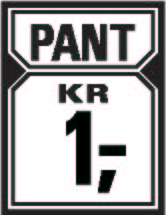
In Norway consumers can go to the supermarket and get the refund of the deposit they paid when they purchased plastic bottles and tin cans. The ‘Pant’ (Deposit) is paid back when empty bottles or tins are returned.
This innovative system, ‘a reverse wending machine’, makes Norway the leader in fighting plastic and tin waste. The system has long been a part of the Norwegian society, and is owned and run by the company Infinitum, which changed its name from Norsk Resirk in 2014.
In 2016, Infinitum collected 466 793 339 million cans and 545 397 194 million bottles labeled with the deposit symbol
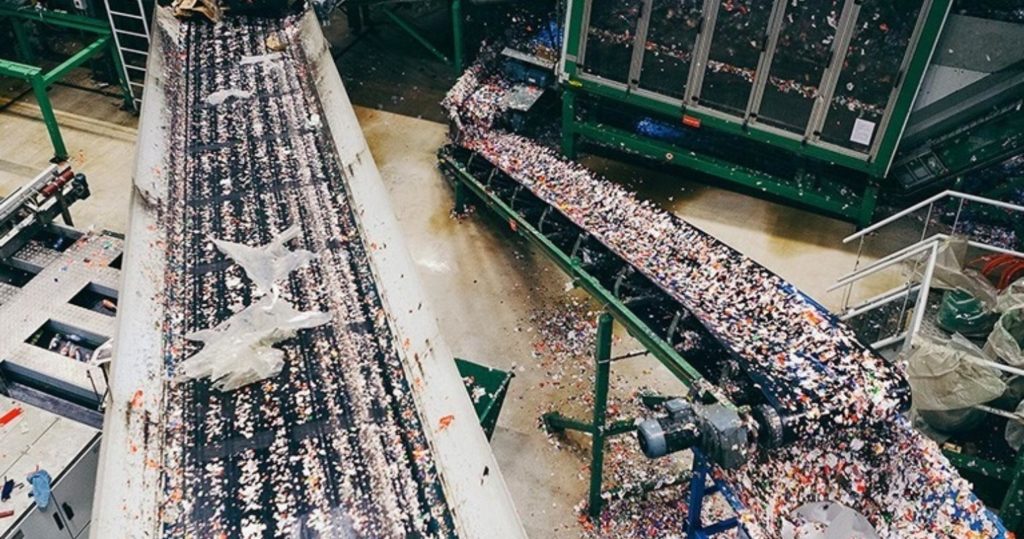
When the wending machine has counted the number of bottles and cans the customer have returned, it prints out a voucher for getting money back, either cash or deducted from your bill at the till. Most supermarkets contain such machines, and in 2016, Infinitum collected 466 793 339 million cans and 545 397 194 million bottles labeled with the deposit symbol.
According to Infinitum, there are 12,000 collection points throughout Norway
According to Infinitum, there are roughly 3 700 reverse vending machines in Norway, and there are 12,000 collection points throughout the country where you can return your empties.
1,900 bottles and 1,200 beverage cans are labeled with Infinitum’s deposit symbol.
The reverse vending machines accept almost 3 000 foreign beverage cans and bottles. You can therefore return these empties, but you do not receive a deposit back when you do.
Norwegian company Tomra invented the first reverse vending machine
In 2014, The Norwegian Environmental Agency approved a return rate of 95 per cent for bottles and cans in the Infinitum-system.
The reverse vending machines also accept almost 3 000 foreign beverage cans and bottles
Some other countries around Europe operate container deposit legislation but it’s definitely the Scandinavian countries that lead the way. And in typical Scandinavian fashion, the system is straightforward and it works!
Norway’s Successful Plastic and Metal Recycling System – A World Model, written by Tor Kjolberg
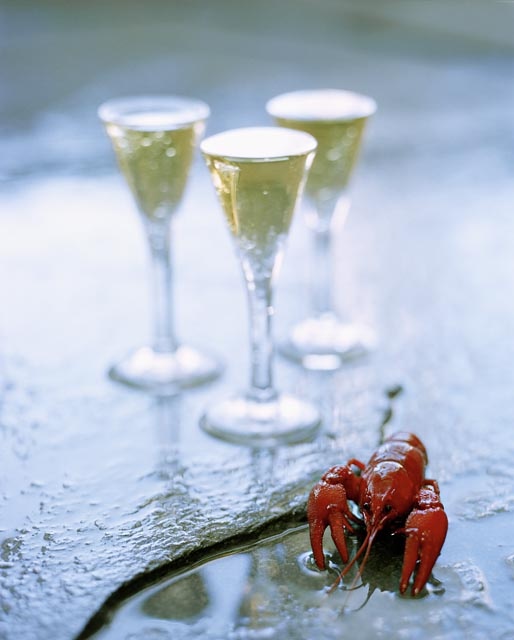
Crayfish (Astacus astacus) are protected most of the year but in August and September the chase is intense in ponds, brooks and streams all over Scandinavia. Until recently, crayfish were a popular, relatively cheap and abundant food, to catch yourself in the countless freshwater holes and lakes.
But draining, pollution and a crayfish pest have decimated the population dramatically. Owning a crayfish pond is something to be proud of: what might seem to be just another hole in the ground is jealousy protected, and stealing another man’s crayfish is an unthinkable crime.
Crayfish are short, seldom more than 12cm, resembling a small lobster
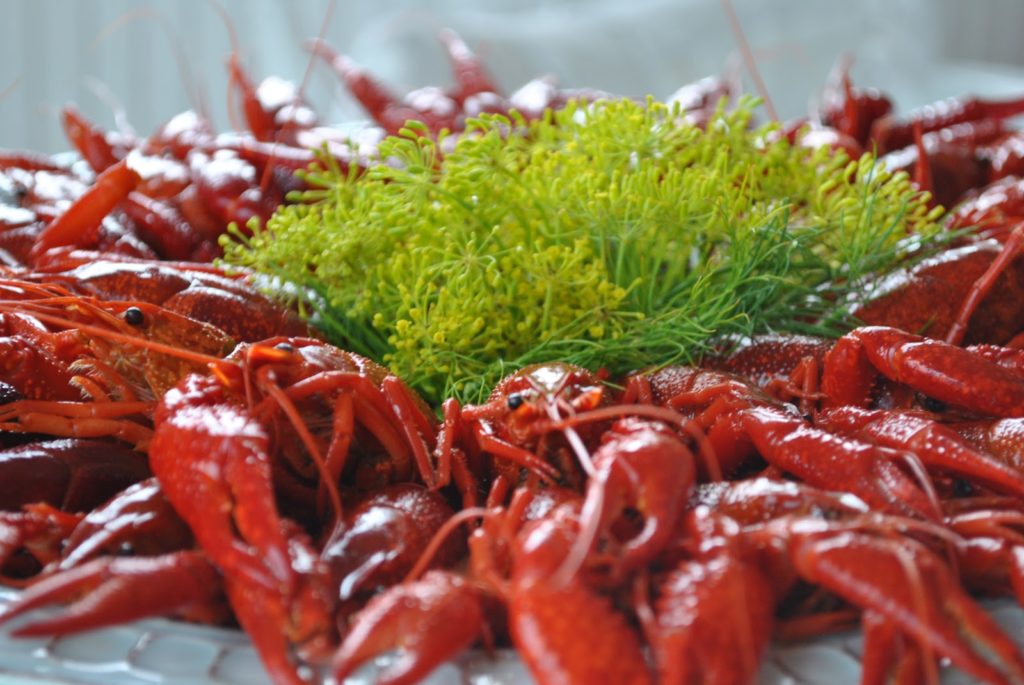
Appearance and taste Crayfish are short, seldom more than 12cm, resembling a small lobster. They can be greenish, blue, or black when raw, but they all turn a glorious scarlet when cooked. The taste is different from that of all other shellfish, delicate and sweet.
The best way to prepare Scandinavian crayfish is the traditional Swedish manner of the kräft kalas (crayfish party)
Buying and storing Fresh indigenous crayfish are available in Scandinavia only in August and September, but import of a different species are available year-round. Sadly, Swedes now more often eat imported crayfish from Turkey and Eastern Europe, a different species with an inferior taste to that of the native.
When buying live crayfish, ensure that they bare very much alive
You can but crayfish precooked, and frozen, but these are really not worth buying as they lack the spicy, aromatic saltiness and succulence you get when you prepare them fresh yourself.
When buying live crayfish, ensure that they bare very much alive. If they seem lazy, it means the crayfish have been lying around for too long, which drains away the taste and leaves the flesh a flabby, sorry thing to eat. Choose big, broad, fat female crayfish, which contains more meat than the thinner males. One person can easily eat 12 crayfish, even double that. For a starter, however, six crayfish per person is fine.
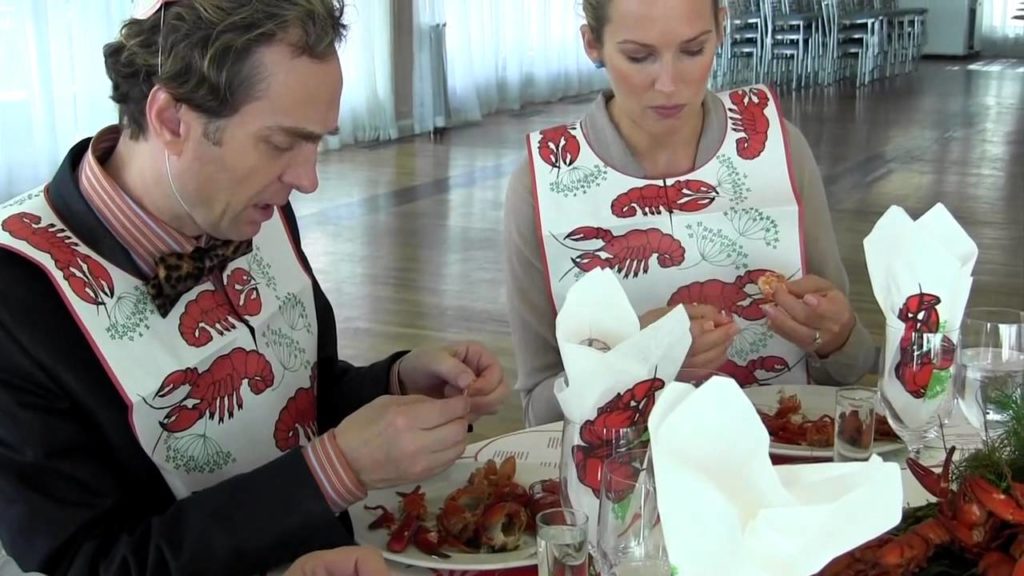
Culinary uses If you have enough crayfish, the best thing is to prepare them in the traditional Swedish manner of the kräft kalas (crayfish party). Even on a normal day, eating crayfish outdoor is a must – a gorgeous, delicious mess, with huge napkins and finger bowls as compulsory. We suggest you try to make a homemade mayonnaise and eat the crayfish with this, together with some crunchy sourdough bread, lemon and fresh dill.
If you wish, a grilled or home-smoked fish, new potatoes and a bowl of rødgrød med fløde will make it an unforgettable and very Scandinavian meal.
And don’t throw away the shells, as they are very good for shellfish stock.
You eat crayfish by twisting off the head and sucking everything possible from it
How to eat a crayfish You eat crayfish by twisting off the head and sucking everything possible from it – this is the tastiest part. Crack the claws with a nutcracker, or a special tool designed for the purpose and extract the fine meat – a lobster fork is the best tool for prying it out. As for the tail, you may be lucky and yank it out in one go; alternatively, you can cut open the underside of the shield protecting the tail.
You must remove the intestine, which runs as a thin line along the tail, before eating the flesh in one enjoyable mouthful. You will be glazed with the juices all over – it’s deliciously uncivilized.
Stora Skuggan (Big Shadow) was established in Stockholm, Sweden in 2015 byfour design student friends, among themTomas Hempel and Olle Hemmendorff. The founders’ aim wasto be as autonomous as possible in every aspect of the creation process – from the formulation of the perfumes to the packaging and branding.
Stora Skuggan is also the name of a well-known park in the center of Stockholm. At the perfume company by the same name, the concepts, fragrance formulations and product design at Store Skuggan are all handled by a small group of interdisciplinary creatives, and over time they have learned that quality raw materials are more likely to lead to better perfumes.
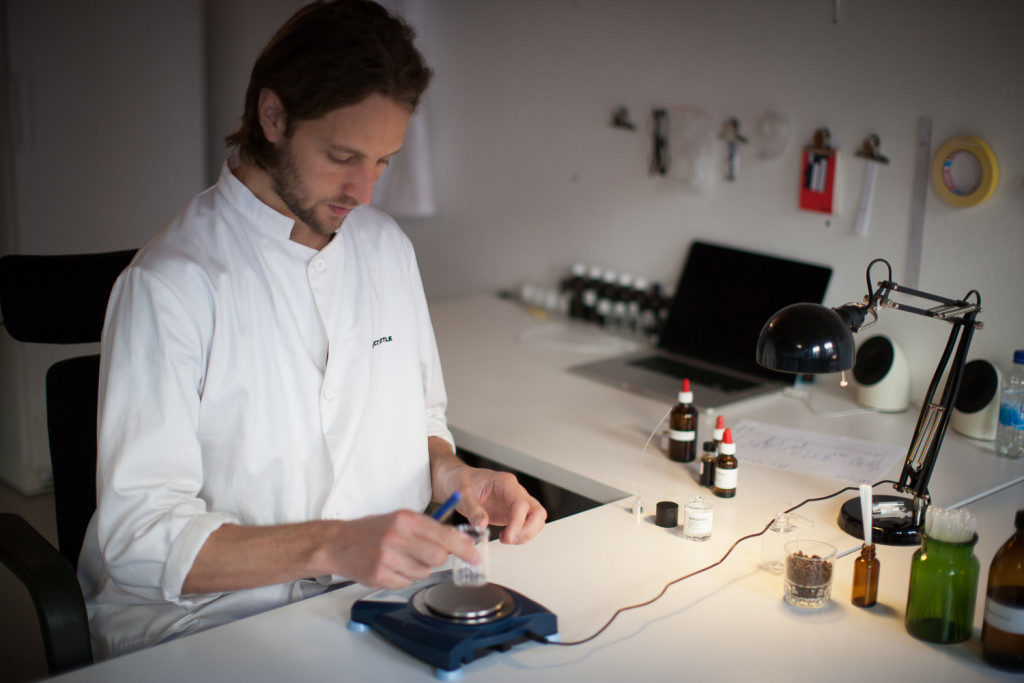
Fragrance formulations and product design at Store Skuggan are all handled by a small group of interdisciplinary creatives
Ten years ago, the four students had a joint interest in fragrances, which later developed into the first trembling steps in a DIY perfumery, by mixing cheap essential oils. Later, by combining myth and reality, the first perfume “Fantôme de Maules” was inspired by a creature wandering in the forest of Maules in Switzerland.
Fantome de Maules by Strora Skuggan
Their second fragrance, Silphium, was born from the desire to recreate a spice dating from antiquity that has now disappeared, after they had gained access to the distributers if real aroma chemicals and the most precious natural materials.
Silphium is the name of a plant used by Ancient Greeks as a medicinal herb, spice, or perfume ingredient. While the olfactory experience of the scent is the core of Stora Skuggan, the team works in a symbiotic process to give life to each product through the combination of conceptual stories, visuals and physical design.
Pne of the founders and enthusiast Tomas Hempel
Silphium is a perfume for those who enjoy green perfumes. The journey from medicinal to savory with the herbal nucleus is beautifully realized. As Mr. Hempel and Mr. Hemmendorff learn more through their experiences let’s hope for more like Silphium in the future.
Swedish Perfume Maker ‘Big Shadow’ has Bottled the Scent of Swiss Woods, written by Tor Kjolberg
One of the most convenient tourist information centers in Stockholm is located in the main hall of Stockholm Central railway station. Sweden’s first private tourist information was founded in 2011.
The center offers advice, and can book tours, excursions and other entertainment. It also sells the Stockholmskortet (Stockholm City Pass), which is well worth buying. The card offers free entry to over 60 of Stockholm’s top attractions, museums and tours, and gives the holder free public transport around the city. It’s available in 24-/48-/72-/120-hour versions.
The Stockholm Visitor Center offers advice, and can book tours, excursions and other entertainment
If you get your Stockholm Pass shipped out to you before you visit you can start planning your sightseeing schedule in advance with the helpful pocket guidebook that comes free with the Stockholm Pass.
On the Tourist Information site, trained staff will assist visitors you in every step of your stay
You can also download tour free guidebook which contains Stockholm City map, address details of all attractions, opening times.
The Stockholm Card gives the holder free public transport around the city
On the Tourist Information site, trained staff will assist visitors you in every step of your stay. No matter if Stockholm is your home or if you are planning your first visit, you are always welcome to Stockholm Visitor Center.
If you consider living in a more peaceful environment you should consider Scandinavia, the cost of living in Sweden will definitely surprise you!
Kinnarps is one of the leading European designers of functional office and learning environments. The company has conducted extensive research during the last years on how our working and learning habits will change in the future, in order to anticipate forthcoming needs that will be evident in our offices and learning environments.
As we spend more than half of our ‘awake’ time at work or in learning processes, it is very important that our working places are designed in a functional way to allow people to feel comfortable and maximize their productivity. The goal can be achieved by creating different areas suitable for the diverse needs of different people.
Kinnarps emphasizes that it is very important that our working places are designed in a functional way to allow people to feel comfortable and maximize their productivity
Kinnarps has always taken these topics very seriously and has succeeded in shaping tailormade solutions adjusted to fit varied individual needs, no matter whether old or young, man or woman, tall or short. Kinnarps creates unique solutions for pleasant office and educational spaces that will make everybody enjoy being at work.
10 Future Trends in Learning
Based on research, interviews and work, Kinnarps FutureLab, has compiled ten major trends that will influence and shape the educational environments of the future up to 2025 in the Nordic countries.
The complete trend report provides a more detailed description and interesting issues relating to future learning environments. You can get access to the full report here.
Trend 1 and 2
TREND 1 Learn bnb. involving the whole person in the learning
Body language is a crucial part of how we communicate, and research indicates that people learn better through movement. That way, not only the brain but the entire body is engaged in the learning process. But people’s ability to learn and the way they learn varies significantly. The learning environment must therefore be responsive and flexible.
TREND 2
Fully sustainable learning environments
Sustainability means that all players take a long-term perspective. From the economy and the environment right down to the level of the individual. A fit body that puts the mind in the best possible position in a carefully considered learning environment will help make learning sustainable in the long term.
Trend 3 and 4
TREND 3
Digilearn. digital learning
The digitalization of schools has enabled interaction between sender and recipient. Now we are seeing new tools that can personalise learning, and learning can take place remotely in almost any location. The learning environment must allow the power of digital technology to be exploited, but it must also be capable of preventing distractions.
TREND 4
Digiteach. teaching in a digital age
We are now seeing technology that really can change the role of the teacher in an ever more digital future. Teaching robots, artificial intelligence and digital transfer of teachers across geographical borders are no longer science fiction.
Trend 5 and 6
TREND 5
Mass customization. individualized
Personalized study paths are in ever greater demand but, at the same time, educators need to ensure that their operations are financially viable. The answer: mass customization. In other words, the mass production of (online) courses that respond to the student’s requirements.
TREND 6
Maximise everything. self-fulfilment through the children
In the affluent society in which we live, parents fulfil themselves through their children – and are keen to protect them from anything that they perceive to be bad for them. And this also applies to demands placed on them at school. The attitude “the customer is always right” is now evident in schools, and is putting educational institutions under a great deal of pressure.
Trend 7 and 8
TREND 7
Global learning network. New ways of collaborating and learning
As globalization takes hold, courses, teachers and students may come from all over the world, forming new educational networks. The old hierarchies will be transformed: the young will teach the old and vice versa. We will meet without borders.
TREND 8
New realities. Multisensory learning through virtual achievements
Ever more powerful computers are helping us construct alternative and indeed “better” realities, which will become powerful new tools in the classroom. We can also collect huge quantities of data on events that are taking place around us – information that can enhance and guide these resources.
Trend 9 and 10
TREND 9
New ecosystems for learning
Students are no longer content with their nearest school. Instead, they want to be associated with a particular group or approach to education. Businesses are also getting involved, establishing links with schools and students and creating entire ecosystems for learning.
TREND 10 From IQ to SQ. The importance of social skills
For a long time now, a high IQ has been a key factor in a person’s success. Now, “social intelligence” is at least as important in the achievement of success. At the same time, creativity and the ability to innovate are essential, both in schools and in society as a whole.
The list is compiled from Kinnarps third Trend Report 2017, which identifies and analyzes key changes in the world around us for different types of work, meeting, learning and training environments. This time the focus is on what these changes will mean for learning environments in the Nordic countries: Sweden, Norway, Denmark and Finland.
Swedish fashion brand Hope was established in 2001 by Ann Ringstad and Stefan Söderberg. They wanted to create contemporary, high-quality fashion, aimed to inspire and emphasize individual style.
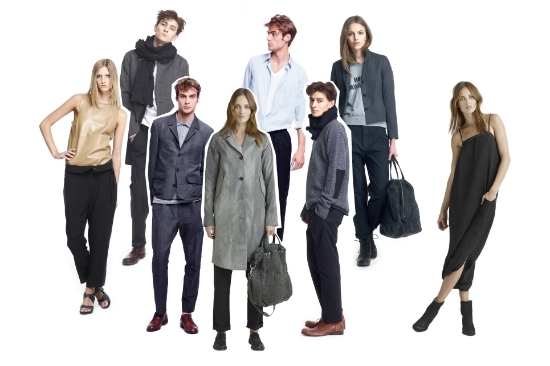
What began as a creative discussion between two friends, passionate about well-made utility wear, is today a fashion label centered on well-made, quality fashion design. Frida Bard signed on as creative director in 2016, after working at Acne Studios for 13 years. She sees Hope, once defined by utility and minimalism, as having “a little bit of a punk soul.”
According to the company’s website, Hope is passionate about diversity, creativity and self- expression
According to the company’s website, they’re passionate about diversity, creativity and self- expression. Their new Changes collection is a celebration of a new outlook on gender identity through a new way of labeling: Men’s and women’s sizes are from 2017 on indicated on every garment so that it’s easy for the customers to make their own choices.
“Style comes before gender, and we encourage our customers to explore our full assortment, rather than just one department,” says Ann Ringstad. “The clothes you wear should be a celebration of you,” adds Frida Bard.
Frida Bard signed on as creative director in 2016, after working at Acne Studios for 13 years
In Sweden everyone’s entitled to be who they want to be, believe what they want to believe, love who they want to love, and wear what they want to wear.
When the first collection for men was launched in 2005, it immediately became a go-to favorite of the Swedish fashion establishment. Over the years, HOPE has received numerous awards and nominations and is today one of the leading fashion brands in Sweden.
Daily Scandinavian has been selected the third best Scandinavian Travel Blog by the panelists of RSS Reader Feedspot.
“I personally give you a high-five and want to thank you for your contribution to this world,” says founder Anuj Agarwal. “This is the most comprehensive list of Top 50 Scandinavia Travel Blogs on the internet and I’m honored to have you as part of this!” he adds.
Daily Scandinavian ranked #3 among Top 50 Scandinavian Travel Blogs
The online RSS reader Feedspot jumped into action in 2013 following the removal of social features from Google Reader. Now Feedspot not only offers a solid Google Reader replacement for the desktop, but is also one of the few to include the ability to search within your RSS feeds.
Founder of Feedspot Anuj Agarwal
When asking Anuj what have been his biggest challenges he says: “Getting paid customers for a Reader service is a challenge. However, we realize that people pay for a reader product if you help them to stay updated with information which is essential for their business.”
Feedspot has recently launched a monthly subscription plan which is US $2.99/month.
Who are your typical customer?
“Working professionals across all industries.”
The online RSS reader Feedspot jumped into action in 2013 following the removal of social features from Google Reader
To collect the Top 50 Scandinavian best websites, The Feedspot editorial team searched extensively on Google and social media websites to find the best blogs and ranked them based on several factors such as:
Blog content quality
Post consistency
Age of the blog
Average number of shares on social sites for blog posts
Traffic of your blogs
and more.
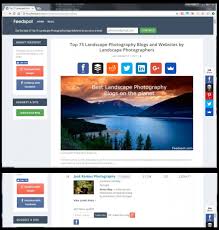
75 Best Landscape blogs selected by Feedspot
When Feedspot launched its service, the goal was not to be a Google Reade clone, but rather to offer an unadorned interface, keyboard navigation, shortcuts and a compact “list” view, which makes for easier headline scanning.
Thee service lets you automatically post both your shared items and favorited items to a variety of third-party sources, including Facebook, Twitter and many others.
Prestigious Award to Daily Scandinavian, written by Tor Kjolberg
Quatar has for many years been considered the richest country in the world in the World Bank ranking. In a new method of calculating the wealth per capita, Norway now beats out Quatar.
Due to the country’s substantial natural resources, very high income, huge financial assets and low debts, Norway currently tops the World Bank’s list over the wealthiest countries in the world.
In a new method of calculating the wealth per capita, Norway now beats out Quatar
And Norway is not even a part of the European Union. It turned down the Common Market in a referendum in 1072 and turned it down again when it had become the EU in 1994 by good margin
In the new method of calculating the World Bank has now translated wealth into a nation’s various available resources both now and for the future. The expected income for residents in the course of their lifetime has also been taken into the equation.
Norway is famous for its beautiful fjords, its seafood, the fearsome Vikings and its success in winter sports. The oldest ski discovered in Norway dates in fact back to 5100 B.C. Yes, the country is prosperous, happy and free. Its towns and cities are orderly and comfortable, runs its own affairs and is trading cheerfully with the EU.
Norway currently tops the World Bank’s list over the wealthiest countries in the world
However, Ingvild Almås, an economics professor at business school NHH in Bergen and the University of Stockholm, called the World Bank’s new calculations “interesting,” but worries that Norway may score higher than it should.
In fact, we agree. If we’re looking in terms of real GDP, Norway ranks according to Global Finance #8 in the world with a ‘current’ GDP of 69,296 International dollars, falling behind Quatar and Luxembourg.
Yet, apart from all these statistics, it is safe to say that Norway is the happiest country in the world.
Norway – The Richest Country in the World? Written by Tor Kjolberg