Finland is the third largest country in the Nordic region with 5.5 million inhabitants. Clothing and footwear followed by electronics, cosmetics and skin care are the top three most commonly bought products online. And e-commerce in Finland is a growing market.
Finland is the 38th largest market for eCommerce in the world with a predicted revenue of US$8.215.4 million by 2023. Revenue is expected to show a compound annual growth rate (CAGR 2023-2027) of 8.8%, resulting in a projected market volume of US$11,509.1 million by 2027.
Ecommerce customers in Finland
According to Eurostat, 97 percent of the people in Finland were internet users in 2021. This makes Finland one of the higher rating countries for internet penetration. Moreover, 81 percent of Finnish are online shoppers according to the Europe E-commerce Report 2022.
To be more specific, nearly one third of the population purchased something online in three months’ time (28 percent). 40 percent of Finnish people order online frequently, namely 3-4 times over the same period.
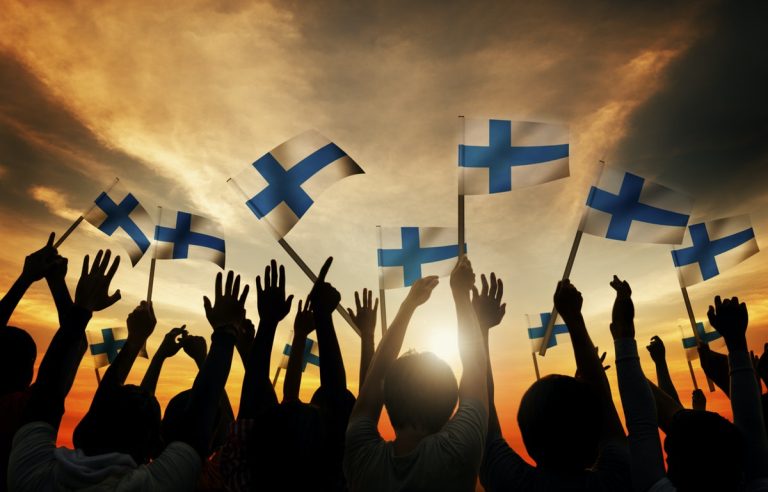
According to Eurostat, 97 percent of the people in Finland were internet users in 2021.
Top three online stores in Finland by net sales 2022
The biggest player in the Finnish eCommerce market is verkkokauppa.com. The store had a revenue of US$272.8 million in 2022. verkkokauppa.com is followed by k-ruoka.fi and gigantti.fi as the second- and third-largest stores with US$246.8 million and US$243.7 million, respectively. Altogether, the top three stores account for 20.4% of the top 100 online stores’ revenue in Finland.
Store rankings include every store that generates revenue in Finland. These stores can either have a national focus and only sell in their main country or operate on a global scale. For this evaluation, only revenue created in Finland has been considered.
The three biggest markets for purchases outside Finland are Germany, China and Sweden.
The three biggest markets for purchases outside Finland
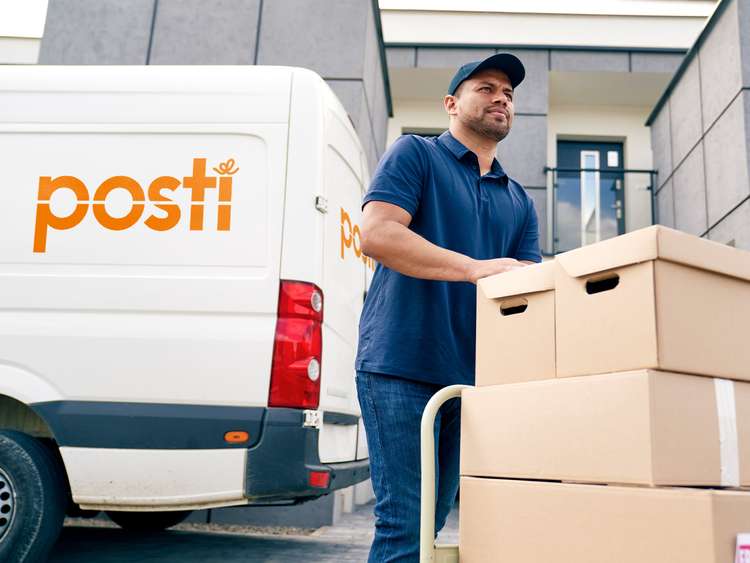
The three biggest markets for purchases outside Finland are Germany, China and Sweden. When it comes to preferred delivery options, the Finns stand out compared to most other European countries. A majority of Finns prefer to collect the e-commerce parcels themselves, rather than having their purchases delivered to their homes.
.A majority of Finns prefer to collect the e-commerce parcels themselves, rather than having their purchases delivered to their homes.
Paying for goods
When it comes to paying for goods bought online, Finnish consumers prefer to use online banking, card, invoice, and PayPal. With 38 percent, online banking is clearly the most preferred payment method, with card occupying second place at 26 percent. Invoice (13 percent) and PayPal (10 percent) are slightly less popular but should still be considered by online retailers active in Finland.
A growing market
By 2025 the market is estimated to be worth 12.74 billion dollars. In that year, the Finnish online retail market is projected to have over 4 million users.
E-Commerce in Finland – A Growing Market, compiled by Tor Kjolberg
The world is embracing yet another Scandinavian concept: “lagom”. What does living the «lagom» life in Sweden mean?
Danish “hygge” and Swedish “fika” are both nice, but “lagom” is perhaps even better, in any case if you use private consumption and climate challenges as benchmarks. This is what Elliot Jay Stock says, who together with his wife Samantha Stock publishes the Bristol-based lifestyle magazine Lagom.
The Swedish word “lagom” translated into English is “just the right amount”
The Swedish word “lagom” translated into English is “just the right amount” or “not too much, not too little”. Just as we’re learning to decorate like Danes, using the word “hygge” as our guide, along comes another Scandinavian tranquility-producing concept.
Elliot Jay Stock learned about the Swedish word “lagom” from Swedish friends more than a decade ago, and says that the “lagom” mindset has become fashionable in Britain.
Elliot Jay and Samantha Stock arethe editors of Lagom Magazine
According to Wikipedia, the word can be variously translated as “in moderation”, “in balance”, “perfect-simple”, “just enough”, “ideal” and “suitable” (in matter of amounts). Whereas words like sufficient and average suggest some degree of abstinence, scarcity, or failure, lagom carries the connotation of appropriateness, although not necessarily perfection.
A way of life for Swedes for generations, the concept of living the lagom life has, within the last few years, evoked curiosity among Americans. An Amazon search yields no less than eleven recently published books dedicated to the subject.
Lagom magazine depicts a lifestyle that the middle class can also take part in, not the dream of the perfect life.
The archetypical Swedish proverb “Lagom är bäst”, literally “The right amount is best”, is also translated as “Enough is as good as a feast”, or as “There is virtue in moderation”.
There are now books instructing English speakers on how to apply the lagom concept in general, in interior design, cooking, fashion, and sustainable living.
The magazine Lagom is published twice a year, with a circulation of 6,000.
The magazine Lagom is published twice a year, with a circulation of 6,000, and is intended as inspiration for creative people who want to start a pleasure-oriented side project, or who just want a break. It is sold in the British Isles, in Asia, Canada and several European countries, including Scandinavia.
When you feel like you have all that you need without the need for more. Then you understand what lagom is all about.
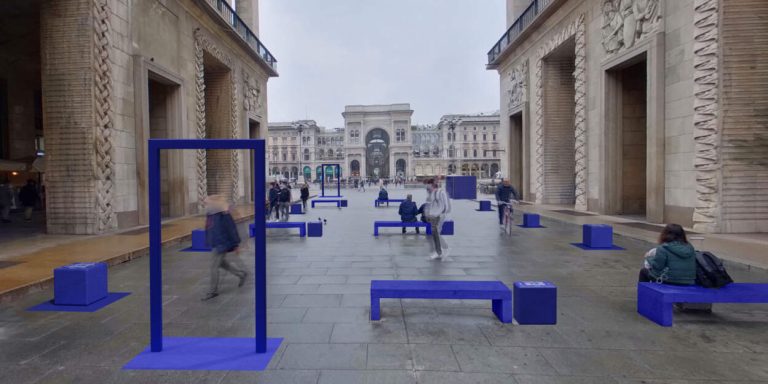
Since its first edition in 2015, Norwegian Presence has brought the best of Norway’s design, craft and manufacturing to Milan Design Week. Learn more about Norwegian presence at Milan Design Week 2023, April 18 – 23.
Norwegian Presence is back in Brera for Milan Design Week with a roster of inspiring new designs from Norway’s most exciting independent makers and creative studios.
In a beautiful new venue at Via Pietro Maroncelli 2, styled by Kråkvik & D’Orazio and Bjørn van den Berg, this year’s exhibition gives visitors an opportunity to discover innovative new products and gain an insight into Norway’s material-minded and collaboration-driven creative culture.
The appreciation for design and craft across the Nordic region is well documented, and their longstanding affinity with high-quality, well-designed objects for the home has gained its countries the worldwide design-savvy reputation they hold to date. But as well as relying on the past, the Nordics understand the value of investing in their future design stars by means of grants, programs, and – especially in the case of “Norwegian Presence” – exhibitions.
A perennial highlight of the festival, the annual showcase offers a unique insight into Norwegian creative culture, and the values, infrastructure and materials that shape it. Returning to Milan for a ninth edition, Norwegian Presence’s exhibition is a celebration of honest materiality, circular design practice, and collaborative creativity.
Norwegian Presence at Milan Design Week 2023, continues below image
Here are the 11 Norwegian designers set to make waves at Milan Design Week 2023.
Ann-Kristin Einarsen. Photo Calle Huth
Ann
Ann Kristin Einarsen’s XO flowerpot is much more than a good-looking object. Made up of a ceramic pot and an aluminum base, the self-watering aspect enables plants to absorb water through wicks on the bottom of the pot, with its name deriving from the respective shapes of the two individual elements.
XO flowerpot by Ann Kristin Einarsen
Anna Maria Ofstedal. Photo: Novool
Anna
For the Juv dining table, Anna Maria Øfstedal Eng used a chainsaw to hand-carve shapes from Norwegian ash. Textures and silhouettes have been inspired by the country’s valleys and mountain gorges, as seen in the curved tabletop intended to be reminiscent of rock formations.
A traditional weaving technique known as ‘halvdreiel’ has been reinterpreted to create Ida Hagen’s “Fiber Lines” collection. Made up of three handwoven textiles, the pieces can be used for blankets, room dividers, bedspreads, or sound-absorbing and heat-insulating wall decorations, with colors inspired by the Northern Lights.
Fiber Lines by Ida Hagen
Jomi Evers
Jomi
Furniture maker Jomi Evers has, quite literally, brought modularity to the table with this design. Named “Layer”, the concept sees basic components that can be assembled and disassembled into a number of configurations, in a wide variety of color combinations. “This way, it adapts to its user’s needs, rather than requiring the purchase of a brand new piece of furniture,” the designer says.
Layer by Jomi Evers
Live Berg
Live
The clay used to make this mug, bowl, and container was sourced from a construction site in the Fredensborg area of Oslo, while the shapes expressed are inspired by its surrounding architecture. The collaboration saw Osloleire (made up of ceramicist Tonje Paus and designer Bobby Petersen) create freehand pieces based on models by product designer Live Berg.
Souvenir by Live Berg + Osloleire
Martin Høgh Olsen
Martin
The One stool and the Two bench have been designed by Martin Høgh Olsen to be as versatile as possible – without compromising on aesthetics. Suitable for both indoor and outdoor use, the designs are made from a combination of aluminum and Kvadrat textiles.
Noidoi – a studio headed up by Kathrine Lønstad and Cosmin Cioroiu – are turning a utilitarian object into a sculpture with “Rede”. Translating to ‘nest’ in English, the design can be used as a trivet or as a small platter. Crafted from cast stoneware, it is available in two sizes and sees tactile textures across its surface.
Rede by Noidoi
Studio Sløyd
Studio Sløyd
Studio Sløyd is made up of Herman Ødegaard and Mikkel Jøraandstad. Both fascinated with materials, the pair used the “Roggbif” project as a chance to create something from birch, but experiment with the wood’s capabilities to ensure longevity. By using a through-coloring process rather than simply applying a hue to the surface, the designs will survive years of wear and tear.
Roggbif by Studio Sløyd
Stine Aas
Stine
Stine Aas and Siv Støldal have blended the worlds of furniture and fashion with their C2S armchair, which combines an industrial-looking steel frame and handmade wool felts. The textile has been made from the wool of the Norwegian Spælsau sheep, which is often seen as low value and commercially unattractive – spurring Aas and Støldal to elevate it through their collaborative design.
C2S by Stine Aas + Siv Støldal
Aleksander Svingen
Svingen
Svingen Arkitektkontor founder Aleksander Svingen met collaborator Wu Xian while the pair were studying at the Oslo School of Architecture and Design. Drawing upon their different cultural backgrounds, they began to embark on collaborative projects – one of which, “Kringsjå”, will be on show at the exhibition. Made from locally sourced pine, the piece was born after the designers were refurbishing a 1980s terraced house in Oslo and decided to design a stool for the hallway.
Kringsjå by Svingen
Tobias Berg
Tobias
Minimalism prevails in the case of Kollen – an armchair designed by Tobias Berg. With a name selected in reference to a Norwegian ski jumping hill named “Holmenkollen”, Kollen combines bent aluminum sheets with a soft seat upholstered in wool bouclé fabric from Kvadrat.
Kollen by Tobias Berg
Norwegian Presence at Milan Design Week 2023, compiled by Tor Kjolberg
Small and big companies are selling their products on social media platforms today. Research shows that in 2023, 4.89 billion people are expected to use social media and that this number is set to increase to 5.86 billion people by 2027. Here are the 8 best social media platforms for ecommerce in 2023.
There are plenty of social media sites you can use to sell your products but the ones best suited to your brand will depend on:
Where your target audience likes to hang out online
What kind of content your customers like to consume
Where your target customers are more likely to engage with online ads
Online stores with a social media presence drive 32% more revenue than those without. If you’re looking to drive more revenue and maximize your marketing ROI, it’s time you invest in social media ecommerce and tap into a global audience of 4.9 billion.
Social ecommerce, or the act of selling products or services on social media platforms, isn’t new by any means, Meta’s Facebook and Instagram, as well as its competitors TikTok, Snapchat, and Pinterest, are all platforms with built in social commerce features. Simply put, along with sharing pictures and memes, people can directly purchase products within the apps.
Selling products on your own ecommerce platform is important, but one of the next places you should consider selling online is on social media platforms.
You may need to test out different social media selling platforms to see which one converts the best for your audience, but doing some simple competitor research should help to guide your initial social media selling strategy.
To help you incorporate the right platforms into your marketing strategy, we’ll walk you through 8 of the best social media platforms for ecommerce.
All brands should launch a Facebook business page to help bolster their brand and increase sales. It doesn’t matter what niche you’re in, there’s a good chance you’ll find your target audience on Facebook.
Facebook is the biggest social media platform on the web. It boasts a whopping 2.32 billion monthly active users which is a third of the world’s population!
On the Facebook business pages, you can also establish Your Facebook store. However, according to Facebook rules, you can’t sell services, digital, or downloadable products from your Facebook shop.
In addition, you have Facebook Messenger Chatbots and Facebook Ads. 2. Instagram
With 2.4 billion monthly active users, Instagram is a fabulous platform for promoting your business. The means to use Instagram for business are among others, Instagram Stories, Instagram Shopping, Instagram Live, IGTV and Instagram ads.
Instagram is incredibly image and video intensive.
3. Pinterest
Pinterest has well over 250 million monthly active users. Pinterest is the perfect place to start your sales funnel. With Pinterest pins, you can build awareness around your brand and products, develop consumer interest, and increase traffic, but then you can also use Pinterest to boost in-store and online sales and influence users to take actions like sign-up to, purchase and install products.
Twitter has as many as 330 million monthly active users and it’s a fabulous platform for microblogging. It’s also a great platform for strengthening customer relationships, growing your online following, advertising products and services and conducting market research.
LinkedIn boasts 303 million monthly active users and it’s an ideal platform for entrepreneurs looking to make a name in the business-to-business market. There are three kinds of ads you can launch on LinkedIn: Sponsored Content, Sponsored InMail and Text Ads
LinkedIn’s ad targeting isn’t as sophisticated as Facebook’s, but you can still reach your ideal audience by setting filters like company, company size, job title, location, seniority, age, education, skills, etc.
6. Snapchat
Snapchat boasts a whopping 287 million active users a month and an increasing number of brands are using Snapchat to reach out to their audience – especially millennials.
Snap Ads: Snap ads are just interactive video ads. The best thing about them is that they boast a swipe-up rate that’s five times higher than other comparable social platforms. But, on average, these cost anywhere between $1,000 to $3,000 a month to run.
7. YouTube
With a reported 2.1 billion monthly active users, YouTube is the world’s most popular video platform.
Many of the biggest brands – including Coca-Cola, LEGO and American Express – regularly post content on a dedicated channel, and with good reason. According to Google, 70% of people have purchased from a brand as a result of seeing it on YouTube. However, patience is key. You need to build your audience before you get results on YouTube.
8. Tik Tok
A relatively new kid on the block in social media, TikTok lets you upload and share videos up to three minutes long. With 1 billion active users in more than 150 countries worldwide, TikTok has become universally popular in recent years – and its highly engaged users make it a valuable marketing channel for ecommerce brands.
In 2020, TikTok launched TikTok for Business, which lets business owners connect their online store and TikTok account. You can engage new and existing customers on TikTok by using hashtags, collaborating with influencers and running four different types of ads, including Dynamic Showcase Ads, Collection Ads, Spark Ads and Lead Generation Ads
The 8 Best Social Media Platforms for eCommerce in 2023 – Conclusion
A website alone doesn’t help customers find your product.
Almost every company selling a product or service has a site that allows people to purchase directly. However, a website alone doesn’t help customers find your product. That’s where e-commerce marketplaces, social media platforms, and physical stores come into play. Social commerce complements your primary sales channel while improving brand awareness and customer experiences.
After all, doesn’t it make sense to use an existing audience, your reach, and engagement levels on these platforms to improve discoverability, boost sales and create better customer experiences?
Mother’s Day is celebrated in many countries around the world. It’s a day for children and adult children to honor and thank their moms for being such special women. Here you can learn about 9 Different Ways Mother’s Day is Celebrated in Scandinavia.
While the modern Mother’s Day originated in the U.S.A. at the turn of the twentieth century, its origins go back much further.
In the Middle Ages, in Britain and elsewhere, a custom developed in which people who had moved away from their homes, which was common at the time in order for them to find work, returned once a year to honor both their mothering churches and their mothers.
In Britain, that took place on the fourth Sunday of the Christian festival of Lent. The day became known as Mothering Sunday.
Mother’s Day in the U.S.A., which is celebrated on the second Sunday of May each year, was started by a woman called Anna Jarvis.
In 1907, she began holding a small memorial service for her mother. Over the following years, most places in the country began observing Mother’s Day and in 1914, the president made the day a national holiday.
Like many other countries, Scandinavian countries celebrate Mother’s Day to this day.
And while most of the ways of marking the day are the same as or similar to other countries, like the U.S.A. and the countries of Great Britain, Scandinavian countries have some of their own specific ways of celebrating their moms on Mother’s Day.
Let’s take a look at nine.
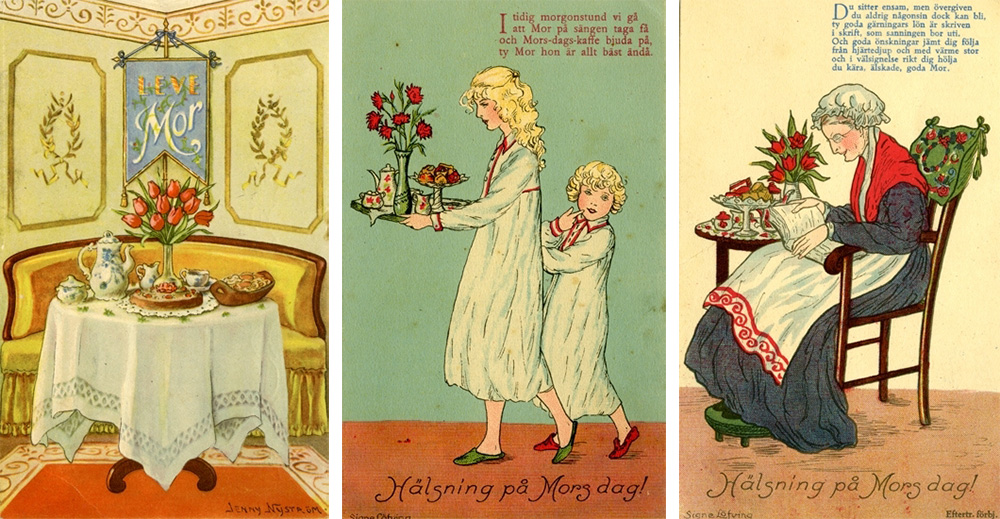
Image: Norwegian Mother’s Day Greeting card by Jenny Nystrøm/Nasjonalbiblioteket.
In Norway, Morsdag is celebrated on the second Sunday of February. Most countries celebrate Mother’s Day between March and May. Norway is the only country in the world to celebrate the day in February.
Ways in which mothers are honored on the special day include the following.
Moms Receive Breakfast in Bed
Most children who live at home in Norway celebrate Mother’s Day by making their moms breakfast in bed, consisting of tasty bread rolls and freshly-brewed coffee.
Often, bouquets of flowers are given as breakfast is served.
Cards and Gifts Are Given
In addition to giving flowers, many children and adult children in Norway give their mothers cards and gifts.
If it’s not possible for adult children to go home for the day, they will often send virtual Mother’s Day cards instead and send gifts via mail.
Also, it’s common for kids and adult children to make handmade gifts for their mothers.
Cakes and Pastries Are Made to Celebrate the Day
Children, with the help of their fathers or older siblings, often make cakes or special pastries to celebrate Mother’s Day.
One favorite is Verdens Beste Kake, which literally means the World’s Best Cake in Norwegian!
Image: Mother’s Fay in Sweden. Illustration: CLARIN knowledge center for the languages of Sweden
Known as Mors Dag in Swedish, Mother’s Day is celebrated in the Scandinavian country of Sweden on the last Sunday in May.
Here are three ways in which people celebrate the day.
Families Have Meals Together
It’s very common in Sweden for families to have special meals together on Mother’s Day.
In addition to eating tasty home cooked Swedish food, gifts and flowers are usually given during the meal.
Families Go on Outings
In Sweden, it’s also common for families to go out on special outings, such as picnicking in the countryside or going on a long walk along the coast after a meal at home.
Swedes Celebrate Mothers in Society
As well as honoring and celebrating their own mothers, Swedes see Mother’s Day as an opportunity to honor and support mothers within society.
So, many charitable organizations hold events and fundraisers to support moms in need, such as mothers with disabilities and single moms.
In Denmark, Mother’s Day is held in the second week of May.
Also known as Mors Dag, Mother’s Day sees families getting together to honor mothers.
Here are just three ways in which the day is celebrated in Denmark.
Families Like to Eat Out
While many families get together for home cooked meals, as in Sweden, many other families enjoy eating out at nice restaurants on Mother’s Day.
Popular restaurants are usually fully booked on the day.
Mothers Are Given Mors Dag Cakes
As in Norway, children often buy or make cakes for their mothers in Denmark.
Danish bakeries are always busy in the run-up to the day making special Mors Dag cakes.
Commemorative Plates Are Given as Gifts
It’s common for children and adult children to give their mothers cards, flowers, and other gifts on Mother’s Day, just like in other countries.
But since the late 1960s, it’s also common to buy special commemorative Mother’s Day plates in Denmark.
Over the years, Danish mothers can gain quite a collection of plates – which they can always use to serve the delicious Mors Dag cakes!
Nadine Westwood
9 Different Ways Mother’s Day is Celebrated in Scandinavia, written exclusively for Daily Scandinavian by Nadine Westwood. Nadine is a registered dietitian, travel blogger & fitness lover. In her spare time, she helps save stray animals. Nadine really does enjoy sharing her fitness journey with others who might need help with weight loss or finding a stress reliever.
Often, before buying or doing something important, people ask themselves questions. Similarly, people who are looking forward to renting a coworking space in Stockholm or any other city, and ask themselves questions that will help them make the right choice. Although coworking is not new. Much is known, already said and written, but people that are interested are still searching. That’s why I’ve collected the most common questions people ask about coworking spaces online and the answers to them.
What is meant by coworking space?
Have you ever heard of a coworking space? It’s a place where people from different companies or organizations can work together in the same space. Each person rents a desk or workspace that they can use to work independently.
Coworking spaces have everything you need to work, like desks, chairs, Wi-Fi, and printers. Some even have extra things like meeting rooms, kitchens, and lounges. They’re great for freelancers, entrepreneurs, and people who work from home because they offer an affordable and flexible workspace.
The idea of coworking spaces started as a way to help people who work independently to collaborate and network with others. But now, even big companies are using coworking spaces instead of traditional offices. It’s a great way to work in a shared environment and be productive.
It’s important to think about what you need and want before making a decision. Here are some things to consider:
Money: Coworking spaces can be more expensive than working from home or a coffee shop. But they usually have more things to offer and a professional atmosphere. Think about if you can afford a coworking space and if the things they offer are worth the price;
Productivity: Coworking spaces can help you stay focused and get more done than working from home or a coffee shop. If you have trouble staying on task at home, a coworking space might be a good choice for you;
Networking: Coworking spaces can give you the chance to meet and work with other people in your field. If networking is important to you, a coworking space could be a great investment;
Flexibility: Coworking spaces usually have different plans you can choose from. You can rent a desk or workspace for a day, a week, or a month. If you need a workspace that can change with your schedule, a coworking space might be a good fit.
If you want a professional and productive place to work, a chance to network, and a flexible plan, a coworking space could be a good choice. But if you don’t have a lot of money or prefer to work alone, a coworking space might not be the best option for you.
What can you do in a coworking space?
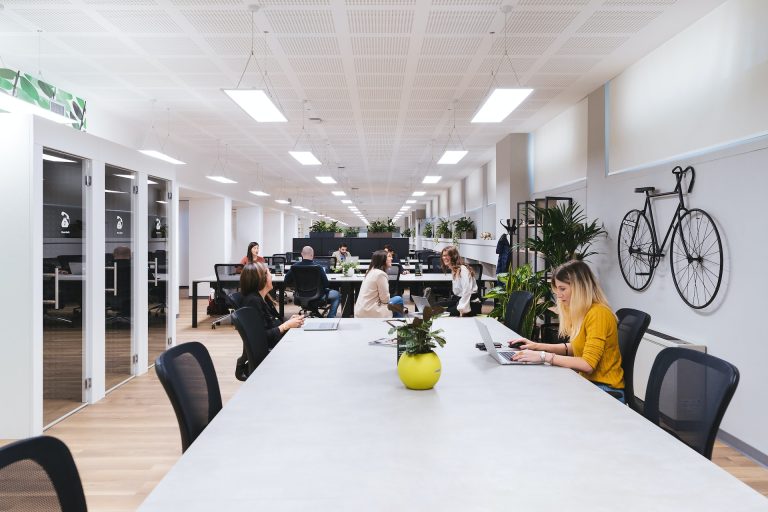
It’s important to think about what you need and want before making a decision. Photo: Shrindhar Gupta/Unsplash
Coworking space is not a regular office but as a working space, they have much in common. Still, at some point, a coworking space is also a culture, so activities may differ. Here are the things that you can do:
Work on your laptop or computer: Coworking spaces have a quiet and professional environment where you can work on your computer;
Hold meetings: If you need to meet with clients or team members, you can rent a meeting room at a coworking space;
Collaborate with others: You can meet other professionals in your field and work together on projects;
Attend events: Coworking spaces often have workshops and networking events where you can learn new skills and meet other professionals;
Use office equipment: You can use printers, scanners, and copiers in a coworking space;
Take a break: Coworking spaces have lounges and kitchens where you can take a break from work and socialize with other members.
A coworking space is a great place to get work done and meet new people. It’s a professional and collaborative environment that can help you focus on your work and grow your network.
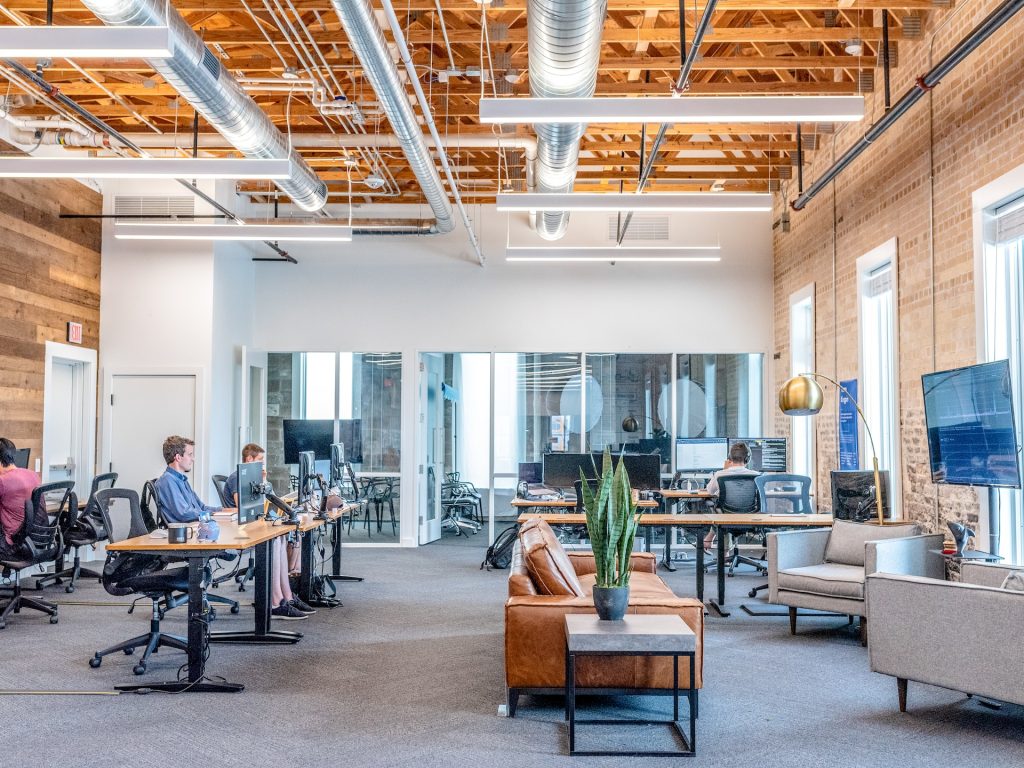
Coworking space is not a regular office but as a working space, they have much in common. Photo: Austin Distel/Unsplash
There are many benefits of coworking spaces, including:
Professional environment: Coworking spaces are places where you can work in a professional environment. This can help you focus on your work and get more done;
Networking opportunities: Coworking spaces bring together people from different fields and backgrounds. This means you can meet new people and work with them on projects;
Flexibility: Coworking spaces offer flexible plans. You can rent a workspace for a day, a week, or a month. This means you can work when and where you want;
Cost-effective: Coworking spaces can be cheaper than traditional office spaces. This is especially true for small businesses or startups that don’t have a lot of money;
Access to amenities: Coworking spaces have things like Wi-Fi, printers, scanners, meeting rooms, and kitchens. This means you don’t have to spend money on these things yourself;
Community and collaboration: Coworking spaces are places where people work together. This means you can learn from others and share your own ideas;
Work-life balance: Coworking spaces can help you balance your work and personal life. You can work outside of your home and avoid distractions.
Coworking spaces are great places to work. They can help you meet new people, get more done, and save money.
How do coworking spaces make money?
There are many benefits of coworking spaces. Photo: Austin Distel/Unsplash
Coworking spaces are places where people can work together and share resources. They make money by charging people for using their space and services. Here are some ways that coworking spaces can make money:
Membership fees: People who use coworking spaces usually pay a monthly or yearly fee to access the space and its services. The cost depends on the type of membership, the services provided, and the location of the coworking space;
Day passes: Some coworking spaces offer day passes or hourly rates for people who only need to use the space occasionally. These rates are usually more expensive than monthly membership fees;
Private offices: Some coworking spaces offer private offices or dedicated desks for an extra fee. This allows members to have their own space within the coworking space;
Meeting room rentals: Many coworking spaces have meeting rooms that can be rented by the hour or day for meetings or events;
Event rentals: Coworking spaces can also make money by renting out their space for events like workshops, conferences, or networking events;
Partnerships: Some coworking spaces partner with other businesses to offer their members discounts or special offers. This can also generate revenue for the coworking space.
Coworking spaces make money by providing a professional and collaborative workspace that meets the needs of its members. They also offer additional services and amenities that generate revenue for the coworking space.
Coworking spaces are places where people can work together in a shared environment. There are different types of coworking spaces that cater to different needs. Here are some common types:
General coworking spaces: These are flexible workspaces that offer open areas, private offices, meeting rooms, and other amenities. They are great for freelancers, entrepreneurs, and small businesses;
Industry-specific coworking spaces: These are designed for professionals in a specific industry, like technology, media, or creative fields. They offer industry-specific resources, tools, and networking opportunities;
Incubators and accelerators: These are coworking spaces that focus on supporting early-stage startups. They provide resources like mentorship, funding, and networking opportunities to help startups grow and scale;
Corporate coworking spaces: These are coworking spaces that are owned and operated by large corporations. They offer flexible workspace options for remote teams and freelancers, as well as opportunities for collaboration and innovation;
Hybrid coworking spaces: These are coworking spaces that offer a combination of traditional office spaces and coworking areas. They are designed for businesses that require both private offices and shared workspaces;
Shared office spaces: These are coworking spaces that offer a shared office environment with other professionals. They are great for small businesses and startups that want to reduce overhead costs;
Virtual coworking spaces: These are online platforms that provide virtual coworking and collaboration tools for remote teams and freelancers. They offer features like video conferencing, project management, and task tracking.
Are there any disadvantages in coworking spaces?
Coworking spaces can be a great place to work, but there are some things you should know before you decide to use one. Photo: Helena Lopes/Unsplash
Coworking spaces can be a great place to work, but there are some things you should know before you decide to use one. One thing to keep in mind is that coworking spaces can be noisy and busy. This might make it hard for you to focus on your work if you get easily distracted. Another thing to consider is that you might not have as much privacy as you would in a traditional office.
Most coworking spaces have shared desks, so you might not be able to work in a private office. You also might not be able to control the temperature, lighting, or noise levels in a coworking space. This could make it hard for you to feel comfortable and productive. When you work in a coworking space, you’ll be working alongside people from different companies and backgrounds. This can be great for networking, but it also means you might not have as much control over the office culture and dynamics.
Finally, coworking spaces can be expensive, especially if you need a private office or dedicated desk. And they might not offer the same level of security as a traditional office, which could be a concern if you’re working with sensitive information.
Before you decide to use a coworking space, it’s important to think about these potential disadvantages and weigh them against the benefits.
How much does it cost to rent a coworking space?
Well, the price usually depends on where you are and what you need. I can’t tell the exact number but here are some price ranges across Sweden:
If you’re okay with sharing a workspace and using any available desk, you can go for hot-desking. Prices can range from SEK 1,500 to SEK 3,500 per month. But if you want a dedicated desk that you can use every day, prices can go up to SEK 6,000 per month.
If you need more privacy, you can rent a private office. This is a fully enclosed space that you can use exclusively. Prices can range from SEK 6,000 to SEK 20,000 per month.
But what if you don’t need a physical workspace? You can still get a virtual office package that provides you with a business address, mail-handling services, and other amenities. Prices can range from SEK 500 to SEK 1,500 per month.
Remember, these are just general guidelines. Prices can vary depending on the specific coworking space and the location within Sweden. So, it’s always a good idea to research several options and compare prices and amenities before choosing a coworking space that suits your needs and budget.
Who goes to coworking spaces?
Coworking spaces are places where people can go to work, but they’re not like regular offices. Lots of different types of people use coworking spaces, like freelancers, startups, small businesses, remote workers, entrepreneurs, non-profit organizations, and digital nomads.
Freelancers like coworking spaces because they can work in a professional environment and meet other professionals. Startups like coworking spaces because they’re cheaper than regular offices and can change as the startup grows. Small businesses like coworking spaces because they can have a professional presence without paying for a whole office. Remote workers like coworking spaces because they can separate their work and home life and use office amenities. Entrepreneurs like coworking spaces because they can work on their businesses and meet potential partners and investors. Non-profit organizations like coworking spaces because they can save money on rent and still have a professional workspace. Digital nomads like coworking spaces because they can work while they travel and still have a professional workspace.
Overall, coworking spaces are great for people who want flexibility, networking opportunities, and access to a professional workspace and amenities.
Written dedicatedly for Daily Scandinavian by Sebastian Dahl.
The world is embracing yet another Scandinavian concept: “lagom”. What does living the «lagom» life in Sweden mean?
Danish “hygge” and Swedish “fika” are both nice, but “lagom” is perhaps even better, in any case if you use private consumption and climate challenges as benchmarks. This is what Elliot Jay Stock says, who together with his wife Samantha Stock publishes the Bristol-based lifestyle magazine Lagom.
The magazine Lagom is published twice a year, with a circulation of 6,000.
The Swedish word “lagom” translated into English is “just the right amount” or “not too much, not too little”. Just as we’re learning to decorate like Danes, using the word “hygge” as our guide, along comes another Scandinavian tranquility-producing concept.
Elliot Jay Stock learned about the Swedish word “lagom” from Swedish friends more than a decade ago, and says that the “lagom” mindset has become fashionable in Britain.
Lagom definition
According to Wikipedia, the word can be variously translated as “in moderation”, “in balance”, “perfect-simple”, “just enough”, “ideal” and “suitable” (in matter of amounts). Whereas words like sufficient and average suggest some degree of abstinence, scarcity, or failure, lagom carries the connotation of appropriateness, although not necessarily perfection.
A way of life for Swedes for generations, the concept of living the lagom life has, within the last few years, evoked curiosity among Americans. An Amazon search yields no less than eleven recently published books dedicated to the subject.
Lagom magazine depicts a lifestyle that the middle class can also take part in, not the dream of the perfect life.
The archetypical Swedish proverb “Lagom är bäst”, literally “The right amount is best”, is also translated as “Enough is as good as a feast”, or as “There is virtue in moderation”.
There are now books instructing English speakers on how to apply the lagom concept in general, in interior design, cooking, fashion, and sustainable living.
Elliot Jay Stock together with his wife Samantha Stock.
The magazine Lagom is published twice a year, with a circulation of 6,000, and is intended as inspiration for creative people who want to start a pleasure-oriented side project, or who just want a break. It is sold in the British Isles, in Asia, Canada and several European countries, including Scandinavia.
When you feel like you have all that you need without the need for more. Then you understand what lagom is all about.
Christian Frederic Møller (1898-1988) was a Danish architect, professor and, from 1965 to 1969, the first rector of the Aarhus School of Architecture. His architecture firm C. F. Møller was founded in 1924. Today, it is the largest architectural firm in Denmark with branch offices in several countries. Learn more about the Danish heavy-weight architect.
Christian Frederic Møller first trained as a mason and later studied architecture at the Royal Danish Academy of Fine Arts in Copenhagen. He graduated in 1920 and went on study trips to England, Germany, Italy, France and Switzerland.
In Norway, the architectural company C. F. Møller might be associated with developing hospitals because of its high profile project Akershus University Hospital in Oslo. However, the company has always had a passion for developing urban spaces and has more to offer.
The company claims to create architectural quality based on innovation, experience and Nordic values. This assures sustainable and aesthetic solutions with lasting value for clients, occupants and society.
The company’s winning proposal for Aarhus University in 1931 consisted of individual faculty buildings arranged along the margin of an undulating park setting. The first building at the site was completed in 1933.
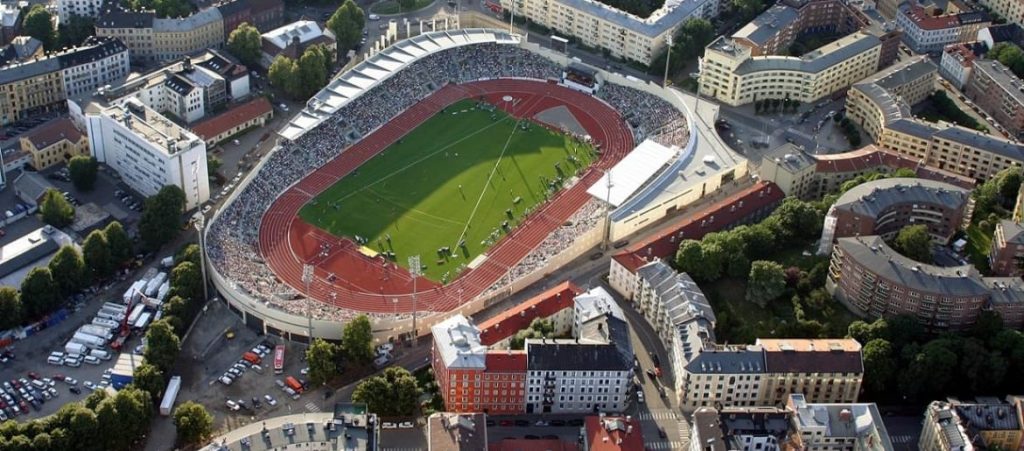
A new stadium built over the famous Bislett stadiun in Oslo 2004-2005. Photo: NCC
When C. F. Møller won the bid for three major restorations and construction projects in Oslo, its place amongst Norwegian architectural heavy-weights was secured. The company’s work on Bislett Stadium and Domus Media in Oslo were important projects which documents this.
“We regard environmental concerns, resource-consciousness, healthy project finances, social responsibility and good craftsmanship as essential elements of our work. This ethos is fundamental to all our projects, a thread which runs from master-planning to detail design,” says manager Christian Dahle.
Today, C.F. Møller has approximately 350 employees. The head office is in Aarhus, Denmark and there are branches in Copenhagen, Aalborg, Oslo, Stockholm, Malmö and Berlin.
The Danish Heavy-Weight Architect, written by Tor Kjolberg
Feature image (on top): Vestby urban center outside Oslo
Denmark hijacks Mona Lisa’s fame with offbeat AI campaign. A new activation campaign from the tourism organization VisitDenmark aims to put the “Land of Hygge” on the map as an antidote to bucket list tourism. Using artificial intelligence, the Mona Lisa, the Statue of Liberty and other iconic tourist attractions come to life with a simple message: Don’t come to me – visit Denmark instead. Apart from the cheeky approach, the campaign stands out by being completely written by artificial intelligence.
“Imagine that you are Mona Lisa. Write a speech on why people should visit Denmark instead of standing in line to see you.” This was the prompt given to artificial intelligence (AI) to create the script of one of a series of campaign videos. In this series, tourist attractions all over the world turn against themselves and recommend visiting Denmark rather than standing in line at the Louvre or seeing the Statue of Liberty in a sea of selfie sticks.
Tourist attractions all over the world turn against themselves and recommend visiting Denmark rather than standing in line at the Louvre or seeing the Statue of Liberty in a sea of selfie sticks.
The Mona Lisa, Vincent Van Gogh’s 1887 self-portrait and the Statue of Liberty are undeniably massive draws for tourists visiting Paris, Chicago and New York.
For decades, people have marveled at Mona Lisa’s mysterious smile – but have you ever wondered what she would say if given the chance to speak? “While I appreciate the attention, let’s be honest. Standing in line for hours just to see me is not exactly the most exciting way to spend your holiday,” she says.
When travelers seek more authentic experiences, Denmark emphasizes that a visit to the country is not about ticking off the most famous sights, but rather stumbling upon the many small and large gems that hide around every corner of the small Scandinavian country.
“Having iconic attractions from popular tourist destinations turn on themselves is a good way to highlight the absurdity of doing and seeing the same things as everyone else,” says Louis Pilmark, Creative Director at Danish advertisement agency Brandhouse/Subsero.
Executing on the brief ‘Don’t be a tourist – be an Explorist,’ VisitDenmark positions Denmark as the antidote to bucket list tourism. “Having iconic attractions from popular tourist destinations turn on themselves is a good way to highlight the absurdity of doing and seeing the same things as everyone else. Who better to explain it than the paintings and statues that see millions of tourists every year,” says Louis Pilmark, Creative Director at Danish advertisement agency Brandhouse/Subsero.
While new techniques such as “deepfake” and “motion synthesis” have been used to bring images to life over the past couple of years, the addition of a script generated entirely by AI makes it one of the first campaigns to combine the two technologies. Flemming Bruhn, Marketing Director from VisitDenmark explains: “The scripts are 100% generated by AI – we haven’t written a single word – we’ve only removed sentences that were too long or simply weren’t right. While it felt somewhat risky to put the entire campaign in the hands of artificial intelligence, we are excited to be at the forefront of the travel industry, using cutting-edge technology to bring our creative visions and messages to life.”
From the Happiness Museum: Mona Lisa smiles differently in the left and right side.
A recent UK, Germany, and Sweden study revealed that overcrowded tourist sites and landmarks are among the top two reasons for holiday disappointment (54 percent). Today’s travelers are looking to find hidden gems and seek off-the-beaten-path experiences rather than ticking off a long list of mainstream attractions, according to a survey conducted by YouGov on behalf of VisitDenmark. “From a marketing perspective, the current trends only make Denmark more relevant as a vacation spot,” says Kathrine Lind Gustavussen. “We are obviously always advocates for Denmark. But as a country that doesn’t have one main attraction, but rather an abundance of smaller, unique experiences in everything from nature to culture, Denmark fits the wish for ‘the road less traveled’ perfectly, and we welcome ‘Explorists’ to the land of everyday wonder.”
A recent UK, Germany, and Sweden study revealed that overcrowded tourist sites and landmarks are among the top two reasons for holiday disappointment (54 percent).
“From a marketing perspective, current trends make Denmark more relevant as a holiday destination,” says Flemming Bruhn. “We are obviously always advocates for Denmark. But as a country that does not have one main attraction, but rather an abundance of smaller, unique experiences in everything from nature to culture, Denmark perfectly fits the desire for ‘the road less travelled’ and we welcome ‘Explorers’ to the country with the many everyday wonder.”
Denmark Hijacks Mona Lisa, based on a press release from Visit Denmark
The snowy region Sälen within driving distance of Stockholm has gentle slopes and welcoming cabins deep in the forest offering waffles and more. Skiing in Sälen – Sweden- should be on all skiers’ bucking list.
With 830 meters, Stöten has the highest altitude in all of Sälen mountains. This is where you can enjoy the combo of great skiing and snow, as well as a stunning view over the Swedish and Norwegian mountain landscape.
You’ll find slopes for everyone – from easy bunny-slopes to steep and more challenging ones. At Stöten, all accommodation is in close proximity to the ski system, so the only transportation you’ll need during your stay is skis and ski lifts.
Sälen is the largest ski resort in Sweden and consists of several areas: Kläppen, Lindvallen, Högfjället, Tandådalen, Hundfjället and Stöten.
If you want a real special experience, head for Hemfjället, 850 meters above sea level and Hämfjällsstugan. The only way to get there is by snowmobile or cross-country skis. You’re only served soups, waffles and fika, but feel the atmosphere in a cabin without central water or electricity!
The only way to get to Hämfjällstugaan is by snowmobile or cross-country skis.
Hemfjällsstugan is lit entirely by candles and oil lamps. The dining area is a series of wooden tables and benches, a counter and a small chalkboard menu: waffles with homemade strawberry jam, waffles with homemade blueberry jam, and waffles with homemade cloudberry jam and soup of the day.
Stöten offers a total of 50 slopes with different degree of difficulty, suitable for all ages and with or without previous skiing experience. At least one of the slopes is guaranteed to become your new favorite!
Regardless age and previous skiing experience, ski lessions make you a better skier. Professional ski instructors are trained in both ski technique and pedagogics and can quickly pinpoint what you can improve with your skiing.
In Stöten you’ll find up to 45 kilometers of cross-country skiing tracks, both down in the valley and up on the mountain peak. Enjoy cross-country skiing with both the Swedish and the Norwegian mountain landscape as backdrop.
One thing you shouldn’t miss in Stöten is morning skiing when you can be almost alone in the slopes. Take the first lift up while the rest of the resort is still asleep and get access to the slopes before everyone else. And why not extend the ski day with night skiing?
Högfjället is the highest located part of Sälen with few slopes but a very nice hotel and a major hangout place for after ski and party.
In Tandådalen and Hundfjället you will find the steepest slopes but also good slopes for families and beginners. Loads of activities for children and teenagers and never quiet. A big dreampark with jumps, rails and halfpipes is available and very popular.
The best reason to get to the top of the Hundfjället mountain is possibly to eat. There’s almost always a sit-down restaurant at the peak, with menus that are local, seasonal and prepared by French-trained chefs.
Sunset and snow in Sälen. Photo: Wikipedia
However, every area in Sälen has its unique character and they are all worth a visit. The areas are located in line with the mountain. When you arrive at Sälen you first arrive at Kläppen, then Sälen village with all facilities, and then the rest of the ski resorts.
Kläppen is the warmest and sunniest part of Sälen, located at lowest altitude. There are several long and winding pistes that suit both adults and children, cozy chalets, restaurants and access to cross-country tracks.
Lindvallen is the family paradise which is perfect for children. Many green and blue pistes. The children love the enormous snow man that is created at the top of the mountain. The snow coverage is reliable and snow cannons are available in most parts.
Restaurant Sälen Original, just look for a building looking like a gingerbread house, is a good place for dinner.
From Stöten
Stören is where you can enjoy the combo of great skiing and snow, as well as a stunning view over the Swedish and Norwegian mountain landscape. You’ll find slopes for everyone -from easy bunny-slopes to steep and more challenging ones.
The mountains in Sälen aren’t intimidating; they’re what you would get if you sanded the top of the Alps down to smooth, endless hills. At the bottom they’re blanketed in forest, but there are no trees at the summit, so you can ski down in almost every direction. The slopes are mostly gentle, and there are trails for every level skier, cross-country skier and snowboarder.
If you feel like some fun during the evening or just want to rest for a day there are so many activities to do in Sälen, both for kids and adults.
From Tandadalen. Photo: Skistar
The relationship between dark and light starts to play tricks on you in this part of Sweden, where the sun goes down around 3 p.m. in December. Long, menacing shadows start to follow you around by lunchtime, reminding you that your ski day is on a clock (although many slopes have lights). The sky swims between dusty pink, faded yellow and icy blue.
Skiing in Sälen – Sweden, compiled by Tor Kjolberg








 XO flowerpot by Ann Kristin Einarsen
 Juv dining table by Anna Maria Øfstedal Eng
 Fiber Lines by Ida Hagen
 Layer by Jomi Evers
 Souvenir by Live Berg + Osloleire
 One and Two by Martin Høgh Olsen
 Rede by Noidoi
 Roggbif by Studio Sløyd
 C2S by Stine Aas + Siv Støldal
 Kringsjå by Svingen
 Kollen by Tobias Berg
 1. Facebook
 2. Instagram
 3. Pinterest
 4. Twitter
 5. LinkedIn
 6. Snapchat
 7. YouTube
 8. Tik Tok