Raspberries grow wild all over the northern hemisphere and in great abundance. Learn more about Scandinavian raspberry.
Clearings and woods, where the soil is deep and well nourished, are sure to host prickly areas of wild raspberries, which taste incomparably better than domesticated ones. And you can pick as many as you want if you take the time for a fruitful picnic in the woods. A handful of raspberries is a wonderful thing simply eaten from a juice-stained hand, but it can also go a long way to add flavor to cakes and puddings. Furthermore, raspberries are full to the brim with antioxidants and, of course, vitamin C.
Wild raspberries are small but richly flavored. This does not mean that home-grown raspberries are necessarily inferior, depending on the cultivar, they can be intoxicatingly sweet, juicy and bursting with taste. But beware of modern cultivars with over-large berries; you will get lots of fruit, but your jam will be nondescriptly berry-ish and without the tart, distinct raspberry taste that you want.
Raspberries grow in canes, usually bearing fruit the year after initial planting. Photo: Hageland
How it grows
Raspberries grow in canes, usually bearing fruit the year after initial planting. Many Scandinavians grow many cultivars in their gardens, including an autumn-fruiting yellow variety which actually bears fruit twice, both in the summer and again from September to November – that is, if you ignore the garden ‘wisdom’ of cutting back the canes after fruiting. They have a flavor of all their own as the color indicates, of peach Melba.
If you are buying raspberries, they must be completely fresh, with absolutely no mould on them. Photo: Meny
Buying and storing
If you are buying raspberries, they must be completely fresh, with absolutely no mould on them. Commercially grown raspberries are more resilient than home-grown ones, but generally raspberries do not keep for long and the taste deteriorate very quickly, particularly if the fruit is warm or wet. If you keep raspberries for more than a few hours, you must put them in the fridge, but this will take away their taste, and you must return them to room temperature before eating them. Any surplus must be heavily dusted with sugar to prevent mould, which relieves them from the strain of the fridge, and are heaven on your morning muesli or yoghurt.
Raspberries are well suited to freezing as they keep their taste well, but of course lose any firmness.
Commercially grown raspberries are more resilient than home-grown ones. Photo: Asko servering
Culinary uses
Raspberries are much loved by Scandinavians, and may be our best-loved berry for jam. The culinary uses for raspberries have no end, but it’s not very often that you have the chance to tire of raspberries eaten raw with cream or ice cream, or made into rødgrød, fools or jam. However, these cakes are well worth a try. The sponge and jam in the multilayer raspberry cake melt slowly into a fusion of rich marzipan taste, and it is to us what Christmas cakes are to the British. The shortcut squares are quickly to make and perfect for afternoon tea.
While strawberry jam is exciting enough to be used in desserts and cakes too, as its flavor is much more pronounced.
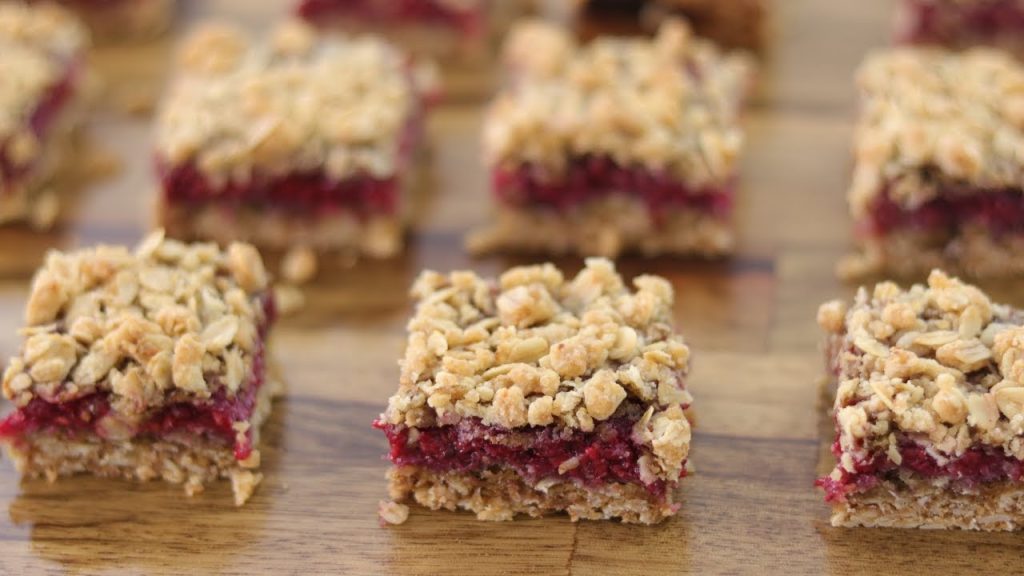
Raspberry shortcrust squares
These delicious and homely-looking pastry squares are quick and easy to make. Photo: YouTube
These delicious and homely-looking pastry squares are quick and easy to make, and are perfect for afternoon tea. Children love them and are quite capable of baking them themselves.
400g raspberry jam for the pastry
200g salted butter, chilled
100g icing sugar
300g plain flour
2 egg yolks
A little rice flour, for rolling icing sugar, for dusting.
Makes 8-10
Chop the ingredients for the pastry on the worktop with a large knife. When it resembles grated cheese, assemble the dough using the warmth of your hands. Do not knead it. Divide the pastry in half and form into two flat rounds. Chill for 1 hour.
Preheat the oven to 200℃/gas mark 6. Using a little rice flour, roll over the pastry directly on to the parchment paper to form two identical 3mm-thick squares. Place on a baking sheet and bake until cooked through and lightly golden.
While the pastry is still hot, spread the jam on to one of the squares. Leave the other to cool. Then place it on top – the easiest way to do this is upside down, as you can pull off the paper once the pastry is in place. Gently press together.
The price you pay for this delicious, very crispy and flaky dough is that it will crack in unexpected places when you cut the cakes into squares, triangles or whatever shape you prefer. It will keep for several days, if wrapped in clingfilm and stored in a cool place, though not the fridge as it gives cakes a nasty consistency and steals the taste. Dust with icing sugar before eating.
Scandinavian Raspberry, written by Tor Kjolberg
Feature image (on top): Rubus idaeus / Wikipedia
In 2009, Minneapolis Museum of Modern Art presented the exhibition “European Design Since 1985 – Shaping the New Century”. Next to world stars such as Jasper Morrison and Zaha Hadid, the Norwegian designers Cathrine Maske, Johan Verde and the company Harede Designmill (led by former Saab designer Einar Hareide) exhibited their products. In this article we focus on theNorwegian Award-Winning Design Company Hareide Designmill.
Hareide Designmill is working across a wide range of industries including product, interior, maritime, automotive and technology. Hareide Design has received more than 20 awards from the Norwegian Design Council, Red Dot design awards, Red Dot Best of the Best design awards and If-Gold design awards. The company’s work has been internationally recognized by museums such as Museum of Modern Art (MoMA), Indianapolis Museum of Art (IMA) and Museum of Arts And Crafts Oslo, and has participated in several exhibitions, and been featured in hundreds of magazines worldwide.
Hareide’s “Startloop”, which was launched in 2002, made it possible for small and medium-sized cars to charge flat batteries by inserting the cable directly into the socket for the cigarette lighter. In 2006, “Startloop” was incorporated into the permanent collection for design and architecture at MoMa in New York.
In 2010, Hareide Designmill was awarded the prestigious Award for Design Excellence from the Norwegian Design Council for Kongsberg Maritime’s integrated aft bridge workstation. The Award is a leading award for design in Norway and is given to both manufacturers and designers that have cooperated on the development of products.
Hareide’s Kongsberg K-master
“We are honoured to have won this prestigious award,” said Kongsberg Maritime project manager for K-Master, Thor Hukkelås. “With K-Master, we have developed a product that offers functional operation and high design values, so it has received attention beyond our traditional markets. The award reflects our commitment to modern design, aesthetics and innovation, while at the same time placing the end-user and operator in the driving seat.”
In 2015, Hareide Designmill was awarded the Red Dot Award for the wood stove Jøtul F 305.
In 2015, Hareide Designmill was awarded the Red Dot Award for the wood stove Jøtul F 305. The stylish wood stove with a large glass door that covers 70 percent of the front face, is giving an impressive view of the fire. Its horizontal combustion chamber makes filling it with logs easy and guarantees quick heat emission into the room. Its integrated heat convection allows the stove to be safely installed even near combustible materials. A flat top panel is currently under development with the objective of making the stove a multifunctional device.
“The Jøtul F 305 wood stove owes its high functionality to an easy-access combustion chamber and its efficient thermal properties,” said the jury.
In 2018, Hareide Designmill once again won the prestigious Red Dot Award. This time for the product maneuver lever and panel designed for the Swedish company Berg Propulsion. The company became the first Norwegian agency to be awarded “red dot: best of the best” for the second time.
The “Red dot design award” is the largest and most recognized design award in the world.
In 2018, Haeide won the Red Dot Award for the product maneuver lever and panel designed for the Swedish company Berg Propulsion.
About Einar Hareide
Einar Hareide has studied industrial design at the University in Gothenburg, and further studies in automotive design from Center for Creative Studies in Detroit.
In 1985 Einar Hareide was employed as a designer at Saab Automobile to develop the exterior design of the new Saab 900. In 1989 Einar Hareide was hired by Mercedes-Benz in Stuttgart. During that period he developed the theme model for the 1994 Mercedes E-Class (W-210). In 1991 Einar returned to Saab Automobile to be in charge of the exterior design of the Saab 9-5, and in 1994 he was promoted to design director in charge of the design operations including the design of the 9-3 and 9-5 series. In 1999 Einar Hareide together with Harald Sjølshagen established Hareide Design in Moss, Norway, and later-on in Gothenburg, Sweden.
Norwegian Award-Winning Design Company, written by Tor Kjolberg
Feature image (on top): Hareide’s “Startloop”, which was launched in 2002, made it possible for small and medium-sized cars to charge flat batteries by inserting the cable directly into the socket for the cigarette lighter.
Every year millions of people move from their native country in pursuit of a better life. An American study Americans Abroad is exploring why US citizens are leaving their country. If you consider moving to another country and Scandinavia seems to be one of your options, here is the complete guide to moving to Norway.
In this guide we will cover custom duties, tax, registration, work opportunities, social insurance rights, education, and housing.
Immigration
Norway’s immigration rules may not be as challenging as you think.
Immigration requirements depend on many things including your citizenship, reason for immigration, professional qualifications, and your family and financial circumstances. Norway’s immigration rules may not be as challenging as you think. Of the 5.48 million people presently living in Norway, approximately 15% were born in another country.
If you are a citizen in another Nordic country, you are entitled to move to Norway to live, work and study. However, you do not need to apply for a residence permit or similar. If you are a citizen of another EU/EEA country, you may freely enter Norway and stay in the country for up to three months. If you are staying in Norway for more than three months, you must register.
The EEA provides for the free movement of persons, goods, services and capital within the European Single Market, including the freedom to choose residence in any country within this area. What this means is that citizens of EEA member states have a much easier time of things when it comes to immigration.
The Norwegian Directorate of Immigration (UDI) is the body responsible for the immigration process, but the Norwegian police is responsible for most of the paperwork.
You need to book an appointment for a personal meeting at a tax office and undergo an ID check. If you are moving to Norway together with your family, it is important that all family members attend the personal meeting at the tax office. You need to take some documentation with you, such as an ID card, employment contract/student certificate, or similar. When you become registered as living in Norway, you will be given a Norwegian identity number. In some countries, you must also notify the population registry that you have moved to another Nordic country.
For those seeking relocation, finding a job as a ‘skilled worker’ is the most likely way to be granted a residence permit. To justify the skilled worker permit, the job must require a university degree or equivalent vocational training, with a minimum annual salary of NOK 449,900 ($43,500) if it requires a master’s degree or NOK 417,900 ($40,500) if not.
People who would qualify for a ‘skilled worker’ work permit can apply for a six-month job-seeker visa, although UDI states these are only given in “exceptional circumstances.”
Although there is a job seeker permit for certain professions, the general rule is that you’ll already need a firm job offer from a Norwegian company to be granted a work permit. The job will need to be of a certain salary to qualify.
Residence permits are also available for specific trades including seafarers, offshore workers, sports athletes and coaches, ethnic cooks, au pairs and religious teachers. Starting a business as a self-employed person is possible, but proof of expected income is required and, crucially, it must be necessary for you to be in Norway.
In 2022, UDI clarified the rules on remote workers. While many countries especially in Asia and Latin America welcome digital nomads, that’s not the case in Norway. UDI considers working in Norway for a remote employer (or your own online business) to be no different, meaning in most cases a skilled worker or self-employment residence permit is required.
After three years holding valid residence permits, it’s possible for non-EU/EEA citizens to apply for a permanent residence permit meaning you can live and work in Norway indefinitely with no need to renew permits.
Contrary to popular belief, having a distant Norwegian relative does not entitle you to Norwegian citizenship and gives you no kind of advantage in the immigration process.
A quick note for British citizens. The United Kingdom is no longer a member of the European Union, nor the EEA agreement. This means that the information above no longer applies to British citizens.
Housing
Most newcomers arrange temporary accommodation to tide them over for a few months. Photo: Karin Beate Nøsterud/norden.org
Finding accommodation in the major cities is becoming quite difficult. Most newcomers arrange temporary accommodation to tide them over for a few months while they look for something more suitable.
The process for renting a house, apartment or even just a room is fairly similar. Most people go through one of the online marketplaces such as Finn.no, or rely on their new employer to help.
Paying as much as three months’ rent as a security deposit is commonplace, which is another common financial barrier faced by new arrivals.
There are different types of housing in Norway. Foreign citizens and people living in other countries may freely buy or rent property in Norway. However, some properties have a residence obligation.
Depending on your circumstances, passing an oral exam or attending a mandatory amount of formal tuition is required. However, there is no legal requirement for anyone to learn Norwegian to live in Norway, at least on a temporary basis.
MinID is a personal log-in to public services in Norway.
MinID is a personal log-in to public services in Norway. With your personal MinID you can, for example, gain access to different services of the Norwegian Labor and Welfare Administration, NAV, apply for admission to higher education, apply for a loan and grant from the Norwegian State Educational Loan Fund (Lånekassen), and submit your tax return electronically. You need a Norwegian national identity number or a D number to set up MinID.
BankID is a personal, electronic ID that gives you access to public services at the highest level of security. To get a BankID you must contact your bank.
If you have lived abroad continuously for at least one year, you may bring most of your removal goods free of customs duties and taxes when you move to Norway. For some items, you must complete a declaration form for the import of removal goods and submit the form to the Norwegian Customs (Tolletaten).
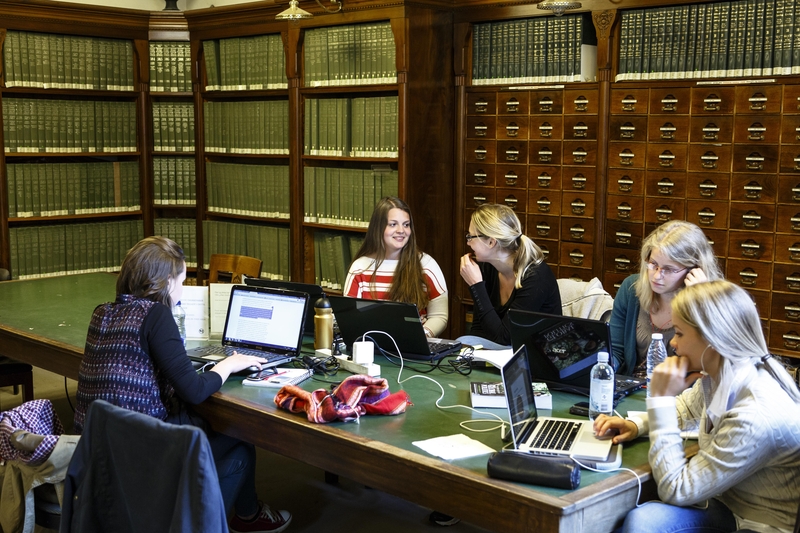
Students studying at the Library. Photo: Nordic Council of Ministers
While most bachelor level education is conducted in Norwegian, Norway’s public universities offer a lot of master programs in English. Studying in Norway is a great way to experience Scandinavian lifestyle without committing to a permanent move.
Residence permits are available to students who have successfully applied and been granted a full-time place at a university college or university in Norway. Applicants in this category are required to prove existing funds or annual income of at least NOK 128,887 ($12,500) per year for full-time study, less for single semesters.
Successful applicants are permitted to work up to 20 hours per week part-time in order to help meet the income requirement and support themselves.
Working opportunities
Norway has areas with a skills shortage, including ICT, construction, and healthcare. The energy industry remains a major employer but competition for positions is high.
Taxes
If you work in Norway, you should generally pay tax on your salary in Norway. Photo: Nordic Council of Ministers
If you work in Norway, you should generally pay tax on your salary in Norway. If you are registered as living in Norway, your employer can get your tax deduction card electronically from the Norwegian Tax Administration. If you are not registered in Norway, or do not have a Norwegian identification number, contact your nearest tax office to apply for a tax deduction card.
The main regulation is that you are a member of the social insurance scheme (sosialforsikret) in the country in which you work. Photo: helsenorge.org
The country in which you have your social insurance rights is significant for pension, unemployment benefit, sickness benefit, family benefits, and parental benefit. The main regulation is that you are a member of the social insurance scheme (sosialforsikret) in the country in which you work. If you do not have a job, you are generally a member in the country in which you live. However, there are many special situations. If you are in any doubt, you should contact the agencies in the country in which you are living, working, or studying.
If you receive a pension from another Nordic country, contact the pensions agency to find out whether you can still receive your pension paid if you move to Norway. You should also check the regulations for tax payable on the pension, both in the country you move from and in Norway.
If you have pension savings in another country, you should contact the pension company for more information about how this will be affected if you move to Norway.
In Norway, you earn rights to a pension while you are a member of the Norwegian social insurance scheme.
You are entitled to a regular general practitioner (RGP) in Norway. Photo: Christiaan Dirksen/Nordic Council of Ministers.
When you move to Norway and register in the National Population Register, you are entitled to a regular general practitioner (RGP). Contact your GP if you become ill or need medical help. If you need emergency medical help outside the surgery’s opening hours, contact an out-of-hours medical service.
To get a driving licence, you must have been living in Norway for at least 6 months. Photo: Wikipedia
You can apply for a temporary driving permit for a foreign-registered vehicle within 14 days when you move to Norway. You must present documentation to confirm your relocation, such as a change of residence certificate, employment contract, or some other relevant documentation.
If you want to bring a foreign-registered vehicle when you move to Norway, you must import the vehicle and pay customs duties and taxes. This applies regardless of your citizenship and where you are moving from. In some countries, you may be reimbursed some of the registration fee when your car is registered in another country.
How to take a driving test in Norway?
You can apply for a driving licence electronically on the website of the Norwegian Public Roads Administration. If you are to become a professional driver, in addition to holding a driving licence you must also obtain a special professional driver qualification.
To get a driving licence, you must have been living in Norway for at least 6 months satisfy the age requirement submit an application for a driving licence satisfy health requirements and have documented good conduct (issued by the police) the first time you apply for a driving licence.
All the compulsory training that is necessary to apply for a driving licence must be completed through an approved driving school (trafikkskole/kjøreskole).
If you are intending to bring a pet when you move to Norway, you must find out the regulations about importing animals. Photo: Karin Beate Nysterud/Nordic Council of Ministers
If you are intending to bring a pet when you move to Norway, you must find out the regulations about importing animals.
Only Norwegian citizens have the right to vote in parliamentary elections. Photo: Norwegian Refugee Council
When you move to Norway, you have the right to vote in municipal and regional elections. Only Norwegian citizens have the right to vote in parliamentary elections. To vote in the Sami Parliament elections, you must be registered in the Sami Parliament electoral roll.
Although Norway is not a member of the European Union, it is a member of the European Free Trade Association (EFTA) along with Iceland, Liechtenstein, and Switzerland. In other words, Norway is a member of the European Economic Area (EEA).
The Complete Guide to Moving to Norway, compiled by Tor Kjolberg
Cool new technologies are emerging constantly in the science world. While most don’t have their own department at any major university, they are making big waves in the scientific and technological communities. One of the craziest, game-changing technologies that took place in 2016 was ASEA. Now, Scandinavians are embracing ASEA and its tiny signaling molecules.
ASEA is a global health leader in redox signaling technology and was awarded the 2022 CHOICE Humanitarian Corporate Impact Award earlier this year. CHOICE Humanitarian’s mission is to reduce global poverty and build self-reliant, resilient communities around the world.
What is redox signaling technology?
The National Institute of Health (NIH), Stanford, Harvard, Cornell, and many other top medical research institutions are utilizing huge sums of money and dedicating entire labs toward studying these tiny molecules, after finding they are a cornerstone to preventing disease.
Atoms structure. Science or medical background with molecules and atoms. Medical background for banner or flyer. Structure at the atomic level, 3D illustration
Our bodies are made up of cells. Inside of every cell we have mitochondria (some cells have thousands). When functioning optimally, mitochondria produce redox signaling molecules called Reactive Oxygen Species (ROS). The ROS molecules fall into two categories: reductants that cause reduction reactions or oxidants that create oxidation reactions.
Redox signaling processes take place in nature every time there is a chemical reaction, including inside our cells. Both reductants and oxidants are important, and in order to maintain optimal health, we require them in balanced numbers.
Global leader in redox technology
ASEA is a global leader in redox technology and is dedicated to delivering high-quality cellular health products through a principles-based, direct-selling business model. ASEA offers first-to-market products that utilize molecules natural to the human body that support cellular functions. ASEA’s cornerstone, patented redox signaling technology, supports the body’s natural cellular renewal and communication as well as signals the regulation of genetic pathways, supporting body health and functions.
Currently, redox signaling technology is available in two first-to-market products: ASEA® Redox Cell Signaling Supplement, the company’s flagship liquid supplement; RENU28®, an age-fighting, cellular-rejuvenating gel for the entire body.
As with many other health products that fall outside traditional accepted approved medicines, ASEA’s products have been met with skepticism from the established medical community and have even been declared shams.
However, new scientific research released by ASEA shows that regular consumption of ASEA – the world’s first and only redox supplement – can help to reduce oxidative stress. Oxidative stress is the stress of free radical damage to our cells. As oxidative stress increases, also the risk for various diseases increase.
ASEA Redox products are not treatments or cures for any disease or medical condition. The redox signaling molecules in ASEA’s products simply empower our bodies to heal themselves by increasing cellular efficiency, cellular functions and cellular communication.
Founded in 2010, ASEA currently operates in 33 international markets, including Scandinavia. The distributors in Denmark, Norway and Sweden are not employees of the company, but people working as independent distributors to sell the health products on their individual market. Ronnie Werner Mathisen, who runs the blog Lavkarboliv was one of the first to introduce ASEA in this country. He explains:
“Asea is cleaner than tap water and contains only distilled water, i. e. H2O and sodium chloride, NaCl. H2O consists of the elements, hydrogen and oxygen. NaCl consists of the elements sodium (Na) and chlorine (Cl), and we know this as ordinary table salt. The molecules are split and the atoms rearranged in an electrochemical, patented process, which takes three days. The result is stable redox signaling molecules in a bottle. A few people may experience a transient reaction when cell communication is optimized, but this is not dangerous and passes quickly.”
Daily Scandinavian has interviewed another of the enthusiastic early distributors, Sissel Kristine Andersen
“I’ve been an entrepreneur since 1987 and have spent the bulk of my career building dynamic companies and high-impact teams in different countries all around the world,” says Sissel Kristine Andersen. Photo: Private
What did you do before ASEA?
I’ve been an entrepreneur since 1987 and have spent the bulk of my career building dynamic companies and high-impact teams in different countries all around the world. I began working with ASEA in 2015 and have been changing lives ever since.
How did you hear about ASEA?
A friend from America posted this picture on Facebook and I just «had to» try the product… I gave her a call and she shared some info – but the decision was taken due to my own experience with the technology.
An ad posted on Facebook caught Sissel’s attention.
I was initially drawn to ASEA simply because I was so impressed with the before-and-after photos of people’s skin after using ASEA’s revolutionary topical redox gel. My initial curiosity led me to unexpected but warmly welcomed turns in both my career and my health.
I have always been very interested in maintaining and taking care of my body. When I started to hear testimonials of people’s experiences with the ASEA products, I understood that this is something truly amazing and very unique.
You’re an experienced network marketer. What fascinates you about the system?
The great thing about working in this business is the time, money and freedom it gives me. I love not having to point to a building and say, “that’s where I work.” I love not having a boss telling me what to do, when to do it, or when to have my vacation. I’m not limited by someone else’s decisions! I like the fact that I am responsible for my own income and I LOVE helping others succeed both in business and personally.
New scientific research released by ASEA shows that regular consumption of ASEA – the world’s first and only redox supplement – can help to reduce oxidative stress.
Challenges and Opportunities?
As I see it when it comes to our working life, we have these 3 options:
You become employed = your boss assesses your performance and has the right to fire you if you aren’t up to scratch.
You go freelance – you bear all the risk yourself, and when you can’t work you have no income.
You work as a network marketer – you work with your team. No one can fire you and there is unlimited earning potential for everyone.
The question is why network marketing often is the first option for people to dismiss. And that is a challenge as well as an opportunity.
ASEA is a global health leader in redox signaling technology and was awarded the 2022 CHOICE Humanitarian Corporate Impact Award earlier this year.
The future
Redox signaling molecules have been researched for tens of years, worldwide. Dr. Gary Samuelson and his research team have solved the hitherto impossible puzzle of making the molecule stable outside the body. ASEA is referred to by some researchers as the biggest breakthrough in health science of our time.
It is possible to use ASEA products without being part of the sales apparatus, but if you want the opportunity to both become part of a business opportunity, spread information about a product with future unexpected possibilities and take care of your own body, you can read more here.
If you want more information on the possibilities of being a distributor (anywhere in the world), please contact me at editor@dailyscandinavian.com.
Scandinavians Are Embracing These Tiny Signaling Molecules, written by Tor Kjolberg
If you are thinking about getting higher education in Europe, Scandinavia is a great place to consider. It offers a lot of opportunities and benefits as well as comfortable living for students. In this article, you’ll find everything you need to know about Scandinavia as an educational destination. Learn more about why Scandinavia might be the best place to study.
What You Need to Know About Scandinavia
Scandinavia is a term used to describe three countries – Norway, Sweden, and Denmark. The name comes from the Scands – the mountain range that goes through Norway and Sweden. Sometimes people also add Finland and Iceland to this region as they are also from the Nordic group. But, strictly speaking, Scandinavia covers three countries.
They are also located on the Scandinavian peninsula and share mutually intelligible languages. These countries are also highly-developed and known for their quality of life. All of the opportunities you might have in your home country are also available here.
There is a speedy and reliable internet connection, a lot of technological advancements, and excellent infrastructure. So students might stay connected to people around the world, study productively, and access high-quality academic help online. For instance, those who struggle with academic writing can apply for help from paper writing services the same way. Professional authors offer writing, editing, and proofreading assistance with all types of college assignments. They deliver excellent results quickly and with constant support.
Students that need their writing polished can also get valuable advice and guidance from experts, which is an amazing learning opportunity. And if you struggle with time and deadlines, such professionals can do the paper for you from scratch right in time. This way, students can keep up with their responsibilities, have a bit of free time and receive unique and well-crafted papers.
So studying in Scandinavia is comfortable, accessible, and offers a multitude of benefits that are going to be covered next.
Reasons to Choose Scandinavia for Education
Excellent Educational System
Some of the best educational institutions in the world are located in Scandinavia.
Sweden, Norway, and Denmark are known internationally for the quality of education provided here. Some of the best institutions in the world are located here. They offer well-built and innovative programs as well as great opportunities in terms of research and further studies.
According to the Times Higher Education World University rating, some of the top institutions to choose here are:
Karolinska Institutet, Sweden;
Lund University, Sweden;
University of Copenhagen, Denmark;
Uppsala University, Sweden;
Aarhus University, Denmark;
University of Oslo, Norway;
Stockholm University, Sweden;
Technical University of Denmark;
University of Gothenburg, Sweden;
KTH Royal Institute of Technology, Sweden;
University of Bergen, Norway;
Aalborg University, Denmark;
Copenhagen Business School, Denmark;
Chalmers University of Technology, Sweden;
The University of Southern Denmark.
It is worth noting that some of the amazing schools are not even on the list because they have narrow specializations. So if you know what field you are interested in, it is important to look into all available options.
Lund University. Photo: Samuel Bryngelsson/Unsplash
English is widely spoken in all three countries. According to the global ranking of English knowledge, Norway is in the 4th place, Denmark is next on the 5th, and Sweden is on the 7th.
So almost anyone here speaks English very well. There are also many college programs available in English that welcome international students. Only in Sweden, there are over 100 English programs for Bachelor’s degrees and over 900 for Master’s.
Yet, it is also a great opportunity to learn Swedish, Danish, or Norwegian languages if it is something you are interested in.
Innovative Research Opportunities
Another huge benefit of Scandinavian higher education is that local institutions constantly score highly for innovation and cutting-edge research. According to INSEAD’s report of 2017, Sweden was the 2nd in the world, Denmark came 6th and Norway 19th.
Scandinavian countries also got high scores in Bloomberg’s innovative economies ranking. No wonder universities and colleges here invest in research and innovation as well.
Learn more about why Scandinavia might be the best place to study, read more b elow image…..
Beautiful Nature
From Bryggen, Bergen. Photo: Michael Fousert/Unsplash
Although Sweden, Denmark, and Norway are known for their cold climate, the nature here is beautiful. They are homes for some of the best places in Europe to travel to. And it is always right behind the corner, whether you live in the capital or not.
Students can travel around and see the Northern lights, participate in outdoor activities, or enjoy winter sports. So if you are excited about hiking, camping, ice skating, or fishing, it is a great place to be.
Also, Scandinavian higher education is quite affordable compared to other destinations. Some students can acquire degrees here for free as well. This is a huge benefit as the cost of living here is relatively high.
For example:
Denmark offers free education for EU/EEA students as well as exchange students. Learners from other regions might pay around $6,400-17,000 annually;
Norway’s public universities are free for students from all over the world. This covers all study levels. You might only pay a small fee for a semester (about $38-75). Private universities are not free, but the tuition is relatively low;
Sweden offers free education for EU/EEA students. Also, Ph.D. programs are free here. As for learners from other regions, they might pay around $9,000-18,000 annually.
And there are some scholarships open for international learners. So even if you have to pay tuition, there are ways to cut the costs or get financial help.
Comfortable Living
Scandinavian countries are among the leading when it comes to safety and equality. There is also a thriving student life here as a lot of international learners come to get an education in Denmark, Sweden, and Norway.
The quality of life here is one of the highest in the world. There are amazing social support systems, environmental policies, and affordable healthcare. Of course, life here is not as dynamic as in metropolitan cities like London or New York. But Scandinavian countries have to offer comfort, rich culture and history, and safety.
Why Scandinavia Might Be the Best Place to Study In – Summary
Learners that are interested in pursuing degrees in Europe should consider Scandinavia. It has an outstanding educational system, great universities, and affordable tuition. But also, it comes with an opportunity to explore new cultures, languages, and marvelous nature.
Why Scandinavia Might Be the Best Place to Study, written exclusively for Daily Scandinavian by Adriana Bell.
What comes to mind right away when you hear the name Stockholm? Childhood friend’s or Carlson’s house? Instead, where did attractive furniture design begin? Maybe some songs from the once-popular band Abba? About this stunning, cutting-edge, and interesting city, everything of the above and more may be stated. Learn more about Stockholm’s most well-known tourist attractions.
Stockholm, the stern capital of Scandinavia, possesses a certain appeal. It is dispersed among 14 islands connected by 57 bridges. As a result, the name of the city is Stockholm, which, according to a few legends, means “island in the bay.” The ideal time to go on vacation if you want to enjoy the nice weather is between late May and September since the cold Baltic wind regularly blows through and the severe northern summer lasts not very long.
The topic that most directly relates to any journey is air travel. The third busiest airport in all of Scandinavia and the largest airport in Sweden is Stockholm Arlanda Airport. In reality, it is located outside of the Swedish capital, on the border with the neighbouring province of Uppland. It may be reached via car, public transit, or AtoB airport transfers. Using an AtoB airport taxi to go from Stockholm Arlanda airport is one of the most practical options. The driver of the airport transfer will be waiting for you near the airport with a nameplate. You may reserve any kind of airport taxi, depending on how many people will be travelling.
If you’re lucky enough to travel to Stockholm for the first time and just have a short amount of time to explore, you should pay a visit to the popular tourist attractions.
Stockholm Metro
Stockholm Metro consists of three branch lines with a combined length of 105.7 km and 100 stops.
Sweden’s sole subway system is in Greater Stockholm. Company SL is the owner. The network consists of three branch lines with a combined length of 105.7 km and 100 stops. 53 stations are above ground or raised, while 47 stations are subterranean. Because everyone in Sweden at the time the subway system opened was left-handed, the traffic on the lines is also left-handed. The Stockholm subway is renowned for its unique station designs, particularly at its central station, which is referred to be the world’s longest art museum.
Gamla Stan
Gamla Stan, or the old town, is one of Europe’s largest and best-preserved medieval cities and a top tourist destination in Stockholm. Photo: Visit Stockholm
Gamla Stan, or the old town, is one of Europe’s largest and best-preserved medieval cities and a top tourist destination in Stockholm. Take an airport taxi from Stockholm Arlanda airport to get here to save time. With a founding date of 1252, it is the city’s oldest location. Gamla Stan is a maze of eerie cobblestone lanes and historic North German buildings.
One of Gamla Stan’s top attractions and one of the biggest palaces in Europe is the Royal Palace. While it is solely used for ceremonies, it serves as the official palace of the Swedish royal family and has more than 600 rooms. On the site of a castle that had burned down in 1697, the palace was erected in the 18th century in the Italian Baroque style.
Stortorget, the oldest plaza in Stockholm. Photo: Wikimedia commons
Stortorget, the oldest plaza in Stockholm, is located in the heart of Gamla Stan and is encircled by lovely old merchant homes. Starting from here is Köpmangatan Street, the city’s oldest thoroughfare, which goes back to the fourteenth century. To get there, simply arrange for an airport transfer. But Stortorget also recalls terrible incidents. The revolt against the Danes’ commanders, who are revered by the Swedish people as champions, were put to death here in 1520.
Stockholm’s Most Well-Known Tourist Attractions, read more below image….
Katarinahissen
Katarinahissen is an elevator with a viewing platform, located in the Södermalm neighborhood in the heart of Stockholm. Photo: Wikipedia
Katarinahissen is an elevator with a viewing platform, located in the Södermalm neighborhood in the heart of Stockholm. Your airport transfer driver will merely drive you there. One of the most well-known sights in the Swedish capital is Elevator Katarina, which provides stunning city views from its viewing platform, which is located more than 30 meters above Slussen. The well-known Gondola Restaurant is located on the bridge that connects the structure and the lift.
Engineer Knut Lindmark created the first lift at this site, which was constructed in 1881 by the Belgian company Lecoq & Comp to link Mosebakke Square with the harbour of Stadsgaarden. The steam turbine that initially propelled the Katharina lift was replaced in 1915 by an electric drive. Katarinahissen’s latest iteration first debuted in 1935.
The Vasa was intended to be the largest ship in the annals of the Swedish military (92 meters long). Photo: Visit Stockholm.
A single object is on exhibit at the Vasa Museum. The entire exhibit is an enormous battleship that fell in Stockholm Harbor in 1628 and was only partially recovered, restored, and assembled 333 years later. An exhibit is a must-see! Even if you’re passing through or staying for a few days, take an airport taxi to see this unique spot! Nowhere else on the planet is anything like it.
Vasa is the name of the ship. It was given that name to honour the Vasa family, which was in power when it was constructed. It was decorated with statues and figurines that were gilded in gold and ocher and painted a regal hue of crimson. In 1628, there were high hopes for this ship. The Vasa was intended to be the largest ship in the annals of the Swedish military (92 meters long). But it was not to be.
Stockholm’s Most Well-Known Tourist Attractions, written exclusively for Daily Scandinavian by Francesca Gastrell.
The German online retailer Zalando, which has satisfied shoppers from all over Scandinavia, expect recession in Europe for 2023, particularly for its key DACH market. Will this effect the consumer prices for the present year? Will the chase for higher profit lead to prices on the rise from the popular e-commerce retailer in Scandinavia?
Retailers in general expected slow performance for Black Friday 2022, but retailers and marketplaces around the world proved once again how well a shopping event like Black Friday works – even in the face of record-breaking inflation, energy and food costs. Results in the US showed a 2.3% increase in online sales compared to 2021. In the Netherlands, data from credit card translations and online sales showed a 12% increase in purchases while spending increased overall by 30% in the week leading up to Black Friday.
Prices on the Rise from Popular E-Commerce Retailer in Scandinavia?, text follows below image….
Zalando headquarters in Berlin. Photo: Wikipedia
Zalando has seen a fast price rise over the last quarter. Its financials have shown some improvement too, but that doesn’t appear to justify its P/E. The P/E is at vertigo-inducing 2,852x, driven more by its fast-shrinking earnings than its performance. With the company not entirely sure of future profits, a correction looks due.
The most successful retailers and online marketplaces like Zalando have learned how to get the most out of consumers and their vendors using competitive pricing strategies, and we’ve taken a look at how Zalando, one of Europe’s biggest online marketplaces, managed its pricing before, on and after Black Friday 2022.
In November, the company released its third-quarter results, which showed some turnaround in performance. In the second quarter (Q2 2022, April-June, 2022), it reported a 4% year-on-year (YoY) drop in revenue. For the first half of the year (H1 2022), its performance was weak too, with a fall in revenue of 2.9%. But come the third quarter (Q3 2022) and its sales rose again. At 2.9%, it wasn’t a substantial increase, but nevertheless it was an increase.
10,000 product prices on Zalando have been analyzed across multiple vendors within various categories, with a specific date range surrounding Black Friday, which took place on 25 November.
Zalando’s prices increased by 8% in the three weeks leading up to Black Friday, starting on 25 October. Then, there is a significant price drop by 18% on the 17th, signaling the start of Black Friday week. The decrease in prices reached its highest amount with a drop to an average price level of 85.5 % on Sunday, 27 November. This means that prices have fallen by 23% (compared to a pre-Black Friday level of 108%) in just one week. After Cyber Monday, prices returned to pre-Black Friday numbers which were still higher than prices in October.
Prices on the Rise from Popular E-Commerce Retailer in Scandinavia?, text follows below image….
But Zalando has done a good job of keeping costs down. For Q3 2022 its cost of sales is up by just 2.4% and the number is even lower for the nine months at sub-2%. If inflation starts declining meaningfully in the next few months, its numbers could look better.
However, Zalando is introducing a base rate for third-party sellers and brands starting July 1st. Partners will have to pay a monthly 40 euros. In addition, the fashion retailer will increase commissions per sold item for certain products.
Until now, the German marketplace only charges a commission for successful sales by partners.
Selling through Zalando will thus become more expensive starting July 1st. The ecommerce giant will introduce a flat subscription fee for partner sellers. Merchants participating in the Connected Retail and partner program will pay 480 euros per year. This will take the form of a monthly 40 euros.
Retailers will pay a commission up to 22 percent.
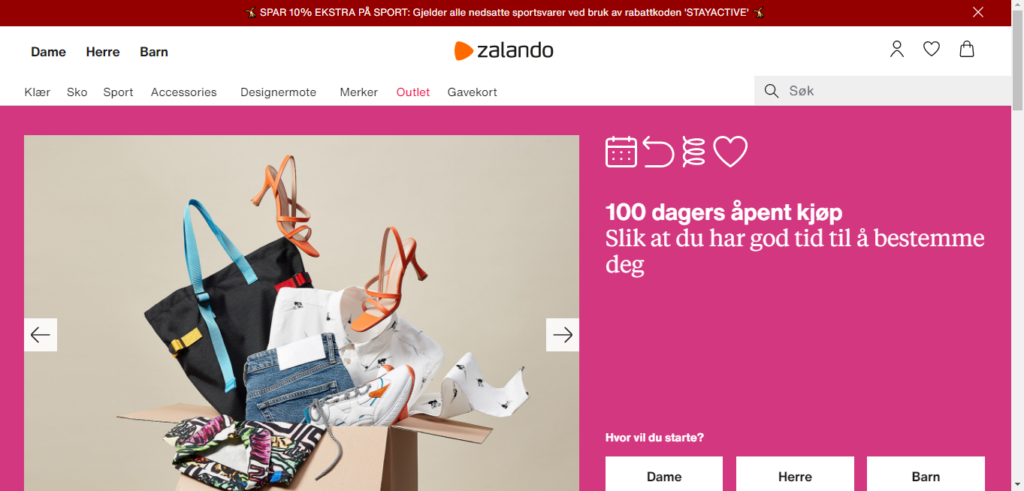
Zalando homepage in Norway
German DZ Bank has downgraded Zalando from “buy” to “hold” after a strong start to the year in terms of share price, although the fair value was raised from 39 to 43 euros. Analyst Thomas Maul does expect the online retailer to reach its reduced targets in 2022, according to a report available Monday. However, he expects only moderate growth in 2023. Accordingly, targets are likely to be restrained due to dampened consumer confidence and an increased focus on profitability. He views the stock’s further upside potential as limited after its good run.
Higher retail prices from the popular e-commerce giant might be expected.
Prices on the Rise from Popular E-Commerce Retailer in Scandinavia? compiled by Tor Kjolberg
The Norwegian artist Lars Laumann (1975) creates video works that tell curious stories from the fringes of popular culture. Among other things, he has told the story of Mrs. Berlin Wall, the Swedish woman who married the Berlin Wall, about his girl-friend, Kjersti Andvig’s relationship with a prisoner sentenced to death in Texas (Shut up Child, This Ain’t Bingo) – and the story of a gay asylum seeker. Learn more about the filmmaking of a Norwegian artist.
Lars Laumann graduated from the Oslo National Academy of the Arts (1995-2001) and Nordland Art and Film School in Kabelvåg, Norway (1993-1995). He is also known for his sculptures and installations. He has achieved international recognition for his work, with exhibitions including the New Museum in New York.
Lars Laumann is known for his sculptures and installations. Photo: Civitella Ranier Foundation
He was drawing from his earliest days home in Brønnøysund, every day, preferably for guests. He drew pictures, invited and told stories to anyone who would listen. There were stories of disasters, earthquakes, and tidal waves. There were rockfalls, avalanches, plane crashes and kidnapped princesses. However, he admits that he has never been good at drawing. It was the stories that were important.
His films often have a documentary slant interested outsiders’ fate, interspersed with a media critical approach. He often uses found or appropriated imagery from the internet or inspired by fan clubs, chat groups or obscure websites online.
Themes of obsession, fandom, love, and devotion loom large in his work.
In his ‘Rupert residency’ Lars Laumann took part in ‘Unbuilt’- a collaboration project between an architect (Thomas Tsang), a visual artist (Lars Laumann), a composer (Cecilia Lopez), and a poet (Natalie Diaz). Resisting and upholding the disciplinary practices of each artist their work examines and questions the nature of imagination and ambition in plans without a predetermined “object”. The collaborative eye is not a single lens for each artist to look through – instead, it is the single steady gaze of each artist. How are artists inspired or stifled by the pressures of gazing at a collaborative process versus looking forward toward the collaboration’s outcome?
His films often have a documentary slant interested outsiders’ fate. Photo: Maureen Paley, Seasons installation.
The archive of these relationships results in a future-archeological artifact named as such because it documents a building process that will never become a built body. By the end of the residency, on 26th of August 2016, the artists gave a presentation in the CAC reading room. During the event, called ‘Built’, the artists shortly discussed their past individual work contextualizing it around the ‘Unbuilt’ project.
The Berlin Wall
Berlinmuren (Berlin Wall), made in 2008, tells the story of ‘object sexualist’ Eija-Riitta Eklöf-Berliner-Mauer, who believes that objects have souls and feel emotions, just like humans. She is ‘married’ to the Berlin Wall, and speaks of a love in which their “souls will be entwined for eternity”.
The Filmmaking of a Norwegian Artist, compiled by Tor Kjolberg
Spring is the perfect time of year to get outside and take in all that Sweden has to offer. The days are longer, the weather is warmer, and the wildflowers are in bloom. Learn more about best activities to embrace spring in Sweden.
There are plenty of cultural events that coincide with spring, too. You can join Valborg celebrations across the country or see the cherry blossoms at the Gothenburg Botanical Gardens.
You’ll need to do a little planning and preparation to see the best that Sweden has to offer, so consider adding these activities to your itinerary.
Valborg
Valborg — also known as Walpurgis Eve — marks the start of spring. People celebrate Valborg on the last day of April. Traditionally, the festival was meant to ward off witches and bad spirits. The traditional Valborg celebration was about building bonfires, or majbrasor, for protection and stirring up a ruckus to dispel all that is evil.
There are a few different ways to celebrate Valborg. If you love to party, you might want to book a train to a university town like Uppsala. You can watch the university choir perform a spring concert and join in with festivities and merry-making later in the day.
If you prefer a more toned-down approach, consider attending a choir performance in Lundagard. Just be sure to take in all your activities early in the day, as the choir performance will quickly turn into a party in the park.
Dining Out in Spring
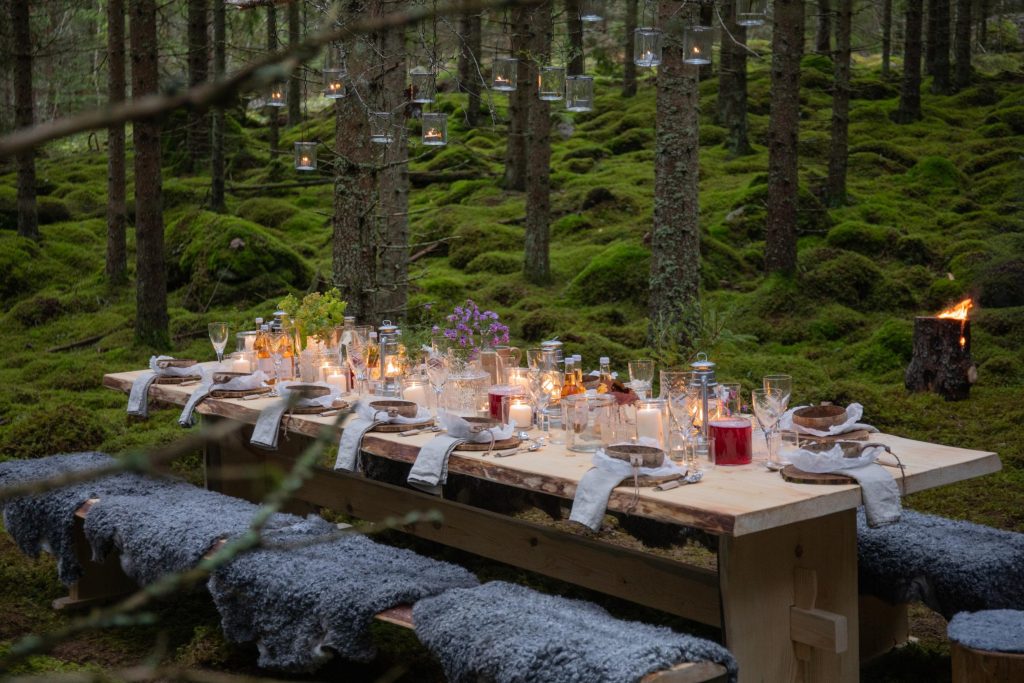
Dining outside is the perfect way to enjoy Sweden in the spring.
Dining outside is the perfect way to enjoy Sweden in the spring. You can breathe the spring air in and enjoy the open green spaces that Sweden has to offer.
Sweden is well known for its sustainable cuisine. Choose restaurants that use locally sourced, seasonal produce to help you eat more sustainably throughout all the seasons. In the springtime, look for menus that utilize ingredients like artichokes, apricots, chives, fennel, and peas.
Try a few traditional dishes while traveling throughout Sweden in spring. Husmannskost (traditional cuisine) aligns with the seasons and is innately sustainable. You may find that some dishes, like blueberry soup and surströmming, are an acquired taste that you come to love by the end of the season.
Cycling the Sydkustleden
Sydostleden is a 260km track that follows Sweden’s southern coastline. Photo: apeloga.se
The Sydkustleden is Sweden’s third national cycle route and links the Kattegattleden and Sydostleden. It’s a 260km track that follows Sweden’s southern coastline, which makes it the ideal location for a late-spring cycle adventure while the North warms up.
The Sydkustleden was built in 2019, so the roads and trails are still in great condition. You’ll get to see plenty of wildlife along the way, too, as the varied scenery is home to an array of birds and mammals.
The Sydkustleden is a coastal course that passes through fishing towns and beaches. If you want to cycle the length of the Sydkustleden, consider booking into inns and BnBs along the way.
You don’t have to cycle the entire length of the Sykustleden, either. Cycling a few miles a day is a great way to see nature come to life in spring while exercising. Spring is the ideal time to start a new self-care habit, as you can practice mindfulness between cycle stops and enjoy the benefits that regular exercise brings to your mental and physical health.
Hiking in Bohuslän
Sweden’s hillsides and mountain ranges are perfect for hiking and camping. Bohuslän is the perfect place to walk, as you can choose from gentle hillsides or more strenuous footpaths.
If you’re an avid hiker, take the Kuststigen trail. The trail passes a range of different landscapes and scenery. The path will take you all the way to Oslo in Norway if you follow it for long enough, and you’ll get a chance to see waterfalls, deciduous forests, and ancient rock carvings.
You can find some incredible campgrounds in Bohuslän, too. Spend the day in a national forest, or camp by the water in Hunnebostrand. Just be sure to pack appropriately, as you may have limited access to resources like running water if you choose to camp in a more rural location.
Gardens and Cherry Blossoms
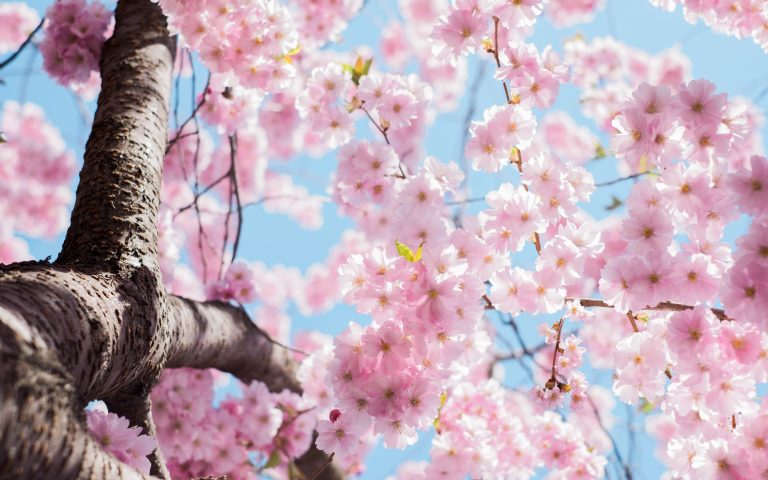
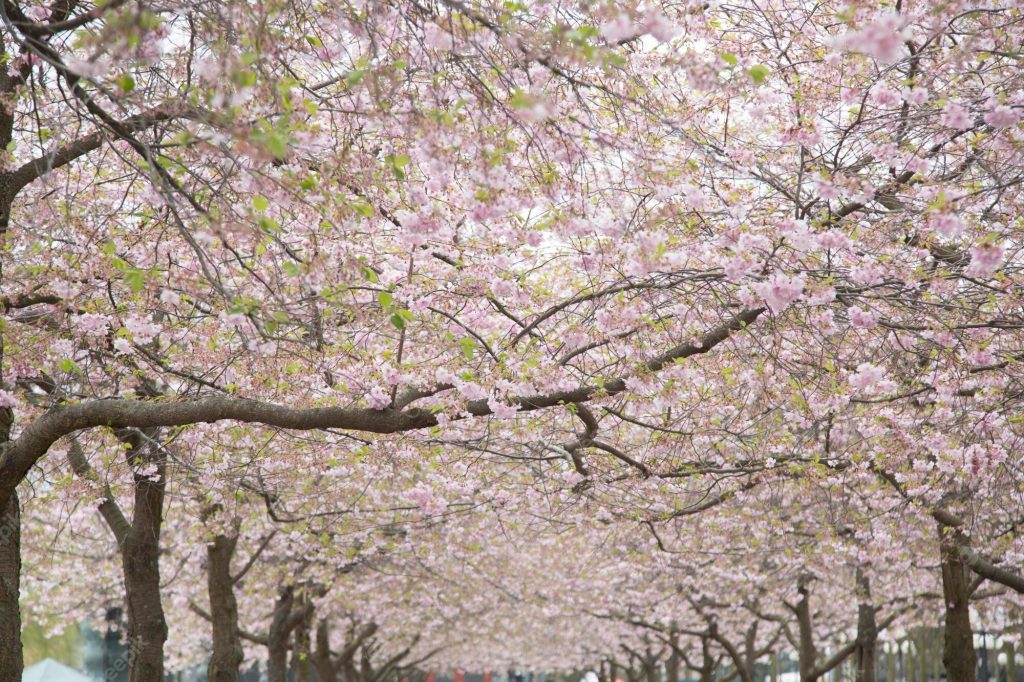
Blossom tree on King’s Garden. Photo: Freepik
Sweden is a great country for gardeners and folks who love getting out in the wilderness. National parks and nature reserves cover a tenth of Sweden’s land mass, and the country hosts many botanical gardens.
The nation’s best cherry blossoms are found in the capital, Stockholm. Kungsträdgården, a public park, hosts an annual Japanese festival and you can walk amongst the trees and stalls for free. You can beat the crowds by venturing southwest across the country to Gothenburg, where you’ll find botanical gardens and cherry blossoms in abundance.
Best Activities to Embrace Spring in Sweden – Conclusion
Spring is a special time of year in Sweden. The days are longer, and the wildflowers are in bloom. See spring in by celebrating Valborg and eating out in sustainable restaurants all across Sweden. If you have a passion for nature, be sure to see the cherry blossoms in Stockholm and cycle the Sydkustleden.
Ainsley Lawrence
Best Activities to Embrace Spring in Sweden, written dedicatedly for Daily Scandinavian by Ainsley Lawrence. Ainsley is a freelance writer from the Pacific Northwest. She is interested in better living through technology and education. She is frequently lost in a good book.
Niels Henrik Abel was born in Finnøy, Norway, in 1802, the second of a Norwegian minister’s seven children. His math teacher in Christiania (now Oslo), Bernt Holmboe, raised money from his colleagues to send Abel to the University of Oslo in 1821. Learn more about the pioneering Norwegian mathematician.
In 1824, Abel published his groundbreaking work on the insolubility of fifth degree (quintic) equations, which had been challenging mathematicians for 250 years. But save to money on printing, he had to cut his proof down to six pages, making it difficult to understand.
In 1824, Abel published his groundbreaking work on the insolubility of fifth degree (quintic) equations. Photo: UiO
In 1825, he was given a travel scholarship by the Norwegian government, and traveled around Europe. In Berlin, he met August Leopold Crelle, who published a clearer version of Abel’s quintic solution in 1827. While waiting in Paris for another paper to be reviewed, Abel contracted tuberculosis.
Heavenly in debt, Abel returned in 1827 to Oslo, where he tutored schoolchildren while his fiancée Christine Kemp worked as a governess in Froland. Sadly, his health deteriorated and he died in 1829, at the age of just 26, following the sled journey to visit her for Christmas.
Niels Henrik Abel died in 1829, at the age of just 26.
Two days after Abel’s death, his fiancée received a letter announcing Abel’s appointment as a professor in Berlin. In 1830 his work was recognized by the Paris Academy; French mathematician Charles Hermite said that in six years, “Abel has left mathematicians enough to keep them busy for 500 years.”
The Abel Prize is awarded on 24 May in Oslo. The Pioneering Norwegian Mathematician, compiled by Tor Kjolberg
Feature image (on top): Niels Henrik Abel (National Museum in Oslo)