

Why It’s Worth Studying in Scandinavia

Whether you’re looking for a top-notch education or just want to immerse yourself in a new environment, studying in Scandinavia will give you an unforgettable experience that can open-up countless opportunities. Learn more about why it’s worth studying in Scandinavia.

Studying in Scandinavia provides students with the opportunity to experience life-changing academic and personal growth opportunities, while also taking advantage of some great benefits. From the stunning natural landscapes, the diverse cultural offerings, and the quality education system, there are many reasons why studying in this region is worth considering for any student looking for a unique learning experience and potential career boost.

This article will provide an overview of the advantages of studying in Scandinavia as well as what prospective students need to know about the education system and quality of life they can expect if they choose to pursue their studies in this region.

Related: An Introduction to Studying in Scandinavia 

Why It’s Worth Studying in Scandinavia
Scandinavian universities offer high-quality teaching in an international setting with cutting-edge research opportunities.

Quality education 

Scandinavian universities offer high-quality teaching in an international setting with cutting-edge research opportunities and access to advanced technology and equipment. Many universities focus on preparing students for the professional world through hands-on learning experiences such as internships and practical projects set within real-world contexts to help develop skills that are highly sought after in today’s job market. Furthermore, many courses are taught in English so there’s no need for language proficiency tests or additional language courses before enrolling in higher education programs offered in Scandinavia.

However, college students may still have difficulties in completing their college assignments, and collegepaperwritingservice.org is a great platform for college students who need professional help with college papers.

Related: 7 Best Scandinavian Universities of All Time

Why It’s Worth Studying in Scandinavia
Scandinavian culture has a strong focus on creating an inclusive environment for all with a deep respect for human rights regardless of race or gender identity.

Inclusive culture  

Scandinavian countries have long been renowned for their social welfare systems which provide free healthcare services along with generous student grants from government funding sources such as StudyGrant Vikings (SGV). In addition to this support system, Scandinavian culture has a strong focus on creating an inclusive environment for all with a deep respect for human rights regardless of race or gender identity. This can be especially beneficial for international students who want to feel accepted while studying abroad without fear of discrimination or prejudice based on their background or beliefs.

Why It’s Worth Studying in Scandinavia
One thing that makes Scandinavian countries particularly desirable places to study is their stunning natural beauty. Here, northern lights in Reine in Lofoten. Photo: Visit Norway

Natural beauty 

One thing that makes Scandinavian countries particularly desirable places to study is their stunning natural beauty which includes dense forests filled with wildlife, majestic mountain ranges covered in snow during winter months, crystal clear lakes with swimming spots throughout summertime and plenty of scenic coastal areas perfect for exploration year-round. This type of landscape provides a valuable opportunity for students who want to make the most out of their time abroad by experiencing nature up close while also taking advantage of educational opportunities at top universities located nearby large cities such as Stockholm or Oslo.

Related: Top 5 Research Areas in Scandinavia 

Unique experiences  

Studying abroad in Scandinavia presents students with unique opportunities which they may not get elsewhere such as seeing the Northern Lights during winter months or visiting traditional Viking villages which still exist today. Students can also take part in outdoor activities like skiing or snowboarding on slopes just outside major cities like Helsinki or Reykjavik while still having access to all the amenities modern life has to offer nearby. Finally, those interested in art and culture can enjoy museums featuring classic works from famous Scandinavian artists alongside newer pieces created by local talent too – it’s no wonder why many consider Scandinavia one of Europe’s most enriching destinations.

Affordable cost of living and tuition  

When comparing other destinations around the world offering higher education programs, it’s no surprise that Scandinavia often provides lower tuition fees thanks to generous government subsidies from each country’s social welfare system. This makes studying in this region much more affordable than its European counterparts or even further afield. Additionally, living costs like rent and food expenses here tend to be quite cheap – so those studying not only benefit from an excellent quality of education but also save money while doing so.

Why It’s Worth Studying in Scandinavia
Not only does studying in Scandinavia offer a unique and enriching educational experience, but it can also open-up valuable opportunities for employment upon graduation. Photo: DNV

Professional opportunities for graduates 

Not only does studying in Scandinavia offer a unique and enriching educational experience, but it can also open-up valuable opportunities for employment upon graduation. Companies from all over the world recognize graduates from prestigious Scandinavian universities, due to their renowned international reputation coupled with the high-quality education they have received here. Investing your time into post-secondary studies in this part of the world could bring you huge rewards once you complete your program.

For those who wish to take their studies one step further and pursue a dissertation, https://typemyessay.me/service/buy-dissertation/ can provide expert support and guidance throughout the entire process. With experienced writers on board, you will benefit from quality advice when tackling the various stages of research and writing your paper.

Career prospects after studying in Scandinavia 

Graduates of Scandinavian universities benefit from numerous career prospects and professional development opportunities.

Expanded Network Opportunities 

By studying in Scandinavia, students gain the opportunity to make valuable connections with professionals from around the world. This can open up potential job opportunities and internships that may not have been available before.

Improved Job Prospects Following Graduation

Employers recognize the value of a Scandinavian education and graduates often find greater success in their chosen fields upon completion of their degree programs.

Increased International Mobility 

Thanks to their international qualifications, graduates can find career opportunities outside of Scandinavia more easily, providing them with increased flexibility when it comes to pursuing their dream job or career path.

Why It’s Worth Studying in Scandinavia – Conclusion

Studying in Scandinavia provides students with an incredible learning experience and unique advantages that cannot be found elsewhere. With its high-quality education system, diverse cultural offerings, and abundance of professional opportunities, this region is an excellent choice for those considering their educational options abroad.

Why It’s Worth Studying in Scandinavia is written exclusively for Daily Scandinavian.
Copenhagen – the World Capital of Architecture for 2023

The city of Copenhagen has been officially named UNESCO-UIA World Capital of Architecture for 2023 by the Director-General of UNESCO, on the recommendation of the General Assembly of the International Union of Architects (UIA).

UNESCO and the UIA launched the World Capital of Architecture initiative to highlight the key role of architecture, city planning, and culture in shaping urban identity and sustainable urban development. Every three years, the city designated as World Capital of Architecture becomes a global forum at the forefront of discussions on contemporary urban planning and architectural issues.

Copenhagen - the World Capital of Architecture for 2023
Copenhagen has been chosen in recognition of its strong legacy within architecture and innovative urban development.

Copenhagen has been chosen in recognition of its strong legacy within architecture and innovative urban development, along with its high ambitions on climate, sustainability, and live ability. Copenhagen, The World Capital of Architecture, is only the second city in the world to hold this triennially awarded title, following Rio de Janeiro in 2020.

Copenhagen - the World Capital of Architecture for 2023
Copenhill. Photo: Linkedin

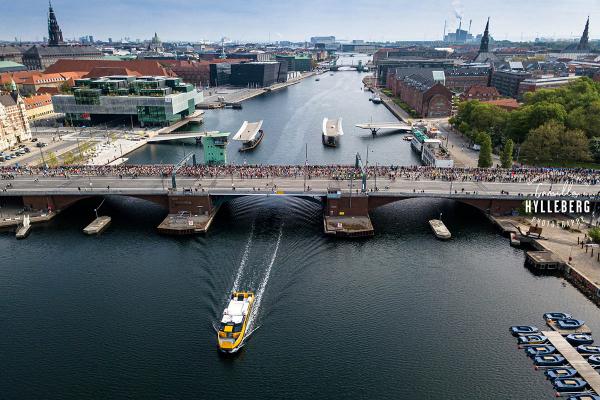
Danish architecture is known for its focus on the human scale and its democratic approach, as well as its unique modern buildings that include a power plant with a ski slope on its roof called CopenHill, a bike-first urban design consisting of the bicycle snake bridge, and not to mention floating harbor baths, rooftop restaurants and recreation areas, and innovative residential buildings.

Copenhagen - the World Capital of Architecture for 2023
Bicycle snake bridge.

Besides, Copenhagen will host a series of major events and programs under the theme “Sustainable Futures – Leave No One Behind”. In cooperation with the Danish Association of Architects and various Nordic professional bodies, the municipality will examine how architecture and urban planning contribute to achieving the 17 UN Sustainable Development Goals.

Copenhagen will even host the World Congress of Architects online in 2023!

Copenhagen – the World Capital of Architecture for 2023, a press release from GDA.

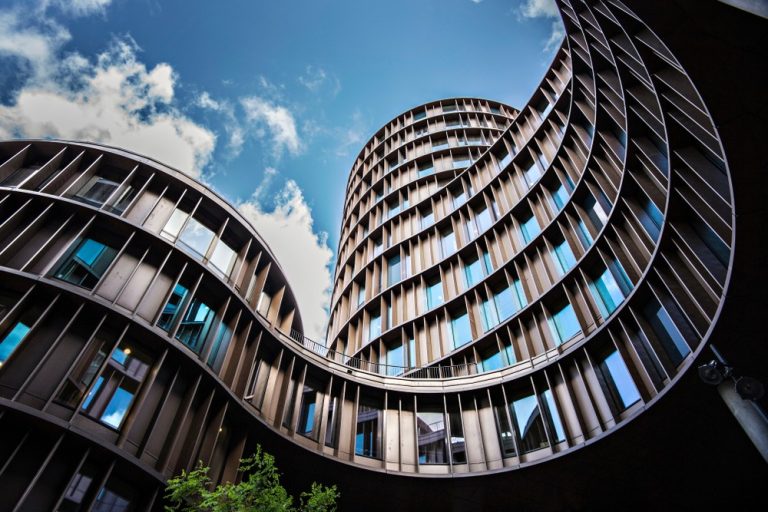
Feature image (on top): Axel Towers. Photo © Shutterstock

How Does the Cost of Living Compare in Scandinavia vs. Australia?

If you could choose, where would you like to live: sunny Australia or snowy Scandinavia? Of course, these are just the stereotypes that first come to mind when it comes to these two regions situated at opposite corners of the Earth. And yet, the weather is one of the factors that influence one’s decision in such a situation. How Does the Cost of Living Compare in Scandinavia vs. Australia? Learn more.


However, the factor that weighs the heaviest is the cost of living and the possibility of finding work or launching a business. Since both regions are some of the best-developed areas in the world, today, we’ll take a look at the cost of living and how it can affect your life as an expat.

How Does the Cost of Living Compare in Scandinavia vs. Australia?
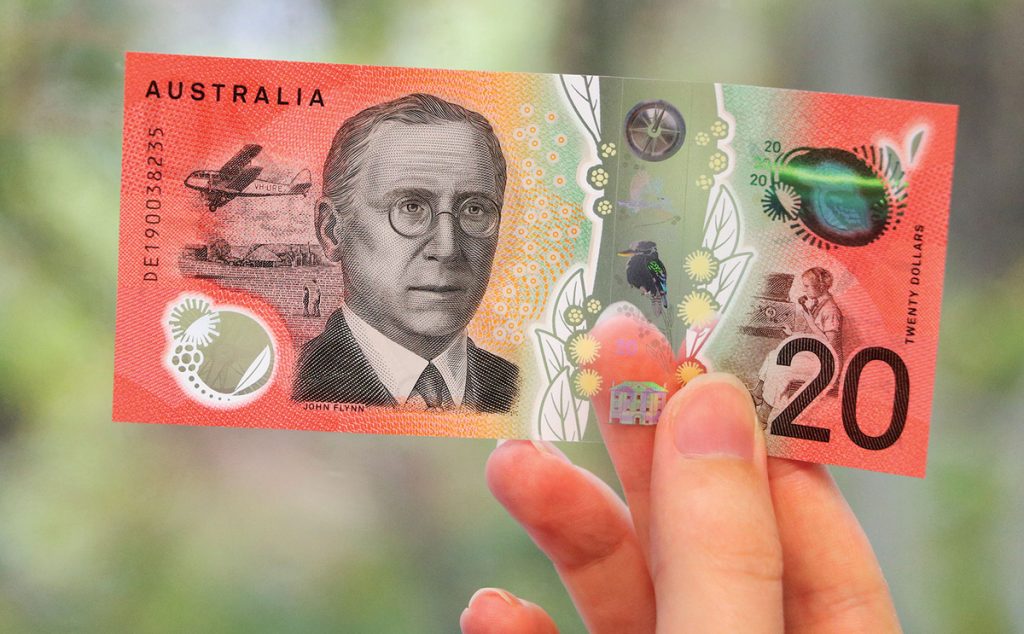
Australia is known for its high standard of living, but it comes at a pretty steep price. Photo: Central Banking

Cost of Living in Australia

Australia is known for its high standard of living, but it comes at a pretty steep price. According to recent surveys, two Australian cities, Sydney and Melbourne, are on the list of the world’s most expensive cities.

In general, a single person may need around $20,000 per year to get by in the country, while a family needs around $50,000. Of course, the cost of living changes depending on where in Australia you want to live, but big cities and areas around them are quite expensive.

Accommodation costs are the highest, followed closely by food and car costs. Utilities are also pricey, especially with the recent price increases for gas and electricity. Luckily, the Australian government has passed a bill designed to cap the skyrocketing price of utilities, so things should calm down in the near future.

Furthermore, when it comes to electricity, you can choose between several suppliers, depending on the region. To make things easier, Australians use iSelect’s electricity comparison tool to see which supplier can offer the best price for the services.

Cost of Living in Scandinavia

Scandinavia is a geographic region that includes three well-developed countries: Sweden, Norway, and Denmark. As such, we’ll talk about the cost of living in all three countries and compare the results with Australia.

How Does the Cost of Living Compare in Scandinavia vs. Australia?
Swedish 10 kronor. Photo: Wikipedia

Sweden

Sweden is an amazing country to live in, but it’s not for anyone. The quality of life is high, but so is the cost of living. For instance, a family of four living in Stockholm (the country’s most expensive city) will need around $3,900 (without rent) per month to get by.

Just like in Australia, Sweden’s highest expense is accommodation since rent prices climb around 1% per year. Of course, if you don’t plan on staying in a highly populated urban area, you should be able to find affordable housing.

Unlike Australia, the cost of utilities (water and electricity) is fairly reasonable, and it’s often included in the rent. So is WiFi, which makes it a lot easier for renters.

How Does the Cost of Living Compare in Scandinavia vs. Australia?
Denmark, 2 kroner (1912) Wikipedia

Denmark

As one of the happiest countries in the world, Denmark is also quite expensive. If you want to live in the capital city Copenhagen, expenses may rise to around $1,100/month for a single person and around $4,000/month for a family of four. And these don’t include rent or utilities!

Add to this around $1,740 per month for a medium-sized apartment and about $200 for utilities. Luckily, if you have a bike, you won’t have to worry about transportation fares since the Danes love to bike in any kind of weather.

How Does the Cost of Living Compare in Scandinavia vs. Australia?
Norwegian bank notes. Photo: Bank of Norway

Norway

Norway also places high on the happiness index list due to its high standard of living, solid social system, and impressive wages. In general, you can spend between $2,176 and $4,352 per month, depending on where you establish your residence.

If you want to live in one of Norway’s big cities (such as Oslo, Bergen, or Trondheim), you should be prepared to spend $1,100/month for single people and $4,000 for a family of four (without rent).

Rent is not that expensive, with the average around $950 for a mid-sized apartment, but you will be required to put down a deposit worth about three to six months’s rent. Also, utilities are quite affordable at around $170/month and $50/month for internet. However, food is quite expensive in Norway since stores have to import many of the products.

How Does the Cost of Living Compare in Scandinavia vs. Australia? Wrap Up

The cost of living is high in Australia and Scandinavia, but so is the quality of life and the wages. So, if you want to try your luck in any of these countries, it helps to have a budget and a plan to find employment or start a business.

How Does the Cost of Living Compare in Scandinavia vs. Australia?
Nadine Westwood

How Does the Cost of Living Compare in Scandinavia vs. Australia? written exclusively for Daily Scandinavian by Nadine Westwood. Nadine is a registered dietitian, travel blogger & fitness lover. In her spare time, she helps save stray animals. Nadine really does enjoy sharing her fitness journey with others who might need help with weight loss or finding a stress reliever.

Feature image (on top): © Pixabay

Installations by a Norwegian Artist

In 1980, Marianne Heske (b. 1946) took with her a stack of wood from Tafjord on Sunnmøre to the Center Pompidou in Paris. The Norwegian artist’s installations are her trademark.

Marianne Heske (b. 1946) is an artist with great international impact and appeal. Heske has a degree from Bergen School of Arts and Crafts, Ecole Superieure des Beaux-Arts in Paris, Royal College of Art in London and Jan Van Eyck Academie in Maastricht.

Installations by a Norwegian Artist
Mountains of the Mind by Marianne Heske (National Museum, Oslo)

She grew up partly in Ålesund and partly in Tafjord; her father was director of the energy company Tafjord Kraft.

Her debut exhibition was at the Cité Internationale des Arts in Paris in 1973, and since then she has had a number of exhibitions at renowned galleries both in Norway and abroad. She has been purchased by all the country’s largest museums and galleries, as well as several of international ones, such as the Center Georges Pompidou in Paris, the Shanghai City Art Collection in China, and the Pushkin Museum in Moscow, as the first Norwegian artist since Edvard Munch.

Installations by a Norwegian Artist
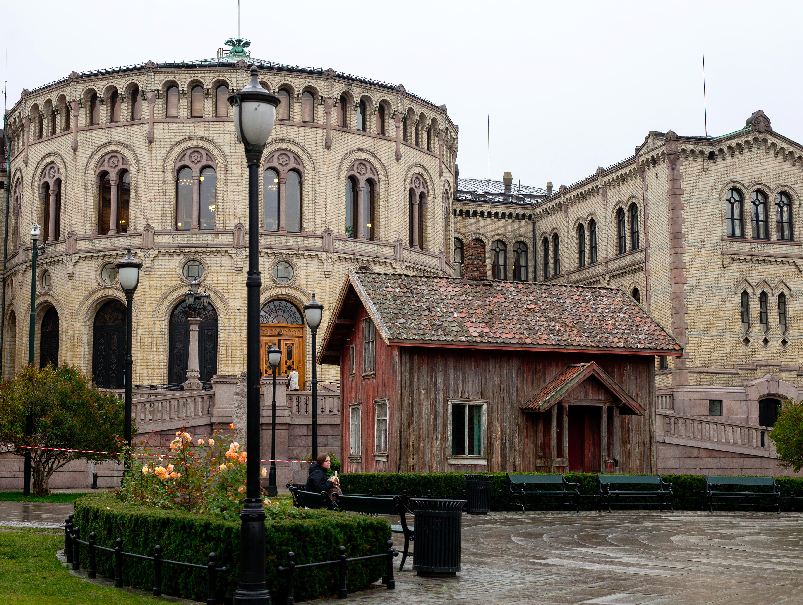
In 2016, she placed an old shack in front of the Parliament building in Oslo titled “House of Commons. Photo: Oslo Pilot

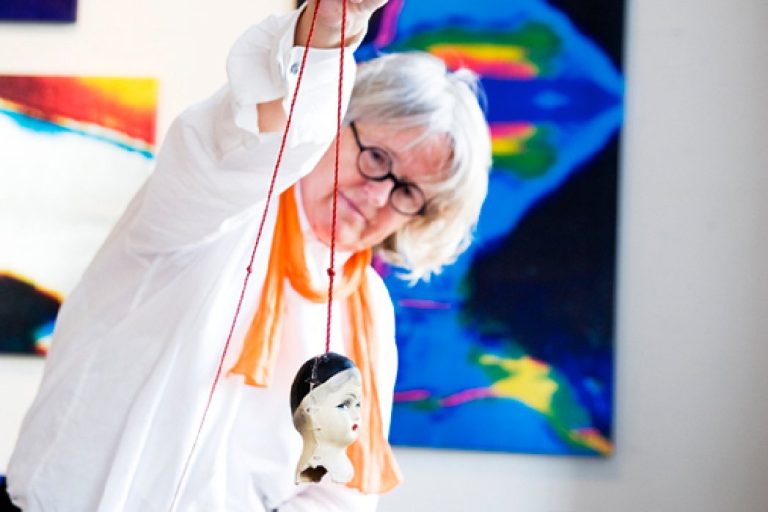
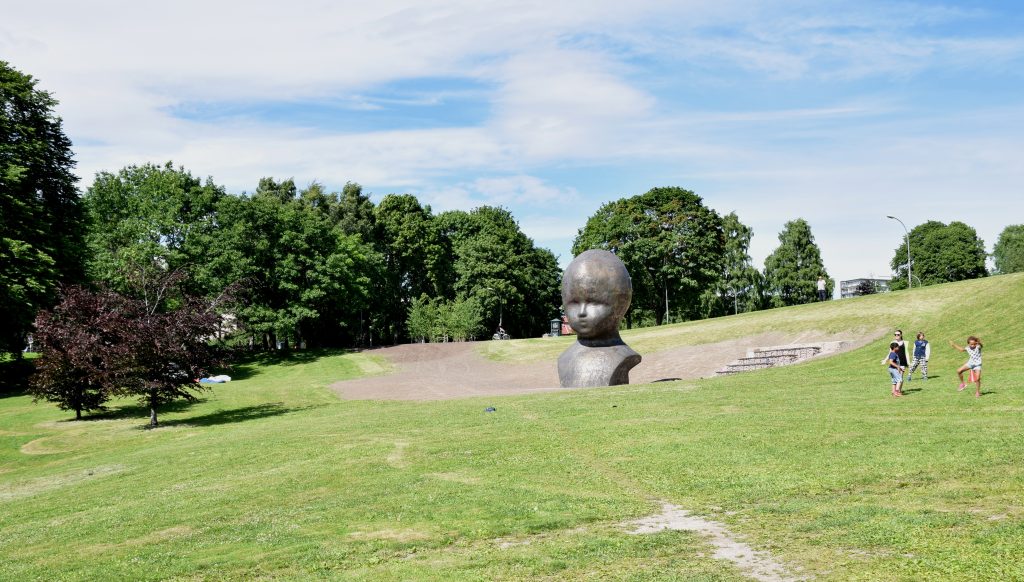
Heske is particularly known for her video manipulated landscapes, installations and various casts of an antiquarian doll’s head she found at a market in Paris in 1971. In Torshovdalen in Oslo is a 10-ton heavy bronze sculpture of this doll’s head. This little doll’s head has followed her throughout her career and she has made it in countless variants and materials, and in collaborating across cultures and borders.

She has collaborated with artists in countries such as Nepal, China, Zimbabwe and South Africa, yet it was her upbringing in the small and almost isolated village of Tafjord on Sunnmøre that has left the deepest traces in her art.

Installations by a Norwegian Artist
she has made it in countless variants and materials of her favorite doll’s head. (A doll’s house, Khak Kunstall)

Among her works is Istårn (Ice Tower) from 1992, for the 1994 Winter Olympics in Lillehammer. She is represented in various galleries, including the National Museum in Oslo, Henie-Onstad Art Centre, Bonnefanten Museum, Bibliothèque nationale de France, and the National Museum of Contemporary Art in Seoul.

In 2016, she placed an old shack in front of the Parliament building in Oslo titled “House of Commons”.

Installations by a Norwegian Artist
In Torshovdalen in Oslo is a 10-ton heavy bronze sculpture of her doll’s head. Photo: Wikipedia

Last year, she exhibited her much talked about artwork “Wittgenstein’s Boat” during the Bergen Festival.

Installations by a Norwegian Artist, written by Tor Kjolberg

Feature image (on top): Carousel Man © Fine Art


Wild Nature and Excellent Architecture in Norway

0

At the far end of the Trøndelag in Norway coast lies an island with wild nature and excellent architecture.

Norway is a country famous for its natural attractions such as the midnight sun, the Norwegian fjords and the majestic mountains. Undoubtedly, the countryside is breathtaking and Stokkøya Sjøsenter is one of the best places to visit if you seek natural beauty and the ideal spot for Instagram-worthy photos.

The sea around Stokkøya is brilliant for diving, and over time the site became a base for divers from outside the local area. A building call Sjøsenteret – the Sea Centre – was used for accommodation, communal area and eating. The Sea Centre was originally the main building of a farm called Botnan and was also at one point used as a workshop for a welding firm.

Wild Nature and Excellent Architecture in Norway
Conservation and gentle use of the surroundings has been an essential part of the development process . Photo: Trøndelag reiseliv

Related: The Norwegian Queen of Salmon Rivers

The island has shown the way for how rural communities should be developed as part of the Bygda 2.0 project, which is the development of a sustainable, upgraded, urban and attractive small village – a “microcity”. In powerful nature, and with a focus on architecture, meeting places, food, art, and culture, a unique, condensed living and working environment is under development. It is about the establishment of social structures, modern living arrangements, use of renewable energy, food culture and nature experiences. All this together with a forward-looking environment for business and research – a living laboratory.

Nature here is wild and beautiful and practically untouched, both on land and at sea, and the aim is to keep it in as untouched a state as possible. Conservation and gentle use of the surroundings has been an essential part of the development process and a deciding factor for all the projects, as a strong interaction between nature and architecture and between landscapes and buildings has been in focus.

Wild Nature and Excellent Architecture in Norway
Torild Langklopp

Some years ago, Torild Langklopp, the owner and manager of the Sea Center, came up with the idea of moving to a small remote island of Norway and build small summer houses for visitors and her dream was transferred into a perfect place for everyone who seeks relaxation with gorgeous surroundings at the Norwegian fjords.

Wild Nature and Excellent Architecture in Norway, read more below….

Food, culture, architecture, social meeting places and passionate local commitment should keep a rural community alive. Many of the best elements from big city life with the big ocean outside the kitchen window have been incorporated.

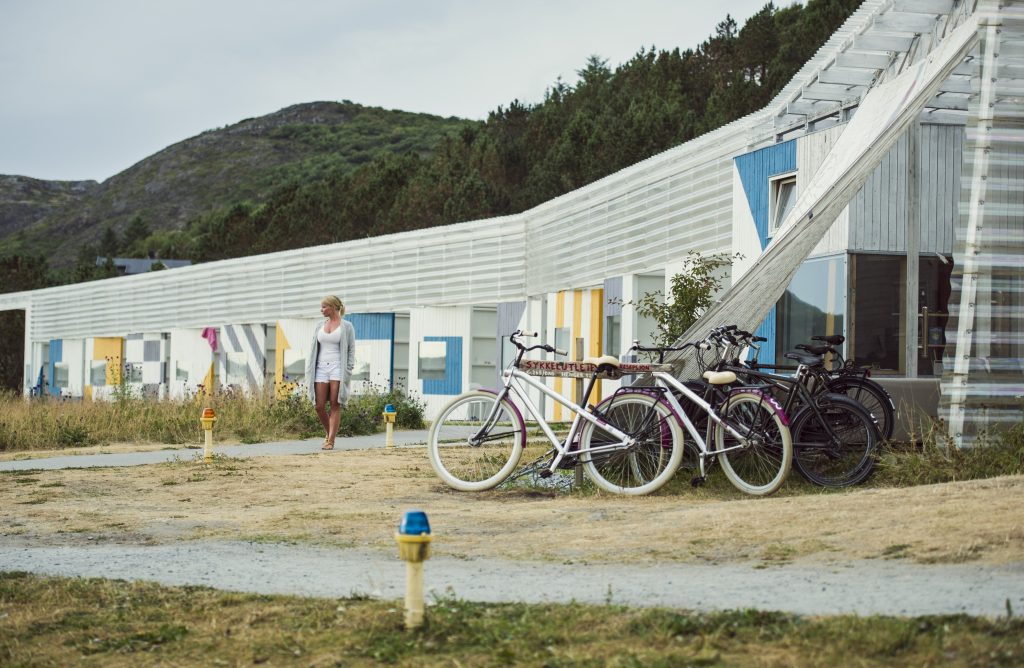
In Middagshaugen, in the hill behind the beach, there were 26 plots allotted to holiday residences, and in 2003 Torild and her husband started building the cottages. Their choice of a modern design was not to everyone’s liking – some likened the cottages to portacabins, when they were exhibited as an example of successful new European architecture at the Italian architectural exhibition ‘Architettura e memoria’ in Genoa. Most of the holiday cottages have now been sold to private owners, but some of them are available for rent.

Wild Nature and Excellent Architecture in Norway
Today, Stokkøya Sjøsenter (Sea Center) offers different options of accommodation for every taste. Photo: Visit Norway

The architects behind the cottages, the Beach Bar and the Sub-units are Ogmund Sørli and Ragnhild Erdal of the Pir 2 Arkitektkontor.

Related: Norwegian Trønder Farms and Food

Today, Stokkøya Sjøsenter (Sea Center) offers different options of accommodation for every taste. Hidden in the landscape up in the cliffs are these coastal houses. Stokkøya Strandhotell is located on the shoreline at Hosnavika. The rooms have the funny name SUB-cabins, “sleep under the ground”, a construction style to make the least possible impact on the landscape. Each one has its own distinct style, offering bathroom and private covered porch; self-contained cottages in case you want to share them with friends or family.

Wild Nature and Excellent Architecture in Norway, continues below

Wild Nature and Excellent Architecture in Norway
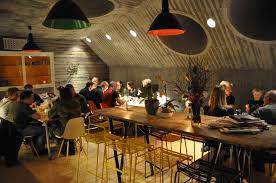
Interior from Stokkøya sjøsenter

If living on the beach is your thing, spots for your own tent can be reserved throughout summer. All lodging options have been created with simplicity and minimalism in mind and always in harmony with the landscape of the island. Stokkøya Sjøsenter has a total capacity of 90 beds available and conference facilities for groups of up to 50 people.

Building work of The Beach Bar started In 2005. Originally meant to be just a shack on the beach, a place for the holiday makers to meet, it has since started catering for a much wider range of guests. The Beach Bar is built quite literally on the foundations of an old cement factory which was in operation from 1947 to late 70s.

Wild Nature and Excellent Architecture in Norway
Evening at the Beach bar. Photo: Trøndelag reiseliv

At the Beach Bar, the skilled and experienced staff creates a new menu every day based on the daily catch from the sea, meat from their own farm and seasonal products. The drinks menu is put together by professionals to complement your food in the best possible way.

Also remember to bring fresh cinnamon rolls from Stokkøya Bakeri – voted Bakery of the Year 2022 for its important role in the local community.

Related: The World’s First Sustainable Destinations

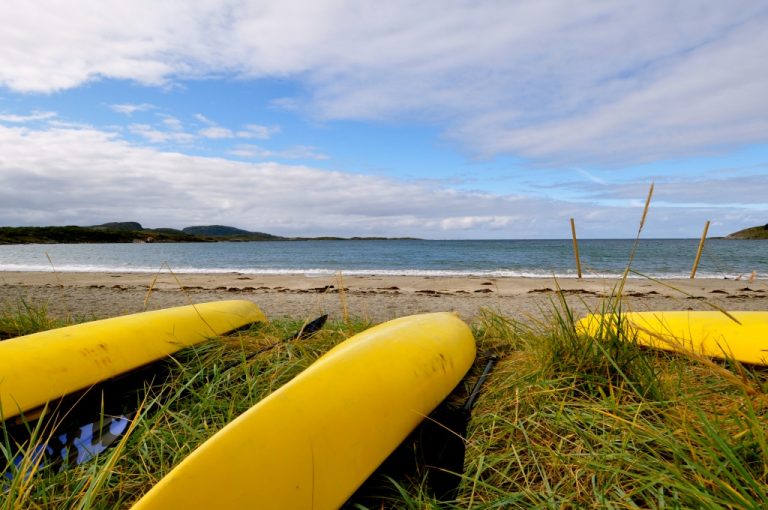
During your visit, you may also enroll to various courses such as a beer course with a local microbrewer, a shellfish course during your lunch or a team building activity. Apart from those, the spot where the Sea Center is located is perfect for kayaking, cycling, diving, fishing, and sailing.

Wild Nature and Excellent Architecture in Norway, more follows…

Wild Nature and Excellent Architecture in Norway
Also remember to bring fresh cinnamon rolls from Stokkøya Bakeri – voted Bakery of the Year 2022. Photo from Facebook

Nature itself is the starting point for any and all your activities out here – whether you are enjoying a good meal while taking in the fantastic view, going for a walk in the surrounding area, taking a bath in the Dutch tubs or a dip in the sea or playing about with a dinghy, a kayak or a fishing boat.

At Stokkøya, guests can enjoy and take their time to fully appreciate nature from wherever they choose to be. And maybe the best way to do it is to do absolutely nothing.

You arrive here after a drive through the spruce-clad municipality Fosen. The road winds around and between narrow fjords – until you meet the sea and the 525-meter-long Stokkøy Bridge.

Alternatively, visitors may fly to Værnes Airport in Trondheim and then either take the bus from Trondheim Central Station all the way to Stokkøya, or rent a car at the airport and come straight to the hotel.

Wild Nature and Excellent Architecture in Norway, written by Tor Kjolberg

Feature photo (on top) © Ove Gjermstad – Trøndelag reiseliv

Homage To One Of Norway’s Most Recognized Comics Creators

On 13th February the Norwegian recognized comics creator Håkon Aasnes turned 80, and the publisher Egmont Norway celebrated this productive cartoonist by releasing an 80 pages book including much of his work. Learn more about this Homage To One Of Norway’s Most Recognized Comics Creators.

The book is enlightening and appetizing, but at the same time also a little sad since too much of Aasnes’ impressive catalogue is not readily available.

One Of Norway’s Most Recognized Comics Creators
Håkon Aasnes was born in Oslo (13 February 1943) and started drawing at the age of two.

Håkon Aasnes was born in Oslo (13 February 1943) and started drawing at the age of two, with a carpenter’s pencil on wrapping paper. He self-published his early comics, such as ‘Avkroken’ (1960) and ‘Zantar’ (1964) while working. He had already created the first version of his character ‘Tobram’ in 1960, when he was seventeen.

Related: Disney Characters with Scandinavian Connections

One Of Norway’s Most Recognized Comics Creators
Tuss og Troll, Christmas 2016

From 1976 to 1979, or intermittently until 1993, Aasnes wrote and illustrated several stories for the magazine Donald Duck & Co, drawing Disney characters licensed for Norway. He was the very first Norwegian to work for Disney with his Donald Duck stories, and whose own drawings, stories, and scenarios based on his own ideas received official publication by Disney.

Nevertheless, Håkon Aasnes may not be an artist many non-Norwegians know but in the last 50 odd years he has drawn over 440 different comic stories including his own creations the Phantom, Vi på Eiketun, Annika, Gråtass and Olsenbanden. However, in the last decade or so, he has produced some amazing commissions for phans from around the world celebrating his favorite era of the Phantom universe.

Homage To One Of Norway’s Most Recognized Comics Creators, text follows below illustration.

One Of Norway’s Most Recognized Comics Creators
From 1983 Aasnes has written and illustrated the comic strip Smørbukk

Related: Innovation Norway Joins Forces With Disney

Aasnes made his debut in 1972 by selling the humorous adventure series “Seidel and Tobram” to Norwegian newspapers. The series was published until 1991, was published in over 17 newspapers and consists of more than 5,000 strips. This is the saga of two loafers looking for easy money in rural Norway. The series has never been published as a collection, with the exception of a small selection of tiny booklets more than 30 years ago.

One Of Norway’s Most Recognized Comics Creators
he has produced some amazing commissions for phans from around the world celebrating his favorite era of the Phantom universe.

From 1983 he has written and illustrated the comic strip Smørbukk, and from 2005 also the comic strip Nr. 91 Stomperud.

Many consider that the series “Vi på Eiketun” is Aasnes’ greatest achievement. This is a children’s series which, over the course of 1159 pages, developed into “an advanced family series” and finally a purely adult series that contains most of the practical problems and moral dilemmas that can arise in a Norwegian farming community.

According to the records of Mine tegneserier, he has contributed to 440 cartoons.

One Of Norway’s Most Recognized Comics Creators
The book is enlightening and appetizing

You can buy the book “Håkon Aasnes: Norges største tegneserieskaper” her.

Homage To One Of Norway’s Most Recognized Comics Creators, written by Tor Kjolberg

Feature image (on top): Nr. 91 Stomperud, Christmas 2012.

Exceptional Architecture Made in Norway

0

The Oslo-based architectural company Nordic Office of Architecture has a mission: To build a more sustainable society through exceptional architecture that transforms, inspires, and enhances the environments in which we live. Learn more about exceptional architecture made in Norway.

Dedicated individuals from more than 30 different countries have specialized in complex projects such as airports and hospitals. Nordic has branches in Copenhagen, Reykjavik and London and is actively involved in projects in various countries across Europe, Africa, the Middle East and Asia. It has become one of the largest architectural practices working in the national and the international arena.

Exceptional Architecture Made in Norway
From Oslo Airport

Related: An Architectural Travel Guide to Oslo

Over the years, the company has gained extensive expertise through a wide variety of projects ranging from urban masterplans to furniture and interior fittings. The architects work in integrated multidisciplinary teams, combining planning specialists with architects, to achieve the most innovative and sustainable solutions.

The practice was founded as Narud Stokke Wiig Architects and Planners in 1979 but changed name in 2012. Having continuously developed and adapted to the numerous changes in the industry for over 40 years, Nordic Office of Architecture has specialized in complex and function-specific facilities from the largest and most gigantic areas in Norway to private housing.

Exceptional Architecture Made in Norway
From new airport Istanbul

Related: World-Class Scandinavian Airports

This way of working also makes for a flexible, project-based organization that allows participating in competitions and projects of all scales globally. Nordic covers the following fields: Master planning, urban planning, architectural design, interior design, furniture and product design and visualization as well as film design and BIM management.

Since 1991 Nordic Office of Architecture has been involved in the design and planning of Oslo Airport, following the decision that the main airport would move to Gardermoen from its previous location at Fornebu. The airport opened in 1998, and Nordic has been involved in the continuous improvement works and the current vast expansion including a new pier, as part of Team_T. Team_T is a collaboration between Nordic Office of Architecture, COWI, Norconsult, Aas-Jakobsen and Per Rasmussen AS.

Exceptional Architecture Made in Norway
Liljewall Knowledge House. Photo: Anders Bobert

Related: The Scandinavian Green Roof Award

“Through the encouragement  of individual development for our members of staff, we aim to achieve a collective culture with the ability to offer our clients and society more sustainable, elegant, functional and surprising solutions,” says John Arne Bjerknes, Senior Partner, Head of Residential and Commercial at Nordic Office of Architecture.

Exceptional Architecture Made in Norway, written by Tor Kjolberg

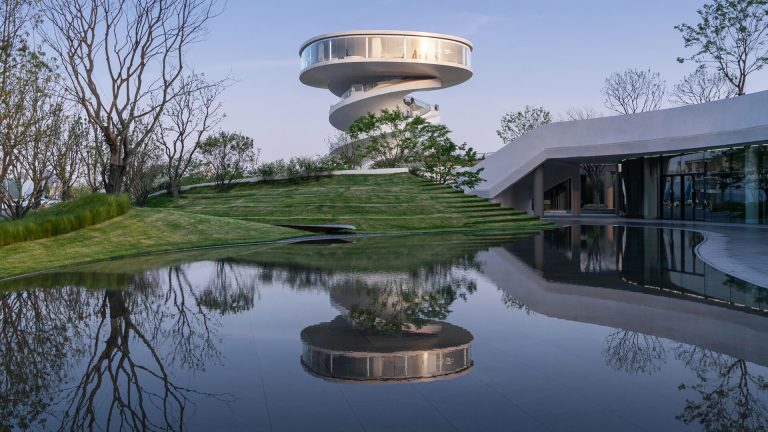
Feature image (on top): Spiraling Nanchang Waves Tower, China © Nordic Office of Architecture

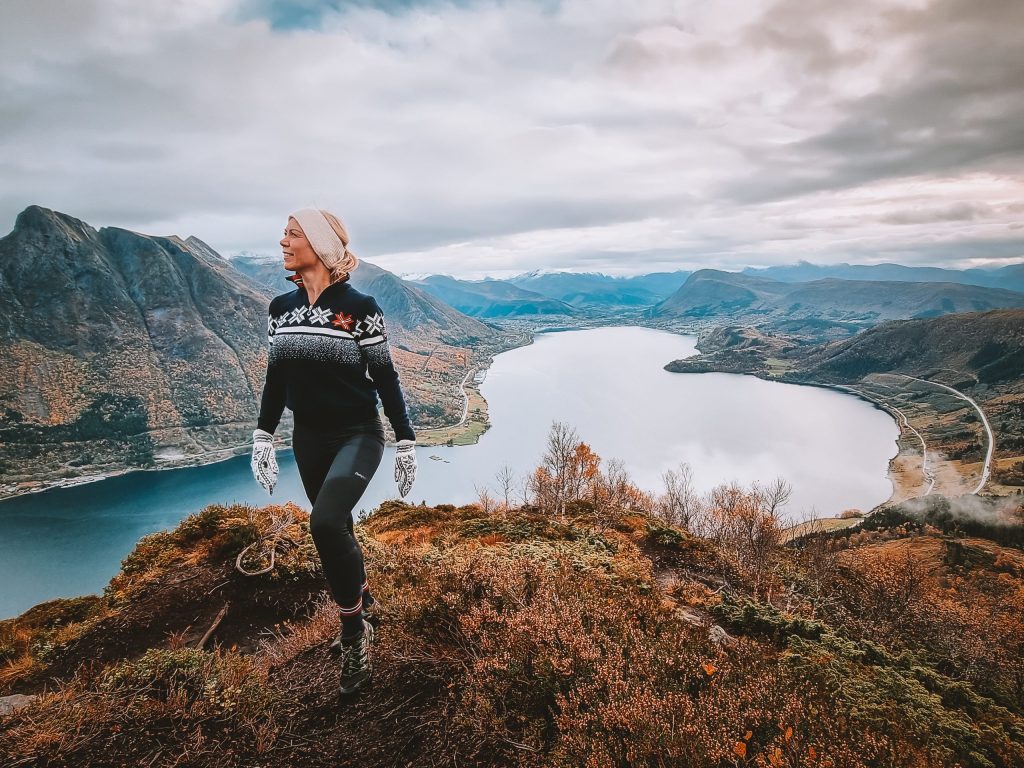
What to Wear in Scandinavia: All-Season Packing List

It doesn’t matter when you plan on visiting Northern Europe; whether at the start of the year or around June, there are a few clothes you must pack for your trip to enjoy your stay there. In this piece, we’ll cover everything you need to carry to ensure you’re well-prepared for any occasion. Here’s our advice on what to Wear in Scandinavia: All-Season Packing List.

Essentials Items to Pack in All Seasons

Hiking Boots

Scandinavia and even Northern Europe are well known for its gorgeous countryside and beautiful mountains, so whether the weather is sunny or wet, you must carry your hiking boots or best walking shoes to explore all these places during your visit. How will you even enjoy a big city break without your walking shoes?

What to Wear in Scandinavia: All-Season Packing List
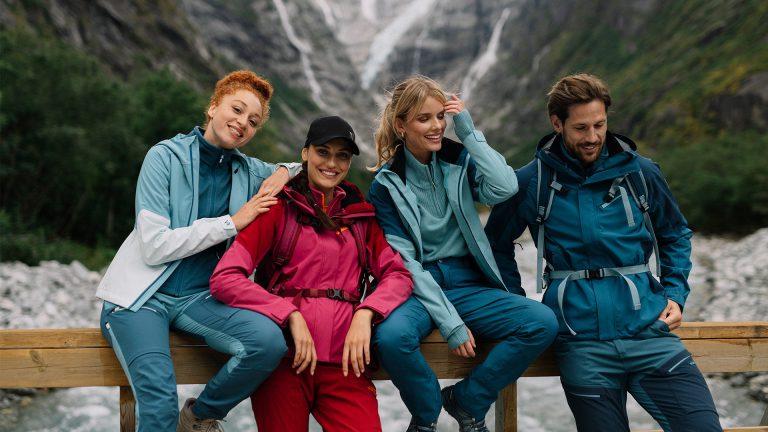
The first thing everyone tells you to pack while you tell them you’re visiting Northern Europe is a raincoat. This one is made by Norwegian Rain.

Rain Jacket

The first thing everyone tells you to pack while you tell them you’re visiting Northern Europe is a raincoat. The weather there can change so fast, and even on hot days, you may encounter heavy rains lasting around 15 minutes, so if you don’t have your coat, you will not like the experience.

Extra Layers

Choosing the best outfit for a day in Scandinavia and even Northern Europe can be difficult because even on a nice day, cold winds could spoil the fun. That’s why putting on some extra layers inside is advisable so that if the winds start blowing early, you will not have to quit having fun. Keeping warm in such cases also helps you avoid catching a cold. Getting sick during such a highly anticipated visit is the last thing you want to imagine.

Umbrella

A raincoat could keep you safe on a rainy day, however, it can get too hot and uncomfortable when it’s raining on a sunny day, and in this case, your umbrella, or “brolly” as locals call it, will be the best option. Ensure you are careful because winds could damage your umbrella, and you’ll also be exposed to rain. It means you have to pack a strong umbrella.

What to Wear in Scandinavia: All-Season Packing List., read on….

What to Wear in Scandinavia: All-Season Packing List
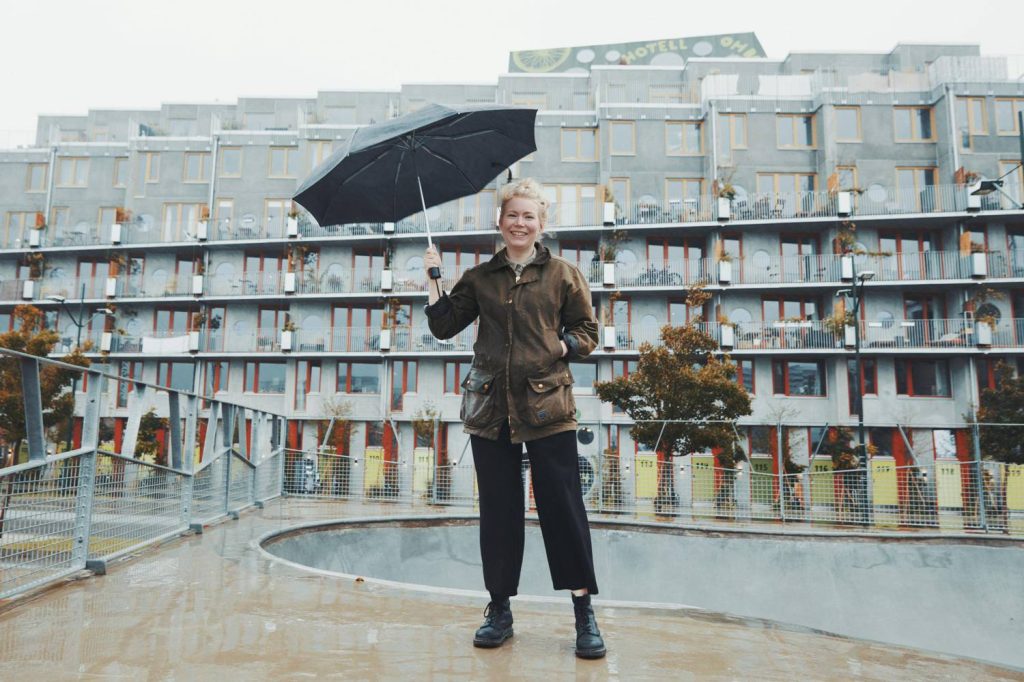
You have to pack a strong umbrella. Photo: Visit Sweden

A Packing List for a Spring Visit to Scandinavia

Carrying the wrong clothing for a trip can ruin your experience, so if you want to visit Northern Europe in Spring and have the best time of your life, here’s what you need to carry.

Jumpers

You will sometimes encounter the winds while walking in Scandinavian countryside or when visiting the Scottish Highlands, but if you carry your woolly jumper, you will have nothing to fear. You will see many people wearing jumpers in Northern Europe; since the country has many sheep, wool is not a problem.

Windbreaker

During Spring in Northern Europe, the weather will most likely be windy when it’s not raining, and in this case, a windbreaker is the best outfit to wear.

Shorts and Jeans

Although you don’t often wear jeans, ensure you have a pair when you visit Northern Europe. Jeans, made of strong material, are great when you need to go for a wilderness hike because they protect you from bug bites and nettle stings. Shorts are also a must-have for the few sunny days during the spring.

What to Wear in Scandinavia: All-Season Packing List
Although you don’t often wear jeans, ensure you have a pair when you visit Northern Europe.

The Best Summer Packing List for Scandinavia

Summer in Northern Europe and Scotland is almost like in other places, so you’ll need the same clothes you would require elsewhere but remember to carry your umbrella in case anything happens. Fairfield House Hotel is a lovely place to spend a summer break, so is a new concealed gem resort just outside the capital of Norway.

The Best Summer Packing List for Scandinavia

Sunglasses

Sunglasses are essential for your summer holiday, especially if you are exploring the mountains since the sun can be blinding, hindering visibility. If you can see well as you hike, the trip can be risky since you can quickly find yourself in an accident.

Sun Hat

Carrying a sun hat is an optional choice, depending on your preference, however, having something to cover your face and head when the sun is burning in the afternoon will make you comfortable.

Short-sleeved T-shirts

You must have short-sleeved t-shirts for your summer holidays, and this also applies to Northern Europe. There’s a common saying for Scottish summertime, and it goes like this “sun oot, guns oot”, so remember to carry your short-sleeved t-shirt so you can show off the guns!

Swimwear

There are great beaches on Northern Europe’s west coast, for example, the one found at Troon. Dipping yourself in the sea to overcome the heat at the beach is one of the best feelings.

A Packing List for a Tour to Scandinavia in Autumn

As summer comes to an end and autumn begins, everything in Northern Europe looks beautiful, and although you’re likely to get wet, autumn country walks are the best.

What to Wear in Scandinavia: All-Season Packing List
Autumn country walks are the best. Photo: Mall of Norway

Hoodies

Hoodies are perfect for many occasions, one of which is the midges you’ll most likely face on your evening walks.

Light waterproof jacket

Autumn weather is not that bad, but you’ll realize that rain showers will start to occur more often as time goes by. That’s why you must have a light waterproof jacket, especially as autumn begins, around late August and early September.

Flannel Shirts

Flannel shirts are a unique fashion, and they are also warm. You can button them up with your jeans and favorite jacket or wear them casually with a t-shirt. If you’d like to explore the nightlife, this is the attire for that endeavor.

What to Wear in Scandinavia: All-Season Packing List
If you carry your woolly jumper, you will have nothing to fear. Photo: With and Wessel

Essential Items to Pack for Winter in Scandinavia

Although Scandinavian and Scottish winters are beautiful, they are usually harsh and very cold. The following items will make life easier for you during the winter in Northern Europe.

Warm Socks

Imagine having numb toes while shopping for a Christmas party in the city center. If you want to avoid being in such a situation, don’t forget some warm socks (fluffier ones are the best).

Hats and scarves

The winter comes with icy winds that cut through the jawbone and ears, so you should put on your hat and scarf every time you leave the house.

Fleeces

Fleeces are an excellent addition to have under your winter jacket because they are warm, lightweight, cheap, and comfortable. They are better than jumpers because they are softer, so they will fit well with the other layers.

Thermal layers

You must have thermal layers if you’re planning to explore the mountains during winter because temperatures may fall below zero, and you’ll find yourself chittering when you stop to take a breath.

What to Wear in Scandinavia: All-Season Packing List – Final Thoughts

It’s important to be prepared for the changing weather conditions in Northern Europe, as the seasons can bring drastic temperature changes. Layering is key, and investing in high-quality, warm, and waterproof clothing and footwear will ensure you stay comfortable and stylish throughout your travels.

What to Wear in Scandinavia: All-Season Packing List
Shawn Mack

What to Wear in Scandinavia: All-Season Packing List, written dedicatedly for Daily Scandinavian by Shawn M. Shawn Mack is an experienced outreach expert at The Pro Linkers. He is known for his excellent communication skills and ability to build strong relationships with influencers and media outlets. With a sharp eye for detail and a commitment to delivering results, Shawn is the go-to expert for all things SEO outreach.

Feature image (on top): © Mall of Norway

Dystopian Visions of the Future by Popular Norwegian Painter

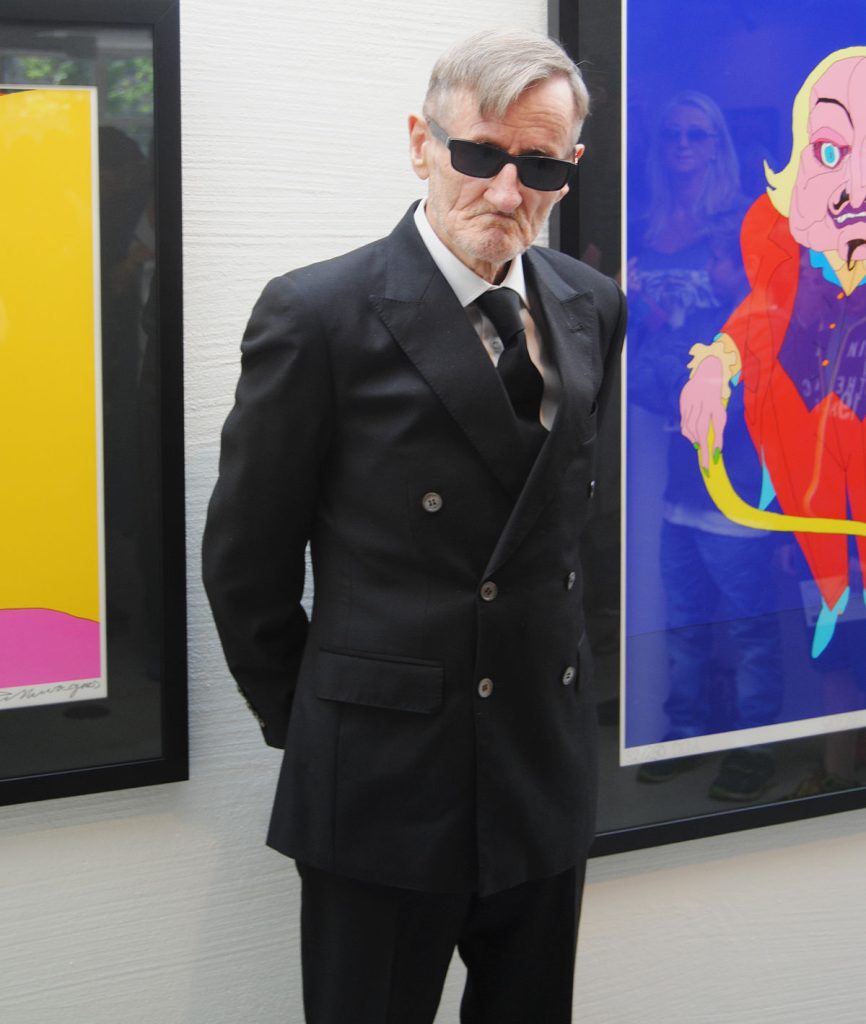
Terje Brofos, better known by his pseudonym Pushwagner (1940-2018), clearly left his mark on Norway and internationally. The artist has even been compared to Norway’s Edvard Munch after his death. The popular Norwegian painter had indeed dystopian visions of the future.

He was born during a bomb attack in May 1940, less than a month after the invasion by Nazi Germany. he was raised in Berg, a neighborhood in the North End of Oslo. In 1944, he was severely injured in a traffic accident. His father Fritjof was an engineer who struggled with alcohol. His mother Sonja worked as a biochemist.

Dystopian Visions of the Future by Popular Norwegian Painter, text follows below image.

Dystopian Visions of the Future by Popular Norwegian Painter
Pushwagner has been hailed as one of Norway’s most important contemporary artists whose life was as tragic and colorful as the pictures he created. Photo: Wikipedia

Childhood and youth

As a child in Oslo, Pushwagner didn’t just suffer from claustrophobia, he said, but he was also quite paranoid – especially about his parents who said “phew” to anything he wanted to do – except drawing. Pushwagner’s first sketchbooks contain expressive scribbles of football players and Indians, motorcyclists and bloody boxing matches he made up in his own mind.

During his youth, he excelled in both summer and winter sports. He became one of Norway’s best tennis players and in 1955 played in a double’s final for the Norwegian championship with Arne Melander, a match which the duo lost.

Dystopian Visions of the Future by Popular Norwegian Painter, text follows below image.

Dystopian Visions of the Future by Popular Norwegian Painter
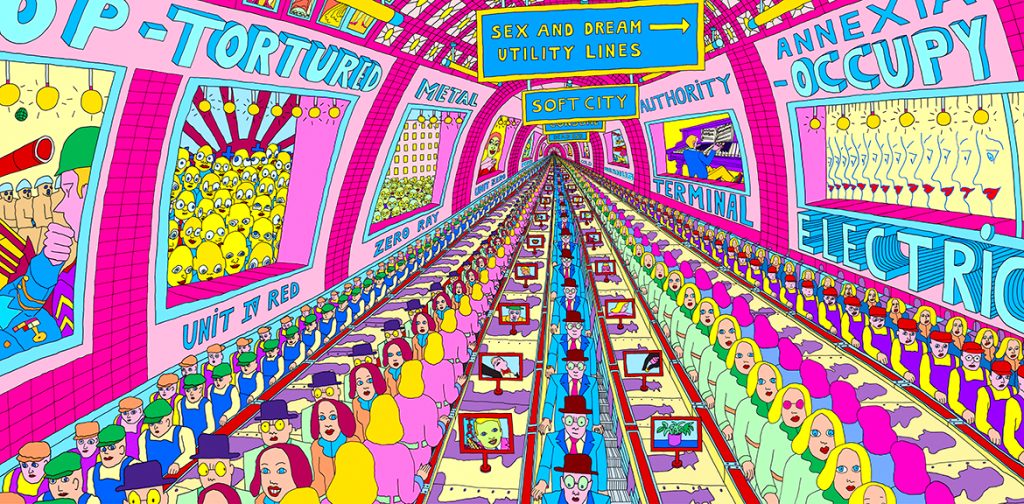
Pushwagner, Sex and Dreams

Hailed as one of Norway’s most contemporary artists

Pushwagner has been hailed as one of Norway’s most important contemporary artists whose life was as tragic and colorful as the pictures he created. “He has been a living miracle,” Jan Christian Hermann Mollestad, a friend and work partner, told state broadcaster NRK. He noted that Pushwagner had come close to death several times during his years as a heroin addict and homeless person living on the streets.

Pushwagner finished his education at the State’s School of Art and Design of Oslo in 1959. He stated that he quit drawing for a period after his studies and that he struggled for several years to find his personal style.

Pushwagner met the Norwegian author Axel Jensen in 1968 and the two lived together for a time. Pushwagner illustrated Jensen’s book “Og resten står skrivd i stjernene” (And the Rest is Written in the Stars) (1995). Fascinated by comics since childhood, Pushwagner was inspired to start the series “Soft City” and “Doktor Fantastisk” during this period.

Related: A Norwegian’s Journey From Professional Snowboarder to Visual Artist

Dystopian Visions of the Future by Popular Norwegian Painter, text follows below image.

Dystopian Visions of the Future by Popular Norwegian Painter
A day in the Mann family

Commercial breakthrough in 2008

His commercial breakthrough didn’t come until 2008, after various periods of addiction and living on the streets. His art began to be bought up by museums after exhibitions in Berlin and Sydney and he also won the top prize at Norway’s annual fall art exhibit in Oslo.

Among his most famous works are “Soft City”, the satirical cartoon about a mechanical everyday life in a horror society of a big city, and “A day in the Mann family” with the same theme.

One of the last things he made before his death was a book cover in collaboration with the famous American cartoonist Chris Ware.

You may also like to read: Cross-Boarding Norwegian Film Directors

Dystopian Visions of the Future by Popular Norwegian Painter
From Soft City

Soft City

In an introduction to a new release of the book Soft City, Chris Ware writes that when he first encountered Soft City, he mentally catalogued it as “The Stanley Kubrick Comic Book.” The name fits the visuals. The book is cinematic, and Ware compares Soft City to a group of films: Fritz Lang’s Metropolis (1927), Charlie Chaplin’s Modern Times (1936), Andrei Tarkovsky’s Solaris (1972), and Jacques Tati’s Playtime (1967). The skyscraper cities in these films are dense, impersonal, and often oppressive. Like them, the Soft City of Pushwagner’s imagination is a prescient vision of a future that we don’t want, but that may have already arrived.

“He’s been an outstanding character in Norwegian art history,” said NRK’s cultural commentator Agnes Moxnes, who noted how his art also attained “outstanding success” in recent years.

“It made him very happy to experience how enthusiastic folks were about his art, and that he became so dear to the public,” said Petter Mejlænder, who wrote a biography of Pushwagner. “He won support in the most unexpected corners. He made pictures that everyone saw something in.”

Dystopian Visions of the Future by Popular Norwegian Painter, written by Tor Kjolberg

Feature image (on top) Cadillac by Pushwagner

Hiking in the Capital in the Faroe Islands

0

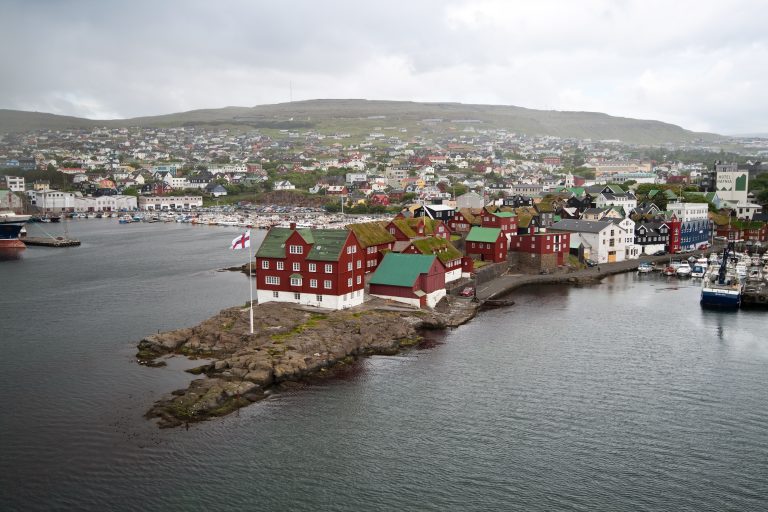
There is a lot to experience in small Tórshavn, usually locally referred to as simply Havn, and the distances mean that you can always walk to most of the attractions. Learn more about hiking in the capital in the Faroe Islands.

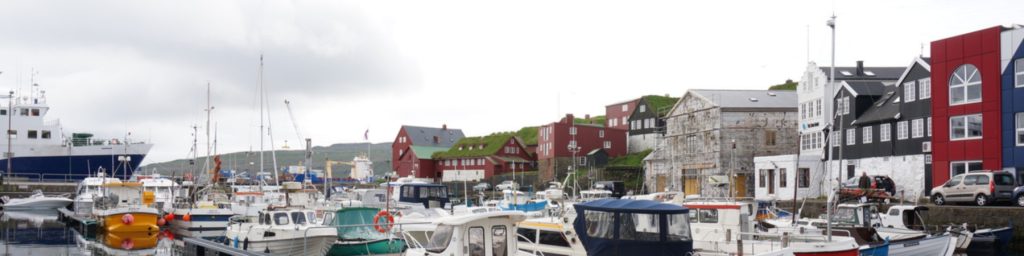
Tórshavn, the capital and largest city of the Faroe Islands, has a population of 14,001 (2022), and the greater urban area has a population of 21,078, including the suburbs, and makes it one of the smallest capitals in the world.

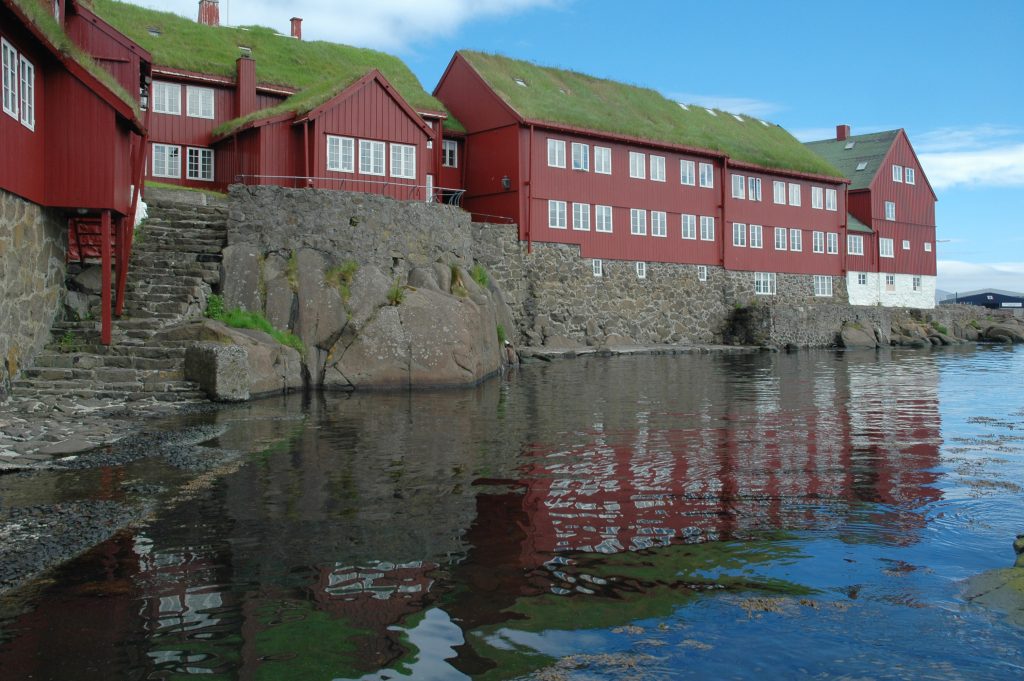
The old town of Tinganes is a special experience. With its grass roofs and government building, the Lighthouse at Skansen, the Viarlundin city park with green plants, trees and benches, Torshavn church, the boat harbor and not least a walk through the city, will undoubtably be a memorable experience.

Hiking in the Capital in the Faroe Islands
Tórshavn, the capital and largest city of the Faroe Islands, has a population of 14,001 (2022). Photo: Wikitravel

Related: Farao Islands – Grand, Wild and Majestic

The parliament on the Tinganes peninsula was established by the Norse (Scandinavians) in AD 850 and became the capital of the Farao Islands and has remained so ever since.

Tórshavn is a cosmopolitan municipality, where history and 21-century modernity meet to create the city’s unique charm and appeal. It is the place where old stories are narrated and new ones are written, where the traditional Faroese ballads are still chanted (and danced to) and contemporary music is composed; a place where the traditional Faroese attire is proudly used on special occasions and designer woolen clothing is created.

Hiking in the Capital in the Faroe Islands
The city offers a rich cultural life, impressive art exhibitions, recreational activities, traditional experiences, excellent hotels, and restaurants, all nested in a beautiful landscape. Photo: Wikipedia

Related: Faroese Knitting Festival

A trip to one of the city’s European-style pubs or music bars is also worth taking. Traditional and international cuisines satisfy a variety of tastes. Feel free to also take a look at the many funny statues that can be found scattered around the city. The city offers a rich cultural life, impressive art exhibitions, recreational activities, traditional experiences as well as excellent hotels and restaurants, all nested in a beautiful landscape.

Tórshavn features a subpolar oceanic climate, with strong moderation from the Atlantic Ocean’s Norwegian Current. Because of its cloudiness and the ice-free water surrounding Tórshavn, its winter temperatures are exceptionally mild for such a northerly location, with winter daytime temperatures usually oscillating around 6 °C (43 °F). However, summer temperatures are much lower than those found in continental Scandinavia on similar latitudes, and barely exceed 13 °C (55 °F) in the warmest month.

You are never far from the “wilderness” on the Faroe Islands, not even in Torshavn. Travel to Svarifossur and enjoy the beautiful waterfall, wildlife, and fresh air. The small but beautiful waterfall is only two kilometers up from the harbor and is today part of the city. The area is protected and used as a hiking area by the locals. Geese, horses and of course sheep graze in the area.

Hiking in the Capital in the Faroe Islands
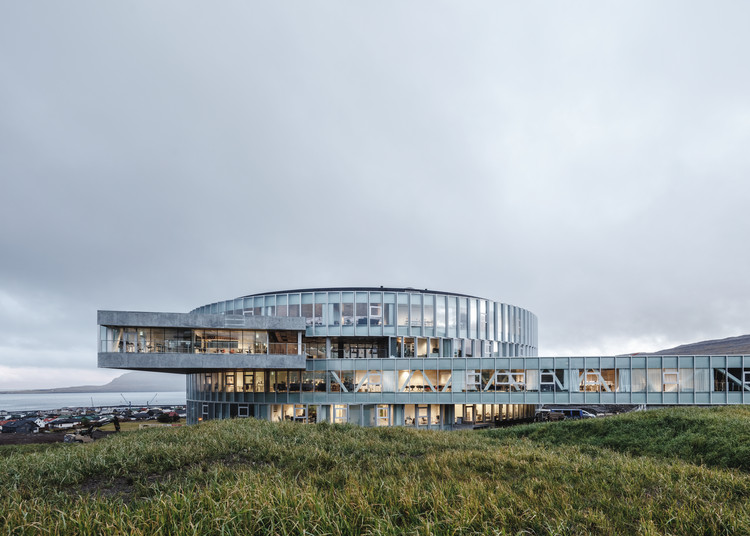
Glasir – Thorshavn’s College. Photo by Rasmus Hjortshøj

Public transportation in Tórshavn is free of charge and the city buses have free Wi-Fi. The twin goal of this initiative was to reduce traffic in the town’s center and lower fuel oil use and CO2 emissions. As a result, Tórshavn Municipality received the national Faroese Environmental Award in June 2008 for having sponsored the best event designed to promote environmental protection, sustainable development, and sustainable tourism.

Hiking in the Capital in the Faroe Islands, written by Tor Kjolberg

Feature image (on top): Photo – Wikipedia