Sweden’s biggest island is to many a summer paradise, regardless if you are staying in the cultural heritage city Visby, or continuing your way on the island. Braathens Regional Airlines (BRA) is back in Norway and this summer is launching a direct route from Oslo Gardermoen to Visby. Experience Visby & Gotland by Braathens Regional Airlines (BRA).
The new route will be operated twice a week, with the first departure from Oslo Gardermoen on Thursday 6 July.
Move 900 years back in time among knights and markets during medieval week, or perhaps a visit to Pippi Longstocking at Astrid Lindgren’s World or the karst caves of Lummelunda. Visby is filled with culture and history all year round.
Visby, located on Sweden’s largest island Gotland, has something for everyone, whether you are interested in history, nature, culture, good food or just want to relax on the beach. The city attracts tourists from all over the world due to its fascinating history and stunning scenery, as well as culinary restaurants and beautiful beaches. Visby is a medieval town and has been on the UN World Heritage List since 1995.
Experience restaurants, funny shaped sea stacks and the traditional saffron pancake. Beautiful old buildings and being close to the ocean, wherever you go.
Gotland is a place for both city pulse and relaxation, regardless if you are visiting for the Medieval week or the democratic week of Almedalen. a calm day on the amazing beaches or to just or relaxation and breath in the ocean air!
Gotland, has something for everyone, whether you are interested in history, nature, culture, good food or just want to relax on the beach.
“It feels very good to be back in Norway and Oslo, where our roots are. The launch of a direct route from Oslo Gardermoen to the Swedish holiday island of Gotland is in line with our long-term strategy to strengthen our position outside Sweden’s borders. We look forward to welcoming our Norwegian passengers on board Braathens Regional Airlines this summer,” says Martin Erkenborn, commercial manager at BRA.
Experience Visby & Gotland by Braathens Regional Airlines (BRA), based on a press release from BRA.
Late March this year, the Ministry of Finance submited the white paper The Government Pension Fund 2023 to the Storting (the Parliament). Topics in this year’s paper include how international economic and political developments may affect the Government Pension Fund Global, and a new review of the active management of the Government Pension Fund Norway. Learn more aboutNorway’s gigantic sovereign wealth fund 2022 – 2023.
2022 was a volatile year in the financial markets, among other things as a result of increasing inflation and tightening of monetary policy internationally. Return on the investments in the Government Pension Fund Global (GPFG) and the Government Pension Fund Norway (GPFN) was -14.1 pct. and -4.4 pct., respectively. This was, respectively, 0.87 and 0.71 percentage points higher than the return on the benchmarks set by the Ministry.
Despite weak markets, the market value of the GPFG increased with NOK 89 billion, to NOK 12 429 billion. This was due to significant revenues from the Norwegian petroleum sector deposited into the Fund and a weakening of the Norwegian krone (NOK). For the GPFN, market value at the end of 2022 was NOK 318 billion, a decrease of NOK 15 billion since the start of the year.
Norges Bank Investment Management CEO Nicolai Tangen. Press photo
“The market was impacted by war in Europe, high inflation, and rising interest rates. This negatively impacted both the equity market and bond market at the same time, which is very unusual,” said Norges Bank Investment Management CEO Nicolai Tangen.
The first quarter 2023, however, shows a 5.9% return on investment.
Deputy CEO Trond Grande. Photo: Norges bank
Norway’s $1.4 trillion sovereign wealth fund, one of the world’s largest investors, on Friday posted a 5.9% return on investment for the first quarter boosted by rising equity markets. “It’s actually one of the strongest quarters we ever had,” Deputy CEO Trond Grande said in a video posted on LinkedIn.
Minister of Finance Trygve Slagsvold Vedum. Photo: Center Party.
“We have seen a strong increase in the value of the Fund over several years but have no guarantee that this will continue. Thankfully, we have competent and experienced people managing the Fund, combined with a long-term investment strategy that we must remain committed to, also in more challenging times. This will serve us all in the long run,” says Minister of Finance Trygve Slagsvold Vedum (Centre Party).
Norway’s sovereign wealth fund was established in the 1990s to invest the surplus revenues of the country’s oil and gas sector.
Despite market turmoil in March 2023 amid concerns of a new banking crisis, equity markets provided the biggest boost for the fund, with a nearly 8% gain. Falling interest rates benefited its bond portfolio, which returned almost 3%.
The profit of 893 billion Norwegian crowns ($83.89 billion) contrasted with a loss of 653 billion a year earlier.
So far, it seems that Norwegians have no reason to worry.
Norway’s Gigantic Sovereign Wealth Fund 2022 – 2023, written by Tor Kjolberg
Norwegian designer Daniel Rybakken is famous for his lighting concepts, and already in 2008 he won the prize for the best piece of furniture at the Milan fair with his “Surface daylight”, which is about creating a subconscious feeling of sunlight in a room. Learn more about the Norwegian designer who has seen the light.
Born in 1984, Daniel Rybakken grew up in Oslo, Norway. He studied design at the Oslo School of Architecture and the School of Arts & Crafts in Gothenburg, Sweden. On graduating with a Master of Fine Arts in 2008 he opened his own design studio in both Oslo and Gothenburg.
Rybakken has now been established on the international design scene for over a decade. Based in Gothenburg, Sweden, he has created products with manufacturers including Italian lighting brand Luceplan, Danish homeware label Hay and Finnish furniture company Artek.
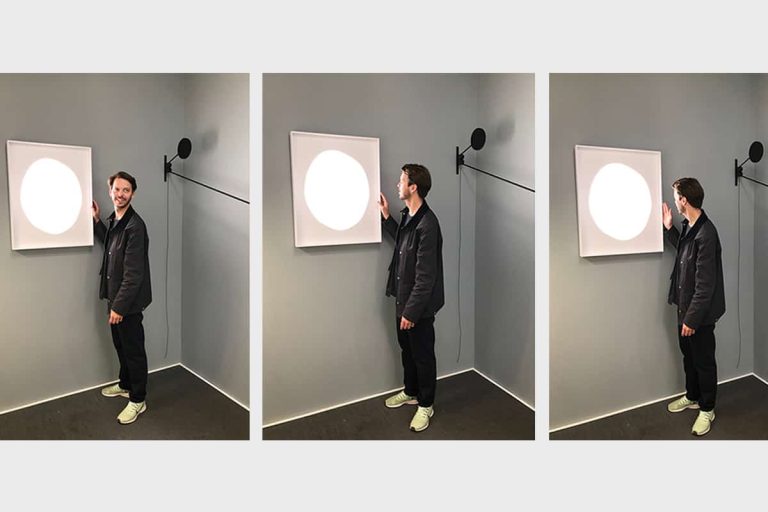
Surface Daylight from 2008 consisted of two flat pieces that stood leaning against a wall where the light came from diodes under the surface of the plate.
Rybakken has received numerous awards, including the ‘Best of the Best’ Red Dot Award in Singapore, 2007; the Anders Jahre’s Cultural Prize for Young Artists in Oslo, 2008; and the Design Report Award for best designer at Salone Satellite in Milan, 2009.
In collaboration with the Italian lightening brand in 2020, he designed the Casette family of lamps. Cassette is the result of research on form to generate a slim, minimalist lighting fixture with a large, uniform luminous surface, but also an object with which to make compositions on multiple levels, conveying a pleasing sense of depth.
Cassette is the tenth collection created by the designer for the company. Luceplan has thus decided to make this long, fertile collaboration the theme of its event for design week in Milan.
Cassette, like the previous products by the designer, including two winners of the Compassi d’Oro, reflects intense affinities that have led, on each occasion, to the exploration of new facets and virtues of lighting design, both in technical and aesthetic terms.
Rybakken has now been established on the international design scene for over a decade.
The work of Daniel Rybakken occupies the area between art and design, forming limited editions, art installations and prototypes for serial production. His main focus has been to work with daylight and how to artificially recreate its appearance and subconscious effect.
The Norwegian Designer who has Seen the Light, written by Tor Kjolberg
Feature image (on top): Daniel Rybakken with the Casette Lamp designed for Luceplan.
During a recent renovation, the historic hotel SKT. Annæ, a former 19th century speakeasy, revealed many intriguing secrets. Larn more about this boutique bolthole in Copenhagen.
A quiet elegance pervades this hotel, but it’s the atrium and rooftop gardens that really elevate it into pure dreamland.
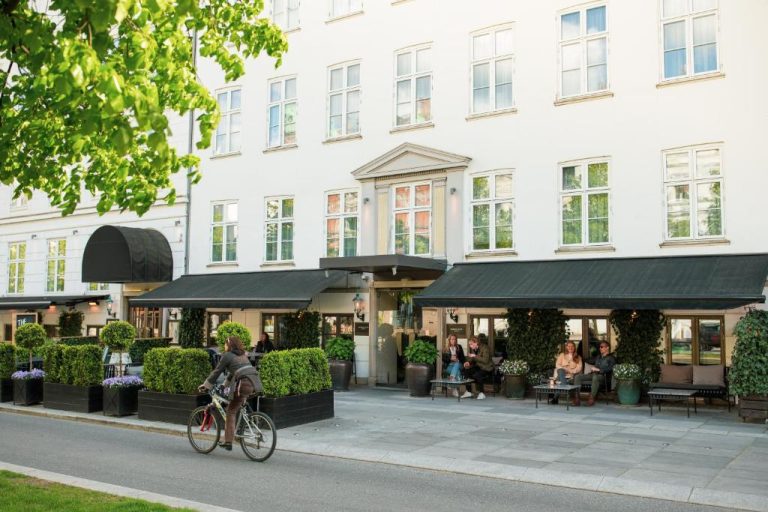
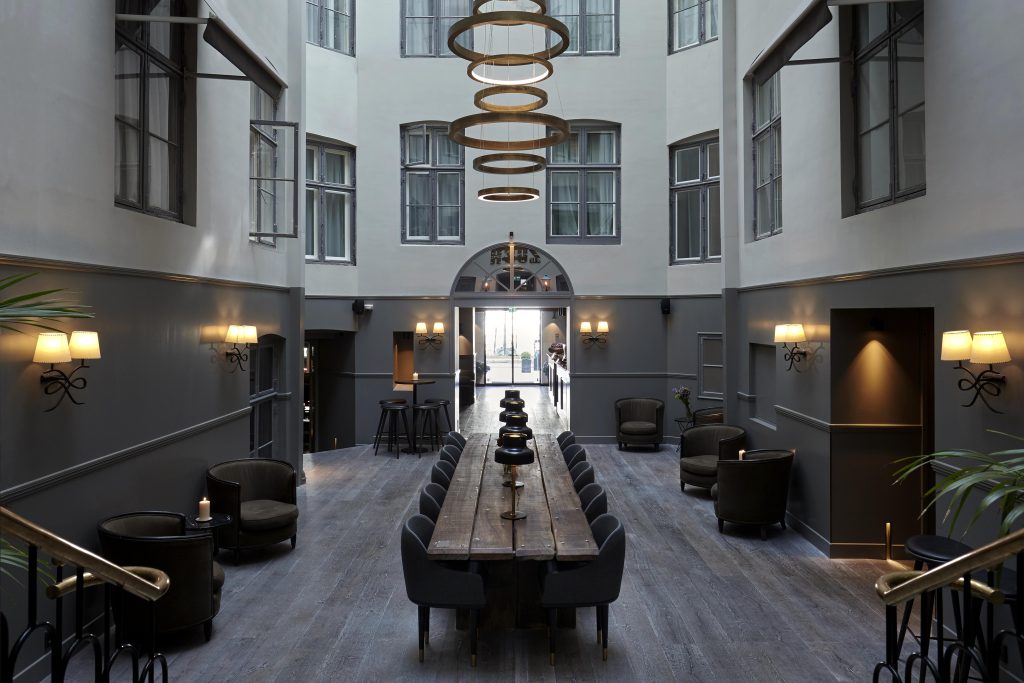
Situated near the Amalienborg royal palace, the 145-room Hotel Skt. Annæ has a calming, residential feel, with a front terrace for warm-weather wine sipping and a fireplace in the lounge offering salvation for the far-more-frequent cold spells. The atrium, where you can sit at the communal table underneath a glam spiral chandelier, is another lovely place to read or catch up on emails.
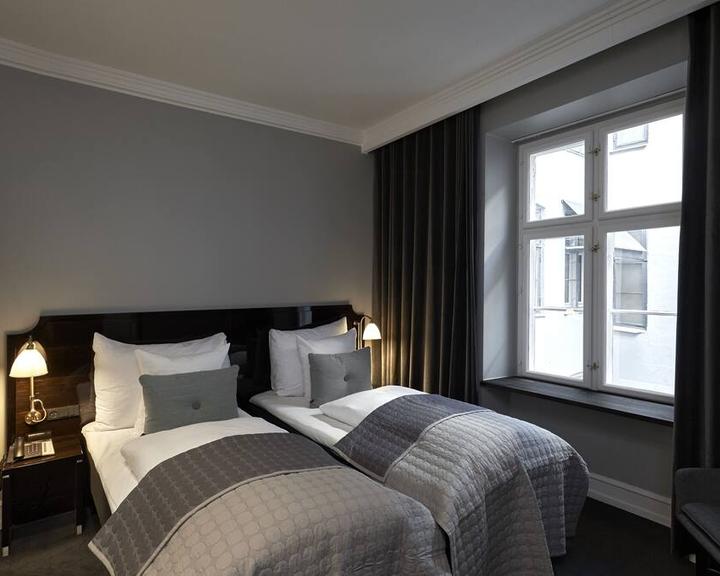
The rooms and suites decorated discreetly in the chic, muted palette of renowned painter Vilhelm Hammershøi
Housed in a 17th-century building, Hotel Skt Annae is a lovely boutique hotel that features a classic and upgraded style. It is situated in a very peaceful neighborhood yet still central and convenient.
Today, the word is about its stylish cocktail bar, modern Italian restaurant, and the rooms and suites decorated discreetly in the chic, muted palette of renowned painter Vilhelm Hammershøi, whose paintings are dominated by black, white, and brown. Sloped ceilings, chaise longues, and bathrooms crafted with gold, brass and Italian tile elicit both cozy and elegant vibes. Standard rooms have a decidedly more retro touch.
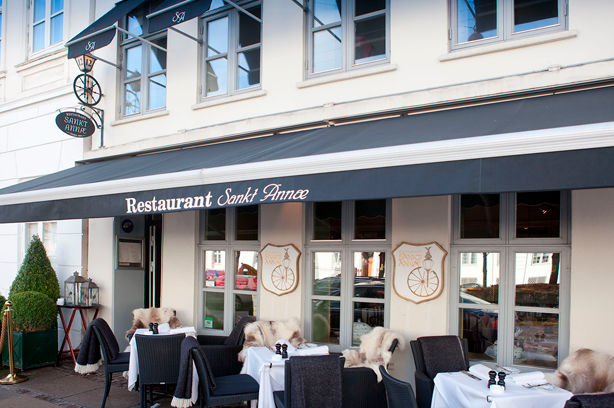
The property first opened in the mid-19th century as Hotel Neptun, an underground establishment that attracted a seedy clientele. In 2016, the new owners, who purchased it just a few years prior, re-christened it Hotel Sankt Annæ to help shed its less-than-illustrious past and connect it to the newly revamped Sankt Annæ Plads. This green plaza close to the harbor dates back to the 1700s.
While it remains something of a hidden gem, there’s no passport required for entry this time around.
Boutique Bolthole in Copenhagen, written by Tor Kjolberg
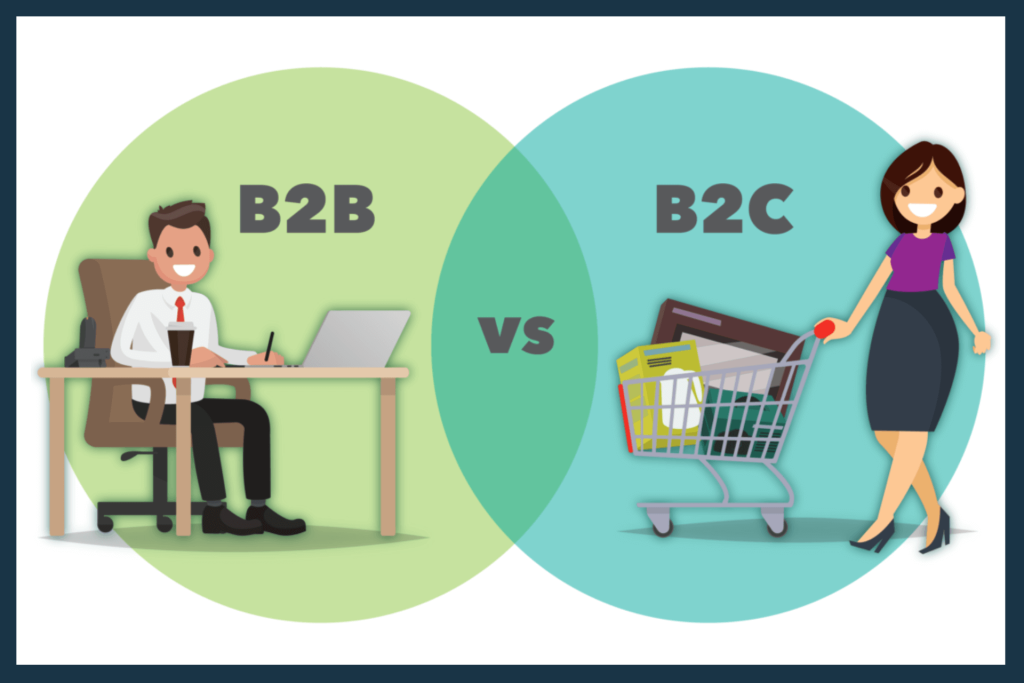
B2B e-commerce is changing fast. 2023 will not be just another global B2B year. It will be a crucial year, a transition year. Learn about the 20 most spectacular E-Commerce trends 2023.
Advances in tech and changes in the demographics of B2B buyers have impacted the B2B eCommerce industry quite significantly over the past few years. According to data shared online, millennials make more than 70% of B2B buying decisions. Unlike Generation X and baby boomers who primarily made up the B2B audience before 2020, millennials are much more familiar and dependent on technology.
There are several specific trends that are particularly influential for B2B ecommerce in 2023 and beyond. These reflect buyers’ changing attitudes about how they interact with brands and give organizations guidance to set themselves up for success.
First thing first, to quickly put you on par with the current B2B state, you first need to understand that the COVID crisis accelerated a natural process of generational change. Current B2B decision-makers are fast becoming Milliennials or even younger digital native generations.
What this means for B2B businesses is that they will have to adapt their marketing. Millennials approach the B2B buying journey as a B2C consumer and, as a result, their expectations are different. To put it more bluntly, their expectations are higher. They’re used to a first-class, personalized customer experience.
This article explores critical B2B ecommerce trends to help you and your business evolve with market changes.
There are several specific trends that are particularly influential for B2B ecommerce in 2023
1. Intelligent searches and the power of personalization
The first clear trend for B2B e-commerce in 2023 will be the use of intelligent searches, either by AI or machine learning; this is something that has become a go-to objective in B2C due to the high level of personalization in the search results that intelligent searches can provide. And why does personalization matter? Because a custom-fit answer that directly addresses the content, concerns, and personal interests of the person doing the search will always be a far more powerful answer than any normal search engine indexation SERP.
2. B2B buyers want self-service buying portals
In 2022, self-service buying portals were one of the major trends. The need for this isn’t going to wane anytime soon and it’s predicted that it will remain a major trend in 2023. Increasingly more B2B buyers want the ability to make a purchase without the need to speak with a sales rep first. What self-service portals do is they let users get answers quickly, helping to streamline the whole process to create a seamless experience.
The 20 Most Spectacular E-Commerce Trends 2023, continues below illustration
Your business needs the agility and efficiency to keep up.
3. Improved management technology
B2B ecommerce transactions have become the standard, and your business needs the agility and efficiency to keep up. Legacy digital systems aren’t enough for B2B ecommerce growth. You need software and tools that can accommodate new customer experience expectations, provide fast service, offer completely digital buying options, and scale with your business.
To make this upgrade effective, look at your systems holistically. Upgrading one piece at a time can make it challenging to integrate tools effectively. A complete system can work together to deliver outstanding experiences for your customers.
4. Rise of virtual commerce
Virtual commerce is on the rise. The capability of actually being able to visualize the product or service we are interested in buying online is one of the main gaps between physical commerce and e-commerce. So far, the use of photos and videos has been the most common solution to this very human need of actually seeing what you are buying. But in 2023, we would start seeing a pretty different picture, a Virtual Reality picture, to be more precise.
It’s anticipated that social commerce sales will reach about 2.9 trillion US dollars by 2026.
5. Social commerce will continue toincrease
It’s anticipated that social commerce sales will reach about 2.9 trillion US dollars by 2026. Needless to say, in 2023, social commerce will be one of the major trends that even B2B businesses will be able to use to their advantage.
While social commerce is typically linked with the B2C industry, in 2023 and beyond it’s anticipated that B2B businesses will also turn to social commerce more. It’s just one more way in which B2B organizations can offer a more personalized service that their buyers will ultimately find more convenient.
6. Personalized customer experiences
B2C merchants have employed ecommerce personalization for a while now and it’s time for B2B merchants to catch up. A McKinsey & Company study of B2B buyers found that most are looking for more personalized buying experiences and they’re willing to move their business if they don’t get it.
Personalized buying journeys revolve around relationships, which means targeted messaging should stretch from end to end — from personalized account-based marketing (ABM) plays and upselling opportunities. Creating seamless and tailored interactions from awareness to purchase to ongoing support increases brand loyalty.
The 20 Most Spectacular E-Commerce Trends 2023, continues below illustration
Having B2B e-commerce with AR and self-serving capabilities sets the path to success
7. Progressive Web Apps
Having B2B e-commerce with AR and self-serving capabilities sets the path to success but having it accessible from any kind of device with native compatibility is what might set you apart from your competition. To do so, the best way is to use Progressive Web Apps and OS-agnostic mobile technology. PWAs have become an ideal solution for mobile B2B e-commerce by mixing the best of a classic e-commerce website optimized for mobile – responsive and that can be addressed via a browser – with the advantages of a fully developed native app.
8. More B2B businesses will focus on increasing their revenue via existing customers
Considering the economic uncertainty that’s currently experienced globally, it makes sense for B2B businesses to focus on how they can retain current customers and boost the revenue that they generate from their existing customers. To do this, businesses should ensure that their pricing is in line with what customers feel comfortable to pay and shift their focus to the highest quality leads. They can also give existing customers earlier access to new features as a way to show their appreciation and boost loyalty.
9. Fast, high-quality service
Amazon has made free, two-day shipping the standard, and people anticipate that kind of service in every avenue. Buyers expect their orders fulfilled faster than ever regardless of growing order sizes.
Many businesses resolve this issue with product information management (PIM) software. PIM software provides a central location for all the data related to your products. As you balance sales across multiple channels, PIM keeps your product information up-to-date across the different platforms.
The 20 Most Spectacular E-Commerce Trends 2023, continues below illustration
. E-commerce has been remarkably negligent in creating a sustainable way of doing its logistics.
10. Sustainability and e-logistic
Although this trend is for 2023, truth be told, this is what should be called ‘lifetime trend’. E-commerce has been remarkably negligent in creating a sustainable way of doing its logistics. And this is tarting to be a massive issue perceived both by the industry and by the general public. Currently, we base our global e-commerce logistics on protocols and standards that are often not eco-friendly or sustainable.
11. E-Commerce sites will be used to get new customers
This is another trend that already appeared in 2022 and will continue to become even more important moving forward. Before the global pandemic, ecommerce sites didn’t nearly play such an important role in getting new customers. These sites were rather used to let current customers place their next orders and as an alternative to a customer service rep.
This has changed as online selling has become a key pillar of the sales plan adopted by B2B businesses. Thanks to online search tools, new customers can now find out more about a B2B business and easily place orders. So, increasingly more brands are realizing that they need to change the goal of their e-Commerce site to include acquiring new customers. This might mean that you should be willing to start selling your products at individual prices as opposed to just in bulk.
12. Omnichannel experiences
Omnichannel is another area that B2C merchants have long dominated, but B2B merchants have begun to take notes. Buyers encounter an increasing number of touchpoints across different channels before they make a purchase, and according to McKinsey they want even more. Ensure they have positive, integrated experiences on every channel.
In the B2B industry, customer touchpoints often include mobile apps, websites, social media platforms, and marketplaces. If a prospect engages with your mobile app or website before reaching out to a sales representative, they expect that rep to know about that previous interaction. This insight can provide key details to help draw the buyer in with an appealing offer.
Building on 2022’s success, it’s predicted that in 2023 B2B eCommerce sales via online marketplaces like eBay, Etsy, and Amazon will continue to grow.
13. B2B e-Commerce sales via online marketplaces will continue to grow
Building on 2022’s success, it’s predicted that in 2023 B2B eCommerce sales via online marketplaces like eBay, Etsy, and Amazon will continue to grow. This trend is fueled by millennials who hold executive positions. The vast majority of millennials are already using marketplaces for their personal purchases and so it’s not a big jump for them to use these channels for their professional lives too.
So, to ensure that a B2B business stays up to speed with the changing needs of buyers, they should seriously consider using a third-party marketplace in 2023. Alternatively, larger business can also possibly create their own. That said, this approach will call for more resources, but can prove to be more effective in the long run as it will offer more customization options.
14. Social e-commerce
Social e-commerce is another channel commonly associated with B2C selling, but B2B merchants are poised to grow social selling dramatically in the coming years. According to Gartner, 46% of your buyers already use social media when researching solutions, so embrace social media to reach and engage them.
Social media isn’t just a place for a business to promote itself and build brand awareness — it’s a marketplace itself. Companies can build a store directly on Facebook, Instagram, or other social media channels, allowing customers to buy instantly without leaving the app or network. Selling directly from social media is an important part of the larger trend toward fast, convenient, personalized service, no matter the channel.
15. Efficient fulfillment will become more urgent
This is another trend that’s fueled by millennials and in 2023 it will become even more important. Younger buyers expect expects that a B2B company should be able to offer the same fast shipping options that a B2C company provides.
To help speed up the fulfillment process, businesses can turn to automation as a possible solution. Shopify and Kroger, a US supermarket, have successfully used robots to assist with fulfillment. Not only can it reduce the time needed to store and collect products, but it can also minimize human error. All things considered, if you have the financial means to stay up to speed with the advances in technology, it can be a good idea to automate your warehouse.
The 20 Most Spectacular E-Commerce Trends 2023, continues below illustration
, it will become even more important for B2B businesses to display the availability of their stock accurately.
16. The demand for real-time inventory will grow
Adding to the previous point, moving forward, it will become even more important for B2B businesses to display the availability of their stock accurately. Basically, customers need to know how much stock is available when they place their orders. Updating your inventory in real time can give customers that needed reassurance that they’ll get the products on time. If you don’t have such a system in place yet, it’s a worthwhile investment for 2023 and beyond.
17. New payment options
Pandemic restrictions cut into the revenue of many organizations, and payment options that helped to alleviate the stress became increasingly popular. These options allow installments or delayed payments, helping buyers get what they need despite low cash flow. B2B buyers today expect the same flexibility when they make their purchases, including access to mobile wallet transactions. Credit-as-a-service platforms allow businesses to set up postponed payments or to help manage invoices.
Automation has also become critical for B2B ecommerce payment options. When you automate systems like accounts payable and receivable, your company can save time and communicate with customers faster. Ensuring that bills and receipts of payment are tracked seamlessly reduces frustration for your buyers.
18. Dynamic pricing will become more common
Dynamic pricing isn’t new. It’s used on a daily basis in the vacation rental industry, though, it’s only recently caught the attention of the eCommerce sector. With technology becoming more sophisticated, B2B businesses now have more control over their pricing. This means that they can start to explore the idea of changing their pricing in response to any changes in supply and demand in real time.
Considering how inflation skyrocketed recently, embracing real-time pricing will help B2B businesses to remain competitive. Not only will it help businesses to manage their pricing more effectively, but it can also make the customer experience more personal. As both parties can benefit, it’s one of the trends that can have the biggest impact on the future success of your organization. It shows you that you can boost customer loyalty and your profit margin at the same time.
19. Transparency will become even more crucial
In the past, buyers used events like trades shows to meet with suppliers. By meeting in person, it was easier for buyers and B2B businesses to discuss matters about pricing and quality. Though, with B2B e-Commerce, more of these interactions occur virtually.
Yet, matters like quality and pricing remain equally important to buyers. For this reason, B2B eCommerce businesses will start to focus more on being completely transparent about the quality and their pricing. While this isn’t necessarily a new trend (after all, any business needs to be transparent if they want to be successful), the need for complete transparency will become even more crucial in the future.
20. Autonomous commerce
Autonomous commerce is something we will keep on hearing about in the following years. It is not only a logical and natural evolution of current e-commerce trends and global e-commerce development but also a pretty efficient way to handle B2B e-commerce.
It combines all the previous trends, and the technology behind them, to produce a self-governing commerce experience between buyers, merchants, suppliers, partners, and the internet of things (IoT) to simplify the customer journey and make every merchant decision backet\d by AI.
Wrapping it up
Overall, the future of B2B e-commerce looks bright. It is a competitive scenario, but if you play your card properly if your brand keeps tabs on all these trends, and you do your homework, rest assured that 2023 will be a year of success.
The 20 Most Spectacular E-Commerce Trends 2023, compiled by Tor Kjolberg
As of April 4, 2023, Stefan Persson was the wealthiest person in Sweden, with an estimated net worth of 17.5 billion U.S. dollars, followed by Melker Schorling (No. 2, $10.4 billion), Antonia Ax:son Johnson (No. 3, $9.6 billion); and Finn Rausing (No. 4, $9.2 billion). Here’s the complete Sweden Billionaire List 2023.
Stefan Persson. Photo: Wikipedia
Stefan Persson: $17.5 billion
Carl Stefan Erling Persson (born 4 October 1947) is a Swedish billionaire businessman. In March 2013, Forbes reported Persson’s net worth as $28 billion making him the richest of Sweden’s 12 billionaires and the 17th richest person in the world; he has since dropped to number 50. Persson was the chairman of fashion company H&M until May 2020, when he was succeeded by his son. He remains the company’s largest shareholder, owning a 36% stake. The company was founded by his father Erling Persson in 1947.
Melker Schorling
Melker Schorling & family : $10.4 billion
Melker Schörling (born 1947) is a Swedish billionaire businessman. His investment companyMelker Schörling AB (MSAB) has large interests in Securitas AB, Assa Abloy, Hexagon AB, Loomis and more. Schörling formed a partnership with fellow billionaire Gustaf Douglas, who is also a major shareholder in Securitas and Assa Abloy.
Antonia Ax:son Johnson & family: $9.6 billion
Antonia Margaret Ax:son Johnson (born 1943) is the fourth-generation head of the family company Axel Johnson AB, founded by her great-grandfather in 1873. In 1982 she succeeded her father as chairman of the board for Axel Johnson AB, Sweden, and Axel Johnson Inc., Stamford, U.S.
Finn Rausing. Photo: Wikipedia
Finn Rausing: $9.2 billion
Finn Rausing (born 1954) is a Swedish billionaire heir and businessman. He is a co-owner of Tetra Laval, the packaging company, and co-owner of Sauber.
Kirsten Rausing
Kirsten Rausing: $9.2 billion
Kirsten Elisbet Rausing, DL is a Swedish businesswoman, who owns a third of the holding company Tetra Laval and sits on the company board alongside other members of her family. She was listed as the 150th richest individual in the world in the Forbes 2020 list of The World’s Billionaires.
Jörn Rausing
Jörn Rausing: $9.2 billion Jörn Rausing is a Swedish heir and businessman, a co-owner of Tetra Laval, the packaging company. In 2021, the Sunday Times Rich List estimated his joint net worth with Kirsten Rausing at £13 billion.
Carl Bennet
Carl Bennet: $7.2 billion
Carl Bennet is a Swedish billionaire businessman. He is the chairman of the medical technology firm Getinge and the printing company Elanders.
Fredrik Paulsen
Frederik Paulsen: $7.1 billion Dr Frederik Paulsen Sr was a medical doctor and the founder of Ferring Pharmaceuticals. Friedrich Paulsen was born in the tiny port hamlet of Dagebüll on the North Frisian coast. Both his parents originated from the neighbouring island of Föhr.
Gustaf Douglas. Screen dump from YouTube
Gustaf Douglas: $6.4 billion
Gustaf Archibald Siegwart Douglas (born 3 March 1938) is a Swedish aristocrat, billionaire businessman, and politician. As of August 2022, his net worth was estimated at US$7.2 billion. He has been a member of the Royal Swedish Academy of Engineering Sciences since 2007.
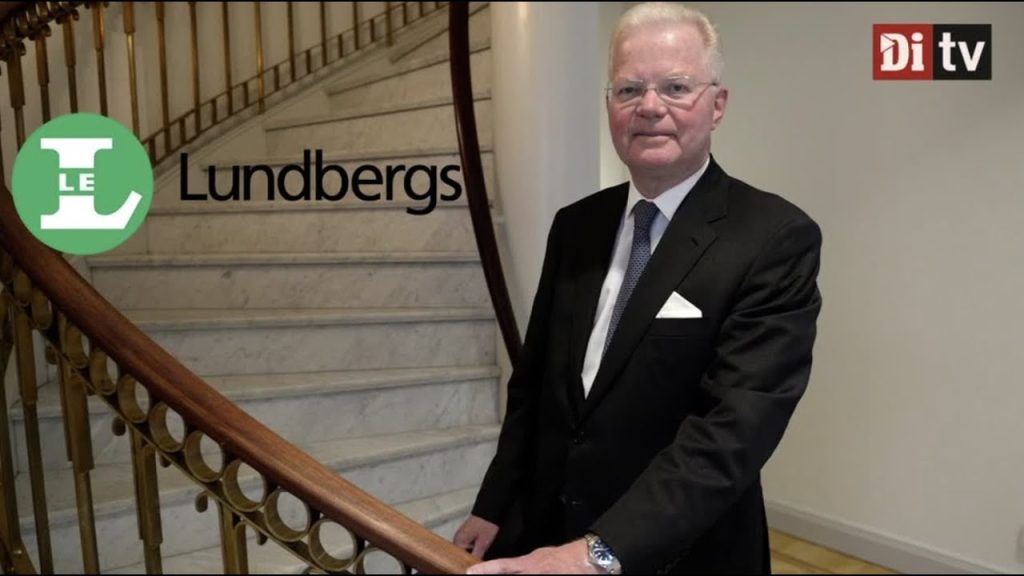
Fredrik Lundberg: $5.9 billion
Fredrik Lundberg is a Swedish businessman. His father was Lars Erik Lundberg founder of L E Lundbergföretagen. Fredrik Lundberg is president and CEO of L E Lundbergföretagen, of which he inherited a controlling stake from his father.
Torbjörn Törnqvist. Pgoto: Sveriges radio
Torbjörn Törnqvist: $4.0 billion
Torbjörn Törnqvist is a Swedish billionaire, and the CEO and co-founder of Gunvor, “one of the largest commodities conglomerates in the world”, with the Russian billionaire, Gennady Timchenko.
Martin Lorentzon. Photo: Sveriges radio
Martin Lorentzon: $3.2 billion
Sven Hans Martin Lorentzon is a Swedish entrepreneur and co-founder of Tradedoubler and Spotify. From 2013 to 2018 he was on the board of Telia Company. Since April 2019 he has been an expert on Sweden’s immigrants’ integration issues for the Moderate Party commission New Swedish Model.
Bertil Hult. Photo: Wikipedia
Bertil Hult: $3.1 billion Bertil Eric Hult is a Swedish billionaire, known for founding educational and language school company EF Education First in 1965, and for being the patron and namesake of Hult International Business School.
Erik Selin. Photo: Wikipedia
Erik Selin: $3.0 billion
Erik Selin is a Swedish billionaire property developer, and the CEO and controlling owner of Fastighets AB Balder. Selin is the chairman of Collector Credit AB, SATO Oyj, and Collector AB. Selin is divorced, and lives in Gothenburg, Sweden.
Dan Sten Olsson
Dan Olsson: $2.8 billion Dan Sten Olsson is a Swedish billionaire businessman, the CEO and majority owner of Stena Sphere. Dan Sten Olsson was born in February 1947, the son of Sten Allan Olsson, the founder of Stena Sphere. His siblings Stefan Olsson owns 24.5% and Madeleine Olsson Eriksson owns 12.5%, her two kids 6% each.
Eric Douglas
Eric Douglas: $2.7 billion
The son of billionaire Gustaf Douglas, Eric has sat on the board of the family’s investment company Wasatornet for more than a decade. The Douglas family is the largest shareholder of Latour AB, which holds stakes in Securitas AB and Assa Abloy, the world’s largest lock producer.
Latour is a company in the Wasatornet group.
Carl Douglas: $2.6 billion
The son of billionaire Gustaf Douglas, Carl has sat on the board of the family’s investment company Wasatornet for more than a decade. The Douglas family is the largest shareholder of Latour AB, which holds stakes in Securitas AB and Assa Abloy, the world’s largest lock producer.
Daniel Ek. Photo: Wikipedia
Daniel Ek: $2.6 billion
Daniel Ek is a Swedish billionaire entrepreneur and technologist. He is the co-founder and CEO of music streaming service Spotify.
Lottie Tham
Lottie Tham & family: $2.4 billion
Lottie Tham owns more than 5% of cheap chic fashion retailer H&M. The company was founded by her late father Erling Persson in 1947, and her nephew Karl-Johan Persson is the current CEO.
Katarina Martinson: $2.2 billion Katarina Martinson is a Swedish billionaire businesswoman. She owns 14% of L E Lundbergforetagen, the family holding company, which owns property, pulp and paper companies, and was founded by her grandfather Lars Erik Lundberg. She was born in 1981, the daughter of Fredrik Lundberg.
Louise Lindh
Louise Lindh: $1.8 billion
Louise Lindh is a Swedish billionaire businesswoman. She owns 14% of L E Lundbergforetagen, the family’s holding company, which owns property, pulp and paper companies, and was founded by her grandfather Lars Erik Lundberg.
Fredrik Österberg
Fredrik Österberg: $1.8 billion
Fredrik Österberg cofounded Evolution AB with Jens von Bahr in 2006. Evolution sells casino solutions to online gambling operators, primarily live-streamed tables of blackjack, poker, craps and roulette.
David Mindus
David Mindus: $1.8 billion
David Mindus is the founder and CEO of Swedish commercial real estate company Sagax AB. Mindus and two partners began buying warehouses and light industrial properties around Stockholm in 2000 after identifying the sector as undervalued.
Jens von Bahr
Jens von Bahr: $1.7 billion
Jens von Bahr cofounded publicly traded casino supplier Evolution AB with Fredrik ‘sterberg in 2006. He was CEO of Evolutions until 2016 and is now chairman of the company, which primarily sells live-streamed tables of blackjack, poker, craps and roulette to online gambling operators.
Karl-Johan Persson. Photo: Wikipedia
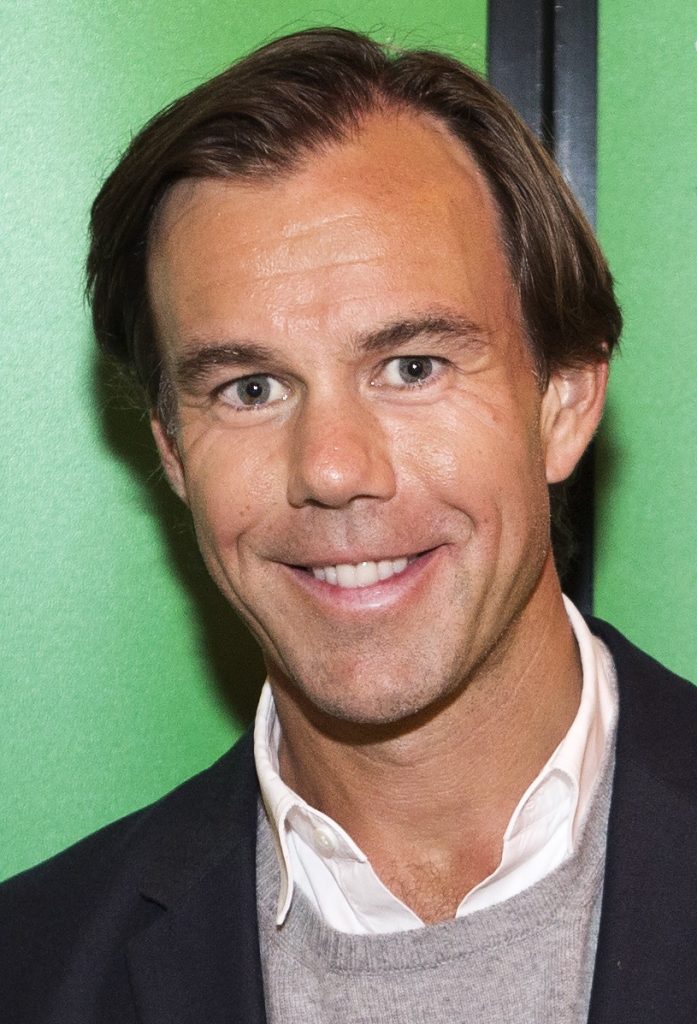
Karl-Johan Persson: $1.6 billion
Karl-Johan Erling Göran Persson is a Swedish billionaire businessman, and the chair and former president and CEO of the fashion company Hennes & Mauritz, founded by his grandfather Erling Persson. As of March 2022, according to Forbes, his estimated net worth is US$1.5 billion.
Stefan Olsson: $1.6 billion
Stefan Olsson is a Swedish billionaire businessman and Catholic priest, and 24.5% owner of Stena Sphere. Stefan Olsson is the second son of Sten Allan Olsson, the founder of Stena Sphere. His siblings Dan Olsson owns 51% and Madeleine Olsson Eriksson owns 12.5%. He is married and lives in London, England.
Sweden Billionaires List 2023, compiled by Tor Kjolberg
The title might be misleading since we’re writing about a rapper group from Bergen in Norway named Dårlig Vane (Bad Habits, translated into English). Bad Habits from Norway had its breakthrough in 2016 with the EP “71”.
The hip hop trio Dårlig vane was formed in 2012 by Lars “Kikkan” Holme from Loddefjord outside Bergen and Martin “Lazy” Valding from Olsvik. In 2014, the duo expanded with Amadou Jobarth from Olsvik.
Martin Hazy has made a name for himself as one of Norway’s most productive rappers. In addition to having released a steady stream of hits since Dårlig Vane’s first major release “Gikk i bakken” in 2017, Hazy has in recent years released a slew of solid singles as a solo artist as well as his latest release “Ut av huset”.
The debut album «Oppkjørt & Nedkjølt (Revved up and Cooled down) » was received with great enthusiasm by both the press and the underground and appeared on the newspaper Bergens Tidende’s list of the ten best albums from Bergen in 2018. They wrote: “The year’s hardest, broadest and most cutting-edge rap albums. Martin Hazy shows why he is one of Norway’s most respected rappers.”
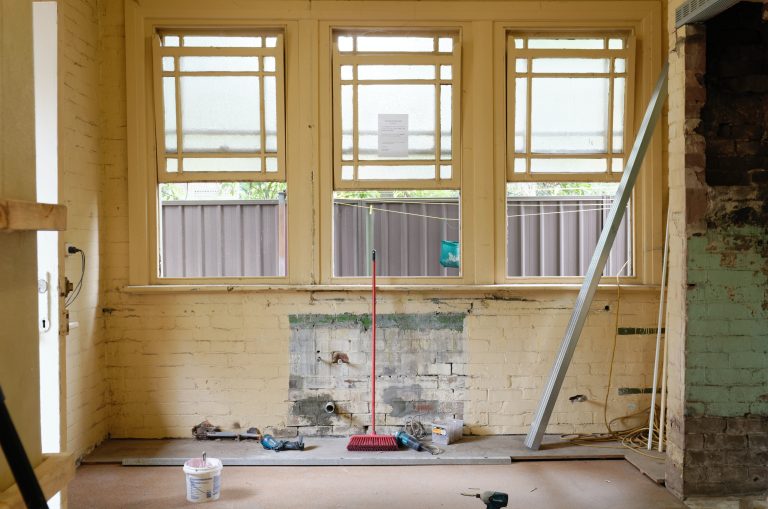
Scandinavia is a part of Northern Europe. Norway, Sweden, and Denmark are the primary countries of this region, with arguments for Finland, Iceland, and the Faroe Islands to be included as well. In this article I will review how you can be preparing for a Scandinavian-Style home rebovation.
There will come a time when you’re ready to revamp your home. Whether you want to upgrade your entire house inside and out, tackle a few rooms, or spruce up small things like accessories and paint, renovations require thorough planning.
This is especially true when you’re hoping to adhere to a specific style, like Scandanavian-style. Researching what the style is, what materials and accessories represent it, and how to best incorporate them in your home are the core of your style-specific preparation responsibilities.
Sound like a lot to do? Maybe. But approaching planning in an organized fashion will help make your renovation project much more manageable. This guide will walk you through how to prepare for a Scandinavian-style home renovation.
Let’s start with defining what exactly constitutes the Scandinavian style.
What is Scandinavian Style?
Scandinavia is a part of Northern Europe. Norway, Sweden, and Denmark are the primary countries of this region, with arguments for Finland, Iceland, and the Faroe Islands to be included as well.
Homes in this region have a specific style. Minimalism, sleek lines, neutral colors, natural woodwork, and an intimate, warm atmosphere are the foundation of the Scandinavian style. The goal is to keep things simple and functional without sacrificing beauty.
Minimalism, sleek lines, neutral colors, natural woodwork, and an intimate, warm atmosphere are the foundation of the Scandinavian style. hoto: ArchDaily
White, black, pale colors and gentle neutral colors should make up most of your color palette for a Scandinavian-style home. Woven baskets, fresh greenery, a wood-burning fireplace, furs, and sheepskins are textbook Scandinavian home accessories. Lots of natural light and comfy areas are also key traits of a Scandinavian-style home.
If your heart is set on a Scandinavian-style home renovation after researching what the style entails, start with these best practices for preparation.
Best Practices for Preparing for a Renovation
Proper preparation for a renovation might be the most important step you take in the process.
Accounting for as many details and potential problems as possible before you start making physical changes makes a huge difference in your vision for a Scandinavian-style home actually coming to life.
Prepare for your renovation by implementing these best practices.
Your renovation plan should include renovations that help build your property’s value, like increasing your interior lighting, improving the look and function of your bathroom, and updating the floors, appliances, and countertops in your kitchen.
Also, because you’re doing your renovation to increase your home’s value, your budget and timeline will be a lot more strict than if you were doing the renovation for fun or personal enjoyment.
And when you’re in the thick of the renovation process, challenges like unexpected expenses or an unanticipated shift in design will happen. Going back to your why (increasing your home’s value for when it’s time to sell) will motivate you to find solutions and keep moving forward.
Defining why you’re doing this renovation will help you keep your plan, budget, timeline, and motivation on point.
Determine your renovation budget
One of the most important elements of any renovation is your budget. How much money do you want to spend on completing your Scandinavian-style renovation? Without a definite number, the likelihood of spending way more than you can afford increases dramatically.
One of the most important elements of any renovation is your budget. Photo: Max Construction
When you know how much you can spend on your renovation, you can tailor your plans to fit that budget and keep your expenses in check.
Audit your current financial situation. What are you making, what are your expenses, and what’s left over after those expenses are paid? Based on your answers to these questions, determine how much you can realistically afford to spend on renovating your home.
Part of the reason home renovations can be so chaotic is that people will go off of a vision they have in their head, adding things here and there and changing things on a whim.
If you want your Scandinavian-style home renovation to be cohesive, you need something to refer to that keeps you focused on your vision. That’s where a mood board comes in. A mood board helps you visualize the complete picture of your renovation, from the colors, furniture, wall hangings, flooring, and other accessories.
You can go the traditional route, pasting newspaper and magazine clippings on a poster board. Or, you can use a digital alternative, like Pinterest, which gives you access to even more ideas, pictures, and digital art for inspiration.
Whenever you get lost in your renovation you can refer to your mood board. You can also refer to the detailed plan you create in the section below.
Lay out the details of your renovation
A mood board is good for inspiration. But you need something a little more concrete to guide your renovation and keep you on track to completion. Lay out the details of your Scandinavian-style upgrades in a comprehensive renovation plan.
You can use a downloadable home renovation planning template or create one from scratch. Illustration: ArchDaily
You can physically document these details by handwriting them in a dedicated notebook. You can also use a downloadable home renovation planning template or create one from scratch. Choose the option that’s most accessible and keeps you organized. Next, start filling in the details of your renovation.
Decide what season you want to start your home renovation in. Spring and summer offer the best weather and more daylight to work on your renovations. On the other hand, you may have challenges with the weather in winter and fall, but costs for labor and materials will be significantly less than in spring and summer.
You also need to determine whether you’ll stay at home during your renovations. You’ll have a lot more control over the process if you do. You can keep costs down and save time and effort as well. But if your renovation projects are big and require heavy machinery and hazardous materials, staying home probably isn’t the safest option.
In addition to the above, lay out the following details for your Scandinavian-style home renovation:
Which rooms you’re renovating
Your renovation vision for each room
Solutions for challenges that may occur
Who’s involved in the renovation process
What permits and approvals you’ll need
When you want to complete all of your upgrades
How much materials, accessories, and other expenses will be
Add any other details you can think of to ensure your renovation blueprint is one you can rely on.
Preparing for a Scandinavian-Style Home Renovation – Conclusion
Preparing for a Scandinavian-style home renovation requires time, effort, and intention. But covering all of the pertinent details beforehand will make the process much more manageable and enjoyable. Implement the planning advice above to ensure your vision for a Scandinavian-style home comes to fruition.
Ainsley Lawrence
Preparing for a Scandinavian-Style Home Renovation, written by Ainsley Lawrence. Ainsley is a freelance writer from the Pacific Northwest. She is interested in better living through technology and education. She is frequently lost in a good book.
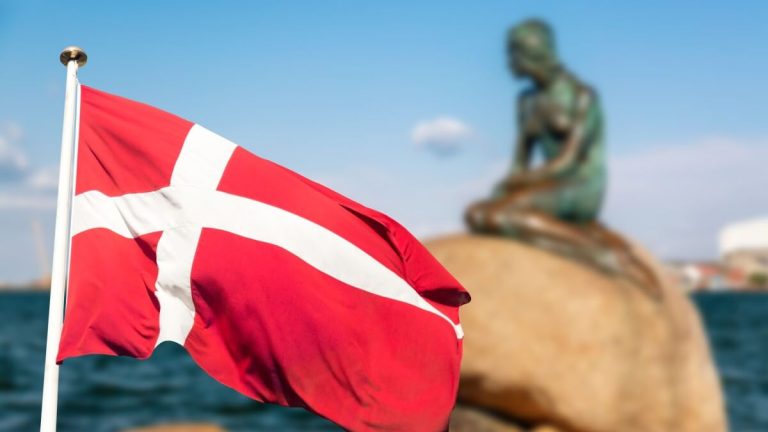
According to SIRI, the Agency for International Recruitment and Integration, Denmark is currently looking for skilled workers in different professional fields. The job titles for skilled workers required in Denmark are based on professional fields. Learn more about labor shortage in Denmark.
If you’ve wanted to move to Scandinavia, there’s never been a better time. Labor shortages across the Nordics are making it easier to snap up a job as a non-EU worker.
The Positive List for people with a Higher Education includes a total of 45 job titles.
New rules are part of the amendments made to the Danish Aliens Act, which were agreed upon by parliament on March 23rd and came into effect on April 1st.
The Positive List for people with a Higher Education includes a total of 45 job titles, whereas the Positive List for Skilled Workers includes 46 titles.
In addition, more jobs will be open to foreigners, and foreign students studying in Denmark will receive an extended job search period after completing their degree.
SIRI has already published an overview of the job titles on the positive lists for highly educated and skilled workers.
By lowering minimum salary requirements, expanding its work permit fast-track scheme, and opening up more jobs to foreigners, the Scandinavian nation is making it easier for companies to hire non-EU workers.
More jobs will be open to foreigners.
Furthermore, Denmark is expanding its start-up scheme to include not only entrepreneurs who want to establish a new business in Denmark but also those who own a business outside of Denmark and want to open a branch in the country.
Labor Shortage in Denmark, written by Tor Kjolberg
A respected insider of the contemporary Norwegian art scene, Anne Marit Muri has spent much of her professional life interviewing many of the greatest Norwegian artists of the 20th century. Her knowledge and frequent studio visits with artists like Sverre Bjærtnes, Håkon Bleken, Ida Lorentzen, Kenneth Blom and Frank Brunner among many others, have produced an incredible archive of interviews, mainly in form of off-the cuff conversations. It resulted in “Artists’ Life in Norway” the award-winning book, Kunstnerliv, in 2018.
Art books, or artist’s books, are one of my favorite genre in publishing. Every year they come in such a wide range of styles and forms and are often considered more works of art that utilize the form of a book, rather than simply books. One of these is Kunstnerliv by Anne Marit Muri. There seem to be no limits or rules to the art form and this book manage to entertain, challenge AND educate us while creating new, invigorating experience visually or haptically.
Kunstnerliv has been published in limited edition and challenges the conventional book format and has become a sculptural literary masterpiece.
Kunstnerliv has been published in limited edition and challenges the conventional book format and has become a sculptural literary masterpiece. Printed by Rolf Ottessen trykkeri as. Photo: Grafill
Muri has selected 19 of the most noteworthy and fascinating of her conversations with the artists, and together with photographer Bjørn Wad, she presents her subjects with a mix of passion, insight, humor and dignity.
Photographer Bjørn Wad (left) Author Anne Marit Muri (right).
The book is consistently entertaining and informative, as the artists open up in unexpected ways about their work and their lives. Bjørn Wads photographs in combination with an esthetic layout and living content made Kunstnerliv Gold-winner for the year’s most beautiful photo book/art book in 2019 at Grafill’s “The year’s most beautiful books” award.
Award-winning graphic designer Rune Døli has been responsible for the layout.
The book focuses both on the artistry and the life course of the individual artist in order to get closer to the person behind the art. Never before has such an extensive documentary book been published with life stories and photo portraits of contemporary living Norwegian visual artists. Muri also wanted all the artists to choose a quote that they should write down in their own handwriting. This has contributed to readers gaining an even deeper understanding of the creators.
Kunstnerliv manages to entertain, challenge and educate us while creating new, invigorating experience visually or haptically.
Black and white photographs make the book enduring.
The result is a surprising and different art book with a poetic approach both in text and how the artists are captured in black/white portraits. Readers learn to know both the artist and the person behind the art in this 400-page masterpiece.
Anne Marit Muri tells me that she started her work on this book as a freelance project in 2014, and she has been responsible for the idea and text.
“Intendedly I chose to interview 19 artists, women and men, famous and less known. Perhaps not politically correct, but these are artists that I admire on many different levels, and of whom I could therefore make genuine portraits.”
Muri explains that the meetings with the artists have not been traditional questions and answers interviews. It has been informal, relaxed, and friendly behavior, rather than very correct meetings between an interviewer and her interviewees.
The book on display, autumn 2018.
From the book’s introduction, written by art historian Gunnar Danbolt:
“The first encounter with a work of art can be fascinating. For example, there may be something about a painting’s movements, strokes, color, etc. that keep you hooked. But at the same time, you can also be confused, because what does the artwork really mean? And why does it concern me? It is rarely a question you ask yourself when you are outside the realm of art. The TV entertainment always slips in easily without leaving any particular touches.
Art in all its forms, on the other hand, requires something from us – courage, patience, curiosity. It is this work that might let us experience art as something that not only remains in consciousness, but also helps to expand it. Because it is the feeling and thought processes that art initiates in us that are decisive, not whether they agree with what the artist may have thought or felt. Nevertheless, the meeting with the artists can give us the first impulses.”
Inside the book
There are only few books left in stock. You can order here.
“Kunstnerliv has become a book that is contagious with its enthusiasm both for art and those who create it.
Anne Marit Muri is obviously a skilled interviewer, who gets others to open up, because between the twists and turns there is a deep familiarity that gives nerve to the most personal stories.”
– Oda Bhar, Morgenbladet
“The narrative is reflective and good, with a personal twist that makes you get close to the artists. The portraits stand out as cinematic and strong. The photographer has the ability to bring out the personality of each and every one of the artists. The layout is tight, and there is air and peace. Overall, Kunstnerliv is a very beautiful book that is nice to have on the living room table. The book is rich in content and gives readers a solid insight into Norwegian artistic life.”
– Gullaug Press, Feelgood Magazine
Anne Marit Muri receiving the award
The artists Sverre Bjertnæs, Håkon Bleken, Kenneth Blom, Frank Brunner, Lars Elling, Jan Groth, Liv Heier, Håvard Homstvedt, Svein Johansen, Anki King, Ida Lorentzen, Thorvald Lund-Hansen, Hilde Mæhlum, Martine Poppe, Vebjørn Sand, Tore Bjørn Skjølsvik, Ingeborg Stana, Marie Storaas and Elisabeth Werp.
Anne Marit Muri (born 1962) has a Masters degree in social science from the University of Bergen in addition to art history from the University of Oslo. She has been an editor for various magazines for more than 20 years, including the magazine KUNST.
Artists’ Life in Norway – Award Winning Book, written by Tor Kjolberg
Feature image (on top): Gold Award, Year’s most beautiful art book 2018, Grafill1. pris, gull – for årets vakreste kunstbok 2019, fra Grafill.






































 Stefan Olsson: $1.6 billion