Nothing sums up Scandinavian cuisine better than Scandinavian berries, which ripen slowly during the cool summers and are full of sweet, health-giving and flavorful juiciness.
Berries are the jewels in the crown of northern eating, adorning everyday meals – as lingonberries on the morning oatmeal or with veal, game, roasts or fish, as blueberries simply eaten with cream, or as strawberries and raspberries in every possible cake and dessert during their brief season.
The abundance of berries with all their nutritional virtues has undoubtedly kept us healthy during long winters; and their ability, sweetness and tartness has balanced the fare of heavy meals and abundant animal fat over thousands of years. But berries offer far more than health hype; they are the focus of countless trips to heaths and woods, where the whole family gathers berries for the winter season, and their beauty is beyond compare.
Absolutely no other food is so inviting as freshly picked berries – children should be allowed to gorge on these little globes of concentrated sunshine to their heart’s delight. Some of them are unobtainable in the shops, or costly, and rightly so. Blueberries, lingonberries, wood strawberries and cloudberries are still picked from the wild.
The small and incredibly aromatic åkerbär or Arctic raspberry is found only on the high ground, but below tree level, in North America, Norway, Russia, Finland and Sweden.
Berries are extremely inviting, and for good reason – the plants need to make delicious and irresistible fruit in order for animals and humans to eat them, thereby spreading the seeds further afield than they can do themselves.
We have always known, by instinct and guidance from our taste buds, that berries are good for us, and we do not really need science to tell us that they are, and why.
The petals from fragrant, old-fashioned roses – and especially Rosa rugosa, the wrinkled Japanese rose which grows like a terrifying weed all over the north – are perfectly coupled to this jam. The taste is almost indecently intense, and the rose petals add a delicious chewiness; eating it is an all together ‘mouth-opening’ experience.
Jam made this way is nicely set, without the need for pectin, and the short, hefty boiling preserves the taste. Be sure to gather roses that have not been sprayed, and pick the flowers in the morning, where the fragrance is at its highest level. You can use buds, and even blowsy, almost spent flowers, as long as the petals are in good condition. Clean the petals by spreading them out on a tea towel, then removing insects and stamens by hand; do not wash them.
500g sugar
900g strawberries, hulled
1.5 liters rose petals
MAKES 4-5 jars
Heat the sugar in an ovenproof dish in the oven at 150 C/gas mark 2 for 5 minutes. At the same time, put the strawberries in a non-corrosive sauteuse or other heavy-based pan and boil to full heat until the berries give up their juices.
Stir the hot sugar into the fruit. Keep the heat on high, and stir for some minutes until the juice thickens. Stir in the petals, which will collapse in a very short time. Boil until the petals are soft and well-integrated in the jam and the strawberries have a cooked-trough, jammy look, but are not too mushy.
Pour the jam into sterilized jars, cover with a clean tea towel and leave to cool. Seal when completely cold. The jam keeps well if stored in a cool, dark place.
An approach to promoting goods and services in which the advertiser pays only for a specific result (the number of paid orders, for example) is called affiliate marketing. Now it is actively developing worldwide. However, not all entrepreneurs fully understand what its features are. In this article, we will introduce you to this concept and describe its features. Affiliate marketing in Sweden. How to Operate in the Scandinavian Market?
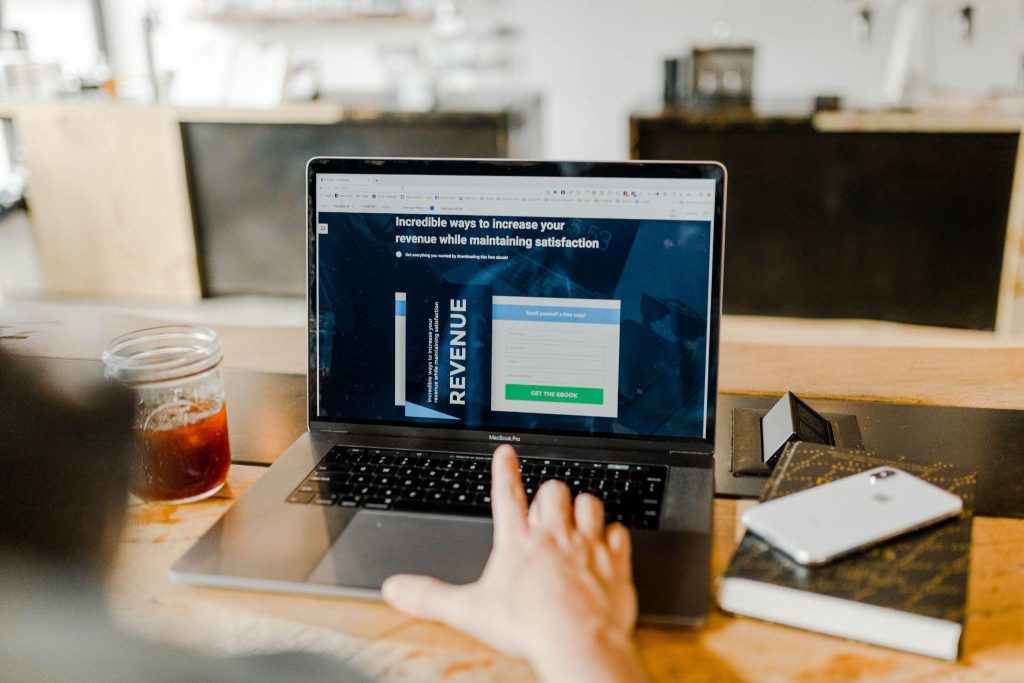
Referral marketing and affiliate marketing are quite related. Photo: Diggity Marketing/Unsplash
Affiliate marketing: what is it?
William J. Tobin, who owns the honorable claim of being the world’s earliest internet marketer, launched affiliate marketing in 1989.
Referral marketing and affiliate marketing are quite related. This might also be a cost-effective strategy for smaller businesses with tighter finances. Existing clients might be encouraged to spread the word about your business and become devoted affiliates.
Although some businessmen are unaware of what it is or how it functions, well-structured affiliate marketing programs are an online marketing strategy utilized by e-commerce firms and merchants that may expand the exposure of both services and companies and drive revenue. It is constantly evolving. For example, for several years now, experienced affiliate marketers have been experimenting with push traffic – a new style of advertising.
A low budget could easily launch an affiliate marketing program. This program could improve brand recognition and expose your company to a larger market. By using affiliate marketing, a corporation allows a person or other related parties to promote its goods or services in exchange for a commission or any other reward. The method is comparable to the traditional commission-based salesman model.
What steps to follow if you want to use affiliate marketing for your business in Sweden?
Affiliate network marketing organizations in Sweden often adhere to the guidelines below:
Look for a network or affiliate program. You can use the best push ad networks to make a choice.
Examine the program summary, including the types of goods and services, payment options, and fees.
Register for the program, then check for a notification from the organization.
After that, write material and incorporate the program’s pertinent hyperlinks. A tiny commission will now be paid to affiliate marketing management businesses if a customer makes a purchase using this link.
Additionally, be aware that the affiliate program is typically organized into a variety of sections to facilitate choosing. After being given the go-ahead, you may begin marketing the affiliate links on your websites, social networking pages, emails, and other channels that allow link distribution.
When you meet the minimum payout threshold, the affiliate marketer rewards you. Varied platforms – bank transactions, PayPal, and so on – are used for payments.
The top affiliate marketing companies in Sweden adhere to three categories:
Unattached Affiliate Marketing – here the affiliate has no interest in what he is promoting. He does not talk about using these goods or services and does not have the necessary competence to answer questions on the advertised topic. In fact, this is the weakest type of affiliate marketing.
Related Affiliate Marketing – it entails a process of collaboration with the affiliate link agency. Actually, there is a relationship between the affiliate’s specialization and the product in question. As a result, the affiliate has the necessary knowledge, standing, and power to act as a reliable provider of traffic for the item.
Involved Affiliate Marketing – the affiliate is deeply engaged in this method of advertising. He is absolutely certain to promote the item to his viewers because he has utilized it. The affiliate’s experience serves as both a source of knowledge and a legitimate recommendation. Nevertheless, if the product is a failure, he would also be responsible for the negative effects of endorsing it.
Sweden is more than an attractive location to carry out digital marketing initiatives, with a 97% internet usage rate altogether. Photo: Austin Distel/Unsplash
Sweden marketing features
One of the globe’s areas with the best connectivity is Scandinavia. Additionally, it is among the richest locations on earth. It is more than an attractive location to carry out digital marketing initiatives, with a 97% internet usage rate altogether.
Marketing in this region has its own features that you should be aware of while building your affiliate strategy. Numerous web marketing firms in Scandinavia may highlight an item’s cool aspect, ease, or coziness – all personal qualities that Swedish people adore – in order to sell it to them.
The appreciation of the environment and the little joys of human connection is valued highly in Swedish culture.
While Sweden’s marketing industry is particularly interested in efficiency and timeliness, you shouldn’t ignore the nation’s aesthetic heritage.
Affiliate marketing in Sweden. How to Operate in the Scandinavian Market? In conclusion
It is predicted that in the upcoming years, affiliate marketing will grow further as e-commerce transitions from a conventional wholesale approach to a marketplace model. Therefore, if you have not tried affiliate marketing before, now you have a great opportunity to understand what it is and start using it in your business.
Affiliate marketing in Sweden. How to Operate in the Scandinavian Market? Written exclusively for Daily Scandinavian
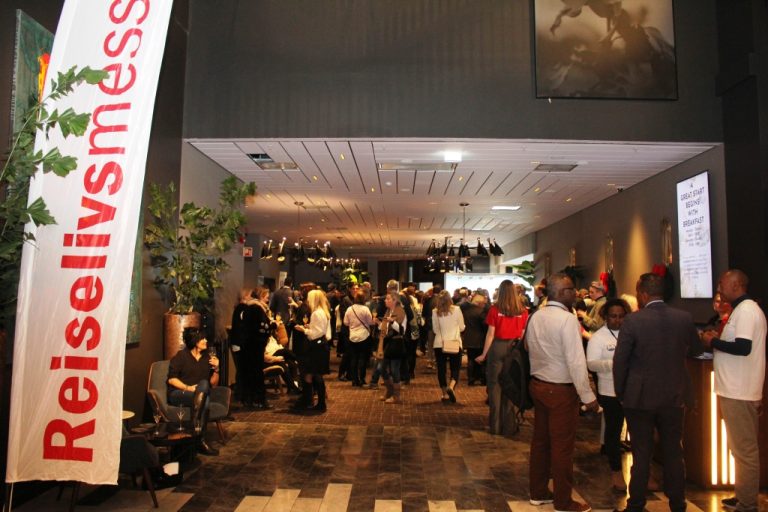
Reiselivsmessen (Oslo Travel Fair) 2023 was arranged last weekend at the Clarion Hub Hotel in the center of Oslo. It opened with a seminar for exhibitors and media, where several prominent speakers shared their knowledge about the hospitality industry in Norway. An important message was that Norwegians are planning their summer vacation NOW.
First speaker was Norway’s uncrowned hotel king Petter Stordalen, who made no secret of the fact that return on capital must always be the most important goal for players in the industry. His company Strawberry Group bought the travel agency Ving together with two other players in October 2019, when Thomas Cook Travel with 2,300 employees had gone bankrupt. Five months later, Norway – and the world – closed down due to the Corona virus.
“Return on capital must always be the most important goal for players in the industry,” said Petter Stordalen.
“The ability to adapt is hugely important,” said Stordalen. “But it is not possible to predict crises such as a pandemic outbreak or a war with large price increases as a result. Airplanes stuck on the ground do not make money. Neither do empty hotel rooms or restaurants.” Ving had to repay NOK 400 million to passengers who either could not return home or who could not use their booked journeys.
The industry has to get paid for its services in order to survive, emphasized Stordalen. Creative thinking is important, and you have to dare. He himself highlighted the chain’s major hotel venture Sommerro in Oslo, which according to him has cost a quarter of a million NOK more than it should have. However, the hotel has sectors that have exceeded even the most optimistic forecasts. “Pricing services too low is the surest way to poor profitability,” was his message.
The travel industry represents 10% of our country’s GBP and is also culturally significant.
Trends for the Travel Industry 2023
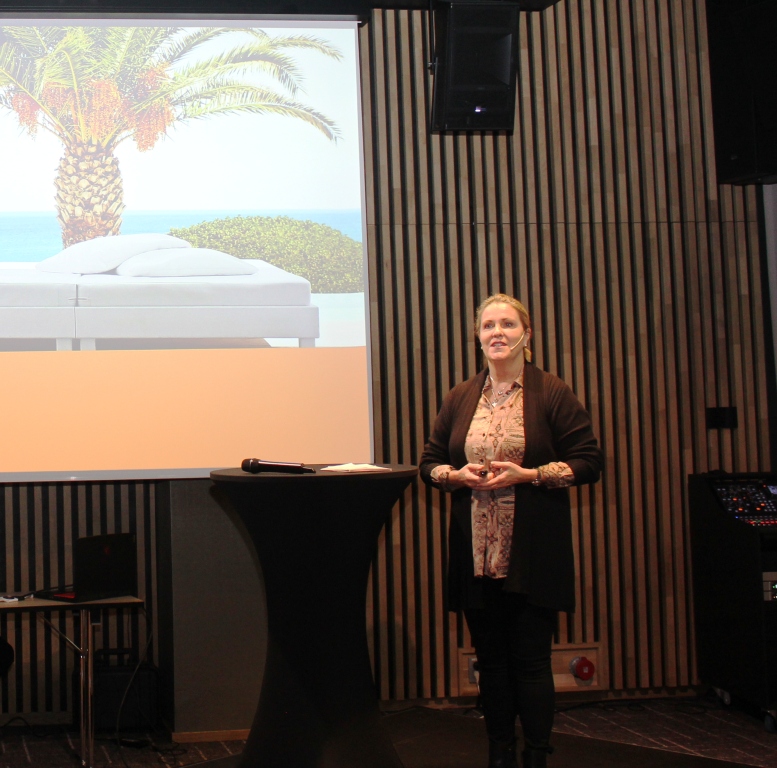
Kristine Krohn Devold, CEO in NHO travel, presented trends for the travel industry’s coming year.
Kristine Krohn Devold, CEO in NHO travel, presented trends for the travel industry’s coming year. NHO is the Confederation of Norwegian enterprise and Norway’s largest organization for employers and the leading business lobbyist.
She predicted a coming wave of bankruptcies in large parts of the industry when bills are due in the first quarter of 2023. The positive, meanwhile, is that Norway has once again been named the best country to live in, after Switzerland, according to United Nations’ Human Development Report 2021/22.
The trends:
Less spending
More of what we already have (social life)
Adventures (shorter travels)
Close relations
Local cafés
Digitalization
Creative chefs (simpler and cheaper)
Relation between work time and personal time
Krohn Devold pointed out that the health sector is the only service sector that is as large as the tourism industry.
“Everything is ahead of us for us to become the growth industry that we want to become,” she concluded.
“4 out of 5 Norwegian spent their vacation in home country in 2021, while 6 out of 10in Europe,” said Guro Henriksen from Statistics Norway,
Guro Henriksen from Statistics Norway presented figures for Norwegians’ travel activity before, during and after the corona (all figures in million travels)
2016 2020 2021 2022
18 14 15 23
4 out of 5 Norwegian spent their vacation in their home country in 2021, while 6 out of 10 in Europe.
Norwegians’ most popular destinations are Sweden, Spain, Denmark, Greece and Germany.
Explore the Northern Lights
“Tromsø is perhaps the world’s best place for a Northern Lights holiday,” said Trond Øverland from Arctic Explorers.
Trond Øverland from Arctic Explorers said that Norther Lights tourism is becoming internationally more and more important. “Tromsø is perhaps the world’s best place for a Northern Lights holiday,” he said. Arctic Explorers offers 1-, 2- and 3-days Northern Lights tours.
Handling 10,000 stranded tourists
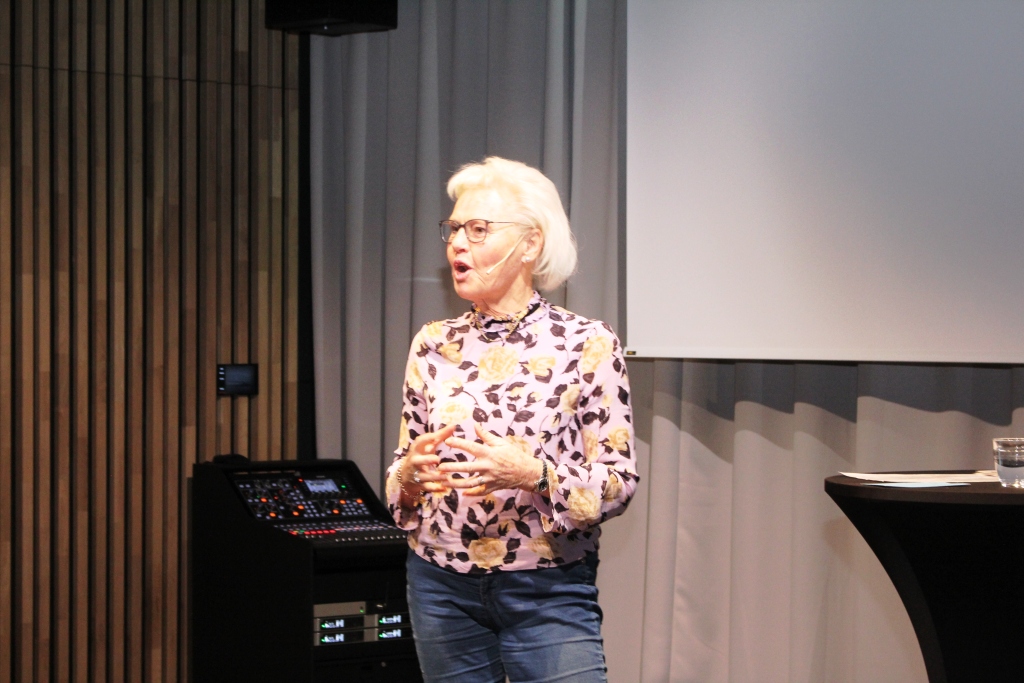
Marie-Anne Zachrisson, CEO Ving Norway.
Marie-Anne Zachrisson from Ving Norway explained how the company managed to handle almost 10,000 travelers stranded on different locations due to the pandemic and paid 410 million NOK in compensations pledged to the statutory requirements in the Norwegian Travel Guarantee Fund.
Greek National Tourism Organization served delicious food and beverages.
…. and was also responsible for the music.
Norwegians are planning their summer vacation now
81% of Norwegians organize their own holiday, only 7% use a travel agent, according to Auden Pettersen, Virke.
“The number of people on vacation in our own country has returned to 2019 level,” said Audun Pettersen in Virke.
Virke is the Federation of Norwegian Enterprise and organizes and represents over 24,000 businesses with more than 280,000 employees.
It has, however been 243 bankruptcies so far during the pandemics, he added. But bear in mind that Norwegians are planning their summer vacation NOW, although they are delaying their bookings.
81% of Norwegians organize their own holiday, only 7% use a travel agent. Most people use Internet or advise from friends or family as sources for their choices. Private income is crucial for where, what and now.
«It’s all about keeping the powder in your pants dry»
Christian Ringnes has been appointed ‘Oslo Ambassador.’
This was the title of Oslo-enthusiast, businessman and art collector Christian Ringnes’ presentation. Ringnes, whose family founded Norway’s now largest brewery in 1876, is an important player in the hospitality industry and has been appointed ‘Oslo Ambassador’.
He used this opportunity to promote his travel related ventures, like the Ekeberg Restaurant, the Ekeberg Sculpture Park, Christiania Theatre, Folketeateret and not least his Mini Bottle Gallery, which holds the world’s largest collection of miniature bottles. Of the museum’s 53,000 bottles, 2,500 are displayed in 50 different locations over 3 floors.
He also owns two prestigious hotels in Oslo, the Grand Hotel on the main street in Oslo and the Holmenkollen Park Hotel.
Two of his latest investments are outside the capital: the 70,000 square meter Tromsø Concert Hall and the Goat Hotel in Svolvær, both in Northern Norway. The rooms in the Goat are larger than ordinary hotel rooms, from 28 to 34 square meters. He admits, it is not financially solid, but «it’s all about keeping the powder in your pants dry».
Ringnes did not fail to mention some of his projects that never came to fruition, among them a gondola from the center of Oslo to Ekeberg.
Now, however, he wants to buy Tryvannstårnet, a 118 meter (387 feet) tall former broadcasting tower, located 529 meters (1,736 feet) above sea level overlooking lake Tryvann and with a spectacular view to the capital. His dream is to turn it into “a three-storey restaurant with a surprise at the top”.
How to succeed in the tourism business
Moderator Cecilie Andvig.
Moderator Cecilie Andvig linked together the presentations in a professional and humorous way and helped building awareness of the big theme of the day – how to succeed in the tourism business.
Her wrap up and call to action was indeed an important contribution in cementing the learning from these presentations.
During construction work in December last year, the remains of a shield and a cape buckle were uncovered in Oslo. This rear Viking burial treasure were in fact discovered in the middle of the capital of Norway.
Archeologists were brought in to excavate a site on the upper side of a small pond called Holmendammen. Plans to build a new detached house on a plot of land by the dam triggered an archaeological survey of the site. Marianne Bugge Kræmer was in charge of the resulting investigation.
Viking Burial Treasure discovered in the Middle of the Capital of Norway, read more….
This was probably a quiet area during the Viking age, but is a residential area on the Oslo’s west side today.
Holmendammen was used to make ice. Photo A. B. Wilse..
“This location has been a prominent hill, clearly visible in the terrain and with a great view,” says Kræmer to sciencenorway.no. She is an archaeologist at the Oslo Municipality Cultural Heritage Management Office. “The grave was located directly under a thin layer of topsoil and turf right on the east side of the highest point on the site,” she continued.
This is the first time a Viking Age grave rich in artefacts has been found in Oslo. Holmendammen was built at the beginning of the 20th century after the Holmenbekken was dammed. The dam was used to make ice.
Viking Burial Treasure discovered in the Middle of the Capital of Norway, written by Tor Kjolberg
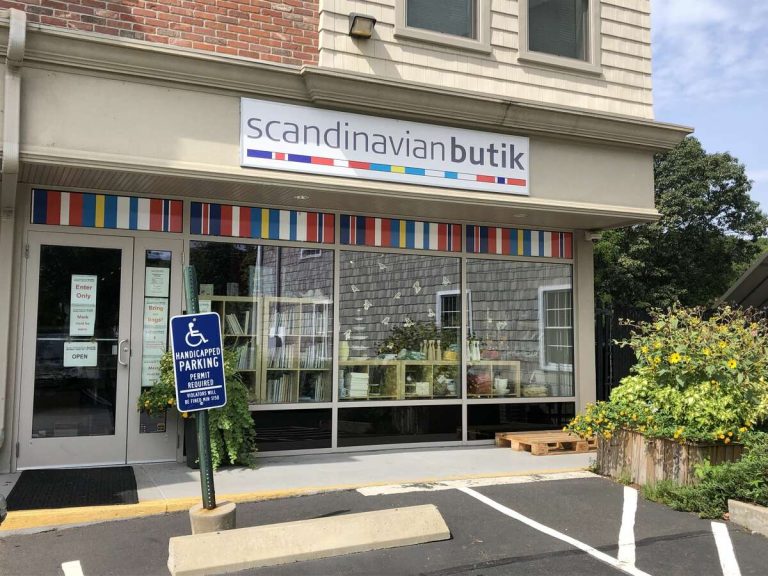
Americans don’t need to fill their suitcases with all their favorite food, candy and design after a trip to Norway, Sweden or Denmark. US-based Scandinavian Butik is there to lighten the load.
In 2010, Marianne Beresford and her long-time friend Doris Levene opened a store in Wilton, Connecticut called the Scandinavian Butik. Beresford moved from Denmark to the United States in 1984. And even though Beresford loves living in the United States, she said she was missing her home country, especially around the holidays.
Founders Doris Levene (left) and Marianne Beresford (right). Photo: Erik Trautmann/The Hour
With a huge range of cheeses, meats, breads and condiments as well as local favorites such as Anthon Berg and Freja chocolate and Haribo candy available in-store and online, this is the most convenient way to stock up.
“Our holiday collection is very important because there is a large population of Scandinavians around the area,” Beresford says. “And I know that they want things that comfort them around Christmas time — things they grew up with.”
Beresford said the butik also sells items year-round, not only for Scandinavians, but anyone that likes unique and interesting ceramics and furniture.
Scandinavian butik, Wilton – Connecticut.
“We sell a lot of glass items from Sweden, which are beautiful,” she said. “We have a lot of Danish ceramics and wood furniture. We have a lot of interesting things you can’t get anywhere else.”
An autumn day in 2012, the Norwegian photographer Helge Skodvin walked around his hometown of Bergen where the streets were full of Volvos in the most wonderful colors; brown, green, turquoise – you name it. It gave him inspiration for the biggest Volvo photo project ever: 240 Norwegian landscapes with a Volvo 240 somewhere in the image.
2,850,000 Volvo 240 cars were made between 1974 and 1993. It became the car of choice of the Nordic countries. 84,287 were sold in Norway. “More than any other car, the Volvo 240 became a symbol of Scandinavian and Nordic values,” says Helge Skodvin on his website.
Private investigator
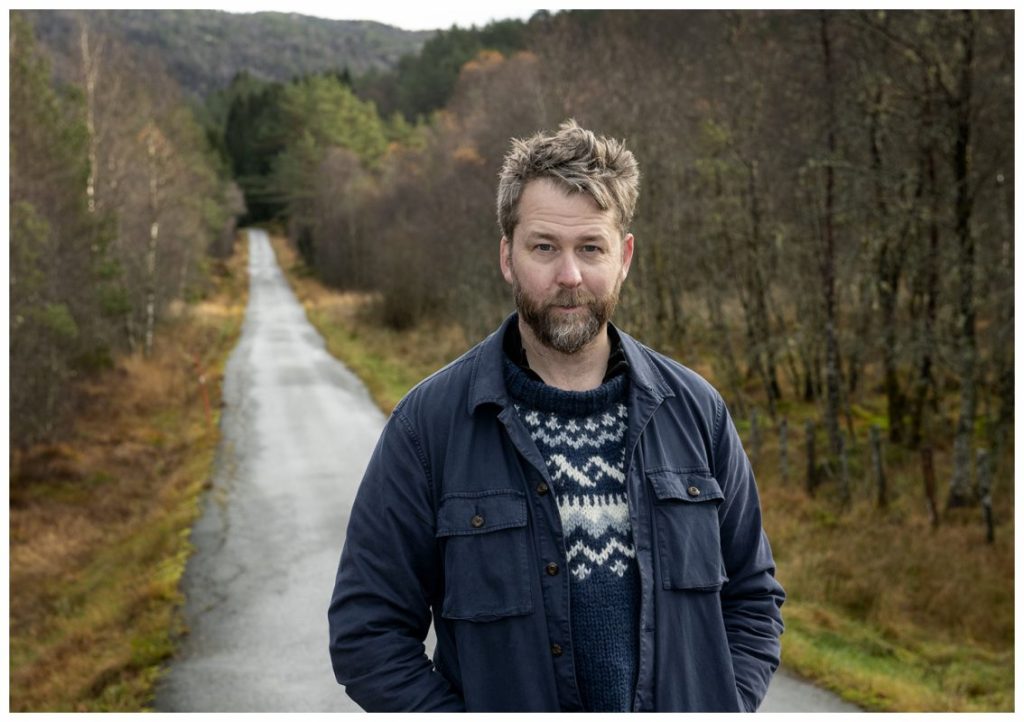
Helge Skodvin spent four years photographing the Volvo 240.
Skodvin spent four years photographing the Volvo 240. Every time he came across a Norwegian-registered model of the classic Swedish-made car series, he noted the license plate number, looked it up in the Official Car Register to find out who owned the car. He then tracked down where the owner lived and organized everything into his own, increasingly extensive archive. He then searched Google View and studied whether the place looked good or not.
At regular intervals, Skodvin set out on the road in his own car, a Volvo XC70, or a rental car.
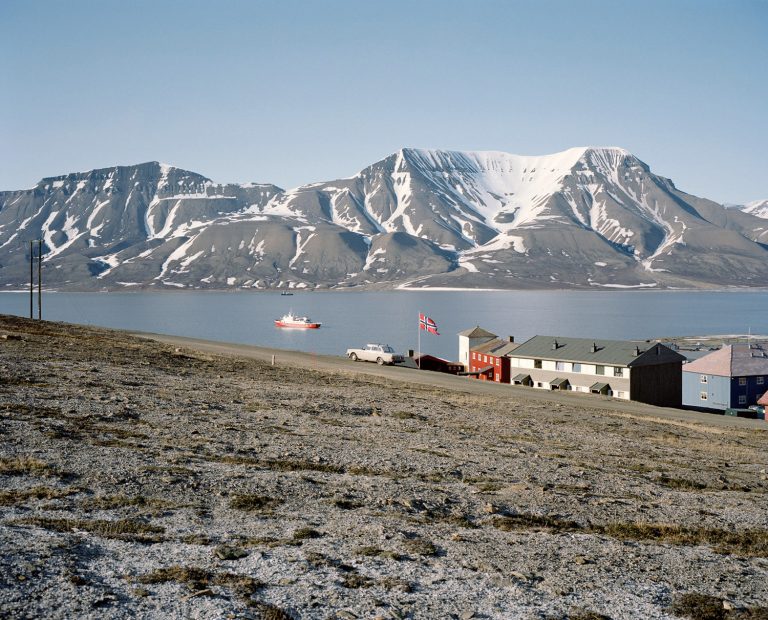
At regular intervals, Skodvin set out on the road in his own car, a Volvo XC70, or a rental car, treading winding small roads, covering counties and parts of the country systematically. He has even been to Svalbard. However, most of the pictures are shot in Southern Norway, where his wife has family.
most of the pictures are shot in Southern Norway, where his wife has family.
More than any other car, the 240 became a symbol of Nordic and Norwegian values. The safe, the sound, the commonplace. Square and homely, yet solid and reliable. Function over form. No frills. Taking you from A to Z. A car. An ambassador for the Scandinavian social democracy.
The Volvo 240 was square and homely, yet solid and reliable.
It’s interesting that a vehicle can in some way resemble or reflect a person or country/state. It’s an interesting point to have been discovered and the way that Skodvin photographs these cars, with such subtlety and tranquility, parked amongst beautiful landscapes of Norway.
The Volvo 240 became a symbol of Scandinavian and Nordic values.
Skodvin has photographed the cars from a distance, silently waiting in their natural habitat. Half-hidden behind barns, peeking out of garage doors and abandoned on snowy farmyards; in a documentary style inspired by American photographers such as Stephen Shore and Jon Sternfeld. There is never more than one car in each picture. No people. Just the backdrops, the everyday contemporary landscape.
“With these photographs, I want to show how we live, how our surroundings look. I wish to portray the everyday landscape. A photographic documentation of the landscape we inhabit,” said Skodvin.
Rooted in a Copenhagen mindset of freedom and flexibility, MISMO offers passionate travelers and city dwellers a timeless world of Nordic simplicity and everyday luxury. In fact, lifestyle of slow consumerism is embraced by Danish luggage producer MISMO.
MISMO covers a wide range of luggage collections and accessories that support and accentuate individual expression across the lifestyle spectrum, from laidback to sophisticated.
MISMO strives to create products that breathe longevity. The longer the lifecycle, the gentler the environmental footprint. MISMO products exude purpose and function and are crafted using natural materials that mellow from wear and tear. MISMO partners with select suppliers and producers, most of which are family-run businesses who have been part of our enterprise for more than a decade. MISMO products are assembled in a process that balances classic craftsmanship with modern-day manufacturing. In short, MISMO is guided and defined by aesthetic sustainability. In a world of fast fashion where consumption has risen 60% in the past two decades alone, MISMO embraces the reformed ethos and considered lifestyle of slow consumerism.
“We believe in surrounding yourself with a few select and high-quality objects and in embracing a much more considered way of consuming where we buy less, but better.”
MISMO collections are designed to support everyday endeavors, city escapes and countryside adventures. Inspired by our daily routines, people-watching on Copenhagen’s buzzing streets and free-wheeling cycle lanes, and by the outdoor living that surrounds our city, MISMO bags support personal expression and defy limitations of age and gender. “Offering a wide choice of expressions, natural materials and classic colorways, MISMO luggage collections will weather any change of personal wardrobe. Sturdy, versatile and purposeful, they are enduring staples of the journeyed spirit.”
Lifestyle of Slow Consumerism Embraced by Danish Luggage Producer, based on a press release from MISMO.
Consumers in Scandinavia spent 54.54 billion dollars on online shopping in 2021. The Scandinavians were early adopters of internet technology and have in general become digitally mature. Find out what matters to online shoppers in Scandinavia in 2023.
Norway is one of the world’s most wealthy and tech-savvy countries with an online spending of 17.18 billion euros in 2021, in other words, an ideal target for eCommerce businesses. Discerning and quality-conscious consumers are looking for streamlined shopping experiences and innovative technologies that simplify their online shopping.
However, there are various signs that, after a long phase of double-digit growth, the boom in online retail may be over for the time being – and that the e-commerce industry will need to dial back its expectations going forward.
The Scandinavian sprawling landscape lends themselves to the convenience of online shopping
Due to a big shift from physical stores to e-commerce well before 2020, around 9 in 20 Scandinavian consumers regularly engage in e-commerce.
In February 2022, the Salesforce Shopping Index, for example, was already reporting a 5% dip in worldwide online retail sales. Both Germany, the Netherlands and France reported drop in product sales for January to May 2022, but the turnover was still 15% higher than the same period in 2020.
Due to a big shift from physical stores to e-commerce well before 2020, around 9 in 20 Scandinavian consumers regularly engage in e-commerce.
Norway and Sweden’s population is denser in city centers, but the countries’ sprawling landscape lends themselves to the convenience of online shopping. Many shoppers are even willing to wait a little longer for delivery due to their rural or remote locations. But some of the largest local businesses are major players in the eCommerce space, which can make it difficult for emerging businesses to find a place within the Scandinavian eCommerce market.
What Matters to Online Shoppers in Scandinavia in 2023? Read on…..
Scandinavian Consumers are happy to buy from other countries
80 to 90% of consumers across Scandinavia engage in “cross-border” e-commerce.
The convenience for consumers supports the expectation that online retail will certainly continue to grow over the medium term. In a recent survey by the German association Bundesverband E-Commerce und Versandhandel (bevh), over two-thirds (68.2%) of respondents of all age groups felt that no longer being able to order online would impair their quality of life. In particular, the 40- to 49-year-old and the 60+ age groups could not imagine relinquishing online shopping. Scandinavian consumers are on the same wavelength.
It’s also important to realize that Scandinavian consumers are also happy to purchase from other countries. 80 to 90% of consumers across Scandinavia engage in “cross-border” e-commerce, and with Amazon now established in Sweden, in addition to already well-established players like Zalando, Wish, eBay and others, this trend is likely to continue.
Widespread smartphone usage
climate change and Excess packaging are increasingly leaving online shoppers with a guilty conscience
Norway was one of the first countries to use breakthrough 1G communication technology, leading to the mobile-centric culture we see today. Due to a combination of widespread smartphone usage and a healthy eCommerce marketplace, 53% of online transactions across the country are completed using a mobile device.
However, consumers not only expect providers to ensure the convenient supply of a wide range of goods but also to deliver a certain level of service – and respond to current challenges: climate change and a scarcity of resources influence our way of thinking. For example, the slow fashion trend is gaining traction, as is awareness of regional quality outside urban centers. Community-oriented platforms are influencing our buying behavior, and climate change and excess packaging are increasingly leaving online shoppers with a guilty conscience. This was highlighted back in June 2022 in the Seven Senders publication “Roadmap 2025: Sustainability in European e-commerce”.
What Matters to Online Shoppers in Scandinavia in 2023? It’s more to come….
A whole array of consumer goods
It’s expected that the gap between desktop and mobile experiences will continue to widen across the globe as mobile technologies become more accessible.
A current study from Seven Senders investigates in detail how European online shoppers’ expectations of the perfect shopping experience have changed recently.
With more than 1,000 euros spent in an average year by Swedish online consumers alone (well above the European average) a whole array of consumer goods is purchased by Scandinavian consumers via e-commerce, such as fashion, groceries, literature and audiobooks, home furnishings, dietary supplements, medication and other pharmaceuticals, sports and leisure products, as well as movies and entertainment and much more.
It’s expected that the gap between desktop and mobile experiences will continue to widen across the globe as mobile technologies become more accessible, and you can reasonably expect that Scandinavia will be ahead of the curve. Businesses trying to break into the Scandinavian eCommerce market should focus on optimizing their sites and checkouts for mobile shopping experiences.
Most important factor – shipping costs
It pays to research customer expectations separately in each target market.
Scandinavian consumers still rate shipping costs as the most important factor when choosing one online store over another but they also seem to enjoy the convenience of having products delivered to them. The vast majority of Scandinavian consumers prefer to have things delivered to their homes or P.O. boxes.
Norwegian consumers typically look to support local brands even as they shop online, which creates another barrier for foreign eCommerce brands. However, high domestic prices often scare customers away. This means cross-border eCommerce stores might already have an “in” with Norwegian shoppers, in terms of pricing, and that’s the reason many Norwegians are shopping online cross-border.
By learning more about the expectations of your target groups (which can differ significantly from country to country), you can take these into account when passing on shipping costs and calculating prices, aiding customer satisfaction and retention. Therefore, it pays to research customer expectations separately in each target market. So, if you are looking to tailor your delivery terms to individual countries, it is advisable to reexamine customer opinions from time to time
30 to 60% of consumers across Scandinavia still prefer to use a debit or credit card to pay for their online purchases. Danes are the happiest to embrace mobile app payments, with nearly 2 in 10 consumers indicating such a preference – this figure is 1 in 10 in Sweden and Norway.
The B2B market
The best way to overcome the challenges of trading across linguistic and cultural borders, is to have a partner that knows how to build those crucial bridges.
The B2B market seems to be booming across the world as businesses seek out platforms that help them keep up with rapidly evolving business environments. The B2B market in Norway is unique in that it is conducted on a highly personal level. What’s not unique is that, similar to other European markets, there are still hurdles in the B2B space for Norwegians to overcome, mostly related to complex industry pricing and the involvement of numerous third parties.
As far as indirect taxation goes, Norway is not a member of the European Union so it employs its own VAT scheme. B2C online sellers in Norway need to register with the VAT on eCommerce scheme (VOEC) when the sales made to Norwegian consumers in a 12-month period exceed NOK 50,000 ($5,700 US). For B2B online sales the reverse charge mechanism is employed, meaning no VAT is collected at checkout, but the buyer must provide a valid VAT ID.
The standard VAT rate in Norway is 25% with some categories like eBooks or audiobooks benefiting from no taxation at all.
The best way to overcome the challenges of trading across linguistic and cultural borders, is to have a partner that knows how to build those crucial bridges to close the gap and enable you to close the deal. If your company offers an affiliate program, Daily Scandinavian is happy to present your products and your company. Just contact us here.
What Matters to Online Shoppers in Scandinavia in 2023? Compiled by Tor Kjolberg
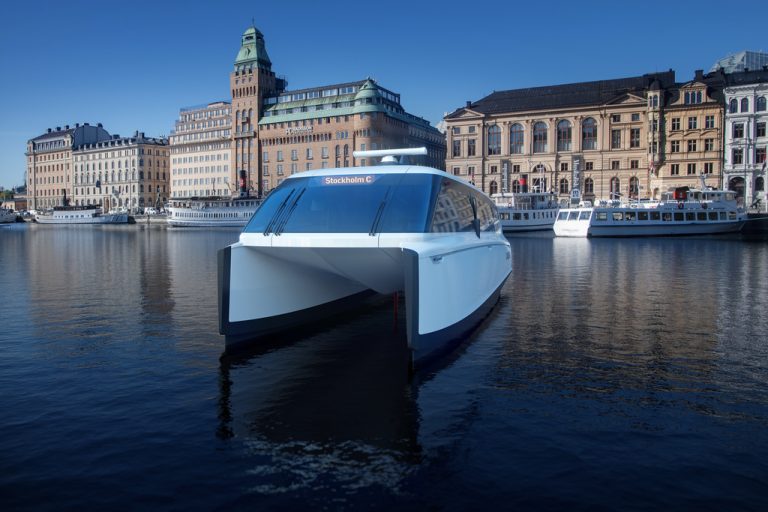
A Swedish study from The Royal Institute of Technology in Stockholm says ship emissions can be cut by 97.5% by switching from diesel vessels to a new type of electric hydrofoil ship that will be introduced in Stockholm later this year.
In the course of 2023, the Region of Stockholm will sea trial the fastest and longest-range electric ferry to date; Candela P-12 Shuttle, the world’s first hydrofoil passenger ship.
In addition to being fast and comfortable, a new study from Stockholm’s KTH Royal Institute of Technology suggests that ships with electric hydrofoil technology could reduce emissions from marine transport by 97.5% compared to current diesel vessels.
The country’s leading technical university, KTH, has compared the Candela P-12 Shuttle with the city’s diesel-powered vessels in a life cycle analysis. The analysis examines the different stages of the product’s life; extraction of raw materials, manufacturing and use phase until the product is no longer used, and must be disposed of or recycled. The study shows that over a lifetime of 30 years, the carbon footprint of a Candela P-12 Shuttle is 97.5% lower than that of the compared diesel ships.
According to the authors, the study is the first to demonstrate the difference in environmental impact between electric hydrofoil ferries and traditional ferries. It shows that electric flying ferries can play a significant role in the transition to more sustainable maritime transport.
The hydrofoil technology means that the boat is lifted on wings that ’fly’ under water
A clear advantage
“The combination of using hydrofoils and being powered by electricity is the main factor in lowering emissions. And since the Swedish electricity grid is almost free of carbon dioxide emissions, this type of ship has a clear advantage,” says Felix Glaunsinger, one of the authors of the study. Related: Norwegian Zero Emissions Ship Without a Crew
The hydrofoil technology means that the boat is lifted on wings that ’fly’ under water, eliminating water resistance from pushing the hull through water. The hydrofoils reduce energy consumption by 80% compared to conventional ships. When the 30-knot Candela P-12 enters sea trials in 2023, it will be the fastest electric ship in the world and also the fastest passenger vessel in the Stockolm public transport fleet. With a range of 60 nautical miles, it can cover the archipelago’s longest routes. Since the flying ferry doesn’t create any wake, the city has granted it an exemption from the speed limits, cutting travel times from 55 minutes to 25 minutes on the maiden route from the suburb of Ekerö to central Stockholm.
Made to be as light as possible
The KTH study also shows that the Candela P-12 Shuttle has a low carbon footprint from production compared to the diesel ferries examined – an interesting finding, since other electric vehicles, such as cars, often have a heavier carbon footprint from production than fossil fuel-driven equivalents due to the negative impact of manufacturing the batteries.
The combination of using hydrofoils and being powered by electricity is the main factor in lowering emissions.
“Just like aircraft, our vessels are made to be as light as possible to maximize the number of passengers and performance. A welcome side effect is that we’re able to use smaller batteries and less raw material, which in turn means a lower negative climate impact, says Erik Eklund, head of Candela’s commercial vessels.
Worldwide, ships account for around 3% of global greenhouse gasses, comparable to the global aviation industry’s emissions. Emissions are expected to rise considerably in the coming years despite the International Maritime Organization’s ambition to cut ships’ carbon intensity by 40% by 2030.
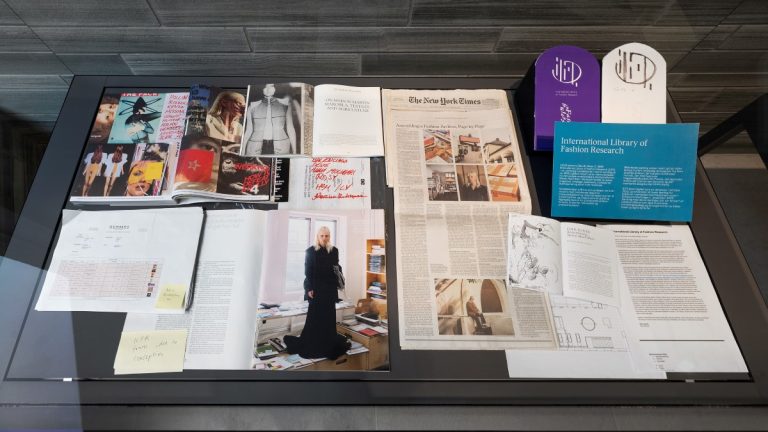
The International Library of Fashion Research is a repository of specialized fashion research and contemporary fashion publications. The collection is continually growing through donations from global fashion houses, publishers and practitioners. The library is open and accessible to general visitors. The new international library of fashion research opened at the National Museum in Oslo last December.
The International Library of Fashion Research (ILFR) was launched in 2020 by Elise By Olsen (b. 1999). It is an independent fashion library based on a large donation from the late fashion theorist Steven Mark Klein. The ILFR is housed in the Station Master’s Building at the National Museum in Oslo. The collaboration between ILFR and the National Museum have so far resulted in three projects, including the Fashion Research Symposium that gathered 170 students, researchers and fashion professionals in September 2022.
The International Library of Fashion Research (ILFR) was launched in 2020 by Elise By Olsen (b. 1999).
“Archives are in vogue, and there is a great demand for this type of material, not least from the fashion industry itself. It is very exciting for a research institution like the National Museum to have the opportunity to bring our perspectives to this collection,” says the National Museum’s Director Karin Hindsbo.
is an independent fashion library based on a large donation from the late fashion theorist Steven Mark Klein. Photo: Ina Wesenberg/National Museum
The International Library of Fashion Research has an ambition of becoming the world’s largest and most comprehensive repository of fashion publications and other documentation connected to the fashion industry. The library will function as a free and accessible resource for fashion professionals, researchers, students and enthusiasts.
“Archives are in vogue, and there is a great demand for this type of material, not least from the fashion industry itself,” says the National Museum’s Director Karin Hindsbo.
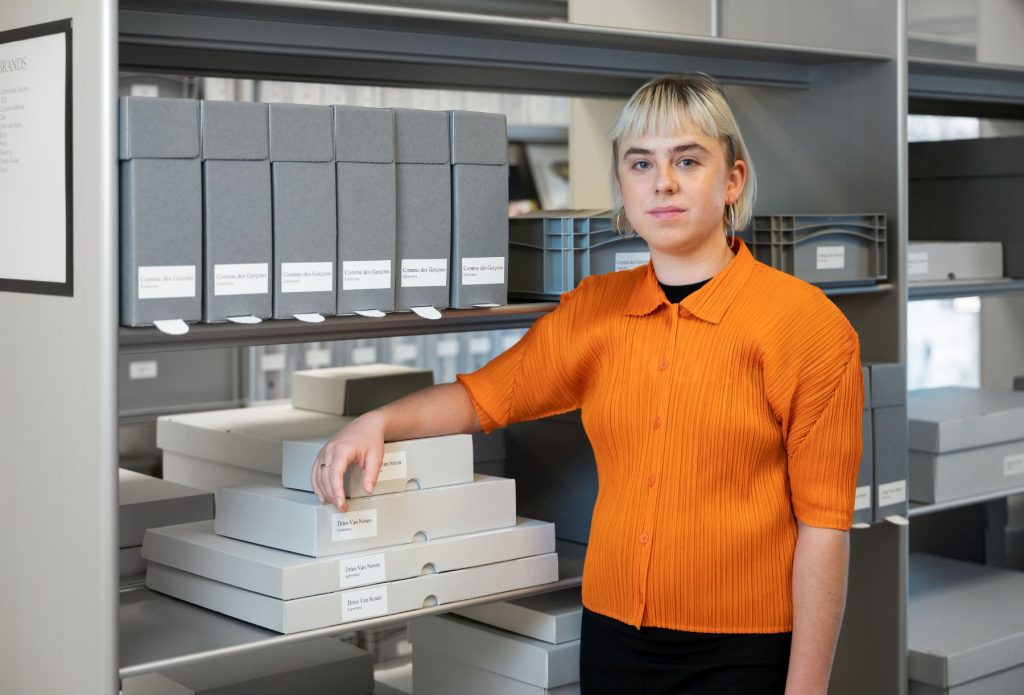
The library’s collection is fast-growing. Since the establishment, it has accepted significant donations, including material from the French fashion house Hermès, the international magazine distributor KD Presse, the Japanese fashion house Comme des Garçons, and the design agency M / M (Paris). Much of the material in the ILFR archive is digitized and available on the ILFR website.
The library’s interior has been developed in collaboration with architect and professor Vesma McQuillan and students at Kristiania University College. The shelf system made by extruded aluminum profiles is designed by the Italian design duo Formafantasma for Hem. The curtain textiles come from Kvadrat Textiles. The tables are custom-built with recycled MDF, and the display cases are reused from the National Museum – Architecture.
The International Library of Fashion Research has an ambition of becoming the world’s largest and most comprehensive repository of fashion publications and other documentation connected to the fashion industry. Photo: Ina Wesenberg/National Museum
International Library of Fashion Research in the Station Master’s Building is open 12.00 – 18.00, Tuesday to Friday
The National Museum of Art, Architecture and Design
is the largest art museum in the Nordics. The collection contains 400,000 objects ranging from the antiquity to the present day and includes paintings, sculpture, drawings, textiles, furniture and architectural models. The new museum building opened in June 2022. At the National Museum visitors can experience a comprehensive collection presentation of around 6,500 works, as well as a varied program of temporary exhibitions and events.
New International Library of Fashion Research Opened at the National Museum in Oslo, based on a press release from the museum.