How & Why to Startup a Business in Sweden

0

The global marketplace is more accessible to entrepreneurs and their startups than ever before. This doesn’t just mean you’re limited to just gaining customers from different countries. It is also more practical to run your business in another country entirely.

Sweden is among the most popular geographical targets for startups at the moment. Scandinavia may not have been at the forefront of your mind when considering locations. But placing your focus here can help inform the success of your burgeoning company.

There are several elements to consider when deciding to take your startup abroad. Let’s run through why Sweden can be a positive choice alongside the practical actions you need to take to make the idea a reality.

How & Why to Startup a Business in Sweden
Sweden is among the most popular geographical targets for startups at the moment.

Why Choose Sweden?
With a global marketplace to choose from, why is it a good idea to choose Sweden?

Among the key incentives are:

An Entrepreneurial Environment
There have been changes in the country’s business infrastructure over the last few decades. This has created an environment that empowers startups to thrive. A process of deregulation following the financial crisis in the 1990s brought in a series of measures designed to encourage private competition. Sweden has a low corporation tax rate of 22%. There is also legislation to block mergers of large corporations. This makes for a landscape in which small enterprises can not just function but have a good chance of growth.

A Thriving Tech Scene
Sweden has gained a reputation as the Silicon Valley of Europe. This is the result of a tech-positive approach within the culture. A government initiative in the 1990s committed to putting a computer in every Swedish home. There has also been a consistent focus on building fast and stable networks and encouraging citizens to learn to code. As such, this is a country of tech innovations. Skype, Minecraft, SoundCloud, and Spotify were all founded in Sweden. If yours is a tech startup, you’ll find a professional community that pushes one another to thrive.

Related: Scandinavian High School Dropout Has Sold Online Tutoring for $360K

How & Why to Startup a Business in Sweden
Sweden has gained a reputation as the Silicon Valley of Europe

Prepare the Basics
In some ways, forming a startup in Sweden is much the same as anywhere else in the world. There are basic steps for getting your small business up and running and to lay solid foundations for growth. These include formulating a well-researched business plan, securing funding, and outlining the resources you need in your first years. However, you may find some difficulties in how to adjust some details of these basics to be relevant in Sweden.

As part of your business plan, it’s always important to gain perspectives on the markets and where you fit into them. While Sweden may be considered generally one of the best places in the world to form a startup, it’s still subject to market variances. You can certainly perform some of your research online. But you can get high-quality up-to-date data by contacting the local “branschorganisation” (trade association) for your industry.

Finances may also be problematic. Lenders in your home country are likely to be reluctant to provide funding for a venture abroad. The good news is if you’re choosing to move to Sweden to run your startup there are sources you may be able to utilize. Almi Företagspartner AB is a state-operated organization that provides small to mid-sized company loans and microloans.

Related: The Startup Kingdom: How Denmark Became an Entrepreneur’s Paradise

Consider Remote Operations
Even before COVID-19, remote operations were popular in Sweden. In 2019, 30% of employees worked from home. This has risen in light of the pandemic and is expected to continue beyond it. As such, it’s worth considering how to make your startup fit for remote working processes.

This approach can present various points of security vulnerability. You may find your small business is at risk of severe negative consequences if you overlook strict cybersecurity measures. Make certain there is an information technology (IT) professional on your staff. They must have experience in designing and implementing network security. Implement safe online behavior training for your remote staff through elearning modules. Even access to virtual private networks (VPNs) to keep your staff’s home networks secure can be effective.

How & Why to Startup a Business in Sweden
Sweden requires business owners to possess certain permits

Adhere to Local Regulations
Some of the most challenging aspects of starting any business are the legislative and regulatory aspects. This begins with some key legal documents most companies need to possess whether you’re a small or global enterprise. A memorandum of association (known as a stiftelseurkund in Sweden) is one of the first you’ll have to draw up if your startup is a new limited company. Alongside ensuring these documents are legally compliant, you should make certain they are available in both your native language and translated accurately to Swedish.

Sweden also requires business owners to possess certain permits. Some of these will be familiar safety inspections and certifications. Others are more unusual. For instance, in retail, you have to use a legally-compliant cash register. Some of these will be specific to the industry or profession you’re entering, so it’s important to do your research on which permits you’ll need.

It’s also vital to remember Sweden takes its employee rights very seriously. The Employment Protection Act outlines regulations for the 4 acceptable types of fixed contract employment. This includes one about handling employees that are over the age of 67. Swedish employees have rights to parental leave, holiday, and pension contributions from their employers too. You need to familiarize yourself with these so you don’t inadvertently fall afoul of regulations. It’s worth checking out the Swedish government’s translations of employment law to make a positive start here.

How & Why to Startup a Business in Sweden – Conclusion 
Sweden is considered one of the best places in the world to create a startup, particularly in tech fields. However, it’s important to understand how your basic planning needs to be adjusted to meet Swedish standards. With a growing demand for remote work, it’s worth adopting tools and professionals to make sure your business is fit for purpose. There are some complex local regulations to follow. But these are designed to ensure a positive experience for everyone involved. With some preparation and commitment, you can join the thriving culture of successful small entrepreneurs in Sweden.

How & Why to Startup a Business in Sweden
Ainsley Lawrence

How & Why to Startup a Business in Sweden, written exclusively for Daily Scandinavian by Ainsley Lawrence. Ainsley is a freelance writer from the Pacific Northwest. She is interested in better living through technology and education. She is frequently lost in a good book.

Other articles by Ainsley Lawrence:
Swedish Weddings: Traditions and Trends
Why More People Should Be Eating the Nordic Diet
Is Dual Citizenship in Scandinavia Right for You? The Challenges of Being Multinational

Have Yourself a Truly Scandinavian Christmas

Ranging from Hans Christian Anderson to Karl Ove Knausgaard, have yourself a nordic noel with the very best Scandinavian Christmas tales. Have yourself a truly Scandinavian Christmas.

Have yourself a truly Scandinavian Christmas… Of visions and prophesies seen in dark, dark woods. Of toys and trees come to life. Of trolls raising chaos, and of families torn apart — only to be brought back together by festive cheer.

More Christmas on Daily Scandinavian: Cheering Scandinavian Christmas Gifts

Have Yourself a Truly Scandinavian Christmas
Have yourself a truly Scandinavian Christmas

In this collection, classic tales from Hans Christian Andersen and Nobel Prize winner Selma Lagerlof blend with modern day stories from Karl Ove Knausgaard and Vigdis Hjorth. Each touch on the warm and wild spirit of Christmas, where the coziness and contentment of the season can often give way to the unexpected, magical and sometimes mystical.

More Christmas on Daily Scandinavian: Christmas Party With A Twist In Norway

A smorgasbord of strange literary gifts, let A Scandinavian Christmas transport you to a winter wonderland in which fantasy, the fantastic and the festive combine for your reading delight.

Have Yourself a Truly Scandinavian Christmas
Let A Scandinavian Christmas transport you to a winter wonderland with fantasy

(Photo by Annie Spratt / Unsplash)

More Christmas on Daily Scandinavian: A Very Christmassy Stay At Award-Winning Norwegian Hotel.

The whole of December is building up towards the most important holiday of the year for many people. Shops and supermarkets try to add Christmas atmosphere by putting on decorations and playing Christmas music. You also probably have a Christmas playlist.

As it happens, most Christmas songs we hear are in English, even here in Scandinavia. Today we would like to challenge you to spice up your playlist with a couple of Scandinavian songs.


December means that the jul-vibes are copious in many countries! The Scandinavian countries are no exception. When strolling through towns, you’ll see lights, decorations, and hear sweet Christmas tunes pumped out of speakers to get folks in the holiday mood.

Much like in the U.S., Swedes have a few classic Christmas songs that just about everyone knows and loves…until you can’t get them out of your head!  Below is one Swedish translation of a more solemn Christmas classic that you’ll probably recognize:

We wish all our readers A Merry Christmas!

Norwegian Friends Of Aquavit

0

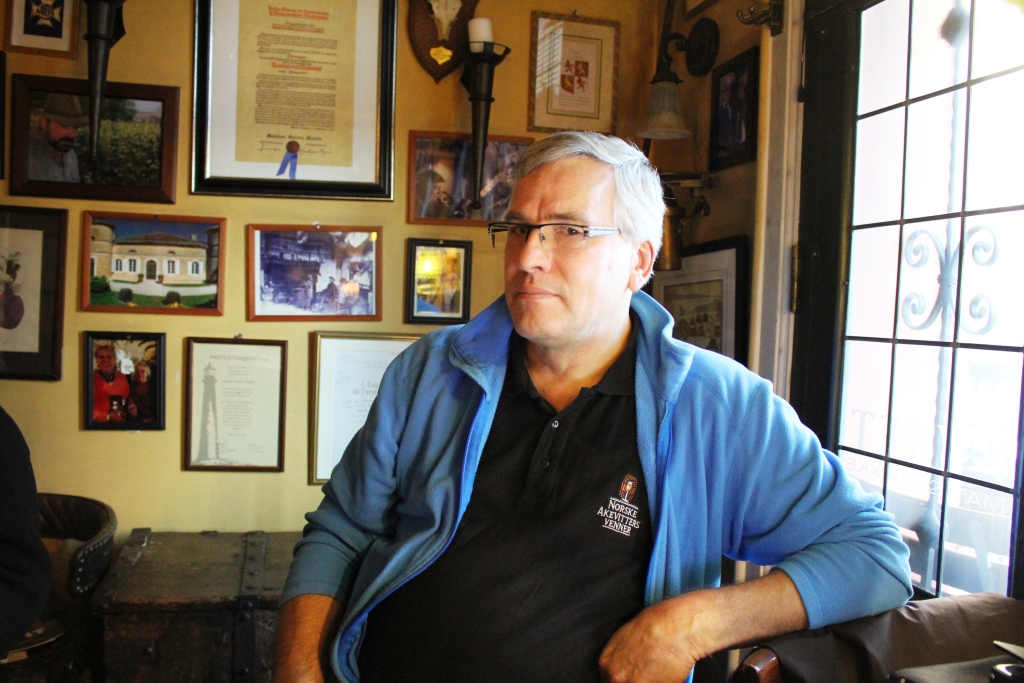
Did you know there is an association of Norwegian Friends of Aquavit? Did you know that there’s an inn in Oslo offering 435 different brands of aquavit? Did you know that the Norwegian official Aquavit Day is on 13 April? These are not fake news, and we invited the president and general manager of the association to meet us at the popular aquavit bar Fyret in Oslo, which is often frequented by popular artists and locals who enjoy eating, drinking and chatting there. Learn more about the Norwegian Friends of Aquavit.

According to general manager Lars Ole Ørjasæter, Friends of Norwegian Aquavits is a cultural organization aiming to develop knowledge about Norwegian aquavits, create synergy between Norwegian food and aquavit, and not least increase the number of good meetings around the table. The organization was founded in 1999 and has about 7,500 members, all of them more than average interested in food & drink. New members are welcome!

Norwegian Friends Of Aquavit
The trio’s favorites: : Bohemens jul (The Bohemian’s Christmas), Flåklypa Special, Kjellermesterens Premium Reserve and Lysholm Linie Double Cask Sherry/Port.

Selected aquavits
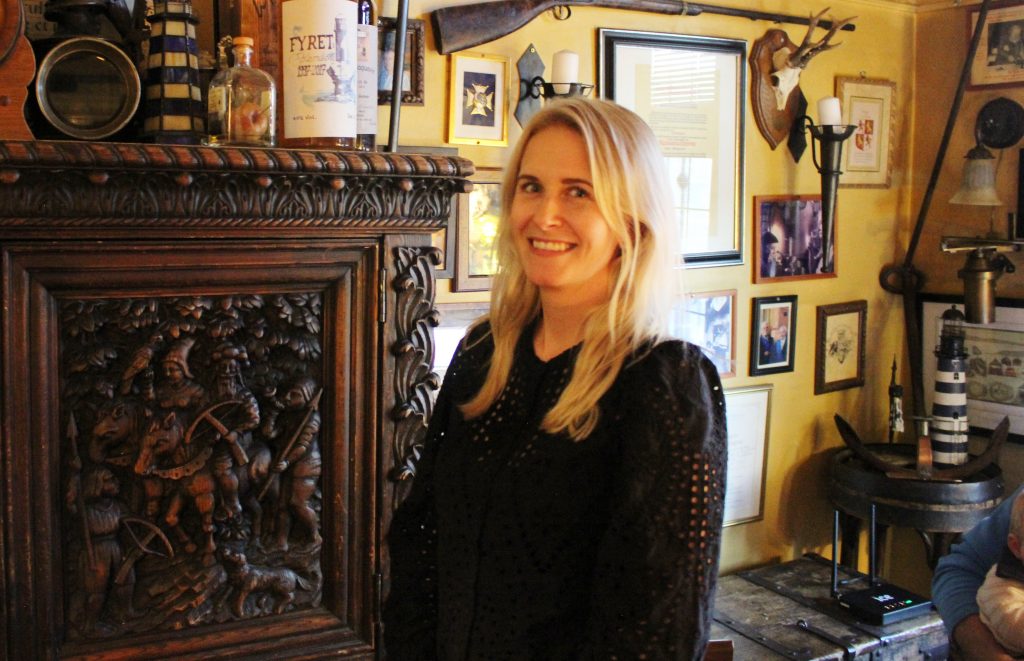
Elisabeth Gjestland was elected the organization’s president in 2020. She tells us that that there are 35 distilleries in Norway and that her favorite is Meir signed by Ivan Abrahamsen, which has a subdued taste but still is rich in spices. The caraway is creating lot of Christmas aromas. She considers it a very comfortable all-rounder which can be safely placed on the table for all types of Christmas food.

Norwegian Friends Of Aquavit
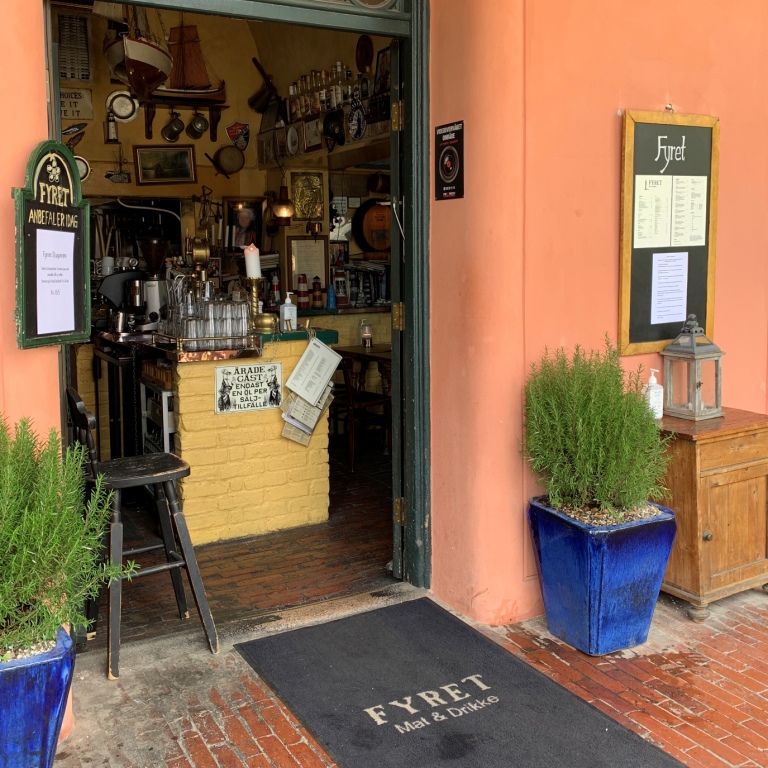
Welcome to Fyret (The ;Lighthouse) at Yongstorget in Oslo. Photo: Fyret

The most famous aquavit is Linie. In 1805 the Norwegian Lysholm family sent a shipment of their potato spirits to East Indies. There people were totally uninterested in buying it, so the aquavit was sailed back to Norway. On its return in 1807, it was discovered that the sea voyage had vastly improved the taste.

Norwegian Friends Of Aquavit
Kaja has a lot of humor. The text says, ‘Remember, your body is not a temple only, but also an amusement park’

The Norwegian aquavit has some key differences from the Danish and Swedish ones. To be named “Norwegian aquavit”, it must be made only from potato spirits. Norwegian distillers call potatoes the grapes of the north! It is always aged in wood, mainly sherry casks, and should never be served freezing cold but in room temperature.

Norwegian Friends Of Aquavit
General Manager Lars Ole Ørjasæter

Traditionally aquavit has been a men’s drink and in particular during the holiday season together with traditional Norwegian Christmas food. In later years, the aquavit is considered an all-year-round drink.

Norwegian Friends Of Aquavit
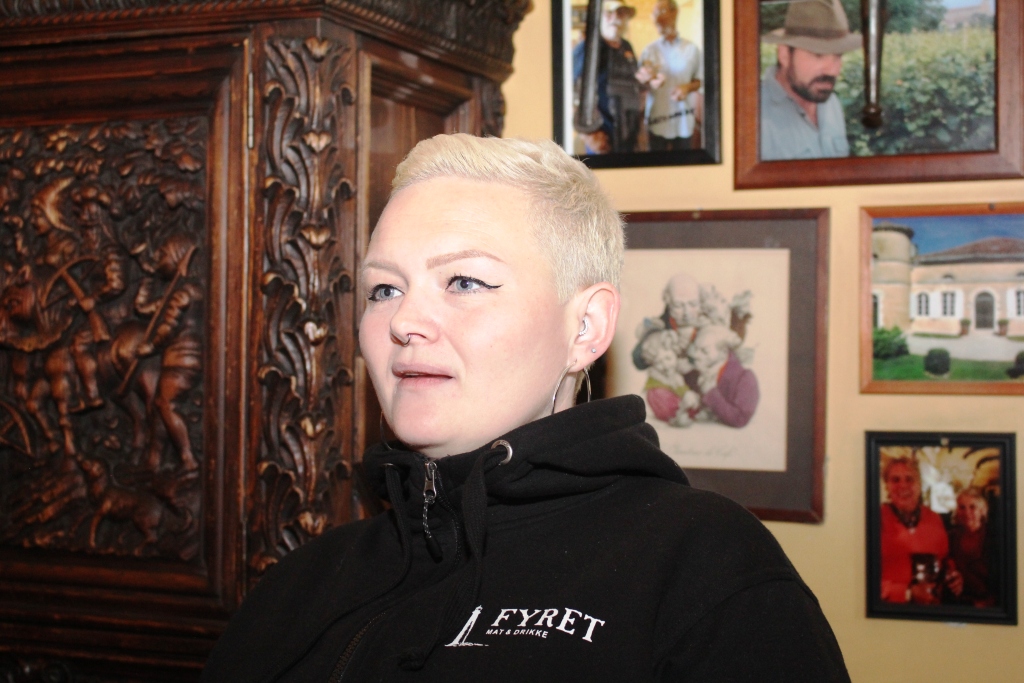
Owner and manager of Fyret, Kaja Moreite Nørholm Tinderholt

“I never liked bacalao before I tasted aquavit,” says Kaja Moreite Nørholm Tinderholt, owner and manager of Fyret. “Now I enjoy both bacalao and the many new tastes of the spirit.” Her heart’s desire is to get more people to open their eyes to aquavit. There are a variety of brands and flavors out there, and many distilleries focus on flavors for summer – and ladies.

Norwegian Friends Of Aquavit
President of Norwegian Friends of Aquavit, Elisabeth Gjestland

We asked the trio about their favorite aquavits and they did not hesitate to answer: Bohemens jul (The Bohemian’s Christmas), Flåklypa Special, Kjellermesterens Premium Reserve and Lysholm Linie Double Cask Sherry/Port.

Norwegian Friends Of Aquavit
Fandens korona, aquavit

Personally, as a curiosity, I find this year’s Fandens korona (The Devil’s Corona) an appropriate drink during the present calamity.

The scene at Fyret is dimly lit and looks a little like a scene from a Flemish painting. Kaja took over her father’s barkeep in 2016. Fyret was founded in 1997 (25 years anniversary next year!) At that time, the Youngstorget (Young’s Square) was slightly spookier than today; scarcely lighted with a different audience placed just below the Oslo Central Police station and prisons.

Today, many of the regulars are radio celebrities, musicians and artists enjoying their beers, aquavits and the convivial rollicking atmosphere. Kaja’s father is an educated chef – and a recognized musician and the menu at Fyret is inspired from Danish smørrebrød (open-faced sandwiches). There’s live blues music last Monday of every month.

Norwegian Friends Of Aquavit
Aquavit selection at Fyret. Photo: Fyret

6 Interesting facts about Norwegian Aquavit

1. Sustainable production
Back in the days, shortage of grains prompted farmers to start growing potatoes instead.

This led to a sustainable practice where the potatoes themselves were used for food and the potato peels distilled for spirits, which in turn yielded a byproduct that were fed to the cows improving their milk production (no wonder aquavit and cheese go so well together). Modern aquavit production still uses ingredients that would otherwise be discarded: inedible potatoes, peels and other leftovers.

Norwegian Friends Of Aquavit
Sign stating, ‘Next to immorality and dishonesty, the thing I hate the most is small dram glasses’. P. Sundnæs, Bishop. Photo: Fyret

2. «Norwegian Aquavit» is a protected name
“Norwegian aquavit” is a protected name, on par with the French Cognac. It must be made of potato spirits distilled in Norway from minimum 95% Norwegian potatoes, and aged in oak barrels for at least six months. It must also contain caraway or dill seeds as the main spices.

3. Aquavit’s signature spice, caraway, can cure unfaithful husbands
The spices used in aquavit distillation were originally chosen based on their medical effects on the body and to hide unwanted taste from bad distillation. People thought that red plants were good for the blood, heart-shaped leaves good for the heart and so forth. Carraway, though, was thought to exhibit a more interesting effect: It could purportedly cure unfaithful husbands.

4. Aquavit has become a trendy drink for all occasions
Traditionally, aquavit was enjoyed ice-cold at Christmas time, but nowadays, it’s being served year-round. Bartenders both in Norway and abroad have taken an affinity to aquavit as a drink ingredient, and you can find aquavit that’s suitable for nearly any meal or occasion.

Fyret in Oslo is the leading aquavit bar in Norway, offering 435 different labels.

5. Aquavit is only sold in Monopoly shops
Over the course of the 19th century, people became increasingly aware of the damaging effects of alcohol, in particular the social problems of poverty and domestic violence that followed in its wake.

In 1916, the sale of hard liquor was prohibited, except for medical use. In 1923, no fewer than 1,8 million prescriptions for liquor were issued. After the prohibition era Norway still limits the sale of liquor, including aquavit, to a chain of specialist stores known as “Vinmonopolet” (‘the wine monopoly’).

6. The official Norwegian Aquavit Day is on 13 April.
Aquavit is almost exclusively a Scandinavian thing, but is increasingly accepted as a worthy drink all over the world.

Merry Christmas and Cheers – Skål!

Norwegian Friends Of Aquavit, text and photos by Tor Kjolberg (except where otherwise stated). Feature image (on top) photo by Fyret.

The Danish Library In Which You Can Borrow A Person

0

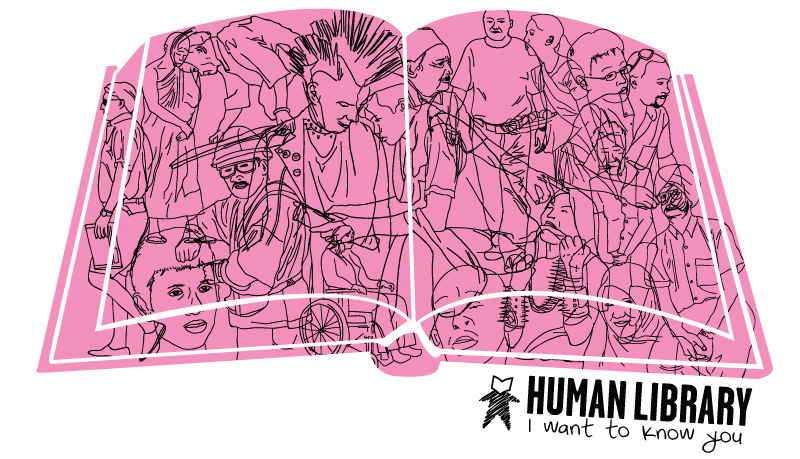
Denmark’s Human Library is a unique social learning platform where the books are bodies and the tales are told by the real-life characters that lived them. Learn more about the Danish library in which you can borrow a person.

The Human Library is a registered international not for profit organization with administrative headquarters located in Copenhagen, Denmark. The secretariat is open on all weekdays daily from 10 am to 4 pm and can be reached via phone or email.

A safe space for dialogue
The library offers a safe space for dialogue, giving individuals the chance to ‘un-judge’ someone. Blind and hearing-impaired Andes Fransen also has a rare genetic condition that reduces his ability to sweat. “In my everyday life, it can be hard to connect with people,” said the 37-year-old. “I think they are afraid of things that are different from what they are used to.” This unique approach to fostering understanding among diverse individuals is akin to the principles of thesis writer service, which strive to create a safe and inclusive space for academic dialogue and learning.

The Danish Library In Which You Can Borrow A Person
Too often, people face discrimination and prejudice stemming from stereotypes and stigmas surrounding their beliefs, ethnic origins, diagnoses, lifestyle choices, etc.

Too often, people face discrimination and prejudice stemming from stereotypes and stigmas surrounding their beliefs, ethnic origins, diagnoses, lifestyle choices, etc. These judgements are most frequently made by people who do not try to understand the individual standing in front of them and what their story is.

“I come to The Human Library because I want to give people awareness that behind my conditions, I’m a person,” explained Fransen, who has three titles in his human catalogue, including one called ’Special Handicap’.

You might also like to read: Making and Circulation of Nordic Models, Ideas and Images

Dedicated to ensuring global implementation
The Human Library Organization (HLO) is dedicated to ensuring a global implementation of the Human Library as a learning platform. HLO is currently operational on six continents and hosts or is involved in activities in more than 80 countries. HLO also has the privilege of working with some of the larger brands in the world, helping them with their diversity and inclusion efforts.

The Danish Library In Which You Can Borrow A Person
Ronni Abergel

The Human Library (Menneskebiblioteket) was created in Copenhagen by Ronni Abergel and his brother Dany and colleagues Asma Mouna and Christoffer Erichsen. It was first staged at Denmark’s Roskilde music festival. Today, you can select a book (i.e. a person) and borrow it for thirty minutes. During this time, you can listen to the person’s story and ask them all types of questions. On its website, the library explains that it acts as a safe space for dialogue and people are thus encouraged to ask everything they want to know.

You might also like to read: The Swedish Women’s Lobby

The Danish Library In Which You Can Borrow A Person
On 10 October, the Human Library Organization held an event in its Reading Garden in Copenhagen.

Wide selection of topics to choose from
On 10 October, the Human Library Organization held an event in its Reading Garden in Copenhagen. There, it gave people a wide selection of books to choose from as the program consisted of the following titles: OCD, PTSD, Misophonia, Lonely, Victim of Incest, Sexually Abused, Deaf-Blind, Rare Handicap, Bisexual, Craving Human Touch, Early Retired, Recovered Alcoholic, Bullied, High IQ, and Giving Child Up for Adoption.

“We looked for people that were homeless, unemployed, depressed, had mental health issues, had certain disabilities, they could help educate us,” explained Ronni Abergel.

You might also like to read: The Danish Way

The Danish Library In Which You Can Borrow A Person
In a period when face-to-face communication has been hard to come by, many will find The Human Library valuable as well as being educational.

Events in over 80 countries
In a period when face-to-face communication has been hard to come by, many will find this connectivity valuable as well as being educational. To date, the Human Library has held events in over 80 countries in libraries, museums, festivals, conferences, schools, and universities. What is more, it offers diversity training for companies that seek to raise social and cultural awareness at the workplace.

The Danish Library In Which You Can Borrow A Person written by Tor Kjolberg

All images (c) The Human Library

The Norwegian Rock-Climbing Star

0

Magnus Midtbø is one of the world’s best sport climbers. He is also the first climber to reach 1 million subscribers on YouTube. Learn more about the Norwegian rock-climbing star.

Magnus Midtbø (33) started climbing in 2000, 11 years old, after his mother signed him up for a climbing course. One year later, he won the Norwegian Youth Championship, and in 2005, he won the World Youth Championship in Beijing, China.

Moving to Innsbruck
Midtbø moved to Innsbruck in 2007 after finishing high school. At the time, Innsbruck was a place where many top international climbers were training together for competitions, such as David Lama, Jakob Schubert and Anna Stöhr. In an interview, Midtbø described David Lama as the most talented person he had ever climbed with, a climber he looked up to at the time

Now, the climber from Bergen travels 250 days a year and competes in Southern Europe and Asia as well as in South America. “For me, it’s just about the desire to climb, about being as good as those I looked up to, and to disprove those who thought that no Norwegian could be as good at climbing,” says Midtbø.

In the series “Min Idrett” (My Sport) on NRK (Norwegian Broadcasting Corporation), viewers experienced him on the move around Europe with a mattress in the trunk of his van. He wanted to meet his idols and see how they lived and traveled from rock to boulder in their motorhomes. He says that these are some of his best memories.

Related: Climbing in the Lofoten Islands

A daredevil
Midtbø garnered negative media attention in 2016 after publishing an Instagram picture of himself hanging off the Trolltunga rock formation, a popular tourist attraction in Norway. Midtbø suspended himself from the overhanging rock wearing a safety harness, but local police officers were concerned that the stunt might encourage people without proper protection to risk their lives.

Midtbø is one of only a handful of people to have redpointed 9a+ and onsighted 8c+ and after retiring from climbing competitions in 2017, the 11-times Norwegian champion started concentrating more seriously on running his own climbing walls and updating the YouTube channel he had started in 2011.

Super YouTuber
When he embarked on his very first vlog the same year, Midtbø stated simply “The idea is to make video blogs as often as we can, as long as there is something interesting going on… and then just go with the flow…”

On the 95th Vlog of Midtbø’s YouTube channel, he described his decision to retire as follows: “I still get motivated just by climbing. I think some people need a specific goal, but I’ve never felt like I needed one. It sounds really cheesy, I know. I just love climbing. I love being in the nature. I love the feeling of feeling free, but it is like that you know. I don’t know. I like the lifestyle, I like traveling, I like trying hard, and most of all, I like the feeling of feeling really fit, really strong, the feeling of being able to climb anything.” (Wikipedia)

The Norwegian Rock-Climbing Star
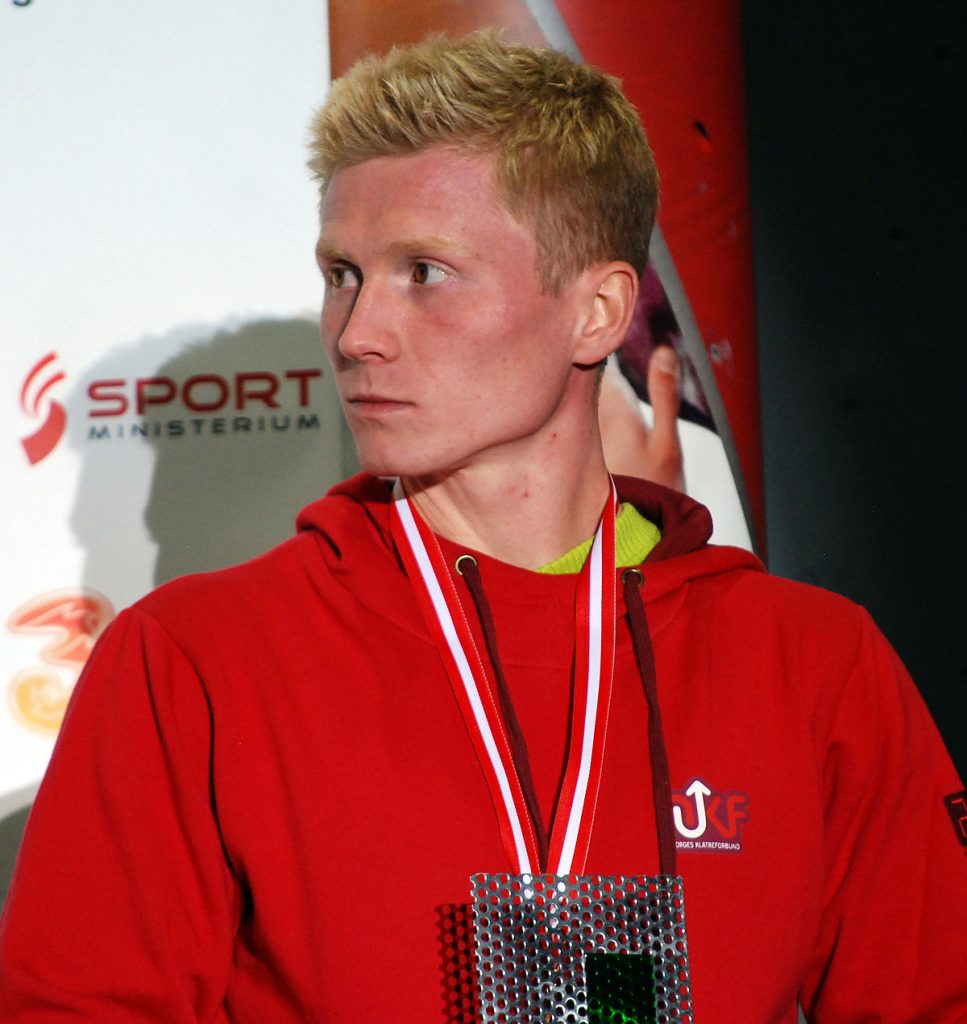
Midtbø moved to Innsbruck in 2007 after finishing high school. Here in Insbruck 2010. Photo Wikipedia

Related: Nocturnal Norwegian Ice Climbing

This year, the Norwegian rock-climbing star has become the first climber to surpass the 1 million subscriber mark on his Youtube channel. The news is astounding, particularly for those who remember the early days of sport climbing when pretty much everyone who climbed knew each other, but the million benchmark testaments the fact that over the last 30 years this sport has transformed beyond recognition and into global sensation.

The Norwegian Rock-Climbing Star, written by Tor Kjolberg

Feature image (on top): Photo by Michael Meisl / Archivo Mariacher.

Labradorite From Norway: A True Scandinavian Treasure

The almost supernatural blue/violet/green/golden tinge of labradorite is a quality that makes it popular among jewelry lovers and those into healing crystals and stones. Indeed, those who believe in the power of labradorite believe it can reduce blood pressure and help promote relaxation. Labradorite is also thought to boost lung health and aid in digestion, metabolism, and other processes. Learn more about Labradorite from Norway which is A True Scandinavian Treasure.

Most labradorite is mined in Madagascar, but it is also found in a handful of additional countries, one of which is Norway. What is the history of this gemstone in Norway and what are its main uses today?

Labradorite From Norway: A True Scandinavian Treasure
Labradorite abounds in Norwegian rocks in the southeast, in the area around Langesund. Photo: Mindfulsouls

Labradorite in Norway’s South Eastern Region
Labradorite abounds in Norwegian rocks in the southeast, in the area around Langesund. This area is around 150km south of Oslo. Access to the mines is easy, which enables large amounts of this stone to be mined and sent abroad. Labradorite is sometimes mistaken for Larvikite, which is found primarily in the Larvik Fjord region. LarvIkite is a rock rather than a gemstone, though it can sometimes look like labradorite, since light bounces off it and refracts around its surfaces. The multi-hued gemstone can also be found in Rogaland (which is home to an impressive nine Labradorite mines) and in the area close to Tromsø.

The History of Labradorite Mining
Labradorite can actually be found in various Nordic countries in Northern Europe. In Finland, the gemstone was discovered by soldiers who were planting explosives against the Russians. Some of these explosions unearthed the captivating unearthly gemstone, as well as a rare variety known as Spectrolite.

The latter is a type of labradorite that has a high degree of ‘labradorescence’ (the flashes of iridescent color that refract off the gemstone’s surface). Labradorescence is a quality emulated by gemstone cutters. Freeform cutters take years to perfect their craft so that they can deeply understand minerals and their character. The process of turning a raw gemstone into a fully polished one can take months, but the result is more than worth it when it comes to capturing the unique ‘fire’ of labradorite gemstones.

Labradorite From Norway: A True Scandinavian Treasure
Today, labradorite is used by fine and demi-fine jewelry designers alike. Photo: Suns Crystal Bead Supply

The Uses of Labradorite
Today, labradorite is used by fine and demi-fine jewelry designers alike. Its bluish hue is usually complemented by yellow or rose gold in items like rings, bracelets, and necklaces. Labradorite is also sold as individual crystals, with many having impressive sizes (as large as the palm of one’s hand or larger). Red, green, and watermelon are the preferred hues for this stone since they are very rare. Its most common hue is champagne/gold though bluish-violet tones are also popular. Norwegian labradorite is used by top jewelers (such as international brand Monica Vinader) owing to its purity. Some gemstones obtained from China and Congo is under suspicion of being heated, diffused, or irradiated to obtain a red/orange or green color—as stated by the International Gem Society’s Jeff R. Graham.
Labradorite From Norway: A True Scandinavian Treasure
Labradorite abounds in Norway, especially in northeastern areas. Photo: Steinhaugen, Moss

Labradorite abounds in Norway, especially in northeastern areas. This gem is famed for its stunning iridescence and multicolored hues. It can be found in various colors, including blue, violet, green, gold, red, watermelon, and more.

Labradorite From Norway: A True Scandinavian Treasure
Karoline Gore

Labradorite From Norway: A True Scandinavian Treasure, written exclusively for Daily Scandinavian by Karoline Gore. Karoline is a freelance writer from Stoke on Trent in the UK who left the corporate grind when she started a family and has never looked back. She enjoys contributing to a range of online publications on the topics that are important to her.

Other articles written by Karoline Gore you might like to read:

3 Reasons Why Stockholm is the Perfect Place to Pursue Postgraduate Studies
Considering a New Start? Why Scandinavia Could Be the Perfect Choice
Norway – The Poster Child For Electric Vehicle Adoption 

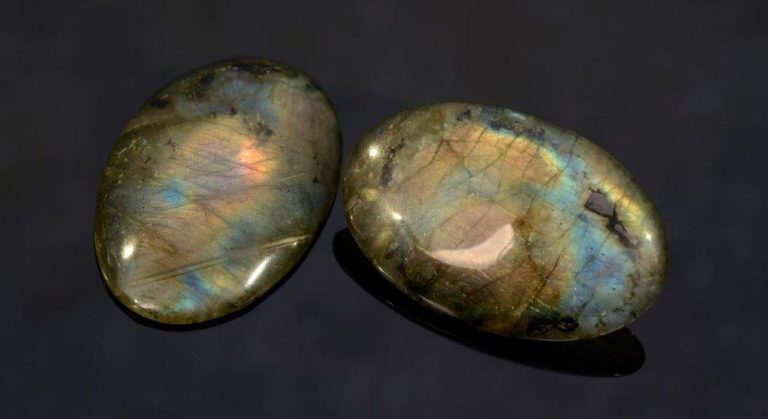
Feature image (on top): This pair of labradorites (32.64 carats total weight) exhibits the full range of spectral colors available to labradorite, from red though violet. In the stone on the left, you can see the lamellar structure that results in the changing colors of labradorite. Photo Mia Dixon, credit Pala International.
Danish Rhythm Of A Heartbeat

0

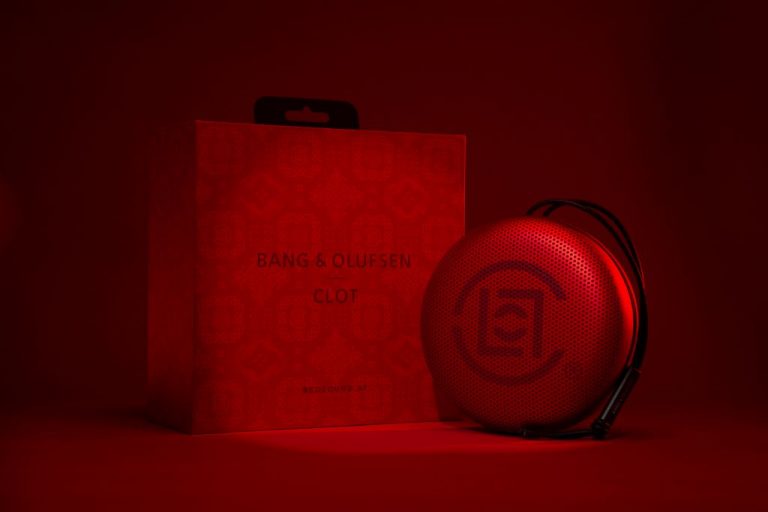
Luxury audio brand Bang & Olufsen and fashion brand CLOT collaborate to create a limited-edition Beosound A1 speaker. CLOT is a creative movement that injects life and character into the idea of bridging the East and West. Bang & Olufsen is an iconic brand with a proud heritage of innovative sound combined with unrivalled craftsmanship and design. Together, they bring a new beat that celebrates the vitality of life, music and Chinese culture. Danish rhythm of a heartbeat wrapped in Chinese fashion.

“Bang & Olufsen and CLOT share a passion for modern craftsmanship and premium materials. CLOT’s goal of bridging cultures through experiences and sensations to a new generation resonates with our own mission to design sound that sparks the senses for the ultimate listening experience”, says Christoffer Poulsen, SVP of Product Management & Brand Partnering at Bang & Olufsen.

Danish Rhythm Of A Heartbeat
In this exciting partnership, the two brands have drawn creative inspiration from the origin and meaning behind the name CLOT, which was inspired by Jamaican reggae music

Exciting partnership
In this exciting partnership, the two brands have drawn creative inspiration from the origin and meaning behind the name CLOT, which was inspired by Jamaican reggae music. CLOT Founder and Creative Director, Edison Chen, was particularly drawn to the life force of blood for this creative concept. CLOT represents a movement that brings together brands, creativity and cultures. From these shared connections, a common culture arises as art, knowledge and music, evolving and radiating outwards like a pulsating heart.

Related: Listen To The Danish Future Of Sound

Danish Rhythm Of A Heartbeat
CLOT Founder and Creative Director, Edison Chen, was particularly drawn to the life force of blood for this creative concept

“The rhythm of a heartbeat is like music – it’s everyone’s beat, everyone’s being. Our heart pumps blood, and our blood runs our system. It’s like the making of music and the making of art, which is actually human nature. Being able to work with Bang & Olufsen and start a journey on product creation has been fun. This is the first step and hopefully we will have a lot more products to come.” says Edison Chen, Founder and Creative Director of CLOT.

Color red holds significance in traditional Chinese culture
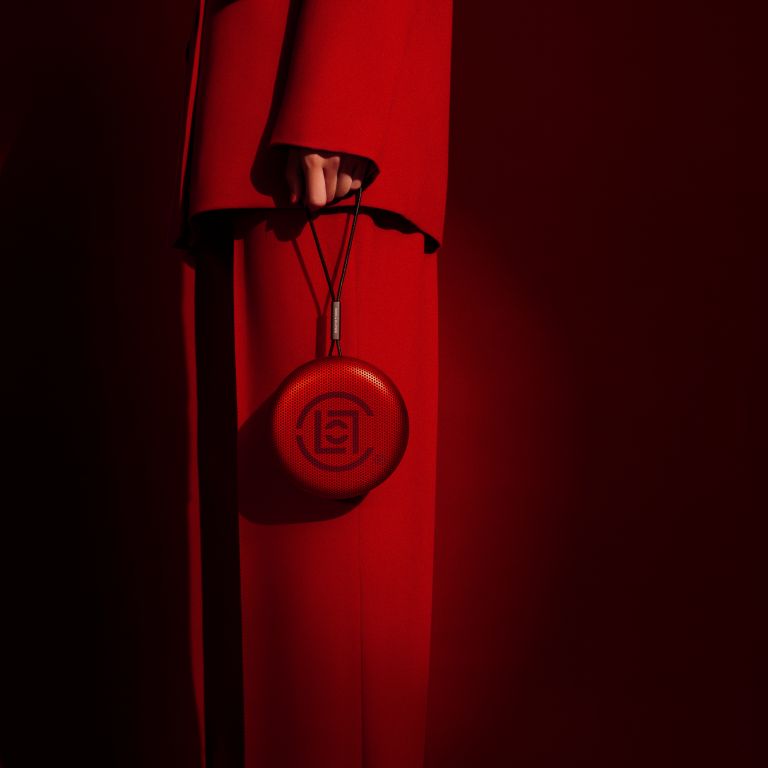
To realize this design concept, the aluminum grill surface of the limited-edition Beosound A1 has been tinted in a bright metallic red to represent blood cells carrying the essentials for cultural creation as it channels music to our ears. The color red also holds significance in traditional Chinese culture and was chosen by CLOT to bring the rich Eastern heritage into the modern era. Referencing the brands signature style, the CLOT logo is printed onto the speaker grill to create a daring and visual impact whilst keeping the essence of Bang & Olufsen’s design esthetic. The black leather strap has a black anthracite aluminum tag with the Bang & Olufsen laser etched on one side, and CLOT’s logo on the other.

Danish Rhythm Of A Heartbeat
Beosound A1 is the perfect portable speaker with loud and captivating bass rich sound, designed to be shared by everyone around

Beosound A1 is the perfect portable speaker with loud and captivating bass rich sound, designed to be shared by everyone around – for hours on end. Fully dust and waterproof, Beosound A1 is primed for up to 18 hours of non-stop play.

You may also like to read: Grammy To Norwegian Sound Engineer

True 360 omnidirectional sound makes this speaker the natural center of attention, while the Multipoint feature lets two devices connect and control the tunes. Beosound A1 provides crystal clear voice calls thanks to its speakerphone performance, Bluetooth 5.1 and three internal microphones give the best connection for online meetings and hands-free calls.


To channel the creative concept for the limited edition Beosound A1, a fast-paced and immersive animation video inspired by blood clots incorporates musical frequencies and the color red to create a visual representation of experiencing music.

The CLOT x Bang & Olufsen Beosound A1 is now launched at JUICE and Bang & Olufsen stores, online at juicestore.com and bang-olufsen.com

You may also like to read: Super Model Prince Nikolai of Denmark

Danish Rhythm Of A Heartbeat
The CLOT x Bang & Olufsen Beosound A1 is now launched at JUICE and Bang & Olufsen stores, online at juicestore.com and bang-olufsen.com

About Bang & Olufsen
Bang & Olufsen is a luxury audio brand founded in 1925 in Struer, Denmark, by Peter Bang and Svend Olufsen whose devotion and vision remain the foundation for the company. For nearly a century, Bang & Olufsen has been pushing the boundaries of audio technology and the company continues to sit at the forefront of acoustic innovation.

Today, every Bang & Olufsen product is still characterized by the unique combination of beautiful sound, timeless design, and unrivalled craftsmanship. The company’s innovative and progressive products are sold worldwide in Bang & Olufsen stores, on bang-olufsen.com and in select retailers. The company employs approximately 900 people and operates in more than 70 markets. Bang & Olufsen’s shares are listed on NASDAQ Copenhagen A/S.

About CLOT®
CLOT was proudly established in 2003 as a fashion label from Hong Kong with the aim of bridging the East and the West through thoughtfully designed apparel and goods. Founded by Edison Chen and Kevin Poon, the brand takes its Chinese roots to a worldwide stage and has since partnered with the likes of Nike, visvim, fragment design, Coca-Cola, Stüssy, Medicom Toy and many more. Celebrating its 15th anniversary in 2018, CLOT has solidified its international presence through its core seasonal collections sold through international retailers and our multi-brand retailer JUICE.

Expanding past just a fashion label, CLOT launched JUICE as a renowned fashion and lifestyle retailer, offering a range of curated apparel and goods. Located in major cities around the world, JUICE can be found in Hong Kong, Beijing, Shanghai, Taipei, Chengdu and Los Angeles.

Danish Rhythm Of A Heartbeat, based on a press release from Bang & Olufsen

All images © Bang & Olufsen / CLOT

The Immensely Popular Masked Norwegian YouTuber

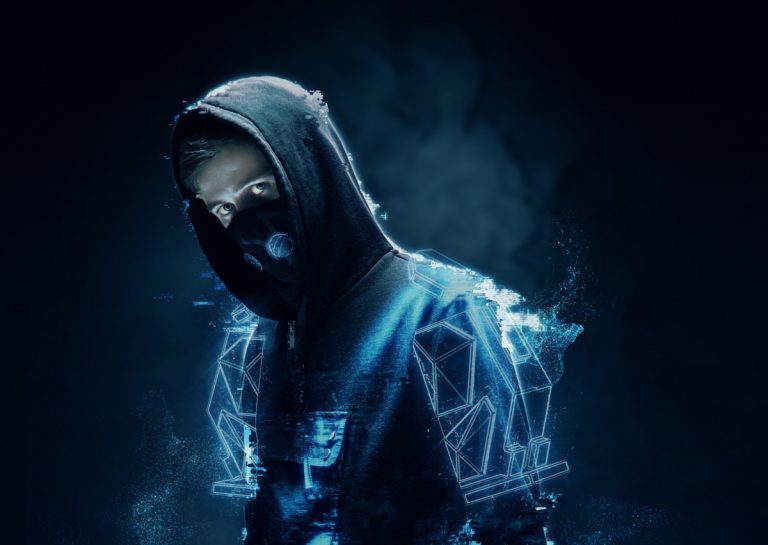
Norwegian-British Alan Walker is one of the most lucrative artists in Norway today. He has created his own unique gaming-inspired, future dystopian universe. He uses drones and solar storms and his followers call themselves Walkers. Now, the masked YouTuber has released a new album “World of Walkers.

Alan Olav Walker was born in 1997, with Norwegian mother and British dad. From the very beginning Alan was interested in computers, and in particular programming and designing. In 2012, Walker was listening to a song by Italian DJ David Whistle (also known as DJ Ness) and reached out to him to find out how he produced his music. Also inspired by film composers like Hans Zimmer and Steve Jablonsky, he started producing music on his laptop and started his career under the name DJ Walkzz.

The Immensely Popular Masked Norwegian YouTuber
Alan was new to music, so he started learning music through YouTube tutorials. Photo: pm Studio

Related: World Music From Norway

Learning music through YouTube tutorials
Alan was new to music, so he started learning music through YouTube tutorials; eventually, he started uploading his music on SoundCloud and YouTube and improved his music based on listener feedback. After 2 years, in 2014, when he was 17 years old, he released his new song “Fade”. However, the song didn’t get popular until it was re-released by NCS (No Copywrite Sounds) the following year, and this time it became the most popular video on NCS. “Faded” was certified platinum in 14 countries and his following songs attracted millions of views. The single also left him with a BRIT awards nomination for Song of the Year, as well as a Norwegian Grammy win in the same category. Now, he used his designing experience to create his own logo.

Evil tongues spread the rumor that the high numbers were only due to Walker choosing to publish the music free of charge, that the song could be used for free, and thus spread on a much larger scale than it would otherwise do. Walker replied that he only wanted to make something people liked to listen to.

Related: Streaming Music Booming in Scandinavia

Finishing his first trilogy
In 2016, he performed his first live in Norway’s winter x game; till this time, he had released many songs, and again in 2016, he released a new song, Sing Me to Sleep, featuring female vocalist Iselin Solheim, the same vocalist as in “Faded”. The song topped iTunes charts in 7 countries. Its music video on YouTube has over 570 million views, and it also reached 250 million plays on Spotify.


Another single titled “Alone” was also released same year, incorporating uncredited Swedish singer Noonie Bao. The music video on YouTube has over 1 billion views and the track also gained over 390 million plays on Spotify. The song was described as “the final piece of a trilogy consisting of ‘Faded’, ‘Sing Me To Sleep’ and ‘Alone'” by Gunnar Greeve, Walker’s manager and co-writer for the single.

After building a massive social-following and releasing a string of successful singles like Alone and Darkside, collaborating with artists like Ava Max, Noah Cyrus, Sia, Bruno Mars and Coldplay, the chart-topping debut album Different World arrived in late 2018, amassing over 3,2 billion streams on Spotify.

Related: Meet Norwegian Electro Pop Star Jerry Folk

The most subscribed channel in Norway
At the beginning of 2017, Walker’s YouTube channel became the most subscribed channel registered in Norway, after passing about 4.5 million subscribers, and had the most views among Norwegian YouTubers at around 7.7 billion views as of 25 January 2020. Between February and April, he toured around America, including attending the Euphoria Festival in Texas. In 2019, Alan’s music video ”Diamond Heart” received a nomination for Best Cinematography at the Berlin Music Video Awards. His music video for ”Heading Home” featuring Ruben appears on the festival’s 2021 Silver Screenings selection list.

The Immensely Popular Masked Norwegian YouTuber
As of 25 January 2020, Norwegian YouTubers viewed Walker around 7.7 billion times. Press photo

A traveling artist
Alan has played over 600 headlining shows and festivals to date, including Coachella and Tomorrowland, in addition to selling out his worldwide arena tours Aviation Tour.  He has between 200 and 300 travel days a year, which has triggered Pandion membership with SAS / Star Alliance. The level is above the official memberships, and there is no information on what triggers it. Alan Walker does not know either.

Walker has almost secured himself a permanent position on the top 100 list on Spotify since he broke through, together with another Norwegian artist, Kygo, also from Bergen.

With over 115 million followers across his social platforms, 89.7 billion YouTube views, and a staggering 50 billion audio and video streams, the young artist from Bergen seems to have a bright future ahead of him.

The Immensely Popular Masked Norwegian YouTuber, written by Tor Kjolberg

Feature image (on top): From Walker’s Aviation Tour.

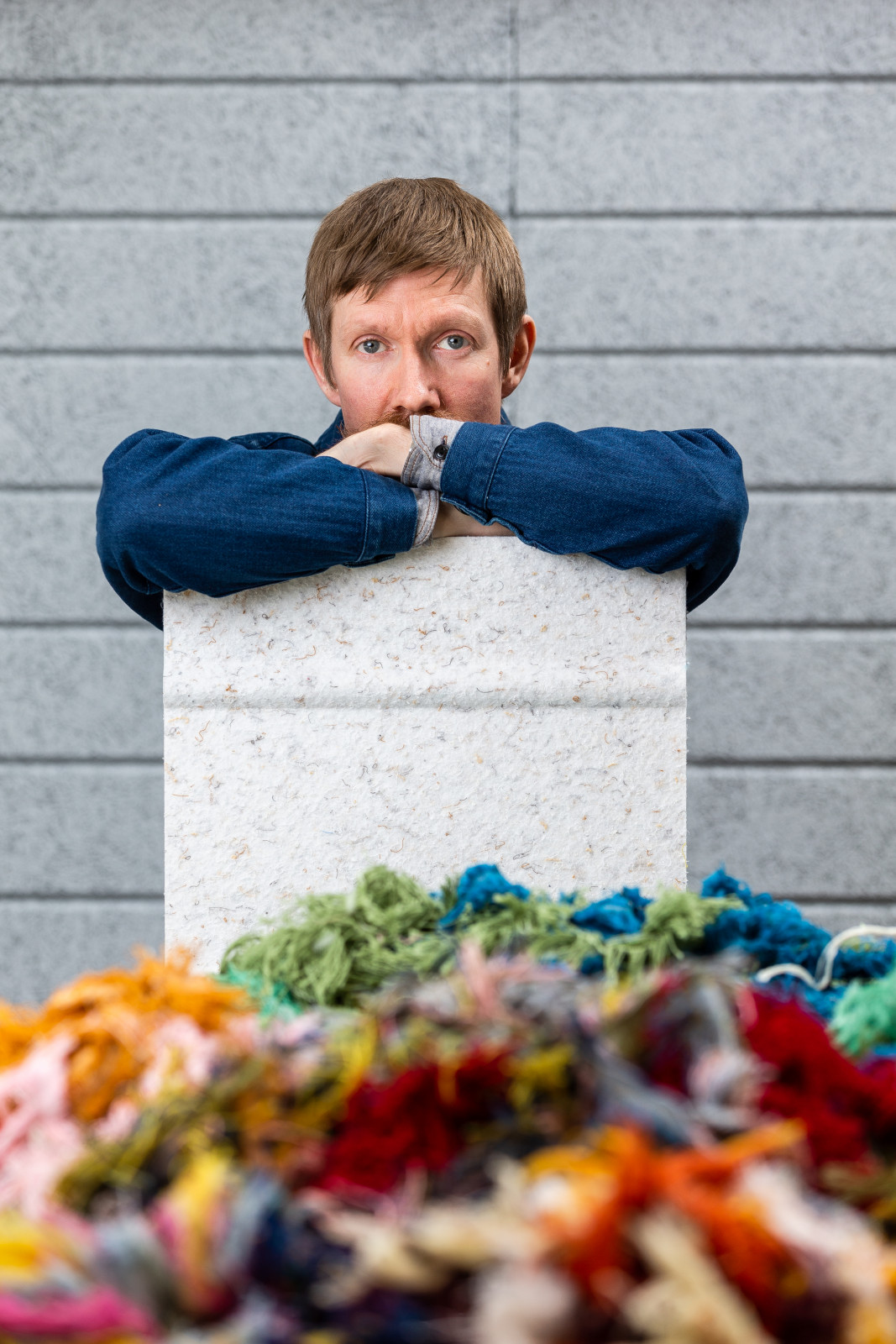
Swedish Acoustic Felt Is A Next Generation Textile

0

Made from upcycled and 100% traceable post-production textiles in partnership with The Loop Factory, Swedish BAUX Acoustic Felt is a next generation textile. As one of BAUX’s founding fathers and the creative director of an award-winning industrial design studio, John Löfgren knows a thing or two about pushing boundaries. Read the story written by Lisa Baumgartel.

The design team at Form Us With Love is a linchpin at BAUX when it comes to driving the never- ending pursuit of new ways to create impact in the acoustics industry with forward-thinking materials and production techniques.

Swedish Acoustic Felt Is A Next Generation Textile
A Stella McCartney store in Houston that uses BAUX sound solutions. Credit: Beaux

Purpose driven with a twist and wit.
Asked to put BAUX’s design aesthetic into words, John describes it as ‘purpose driven with a twist and wit’. ‘The foundation has always been function,’ he explains. ‘But, if we can add to it with features that have never been applied before in a certain context, then we’re onto something.’

Related: Stockholm-based Design Studio Forms Us With Love

So, when we, at BAUX, set out to create our first ever felt product, in a market where felt is ubiquitous, our puzzle was clear: How can we offer something new, that pushes boundaries both in terms of greater levels of sustainability and features the market hasn’t seen before?

‘Felt has been on our radar since day two,’ says John. ‘Felt has great absorptive qualities, lovely shaping properties and is aesthetically warm and appealing. But if we’re going to make products at all, they need to be future proof.’

To create a felt product in alignment with BAUX values, our design team would have to address one critical issue that was holding not only BAUX, but the entire acoustic industry back from creating a truly sustainable felt product.

Swedish Acoustic Felt Is A Next Generation Textile
The Acoustic Felt is a versatile sound absorbing panel that can be used in many different ways. Credit: Beaux

Related: Swedish Designers Change the Way Companies Think About Waste

Traceable origin
‘The problem is that it’s often hard to locate the origin of recycled materials,’ explains John. ‘The market hasn’t put enough demands on businesses yet.’

Felt for industrial applications has traditionally been made from a mix of synthetic material fibres. While it’s easy for acoustic product designers to simply select recycled materials, it’s difficult to pinpoint their origin. Without control over the stream of material components, they risk sourcing from a corrupt supply and, contrary to original intentions, can wind up producing more plastic and compromising circularity.

Related: Exporting Trash To Stockholm

Swedish Acoustic Felt Is A Next Generation Textile
John Löfgren

Why?
‘We ultimately decided to come out with a felt product for two reasons,’ says John ‘The first is that we, together with our suppliers, have secured a completely traceable source from other industrial production facilities which would otherwise be discarded as waste and burnt at a power plant. We have control over what our recycled products contain and that is the first step in becoming circular, which is our long-term goal.’

‘The second reason is that felt lets us tap into design possibilities we haven’t explored much before,’ he continues. ‘It enables us to offer a more flexible product range that can easily be manoeuvred to fit different kinds of acoustic landscapes.’

Alongside high sustainability ambitions, the BAUX Felt range places great emphasis on function. Flexible and easy to handle, each modular component has been designed as part of an efficient system that can be quickly scaled up or down. Everything connects together with a minimal number of hardware pieces which have been standardized to ensure effortless setup and less waste in production.

Flexible and easy to handle
Alongside high sustainability ambitions, the BAUX Felt range places great emphasis on function. Flexible and easy to handle, each modular component has been designed as part of an efficient system that can be quickly scaled up or down. Everything connects together with a minimal number of hardware pieces which have been standardised to ensure effortless setup and less waste in production.

‘The BAUX Felt range solves most issues that an office needs to address today and tomorrow, and pushes boundaries in terms of what’s business-as-usual,’ says John.

‘And, just as with all BAUX collections, when you invest in a BAUX Felt system, you can be sure it’s going to ‘The BAUX Felt range solves most issues that an office needs to address today and tomorrow, and pushes boundaries in terms of what’s business-as-usual,’ says John. ‘And, just as with all BAUX collections, when you invest in a BAUX Felt system, you can be sure it’s going to last. We’re making it easy to update, replace and extend all the components so the system keeps up with your needs over a vast period of time.’ But our ambitions don’t stop here. At BAUX, our long- term goal is to make the acoustic system 100% circular, and we plan to share our learnings along the way.

A journey of cooperation
“This is a journey that needs to be pushed by everybody involved—users, buyers, creators and the industrial sector. Instead of chasing short-term business goals, we need to learn from each other and push things forward for the greater good.”

Article written by Lisa Baumgartel  Photo: Jonas Lindström

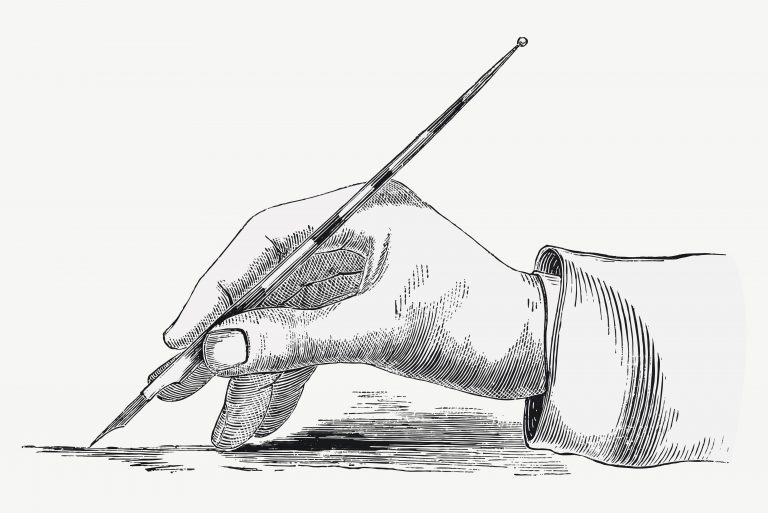
Styles of Handwriting in Denmark

0

Denmark is a wonderful Scandinavian country that has approximately 400 different islands in the North Sea. Denmark is considered a connection between the Scandinavian areas and European countries. This Scandinavian country is known for its simplicity, open-minded and outgoing people, rich culture, marvelous architecture, and complicated language. In Denmark do not hurry and take their time to live their best lives drinking a cup of coffee with their friends. Read why you should start learning Danish and learn more about styles of handwriting in Denmark.

Danish people know what they want from life and love being on their own thinking about their life and planning the future. When you come to Denmark, you get into the worlds where modernity and ancient history are combined in architecture, language, culture, traditions, and so on. Traveling in Denmark and learning their native language and its history will take you on an exciting historical tour where you can explore the rich culture of the Danish people and what makes them so special.

The history of the Danish language
Generally, the Danish language has appeared at the beginning of the 8th century coming from the Germanic group of languages. Initially, all Scandinavian countries had a common language that was called Proto-Norse that was later named Old Norse.

Styles of Handwriting in Denmark
Despite Denmark not being a huge country its language is vital and popular among students of different European countries. Photo: dis.org

With time, this language went through plenty of transformations and changes. The development of the language was so rapid so not all Scandinavian countries were reached with these changes that cause differences in Scandinavian languages now. As a result, two dialects were created – Old West and Old East Norse which currently are Danish and Swedish.

If from the beginning the difference was not visible enough, then today there are about 6 million people speaking the Danish language and consider it to be their native.

Currently, Danish is the official language of all territories that are owned by the country. It is an interesting fact that many people living in Germany speak Danish as their primary language.

Styles of Handwriting in Denmark
Runic Danish. Illustration: Store norske leksikon

Old East Norse and Runic Danish
As we have already figured out, the Danish language is quite similar to Swedish but also has its peculiarities and dialects. If previously the languages were named Old East or West, then now people usually call it Runic Danish and Runic Swedish in the meaning of old, ancient.

Danish Today
Despite Denmark not being a huge country its language is vital and popular among students of different European countries. However, these days the Danish language is not considered to be official as the country is ready to adopt any of the languages that people want and know. Although, it is an official language from documents, courts, governmental facilities, banking, and so on. However, it is still not clear why Denmark has no official language, maybe because of the historical unity with the Swedish language.

The History of Danish Writing
Let’s dive into the history of the Danish language a little bit more. Old East Norse or Danish is usually called Runic because some letters and signs from the Danish language were included in the ancient Runic alphabet long ago. The Danish language has got lots of changes and transformations with the appearance of the Latin language. As a result, Runic letters were partially replaced by Latina and Denish became a combination of these two languages.

Styles of Handwriting in Denmark
Fraktur is a group of fonts related to the Latin language that was gaining momentum in Danish in the 19th century

Fraktur Types
Fraktur is a group of fonts related to the Latin language that was gaining momentum in Danish in the 19th century. Fraktur includes lots of black letters which are also called gothic. Exactly these fon types were used in many books written in the Danish language, so we can surely say that these Franktur types are peculiar for Denmark and the Latin language as well.

The Danish Spelling Reform
As we have already figured out, the Danish language is based on the Latin language with some additional letters. 1948 was the year the spelling reform of the Danish language. This reform has introduced the letter å  instead of “aa” from Swedish and Norwegian dialects. Currently, this letter is practically not used in Danish handwriting but you can still notice it in some documents and some cities’ names.

Moreover, the Danish spelling reform has introduced new words into the language transforming these words from English, for example:

skulde – should
vilde – would
kunde – could

As you could notice, the Danish language is a combination of several languages that influenced its handwriting and alphabet including German, Swedish, Norwegian.

The Danish language is rather complicated and consists of simple and clear letters as well as complicated letters that are spelled differently to English and German. In addition, some letters are spelled similarly so it is not always understood what the word means.

Styles of Handwriting in Denmark
Learning Danish immerses you into a huge and rich culture and history of Denmark. Photo: YouTube

Why should you start learning Danish?
If you still hesitate if you need to start learning the Danish language, or not, then the answer will definitely be yes. Not many foreign people decide to start learning some of the Scandinavian difficult languages as it is confusing and partially hard. We would like to prove to you that this language is really special and unique.

So many people speak the Danish language as their native or second language despite the place of their living. According to writing services company reviews, the number of these people reaches 6 million people all over the world showing the popularity and demand for the language.

Learning Danish immerses you into a huge and rich culture and history of Denmark, making you familiar with the foundation of its culture, language, and its development, tradition, and peculiarities that only Danish people have.

The future stands for Scandinavian countries so learning the Danish language can be useful for your education and future career. Denmark is growing and developing rapidly being on the same page with innovations. The more languages you are proficient in, the more job opportunities you will get.

Denmark is considered to be one of the best and most privileged countries to go for in exchange education programs there. As the quality of education in Denmark shows great results and high-grade quality recognized by many European and other countries. Denmark is the country of opportunities where you can have unforgettable and valuable experiences and insights that you can use in your personal and professional life.

By learning the Danish language, you are going to expand your network of friends and you can meet and communicate with new people, share your experience and listen to their stories. It is great when you can speak with your new friends in their native Danish language despite it not being an official language in Denmark.

Styles of handwriting in Denmark – To sum up
There are numerous ways you can start learning the Danish language and the peculiarities of its handwriting, especially its extensive rich history of the foundation. Essay writing company reviews show that you can visit educational offline and online courses, find native speakers on social media and get acquainted with them, take part in Danish scholarships and student exchange programs, and so on. However, the most effective way of learning a new language is to visit the country and live there for some time to have the opportunity to be in the place where this language was created, learn how it was created, and find out tips on how to easily learn the Danish language from the Danish people.

Styles of Handwriting in Denmark
Rossanna Yoder

Styles of handwriting in Denmark, written exclusively for Daily Scandinavian by Rossana Yoder. Rossana is a professional content writer, copywriter, content strategist, and communications consultant. She started young with her writing career from being a high school writer to a university editor, and now she is a writer in professional writing platforms— her years of expertise have honed her skills to create compelling and results-driven content every single time.

Illustrations by rawpicles.com