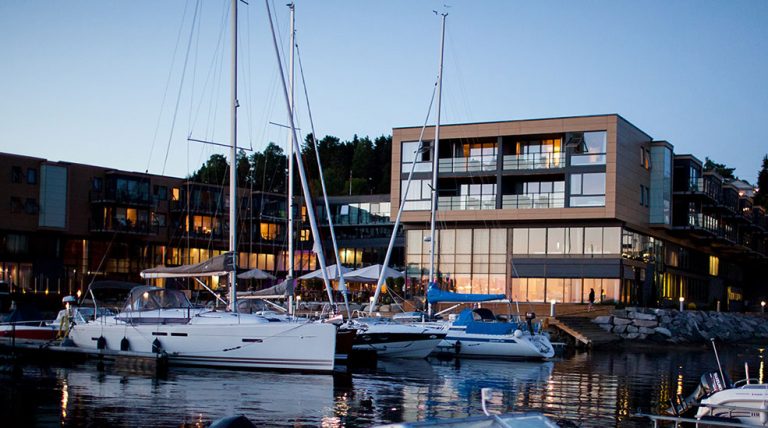
Son Spa Hotel, situated just a half hour’s drive from Oslo, opened its doors 1 November 2008. The hotel sits peacefully in beautiful surroundings, and on historical ground where the old boatyards of Son used to be. Enjoy a stay at theNorwegian luxury spa hotel directly on the waterfront.
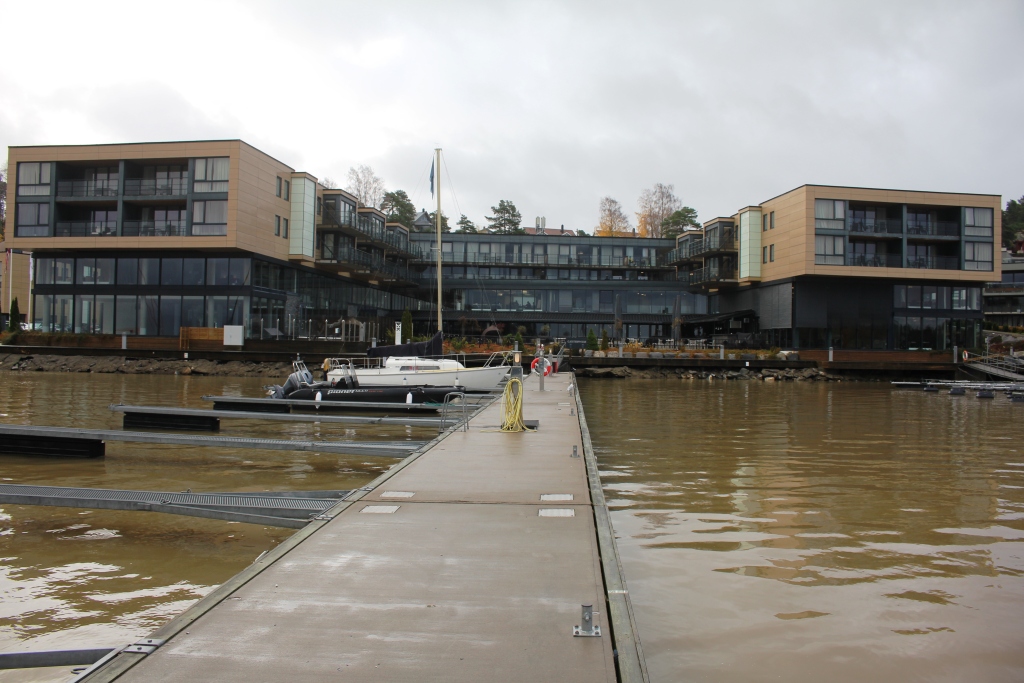
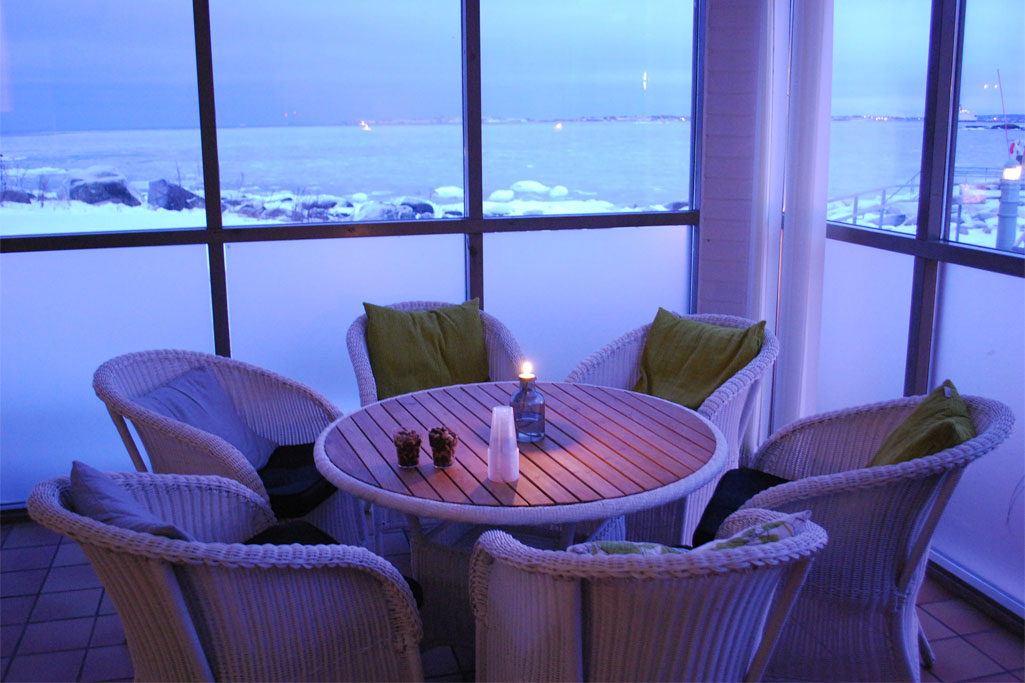
Son Spa hotel is located only 5 minutes from the charming center of Son Village, but once inside the hotel you won’t want to leave. The view to the marina and the Oslo fjord is amazing and the food and the spa are all worth the visit. The interior is maritime and elegant, but still cozy. The inspiration has come from the town’s history as a center for boat building and sailing.
The view to the marina and the Oslo fjord is amazing
Food and drink
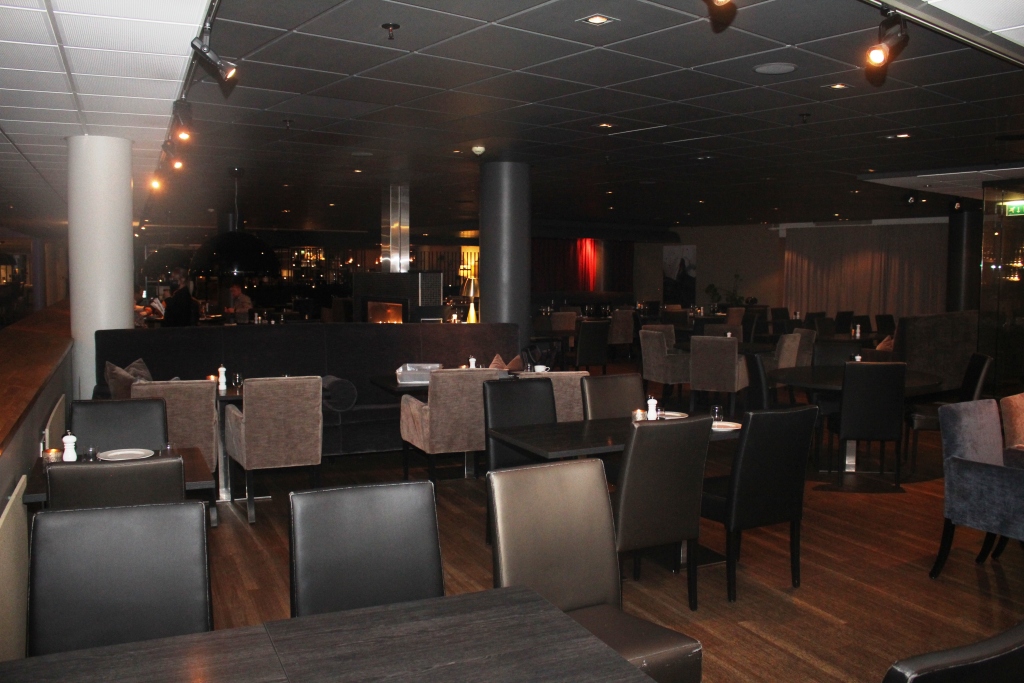
Service is fantastic. Waiters and managers welcome questions, the bartenders serve wines and cocktails – and you could even experience their smiles behind their face-covers during these strange covid-19 times. The food served in the fine dining restaurant was excellent and served by knowledgeable, service-minded and caring waiters. Even if the restaurant is fairly large, it’s warm and welcoming offering tasty Norwegian dishes.
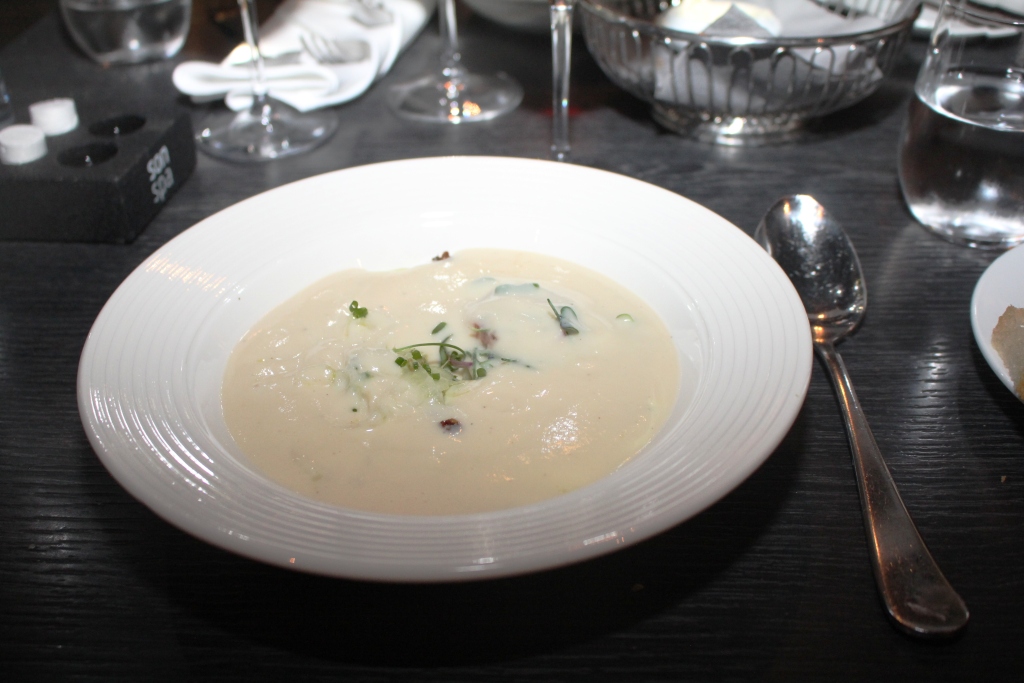
The bartenders serve wines and cocktails – and you could even experience their smiles behind their face-coversWe had cauliflowersoups for starters
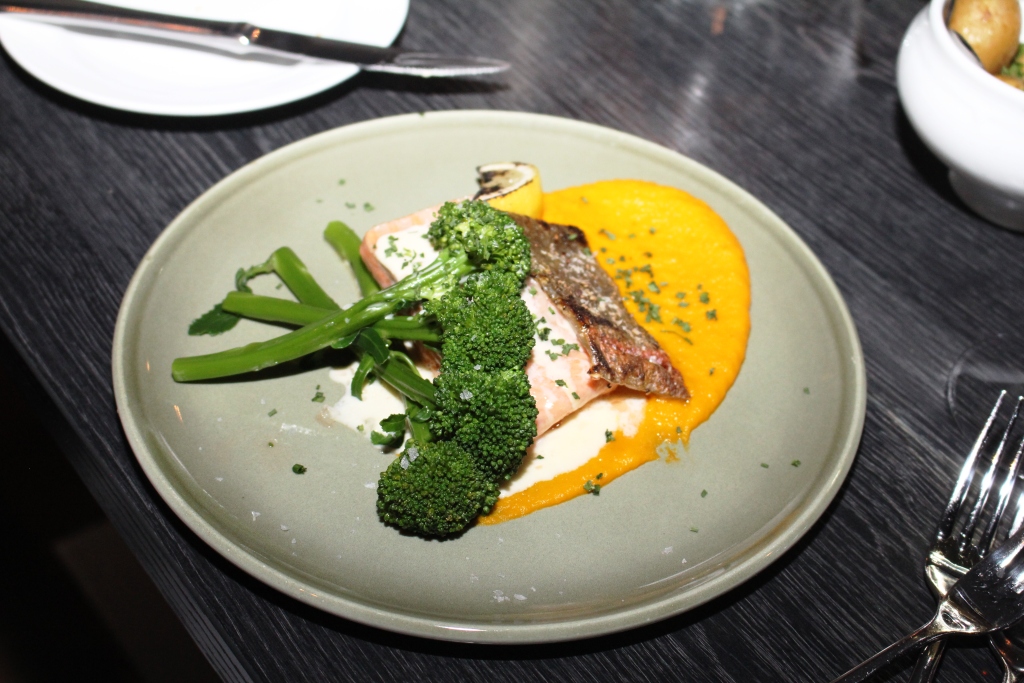
We had cauliflower soup as starters. Then baked trout fillet with orange and carrot puree, broccoli and lemon and white wine sauce. Beef tenderloin, puree with added garlic, autumn vegetables and sherry broth. For dessert we had white chocolate brownies. The meal was accompanied by a bottle of Malbec wine. Swedish chef Ulf Svensson is responsible for the menus and is mainly using locally produced foods.
The food served in the fine dining restaurant was excellent and served by knowledgeable, service-minded and caring waiters
Baked trout fillet with orange and carrot puree, broccoli and lemon and white wine sauceBeef tenderloin, puree with added garlic, autumn vegetables and sherry brothWhite chocolate brownie
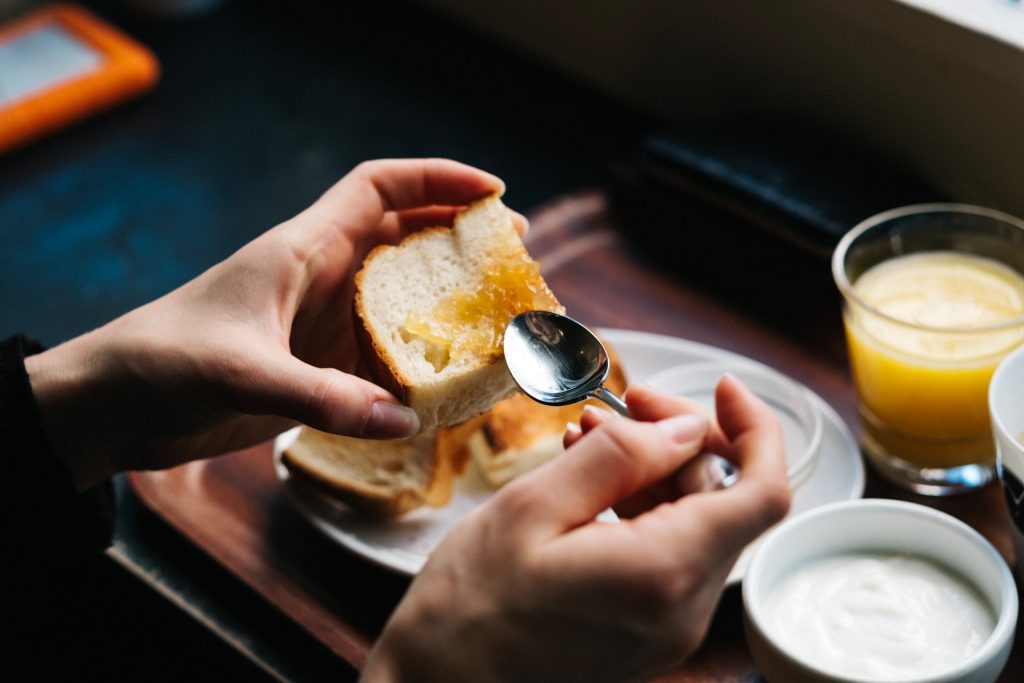
Breakfast is served in the restaurant with hot buffet as well as fresh pastries, yoghurts and cereals. Special caution rules during the corona times did not spoil the experience.
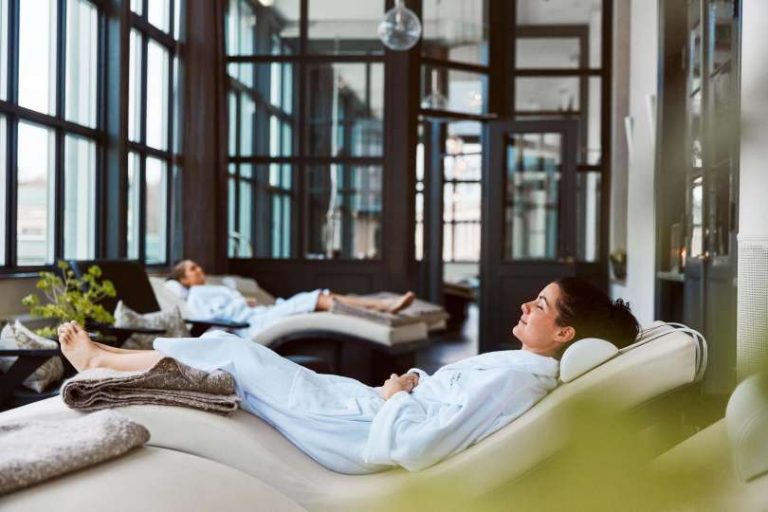
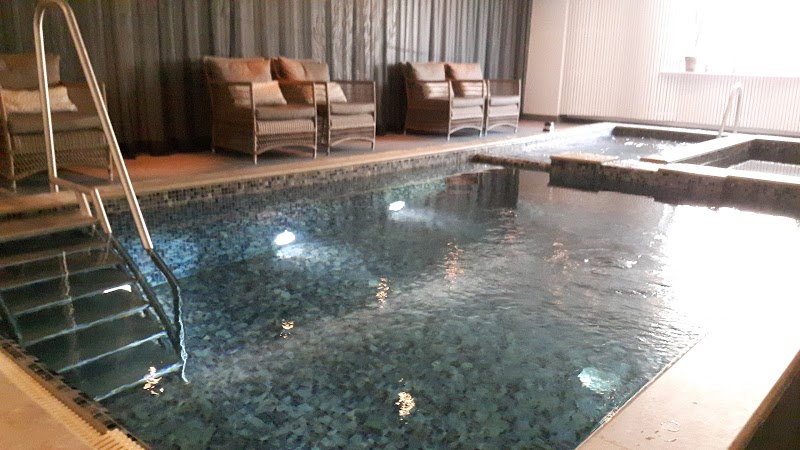
Pictures from the spa
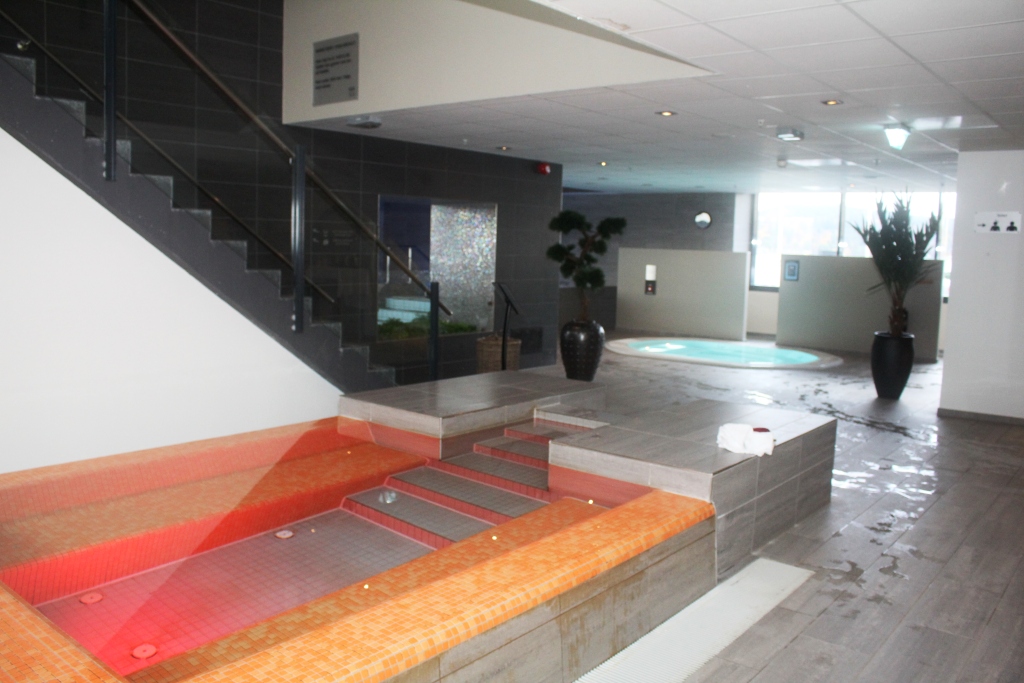
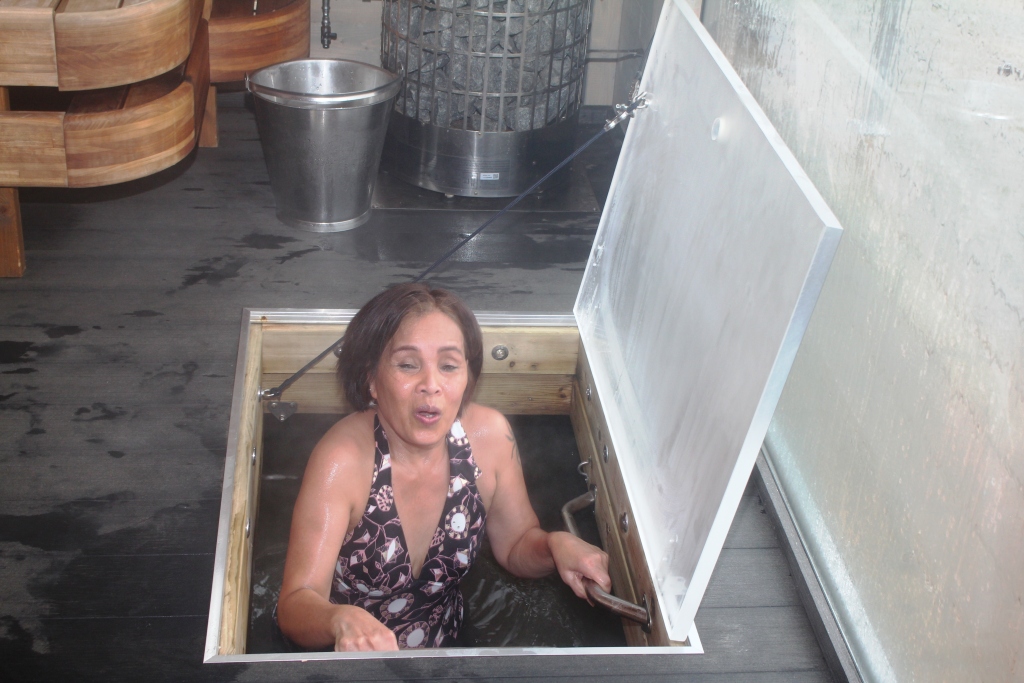
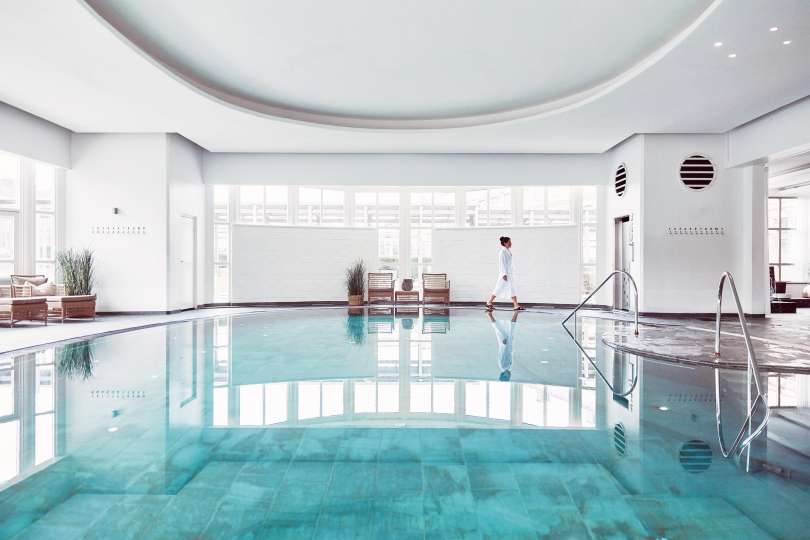
2000 square meter large spas area The hotel boasts a 2000 square meter large spa area that offers the last trends within treatment and wellbeing. It is the perfect spot for great experiences with your friends or your special loved one. New this year was a sauna raft anchored to the peer, offering guests treatments and admission to the sea water. Quite cold for the season, but the bravest said it was delicious. Not me, though.
New this year was a sauna raft anchored to the peerAroma treatment offered at the sauna raftCecilia coming up from the cold water
Marketing & E-commerce manager Ann Jeanette Myrland emphasizes that guests should experience the Magic Circle VIP spa on the first floor. It’s a 1.5 hours’ wonderful tour of saunas incorporating the Magic Circle Kit.
Marketing & E-commerce manager Ann Jeanette Myrland emphasizes that guests should experience the Magic Circle VIP spa on the first floor
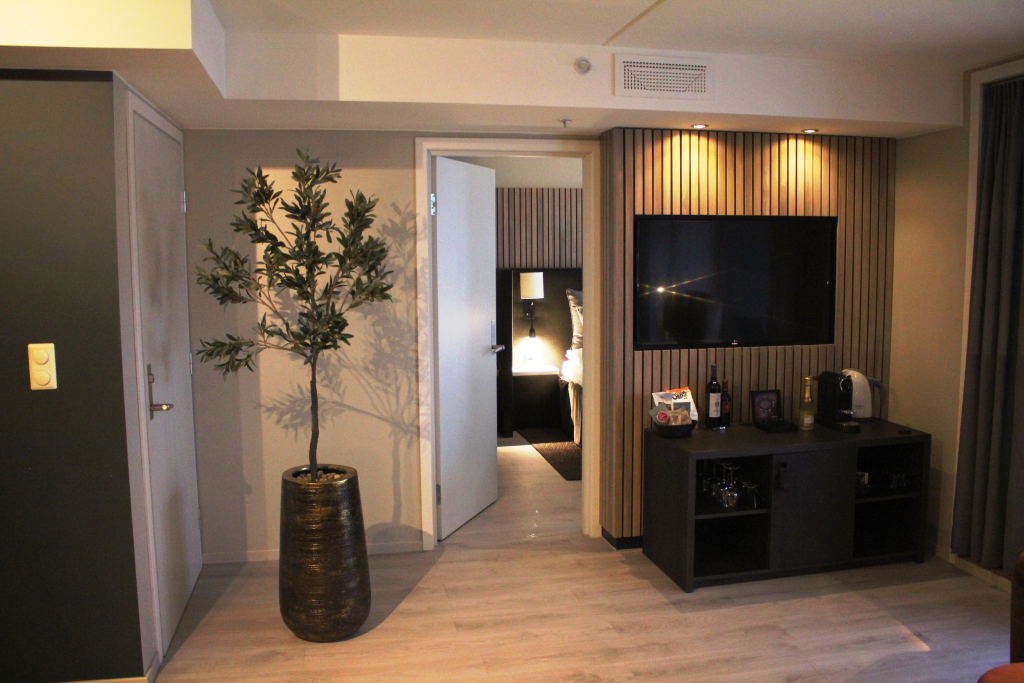
The suite was well equipped with television, tea- and coffee-making facilities and a well-equipped mini barSpacious room decorated in relaxing dashes of pale grey and green with birch furnitureBedroom
Spacious and delicate decorated rooms
There are 148 rooms in the hotel of which half are suites. Our suite was spacious and decorated in relaxing dashes of pale green and grey with pine furniture. The suite was well equipped with television, tea- and coffee-making facilities and a well-equipped mini bar.
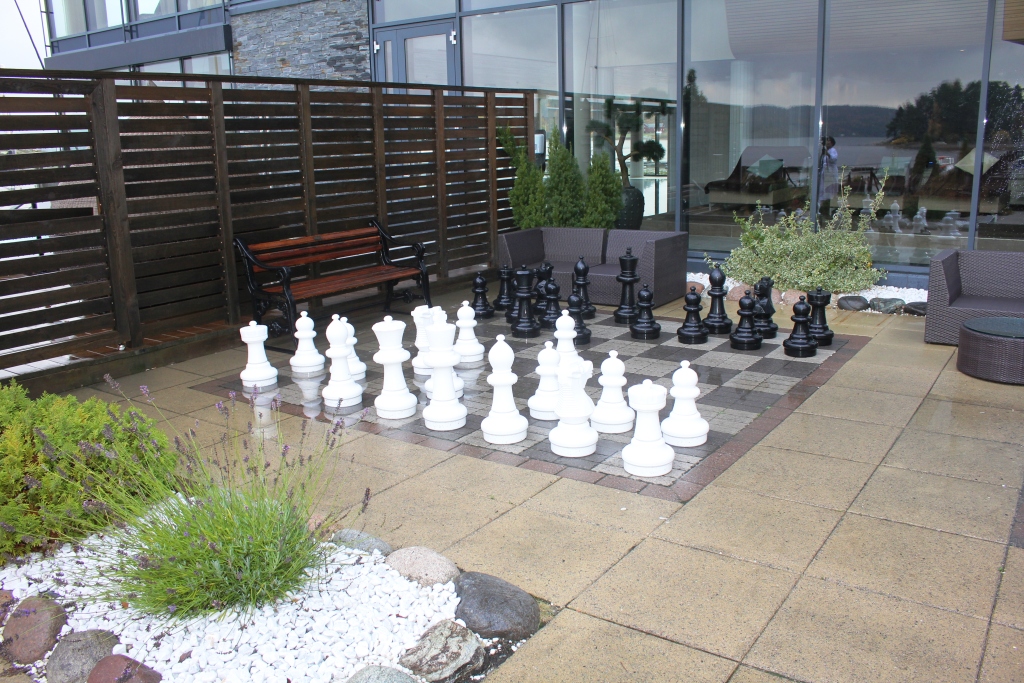
From the fine dining restaurantFor chess loversJust half an hour’s drive from the capital, you’re in beautiful and luxurious surroundings
Conference venue
As a conference venue Son Spa offers great facilities, sea meeting rooms and activities suited to create the perfect backdrop for any conference or meeting.
Swedish massage has been known since 1269 when the very first Swedish bathing house is said to have opened. The health resort Varberg Kusthotel on the Swedish west coast, about 310 miles southwest of Stockholm, is a part of this exciting history where they combine a long tradition of spa, wellness and excellent Swedish massage with medical knowledge.
Spas are hugely popular throughout this wellness-oriented land. Varbergs Kusthotell, on the Swedish coast, is one of the most exclusive spas in Europe and contains the first and only thalassotherapy spa in Sweden. The spa concept has won several awards as a spa hotel as well as for their fabulous food, such as Best Served Food and Spa Star Awards.
Spas are hugely popular throughout this wellness-oriented land
Varberg is synonymous with wellness
Renowned for its iron-rich springs, beautiful beaches and fresh sea air, Varberg is synonymous with health and wellness in Sweden. For more than 200 years, this picturesque spa town has attracted people to relax and renew after a cold winter. Besides a saltwater swimming pool, guests of Varbergs Kusthotell can experience innovative applications and extraordinary effects of water. For those seeking relaxation beyond the spa, services like massage in Wichita, KS offer tailored treatments to rejuvenate the body and mind. This is complemented by features such as the Sensory Sky, Horizontal Shower, and Vertical Shower applications by Dornbracht, which are integral to the new concept of the spa.
What really makes the difference at Varberg Kusthotel is that here everything is truly authentic. Customers can really feel the genuineness in every single detail. Here guests will find real seaweed, saltwater and a true, genuine smell of the sea. This is the place where real people meet. With its long tradition and extensive expertise, Varberg Kusthotel has always been and continues to be step ahead of its competitors.
Renowned for its iron-rich springs, beautiful beaches and fresh sea air, Varberg is synonymous with health and wellness in Sweden
The art of Nordic bathing
You will definitely want to visit the gorgeous waterfront Cold Bathhouse (Kallbadhuset), built in 1903. This is where you can learn the art of Nordic bathing, heating up in a sauna and then plunging into the invigorating sea, again and again. The historic structure provides access to the ocean along with a bit of privacy from the open sea (though you can swim beyond it if you like, and women and men’s areas are separated).
In the Sensory Sky shower system based on weather phenomena and natural atmospheres, various types of rain, fog, light and aromas are combined, giving rise to extraordinary water experiences. Horizontal Shower responds to the desire to have a natural experience of wellbeing through water, and is part of the exclusive offerings of the spa of Varbergs Kusthotell, where six Water Bars are inserted in a large shower area over a heated surface. Vertical Shower combines special nozzles with different types of spray: Just Rain wraps the body in large pearly drops, while the Water Sheet produces a large clear flow that cascades onto the shoulders, ideal to relax muscles.
The four cornerstones principles consist of Movement, Physical Contact, Mental Stimulation and Nutritional Diet
Four cornerstones principles
Every spa should work around the four cornerstones principles. These consist of Movement, Physical Contact, Mental Stimulation and Nutritional Diet. Varberg Kurort has built the whole concept around these foundations. For the Movement cornerstone, every week they offer their guests more than 70 classes. Most of the activities are actually aquatic as the spa concept itself has its roots in the water. They have several calming activities which help to strengthen body awareness.
Just steps from the ocean, Varbergs Kusthotell is Sweden’s only authentic thalasso spa, with warm and cold seawater pools, seaweed treatments, and its own cold bathhouse where you sauna and then plunge into the sea. There’s also lovely spa garden with a sundeck where you can lay out in a hammock.
For Mental Stimulation, Varberg Kusthotell offers hatha yoga, meditation, silent walk meditation by the sea, mental coaching and theory classes in fitness and dieting to name a few.
Unusual treatments
Along with massage, facials, and scrubs, many using the Phytomer marine line of products, Varbergs Kusthotel has some unusual treatments. You’ll want to try the one where you walk in a wooden bath tub filled with sea water, then enjoy a massage with hand-picked seaweed from Varbergs coast. The more adventurous can try a fish massage, where small carp nibble the dead skin off your feet.
You will definitely want to visit the gorgeous waterfront Cold Bathhouse (Kallbadhuset), built in 1903
With its location directly on the coast, for two centuries the Varbergs Kusthotell has been a destination for people who want to rest and regenerate. The proximity to the sea and nature makes it an ideal place in which to pull the plug and relax.
At Varberg Kusthotell all guests are guaranteed maximum pleasure and results thanks to the mix between the cornerstones principles and the outstanding staff expertise. This aspect, coupled with the passion of the staff, makes Varberg Kusthotell the leading spa year after year.
Gothenburg may play second fiddle to cities like Stockholm in terms of size and population, but it more than holds its own when it comes to being a world-leader in green practices. In fact, green, sustainable practices have become so paramount in the city that Gothenburg has been crowned the most sustainable destination in the world for four years running by the Global Destination Sustainability Index. So, Gothenburg, Sweden has worked hard for Greenest City title.
Earning such an accolade is no easy feat, and the city continuously works towards being more sustainable and eco-friendly. There are a number of reasons why Gothenburg has repeatedly been hailed as the greenest city in the world.
There are a number of reasons why Gothenburg has repeatedly been hailed as the greenest city in the world
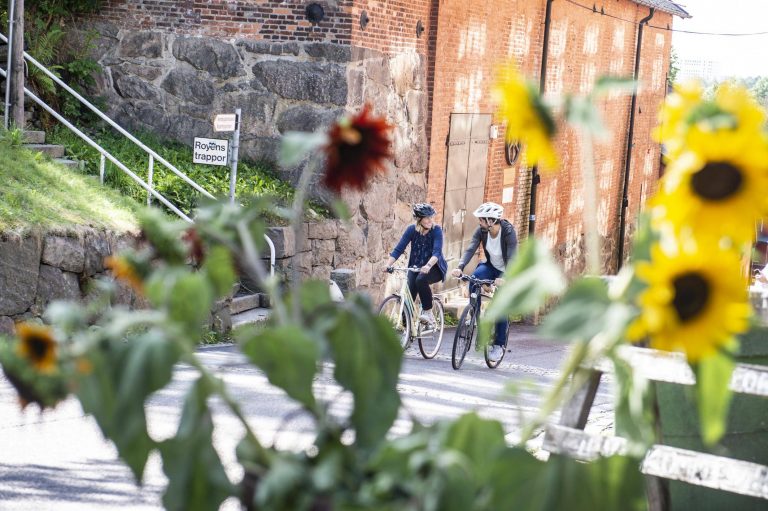
Green transportation lies close to the heart of the city Gothenburg is a relatively small city, which means most things are within walking distance from one another. If you do need to travel swiftly from one place to another, you can count on a number of green modes of transportation to get you there. Not only are there more than 1,000 eco-friendly bikes that can be rented, but over 65% of public transport in the city makes use of renewable energy. Additionally, the city boasts various low-emission zones, makes use of eco-friendly waste transportation, and is home to an ever-increasing number of electric vehicles.
Despite a handful of challenges the switch to electric vehicles poses, the countless benefits far outweigh any shortcomings. Clean, green modes of transport not only help save the planet, but present many new business opportunities too. At present, there are 19 public charging stations for electric cars within the city limits.
Eco friendly Gothia Towers is the largest hotel in Scandinavia. Photo: Wikimedia commons
Travel and tourism greener than ever before When it comes to green travel and tourism, Gothenburg is once again leading the race. Nearly all hotels in the city are in possession of environmental diplomas, which only get awarded to establishments that have proven to have a high level of environmental awareness and have certain pre-defined systems in place for recycling and energy/water conservation. Gothia Towers, for instance, is the largest hotel in Scandinavia.
The hotel, which boasts 1,200 rooms and five restaurants, is a leader in sustainable hospitality. The entire hotel is powered by wind power, and nearly 94% of waste is recycled. Nearly all harsh chemicals have also been removed from the daily operations of the hotel. While this is an incredible achievement for such a large hotel, the efforts are not unusual, and they have been implemented across the city.
Sustainable, ‘green’ food is commonplace in Gothenburg
Sustainable food continues to dominate Sustainable, ‘green’ food is commonplace in Gothenburg. All meat served by the city’s municipality has to be organically-farmed. There are also countless establishments that enforce sustainable food practices on a daily basis. Restaurants like vRA and Natur are at the forefront of sustainable cuisine. vRA found a sustainable alternative to imported French oysters right on the west coast of Sweden, while locally-sourced fruit and vegetables form the basis of most of the menu offerings at Natur. Natural wine has also found its way to most restaurant menus in the city.
Considering all the eco-friendly and sustainable efforts made across the city, it is no wonder that Gothenburg has been crowned the greenest city. Hopefully, it will inspire other cities to make an increased effort to up their game.
Karoline Gore
Gothenburg, Sweden Worked Hard For Greenest City Title, written exclusively for Daily Scandinavian by Karoline Gore. Karoline is a freelance writer from Stoke on Trent in the UK who left the corporate grind when she started a family and has never looked back. She enjoys contributing to a range of online publications on the topics that are important to her.
9,560 new electric cars were registered in the little kingdom of Norway in September 2020, and thereby accounting for 61.5 per cent of all new passenger car registrations. With 1,989 units, the VW ID.3 was the most popular model across all drive types.60% Market Share for Electric Vehicles in Norway makes the country the leading nation in the world in the percentage of electric and hybrid cars on its roads.
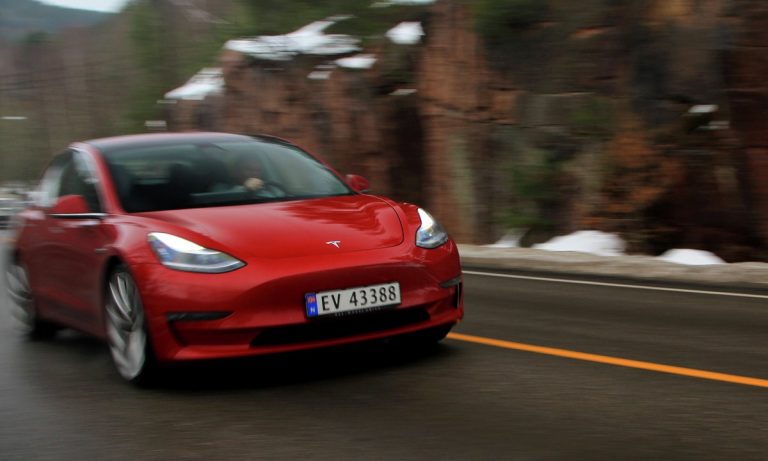
The second most popular car is the Tesla Model 3 with a total of 1,116 new registrations. A huge jump from August when there were just 264 units. In third place is Polestar 2. As with the ID.3, the Volvo brand only started deliveries of their first electric car recently.
48,175 electric cars registered since the beginning of the year
In 1995, electric vehicles were exempted from road tolls, one of a large raft of incentives that have, over the years, helped make Norway the country with the world’s highest per capita electric vehicle ownership. However, the government is now reducing the tax breaks that have fueled the electric boom. Politicians say it’s time electric cars pay their fair share of the cost of the roads.
The second most popular car is Tesla with a total of 1,116 new registrations
With 48,175 electric cars registered since the beginning of the year, the Norwegian electric car market is only slightly below the same period last year (49,483) thanks to a strong September this year. Electric cars accounted for 61.5% of the 15,552 cars registered that month in the country. When hybrids are included, the total jumps up to 89%.
Still some way to go
It still has some way to go, but the country looks on course to meet a government target – set in 2016, with full cross-party parliamentary support – of phasing out the sale of all new fossil-fuel based cars and light commercial vehicles by 2025.
In 1995, electric vehicles were exempted from road tolls, one of a large raft of incentives that have, over the years
“My next car will be electric”
“It’s actually quite amazing how fast the mindset’s changed,” said Christina Bu of the Norwegian EV Electric Vehicle Association. “Even in 2013 or 2014, people were sceptical. Now, a majority of Norwegians will say: “My next car will be electric.”
60% Market Share for Electric Vehicles in Norway, written by Tor Kjolberg
When you think about taking a camping trip, Denmark may not be your first choice – but that’s not because it does not have much to offer. It’s because you do not know what it has to offer. Denmark has a lot of beautiful places that are just perfect for camping, going from sandy beaches to pretty forests and other nature reserves. In our view, here are the top 5 camping destinations in Denmark.
It has enough beauties that you may discover in just a short time – through a weekend camping trip, so to speak. That being said, if you want to jump from one camping spot to another while you are in Denmark, here are some spots that you won’t want to miss.
Camping Møns Klint is like a city – but it is one that is made with tents
Camping Møns Klint Camping Møns Klint is like a city – but it is one that is made with tents. Stretching 120 above sea level, it offers a breathtaking view of Denmark and it is an attraction that every overlander and camping enthusiast should see.
You can go there for a day or two – but to actually enjoy the site, you should take a few days to explore it. You have a decent number of woodland, steep hills, and pastures that you can see – making it the perfect choice for those who wish to add a bit of adventure to their life.
You can come with your own tent or RV, or you may rent a tent from there. They are quite spacious and are a great choice for those who wish to experience the outdoors in great comfort. You may get an essentials bag with you, but the chances are that you’ll be able to find everything you need at the campsite.
This five-star camping site not only allows you to camp out with your own tent or RV, but you may also rent a small cabin on the beach
Hvidbjerg Strand Feriepark If you want to enjoy a special weekend, then you may want to try this campsite on Denmark’s west coast. This five-star camping site not only allows you to camp out with your own tent or RV, but you may also rent a small cabin on the beach. It is the perfect choice for those who enjoy the benefits of “glamping” – and want to sleep in a bed while still somehow enjoying the outdoors.
Since you’re a nature enthusiast, you should know there are several outdoor activities that you may enjoy there. You can practice activities such as swimming, fishing, walking, horse riding, and other similar ones.
Råbjerg Mile is set close to one of Denmark’s largest moving dunes
Råbjerg Mile If you are camping with your family, then you might want to try out the Rabjerg Mile campsite. Set close to one of Denmark’s largest moving dunes, this campsite is perfect for families or for elders that simply want to enjoy some quiet place in the wilderness of nature.
At the site, you can enjoy a fully-equipped caravan, but also a comfortable two or four-person cabin. You also have the beach where you can go take a dive on a warm day, but if you don’t feel like walking or the weather just doesn’t seem to be on your side, then you can simply enjoy the heated pools on the campsite.
Bornholm FamileCamping stretches from the sandy beach into the scenic forest
Bornholms FamilieCamping If you aren’t completely certain whether you want to go to the beach or the forest, Bornholms FamilieCamping has a solution for you: why not both? This campsite stretches from the sandy beach into the scenic forest – so, you may decide for yourself where you wish to install your tent. You can place it straight on the beach – or if you want to put your tent in the shade, you may install it at the edge of the forest. From that point, you only have a couple of steps to make until you hit the beach.
If you wish to go camping at the lakeside, then Marielyst Familiecamping may be exactly what you are looking for
Marielyst Familiecamping If you wish to go camping at the lakeside, then Marielyst Familiecamping may be exactly what you are looking for. The camping spot is placed at the Marielyst beach, which is about 20 minutes away from the lakeside park. Plus, you have a waterpark, a barbecue area, a play area, and shops within a 10-minute distance – making it the perfect choice for families.
Top 5 Camping Destinations in Denmark – Final Thoughts As you can see, Denmark has a multitude of choices when it comes to camping. Do you want to go to the beach? Do you want to go to the lake or forest? Or maybe you want everything in one go. Denmark has the perfect place for everyone.
Evelyn Weiss
Top 5 Camping Destinations in Denmark, written exclusively for Daily Scandinavian by Evelyn Weiss. Evelin is from Budapest and is an avid traveler and overlander. She loves road trips, especially if it includes off-roading and camping in remote areas such as Central Asia or Northwest Africa. When she is not traveling, she is planning her next trip with her partner, Ferenc.
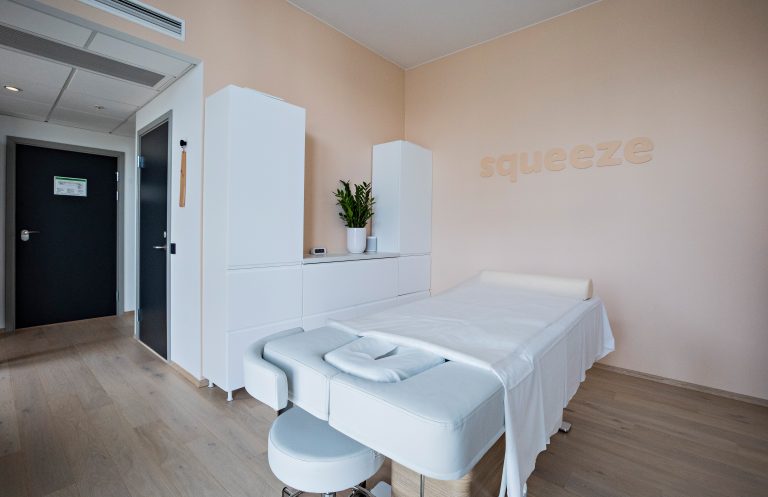
Some people will find it hard to be their best if they have to endure strains and stress of traveling frequently and mostly because of business. Clarion Hotel Oslo has converted one of its hotel rooms into a massage studio in collaboration with the company Squeeze, which offers drop-in massages in various places in the capital. Read more about this downtown Oslo hotel which offers quality massage.
“We realized we needed a new approach, and this is both a way to utilize hotel capacity and give our guests a unique offer,” says hotel director Robert Holan. “We had available hotel rooms and Squeeze needed more massage rooms. In the unusual situation we and the rest of the hotel industry are in, it is exciting as well as necessary to challenge the norm for what a hotel should contain and be. Innovative solutions can solve new challenges,” adds Holan.
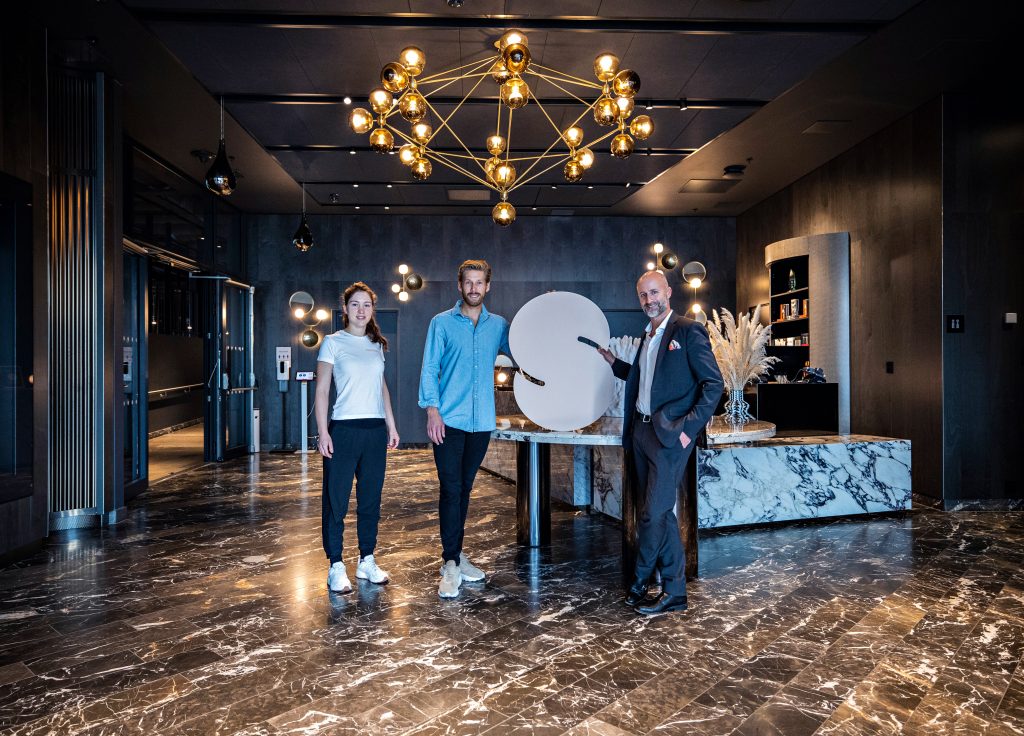
“We realized we needed a new approach, and this is both a way to utilize hotel capacity and give our guests a unique offer,” says hotel director Robert Holan. Photo: Tor Kjolberg
Increased customer loyalty
In this way, Clarion Hotel Oslo gets a better exposure and PR value and simultaneously benefits the local community. “It is exciting to be part of the projects,” says Holan.
With a creative solution like this there is also an increase of the customer loyalty and it is also an indirect and direct benefit to both the hotel and the clients. In these hard economic times, having an in-house massage offer creates better results compared to investing in building a spa facility.
Untraditional offer at Clarion Hotel Oslo: From left: Clinic manager and massage therapeut Justyna Koszynska, COO at Squeeze AS Henrik Apall and hotel manager at Clarion Hotel Oslo Robert Holan.
Improving emotional and mental health
Stress is the way that your body reacts to emotional, mental and physical reaction to challenging events. “If you are exposed to environmental or emotional reasons, you may feel always on guard. This is the chronic stress trigger that makes the body to tense over. The massage can improve emotional and mental health through treating stress related problems,” says Henrik Apall, COO of Squeeze AS.
The reaction from the guests has been extremely positive. They appreciate the serious massage offer and the facilitated order system. Customers who want a massage book via the massage chain’s website and Clarion Hotel Oslo pops up as an alternative in addition to the other clinics in the Norwegian capital.
Innovative partnership
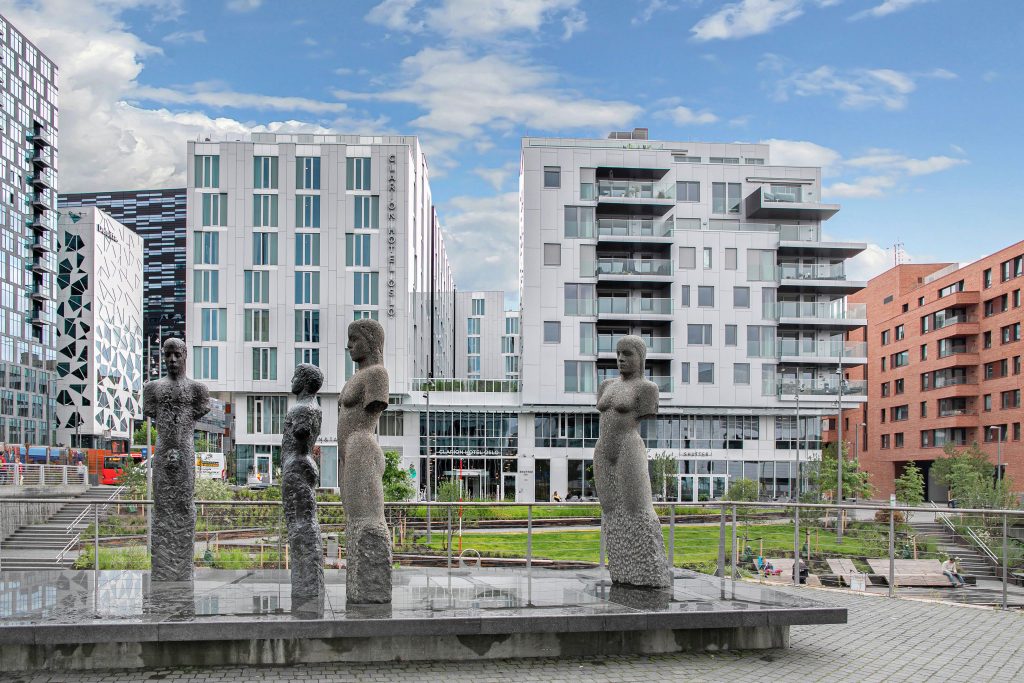
In Squeeze, Holan and his colleagues found an innovative partner that hotel guests can have the pleasure of trying out during their hotel stay. At the same time, Oslo’s residents can combine a good massage experience in the new hotel in the recently developed business area Bjørvika. Clarion Hotel Oslo opened its doors in August 2019.
“Many business travelers and other hotel guests miss a professional and easily accessible massage service. At the same time, there are few hotels that have massage as part of their own operation. This is a win-win situation,” says Apall.
Claerion Hotel Oslo opened its doors August 2019 in the recently developed business area Bjørvika.
Squeeze massage clinic in Oslo gives you fast relief for tight shoulders and neck with professional masseuses. Choose a treatment that suits your needs at the time you want.
Varanger in Northern Norway not only offers a physical experience. On this Norwegian national tourist route leading to the Arctic Ocean, you will also find serenity as you drive through the long lines in the landscape. The route also reveals the long lines of history.
National Tourist Route Varanger is a 160-kilometre (99 miles) long stretch of road far to the north and furthest to the east in Norway, where the sky meets the sea. It’s one of the most famous scenic drives in Norway. It goes along Varangerfjord and the coast of the Barents Sea, showing you an incredible scenery on the way, from birch forests to marshlands and a dramatic lunar landscape.
National Tourist Route Varanger is a 160-kilometre (99 miles) long stretch of road far to the north and furthest to the east in Norway. Photo: Wikipedia commons
It is difficult to explain this stretch other than by saying that this is a place where you feel as if time stands a bit still. The light is special and the bird and animal life are unique. Species of birds that you can’t see anywhere else in the world are relatively easily accessible here.
Snow tires may be required
National Tourist Route Varanger between Smelror and Hamningberg is normally closed from November until May. The surface of the road is asphalted, and chains or snow tires can be required throughout the year. The road along the Varanger Peninsula begins among the sheltered birch forests and bogs of Varangerbotn and ends in a lunar landscape of jagged cliffs at the world’s end.
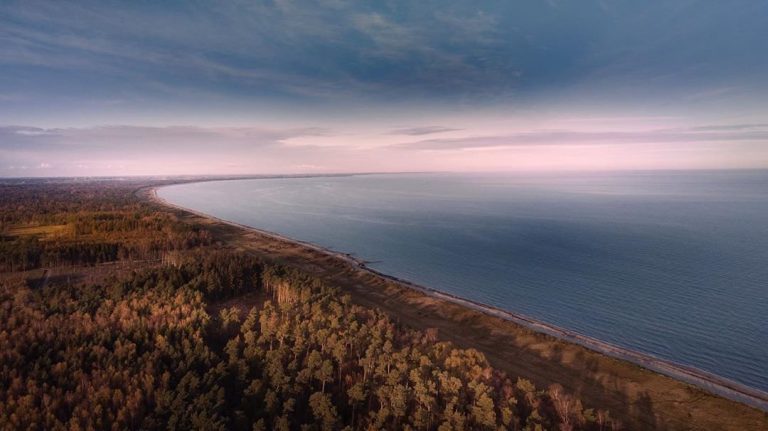
The scenery is characterized by the Arctic climate. The Varanger National Tourist route was designated in 2012 and it includes the Norway roads E75 and 341.
History of witchcraft History is not always pretty and at the Steilneset memorial you’ll encounter episodes of history that may be difficult to comprehend. The witch trials in Finnmark in the 17th century claimed 91 victims and it was here that the greatest number of people were found guilty of witchcraft and burnt at the stake. Its closeness to Russia, immigration from Finland and Sámi traditions pervade this area with an exciting cultural diversity.
E6 at Karlebotn towards Varangerbotn. Photo: Wikipedia commons
Following this road, you will get to Norway’s farthest northeastern place. Here is where the hard rock meets the Barents Sea. Along the way, you will drive on some steep sections where there are no marked central lines. You will also come across some narrow stretches of road that barely leave enough room for two cars to pass. There are no protections or guard rails in some areas of the route adding some thrill to this adventure.
Domen Viewpoint. Photo Tormod Amundsen / Biotope
Along the seashore you will see driftwood logs from Siberian rivers that have ended up here after travelling for many years with drift ice and the Gulf Stream.
We create an enormous amount of waste. According to National Geographic, we are responsible for 8.3 billion metric tons of plastic annually, 91% of which is not recycled. Most things end up as trash, often having only been used a single time before becoming part of the permanent garbage landscape. Read howSwedish designers change the way companies think about waste.
It is imperative to decrease the volume at which we create, to interpret the needs of an ever-growing diverse global population through long lasting and versatile design. The other side of this problem is of course the waste we have already produced. Here the evident solution is to introduce waste back into the raw material loop, which would both benefit ecology and business. We need to look at waste as a resource and we believe designers are well suited for the job. The role of the designer is, after all, so much more than to simply give shape and color.
We spoke to a representative from C&R Lewis Skip hire, and they said, “Yes, waste is a huge problem affecting the entire world and according to research, waste can cause global warming and climate which can lead to other problems. As technology advances, firms and individuals are still trying to find the best means of getting rid of waste. However, some studies revealed that waste cannot be 100% gotten rid off, this is because people produce waste every single day. So the best way to tackle this problem is to find the best ways we can reuse waste, and introduce waste back into the raw material loop.” To find out more about C&R Lewis Skip hire, visit this website. (*
Form Us With Love was voted the 4th most innovative design company 2020 by the magazine Fast Company.
When designing the Odger chair with IKEA, Swedish design company Form Us With Love worked in close collaboration with a number of experts in order to establish an efficient process to turn waste into a resource; from material experts to production engineers. The most important factor to consider in this process was the user. It is the designer’s chief objective to uncover the actual needs of the end user, and what might compel someone to not only purchase a product, but see enough value in it to reuse it for its entire life cycle. In this case that product was a comfortable chair, easy to assemble with a mono material waste story built into its design.
The Odger Chair from Ikea. Design: Form Us With Love
At the moment the Swedish studio has undertaken a number of projects with waste as the starting point. One of them is for Kingdom of Glass in the Swedish province of Småland, known for its rich cultural heritage of glass production. The problem that emerged here was the leftover glass. It was seen as waste for decades and for that reason was placed as landfill.
The glass was riddled with toxic heavy metals that slowly polluted the groundwater. Just in this region were about 100.000 tons of glass, sitting idly and creating a substantial problem. The glass was looked at as contaminated waste, not a resource worth exploiting, so it languished in landfill. Today we can change this preconception. Together with a progressive Swedish research institute and a large recycler in Sweden, Form Us With Love has formed a joint venture to devise a process to take the glass out of the ground, separate and neutralize the toxins and bring forward real commercial opportunities for the newly cleaned glass.
“Design will not solve all challenges of the future, but we can contribute if we are involved in the process of turning waste into business,” says Jonas Petterson, CEO at Form Us With Love
Swedish Designers Change the Way Companies Think About Waste is republished by kind permission from Form Us With Love.
*) This paragraph is added to the original article.
The Lofoten Islands is an archipelago and traditional district in Nordland County, Norway. It is divided into five main islands from the north to south, namely Hinnøya, Austvagøy, Vestvagøy, Moskenesøya, and Flakstadøya. Here’s out take on the best things to see in the Lofoten islands, Norway.
A Brief Fact About the Lofoten Islands
The Lofoten Islands is famous as a tourist destination for its distinctive scenery featuring dramatic mountains and peaks, open sea and sheltered bays, beaches, and untouched lands. It is above the Arctic Circle; during summer, the sun doesn’t set, and in winter, it never rises.
The Norwegian Sea surrounds the island, and it also connects to the Atlantic Ocean. The archipelago experiences an elevated temperature — one of the world’s most massive — due to anomalies relative to its high latitude. Its largest town, Leknes, is 2,420 kilometers from the arctic North Pole and one of the world’s most populated northernmost regions.
What to See When Visiting the Lofoten Islands
The Lofoten Islands are delightful to visit. Tourism is a year-round event on the island, and no matter the season, there are countless sights to see and enjoy. It offers secluded beaches, snug fishing harbors, kayaking, and camping to tourists in the summer.
During winter, visitors can see the spectacular northern lights, and go skiing if they wish. Listing the best things to see when visiting the Lofoten Islands is a bit tricky as it has several beautiful sights. However, in the next few paragraphs, we’ll provide some suggestions.
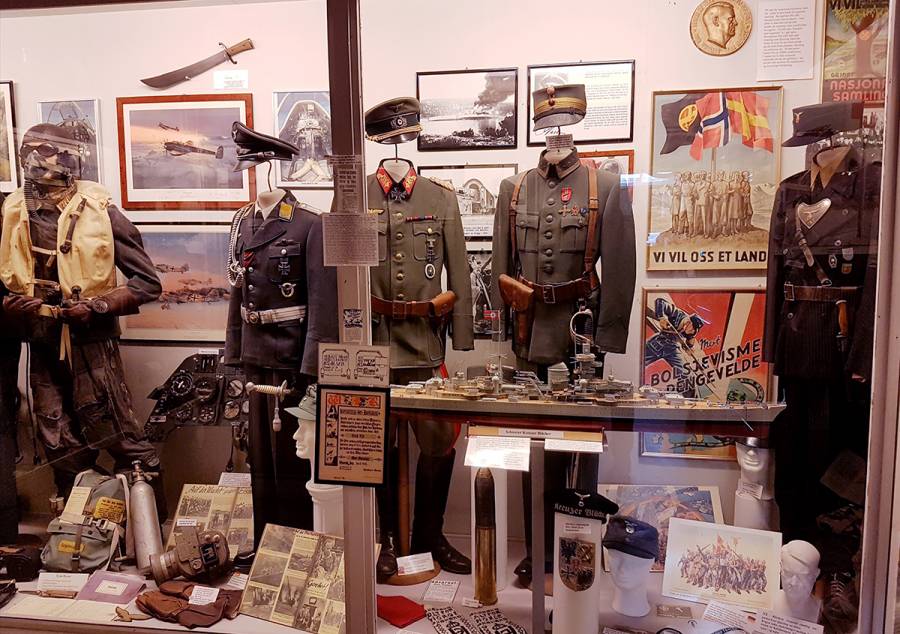
Lofoten War Musuem. Photo: Lofoten.com
The Lofoten War Museum The Lofoten War Museum holds the largest exhibition of rare uniforms and artifacts from the Second World War. At the museum, you’ll see unique historic photographic evidence of the five years the war raged.
The snapshots tell the story of the war in a way that engages its audience and makes them feel they are experiencing it personally. War veterans worldwide have given it positive feedback, and some consider it one of the best war museums in the world.
The museum is in the town of Svolvær, and it is a must-see for tourists, especially if you love history. It is open every day, all year, and visitors pay 100 NOK for adults, 30 NOK for children between 7and 15 years, and 80 NOK per person for groups with a minimum of 12 people.
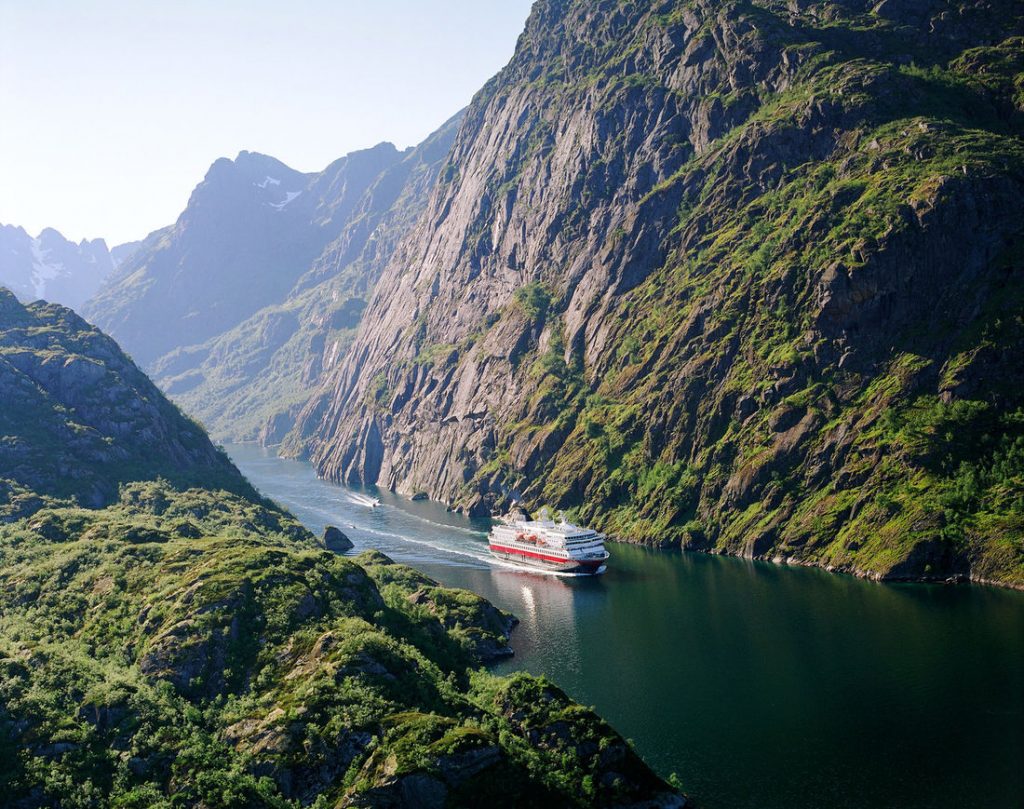
Trollfjord. Photo: Lofoten.info
Trollfjord The Trollfjord or Trollfjorden is a fjord in the Hadel Municipality of the Lofoten Islands. It is 2 kilometer in length, cuts into the island of Austvagoya, and flows out into the Raftsundet strait. The Fjord is a tourist attraction because of its natural beauty consisting of a narrow entrance and steep-sided mountains.
If you wish to see this nature’s delight, you have to use a boat or take a hike on its 10km rugged terrain. Cruise lines are known to pass through the Fjord during summer, and Hurtigruten ships on the route between Bergen and Kirkenes.
The Lofoten Museum The Lofoten Museum is located in Storvågan and is a must-see for tourists, especially if you love fishing. The museum has a wealth of knowledge of Lofoten’s fishing history, and an 1815 building houses it.
The museum boasts of authentic fishermen cabins and boat houses featuring Nordland boats. It offers picture-games, and exhibitions on the Lofoten fisheries, ports, lighthouses, traditional crafts, and a beautiful garden with historic perennials.
It is part of the SKREI Experience Center and lies within walking distance of Gallery Espolin and the Lofoten Aquarium, two places which are also tourist destinations. Visitors can come in from Sunday to Monday during its opening months, and the pricing is fair for individuals, children, and
Vågan Church, Kabelvåg. Photo: Wikimedia commons
The Vågan Church Even if you are not a religious person, you have to see the Vagan Church. It is a parish of the Church of Norway, and it is in the village of Kabelvag on Austvagoya Island. Built in 1898 by the architect Carl J. Bergstrom, the yellow wooden structure is the largest wooden building in Northern Norway and can seat about 1,200 people.
Lofoten Viking Museum. Photo: Kjell Ove Storvik / Lofoten museum
Lofoten Viking Museum If you are interested in seeing the largest Viking-era house globally, you have to visit the Lofotr Viking Museum. The building is in Borg and an 83-meter (272 feet) reconstruction of the original structure.
Visitors can participate in the museum’s Viking feast with activities like singing, dancing, and local cuisine. If you are visiting in the summer, you can row a Viking ship, participate in archery and other Viking activities.
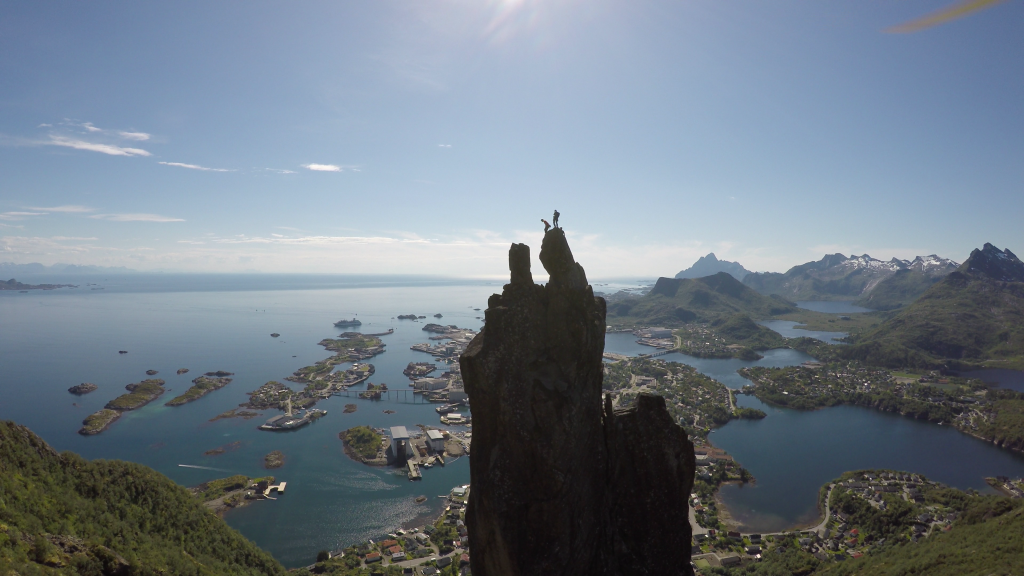
The Svolvær Goat. Photo: Wikimedia commons
Svolvær Goat The Svolvær Goat is a 150 meter (490 feet) tall pinnacle on the edge of the town of Svolvær on Austvagoya Island. It is famous for those who love daredevil climbs and have an adventurous spirit.
The biggest dare to visitors is jumping the one-meter distance between the goat horns. Climbing to the mountaintop is also a top achievement, and the first climbers to achieve the feat, Ferdinand Schjelderup, Alf Bonnievie Bryn, and Carl Wilhelm Rubenson, did so on August 1st, 1910.
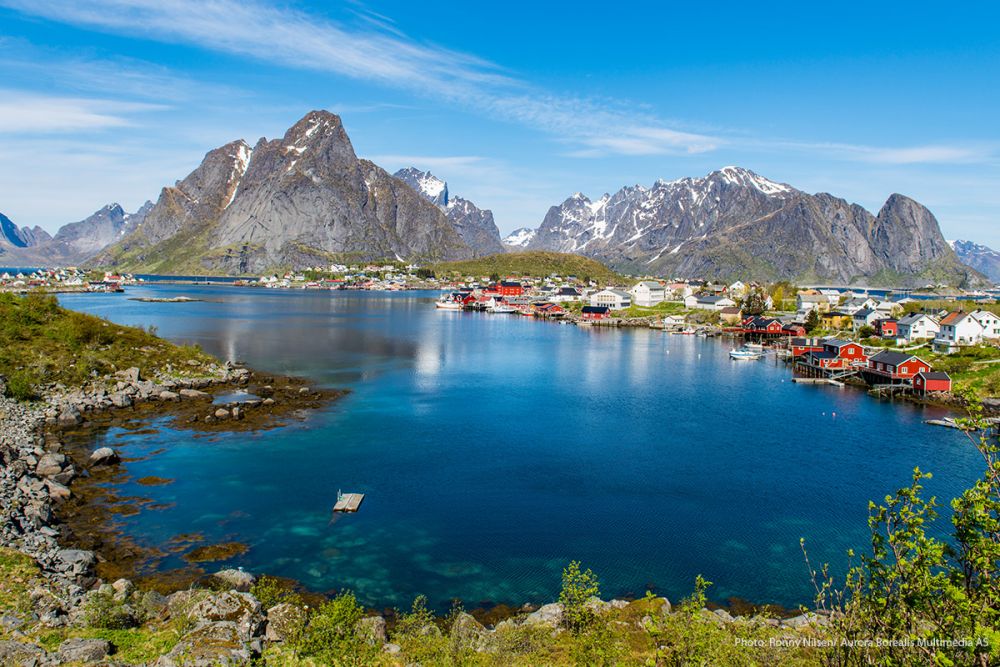
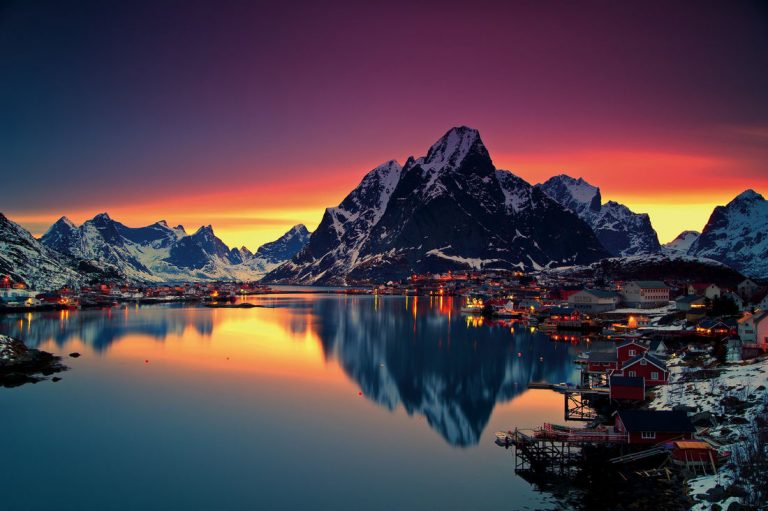
Reine. Photo: Lofoten.com
Reine Reine is a must-see if you are in the Lofoten Islands. It is a beautiful fishing village located on Moskenesoya. It is a favorite among tourists, especially those who love to paint its stunning Fjords and climb mountains. The high grounds also afford you the view of the Moskenesstraumen, one of the strongest whirlpools in the world.
Visit the Lofoten Islands If you’re looking for a picturesque place filled with natural wonders to spend your vacation, then plan to visit the Lofoten Islands. Whether you are hiking on the road or looking from the comfort of your hotel room, you will see sights that will take your breath away. However, you can also explore the island and visit the places mentioned in this article.
Theresa Cofield
Best Things to See in the Lofoten Islands, written exclusively for Daily Scandinavian by Theresa Cofield. Theresa is a freelance writer who has a love for creativity and a passion for helping others. She works as a blogger at csgobettingg.com where she covers the topics of esports and the gaming industry.
Scandinavian countries have developed strong reputations for tapping into a high quality of life. Famous for a slow pace that deliberately enjoys every moment, most Scandinavians are the envy of the world around them. Learn more about Scandinavian lessons for everyday life.
However, much of the lifestyle success of places like Norway, Denmark, and Sweden doesn’t come from an inherent value of the geographic locations themselves. It stems from the culture and habits of the people that live within them.
Here are some of the best lessons that Scandinavians can teach the rest of the world, particularly when it comes to living well every day.
Scandinavians are famous for a slow pace that deliberately enjoys every moment
Find Reasons to Slow Down One of the biggest challenges of the modern world is figuring out how to slow down. Everything from work and school to push notifications keeps people moving forward at all hours of the day and night.
In Scandinavia, though, the natural pace of the local culture regularly counteracts the breakneck speed of modern life. For instance, rather than nabbing a coffee on the way to work or to wake up, a Swede will use it as an opportunity to slow down and bond with others.
In the same manner, they’ll also steer into regular vacations. On top of that, rather than using time off as a chance to quickly recharge before getting back into the thick of things, Swedes tend to purposefully integrate breaks and chances to slow down right into the very essence of their way of life.
Hygge is a concept that impacts everything from food and socialization to clothes and even candles
Embrace a Hygge Atmosphere Hygge has taken the world by storm, and with good reason, too. The untranslatable Danish word is the essence of comfort, coziness, and an all-around good time.
Hygge is a concept that impacts everything from food and socialization to clothes and even candles.
One area where it can have a powerful impact on the way that one sees the world is with home decor. Everything from furniture to the overall interior design of a home can have a comfy, clean Hygge focus that helps a person slow down and unplug every day.
Rather than prioritizing meeting people, in general, Scandinavians steer into finding intimate time spent with a handful of close friends
Cultivate Real Friendships Having a friend is a far cry different (and better) than having an endless number of acquaintances. Many Western cultures focus on the perfunctory act of “going out” to bars, clubs, and restaurants to meet others or hang out with people. This typically leads to shallow friendships and short-term relationships.
In Scandinavia, where work-life balance is essential, people often take the time to parse between friends and acquaintances. Rather than prioritizing meeting people, in general, they steer into finding intimate time spent with a handful of close friends.
In his book “The Little Book of Hygge,” author Meik Wiking points out that, when asked how many people were required to properly Hygge together, 20% of Danes claimed that just two were required, while 57% said three to four. Only 9% said five to 10 people and a measly 1% said more than 10. In other words, Danes understand that you don’t need a crowd to create friendships. On the contrary, a group that is few in numbers facilitates true intimacy.
There’s no doubt that Scandinavians have tapped into a unique theme of contentedness in their daily life
Make Happiness a Destination Finally, the West has long been aware of the concept of “pursuing happiness.” And yet, most Westerners end up using the essential emotion as a means to an end. In Scandinavia, happiness is valued in and of itself. It’s a destination rather than a path, so to speak.
For instance, the Danish word “Lykke” means happy, and it’s attached to a variety of different words that help to cultivate a sense of joy, warmth, and meaning. The meaning of happiness in Danish culture is profound, as it’s much more than a fleeting feeling, indicating a sense of trust, stability, humbleness, safety, and balance.
The Concoction of Scandinavian Contentedness There’s no doubt that Scandinavians have tapped into a unique theme of contentedness in their daily life. Things like Hygge, happiness, friendships, and simply being in the moment blend together to deliver a quality of life practically unrivaled in the civilized world.
The best part is the interchangeable, tangled nature of all of these benefits. Elements like happiness, friendships, and work-life balance all come together to form Scandinavian life in a concoction of contentedness that is impossible to unravel or turn into a prescribable formula for success.
Instead, foreigners from every place and all walks of life must learn what lessons they can from the spirit of Scandinavian life. They must try to let go of control, be content with what they have, and embrace the here and now. If they can do that, they’ll be able to reproduce the sheer delight and contentedness of Scandinavian life right in their own backyards.
Beau Peters
Scandinavian Lessons for Everyday Life, written exclusively for Daily Scandinavian by Beau Peters. Beau is a creative professional with a lifetime of experience in service and care. As a manager, he has learned a slew of tricks of the trade that he enjoys sharing with others who have the same passion and dedication that he brings to his work. When he is not writing, he enjoys reading and trying new things.







 2000 square meter large spas area















 The scenery is characterized by the Arctic climate. The Varanger National Tourist route was designated in 2012 and it includes the Norway roads E75 and 341.




 The Lofoten Museum