The color alone is enough to make you want to eat beetroot – the tint of pure health and wholesomeness. It’s the how that keeps us from using them more, because they are not part of the daily diet in Scandinavia, unless pickled. Learn more about Scandinavian beetroot.
The pleasure of eating well-prepared fresh beetroot comes as a surprise to most people, particularly if they are used only to the pickled kind. Sweet, juicy, new beetroot are becoming more popular – and increasingly available to buy.
But maybe it’s best that the vegetable remains an occasional pleasure. Overuse of beetroot can make you tired of it; the best thing is to make not quite enough, so you are not faced with overwhelming amounts of beetroot to work your way through. Eat it once in a while, as you would Jerusalem artichokes or parsnips, to keep it special.
History Beetroot (and later sugar beet) was according to common Latin, selected by the Romans from the wild beet that still grows on shores all over northern Europe. They selected them for root size, and the beetroots that resulted came in an impressive array of colors – anything but blue. They were mainly used for their medicine qualities, not for food, until they reached northern Europe and Russia in the 1600s. But some evidence suggests that they were in fact developed by the ancient Egyptians, and I think this is true as they grow marvellous beetroot in Egypt – football-sized but tender, and they have the deepest coloring of all. And the Egyptians have a lively tradition of eating them, as do the people that they were in contact with in Antiquity.
The pleasure of eating well-prepared fresh beetroot comes as a surprise to most people. Photo: Jacobs
How it grows Smallholders and gardeners grow beetroot because it must be one of the least demanding crops; it grows quickly, grows well in cold conditions, given the confetti-like range of colors now available. It is simply too much fun not to grow – or eat for that matter. Beetroot plants look good wherever you put them, and the red-leaved varieties are wonderfully ornamental in a border.
New beetroot are becoming more popular – and increasingly available to buy. Photo: Meny
Appearance and taste Beetroots have an intense metallic and earthy flavor, very sweet and satisfying. The taste varies according to the variety and color, and round beetroot are much less stringy than the oblong varieties. All sorts of less common varieties are now available as seed and at good greengrocers: white beetroot that look – and taste – more like turnips, the Italian barbietole di Chioggia, with internal candy stripes, as flesh that turn orange when cooked; the yellow-fleshed variety that actually taste more like sweetcorn, or the flat, extremely dark Egyptian versions with a deep carmine color. The more colored, the more intense the taste. The leaves can be used like spinach and young people enjoy cooking both the leaves and root a lot more than older generations.
Health benefits The color of red-fleshed beetroot is brimming with betanin, a water-soluble coloring that colors your urine blood-red, which can be a real scare for the unsuspecting beetroot-eater. Natural coloring boosts your immune system, and beetroot are full antioxidants, minerals, trace elements, different B vitamins and iron.
Culinary uses There are some delicious ways to east beetroot, From Russia and Germany we have inherited the tradition of pairing beetroot with dill, crème fraiche, horseradish and vinegar. The northern touch is to use fresh, smoked cheese (below) and caraway seeds, both of which give the roots an extra kick.
Beetroot’s sweetness is its great strength, and also its weak point; you have to work with beetroot to make it really good; to pair it with something acidic, sharp or hot to match the sweetness, and something creamy to balance its earthy solidity. If you have sweet and juicy young beetroot, eat them simply, turned in butter and lemon juice, or with horseradish and sour cream.
Beetroot’s cooking time depends on the freshness and the cultivate.
Beetroot salad with cheese. Photo: Meny
Beetroot salad with fresh smoked cheese This salad is a beautiful thing to serve with fish, fish roes, smoked meats, or as a part of a buffet. If the smoked cheese is not available, a very good and very fresh ewe’s milk ricotta will do, or a homemade, drained junket.
4 medium beetroot
Salt and pepper
1 bunch of dill for the cream 150g fresh smoked cheese
100g Greek yoghurt
3 tablespoons mayonnaise
1 tablespoon cider vinegar
2 garlic cloves, crushed
1 tablespoon sugar
SERVES 4
Clean the beetroot well then bake at 160 degrees C/gas mark 3 until tender. Leave to cool. Meanwhile mix together the ingredients for the cream, seasoning to taste.
Peel the beetroot and grate them coarsely, then mix with the cream. Serve garnished with dill.
TIP
An alternative method to make this salad is to slice the beetroot very thinly rather than grate them. Spread the slices in a thin layer or a large dish, then drizzle over a marinade made of 3 tablespoons olive oil, ½ teaspoon coarse sea salt and 2 tablespoons cider vinegar: Spoon the cream on top and decorate with dill.
Scandinavian Beetroot, written by Tor Kjolberg
Feature image (on top) Photo: Unilever Food Solutions
Latvian graduate Sabine Skarule from the Royal Academy of Fine Arts in Antwerp, Belgium was the winner of the H&M Design Award 2020. Sabine was chosen by a panel of industry experts for her collection inspired by the craft of her homeland, winning a prize valued at €50,000. Read about the H&M Design Award and why a Latvian graduate was the winner of the Swedish Design Award 2020.
Now in its ninth year, the H&M Design Award is one of the world’s most respected fashion prizes, supporting graduate designers at a crucial stage in their career. The H&M Design Award proves H&M’s deep commitment to young creatives, and to the future of global fashion. H&M believes passionately in nurturing fashion’s young talent.
“This prize opens the door, and gives me the freedom to fulfil my dreams,” says Sabine Skarule, winner of the H&M Design Award 2020
Starting point for own label
“It’s unbelievable. Winning the H&M Design Award is such an amazing starting point for me to begin my own label. This prize opens the door, and gives me the freedom to fulfill my dreams,” says Sabine Skarule, winner of the H&M Design Award 2020.
“Sabine’s collection was truly amazing. It was such an emotional collection that really touches you. There were so many different elements, so much craft and technique. It makes you want to see more,” said Ann-Sofie Johansson, H&M’s creative advisor.
“Sabine’s collection was truly amazing. It was such an emotional collection that really touches you,” says Ann-Sofie Johansson, H&M’s creative advisor
Memories of her Latvian childhood
Sabine’s winning collection drew on her memories of her Latvian childhood. The knitting techniques came from a time pre-internet, when Sabine made clothes with her mother. Sabine took this heritage and gave it a fresh point of view, with knit pieces that played with scale of stitches as well as folkloric patterns, contrasted with sharp yet feminine tailoring.
From the H&M Award 2020
Sabine joins a list of past winners who have gone on to international success. 2017’s winner Richard Quinn is now one of the hottest names in fashion, with Her Majesty The Queen sitting front row at one of his shows, and Cardi B stopping traffic in Paris wearing a Quinn head-to-toe floral look. 2018’s winner Stefan Cooke is now stocked at respected stores such as Dover Street Market, while 2019’s winner Priya Ahluwahlia has already become a figurehead of the new upcycling movement.
This year’s jury
This year’s jury featured Priya Ahluwalia, who won the H&M Design Award 2019; the photographer Felix Dol Maillot; the fashion director of Glamour Germany, Véronique Tristam; London-based fresh fashion talent supporter Harry Fisher, plus H&M’s creative advisor Ann-Sofie Johansson and Margareta van den Bosch.
From the H&M flagship store in Oslo, Norway
The H&M Design Award The H&M Design Award was established in 2012, with a passion to celebrate and support young talent from around the world. Since then, over 4000 graduates have applied, with 160 finalists taking part over the years.
The H&M Design Awards 2020 was open to both BA and MA graduates from 42 selected design school in 17 countries. It’s about shining a light on the most exciting new design talent, nurturing graduate designers, and also encouraging the next generation of young creatives to become part of fashion’s future.
Latvian Graduate Winner of Swedish Design Award 2020, based on a press release from H&M
To read more about H&M Design Award, visit H&M Magazine
It is necessary to reduce the negative impact consumption has on our climate, our environment, and our health. Yaytrade is the marketplace for environmental conscious rebels from all over the world, the web’s top spot to buy and sell pre-loved fashion and lifestyle products from fellow community members, ambassadors and sustainable brands. Find out more about these sustainable Scandinavian rebels.
Selling clothes that you no longer wear is good for both the environment and your wallet. Yaytrade recently announced a new strategy, taking aim at the issue of over-production in the fashion retail business. By partnering with premium fashion brands, like Filippa K, to sell off overstock, samples, and returns, Yaytrade has turned a fashion industry headache into a business opportunity – at the same time supporting the circular economy.
Selling clothes that you no longer wear is good for both the environment and your wallet
Yaytrade was founded in 2017, with the site debuting by the end of the year. In just a short amount of time it has built up a formidable user base and an impressive stable of some of Sweden’s biggest influencers.
Emil Franzén, one of the sustainable Scandinavian rebels, recommends buyers to spend an extra penny on items made from authentic materials that you know will last a long time
Emil Franzén, one of the sustainable Scandinavian rebels, recommends buyers to spend an extra penny on items made from authentic materials that you know will last a long time. Leather for instance is always durable. For shoes you wear often, remember to clean and waterproof them, then they will always look fresh even after a few years.
At the 2020 Swedish Design Prize gala, Yaytrade was honored for its creative platform design. The award ceremony took place digitally, broadcasted live from Gothia Towers in Gothenburg where Yaytrade won the silver medal in the e-commerce category.
A quality vintage gentlemasn’s suit for sale at Yaytrade
When Filippa K offered Yaytrade samples, returns, and outgoing stock from more than 5 seasons, 80% of the inventory was sold in just 3 days.
Matilda Zimmerman is CMO at Yaytrade and one of the Scandinavian rebels. She’s the one who is coming up with crazy ambitious ideas and making them come to life. She is also accountable for driving brand and performance impact for the marketplace powered by the reach of influencers and a loyal community of sustainable rebels & brands.
In a survey commissioned by Oxfam in 2019, almost nine in 10 adults said they happily bought used items, with one in eight claiming to get more satisfaction from buying second-hand than brand new.
More satisfication from buying second-hand than brand new
“We need to adjust our way of producing and consuming goods and services in order to become more sustainable,” says Emil Franzén and admits he is completely new to selling goods second hand. But one thing he has learned is to stop holding on to things that he never wears – things he knows that someone else could enjoy.
Sustainable Scandinavian Rebels, written by Tor Kjolberg
We are all familiar with the blockbuster Vikings TV series. Might be some of us are not big fans of the historical series but their house interior is an inspiration. If you want to change your living space, then it will be a great suggestion to transform it into a delightful Viking-inspired interior. The radiant colors of the Nordic atmosphere will enrich your living space and make it simply delightful. Here are some ways to embrace Viking-inspired décor for your living space.
A Touch of Fur in the Home Accessories Vikings were very fond of using original animal fur in different accessories. It was considered a prevailing element at that time. You can enrich armchairs, mats, rugs, and decoration pieces with fur. Always use artificial fur to remain cruelty-free. Artificial fur is very much like original animal fur. A bedroom is the best area to use fur on cushion covers and floor mats.
Most of the Nordic countries follow the concept of Hygge which means comfort
Add Warmth to Your Room Most of the Nordic countries follow the concept of Hygge which means comfort. We have seen in the movies that the Viking’s homes appear to be very cozy, warm, and comfortable. Contrary to this, our current lifestyle appears very cold having vibrant colors. Use some natural tones of green, grey, and black to build a soft warm outlook. Use plenty of pillows, a soft plush throw blanket, and warm textiles as bed covers if you have a love for Viking culture.
The walls of your home are an excellent place to display decoration pieces that depict the Viking’s era
Vikings Theme-Based Wall Hangings The walls of your home are an excellent place to display decoration pieces that depict the Viking’s era. These wall hangings include opulent deer antlers, Viking swords, candle holders, leaf ceiling fans, and many other small items to be placed on shelves. If you are a great fan of Viking décor, you can carve the walls of your bedroom to place candles and lanterns. It is also a great idea to paint the walls of your home to reflect Viking mythology.
Odin with ravens bedding
Use Clean-Lined Furniture As we all know that the Vikings period was a simpler time when there was no fancy furniture. The wood is partly polished for making the furniture. To achieve that authentic wood look, choose some furniture with clean lines and rough carving. Carving is an optional suggestion.
Once you choose the furniture, now it is time to place it. Always place your furniture in an eye-catching area of your living room. Try to use a Viking-inspired dining table with three-legged chairs. You can also use the Viking theme on your bed set.
Viking view chalet interior. Photo: Decoholic
Use of Stone, Wood, and Concrete As seen in movies, Vikings use raw wooden furniture with utensils mostly made of stone. The walls were made of stones with huge wooden logs for supporting the roof. To get this divine feeling of the Viking environment, use slightly processed wood for making furniture. The visible wood lines give a genuine wood look. Decorated the walls with rustic concrete bricks to enhance the authenticity of the Nordic atmosphere.
Rustic wooden barrel resin mug with large handle and stainless steel insert
Embrace Negative Space The Viking’s living spaces are never congested. There were minimal items inside the living areas, mostly only the necessary ones. We are born in an era where thicker interior design seems catchier. But that is not the case when it comes to Nordic living style.
While upgrading to a Viking-themed interior, embrace the negative space. Here is a tip for you on embracing negative space. Empty the living area first then add items piece by piece. Make yourself comfortable with the theme before transforming your home.
Elder futhark runes bedset
Use of Subdued Colors The most important part of creating a theme-based interior is to carefully choose the color. Whatever theme you are intended to apply to your interior, it is always the colors that highlight the backdrop. When it comes to Viking culture, they use subdued shades that were the only natural colors available at that time. You can go for pastel shades with bluish and greyish tones.
Ragnarok bedding set
Ways to Embrace Viking-Inspired Décor – Final Thoughts “Less is more” is the basic idea that attracts many of us towards the Viking culture. Indeed, it is possible to design a comfortable, cozy, and natural living place with less budget and minimum items. Being close to nature enhances the aesthetics and provides mental relaxation. That is why many of us are very obsessed with Viking themed home decors. These tips are helpful for you if you are planning to transform your home.
Shawn Mack
Ways to Embrace Viking-Inspired Décor, written exclusively for Daily Scandinavian by Shawn Mack. Shawn is a content writer who offers ghostwriting, copy-writing, and blogging services. His educational background in business and technical field has given him a broad base from which to approach many topics.
Due to the development of Covid-19 and recent restrictions, this year’s edition of Copenhagen Fashion Week which opened yesterday, takes place as planned but will be run digitally. The two fashion fairs CIFF and Revolver are canceled due to a ban on all trade fair activities. The autumn winter 21 collection by Nynne Kunde is a celebration of women named Women For Women presented digitally yesterday.
The essence of NYNNE has been built around the idea of empowering women, motivated by the joy and excitement of creating a universe where women feel comfortable and glow with confidence. Continuing from the Spring/Summer 2021 collection, which plays tribute to the softer features and gentle expressions of women, next autumn, NYNNE continues its quest to create a community of extraordinary women lifting one another up; WOMEN FOR WOMEN.
“NYNNE has to be for all women. The garments we make have to be wearable but also inspire. I have always admired women who are fighting for what they want and I always look to classic suiting and power dressing as a starting point. For me, it’s about taking strong looks and lightening them. Subsequently encouraging more women to harness their feminine power without dressing like a man,” says Nynne Kunde.
in 2018, Nynne Kunde was awarded ‘Womenswear Designer of the Year’
9 exceptional Copenhagen women
Kunde has chosen 9 exceptional women in her native Copenhagen who embody the brand and personally inspired her to be the face of the campaign. Stepping away from traditional models, the NYNNE woman collection is represented in the new world by: Anna-Sophie Hartvigsen, Camilla Cloëtta Falkenberg and Emma Bitz, co-founders of Female Invest. This innovative tech start-up’s goal is to close the gender gap by educating women on investing and personal finance. The Forbes 30 under 30 noted women at Female Invest’s helm are not only beautiful but experts in their male-dominated field.
87 years old Eva Hougaard Lauridsen still explores fashion as her creative outlet
87 years old Eva Hougaard Lauridsen still explores fashion as her creative outlet. Grandmother to Simone Steenber, – the AW21 Nynne collection photographer, Eva has been working with her granddaughter on projects and modelled for her previously.
Kunde has chosen 9 exceptional women in her native Copenhagen who embody the brand and personally inspired her to be the face of the campaign
The first set design job of Fatima Fransson, a furniture & production designer at ART OFFICIAL AGENCY was for Elle Sweden, leading to creative roles at Eurowoman, Ecco, Georg Jensen and Stine Goya as well as working on Virgil Abloh’s collaboration for Ikea.
Autumn – Winter 2021, NYNNE continues her quest to create a community of extraordinary women lifting one another up; WOMEN FOR WOMEN
Josefine Nielsen & Rose, a model and first-time mother to 5-month-old Rose, Josefine, also a data ethics specialist at Erhvervsstyrelsen (Danish Business Authority) is a shining example that women can have it all.
Nanna Kunde, sister to Nynne Kunde, has been Kunde’s rock and support system since the beginning of NYNNE. Kunde admires that Nanna stays true to herself and is selfless in her care for people she surrounds herself with. She is Marketing professional at Kunde & Co.
Stepping away from traditional models, the NYNNE woman collection is represented in the new world by ordinary (or not so oerdinary) business women
Simone Skouby, data analytics architect at Lundbeck where she creates digital solutions for the global company, advocates for a more diverse workplace with more women in tech positions overall, leading to a more dynamic and two-sided point of view on IT solutions.
Sofie Flykt is one of Denmark’s most prominent female comedians as well as author of Gender Equality, Better Practiced as Workforce Diversity. Her stand up show ‘Grin Til Gavn / Laugh to Benefit’ toured Copenhagen to great success whilst her podcast ‘Det Værste Par’ gives a refreshingly honest take on modern life.
This autumn’s color palette honors Mother Earth with the use of rich and dusty neutral tones throughout
Autumn 2021 Color palette
This autumn’s color palette honors Mother Earth with the use of rich and dusty neutral tones throughout. Mixing flecked greens, with molten browns and timeless blacks, whites and taupes. The collection’s jacquard is bespoke for NYNNE. Inspired by architecture – notably Ricardo Bofill’s geometrical creations.
Fabrics take a soft approach
The soft approach of the season’s fabrics is highlighted by the curving structure of the stitching to actuate the female form. Natural leather skins, recycled wool, polyester and organic cotton fabrics make up the core of the collection, whilst for the first time, NYNNE has introduced velvet. Coming in the style of a gathered midi dress with a high neckline, the look is finished with a coordinating belt with a hammered silver buckle.
The famous Diana dress has been remade in a soft flecked knit dress. NYNNE remains committed to two collections a year, as an encouragement to women to transcend the endless flow of superfluous and short-term trends. With 65% of the collection being made out of recycled materials, following the ethos of buying less but better-quality, the collection has been produced within small-scale family-run mills in Europe.
The soft approach of the season’s fabrics is highlighted by the curving structure of the stitching to actuate the female form
The tale of two cities
Reappearing this season is the use of shearling bi-product, coming as a cropped jacket for women on the go, whilst other outerwear highlights include the brands first use of waterproof waxed cotton on a moreish trench coat. The aesthetic of NYNNE plays with the clean lines and design expertise of its founder’s Scandinavian heritage, crossed with the bold colors and vibrant persona of London – two cities Kunde has called home.
The philosophy of NYNNE explores dressing as an expression. The brand’s vision is to offer a capsule wardrobe of functional pieces that feature both the pragmatic and glamorous signatures for which Kunde’s name has become synonymous.
The philosophy of NYNNE is exploring dressing as an expression
About NYNNE Nynne is a contemporary luxury brand with a focus on craftsmanship, fit and silhouettes. The brand explores dressing as a form of power and aims to uplift through glamorous, yet pragmatic clothing.
Upon graduating in 2018, Nynne Kunde was awarded ‘Womenswear Designer of the Year’ for the founder’s graduate collection and subsequently launched the eponymous label.
Scandinavian roots play a significant part in Nynne’s designs where the clean minimalistic lines are complemented with the vibrant colors and details synonymous with London’s cosmopolitan energy. The two cities balance each other out with their distinctive styles and ambience, proving the perfect inspiration for Kunde.
The label’s brand philosophy lies in the exploration of dressing as a form of power and NYNNE aims to uplift the everyday wardrobe of women globally through glamorous, yet pragmatic clothing meant to amplify confidence. NYNNE maintains a truly global sentiment and encourage women of every demographic to transcend the endless flow of superfluous and short-term trends with individual stand-out combinations.
NYNNE collections are now available at selected boutiques and department stores across Europe and Asia, including: Le Bon Marche, Nørgaard Paa Strøget, Macondo, Ron Herman and Luisa Via Roma.
Sustainability Focusing on responsible consumption Nynne is committed to only creating two collections a year that seek to transcend seasons and trends. The autumn winter21 collection consist of at least 60% sustainable materials and is produced with small-scale manufacturers in Europe.
Photo: News Ørestund / Flickr Creative Commons
Copenhagen Fashion Week “Due to the current development of Covid-19, we have been forced to cancel all physical events this time, including the trade fairs. Copenhagen Fashion Week’s show schedule and talks program is still carried out, although virtually, via our digital universe at copenhagenfashionweek.com. Even though it is definitely unwished-for, it is undeniably the right thing to do, and instead we look forward to being able to meet physically again for the August 2021 fashion week,” said Cecilie Thorsmark, CEO of Copenhagen Fashion Week.
FASHION: Women for Women in Copenhagen, written by Daily Scandinavian in collaboration with NYNNE.
The Norwegian King Crab has been a gastronomic world success but the crab stays in dense concentrations and in deeper water in winter and is an invasive species. Read more about the Norwegian monster crab.
Known locally as “Stalin’s Red Army”, an invasion of red king crabs from Russia created a lucrative industry, and difficult choices for Norwegian fishing industry. It might be the most lucrative catch of the Barents Sea, but it is not native to the region. The question is how this immigrant became such a sought-after commodity.
The giant crab
This giant crab (kamtsjatka crab in Russian/paralithdodes camtschaticus in Latin) has become a matter of course, not only for fishermen in Finnmark, but as an exclusive raw material for gourmet chefs around the world. The distance is short from Norwegian crab nets to the restaurant tables in New York, Tokyo and Seoul.
Known locally as “Stalin’s Red Army”, an invasion of red king crabs from Russia has created a lucrative industry. Photo: Marinespecies.org
In the 1980s, woeful fishermen in Varangerfjord in Finnmark began hoisting up mysterious, spindly giants in their nets. The aliens, brandishing two menacing pincers, weighed far more than the brown crabs they had seen farther south.
The crustaceans traveled from Russia, where scientists had introduced red king crabs on the Murman coast during the 1960s with the goal of establishing a new, lucrative fishery. Slowly, the crabs scuttled the 60 or so miles over the border into Norway where the deep fjords in the Barents Sea near Bugøynes provided the perfect cover.
Quota regulated crab
Today, fishing for red king crab is quota regulated along the east coast of Finnmark, down towards North Cape. West of North Cape there is no quotas, to prevent the crab spreading further down the coastline.
The Japanese in particular seem insatiable on king crab. They give it to each other as a New Year’s gift, huge beasts of three or four kilos, priced at tens of dollars, which means a good price per kilo to Norwegian fisheries. Last October alone, Norway exported 259 tons of king crab worth 9 million dollar, an increase in volume of 61 percent.
The King Crab might be the most lucrative catch of the Barents Sea. Photo: Maritimt Magasin
The USA, Japan and South Kora were the largest markets.
Highest volume ever
“Not since 2008 has the export value of king crab been as high as in October last year. At that time, however, the volume was three times as high, which in reality means that the price of king crab has tripled”, says Josefine Voraa, Manager for Shellfish with the Norwegian Seafood Council.
The red king crab has a regal look. Its shell looks like a pointy crown draped in a lavish crimson gown. One of its claws is bigger than the other, which could be mistaken for a scepter, but it’s actually used to crush the red king’s prey.
However, when gourmet restaurant guests are enjoying the strong-tasting crab meat, others are worried about what the table favorite is actually doing down there in the sea. Does it crawl around in heavy hordes? Does it chew on everything it comes across? Is it the beginning of the end of all life along the Finnmark coast? Or does it have a serious image problem only? These are questions Norwegian crab researchers have asked themselves the last few years.
This giant crab (kamtsjatka crab in Russian/paralithdodes camtschaticus in Latin). Photo: Institute of Marine Research, Norway
Stalin’s red army
Initially, the invasion of “Stalin’s red army” was seen as a disaster. The crabs became entangled in gillnets and longlines, removing bait and causing damage that allowed coveted fish species to escape. But when the fishermen learned of the million-dollar Alaskan king crab fishery, they realized the crab could be more boom than bust. Today the red king crab is largely credited with rescuing the fishing villages of the north during a time when cod was sparse.
The crab is large, with succulent and tasty flesh, that can be enjoyed in both hot and cold dishes. But the ruler of the Barents Sea crustaceans is not a native of the Norwegian north. Anyone who as seen the TV series “The Deadliest Catch” about crab fishermen in the USA, knows that the red king crab belongs in the Bering Sea between Alaska and Russia and that the Russians in the 60’s released crabs off the Murmansk coast, just east of the Norwegian border.
In fact, according to some sources, Joseph Stalin tried to do the same before World War II but failed.
To claim that the latest experiment to build up a catchable population has succeeded would be an understatement.
Center of a huge industry
The monstrous crabs, which now number in the millions, have become the center of a huge industry. The fishermen of Bugøynes can sell their catch for more than 210 Norwegian kroner ($24) a kilo to producers, who distribute the crustaceans to the world’s finest restaurants, hotels and casinos, so If you want to taste one of the largest crabs in the world, be prepared to pay a king’s ransom. It’s truly a luxurious commodity and is almost exclusively served in high-end restaurants.
Without particularly many natural enemies, the crab has found its way right into Norwegian waters. It has gradually migrated westwards and was first caught on the Norwegian side of the border in 1977. Throughout the 1980s, the crab established itself in the Varangerfjord east of Finnmark. But it was not until 1992 that the alarm went off with the authorities. Then the fishermen who caught cod, haddock and lumpfish also caught so much crab that it was no longer fun. The crab destroyed nets and ate bait, it wandered west to the Tana fjord and the Laksefjorden, and in 2000 crab was even caught west of Hammerfest.
Cross-border move
Following the crab’s cross-border move, native seafloor species have rapidly declined. The crabs are continuing to expand their territory, and could soon arrive in the Lofoten Islands, one of the world’s largest seasonal cod fisheries.
“Red king crab” is a fitting name for the species—and not just because of its red hue and great size – it can grow to 8 kilos in weight, with a shell of more than 23 cm in length. Like a king, the crab rules its realm of the ecosystem, leaving terror in its wake.
In 2007, the then Minister of Fisheries Helga Pedersen drew a line on the map approximately at the North Cape. To the east of the border, a crab stock was to be built to support the industry, and only a limited amount of crabs of a certain size were to be caught.
Two-part strategy That put government regulators in a tough spot, between securing the long-term economic viability of the crab fishery and limiting its takeover of native species and traditional fisheries. They ultimately can’t push for total eradication if king crab is to continue buoying northern coastal communities – but at what cost?
Norwegian authorities have established a two-part strategy for maintaining a sustainable red king crab population: First, a quota-regulated, long-term fishery in East Finnmark; and second by limiting the crab’s dispersal outside of this designated area. In order to protect other valuable species like the cod, all king crab fishing in areas west of the North Cape is therefore unrestricted.
So far, the line has remained, and armed with ropes, traps and bait, the fishermen in the west will keep Western Finnmark empty of crabs. But how easy is this in practice?
The stringent regulations enforced by the Norwegian seafood industry, only increases the crab’s exclusivity, but the king’s appeal is undeniable on its own.
“If you’re a skillful, not lazy fisherman, you can get your full quota – two or three tons per boat – in two or three weeks maximum. Then you are done and get cash in your pocket,” says Roman Vasilyev, a Russian scientist who moved to Bugøynes in 2013 to help advance the technology for shipping live crabs, which sell for more money than processed ones.
The Norwegian Monster Crab, written by Tor Kjolberg
Feature image (on top): King crab expedition / Photo: Hurtigruten
Co-sleeping and other parenting tricks you might want to learn from Scandinavians. Read the full story answering the question “When do Scandinavian children sleep in their own bed?”
Raising a child can be hard, but it seems like Scandinavian parents have “cracked the code”. Their approach is much different from the common Western parenting traditions, and it also seems to work much better too.
So, let’s take a look at how Scandinavians are raising their kids and see which techniques you might want to try yourself.
Most Scandinavian parents recommend sharing the room with your baby, not the bed. Source
Co-Sleeping: Two Sides of the Coin Co-sleeping has grown incredibly popular during recent years, and not only among Scandinavian parents. Western families also allow children in bed, and experts note that this habit can go beyond the infant and toddler age stages.
And while co-sleeping can give your baby a sense of comfort and security, this medal has another side. Alex Savy, the Certified Sleep Science Coach at Sleepingocean.com notes that sharing a bed with a baby is one of the most common reasons behind SIDS (Sudden Infant Death Syndrome). The risk of infants suffocating increases even more if parents use a sofa instead of a regular bed or go to sleep after consuming too much alcohol or sleep-inducing medicine.
If you thoroughly wrap your little one, you don’t have to sacrifice the fresh air exposure even on a cold or a rainy day. Photo: Tara Raye/Unsplash
That’s why experts and most Scandinavian parents recommend sharing the room with your baby, not the bed. You can still co-sleep and make your little one feel safe while actually keeping them safe by using a firm crib mattress. You can simply put the crib next to your bed, and there you go: you both get to enjoy co-sleeping with no risks.
While co-sleeping can give your baby a sense of comfort and security, this medal has another side. Photo: Nynne Schroder/Unsplash
Napping: “Frozen” Style It’s not a secret that Scandinavian parents let their children nap outside, as fresh air is extremely beneficial for young kids.
The thing is, Scandinavian parents believe that there’s no such thing as bad weather. You just need to dress your baby accordingly. And if you thoroughly wrap your little one, you don’t have to sacrifice the fresh air exposure even on a cold or a rainy day.
And here’s the coolest part: While your baby enjoys their deep nap in a comfortably warm stroller outside, you don’t have to freeze your fingers off, even if your little one starts to fidget. You can simply use this awesome device that automatically rocks the cradle. And yes, it was invented by a Scandinavian (a Norwegian entrepreneur Ståle Flataker, to be more precise). Here’s an extra kicker: this device is water-proof, so it would easily work even in harsh Nordic weather.
Embracing the Nudity While Western countries often sexualize almost everything (and even hide their pets’ genitals with emojis in photos), Scandinavian parents encourage the freedom of spending time in one’s birth suit. That’s why you can often see young kids running naked in parks or at the beaches. Most parents believe that this approach teaches children to be comfortable in their own bodies.
The Concept of Open-Air Living Scandinavian children are encouraged to spend as much time in the fresh air as possible (even when the weather seems dreadful). The so-called Friluftsliv, or the Open-Air Living concept allows young children to get used to spending their time in nature rather than in front of the screens. Scandinavian parents teach their kids to love and appreciate nature from an early age, at the same time minimizing the unnecessary exposure to screens and the virtual world.
And the best part is: you don’t have to move to the countryside to enjoy Friluftsliv. Even walking around the neighborhood or spending time at the local park would be enough to encourage your child to spend more time in the fresh air.
Dirt and Mud Are Welcomed And to support the previously mentioned style of living, Scandinavian parents rarely scold their kids for coming home covered in mud. In fact, running wild and getting dirty is encouraged, as this gives children a chance to enjoy spending time in nature even more. Scraped knees and dirty clothes aren’t frowned upon. And maybe that’s why their kids seem to have happier childhoods.
And if you are still hesitating about letting your little one go play in the dirt, listen to science. Studies suggest that the soil contains microbes that can help children become more resilient to allergic symptoms and asthma.
Scandinavian kids seem to have happier childhoods. Photo: Igordoon Primus/Unsplash
No Pressure When It Comes to Extra Schooling Kids in Nordic countries don’t usually have tight schedules. Parents aren’t that pushy with extracurricular activities, and there’s a reason for that. You see, they believe that giving kids more freedom can foster responsibility in them. So, instead of making their children go to after-class activities, Scandinavian parents allow them to play or wander around the neighborhood. By the time they reach 10, those kids are more or less independent and can even get to their chosen after-school “clubs” on their own (by foot, public transport, bike, etc.) Parents note that this approach teaches children how to judge risks, be responsible, and make decisions.
Eric Pierce
When Do Scandinavian Children Sleep in Their Own Bed, written exclusively for Daily Scandinavian by Eric Pierce. Eric is a professional writer, editor and proofreader with a keen interest in health and sleep.
When Do Scandinavian Children Sleep in Their Own Bed, Feature image (on top): Photo by Aditya Romansa on Unsplash
This is an overview (in alphabetic order) of notable Norwegian Fil Directors who in one way or another have crossed borders. Norwegian filmmakers have only won two Oscars in the history of the Academy Awards, one for the documentary Kon-Tiki and another for best animated short film, The Danish Poet. The selection and descriptions here are a humble attempt by the Daily Scandinavian team to list important cross-boarding Norwegian film directors. Enjoy!
The Quake: In 1904 an earthquake of magnitude 5.4 on the Richter scale shook Oslo, with an epicenter in the “Oslo Graben” which runs under the Norwegian capital. There are now signs that indicate that we can expect a major future earthquake in Oslo.
Scorched Earth was entered into the 6th Moscow International Film Festival, where it won a diploma.
Arild Andresen
Arild Andresen (Born 1967) Kompani Orheim directed by Andresen is a strong, human tale about a boy growing up with an alcoholic father, but also an energetic story about teenage lust, pain and passion – about liberation and redemption.
With a background in writing and directing short films, industry documentaries and PSAs, Asphaug made his feature film debut with the award-winning 1989 film, A Handful of Time.
Since 1992 Asphaug has primarily worked in Sweden, in several cases with SVT, directing episodes of Rederiet and the first season of Skärgårdsdoktorn. Since 2000, Asphaug has worked on several projects from author Håkan Nesser, the first films of the Van Veeteren series (adaptations of The Mind’s Eye, The Return and Woman with Birthmark) and the 1962 period film Kim Novak badade aldrig i Genesarets sjö of 2005. In 2007 he directed the first two films of the Irene Huss series by Helene Tursten.
Even Benestad
Even Benestad (born September 16, 1974)
Benestad is a producer and director, known for All About My Father (2002), Pushwagner (2011) and Club 7 (2014).
In 2002, Norwegian film-maker Even Benestad’s documentary Alt om min far/All About My Father (2002), featuring Benestad together with his transvestite father, premiered at several film festivals. The film soon won several awards, and was nominated for many more. It can be classified as a foundational piece within a Scandinavian context: it blazed the way for other more genuine, more serious, representations of transgender issues on film.
Anja Breien
Anja Breien (born 12 July, 1940)
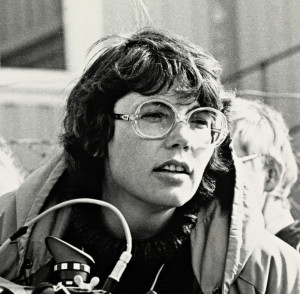
Anja Breien is the director of Hustruer (“Wives”). She and Vibeke Løkkeberg (see under L) were the two most prominent female directors in Norway in the 70s and early 80s.
They were both influenced by the auteur concept; Breien through her use of a modernist artistic style and Løkkeberg through her pursuit of the role as a creative artist. At the same time, they were both marked by the typical 70s’ idea that art was supposed to be both political and socio-critical.
Some international critics asked whether Anja Breien was Scandinavia’s “new Bergman”; others referred to Norway as “the land of female directors”. Breien’s body of work in fiction and documentary explores social and political issues, notably women’s rights within the context of Norwegian society.
Rasmus Breistein
Rasmus Breistein (16 November, 1890 in Bergen – 16 October, 1976 in Hollywood, USA).
Rasmus Breistrein is director of Brudeferden i Hardanger which marked the annals of Norwegian cinema history in more ways than one. Most importantly Breistein played a huge part in the period 1920-1930, that later was known as “the national breakthrough for Norwegian films.”
He was a farmer’s son and learned to play fiddle in his youth, playing for dances at weddings in Western Norway. Later in life, in addition to directing films, he also performed on the Hardanger fiddle.
When the Norwegian Theater opened in 1913, he started acting at the theater. He became engaged with the new medium of film after seeing Peter Lykke-Seest’s productions, and he decided to produce films in a completely different way. His first film was Fante-Anne (Gypsy Anne, 1920). In an interview he stated that “the film was the beginning of something, a Norwegian production with a more national character.” This marked the beginning of the Norwegian heyday of the silent film age.
Breistein is considered the most important Norwegian filmmaker of the silent film era. During the period known as the “national breakthrough” in Norwegian film (1920–1930), he directed five feature films: Fante-Anne (Gypsy Anne, 1920), Felix (1921), Jomfru Trofast (Miss Faithful, 1921), Brudeferden i Hardanger (The Bridal Procession in Hardanger, 1926), and Kristine Valdresdatter (1930). With these films, he challenged Swedish films’ former position of power and pleased both critics and audiences.
After audio films were invented, Breistein solidified his reputation as a director of the popular films Ungen (The Child, 1938) and Trysil-Knut (Knut from Trysil, 1942). The documentary films Jorden rundt på to timer (Around the World in Two Hours, 1949) and Tirich Mir til topps (To the Top of Tirich Mir, 1952) are classics in the history of Norwegian documentary film.
He died in Hollywood, and his urn was brought to Norway.
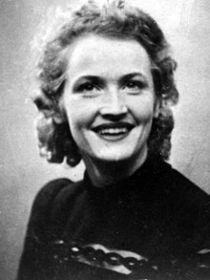
Edith Carlmar (born Edith Mary Johanne Mathiesen) (15 November 1911 – 17 May 2003. Her 1949 film, Døden er et kjærtegn (Death is a Caress), is considered to be Norway’s first film noir. The last film she directed, Ung Flukt, introduced Liv Ullmann, Norway’s most famous actor internationally, to the silver screen.
Carlmar came from a poor family in the working class districts of East Oslo. However, she did manage to take dancing classes and made her debut on stage at the age of 15. From 1936 she worked as an actress in various theatres. Here she met the film director Tancred Ibsen who introduced her to the world of cinema.
In 1949 she and her husband started Carlmar Film A/S, and began writing scripts, directing and producing films. They made ten feature films over a ten-year period. After a decade of film-making Carlmar retired as a director. In the last part of her life, she accepted only minor acting roles in plays and movies. Carlmar’s films often tackled such social issues as abortion, drug addiction, mental illness and out of wedlock births. Her films often pushed the boundaries of censorship at that time.
Eva Dahr
Eva Dahr (30 October 1958 – 12 May 2019) Eva Frederikke Dahr is a director and writer, known for Trio – Jakten på Olavsskrinet (2017).
Dahr was one of Norway’s most prolific directors of short films. She studied at the Volda University College and the Bela Balaz studio in Budapest, Hungary.
Dahr was the conceptual director of the TV drama Himmelblå. Dahr has directed the film drama Brennende blomster (1985), where she edited together with Eva Isaksen the drama comedy Mars & Venus (2007) and the drama Appelsinpiken (2009). Together with her sister, the actress Juni Dahr, she made two short films, Dolce Vita (1989), where Juni Dahr plays a cobbler, and Troll (1991). In 2008, Dahr directed her first TV series, NRK’s drama series Himmelblå. She also made many children’s films.
Dahr won many Norwegian and international prizes, including an Amandastatuett and Gullstolen at the Kortfilmfestivalen i Grimstad for the short film En mann (1997).
Dahr was short film consultant for the Norwegian Film Institute and Norwegian Film Fund from 1998 to 2002.
She died at age 60 following long-term illness.
Trygve Allister Diesen
Trygve Allister Diesen (Born 11 July 1967)
Trygve Allister Trig Diesen is a TV and film director, producer, and screenwriter. He has mostly worked in Scandinavia and the US.
Trygve Allister Diesen graduated from USC School of Cinematic Arts in Los Angeles. He started his professional career as a journalist in Kristiansand. Diesen has a comprehensive background in screenwriting and directing for film and TV, in Europe and the USA. He has also translated plays for theaters. In 2010, he was the first to be awarded a practice-based doctorate in directing from the Norwegian Film School, with the project “Being the Director – Maintaining your Vision While Swimming with Sharks”, where he explored the nature of keeping a personal, artistic vision in a collective and commercial art form.
Diesen’s second feature film, Hold My Heart, was Norway’s official submission for the 2003 Academy Awards, and was screened at festivals globally. Diesen is also the creator of the Scandinavian thriller miniseries Torpedo. His first American film Red, starring Brian Cox and Tom Sizemore, premiered at the Sundance Film Festival in 2008.
Diesen is the director and pilot (conceptual) director on the Norwegian TV series Det tredje øyet/The Third Eye (2014). He directed two of the episodes of the ABC Networks US series The Assets (2014).
In 1974 he produced the musical Bør Børson Jr. Düring also chaired the trade union Norsk Filmforbund.
Alexander Eik
Alexander Eik (Born 8 January, 1972)
Alexander Eik is an award winning Norwegian film and TV series director, TV series creator and screenwriter. Eik is also the Head of Development and Partner in Cinenord Drama, a leading film production company in Norway and Scandinavia.
Educated in fine arts, Alexander Eik started making short films…
Based on true events and starring Sofia Helin and Kyle MacLachlan, Atlantic Crossing is the untold story of the Norwegian Crown Princess becoming an influential figure in world politics during World War II.
1940. Norway is occupied by Nazi Germany. Crown Princess Märtha and her children find shelter as political refugees in the White House. Her presence in Washington soon influences President Roosevelt’s views on the tragic events unfolding in Europe and eventually changes the dynamics of U.S. politics significantly. What starts as a friendship turns into affection and turmoil when Märtha speaks out publicly against the Nazi tyranny. In an attempt to fight for her country, she puts her marriage at risk and convinces the President to support Norway – a first step in the struggle that will lead to the U.S. joining the War. However, Märtha’s actions cause her to make many enemies, some of them even closer than she thinks: within the walls of the White House.
However, after airing some episodes, headlines became merciless: ‘Atlantic Crossing’ puts NRK’s credibility in play, claimed one in newspaper Aftenposten. False story-telling disguised as drama read another, while a commentary written by history professor Tom Kristiansen and royal biographer Tore Rem was headlined: NRK gives viewers a fundamentally untrue story.
It’s a widely held belief by many that comedy doesn’t travel well. Comedies from Hollywood often face more uncertain futures when it comes to international takings than other genres, particularly action films, and non-English speaking comedies seem to struggle to find an audience outside of their native countries. There are of course exceptions and I for one frequently enjoy comedies that just happen to have a line of subtitles running along the bottom of the screen, but it does seem like a rarity for comedies not made in English to achieve success in the UK or America.
Norway appears to have bucked this trend somewhat in the past years, with Troll Hunter and, to a lesser degree, Norwegian Ninja getting favorable reviews outside of their country of origin, but this could well have more to do with aspects aside from the films’ comedic merits. Clearly looking for crossover potential and to appeal to a broad market comes King Curling, a Norwegian comedy that focuses on the sport of curling. Speaking in terms of ‘potential’ and ‘markets’ seems entirely appropriate for a film that appears so consciously targeted at a broad audience, with all the lowest common dominator dumbing down that this could possibly entail.
Drawing on the dumbest that Hollywood comedies have to offer King Curling adds a thick layer of ‘quirk’ that is clearly also derived from a number of American films. Whilst the premise, a niche sport with a group of misfits attempting to win a big prize to save their mentor, and a lot of the comedic execution is entirely derivative of Adam Sandler, Ben Stiller, Kevin James and so on, there is a concerted effort to draw on the likes of The Coen Brothers (The Big Lebowski) and Wes Anderson (notably The Life Aquatic, but King Curling is dripping in attempts at Anderson’s style).
He became known during the 1990s through Norwegian Broadcasting Corporation (NRK), especially on the weekly satire Egentlig, an equivalent to Saturday Night Live. He was also well known for his many dubbing film voices, such as Timon in the Norwegian version of The Lion King.
In 2009 Engmark made his debut as a film director, with the children’s movie Knerten. The movie became a box office hit and was seen by more than 375,000 viewers in Norway. Among many festivals, it participated in the official Generation K Plus section of the Berlinale 2010. Knerten was awarded Best Children’s movie, Best Art Design and Best Visual Effects at the Norwegian Film Awards 2010 Amandaprisen.
In 2010, he won the Norwegian version of Strictly Come Dancing, in Norwegian called Skal vi danse.
Engmark directed, performed and wrote in many different artistic directions. He performed comedy in both Norwegian and English, and won the Norwegian Stå Opp-Prisen (Stand Up Award) in 2001.
Mathias Nordli Eriksen
Mathias Nordli Eriksen The directing duo Mathias Eriksen & Matias Rygh is currently writing their first feature and recently made a strong mini-docu on the air pollution crisis in New Delhi.
In 1987 he won the Norwegian movie award Amanda for best Norwegian film: X.
Stefan Falbakken
Stefan Faldbakken (Born January 13, 1977)
Faldbakken is son of famous Norwegian writer Knut Faldbakken. He grew up on Ridabu, some kilometers away from Hamar. He’s currently working in MotionBlur, an advertising agency started by director Harald Zwart, where he’s making commercials.
He received his Bachelor of Arts in History of Philosophy and Media Science from the University of Oslo in 1995. Faldbakken graduated from Dramatiska Institutet College of Film and Television in Stockholm in 1999. having completed the three-year producer program. He has worked as production manager, director`s assistant, and producer on several short and feature films. Most notable is his graduation film from DI – “Major and Minor Miracles“, which was nominated for Oscar in the best live action short film category in 2000, and which won awards for best script, best film, and a young talent award at the International Film School Festival in Munich summer 1999.
Miracles, in Sweden? A village curate with paltry attendance at his services gets a call one Sunday in December to meet an emissary from the Vatican who has come to test a child for special powers (he’s the young son of a farming couple in the curate’s parish; he’s come to the Vatican’s attention via a roundabout chain of odd events). The curate takes the visitor to the farm, convinced that nothing is out of the ordinary. Then, event by event, the curate comes to think otherwise and must figure out a way to save the child from a life in Rome. Are miracles afoot? The very fact the curate’s car starts in mid-winter may be a sign of things to come.
Fastvold is a New York and Oslo-based writer-director. In early 2012 Mona received a prestigious development grant from the Norwegian Film Fund followed by production support for her directorial feature debut, “The Sleepwalker,” which went on to premiere at Sundance in the U.S. competition.
“The World to Come” screened at the 2020 Venice International Film Festival.
Somewhere along the mid-19th century American East Coast frontier, two neighboring couples battle hardship and isolation, witnessed by a splendid yet testing landscape, challenging them both physically and psychologically.
Frode Fimland
Frode Fimland
Frode Fimland holds adegree in media from Volda University College (1986). He has worked with video and TV production in Bergen since 1986, mainly as a photographer and producer, but later with directing and filmmaking as well.
NRK (Norwegian Broadcasting Corporation and TV 2 have been primary clients.
Most recent productions are the “Siblings are forever” films. The first one a slow and beautiful documentary, winner of Best Feature at Big Sky Documentary Film Festival in Montana, USA. It is the most watched documentary of all time on TV 2 in Norway.
The sequel “The Grand Journey” was released in cinemas the fall of 2015, and shown on Norwegian TV 2 in February 2016.
Arild Fröhlich
Arild Fröhlich (Born September 22, 1972)
Arild Fröhlich is a director and writer, known for Folk flest bor i Kina (2002), Pitbullterje (2005) and Fatso (2008) and “Doctor Proktor: Bubble in the bathtub” (2014).
Arild started his career in NRK (The Norwegian Broadcaster). Recently graduated from Volda University College with a degree in TV- and documentary studies, it was a short way to NRK. In NRK he got the possibility to express himself creatively, and he took part in some of NRKs most successful humor-series ever.
This made the foundation for his humorous and playful narrative style. In 2005 he had his feature film debut with “Pitbullterje”. It won the prize for Best Children- and Youth Film during the Amanda Award (The Norwegian Oscar). Since then he has directed several feature films, among them “Doctor Proktor”, based on a novel by Jo Nesbø.
Arild’s humorous and playful style is also an important ingredient in his commercials, which are known for great charm and warmth.
Nils Gaup
Nils Gaup (born in 1955 in Kautokeino).
Gaup is a director and actor, known for Pathfinder (1987), Pathfinder (2007) and Head Above Water (1993).
Nils Gaup’s 1987’s Oscar-nominated Pathfinder is depicting a famous dramatic episode from the country’s 13th-century civil war, The Last King features enough exciting swordplay and skiing — yes, skiing — to keep viewers satiated, especially fans of the not-dissimilar Games of Thrones, whose Kristofer Hivju plays a lead role here.
Set in 1204, the story involves Haakon, the illegitimate infant son of a recently assassinated Norwegian king, who becomes the object of pursuit by the Baglers, largely comprised of the aristocracy and the clergy and intent on seizing the throne. Attempting to spirit the toddler to safety are Torstein (Hivju) and Skjervald (Jakob Oftebro), two soldiers representing the Birkebeiner, the impoverished faction of the people whose name was derived from the birch bark they supposedly used to make their shoes and skis. Their treacherous journey through the snowy wilderness has become legendary in Norway, which still honors it today via such sporting events as an annual ski run.
American viewers would be wise to not attempt to follow the convoluted political intrigue and numerous subsidiary characters but rather simply enjoy the vigorously staged action sequences that are vividly rendered in Peter Mokrosinski’s handsome widescreen cinematography.
Erik Gustavson
Erik Gustavson (Born 24 November, 1955)
Gustavsen is known for his work on Blackout (1986), Herman (1990) and The Telegraphist (1993).
The Telegraphist (is an adaptation of Knut Hamsun’s novel Dreamers which was entered into the 43rd Berlin International Film Festival.
In addition to his feature films, Gustavson has directed and produced approximately four hundred commercials world-wide for a variety of international markets. Gustavson has published articles and produced documentaries about the craft of filmmaking, and occasionally teaches the subject in Norway, Cuba and Argentina.
Among the international awards that Gustavson has received are: Seven nominations for the Amanda Award, and three Amanda wins including Best Norwegian Short Film (1985), Best Norwegian Feature Film (1991), and Best Nordic Feature Film (1993); Two Golden Pencil Awards for Best Norwegian Commercial, one Gold Award for Best Nordic Director; and three Eurobest Awards in different categories for commercials.
Since 2002 Gustavson has been based in Norway and in Italy and is now creative director and partner in the cross-media company Small Screen AS, developing interactive quality content for the international Smartphone market.
Itonje Søimer Guttormsen
Itonje Søimer Guttormsen (Born 1979)
Based in Oslo, Itonje produces most of her work in her company ANDROPIA, and is currently completing a feature film, Burning Man, which follows the protagonist of her film Retrett on a new adventure.
Line Halvorsen
Line Halvorsen (Born 1969)
Halvorsen was educated at the University of Trondheim and in the documentary film department at Volda University College.
She has directed and edited more than 20 documentaries and travel films since 1997. Halvorsen lived in Bethlehem in the West Bank from 2002 until 2004. During that time she wrote, edited and directed the award-winning documentary A Stone’s Throw Away (2003) about the lives of three young Palestinian children. In 2004, she moved to the United States where she made USA vs Al-Arian (2007) about the trial and imprisonment of Sami al-Arian. After a six-month trial in 2005, the jury found Al-Arian not guilty of raising funds for the Palestinian Islamic Jihad. In 2010 her documentary “Living Without Money” was released, portraying the life of the German woman Heidemarie Schwermer who has been living without money since 1996.
Bent Hamer. Photo: Marius Fiskum / www.fototopia.no
Bent Hamer (Born December 18, 1966)
Hamer’s last film, Factotum, was actually shot in the United States, starred Matt Dillon and Marisa Tomei, and was adapted from a book by Charles Bukowski. Hamer has managed to develop a worldwide audience with largely character-driven films such as O’Horten, and Kitchen Stories, which have visuals and elements that feel very specific to Norwegian, or at least Scandinavian, culture.
Dag Johan Haugrud
Dag Johan Haugerud (Born December 30, 1964) Dag Johan Haugerud is a Norwegian writer and director. Coming from the small town of Eidsberg, Norway, he started out making documentary films and shorts, before moving into the minimalist tradition of Scandinavian film-making.
Dag Johan Haugerud likes a challenge. His 2014 film I’m the One You Want was a 53-minute, straight-to-camera monologue about a schoolteacher who fell in love with one of her 15-year-old students. His latest, Beware of Children (Barn), which clocks in at two and a half hours, suggests he has plenty more to say about the world of education and its rules for both kids and the adults that teach and accompany them.
Aksel Henie
Aksel Hennie (Born 29 October, 1975)
Hennie is an actor, writer and director. He has acted in a number of successful Norwegian movies, and has received several awards. Hennie grew up in Lambertseter in Oslo. In his late teens he was sentenced for tagging, and became an outcast in the community.
He was admitted to the Norwegian National Academy of Theatre after applying four times. He graduated in 2001, and has acted both at Teatret Vårt in Molde (2001–2002) and at Oslo Nye Teater (since 2002), where he has been in plays such as Hamlet and Kvinnen Som Gifftet Seg Med en Kalkun (The Woman Who Married a Turkey).
Hennie’s most notable success has been as a film actor. He made his debut starring in the feature film Jonny Vang in 2003. Although the director, Jens Lien, originally thought Hennie was too young for the role, the actor convinced him he was the right man for the film. That same year, he also acted in the films Buddy and Ulvesommer. The next year, Hennie made his debut as a director and writer with the film, Uno, in which he also acted. For this role, Hennie and his co-star, Nicolai Cleve Broch, undertook six months of hard physical training in order to perform convincingly as bodybuilders.
In 2001, Hennie was named “Theatre Talent of the Year” by the newspaper Dagbladet. Hennie won the Amanda Award (an important Norwegian film award), for “Best Direction” for Uno in 2005. That year he was among the nominees for “Best Actor” and “Best Film.” He won an Amanda Award for “Best Actor” for Jonny Vang in 2003. He was named one of European film’s “Shooting Stars” by the European Film Promotion in 2004.
In 2008, Hennie starred in Max Manus, where he played the Norwegian war hero of the same name. The film had a large budget by Norwegian standards. In 2011, Age of Heroes was released, a World War II film primarily shot in Norway. On 30 August 2013, Pionér, a docudrama, was released. Hennie plays the main role as a commercial offshore diver in the North Sea during the 1970s who witnesses an accident while diving under extreme conditions, prompting him to search for answers.
On 1 December 2013 Hennie won an Angela Award at the Subtitle European Film Festival in Kilkenny, Ireland, for his role in the film 90 Minutes. That evening he appeared at a showing of Headhunters, and did a question-and-answer session with the audience in the theatre after the film.
Thor Heyerdahl
Thor Heyerdahl (Born on October 6, 1914)
Heyerdahl was a director and writer, known for Galapagos (1955), Aku-Aku (1960) and Kon-Tiki (1950). He died on April 18, 2002 in Colla Micheri, Liguria, Italy.
In 1947 Heyerdahl and five fellow adventurers sailed from Peru to the Tuamotu Islands, French Polynesia in a pae-pae raft that they had constructed from balsa wood and other native materials, christened the Kon-Tiki. The Kon-Tiki expedition was inspired by old reports and drawings made by the Spanish Conquistadors of Inca rafts, and by native legends and archaeological evidence suggesting contact between South America and Polynesia. The Kon-Tiki smashed into the reef at Raroia in the Tuamotus on 7 August 1947 after a 101-day, 4,300-nautical-mile (5,000-mile or 8,000 km) journey across the Pacific Ocean. Heyerdahl had nearly drowned at least twice in childhood and did not take easily to water; he said later that there were times in each of his raft voyages when he feared for his life.
Heyerdahl’s book about The Kon-Tiki Expedition: By Raft Across the South Seas has been translated into 70 languages. The documentary film of the expedition entitled Kon-Tiki won an Academy Award in 1951. A dramatized version was released in 2012, also called Kon-Tiki, and was nominated for both the Best Foreign Language Oscar at the 85th Academy Awards and a Golden Globe Award for Best Foreign Language Film at the 70th Golden Globe Awards. It was the first time that a Norwegian film was nominated for both an Oscar and a Golden Globe.
Cabin Fever (Norwegian: Når nettene blir lange) was the first attempt in Norway at a Dogme film. The film portrays an extended family vacationing together in a cabin in the mountains, and the internal conflicts that emerge.
The film begins during Christmas in Norway. A family and all of their relatives decide to stay at a remote cabin to celebrate the holidays. Their Polish–Lithuanian Commonwealth relatives join them. When they arrive, the Polish relatives are annoyed that there is a lack of water and no electricity. As family arguments begin to break out, the film reveals the characters reasoning’s and grudges against one another. Secrets are revealed. One of the children has severe asthma problem which is made worse by the presence of a dog. The father, additionally, cannot control his alcohol problem. He then becomes aggressive making the situations worse than it is. Towards the end of the film the father drinks so much alcohol that he collapses. The family throws him out into the freezing cold where he is never found again. The family members are heartbroken that father Gunnar is gone.
Marius Holst’s latest film KING OF DEVIL’S ISLAND (2011) has deservedly got a load of positive reviews. The story follows the imprisonment of newcomer, Erling on the island of Bastøy – a notorious Norwegian reform center for young boys, famous for its harsh conditions (ironically Bastøy today boasts one of the most liberal prisons around).
Marius cleared up an internet rumor that the film had been shot in 54 days. “Actually, that’s a false rumor”! he says. “It was shot in 47 days. I don’t know when but it ended up on the net somewhere. We shot it in 47 days.”
Tancrd Ibsen
Tancred Ibsen (11 July, 1893 – 4 December, 1978)
Tancred Ibsen was the son of Sigurd Ibsen (1859 – 1930), Prime Minister of Norway 1903-1905, and grandson of the world-famous playwright Henrik Ibsen (1828-1906).
He directed Friends (Venner) in 1960 about two old friends climbing the Eagle Peak mountain and revealing an intelligent story about a friend trying to get rid of another and getting revenge, take the glory of friend’s achievement, get his leading job in the firm, and even his woman.
For a short period Tancred Ibsen stayed in the United States and Hollywood in the 1920s. According to his autobiography, his purpose was to ‘Ibsenize cinema’, but his stay in Hollywood was brief. New information on Ibsen’s Hollywood period is found by examining the outlines and synopses he wrote for MGM in 1924 and 1925, with a closer look at the synopsis Kin of Fame, a drama about identity and recognition with clear references to his own life.
Vibeke Idsøe
Vibeke Idsøe (Born 8 October, 1965)
Vibeke Idsøe is a writer and director, known for Body Troopers (1996), 37 1/2 (2005) and Løvekvinnen (2016).
After an 11 year absence, Norwegian writer/director Vibeke Idsøe came back with the lavish period drama Løvekvinnen (The Lion Woman).
The film is based on Erik Fosnes Hansen’s best-seller (2006) and Idsøe realized it had a huge visual potential for the silver screen. She had a wonderful collaboration with Erik, and he liked the choices she made, the focus on the father-daughter.
Regarding the directing job, she admits it was hard work, but she really wanted to do it. Still, she needed the time to let the project grow in her. Back in 2006 she wasn’t ready to make the film. What helped a lot was the long pre-production period to feel safe before production.
Eva Isaksen
Eva Isaksen (Born 22 May, 1956)
Eva Isaksen directed her first feature film Burning Flowers (Brennende blomster) (1985) with Eva Dahr, and has worked as an assistant on a number of films, including Sweetwater (1988) by Lasse Glomm, Wayfarers (Landstrykere) (1989) by Ola Solum, and The Dive (Dykket) (1989) by Tristan de Vere Cole. In 1990 she directed Death at Oslo Central (Døden på Oslo S), about the two boys Pelle and Proffen, based on the novels for young people by Ingvar Ambjørnsen, a Norwegian author living in Hamburg. Two years later she presented her third feature film Homo Falsus (Det perfekte mord) (1992).
Jensen’s experience as a filmmaker has encompassed every medium including feature flms, documentary and television. He has received numerous international awards including four Amandas (Norwegian Oscar) in his native Norway. His surrealist storytelling approach combines past and present into a unique and compelling visual language.
Knut Erik Jensen is a truly unique Norwegian artist and world-class filmmaker. A survivor of the German occupation of Norway in World War II, as a child he witnessed the reconstruction of his native Finnmark after it was burned to the ground by the Nazi scorched earth policy. Many of Jensen’s films attempt to reconcile this important history of Northern Norway.
Stella Polaris is a poetic, beautifully shot meditation on childhood, growing up, love, and death, set in the arctic region of Norway during the German invasion of World War II. The engrossing drama Burnt by Frost reflects over the lives and romance of Simon (Stig Henrik Hof) and Lilian (Gørild Mauseth) in Northern Norway as World War II gives way to the Cold War. Simon worked with Russian partisans against Nazi occupiers during the war, but in its aftermath his old friends are now enemies, and former enemies have become friends – what side should he choose?
Matias ArmandJordal
Matias Armand Jordal (Born 24 November, 1970)
Matias Armand Jordal, film director and script writer, known for 35 episodes of the TV series Hotel Cæsar (2004-2005), Sammen (2009) and The Birds (2019).
Sammen (Together) is the story of a father, a mother and their son looking forward to go on vacation. On the way they experience an accident, and their lives are suddenly and unexpectedly turned upside down.
This is a story about a father and his son’s journey through a landscape of sorrow, after they tragically lose the one person they love the most. It’s about how they deal with their new everyday life without her, and their strain to win control over the new situation. The woman who dies was the “glue” that kept the family together, and without her they feel like they have to make a new start, a situation that exhausts them both. They realize that they haven’t spent much time together, and have a hard time trying to communicate with each other. Even simple things like making a meal becomes a challenge. The father experiences the loss of this woman so strongly that he isn’t able to pull himself together and take responsibility of his own and his son’s life. In pure desperation he meets with the children welfare service, and when his son is temporarily sent to an orphanage, he isolates himself from his surroundings and rejects every attempt for contact, even from his own son. But the son refuses to give up hope that they can become a family again, and fights bravely to get his father back to life.
The film is a drama about loss and love, told in a realistic style with a great deal of humor and warmth.
Marie Kristiansen
Marie Kristiansen (Born 1982) Marie Kristiansen is a director and actress, known for Måker (1991), Exteriors (2011) and Delete Me. She is currently based in Los Angeles.
Yenni Lee (Born 18 November, 1986) Yenni Lee has made several award-winning short films and is currently in the pre-production phase of her first feature film, which is set for release in 2021. Her Locarno Shorts-nominated short, Explosions in the Heart is a tender and visually evocative film about a young girl who lost her twin sister in an accident.
Jens Lien
Jens Lien (Born 14 September, 1967)
Lien left his native country, Norway, for London in 1990. His initial intention was to play rock music in the British capital, but three years later, he was back in Oslo after graduating from the London International Film School. His graduation project was the short film Montana, that was featured at the short film festival in Grimstad that year. in 1995 he again participated in this festival, with the entry Mitt elektriske kjøkken (My Electrical Kitchen). Lien went on to make the short films Døren som ikke smakk (Shut the Door, 2000) and Naturlige Briller (Natural Glasses, 2001). Both of these films were based on scripts by Per Schreiner, and both were featured at the Cannes International Film Festival. In addition to this Lien has also made a number of commercials.
In 2003 he had his feature film debut with the movie Jonny Vang. The movie was selected for the Berlin Film Festival. The movie was awarded an Amanda Award for “Best Actor” (Aksel Hennie) in 2003. It was also nominated in the category “Best Film”.
Lien’s next major film project was Den brysomme mannen (The Bothersome Man) (2006). This film was again the result of a cooperation with Per Schreiner; it was based on a story originally written for radio theatre, recorded two years before it was adapted for the screen. Lien later said in an interview that the script made such a great impression on him that he was unable to sleep after first reading. The film was awarded three Amandas in 2006: for “Best Direction”, “Best Screenplay” and “Best Actor” (Trond Fausa Aurvåg). It was also nominated in the categories “Best Film” and “Best Actress” (Petronella Barker). Den brysomme mannen has won more than 20 international awards, including the ACID Award (Agence du Cinéma Indépendant pour sa Diffusion) at the Cannes Film Festival.
In 2011 his next feature film Sønner av Norge (Sons of Norway) premiered at the Toronto Film Festival. The film features a cameo performance by John Lydon (aka Johnny Rotten). It premiered in Norway at the same time.
In 2014 he directed the mini-series Viva hate for SVT (Swedish television). The series was three 60-minute episodes, and was a romantic comedy about rock ‘n’ roll set in Gothenburg’s vital music scene in the early 1990s.
Vibeke Løkkeberg
Vibeke Løkkeberg (Born January 22, 1945)
Vibeke Løkkeberg is an actress and director, known for
Norway was once the land of female directors. Then they vanished. New research shows how female Norwegian directors were sidelined by a small French word.
Imagine Norway in the seventies, perhaps the early eighties. Flared trousers and high hair. In the cinemas they’re showing Norwegian films such as Hustruer (“Wives”), Løperjenten (“Betrayal”), Arven (“Next of Kin”) and Åpenbaringen (“The Revelation”). Directors Vibeke Løkkeberg and Anja Breien are highly successful both nationally and internationally. They are among the best Norwegian examples of so-called “auteurs” – cinematic artists.
No one would imagine that a few decades later, these women would be regarded as representatives for a misdirection in Norwegian film history, a “misunderstanding” that would affect women’s status within the Norwegian film scene for a long time to come.
“Internationally, the term ʻauteur’ has primarily been used as a badge of honour, but in Norway it became a negatively charged term, an insult,” says Johanne Kjelland Servoll, who defended her PhD thesis about the Norwegian auteur shortly before Christmas 2014.
In order to understand why this happened, it is necessary to realise what it meant that Løkkeberg and Breien were regarded as so-called auteurs. Moreover, we need to understand the significance of this small, seemingly insignificant French word both in Norway and globally.
(Excepts from an article “Information and News About Gender Research in Norway” by Karine Gullvik in KILDEN
Gunhild Westhagen Magnor studied at Surrey Institute of Art and Design. Her documentary series have both been nominated for Best Documentary Series in Norway 2011; Karanba (NRK, YLE) and Thaifjord 2 (TV Norge). Previous works includes numerous audience favorites, like the doc series Thaifjord 1 (Winner of the TV prize Gullruten 2008, TV Norge/SVT), and her single docs Rabbit King (2007 NRK/Krakow Int. Film Festival), Wings under Water (2005 NRK), Norwegian Wood (TV2) and The Day of The Dead, (Rain Dance international film festival, 2001). She has shot the theatrical doc Nemesis (2006), which was nominated for Best Cinematography for Songs from the Street (Audience Award, Norwegian Doc Festival/ Krakow Int. Film Festival). She has worked as 2nd unit on several major Norwegian fiction features.
Kari Anne Moe
Kari Anne Moe (Born 14 December, 1976)
Kari Anne Moe is a director and writer, known for Knut Sigve fra Folkestad (2010), Bravehearts (2012) and Rebels (2015).
Rebels, one of ten films nominated for the AWFJ EDA Award for Best Female-Directed Documentary at IDFA 2015, is about the problems faced by disenfranchised youths in Norway. Filmmaker Kari Anne Moe takes a tough yet sympathetic look at the struggles of Norwegian dropouts enrolled in a special social welfare program created to help them renter the mainstream.
Hans Petter Moland
Hans Petter Moland (Born on October 17, 1955)
Moland is a director and writer, known for Aberdeen (2000), In Order of Disappearance (2014) and Zero Kelvin (1995). He has received awards for his commercials at major festivals, including Cannes, before he made his feature debut in 1993 with The Last Lieutenant. He followed up with Zero Kelvin (1995), Aberdeen (2000) and The Beautiful Country (2004), which was selected for Competition in Berlin.
Halkawt Mustafa
Halkawt Mustafa directed El clásico (2015) about two brothers in Iraqi Kurdistan who embark on a risky trip to Spain to meet a soccer hero Cristiano Ronaldo.
The production is notable as the first screen project permitted to film in Baghdad’s Green Zone, or international sector, where the filmmakers were never far from falling bombs. According to the movie’s production notes, the bombings usually stop during big soccer matches, given Iraqis’ love of the sport. The film’s title refers to the name applied to any face-off between archrivals Real Madrid and Barcelona.
Played by real-life brothers who are first-time actors, Alan (Wrya Ahmed) and Shirwan (Dana Ahmed) come down on different sides of the Spanish football divide.
The screenplay, by Mustafa and Anders Fagerholt, benefits from touches of irreverent humor as it sets the brothers on a challenge-riddled path. Beyond such ordinary pitfalls as running out of gas for their four-wheel ATV, Alan and Shirwan confront curfews, diplomatic red tape and far worse. At an especially desperate moment, an accommodating Baghdad hotel owner connects them with a black marketeer (Nassr Hassan) who offers a lifeline of sorts when all hope might otherwise be lost.
In spite of its over-the-top dramatic twists, El Clásico is winningly heartfelt, drawing upon the lead actors’ natural chemistry and especially the understated performance of Wrya Ahmed. With fine camerawork by Kjell Vassdal and a mournful score by Trond Bjerknes, Iraqi-Norwegian filmmaker Mustafa has crafted a visually striking road trip.
He is also a comics artist. He is especially known for his subcultural depictions. Nielsen got his first comics printed in 1980 after entering a competition in the Norwegian anarchist magazine, Gateavisa. Only three years later he got his first album published. Generally, he works in a rough and direct style, inspired by the American underground comix tradition.
His most famous cartoon, To Trøtte Typer (Two Wasted Wankers), depicts the life of the two drug users and petty criminals Odd and Geir living their relatively boring lives in Oslo, Norway. This cartoon has been made into a feature for television, running for 13 episodes plus a Christmas special. They also star in the animated movie Free Jimmy (Slipp Jimmy Fri) along with several others of Nielsen’s more famous characters. Another well-known character is the notorious Hold Brillan (Hold My Glasses), a huge “redneck”-like character who terrorizes his so-called mates and always gets into fights. Thus “Hold My Glasses” – he cannot fight with them for fear of breaking them.
Petter Næss
Petter Næss (Born 1960)
Originally Næss worked as a writer, director and actor for the theatre, staging close to 30 productions. In 1997 he was appointed director of Oslo Nye Teater (Oslo New Theatre) and he quickly made a mark for himself promoting contemporary Norwegian plays.
Scandinavian filmmakers are known for making somber, heavy opuses drenched in angst and metaphysical meditations, like the great Swedish director Ingmar Bergman. But the truth is there has always been another strain of Scandinavian films, whimsical comedies like “Kitchen Stories” and the Oscar-nominated “Elling” (2001).
When his mother, who has sheltered him his entire 40 years, dies, Elling, a sensitive, would-be poet, is sent to live in a state institution. There he meets Kjell Bjarne, a gentle giant and female-obsessed virgin in his 40s. After two years, the men are released and provided with a state-funded apartment and stipend with the hope they will be able to live on their own. Initially, the simple act of going around the corner for groceries is a challenge. Through a friendship born of desperate dependence, the skittish Elling and the boisterous, would-be lover of women, Kjell Bjarne, discover they can not only survive on the outside, they can thrive. But as their courage grows, the two find oddball ways to cope with society, striking up the most peculiar friendships in the most unlikely places.
His film “Gone With the Woman” (2007) is in much the same sly comic mode. It has enough appealing touches to score on the festival circuit, though it’s a little too mild and precious to capture any significant audience in American theaters. The film is Norway’s official submission for this year’s foreign-language Oscar.
“Woman” begins with a gob of narration by the sad-sack hero (Trond Fausa Aurvag) describing the strange onset of his romance with Marianne (Marian Saastad Ottesen), who moves in with him despite his indifference. After a series of misadventures, the hero (who is never named) announces, “I decided to fall head over heels in love with her. I would start in the morning.”
The course of true love never did run smooth, and after the hero meets an enticing new flame during a whirlwind trip to Paris, and after Marianne takes up with a lover of her own, matters finally wind their tortuous way to the right romantic conclusion.
Næss has unmistakable visual talent, and there are striking images, alternately ironic and idyllic, throughout the movie. There’s even a deft bit of animation marking one of the key transitional sequences. Technical credits are strong, and the use of music is inventive. Despite its likable cast and inventive visuals, the film desperately needs a few bold laughs in addition to its mild chuckles.
Margeth Olin
Margreth Olin (Born April 16, 1970)
Olin is a director and writer, known for The Angel (2009), Nowhere Home (2012) and Doing Good (2016).
Margreth Olin claims the film Angel is based on a friend’s story and you can clearly feel her compassion for her troubled heroin-addict played by several actresses at different ages culminating in Maria Bonnevie’s flat-out space cadet. The only interesting twist here is that she does the right things — gives up her precious child until she gets clean.
The film is a tough slog through spousal and child abuse, alcoholism, prostitution, degradation and dysfunction without the intervention of art — you know, that thing that makes you understand why you’re on such a familiar journey.
It’s Only Make Believe introduces viewers to a woman whose intention to be a loving and devoted mother keeps getting derailed by circumstance and iffy decision-making. Buoyed by charming performances and enough violence to balance its wistful tendencies, the stylish Norwegian film would be welcome in American arthouses and is all the more impressive given that Ommundsen filled nearly all the major behind-the-camera creative roles.
Silje Salomonsen plays Jenny, a curly-headed, large-eyed young woman first seen telling boyfriend Frank that she thinks she’s pregnant. The news goes over well, and Frank responds with a sweet proposal, before the couple gets back to the mischief they’d planned for the evening — a minor break-in that goes badly awry, with Jenny trying to save Frank’s life and shooting him instead.
Ommundsen constructs sequences with an enjoyably choppy editing style, moving the story forward while pausing now and then for hazy, happy montages accompanied by gentle-voiced indie songwriters.
Ommundsen is as unsparing with sudden violence as he is with the deployment of a little girl’s smile, and it’s hard not to get worked up while guessing which elemental force will carry the day. In a performance that combines optimism with a frank way of confronting life’s unfair obstacles — and this life has more than its share — Salomonsen seems capable of enduring until things go her way.
About Strictly Confidential: Every family has their secrets. But for director Benedicte Orvung, theirs is one that hid a brutal dark story with grave historical consequences. Benedicte’s great uncle was Karl Marthinsen, the most prominent Norwegian Nazi collaborator during the Second World War. This information had been kept a secret from her until she discovered who he was by accident at the age of thirty. What she uncovers is the shocking and harrowing story of a man her family felt was best forgotten through shame.
This visually striking film weaves together personal testimonies with archived footage, and uses the words from documents he had written to paint a shocking picture of the actions of a man who was a fanatical National Socialist. Responsible for coordinating the round up of Norwegian Jews, Karl Marthinsen was eventually assassinated by the resistance. But even in death, he caused more bloodshed, in the form of brutal reprisals.
Erik Poppe
Erik Poppe (Born 24 June, 1960)
Poppe is regarded as one of Europe’s most experienced and compelling directors recognized for his work with actors and impeccably well-crafted multi-pronged narratives.
His latest fil is the first fiction film about the terrorist attack in Oslo and at a youth summer camp on Utøya island that claimed 77 lives. The film follows an 18-year-old girl and her friends as they try to survive minute-by-minute.
Questioned why he chose fiction to documentary filmmaking, he says that fiction, based on thorough research and interviews (as he did with more than 20 youngsters) can be more truthful to the incidents and tell a story that will resonate to more people.
He directed The King’s Choice as a biographical WWII film in 2016. It is a co-production of Norway, Sweden, Denmark, and Ireland and was selected as the Norwegian entry for the Best Foreign Language Film at the 89th Academy Awards. In December 2016, it made the shortlist of nine films to be considered for a nomination at the 89th Academy Awards.
His feature debut, An Ordinary Day at Work (En helt vanlig dag på jobben), about the daily life of an unscrupulous journalist, is based on the 2006 book by Håvard Melnæs, which describes his time as a journalist at Norway’s biggest weekly magazine, Se & Hør.
The film detailed how Melnæs became the top reporter at Norway’s biggest weekly magazine. It looks at his methods, including cheque-book journalism, and his fake friendship with the ageing father of Norway’s crown princess, Mette Marit.
Leidulv Risan
Leidulv Risan (Born 1948)
Director of Fire høytider (1995) (Waiting for Sunset USA / The Sunset Boys)
The 1995 Norwegian film made headlines in Norway as it was the first Norwegian film to star several respected Hollywood stars, namely veteran actors Robert Mitchum and Cliff Robertson. It also boasted some of the biggest acting names from Sweden (Erland Josephson), Germany (Hanna Schygulla and Ernst Jacobi), Austria (Nadja Tiller) and Norway.
The movie was directed and co-written by Leidulv Risan and shot on location in Oslo (Norway) and the German cities of Cologne and Heidelberg. Its budget of 5,000,000 USD was above average for a Norwegian movie at the time. Aging Norwegian doctor Carl (Espen Skjønberg) collapses in the streets of Oslo, and awakens in the hospital. To his great surprise he finds himself surrounded by his old buddies Ernest (Mitchum), Ted (Robertson) and August (Josephson).
Taking matters into their own hands they “kidnap” the dying Carl and embark on an emotional journey back to Heidelberg, where they met studying medicine before World War II. Their plan is to fulfill Carl’s final wish but soon find their cheerful trip overshadowed as they reveal a plot dating back to the pre-war Nazi era.
The movie received mainly fair reviews although many seemed to agree that the Nazi-subplot was too melodramatic, and got in the way of its feel-good nature.
Bini Bull Robsahm
Nini Bull Robsahm (Born 18 June, 1981)
Nini Bull Robsahm is a director and screenwriter, known for Manhunt (2008), Hjelp, vi er i filmbransjen (2011), Amnesia (2014) and Lake of Death (De dødes tjern) (2019).
“Lake of Death (De dødes tjern)” is a mildly creepy Norwegian thriller about a “haunted” lake and a young woman (Iben Akerlie) haunted by guilt over her long-missing twin brother.
It’s built on horror conventions that go back to Edgar Allan Poe, and worn out by every “Friday the 13th” variation since. But this time, it’s five good looking young Norwegians who head to the cabin in the woods to face the strange goings-on, bumps in the night, getting yanked under the water by “something” while swimming, visions of the missing brother and “Wait, who made us all breakfast?”
One of them, Bernhard (Jakob Schøyen Andersen) is a horror/ghost story podcaster, gathering audio on the legends of this lake, joking around with “Cabin Fever,” “Evil Dead” and a certain unfinished “Project” about an American witch movie references, and playing scary tricks on his fellow cabin campers.
And when they unwind, the kids rock out to “Cities on Flame With Rock and Roll,” because “Don’t Fear the Reaper” is entirely too on-the-nose for anybody to get away with these days.
There’s a dog, because of course there is.
“Anybody seen Totto?”
The foreshadowing is trifle obvious. Even the finale is guessable. But of-course there are twists, a mild chill here and there, and not just from the lower depths of the lake in question.
Oslo-based writer-director Nini Bull Rabsahm has reimagined a haunted lake novel by André Bjerke, previously filmed in 1958. She has a little fun with the conventions she’s working with. Just not enough.
Thomas Robsahm
Thomas Robsahm (Born April 29, 1964)
Thomas Robsahm is a producer and director, known for S.O.S. (1999), Folk flest bor i Kina (Most People Live in China) (2002) and Modern Slavery (2009).
Thomas is the son of actors Ugo Tognazzi and Margarete Robsahm. Robsahm has produced a large number of documentaries and short films. Films he has directed include the crime drama Svarte pantere (1992), and Myggen (1996), a documentary about Norwegian footballer Erik Mykland. His 1999 comedy S.O.S. was awarded the Amanda Award for best Norwegian film.
The documentary Modern Slavery is about the 27 million slaves in the world today, who we find in the sex industry, as child soldiers, as unpaid housekeepers and in production and as shop workers. According to Robsahm, we have all a responsibility for this.
Ulrik Imtiaz Rolfsen
Ulrik Imtiaz Rolfsen (Born 4 May, 1972)
Ulrik Imtiaz Rolfsen is a director and writer, known for his action drama IZZAT (2005), the crime thriller Varg Veum – Bitter Flowers (2007), the slacker comedy The Last Joint Venture (2008).[1]Taxi (2011), documentary films Voluntarily Forced (2014), In the Dark (2017) and Recruiting for Jihad (2017).
Rolfsen often addresses national- and global discussion concerning immigration and racism both in his films as well as being an outspoken newspaper columnist and television debater.
Matias Rygh
Matias Rygh
The directing duo Mathias Eriksen & Matias Rygh is currently writing their first feature and recently made a strong mini-docu on the air pollution crisis in New Delhi.
Joachim Rønning
Joachim Rønning (Born 30 May, 1972)
Growing up in the eighties in Sandefjord, Joachim Rønning spent his free time making short films with his dad’s 30 pounds home video camera – one of the few burdens for being the first of the video generation.
In 1992 he attended Stockholm Film School in Sweden. In 2006, Rønning and Espen Sandberg directed their feature film debut, Bandidas, starring Penélope Cruz and Salma Hayek.
His 2012 film Kon-Tiki is the first Norwegian film to be nominated for a Golden Globe, and a Best Foreign Language Oscar at the 85th Academy Awards. The duo directed the fifth Pirates of the Caribbean film, Pirates of the Caribbean: Dead Men Tell No Tales (2017).
In October 2017, it was announced Rønning would direct Maleficent: Mistress of Evil from a screenplay written by Linda Woolverton and Jez Butterworth, with Angelina Jolie reprising the role as the titular character. The film was released in 2019.
Sandberg co-directed the French-produced comedy western Bandidas in Mexico together with Joachim Rønning, starring Salma Hayek and Penélope Cruz; it tells the tale of two very different women who become a bank robbing duo in an effort to combat a ruthless enforcer terrorizing their town.
In Norway, Rønning and Sandberg are best known for directing the 2008 blockbuster movie Max Manus: Man of War, with Aksel Hennie in the leading role; the story follows Manus (Aksel Hennie) from the Winter War against the Soviet Union, through the outbreak of World War II and the occupation of Norway by Nazi Germany until peacetime in 1945. In the same year they won Lions at Cannes for their Hydro Commercials Train Loop.
In 2012, Sandberg and Rønning was concerned with a new big movie about Thor Heyerdahl and the Kon-Tiki expedition. The development of this new film was shown in an exhibition at the Kon-Tiki Museum in Oslo. The film was released in 2012 with great reviews.
Erik Skjoldbjærg was born on December 14, 1964 in Tromsø, Norway. He is a writer and director, known for Occupied (2015), Nokas (2010) and Insomnia (1997).
The tales in Ragnarok come from the belief that nature contains miracles in a sense. Norse mythology and folk tales are full of inspiring classic stories of good vs evil, individual achievement and bravery. Sandemose has been keen to bring back the traditional Norwegian storytelling to today’s younger audiences and adults.
The tone of the film is light, playful and humorous. The original tale from the 13-14th century comes from the oral tradition and in the 19th century they were written down by Peter Christen Asbjørnsen and Jørgen Moe.
The original story was not humorous and had a strong notion of punishment. If you made the wrong choice, your skin would be peel off, you would end up in a pit with a snake or your ears would be chopped off.
Showing this on screen would have been gruesome for the young audience in the target group. So Sandemose tried to retain the realistic feel in the dialogue and in the situations. He wanted the characters to change and grow through the journey and create a real family adventure movie.
On 18 March 2010, Seim was cast in the film The Thing, which premiered on 14 October 2011 in the United States and 2 December 2011 in the United Kingdom.
Anne Sewitsky. Photo: Mubi
Anne Sewitsky (Born 12 January, 1978) Anne Sewitsky is a Norwegian-American filmmaker who won the Grand Jury Prize at Sundance 2011 with her debut film from 2010 “Happy Happy”. She was Norway’s Academy Award entry in 2011. Her next film, “Homesick” (2015) premiered at Sundance and was Norway’s submission for the 88th Academy Awards.
“Sonja – The White Swan” is a portrait of Sonja Henie, the inventor of modern figure skating who went to Hollywood to become a movie star on skates in the 1940s. It is a rise and fall film about stardom, money, and a family tragedy between a brother and sister.
“I guess what drew me to this story was Sonja’s odd, ambitious character”, says Anne Sewitsky. “An athlete and film star who got everything she pointed at and who seemingly had the perfect life, Sonja’s life went downhill when her lack of interpersonal skills reached the surface and revealed a very lonely person. Sonja didn’t understand how to deal with problems. Instead, she kept going, pushing every close person in her life away”.
She admits that there’s a challenge making a “Hollywood” biopic movie from the ’40s on a Norwegian budget. It often feels like an impossible task. The film was funded by the Norwegian Film Institute with co-production funding from Ireland and Scandinavia. It was shot in Spain and Romania, creating LA and Mexico locations there.
Captain Sabertooth & the Magic Diamond was co-directed with Marit Moum Aune for Sivertsen’s company Qvisten Animation. Nordisk Film handles Scandinavian distribution, Sola Media world sales.
Rasmus A. Sivertsen says he grew up with animation. His father was an animator who inspired his brother and himself. “We would spend our time drawing, make short films, discussing animation. As an animator, I want to get back to the feeling I had as a child. Somehow, that feeling is still embedded in me and I want to give that back to the general audience. I’m looking for films that have humor, warmth, adventure to grab the audience’s attention”, he says.
Annette Sjursen
Annette Sjursen (Born 2 September, 1979)
Annette Sjursen directed several short films before she started post-production on her feature film debut with Min misunnelige frisør (My jealous barber) (2004).
Her movie is about Bent, a man who finds comfort in stability and safety, but when a woman moves into his building, he decides to make a change in his life, something his hairdresser does not like one bit.
Sølve Skagen
Sølve Skagen (Born 17 February, 1945)
Sølve Skagen is a Norwegian film director. Among his films are Hard asfalt (1986) and Brun bitter (1988). Hard asfalt was Norway’s submission for the 59th Academy Award for Best Foreign Language Film and was entered into the 15th Moscow International Film Festival.
Erik Skjoldbjærg
Erik Skjoldbjærg (Born 14 December, 1964)
The writer and director, known for Insomnia (1997), Nokas (2010) and Occupied (2015).
Occupied was one of the most anticipated Norwegian TV dramas of 2015 of which Erik Skjolbjærg was the show’s co-creator and director of the two first episodes.
Nokas portrays the real life NOKAS robbery that took place in Stavanger, Norway in 2004. In 2011, the film was screened at the Norwegian International Film Festival, where Skjoldbjærg won the award for best director and screenwriter.
Insomnia takes place in a Norwegian city with a 24-hour daylight cycle where a Swedish murder investigator has been brought in on a special case. Sleep deprived, he makes a horrible mistake which is discovered by the killer he has been hunting.
Arne Skouen
Arne Skouen (18 October, 1913 – 24 May, 2003)
Arne Skouen had three distinct career careers: journalist, author and filmmaker, partly at the same time. After the war, Skouen began working in film. His first film Gategutter (Street Boys) was released in 1949.
He received international fame for his 1957 film Ni Liv, about Jan Baalsrud’s survival following a failed WWII commando raid in occupied Norway, which received an Academy Award nomination for Best Foreign Language Film. It was also shown at the Cannes Film Festival.
Pål Sletaune
Pål Sletaune (Born 4 March, 1960)
Sletaune is a producer and director, known for Junk Mail (1997), Next Door (2005) and The Monitor (2011) and .
The Monitor (original title: Babycall; titled The Monitor under US release) is a thriller film written and directed by Pål Sletaune and starring Noomi Rapace. The original title, Babycall, is the Norwegian/Swedish term for a baby monitor; the film maintained this title upon release in Europe and Australia. The film was released on October 7, 2011 in Norway.
Solum began his career as a director in the early 1960s, writing and directing short documentary and educational films primarily for Norsk Documentarfilm A/S, by whom he was employed beginning in 1964, but also for other companies, such as a film about the Norwegian State Railways in 1966. In 1968 he co-directed Bare et liv (Only One Life – the Story of Fridtjof Nansen), a Norwegian-Soviet co-production.
He made his solo feature-film directing début in 1976 with Reisen til julestjernen (Journey to the Christmas Star), a children’s film with a stellar cast which has since been shown on NRK (Norwegian Broadcasting Company) every Christmas. In 1978, he made Operasjon Cobra (Operation Cobra), which was intended for older children and successfully used their language. He was therefore given the assignment to direct Carl Gustav, gjengen og parkeringsbandittene (1982) in connection with Norsk Film’s 50th anniversary.
In 1985 Solum directed Orion’s Belt. The film was a big success both in Norway, where it was seen by some 700,000 people, and abroad. It won four Amanda Awards, including best Norwegian film of the year. It had an effect on the Norwegian film industry, sparking the so-called “helicopter period” of films marked by internationalization (partly as a result of the need for international financial support for such large projects) and emphasizing suspense and special effects. His next film, Turnaround (1987), was not even shot in Norwegian and was therefore ineligible for state financing.
In 1989 he replaced the original director of Wayfarers (Landstrykere) after he became ill.
After this, he directed only two more feature films before his death from cancer in Oslo, Kvitebjørn Kong Valemon (1991), a well-received children’s film, and Trollsyn (1994), for which he again took over directing duties.
Mats Stenberg
Mats Stenberg Mats Stenberg is a director, known for Fritt vilt II (2008). It takes place in the ’80s where a group of teenagers go to visit an abandoned hotel, only to find themselves hunted by a psychotic killer through the Norwegian woods. An investigation into the original 1993 Michael Jackson allegations brought by the Chandler family. Jannicke wakes up in the hospital. A beautiful and mysterious woman helps an inept scam artist get his game together… but is their meeting purely coincidence?
Øystein Stene is an associate professor at the Academy of Theatre at the Oslo National Academy of the Arts, and an author and director. He has created graphic novels and written works of fiction that have been translated into several languages. His films have been shown at more than 20 film festivals in Norway and internationally. The Art of Acting is his first non-fiction book.
Erik Richter Strand
Erik Richter Strand (Born 17 September, 1974)
Erik Richter Strand is an award-winning director with a reel containing feature films and tv series successes among short films and commercials. Valkyrien, which he wrote and directed, is one of NRKs all time most seen drama series ever and a British remake is in production.
Erik is a passionate director that adds logic, humor and smartness into any script. Besides having a good reputation for writing, he is also a great instructor for any actor.
Eirik Svensson
Eirik Svensson (Born 19 October, 1983) Eirik Svensson is the producer of among other films, Natt til 17. (2014).
On the Eve of The Norwegian Day of Liberation – a whole nation is gearing up to get drunk and disorderly. Sam and Amir, two 15-year-old boys, have decided their night is going to be an epic. The boys have known each other almost all their lives, and are closer than brothers. But the next 24 hours will test the bonds of brotherhood. Sam has fallen for Thea, Amir’s ex-girlfriend. He knows he has to tell Amir, but doesn’t know how. When Sam finally summons up the courage to confess, Amir’s reaction is far worse than he could ever have imagined. The long night turns into chaos as Amir embarks on a revenge-fueled journey of violence and destruction. Can Sam and Amir forgive each other or is this the end of their friendship?
One of Eirik Svenssons goals was to express the feeling of the group of boys having a very strong friendship that goes back to their childhood. To achieve this, he had a couple techniques that he used for his benefit. During the selection process he tried and managed to choose actors who were friends in real life and who could already cope together with a comfort that he later could keep working on. He also decided not to use a fixed script for the movie but to rather tell the actors what he wanted to get out of the scene and let them use their own vocabulary. He mentioned his open attitude towards the actors and the positive surprises they sometimes brought him. This while he also had to challenge not to get confused in what he was looking for.
The environment is the city of Oslo. You get to see the low-class apartment buildings where the two head characters Sam and Amir lives as well as the middle/high class neighborhoods where the party is at. It’s all filmed during the typical sunny summer days or cozy summer nights that every single Scandinavian can relate too.
Patrik Syversen
Patrik Syversen (Born 1982)
Patrik Syversen is a director and writer, known for Manhunt (2008), Exteriors (2011) and Afterparty (2016).
In 2008 Syversen was at the leading edge of the current wave of Scandinavian genre film with his indie slasher Rovdyr – released here as Manhunt – and has since relocated temporarily to the US to direct the After Dark film Prowl. Syversen was a busy man on these shores, connecting with fellow expat Marie Kristiansen to shoot something entirely different – the indie drama Exteriors.
The two LA based directors met through mutual friends, and were inspired by the many out of work people with dreams of making it big. Together, they decided to document and dramatize their experiences.
Yngve Sæther
Yngve Sæther Yngve Sæther joined Motlys, one of Norway’s leading Norwegian production houses, in 2001. His first feature film production was the critically acclaimed The Man Who Loved Yngve , winner of four national Amanda awards, including Best Norwegian Film and Best Director.
In AN interview, Sæther said, “Film has always been in my life, ever since my childhood, when I was shooting Super-8 films. I started to shoot and direct and produce my own short films and music videos. Later on, when I worked as programmer at the Cinematheque at the Norwegian Film Institute, I initiated a collection of short films, The Seven Deadly Sins, that turned into a feature. During development of the next project, Motlys asked me to join them as a producer”.
Maria Sødahl (Born 31 December, 1965) Maria Sødahl is a film director known for the movie Limbo (2010) starring Stellan Skarsgård Andrea Bræin Hovig.
A nine-year gap separates Sødahl’s breakthrough feature debut Limbo and her sophomore film Hope (2019),a sensitive and honest drama based on the Norwegian writer/director’s own experience.
Set between Christmas and New Year, we follow Anja (43) and her husband Tomas (59), parents of six biological and stepchildren, as they try to deal with the bombshell news that she has a brain cancer and only three months to live. While Anja goes through an emotional turmoil and her treatment starts to affect her physical state, the couple’s relationship is put to the test.
Telling a story about cancer is challenging in itself, but a story about your own experience with cancer is all the more challenging.
“In a way it’s a film made against my own will”, says Sødahl. “When I was told that I could prepare to live again, after being initially diagnosed with terminal brain cancer nine years ago, it still took me years to get better”.
Four years later, she was contacted by a Danish producer to make an international film in Stockholm with an American actress. She said: “haven’t you heard what happened to me?” The producer said: “Yes, but I believe you’re fine now”. She was not, but that awoke in her a great lust to be able to go back to work.
In an interview she Said, “My husband did read all the drafts and helped me gather some facts together, and he respected the fact that in the film everything is seen through Anja’s point of view. As for the children, I had one-to-one ‘meetings’ with them. We discussed particular moments in the film and how they remembered my own behavior. It was quite extraordinary to see how each one of them had different recollections of events”.
Per Olav Sørensen
Per-Olav Sørensen (Born 16 March, 1963)
Per-Olav Sørensen is a director and writer, known for The Half Brother (2013), The Saboteurs (2015) and Nobel (2016).
The award-winning novel Halvbroren (The Half Brother), by Norwegian author Lars Saabye Christensen, has become an eight-part television series. This $10 million production, directed by Per Olav Sørensen features Erika Lemay acting as the Chocolate Girl (Sjokoladepiken)
More than a million Norwegians tuned in Sunday evening to the much-hyped premiere of the new television series based on Lar Saabye Christensen’s epic novel. It becomes more than just a TV series with so many watching
“Half Brother” was nominated for the coveted award “World’s Best TV Series. With actors like Frank Kjosås, Nicolai Cleve Broch, Mariann Hole and Agnes Kittelsen in the leading roles, taking NRK series fight against major international TV series’ most famous challenger is American “Homeland” with Hollywood stars like Claire Danes and Damian Lewis in the lead roles.
Eva Sørhaug
Eva Sørhaug (Born 1971) Sørhaug is a director and writer, known for Cold Lunch (2008), 90 Minutes (2012) and Sunny (2018).
Sørhaug’s feature drama 90 Minutes debuted at the Toronto Film Festival. Her TV credits as director include Netflix series Occupied, Starz show American Gods, Hulu’s Reprisal and hit Danish series Witch Hunt. She is currently directing episodes of Showtime series Your Honor.
In 2020, Sørhaug has been set to direct feature thriller Edge Of Normal, based on the novel by Carla Norton.
The film follows a woman named Reeve LeClaire who has managed to piece together a normal life as an adult, but remains haunted by memories of being held captive by a sadistic man in her teens. When her psychiatrist asks Reeve to mentor another young survivor, she finds herself in a deadly game of cat-and-mouse with a more powerful force.
Kaveh Tehrani
Kaveh Tehrani (Born 1978)
Kaveh Tehrani is a Norwegian/Iranian filmmaker living in Oslo whose previous project have appeared on National Norwegian Television and BBC Persian. The Manchador is his latest short film project that was officially selected for 2020 Göteborg Film Festival.
Joachim Trier. Photo: www.wireimage.com
Joachim Trier (Born 1974) Joachim Trier is one of present Scandinavia’s most interesting film directors. He actually comes from a filmmaking family background – his grandfather is a well-known Norwegian film director from the 60s and 70s, and his parents have worked on film production as well, thus film sets have been a pretty familiar environment to him from a young age.
His first movie, Reprise (2006), was bought by Miramax and became sort of a cult film in North America. Then came Oslo, August 31st (2011), which was screened at Cannes, acquiring praise and international recognition. During the Stockholm Film Festival, he presented Louder Than Bombs (2015) – his third film and first one in English,– the day before he won the Bronze Horse for Best Film.
Louder Then Bombs was filmed in New York, and its Hollywood-ish cast achieves an interesting balance between heavy weighs from the industry, like Isabelle Huppert and Gabriel Byrne, and some popular new faces such as Jesse Eisenberg and Amy Ryan.
Oddvar Bull Tuhus (Born 14 December, 1940)
Oddvar Bull Tuhus is a producer and director, known for Rødblått paradis (1971), Maria Marusjka (1973), Streik! (1974), 1958 (1980) and Fifty-fifty (1982).
His Maria Marusjka from 1973 was awarded the Norwegian Film Critics’ Prize. His film Streik! from 1974, based on a novel by Tor Obrestad, was presented at the Cannes Film Festival. Tuhus was manager for the Norwegian Broadcasting Corporation‘s department NRK Drama from 1994 to 2000.
Paul Tunge
Paul Tunge
One of the most interesting voices to emerge in the last few years in Norway is that of writer-director Paul Tunge. He has made a string of micro budget feature films, as well as documentaries on architecture. His latest feature Du (You), is about a dysfunctional couple channelling the darker sides of contemporary popular culture. It has been described as a stunning achievement.
Tyldum built his career directing film and TV series in his native Norway before he caught the eye of Hollywood with his local hit Headhunters. He went on to direct the wartime drama The Imitation Game, starring Benedict Cumberbatch and Keira Knightley.
His latest work is the legal drama series Defending Jacob with Chris Evans, Michelle Dockery and JK Simmons for Apple TV+. The filmmaker’s further credits include the sci-fi romance Passengers, starring Jennifer Lawrence and Chris Pratt. Tyldum lives with his girlfriend and son in Los Angeles.
Liv Ullmann
Liv Ullmann (Born 16 December, 1938) Liv Ullmann’s father was a Norwegian engineer who used to work abroad, so as a child she lived in Tokyo, Canada, New York and Oslo. In the mid-’50s she made her stage debut and in 1957 made her film debut. She really became successful, however, when she began to work for Swedish director Ingmar Bergman.
Ullmann made her New York City stage debut in 1975 also in A Doll’s House. Appearances in Anna Christie and Ghosts followed, as well as the less than successful musical version of I Remember Mama. This show, composed by Richard Rodgers, experienced numerous revisions during a long preview period, then closed after 108 performances. She also featured in the widely deprecated musical movie remake of Lost Horizon during 1973. In 1977, when she appeared on Broadway at the Imperial Theatre in Eugene O’Neill’s Anna Christie
In 2004, Ullmann revealed that she had received an offer in November 2003 to play in three episodes of the popular American series, Sex and the City. She was amused by the offer, and said that it was one of the few programs she regularly watched, but she turned it down. Later that year, Steven Soderbergh wrote a role in the movie Ocean’s 12 especially for her, but she also turned that down.
Ullmann’s first film as a director was Sofie (1992); her friend and former co-actor, Erland Josephson, starred in it. She later directed the Bergman-composed movie Faithless (2000). Faithless garnered nominations for both the Palme d’Or and Best Actress category at the Cannes Film Festival.
Later she directed Blanchett in the play A Streetcar Named Desire, by Tennessee Williams, at the Sydney Theatre Company in Sydney, which was performed September through October 2009, and then continued from 29 October to 21 November 2009 at the John F. Kennedy Center for the Performing Arts in Washington, D.C., where it won a Helen Hayes Award for Outstanding Non-resident Production as well as actress and supporting performer for 2009. The play was also performed at the Brooklyn Academy of Music in Brooklyn, New York.
In 2013, Ullmann directed a film adaptation of Miss Julie. The film, released in September 2014, stars Jessica Chastain, Colin Farrell, and Samantha Morton. It was widely praised by the Norwegian press.
Roar Uthaug
Roar Uthaug (Born 25 August, 1973)
Uthaug was graduated from the Norwegian Film School in 2002. His director debut was Fritt Vilt in 2006. Then came Flukt (2012), The Wave (2015) and in 2018 he directed Tomb Raider starring Alicia Vikander, Dominic West and Walton Goggins.
Netflix has greenlighted Troll, a Norwegian monster movie from Tomb Raider and The Wave director Roar Uthaug. Netflix plans to release Troll worldwide in 2022. An exact release date is still to be announced.
The film, inspired by Scandinavian legend, imagines a gigantic creature awakens from within the Norwegian mountains, where it has been trapped for 1,000 years. Enraged, the huge troll rampages through the countryside, en route to the Norwegian capital of Oslo.
Gunnar Vikene
Gunnar Vikene (Born 23 March, 1966)
Gunnar Vikene directed his first feature film, FALLING SKY (HIMMELFALL) in 2002 which received both critical acclaim and was a box-office success. In 2005 he directed all episodes of the TV-series «RAN» – (Gullruten – «Best TV-drama 2005») His following feature films – TRIGGER (2007), VEGAS (2009).
Tobias Santelmann (Marcella, Acquitted) and Ellen Dorrit Petersen (Blind) had the title roles in Falling Sky. The story focuses on policeman Nikolai Andreassen (Santelmann), asked to investigate a suicide in his hometown. When he discovers that the suicide is in fact a murder, Nikolai is faced with a dilemma that forces him into the grey area between right and wrong, and away from his moral principles.
Vegas (2009) is the story of Thomas, Marianne and Terje – three teenagers with nowhere to go. After witnessing his mother being beaten up, Thomas is sent to a young people’s refuge. No one will tell him where his brother is, and Thomas vows to find him. At the refuge, he meets Marianne, who is always screwing up, and Terje, who seems like he’s from another planet altogether. The three of them find they share a common dream, and together they embark on a journey of love, hate and trust. No one ends up where they planned, but everyone finds a home.
Except Blind, All of the three other films were directed by Joachim Trier from scripts written by Vogt and Trier. He wrote and directed the drama film Blind, which was screened at the 2014 Sundance Film Festival and received the World Cinema Screenwriting Award.The film was awarded the Europa Cinemas Label at the 64th Berlin International Film Festival.
Wirkola is an established filmmaker who easily takes on various roles in the filmmaking process. Raised in Norway and being of Finnish Sami heritage, Wirkola tends to create movies about his culture. His career began in 2007 when he wrote, directed, produced and starred in the satirical action-thriller Kill Buljo: The Movie, a Norwegian parody of Quentin Tarintino’s Kill Bill movies. Two years later, he again took on the role of writer, director, producer and actor for the zombie horror comedy Dead Snow about an army of Nazi zombies haunting the woods in contemporary Norway.
Wirkola made his English-language directorial debut with Hansel and Gretel: Witch Hunters starring Jeremy Renner and Gemma Arterton in the title roles. He both directed and wrote the screenplay for the movie. His next projects are sequels to both Dead Snow and Hansel & Gretel: Witch Hunters.
Hallvar Witzø
Hallvar Witzø (Born 1984) Hallvar Witzø is a director and assistant director, known for Tuba Atlantic (2010), Yes We Love (2014) and El Bruce (2018).
73-year-old Edvard Hægstad starred in the film “Tuba Atlantic,” bought a tuxedo and traveled to LA to join in the Academy Awards celebrations.
“I’m neither disappointed nor sorry, well, maybe both, but really not,” a slightly dazed Hallvar Witzø told Norwegian Broadcasting (NRK) after the film he’d made as a student in Lillehammer, Tuba Atlantic, failed to win an Oscar.
“Just being nominated is something I’ll always be, and the journey the film has been on is so fantastic that not actually skimming the cream isn’t such a big letdown as one might think,” Witzø added in a press statement.
Losing to an Irish short film didn’t stop Witzø, his family, colleagues and friends from partying at the Four Seasons Hotel n Los Angeles with around another 100 Norwegian guests.
The film tells the story of an elderly farmer named Oskar who lives alone on a wind-swept island off the Norwegian coast. One day he falls ill near his tractor, goes to a doctor and is told he only has six days to live, and then desperately tries to renew contact with his estranged brother who emigrated to the US. The two hadn’t been in contact for 30 years, following a dispute over inheritance.
Oskar tries calling his brother in New Jersey but the number he had was no longer valid. With the help of a young social worker sent to help Oskar get through the dying process, he uncovers and uses a giant tuba he and his brother had made as children. The goal is to send a message through a tuba so large that it will be heard on the other side of the Atlantic.
Hisam Zaman
Hisham Zaman (Born 1975)
Zaman is a director and writer, known for Bawke (2005) and Before Snowfall (2013). A sixteen-year-old boy gets wrapped in plastic, and lowered into a tank truck full of crude oil. That’s how Hisham Zaman’s long awaited feature film debut begins. Then comes Letter to the King (2014). Letter to the King portrays five people on a day trip from a refugee camp to Oslo, a welcome change in an otherwise monotonous life. But we soon realize that each and every one of them has an agenda for their trip. All five will make decisive choices on this day, as they discover happiness, humiliation, love or fulfill a long-awaited revenge. The five stories are tied together by a letter, written by eighty-three- year-old Mirza. Mirza wants to hand over the letter to the King personally.
Hedda (2016).
Kurdish-Norwegian director Hisham Zaman’s low-budget second film won the top Dragon Award at the Goteborg Film Festival, a five stories featuring Kurds from a refugee center who are allowed to roam the Oslo streets for a day are woven together to form a rich tapestry in Letter to the King.
The film’s only 75 minutes long, which means that each of the five interconnected storylines has less than 15 minutes to introduce the characters, develop their conflicts and bring their stories to a close. But Zaman does so beautifully, further confirming he’s a storyteller of significant economy and observational skill as well as talent.
Short film The Boy in the Picture (2016) and producer of Half Dog (2019).
About “The Mortal Instruments: City of Bones”: When her mother disappears, Clary Fray learns that she descends from a line of warriors who protect our world from demons. She joins forces with others like her and heads into a dangerous alternate New York called the Shadow World.
Having directed hundreds of commercials since 1998, André made the transition to feature films with his critically acclaimed film “The Troll Hunter” in 2010. This caught the attention of Hollywood and led to his international debut, directing the horror feature “The Autopsy of Jane Doe” starring Emily Hirsch and Brian Cox. Author Stephen King included this film on his list of all-time favorite horror movies along with classics such as Alien, Jaws and Psycho(!).
In 2018 he was busy with post-production on his next big feature “Scary Stories To Tell In The Dark”, produced by Guillermo Del Toro.
Cross-Boarding Norwegian Film Directors, compiled by Daily Scandinavian
Feature image (on top): From Netflix’ Troll, directed by Roar Uthaug
Short days and COVID-19 lockdowns led Stanford scholar Kari Leibowitz to study wintertime mindsets in Norway and found that positive beliefs and attitudes create an overall well-being during dark winter months. Read more about the Winter COVID-19 blues in Norway.
In Norway, as in many other countries, restaurants, bars and movie theaters have been shut down for several months and indoor gatherings have been restricted. How do Norwegian handle this in addition to a cold and dark winter?
Some years ago health psychologist Kari Leibowitz traveled from Stanford, California to Tromsø, two hundred miles north of the Arctic circle. Here from Grotfjord. Photo: Stanford University
Some years ago health psychologist Kari Leibowitz traveled from Stanford, California to Tromsø, two hundred miles north of the Arctic circle to learn more about how Norwegians handle the dark months. As a part of a United States-Norway Fulbright research grant she went to the world’s northernmost university, where the sun doesn’t rise at all for two months.
In spite of this, she learned that residents of the city have low rates of seasonal depression. In fact, a study by May Trude Johnsen at the University of Tromsø, found that the citizens’ wellbeing barely changed across the year. Also, Leibowitz realized that people with a positive wintertime mindset affected their wellbeing, including life satisfaction and personal growth.
Norwegian university city Tromsø. Photo: Wikipedia
Embracing winter is a hallmark of Scandinavian family life
Even in the daytime when it’s dark and snowing, kids play outside at school, wearing light-reflecting vests. According to the Swedish author Linda McGurk, author of “There’s No Such Thing as Bad Weather”, you can still cultivate a positive wintertime mind-set as an adult.
What might we learn from the Norwegians’ psychological resilience? Leibowitz’s findings build on decades of previous research showing that the mental framing of stressful events can powerfully influence the ways we are affected by them. People who see stressful events as “challenges”, with an opportunity to learn and adapt, tend to cope much better than those who focus more on the threatening aspects.
Northern lights in Narvik. Photo: Michael Ulriksen
Norway has a concept called friluftsliv, which translates roughly to “open air life”. “The way Norwegians are brought up with the strong cultural tradition of friluftsliv is key to understanding our (generally quite positive) mind-set,” says Per Kåre Jakobsen, assistant professor and researcher at the University of Tromsø.
To test whether a difference in outlook could also explain the resilience of Tromsø’s residents, Leibowitz designed the “wintertime mindset scale”, which asked participants to rate how much they agreed or disagreed with statements such as
There are many things to enjoy about the winter
I love the coziness of the winter months
Winter brings many wonderful seasonal changes
Winter is boring
Winter is a limiting time of year
There are many things to dislike about winter
Leibowitz found that Norwegians saw the dark winter as an opportunity to do lots of things they love, like cross-country skiing, watching the Northern Lights and cozy time indoors.
By recognizing our own capacity to control our responses to the COVID-19 lockdown and the changing seasons, we may all find some hidden reserves of strength and resilience to see us through these difficult times.
About Kari Leibowitz Leibowitz is a PhD candidate in social psychology at Stanford’s School of Humanities and Sciences, where she is researching psychological and social forces in health care, with a focus on the doctor-patient relationship. Leibowitz also works with Stanford psychologist Alia Crum in the Stanford Mind & Body Lab, where they study how mindsets can make a positive difference to emotional and physical well-being. Kari is available for select collaborations, media requests, speaking engagements and workshops. To learn more, or to bring her to your team or organization, contact booking@karileibowitz.com
Winter COVID-19 Blues in Norway, written by Tor Kjolberg
A new film, “Another Round”, directed by Danish filmmaker Thomas Vinterberg, explores the highs and lows of the Dane’s love of alcohol and ended up in 2019 at the center of his greatest tragedy, losing his daughter.“Another Round” tells the story of four middle-aged friends who have lost their appetite for life and decide to experiment living with a constant level of alcohol in their blood. Learn more about this Danish film about surviving drinking.
Vinterberg’s life took a harrowing turn when his daughter died in a car accident in 2019, but as a filmmaker, he knew he had to go on. “Another Round” may be about drinking, but its vision of alcohol, although nuanced, is largely jubilant.
In Denmark, where movie theaters in spite of the corona close-down have been open since June 2020, the film has been a resounding success.
“It’s not just a film about drinking. Our ambition was to make a film about living,” said Vinterberg at the Lumière Film Festival, adding how the everyday life of an average Dane is dictated by his cellphone, counting his steps, his heart rate, his schedule. “It’s about having lost inspiration, risk, curiosity, exploration.”
In Denmark, where movie theaters in spite of the corona close-down have been open since June 2020, the film has been a resounding success, selling over half a million tickets (in a country of 5.8 million people) in its first month. Part of this popularity is no doubt thanks to the quality of the performances, led by Mads Mikkelsen, and the script, which Vinterberg co-wrote with Tobias Lindholm. But its depiction of the Danish relationship to alcohol has also clearly resonated.
The movie stands out as Vinterberg’s gentlest work, and offers a warm and poignant window into resilience in hard times. It seems like it has been important for the Danish director, who grew up in what he describes as a “hippie commune,” to express the sense of togetherness.
“I guess when you jump off a cliff and you don’t know if there’s water beneath and you do it hand in hand, it’s the ultimate sense of solidarity,” says Vinterberg.
The film premiered at a time when, thanks to coronavirus and a resurgent #MeToo movement, Denmark’s alcohol habits were under new scrutiny. In a culture that perceives itself as reserved — even shy — and which has little tradition of small talk, drinking is an especially important fuel for social connection. That might help explain why Danes have the highest rates of “heavy, episodic” drinking of any country in the European Union.
“It’s not just a film about drinking. Our ambition was to make a film about living,” said Vinterberg at the Lumière Film Festival. Photo: Fred Film
Some of the more playful sequences in the movie find the men joshing around as they gradually become more intoxicated. However, despite the underlying sadness driving these scenes, they maintain a playful quality.
Danish Film About Surviving Drinking, written by Tor Kjolberg




















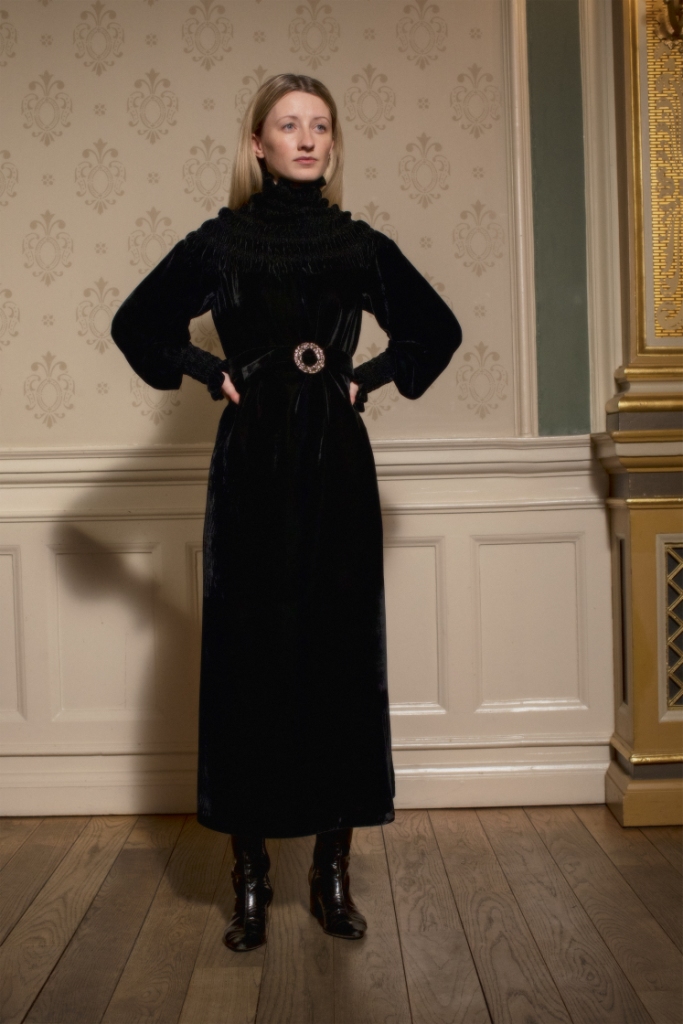
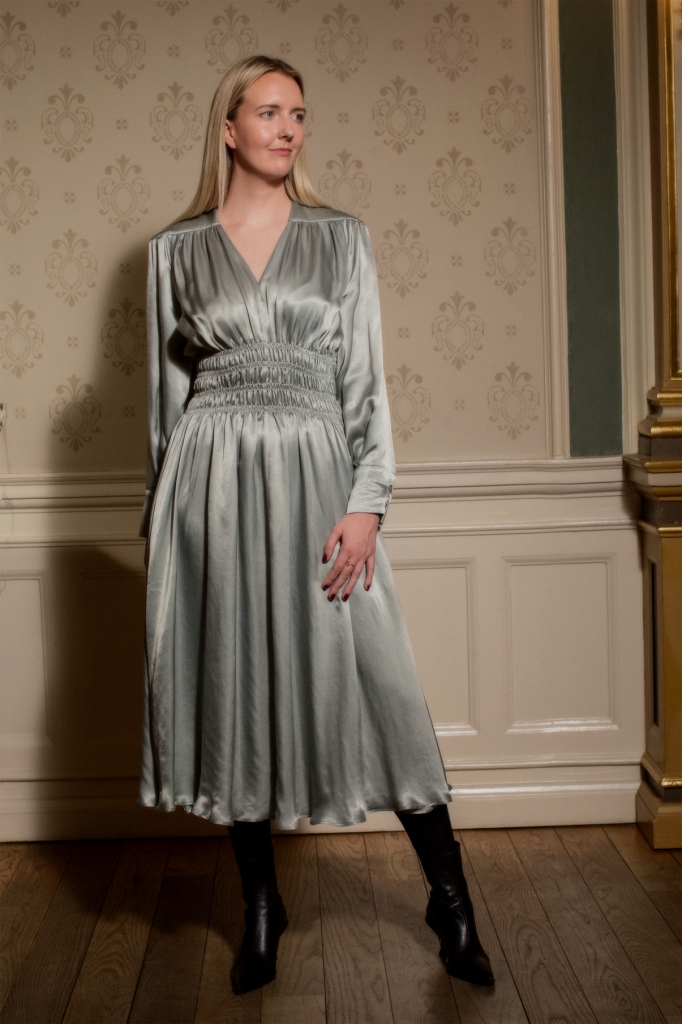




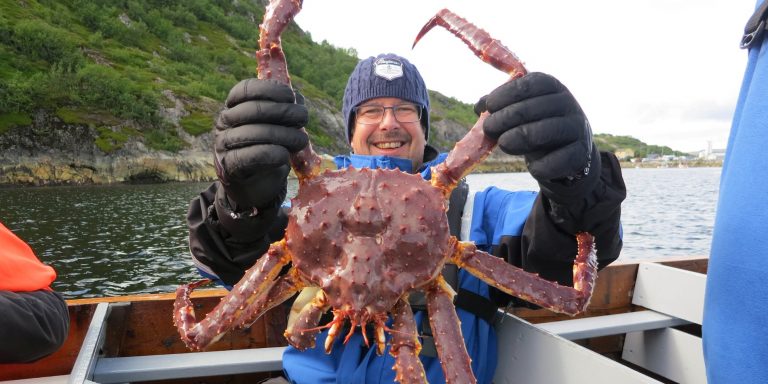













 Martin Asphaug (born April 28, 1950)