
Siri Rat from Norway

0

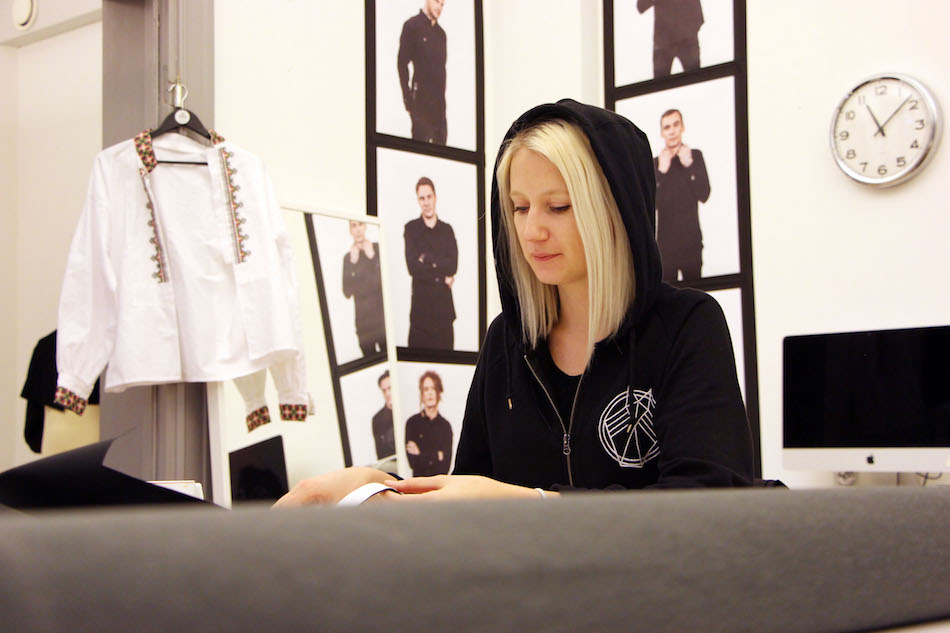
Norwegian designer Siri Sveen Haaland designs clothing inspired by rats. In April 2016 her label Black Rat was accepted and sold in the gigantic flagship store Topshop in Oxford Street, London. Since then black design from Norway has become steadily more popular.

Siri launched Black Rat in December 2012. A few days after launch day she got the honorable award as “Newcomer of the Year” on Oslo Fashion Week in February 2013. The Black Rat concept concentrates on making sustainable clothing in mainly wool with a timeless design. The Rat is colorblind and this sets the color range in black/grey/white. According to Siri, the clothing should be as immortal as the rat itself.

Siri Rat from Norway
A Black Rat collection

Related: Young Norwegian Fashion Design Award Winner

Siri Rat from Norway
For five years, the Norwegian designer has built up a clothing brand that is named after the black rat. But Black Rat has not only taken the name from the rodent, or Rattus rattus, as it is called in Latin. The whole concept is inspired by the animal. The Norwegian streetwear brand has the black rat’s qualities as a red thread. Haalland has even taken the artist name Siri Rat, but the reason is not that she loves rats.

“The idea behind Black Rat is built on the rat itself. It is color-blind, it lives in herds in the underground and it is nearly immortal,” says Siri. Siri started out with only two jackets and has since then built the brand brick by brick; featuring both commercial and non-commercial collections.

Siri Rat from Norway
The idea behind Black Rat is built on the rat itself. It is color-blind, it lives in herds in the underground and it is nearly immortal

Related: The Norwegian Knitting Celebrities

Inspired by reality
One of her collections, “Ansatt/Innsatt” (meaning “employee/inmate”) was built on stories from the book “Skammens Historie” (History of Shame) by Sigmund Aas and Thomas Vestgården. It aimed to tell us how the state of Norway has been institutionalizing different kinds of human groups because of their mental health, religion or orientation. This collection featured the power of the uniform, either you’re an inmate or an employee.

Siri Rat from Norway
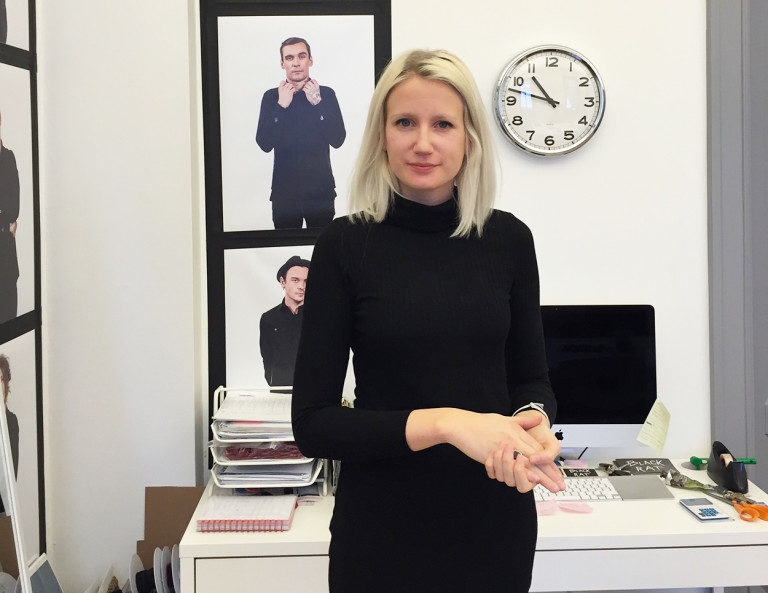
Designer Siri Sveen Haaland

Related: World Famous Knitwear from Dale of Norway

Combining Black Rat and Norwegian national costumes
Siri got her sewing machine from her mother to confirmation, and that was how she learned to sew. Customers who wanted to change their Norwegian national costumes (bunads) approached Siri and she was more than willing to help them.  Norway has a long tradition in national costumes. Siri comes from a tailor family who has been making these costumes since the 1897. Next to Black Rat, Siri work together with her mum in the family business, Sidserk Systue. There they make all kinds of Norwegian national costumes and educate others in making them correctly.“
Siri Rat from Norway
Siri launched Black Rat in December 2012

A Norwegian bunad shall last for 100 years and that is just as long as Black Rat clothing should last as well,” concludes Siri Sveen Haaland.

Feature image (on top): Black Rat for Top Shop, London. Photo: Annicken Dedekam

Siri Rat from Norway, written by Tor Kjolberg
World’s Largest Gourmet Restaurant – in Sweden

0

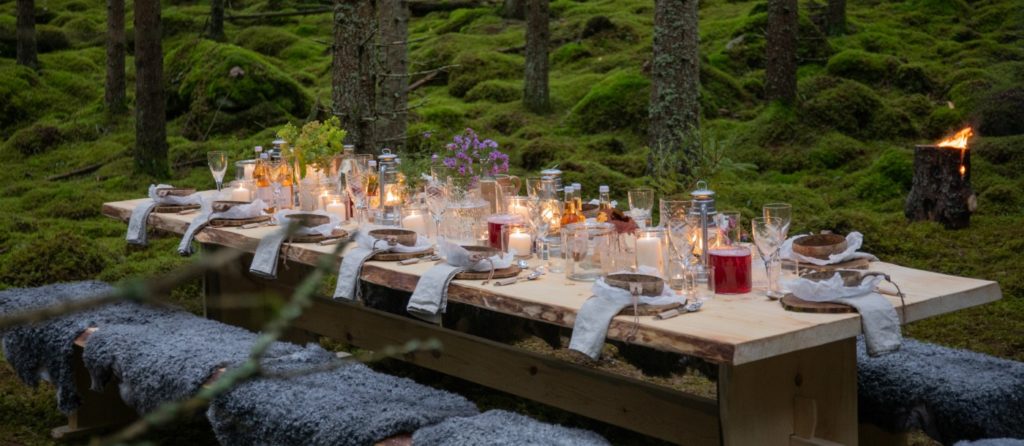
Sweden invites you for free during its “The Edible Country” campaign 2019. To highlight healthy and natural food available in nature, Sweden, together with four Swedish Michelin-starred chefs, is launching The Edible Country – a 100-million-acre-DIY gourmet restaurant. Visit the world’s largest gourmet restaurant – in Sweden

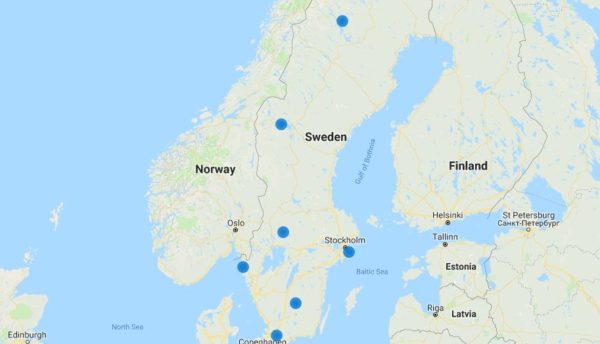
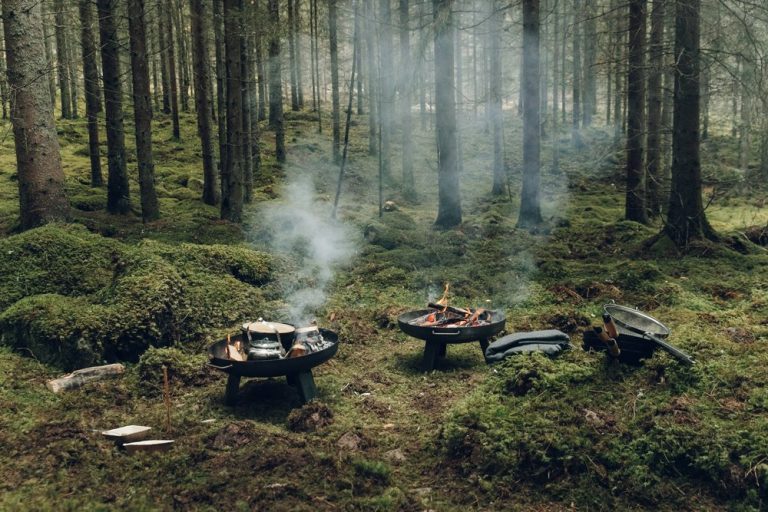
Seven wooden tables are placed in seven locations around Sweden with menus created by the four Swedish Michelin chefs. However, you must prepare the meals yourself on the spot, but Sweden would like to invite you to do so for free. The world’s largest gourmet restaurant, will feature a menu created from ingredients found in the Swedish outdoors and is now open for reservations.

World’s Largest Gourmet Restaurant – in Sweden
The edible country: A set table in Småland

Related: Sweden’s Culinary Island Gotland

World’s Largest Gourmet Restaurant – in Sweden
Sweden has more than 96% of its surface completely uninhabited and easily accessible to everyone. In this new initiative, Sweden is showing the world how easy and accessible healthy food can be. The Edible Country consists of a nine-course menu that visitors can prepare and cook themselves – in the wild.

For Swedes enjoying nature by taking a long walk is almost a religion. Sweden’s new “The Edible Country” campaign, an international effort that aims to show the world “how easy and accessible healthy food can be” by encouraging visitors to prepare and cook a nine-course meal outdoors.

Related: The Best Hiking Trails in Sweden

World’s Largest Gourmet Restaurant – in Sweden
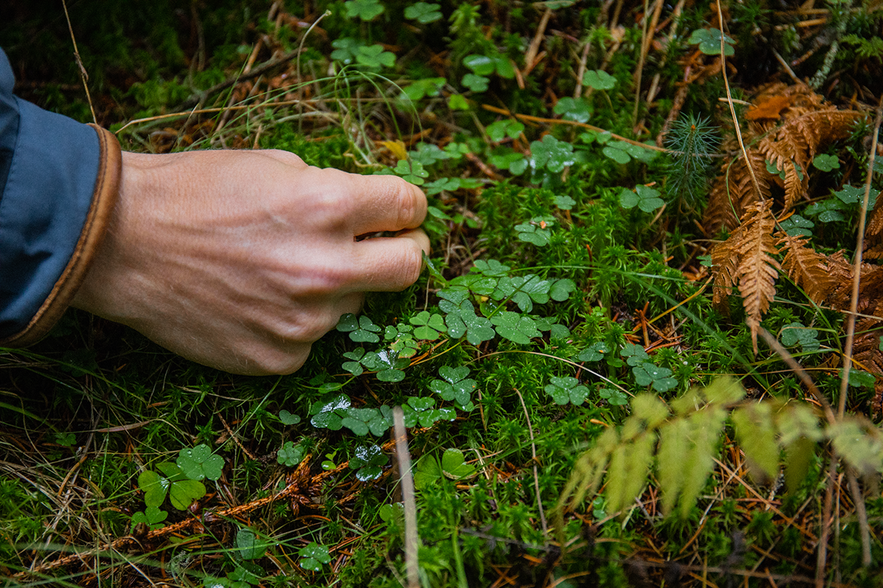
The edible country: Edibles in nature

Michelin-starred nine course menu
The menu is co-created by Swedish Michelin-starred chefs Titti Qvarnström, Niklas Ekstedt, Jacob Holmström and Anton Bjuhr. At the right season the forests of the country are filled with berries, wild fruits, herbs, plants and mushrooms while the rivers and lakes boil with life. A 100-million acre pantry at your feet with all you can eat! So outside of the salt, butter, and honey diners will need to bring with them, the meal is totally free. You just have to find it all and cook it, with fire and stuff.

World’s Largest Gourmet Restaurant – in Sweden
Seven wooden tables are placed in seven locations around Sweden

Related: World’s Best Oyster – A Swedish Delicacy

At the seven wooden tables you will find the menu. If they are fully booked, it is still possible to visit The Edible Country and prepare the dishes at any other preferred location in Swedish nature. Among the dishes is forest broth with poached perch and broiled herb butter, and freshly smoked char with chanterelles and wood sorrel.

Feature image (on top) Photo: Haarkon

World’s Largest Gourmet Restaurant – in Sweden, written by Tor Kjolberg

New Krill-harvesting Vessel Launched in Norway

0

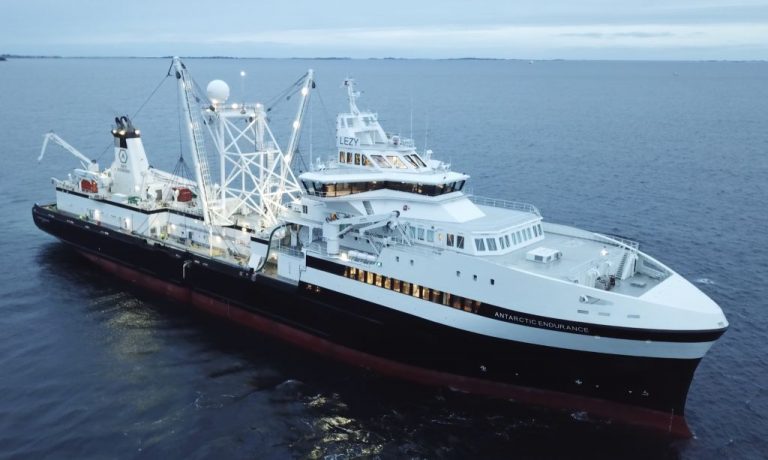
After over two years of design and construction, Aker BioMarine launched a unique krill harvesting vessel in a ceremony at Alesund, Norway in January. The Honorable Alexandra Shackleton, granddaughter of renowned British Polar explorer Sir Ernest Shackleton and godmother of Antarctic Endurance, was invited to officially name the vessel.  

In April 2017, Norwegian Aker BioMarine commissioned a new environmentally-friendly krill harvesting vessel for NOK 1.1 billion (USD 140 mill). With a total of 40 Norwegian vendors contributing to the vessel, the two-year build and final fit-out have kept in excess of 900 people busy working to have the vessel ready for the 2019 harvesting season.

New Krill-harvesting Vessel Launched in Norway
Designed specifically to meet the unique demands of krill harvesting operations in the challenging Antarctic conditions, the new vessel will feature an integrated cargo handling system

Related: New Hydropower Plant to be Built in Western Norway 

New Krill-harvesting Vessel Launched in Norway
Matts Johansen, CEO of Aker BioMarine said, “We have put all our experience and know-how into building a vessel capable of matching our ambitions and operational needs, a vessel we could have only dreamt of when we started our very own Antarctic adventure for more than a decade ago. Named in tribute to polar explorer Sir Ernest Shackleton’s Norwegian-constructed vessel, Endurance, the name also reflects our own perseverance over the years. Energy efficient and equipped with a host of environmentally friendly technologies, Antarctic Endurance is specifically designed and constructed for our unique business, with direct input from our experienced crew. It is truly one of a kind and our very first purpose-built krill harvesting vessel.”

“This is the largest single contract VARD has ever received for a harvesting vessel, and we are very happy to have entered a shipbuilding contract with them. This will also contribute to securing Norwegian jobs in the future,” said Webjørn Eikrem, EVP Production and Supply Chain at Aker BioMarine in February 2017.

Related: Norway – First Country in the World to Ban Use of Gas to Heat Buildings

New Krill-harvesting Vessel Launched in Norway
Webjørn Eikrem, EVP Production and Supply Chain at Aker BioMarine

Sustainable krill harvesting
According to Aker, Energy efficiency has been a key goal for the designers, and the finished newbuilt 130-meter long state-of-the-art vessel is said to be 30% more energy efficient than other comparable trawlers.

“Aker has, since Aker BioMarine was established in 2006, focused on sustainable krill harvesting. From day one, we have worked with WWF Norway. The krill fishery in Antarctica is one of the most sustainable fisheries in the world, and Aker BioMarine hopes to yet again set a new bar for sustainable harvesting with this new vessel. Norwegian skills and new technology will help us reduce our carbon footprint even further with this vessel,” said Matts Johansen, CEO at Aker BioMarine, in 2017.

Related: The Postman Pat Vehicle from Norway

Challenging Antarctic conditions
Designed specifically to meet the unique demands of krill harvesting operations in the challenging Antarctic conditions, the new vessel will feature an integrated cargo handling system. Powered by the latest technology including combustion engines, the vessel will be propelled with an efficient propulsion line with a variable propeller. The supply vessel will be equipped with an advanced heat recovery system helping to reduce the carbon footprint even further.

New Krill-harvesting Vessel Launched in Norway
Powered by the latest technology including combustion engines, Antarctic Rndurance will be propelled with an efficient propulsion line with a variable propeller

“We have put all our experience and know-how into building a vessel capable of matching our ambitions and operational needs, a vessel we could have only dreamt of when we started our very own Antarctic adventure for more than a decade ago,” says Matts Johansen, CEO of Aker BioMarine.

About Aker BioMarine
Aker BioMarine is a biotech- and fishing company dedicated to securing human and planetary health. The company develops krill-based ingredients for use in nutraceuticals, aquaculture and animal feed. The company supplies bio-marine ingredients through a 100% traceable supply chain that it also owns and controls. Aker BioMarine was the first krill company to be awarded Marine Stewardship Council (MSC) certification.

Aker BioMarine Krill Videos

New Krill-harvesting Vessel Launched in Norway, written by Tor Kjolberg

Pottery Porn from Copenhagen

Pottery porn is the tag several of Eric Landon over 700,000 followers on the social platform Instagram puts on his work. The reason is mainly due to his proprietary film clips that show his golden-brown, muscular arms and supple hands shaping soft clay into organic, elegant shapes. So, the pottery porn from Copenhagen is in fact not porn at all.

Eric Landon from Copenhagen pottery design studio has amassed a huge following online supposedly due to his beautiful videos of the making process and wonderful shapes that he gets in the result. Tortus Copenhagen was founded by twin-brothers: Eric and Justin Landons. They combined their previous experiences, networks and passions and created a beast of a project, Tortus Copenhagen (2012).

Pottery Porn from Copenhagen
Eric Landon has won serious accolades, including the 2015 Danish Design Award for Craftsman of the Year

Related: A Copenhagen Furniture Making Collective

Pottery Porn from Copenhagen.
In 2016 his Instagram was covered by the NY Times Magazine: “Eric Landon […] has won serious accolades, including the 2015 Danish Design Award for Craftsman of the Year, for his work: simple, organic shapes glazed in appealingly muted pastels. And, in an age of fetishistic obsession with objects that are handcrafted, the 40-year-old Milwaukee native has harnessed the power of social media to do better than simply make the claim: He’ll show you exactly how it’s done, in mesmerizing Instagram videos that have earned him nearly 600,000 followers. Think “Ghost” without Demi Moore or the Righteous Brothers soundtrack”.

More than 7000 Instagram followers
Today @tortus has 766k followers and an average of 10k likes on posts. On their website Tortus describe itself as a design studio “with the love of making and passion for materials. So, like the noble creature from which we derive our name, we move at our own humble pace. By Tortus, we are dedicated to the modern adaptation of traditional and time-tested making methods with the goal of creating vessels of a timeless quality and beauty. Our production is based on a seamless dialogue between design and hand-work drives an ever-evolving production of ceramics rich in form, color and texture, making each encounter with our objects something unique”.

Related: Uncompromising Danish Jewelry Designer

Pottery Porn from Copenhagen
Eric Landon shows you exactly how it’s done, in mesmerizing Instagram videos that have earned him nearly 600,000 followers

Eric Landon of Tortus Copenhagen studied graphic design at the University of Wisconsin-Milwaukee, and moved to Copenhagen in 1999, where he graduated from the Royal Danish school of Design (2007). He has been awarded with a number of grants, international exhibition selections, and other awards for the quality of his work.

He decided to bring art to a more broad audience and has indeed succeeded and has revealed how sharing online has increased profits and allowed for more creativity.

Understanding both art and economy
Both a master potter and designer, Eric is focused on a constant refinement of both form and technique. For him, the one cannot evolve naturally without the other. His love for wheel thrown pottery started already at age 16 and has evolved into a way of life, his vocation. For Eric, shaping objects by hand is not a look back at the past. He firmly believes that hand-crafting objects of a timeless value is a way forward.

Pottery Porn from Copenhagen
On their website Tortus describe itself as a design studio “with the love of making and passion for materials

In an interview for the CEO Magazine, Eric Landon said, “I’ve actually been using my economics degree the entire time; being creative is just one part of what I do. I also have to understand the market, I have to understand pricing, understand things like scarcity and opening up your market to access the world market instead of thinking just locally. By doing that, we were able to create an exclusive brand pretty quickly — by concentrating on maybe one or two retailers in most major cities in Europe and in Asia.”

Related: The Trolls of Danish Artist Thomas Dambo

Pottery Porn from Copenhagen
Eric Landon of Tortus Copenhagen studied graphic design at the University of Wisconsin-Milwaukee, and moved to Copenhagen in 1999

World-wide distribution
Within a couple of years of launching, Tortus had built up its distribution in about 18 countries. Primarily it was wholesaling to retailers in its early years, but as a small company producing handmade objects that take considerable time (hence the tortus name), Eric explains it was difficult to turn a big profit. Eric considered that while retailers are great, they are essentially the middle man. So, in 2014 the brothers decided to focus on creating a more direct line of communication with their end consumers. They tried to see if they could get more direct sales and that’s when they created their social accounts. The rest is history.

Pottery Porn from Copenhagen, written by Tor Kjolberg

Unique Wallpaper Designed by Norwegian Designer

0

Norwegian designer Andreas Engesvik designed a unique wall mural collection for the Swedish design brand Photowall. Inspired by old techniques, Andreas created three hand-painted patterns, all in different color schemes. The Manuscript collection is a unique wallpaper designed by the Norwegian designer.

“I have long been fascinated by handprints, and their capacity and ability to create things. Whereas the digital is often related to technology, the hand associates more with the body, the mind and nature. Manuscript is a visual and aesthetic collection that helps to create a personal space by exploring the relationship between these different expressions,” says Andreas Engesvik.

Unique Wallpaper Designed by Norwegian Designer
Fresh summer rain on the wall, by Andreas Engesvik for Photowall

Related: New Designs by Norwegian Interior Designer Andreas Engesvik

Unique Wallpaper Designed by Norwegian Designer
The collaboration between Photowall and Andreas Engesvik unites traditional and digital techniques, where each pattern is first hand-painted by Andreas and then printed digitally in Photowall’s studio in Stockholm. The hand-painted patterns of the wall murals create life and movement, which in turn adds an interesting dynamic to the collection.

Unique Wallpaper Designed by Norwegian Designer
“I have long been fascinated by handprints, and their capacity and ability to create things,” says Andreas Engesvik

Working with new designers
The idea for Photowall was born in 2006 when the founders, brothers Charlie and Niklas Johansson, decided to try out something brand new by creating bespoke digital wall murals. Since the start, Photowall has worked with new designers, well-known brands and illustrators to create inspiring, different wall design and wallpapers. To take the next step towards becoming a more well-established design brand, working with Andreas Engesvik was a natural choice for Photowall.

Related: Interior Shopping in Oslo

“Since the beginning our heart has been in color and form, and we want design to be available to everybody – which is why we’ve always focused on our design collaborations. It’s fantastic that Andreas wanted to create wallpaper patterns with us. Since we print to order and have our own production facilities locally, we can quality assure our products in a different way than if production had been abroad. This means we can offer high quality at every stage to a global market,” says Niklas Johansson, one of Photowall’s founders.

Unique Wallpaper Designed by Norwegian Designer
Red berries, by Andreas Engesvik for Photowall

Related: A Norwegian’s Passion for Design

The Manuscript collection is available exclusively from Photowall as made-to-measure wall murals.

Photowall – wall decor by passionate people
“We believe that the walls of a room affect how we feel. That’s why our mission is to help people fill their walls with great art. We have a carefully selected a diverse range of products. With passion and attention to detail, it is our pleasure to help you transform your home to reflect your personality. Our products are manufactured in Sweden and shipped world-wide,” is a statement on Photowall’s website.

Unique Wallpaper Designed by Norwegian Designer, based on a press release from Photowall

Norwegian Sculptor Gustav Vigeland’s 150th Anniversary of Birth

This year, it is 150 years since Norway’s foremost sculptor, Gustav Vigeland (1869-1943), was born. His home and studio are situated next to the Vigeland Park in Oslo, and a large anniversary exhibition opens on Vigeland’s birthday 11 April and lasts through 15 September. Read more about Norwegian Sculptor Gustav Vigeland’s 150th Anniversary of Birth.

Gustav Vigeland is Norway’s largest sculptor, most known as the creator of the Vigeland Park, about 340 acres, in Oslo. The park, mainly designed and shaped by Vigeland, contains about 200 of his sculptures, among the best known are the Sinnataggen (The Angry Boy), the Monolith and the Life Wheel. The park was completed in the 1950s and has around one million visitors annually.

Norwegian Sculptor Gustav Vigeland’s 150th Anniversary of Birth
From Vigeland Sculpture Park, Oslo. Photo: Tord Baklund / Visit Oslo

Vigeland’s studio and appartment
In February 1921, an agreement between Vigeland and the City of Oslo was signed by which he was given a vast studio at Frogner in the outskirts of Oslo. In exchange, he would give the city all of the work he had already made, as well as everything he would produce until his death. The studio had an apartment for him and his family, consisting of library, dining-room, living-room, sitting-room, two bedrooms, and a bathroom with bathtub and lavatory (not every household had such indoor facilities at that time).

Related: 10 Top Attractions in Oslo

Norwegian Sculptor Gustav Vigeland’s 150th Anniversary of Birth
rom the Vigeland museum

Norwegian Sculptor Gustav Vigeland’s 150th Anniversary of Birth
The 150th Anniversary exhibition focuses on Vigeland’s position in art history, and includes borrowings from Musée Rodin, Musée d’Orsay, Musée Bourdelle in Paris, and The Glyptotek in Copenhagen. Vigeland’s works are shown side by side with sculptures by Constantin Meunier (1831-1905), Auguste Rodin (1840-1917), Aristide Maillol (1861-1944) and Antoine Bourdelle (1861-1929), among others. The juxtaposing of Vigeland’s art with other main works in European art history serves to put his oeuvre into a larger context.

In total, the municipality of Oslo has granted NOK 5.8 million (USD 682,000) for the planning and implementation of the anniversary.

Norwegian Sculptor Gustav Vigeland 150th Anniversary of Birth 2019, written by Tor Kjolberg

Mind-boggling Danish Artificial Islands Project

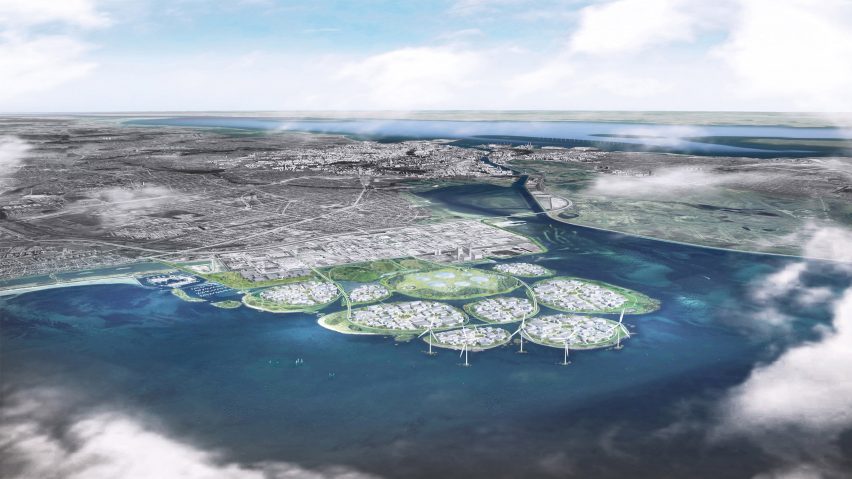
Nine new islands outside Copenhagen are planned developed for office space and recreational activities. Urban Power, the organization in charge of the project, has unveiled its plans for nine artificial islands, named Holmene, which will be a sustainable tech hub off the coast of Hvidovre. Read more about the mind-boggling Danish artificial islands project

The new archipelago will create over 32 million square feet (3 million square meters) and 10.5 square feet of new land.  The project is expected to result in 380 new businesses, 12,000 new jobs directly in biotech, pharmaceutical and life science sectors. In addition, there will hopefully be up to 30,000 new jobs indirectly. The islands will set their buildings in over 170 acres of parkland intended for a variety of recreational uses. Urban Power has deemed it “the largest and most ambitious land reclamation in Scandinavia”.

Mind-boggling Danish Artificial Islands Project
The new archipelago will create over 32 million square feet (3 million square meters) and 10.5 square feet of new land

Related: Tallest residential Building in Denmark

Mind-boggling Danish Artificial Islands Project
“I think this could become a sort of European Silicon Valley,” said Brian Mikkelsen, the head of the Danish chamber of Commerce, in an interview with The Guardian.

Holmene will rise next to Avedøre Holme, an existing industrial area outside of Copenhagen. “Holmene addresses several needs in the area. There is a growing demand for sites for knowledge intensive industry, fossil-free energy production, as well as a flood barrier to secure both existing and future areas,” explained the Copenhagen-based studio.

Mind-boggling Danish Artificial Islands Project
The project is expected to result in 380 new businesses, 12,000 new jobs directly in biotech, pharmaceutical and life science sectors

Related: Denmark’s Climatorium Built to Protect the Asset of Salt Water

Projected completed by 2040
The artificial islands will be built with surplus soil from construction projects in the area — a flabbergasting 900 million cubic feet (26 million cubic meters) of material, according to New Atlas.

Related: 2017 – New Wind Energy Record in Denmark

Mind-boggling Danish Artificial Islands Project
The islands will set their buildings in over 170 acres of parkland intended for a variety of recreational uses

The project still has to be approved by the Danish parliament, but current estimates say that construction could begin in 2022 with the first island becoming inhabitable six years later, and the entire complex completed by 2040.

All images © Urban Power

Mind-boggling Danish Artificial Islands Project, written by Tor Kjolberg

Amazing Norwegian Furniture Designer

0

Norwegian furniture designer Hallgeir Homstvedt has exhibited his work in London, Tokyo, Oslo, New York and Milan and has since received a number of design awards. Since 2009 he has run his independent design studio in Oslo, operating out of a 19th-century factory building in the center of the city and focusing on interior and product design.

Hallgeir Homstvedt has always enjoyed making things. The Oslo native, whose family embraced the attitude that “anything can be made or fixed,” was encouraged to experiment by both his mother, who made costumes and clothing for the family, and his father, an engineer and inventor.

Amazing Norwegian Furniture Designer
Hallgeir Homstvedt has always enjoyed making things

Related: A Norwegian Furniture Design Icon

Amazing Norwegian Furniture Designer
Hallgeir Homstvedt holds a BA of Industrial Design and honors from Newcastle University in Australia. After completing his degree in 2006, he has provided furniture, product and industrial design and consultancy services to a wide range of clients, exhibiting widely in London, Tokyo, Oslo, New York and Milan, and creating products for brands such as Lexon, Established & Sons, Muuto and Menu. He has received a number of design awards.

Amazing Norwegian Furniture Designer
Sofa for Hjelle, by Hallgeir Homstvedt

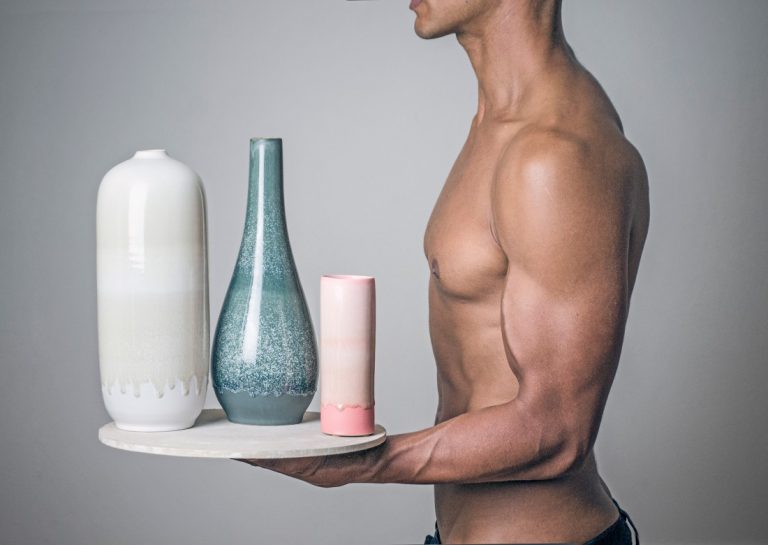
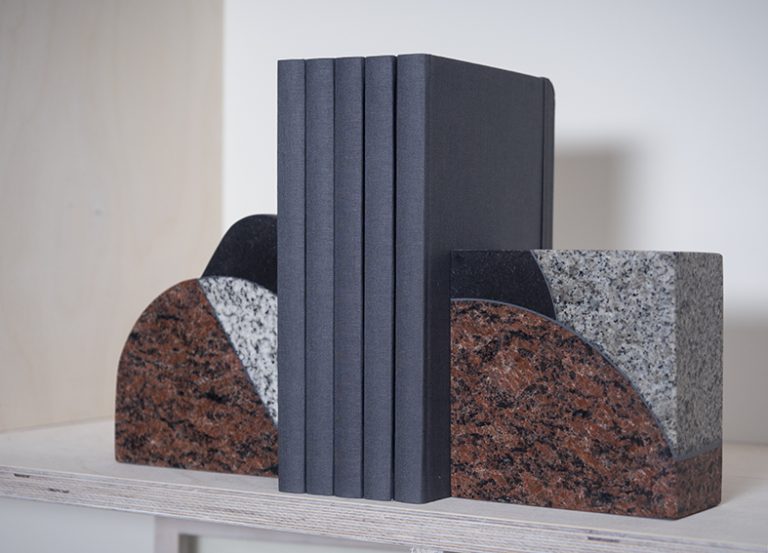
Homstvedt makes products that are tactile, interactive and engages the observer’s curiosity. In collaboration with his sister, graphic designer Hege Homstvedt, he designed a range of four stylized woodland characters, Fauna, that act as bookends (see fature image on top). Each one represents a native Norwegian animal (fox, puffin, hedgehog and bullfinch) and is made from Nordic rock, taking its colour and character from the natural tones and patterns of the stone.

Amazing Norwegian Furniture Designer
Landscape Kavai chair, for Hjelle, by Homstvedt

Related: In Love With a Norwegian Furniture Maker

Improving functionality
Homstvedt has also collaborated with office furniture design brand Elementa to create the Elementa Ki Glowlamp, a lighting product designed to improve air quality and conditions in offices spaces by introducing more plants into the work environment. Homstvedt sums up his philosophy as an attempt “to simplify as much as possible in order to get to the essence of the product.”

Amazing Norwegian Furniture Designer
The Ki is a minimalist interior lamp doubling as a plant light that will keep your plants happy during winter and in less enlightened corners of the house.

Related: Portrait of a Norwegian Designer

“In a successful design I find that the details that make it unique are also the features that improve functionality over a previous generation,” he says.

Amazing Norwegian Furniture Designer, written by Tor Kjolberg
Scandinavia – the Most Democratic Nations in the World

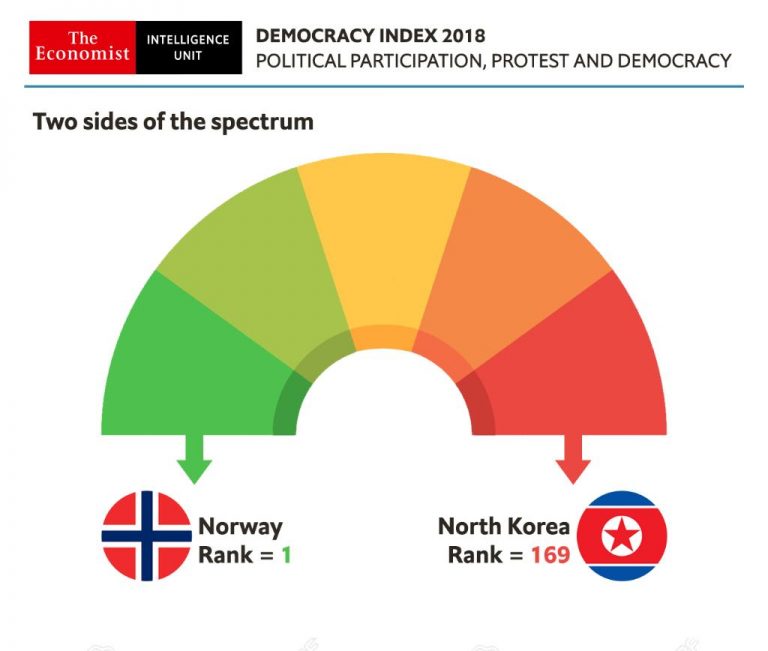
The latest edition of the Economist’s Democracy Index reveals that the Scandinavian countries rank among the most democratic nations in the world. Norway is on the top of the list followed by Iceland, Sweden, New Zealand and Denmark.

The Democracy Index is an index compiled by the UK-based company the Economist Intelligence Unit(EIU) that intends to measure the state of democracy in 167 countries, of which 166 are sovereign states and 164 are UN member states.

Scandinavia - the Most Democratic Nations in the World
The Democracy Index is an index compiled by the UK-based company the Economist Intelligence Unit(EIU)

Related: Norway- World’s Best Democracy

Scandinavia – the Most Democratic Nations in the World
The eleventh edition of the Democracy Index reveals that political participation is on the rise in almost every region of the world. The most striking advance has been in the participation of women – in the past decade the indicator has improved more than any other single indicator in the model.

A total of 20 countries (home to only 4.5 percent of the global population) were judged to be ‘fully democratic’ while the rest of the 167 countries included in the survey were classed as ‘flawed democracies’.

Related: Norwegian Politics for Dummies

Scandinavia - the Most Democratic Nations in the World
Free speech under attack

The Democracy Index
The Democracy Index is based on five categories: electoral process and pluralism, civil liberties, the functioning of government, political participation and political culture. Based on their scores on 60 indicators within these categories, each country is then itself classified as one of four types of regime: full democracy; flawed democracy; hybrid regime; and authoritarian regime.

Related: Income and Tax Transparency in Norway and Sweden

Scandinavia - the Most Democratic Nations in the World
Press freedom under attack

The index was first produced in 2006, with updates for 2008, 2010 and the following years since then.

Download the free white paper

Scandinavia – the Most Democratic Countries in the World, compiled by Tor Kjolberg
The Capital of Norway’s Sporty Profile

0

Oslomarka, the capital of Norway’s sporty profile, is due in part to the closeness of outdoor recreation. One side, there’s the fjord, a broad, sheltered expanse of water ideal for windsurfing and boating. On the other side a huge woodland recreation area known as Oslomarka (Oslo’s fields).

Oslomarka covers some 1,700-sq km (656-sq-miles). Here there are 2,600-km (1,600-miles) of ski trails marked with red-painted slashes on trees and rings round sign-posts at trail intersections.

The Capital of Norway’s Sporty Profile
Map of Oslomarka

Related: After-Ski in Oslo

The Capital of Norway’s Sporty Profile
The total length of the summer-rime walking trails is even longer. They are marked in blue, the difference being that red-marked trails can cross lakes and marshes frozen in winter, while blue-marked trails cannot.

The Capital of Norway’s Sporty Profile
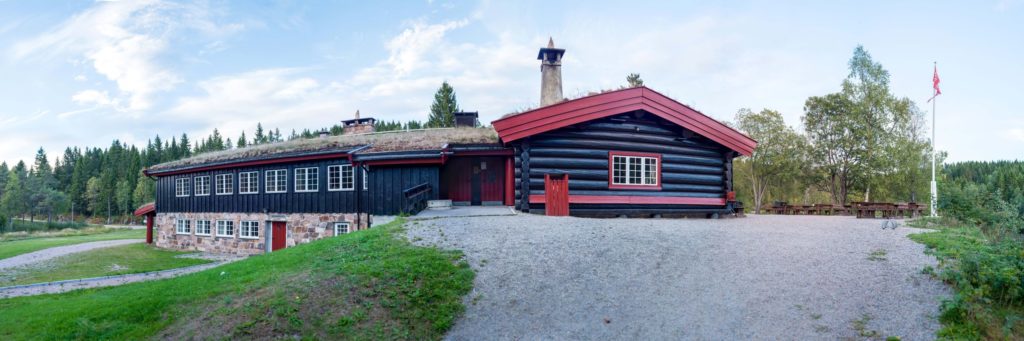
Tryvannsstua, Nordmarka

Some 110-km (68-miles) of these trails are illuminated until 10pm for night skiing, with their trailheads at car parks or underground stations, for ease after-dark access. At the illuminated trails, as well as some 500-km (300-miles) of other trails, are regularly maintained with tracks set by machine.

The Capital of Norway’s Sporty Profile
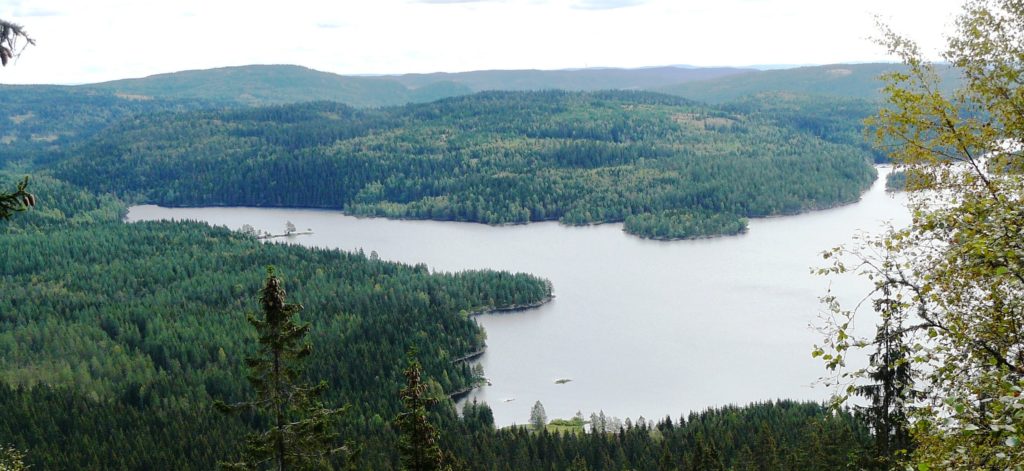
Bjørnesjøen (Bear Lake) in Nordmarka

Related: Oslo – The World’s Biggest Village

Cross-country skiing
Trail use is free, as cross-country skiing is regarded as part of public recreation. Along the trails, there are some 44 staffed lodges with lounges, cafeterias and toilets, most are open at weekends, and during school holidays, and in winter, some are open in the evening.

The Capital of Norway’s Sporty Profile
The Kikut view in Nordmarka

Related: Freedom on Snow in Oslo

There are also 16 Alpine ski lift hills and 48 ski jumps.

For more information click here.

The Capital of Norway’s Sporty Profile, written by Tor Kjolberg