
Aerial View of Pulpit Rock in Norway Stunned Netizens

0

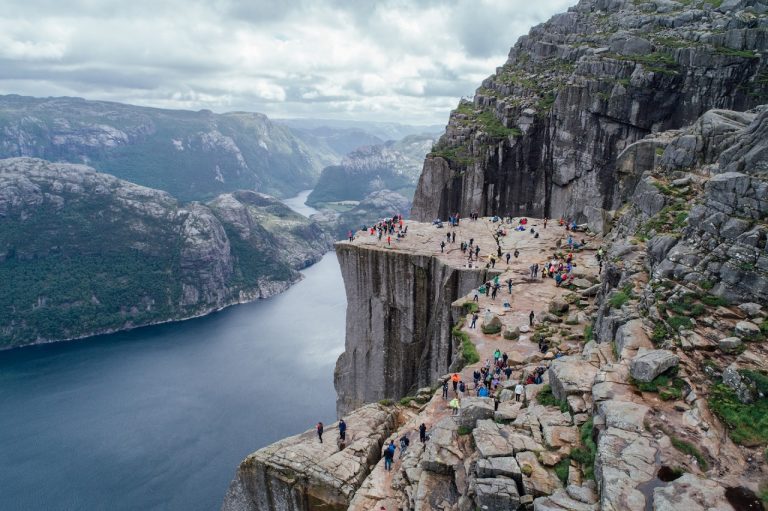
The Pulpit Rock in Norway has no railings around it and poses a natural beauty and an element of risk. It offers a breathtaking cliffside view as a backdrop and an aerial view on Twitter leaved visitors amazed. Read the whole story, Aerial View of Pulpit Rock in Norway Stunned Netizens.

A screengrab from a viral video showed the aerial view of Norway’s Pulpit Rock and was shared on Twitter. It is the same location where the climactic fight in the sixth Mission Impossible film was shot.

This is one of Norway’s most visited attractions and this creation can be scary and fills visitors with a sense of wonder. However, the plateau in the southwestern tip of Norway offers incredible views over Lysefjord.

Flat plateau-like surface


What also makes Pulpit Rock special is its flat surface which measures approximately 82 feet by 82 feet (25 meters by 25 meters). Tourists often hike up to this point to rest on this plateau-like surface and take in the views. A few of the braver ones even go to the edge of the cliff and dangle their feet.

Late November, a popular Twitter account, Science Girl, posted an aerially shot video of Pulpit Rock, showing groups of people standing over it. The undated clip gathered over two million views and over 20,000 likes and over 4600 retweets and quote-tweets. While many people expressed awe at the scenic location, some also spoke about how the steep cliff sparked anxiety within them.

Over 4,600 retweets

Aerial View of Pulpit Rock in Norway Stunned Netizens
“One of the best places I have visited.” Tweet

The 16-second video caused thousands of netizens to share their experiences of hiking up to Pulpit Rock and also post more breathtaking pictures of the scenic location.

“I love all the people commenting on the crack, as if they somehow think that Norwegian geological experts never think to check and the public are let up there without any thought for their safety,” commented DrKevGuitar (@DrKevGuitar).

“I’m freaking out, literally, just watching and reading this. I can feel it in my legs. I have the urge to lie flat on the floor. Of my living room,” wrote snoozrooz (@snoozrooz).

“When I was there, there were 20-30mph winds. I didn’t dare approach the edge, but some people did, sitting with their legs dangling,” remarked Tapu Shaikh (@taputechnic).

“Futher into Lysefjorden you’ll find this baby – Kjeragbolten. A big rock wedged between two near vertical walls about 1000(!) meters above sea level,” stated Bjørn Gressetvold (@BGressetvold).

“One of the best places I have visited. Although probably wouldn’t jump on Kjeragbolten again!” posted Andrew Turnbull (@ajt55)

“In the US it would have ugly railings, EXIT signs, and a porta-potty. I’m Europe, they’re like “if you fall over the edge, it’s your own fault,” uttered Austin Purkeypile (@austinpurk).

Popular attraction

However, the location is pretty popular, attracting plenty of people every day during peak months. According to VisitNorway.Com, the hike to Preikestolen (the Norwegian name) is a total of eight kilometers, and the round trip takes four hours. The hike is graded as medium difficulty.

Aerial View of Pulpit Rock in Norway Stunned Netizens, written by Tor Kjolberg
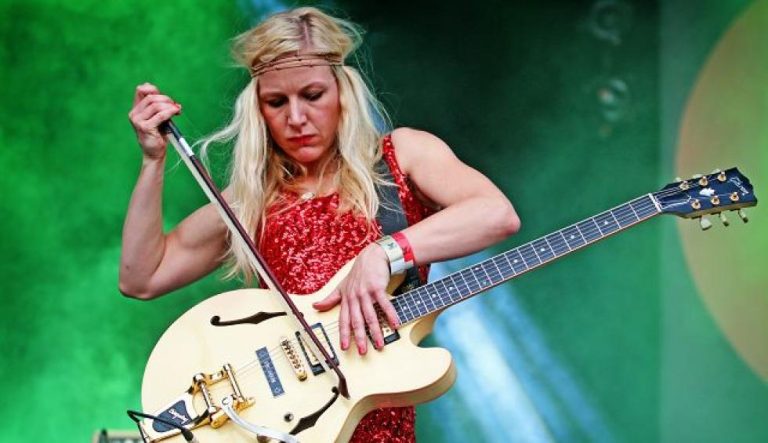
The Noise of a Norwegian Jazz Guitarist

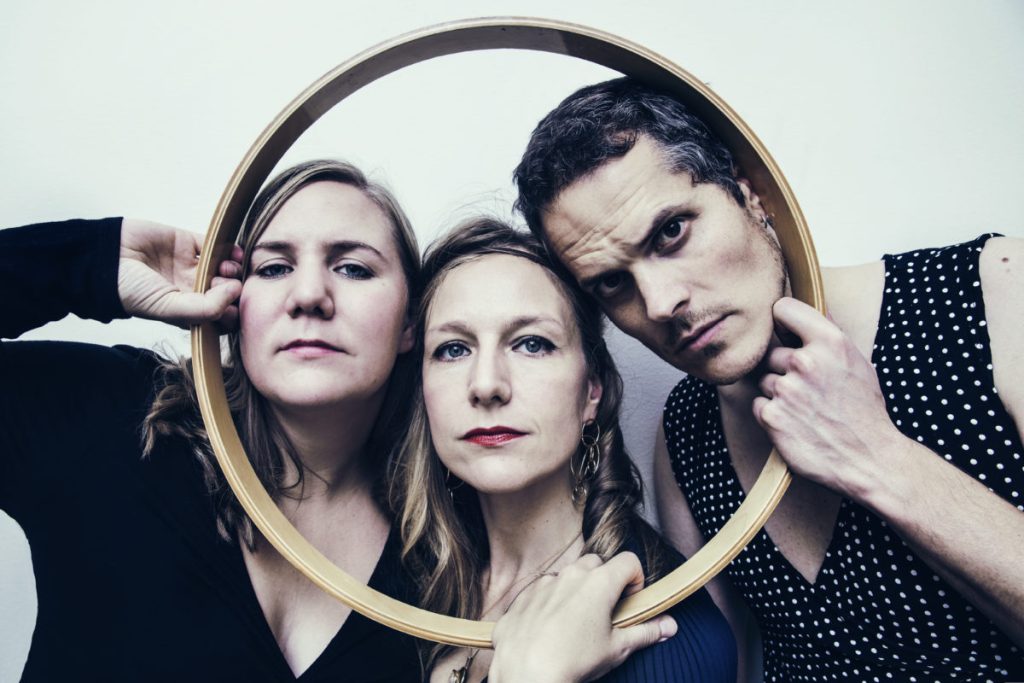
Norwegian jazz guitarist Hedvig Mollestad Thomassen was titled ‘Young Jazz Talent of the Year’, in 2009, 27 years old. Listen to the noise of a Norwegian jazz guitarist.

Since then, she and her trio, Hedvig Mollestad Trio, has released a series of albums, and nobody can make a noise quite like this power trio. Her last album, the seventh full-length recording, ‘Ding Dong. You’re Dead’ was released last year. The trio is Hedvig Mollestad Thomassen, guitar; Ellen Brekken, bass and Ivar Loe Bjørnstad, drums.

Ding Dong, You’re Dead

The Noise of a Norwegian Jazz Guitarist
Thomassen was born in Ålesund and is a graduate from the Norwegian Academy of Music.

On this record the band seems to prefer to stomp rather than swing. Or, put another way, use the swing and shuffle of jazz to add texture and dynamics to its loud, high-octane compositions in the manner of the Jimi Hendrix Experience or the James Gang.

Thomassen was born in Ålesund and is a graduate from the Norwegian Academy of Music. She has performed with a variety of rock and jazz bands, including her own Hedvig Mollestad Trio, Bronco Busters, Songs and Sweet Potatoes. She also has a central role in the bands of Jarle Bernhoft and Hilde Marie Kjersem, and has performed with Trondheim Jazz Orchestra.

Related: Norwegian Jazz Trio Remixing European Jazz Culture

“So cool that she deserves her own harstag”

The Noise of a Norwegian Jazz Guitarist
The Hedvig Mollestad trio is blending hard rock swagger with jazz harmonic precision and a psychedelic atmosphere.

The Hedvig Mollestad trio is blending hard rock swagger with jazz harmonic precision and a psychedelic atmosphere. When they released the album ‘Black Stabat Mater’ in 2016, the Norwegian newspaper Dagbladet wrote, “The trio accelerates with the same gruff feel as a snappy sports car.” “In the modern guitar trio tradition, where Schorch Trio, Krokofant and Bushman’s Revenge have set up signs, Hedvig Mollestad’s trio hatch-parks smoothly and loudly, with a good distance from the others,” wrote Aftenposten, while Dagens Næringsliv believed that “Mollestad’s playing is so cool and characteristic that it deserves its own hashtag.”

The trio has received numerous appraising reviews internationally, for both their studio albums and live performances. Their music is inspired by ’70s heavyrock, but creates a peculiar musical mixture of ingredients like free jazz, prog and psychedelia. On its website the band describes their own music as “Outgoing & progressive instrumental rock”. Since the trio’s formation in 2009, HMT has played many concerts and jazz festivals in both Norway and abroad and they have toured in Europe, Malaysia, Japan and the USA.

Related: The Power of Norway’s Best-Selling Jazz-Artist

Made music since she was very little

The Noise of a Norwegian Jazz Guitarist
The Hedvig Mollestad Trio makes clear that the music is recorded live in the studio.

Fusion is a much-maligned word. But it’s appropriate for HMT music, as it draws so many elements – jazz, hard rock, psych – into a unified whole. Although Hedvig is the owner of one of Norway’s most characteristic guitar voices, for a long time she was not at all sure if it was music she should devote herself to. When she grew up on Bogneset just outside Ålesund, she enjoyed both playing volleyball, reading books, and was above average interested in fishing.

But she has made music since she was very little. She can even remember the very first songs she made. Hedvig also made a short theatre piece, with music, when she was very young.

The Noise of a Norwegian Jazz Guitarist
The trio has received numerous appraising reviews internationally. Photo: Stavanger Jazz Forum

When the trio released the album Enfant Terrible in 2014, one critique wrote, “Many bands use the studio as something different than live performance — and there’s no doubt that there’s better control over sound — but Hedvig Mollestad Trio makes clear, on all its recordings, that it is recorded live in the studio. It’s a challenge to make records that capture the sheer energy, monumental power and flat-out attitude of live performance, but as much as Hedvig Mollestad Trio kicks serious butt onstage, it manages to do the same thing in the studio.”

The Noise of a Norwegian Jazz Guitarist, written by Tor Kjolberg

Norwegian Witchcraft

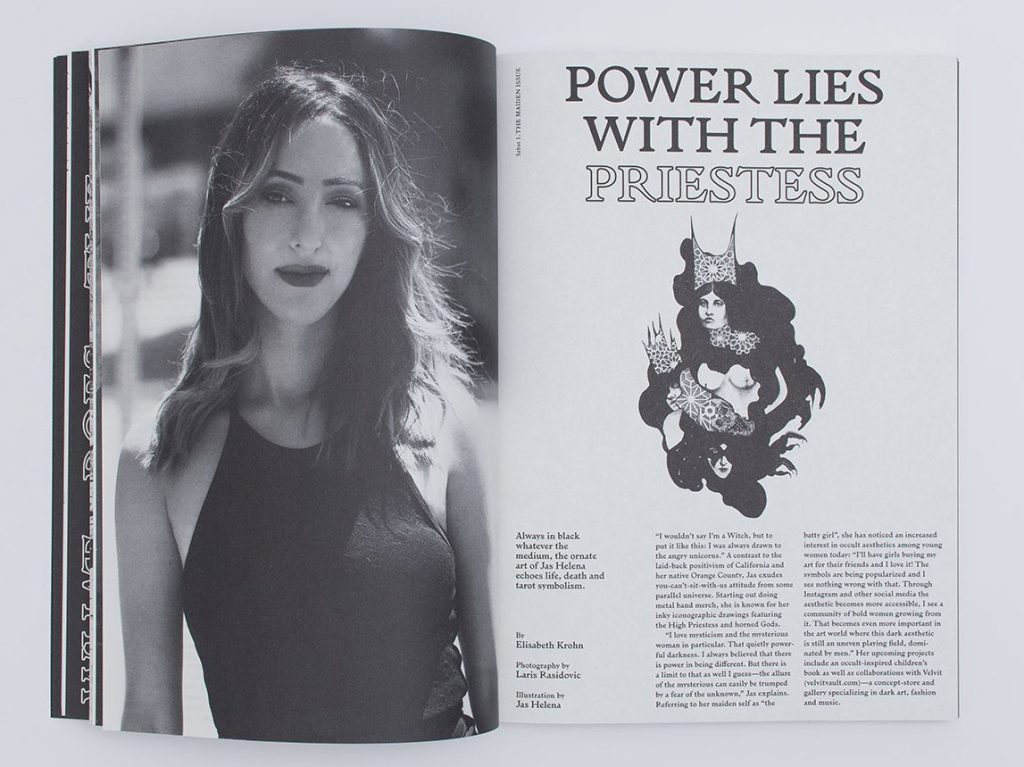
London-based Norwegian Elisabeth Krohn defines herself as a witch. She is the editor of Sabat, a magazine about modern witchcraft. The girl from Oslo is fascinated by the dark female characters out there. Read more about Norwegian witchcraft.

Elisabeth is Founder, editor-in-chief and creative director at Sabat Magazine, co-founder and managing director at Dreadful Press and editorial advisor for Suspira Magazine. Formerly fashion writer for Glass Magazine. She was also art director for the free newspaper Again Magazine for the charity Love Your Clothes in 2015.

You may also like: Norwegian New York-Based Author, Feminist and Philosopher About Art and Gender

Norwegian witchcraft

Elisabeth Krohn explains that today’s witches do not necessarily cast curses or do magic, but use crystals, tarot cards and meditation in an attempt to develop themselves and others. Some years ago, she was inspired by the esoteric inclinations of Swedish painter Hilma af Klint and curated an exhibition and catalogue where six artists presented their visions of modern Witchcraft and feminism. With disciplines ranging from photography to sculpture and painting to performance, each of The Six presented their personal Witchcraft for the future.

International living witches

Norwegian Witchcraft
Elisabeth Krohn explains that today’s witches do not necessarily cast curses or do magic.

American rapper Azealia Banks caused a Twitter storm when she declared in 2015 that she was a witch. Banks elaborated in later interviews that she practiced purification rituals that involved hatching eggs on herself.

Norwegian Witchcraft
Azealia Banks

When pop icon Beyonce released her symbol-heavy record “Lemonade” In 2016, she embraced strong, wild female figures and black magic.

You may also like: Leaders in Gender Enlightment

Sabat Magazine

Norwegian Witchcraft
Elisabeth launched Sabat Magazine in March 2016.

Elisabeth launched Sabat Magazine in March 2016. The magazine was shortlisted for the Stack Magazine of the Year Award in 2016 and 2017, and commended in the category Art Director of the Year 2017, and took home a Pencil in the Independent Magazine category at the D&AD Awards 2017. The full Le Tarot de L’étoile Cachée – Major & Minor Arcana – was a finalist in the Antalis Creative Power Award (Packaging & Promotional) in 2022.

Living Scandinavian witches

“I don’t feel quite at home in the concept of witchcraft and the modern new age movement. It is the connection to nature that stands out the strongest for me. I look back to the Norse, to Sami religion and western esoteric theory,” says Swedish Mimmi Strinnholm @thislemilk.

Norwegian Witchcraft
“I look back to the Norse, to Sami religion and western esoteric theory,” says Swedish Mimmi Strinnholm @thislemilk.

“I don’t know if I want to call myself a witch, but I’m part of a movement of people dressed in black who look back on our history and believe in spirituality, intuition and the forces of nature,” says Norwegian Sara Hestetun @sarapest

You may also like to read: Norwegian Film Director Creates American Women’s History

The last person to be executed for witchcraft in Central Norway

The case of Lisbeth Pedersdatter Nypan and her husband Ole was brought to international attention with the publication of Rossell Hope Robbins’ Encyclopedia of Witchcraft and Demonology (1959).

The ageing couple, who owned a farm at Leinstrand in the modern-day municipality of Trondheim, had their estate confiscated and were both executed in September 1670. Then the case was closed.

Norwegian Witchcraft
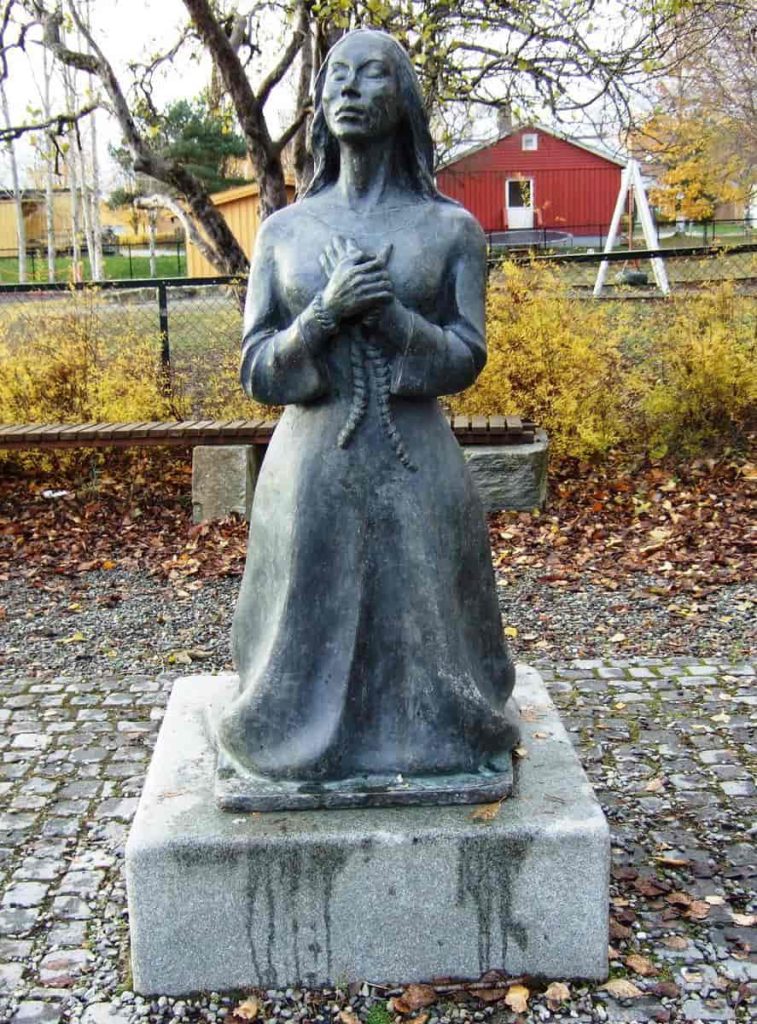
Lisbeth Pedersdatter Nypan was memorialized with her own statue in front of Nypvang primary school in Trondheim.

However, the memory of Lisbeth Nypan has survived in the public imagination, and she is something of a Norwegian ‘national witch’, surrounded by numerous myths and stories.

In recent years fictional tales, local historical and genealogical books, yearbooks, and encyclopedia articles have told her story; in 2005, she was even memorialized with her own statue in front of Nypvang primary school in Trondheim.

Norwegian Witchcraft, compiled by Tor Kjolberg

Feature image (on top): Kirsten Iversdatter (Norwegian Scitech News)

Two Swedish E-Commerce Companies Merges

0

Two Swedish parcel delivery companies, Budbee and Instabox, have announced a fusion combining the two companies under the new holding company Instabee. The two Swedish e-commerce companies merges and the new holding company is valued at 1.7 billion euros.

The two companies, which were both founded out of the Stockholm area in 2015, serve as the delivery and logistics partner for major brands, including multinational clothing retailer H&M, offering delivery services directly to people’s homes as well as automated lockers in strategic locations.

The deal has been approved by the Swedish Competition Authority and this combination creates a new company that aims to take the European market by assault.

Two Swedish E-Commerce Companies Merges
Instabee main goal is to combine Budbee and Instabox’s pooled resources, expertise, and know-how to keep transforming last-mile deliveries and challenge traditional players across Europe.

Related: E-commerce and Beauty Products – A Perfect Match in Scandinavia

Instabox launched in 2015 and reached unicorn status in April this year. The logistics tech company Budbee was founded a year later and raised 40 million euros to expand its network of parcel lockers in May this year.

Instabox operates in Sweden, Denmark, the Netherlands, Norway and Germany, while Budbee serves Sweden, Denmark, the Netherlands, Finland and Belgium.

Instabee main goal is to combine Budbee and Instabox’s pooled resources, expertise, and know-how to keep transforming last-mile deliveries and challenge traditional players across Europe.

Related: Important Issues in the Booming Scandinavian E-Commerce Market

Two Swedish E-Commerce Companies Merges
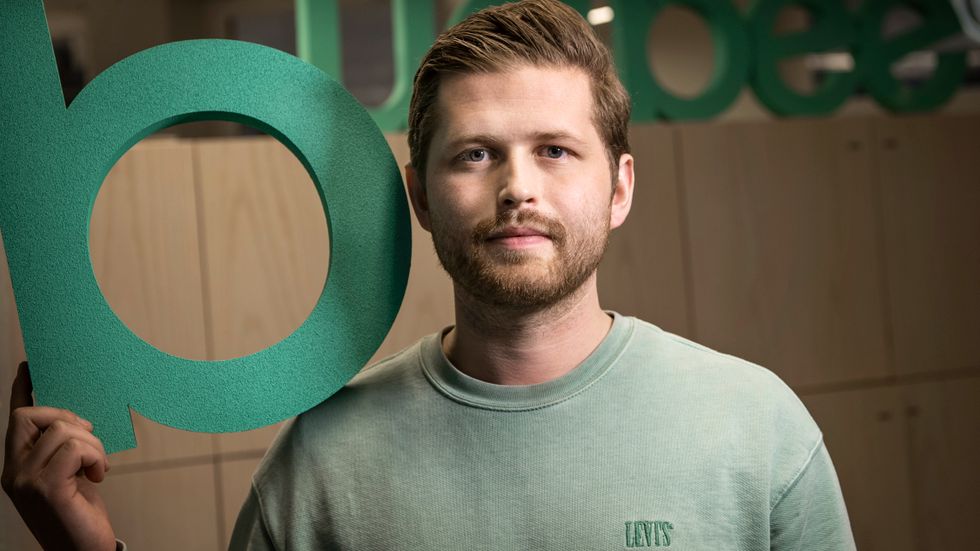
Fredrik Hamilton, founder of Budbee. He will become Instabee’s CEO.

Though the trajectories each company has taken since their foundations have been a little different, they have arrived in roughly the same place in terms of the types of services they offer and the markets they operate in. On top of that, in what has become an increasingly competitive industry in a turbulent economic landscape, we’ve seen a growing push toward consolidation and purse-string tightening, with the likes of U.S. grocery delivery giant Instacart recently slashing its valuation by almost 40% to around $24 billion, and closer to home Netherlands-based Just Eat Takeaway is scaling back in some markets and offloading its international ventures in pursuit of “more sustainable, profitable growth.”

“Since the beginning, I have always kept the long term in mind in my plans, and this step is a fantastic opportunity to create something substantial together. I have always followed Instabox and I am impressed with their growth. This combination feels like a perfect match and I look forward to getting to know all my new colleagues. We are going to achieve great things together”, says Fredrik Hamilton, founder of Budbee. He will become Instabee’s CEO.

Two Swedish E-Commerce Companies Merges
Alexis Priftis will become Instabee’s Executive Chairman of the Board.

Related: Scandinavian e-commerce trends 2022

Two Swedish E-Commerce Companies Merges
The biggest investors are Budbee, Instabox and Kinnevik.

Priftis will become Instabee’s Executive Chairman of the Board. “I’m extra happy that we are now working together to further transform ecommerce deliveries with a strong focus on customer experience and sustainability. I can’t wait to see what we can achieve together. I think this is a very good match between two companies that share a lot of values. Mutual respect and admiration for each other has only increased in recent years”, said Alexis Priftis”

The biggest investors are Budbee, Instabox and Kinnevik. They were joined by other European investors with a smaller share.

Two Swedish E-Commerce Companies Merges, written by Tor Kjolberg
Swedish School of Geneva

0

The non-profit association Swedish School of Geneva was created during the autumn of 1972 by the first School President Bo Mårsäter and his wife Ulla. From the very beginning, parents and school staff have worked hand-in-hand to make the school a wonderful place for children to learn.

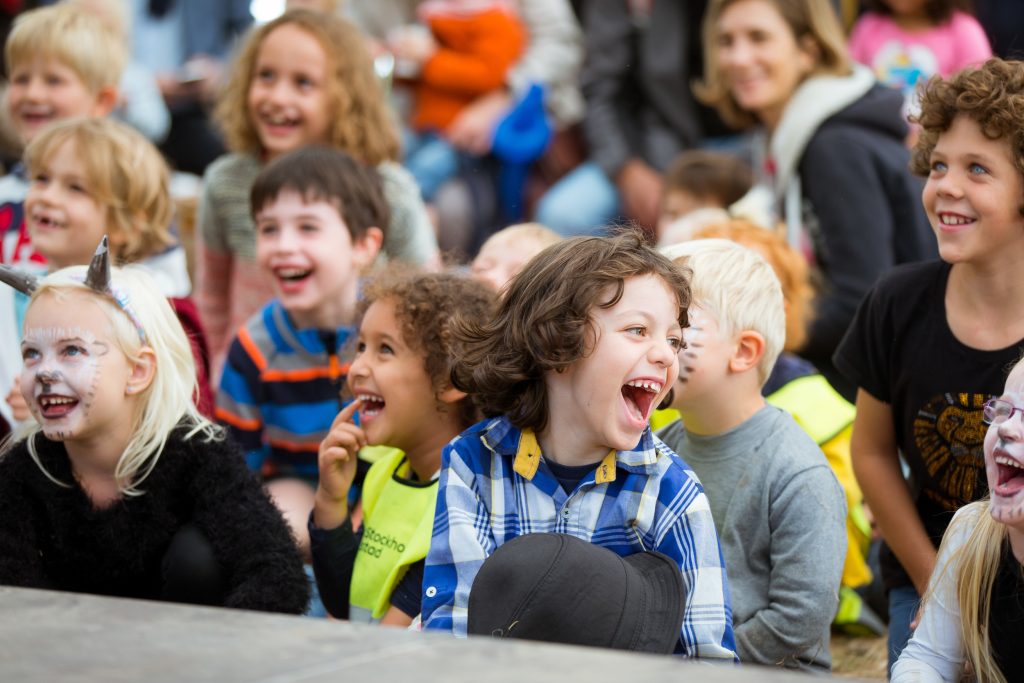
With an ethos of teaching for the individual, the Swedish School of Geneva prides itself of its small classes. Teachers support each student’s continuous learning and knowledge development. The school combines a high level of education with a safe and creative environment, ensuring students are well-equipped for the next level of education anywhere in the world.

The school offers bilingual classes (Swedish-French or English-French) for children between one and eight years old, and an extensive array of language courses.

The non-profit association Swedish School of Geneva was created during the autumn of 1972 by the first School President Bo Mårsäter and his wife Ulla. From the very beginning, parents and school staff have worked hand-in-hand to make the school a wonderful place for children to learn. With an ethos of teaching for the individual, the Swedish School of Geneva prides itself of its small classes. Teachers support each student’s continuous learning and knowledge development. The school combines a high level of education with a safe and creative environment, ensuring students are well-equipped for the next level of education anywhere in the world. The school offers bilingual classes (Swedish-French or English-French) for children between one and eight years old, and an extensive array of language courses. Related: The Top 3 Secrets to Scandinavian Innovation in Education From the beginning, In 1973, the school operated out of classrooms in other schools. At first, there were 37 Swedish-speaking children taking classes in Swedish, math and English outside regular school hours at a school called Collège de Budé. Then, the primary school was established with just 12 students at the Collège des Coudrier. In January 1974, the Swedish School of Geneva moved to the current premises in Meyrin, and Stina Lagergren became president. A group of 30 parents decorated and fitted out the interior during evenings and weekends ahead of the opening after Easter. The official inauguration was held in June 1974 in the presence of the Swedish Ambassador Sven-Eric Nilsson, Consul General Patrik Falkman, Geneva school minister André Chavanne, the Headmaster of Collège des Coudriers and Swedish pastor Lennart Söderström, among others. Related: 6 Reasons Why Swedish School Education is Better As the school was not yet financially secure at this time, Monica Sagnell, the school’s accountant, paid the first rent privately. To save money on postage, she ordered books in 5kg packages from Föreningen för Svenskhetens Bevarande i Utlandet (Association for the Preservation of Swedishness Abroad). During the first summer, the postman arrived almost every day to drop off another package and ask for a glass of water! By the mid 1980s, the school had developed to offer preschool, primary and secondary (by distance learning), and had grown to 60 students and 10 teachers. However, budgets and enrolment fluctuated year on year. The Swedish International School of Geneva is today an international school using the Swedish Approach to help students develop a love for learning, build their self-esteem and spark their curiosity so they can find their unique way to thrive in the world. Excellent results Albert Einstein once said that logic will take you from A to B, but imagination will take you everywhere. Children are naturally original and creative, which is why the school encourages pupils to be curious, explore their own interests and think for themselves. Innovative teaching methods, tailored by a talented team to small student groups, allow the pupils to progress with excellent results to top schools anywhere in the world. Related: Understanding the Scandinavian Language Inspiring values With around 140 pupils and 40 teaching staff, the Swedish International School of Geneva is small enough to feel like a home away from home, where everyone knows each other and children can be themselves. Above all else, the focus is on growing a child’s self-esteem – valuing and respecting them for who they are. When pupils have a sense of security and community at school, it helps them develop a lifelong desire to learn. The school is located in Meyrin, about 5kms from central Geneva. In the summer of 2017, the school moved to a new building in the eco-neighbourhood of Les Vergers, ready for the school start in August. The new premises give the children more space, and there are horses, chickens and rabbits living next door! Les Vergers has been built with respect for the environment, and is surrounded by natural beauty. There is also easy access to a lake, swimming pool, ice rink and sports fields. Swedish School of Geneva, edited by Tor Kjolberg All images © Swedish International School of Genova
The school offers bilingual classes (Swedish-French or English-French) for children between one and eight years old.

Related: The Top 3 Secrets to Scandinavian Innovation in Education

From the beginning, In 1973, the school operated out of classrooms in other schools. At first, there were 37 Swedish-speaking children taking classes in Swedish, math and English outside regular school hours at a school called Collège de Budé. Then, the primary school was established with just 12 students at the Collège des Coudrier.

In January 1974, the Swedish School of Geneva moved to the current premises in Meyrin, and Stina Lagergren became president. A group of 30 parents decorated and fitted out the interior during evenings and weekends ahead of the opening after Easter.

Swedish School of Geneva
The school combines a high level of education with a safe and creative environment.

The official inauguration was held in June 1974 in the presence of the Swedish Ambassador Sven-Eric Nilsson, Consul General Patrik Falkman, Geneva school minister André Chavanne, the Headmaster of Collège des Coudriers and Swedish pastor Lennart Söderström, among others.

Related: 6 Reasons Why Swedish School Education is Better

As the school was not yet financially secure at this time, Monica Sagnell, the school’s accountant, paid the first rent privately. To save money on postage, she ordered books in 5kg packages from Föreningen för Svenskhetens Bevarande i Utlandet (Association for the Preservation of Swedishness Abroad). During the first summer, the postman arrived almost every day to drop off another package and ask for a glass of water!

Swedish School of Geneva
In January 1974, the Swedish School of Geneva moved to the current premises in Meyrin.

By the mid 1980s, the school had developed to offer preschool, primary and secondary (by distance learning), and had grown to 60 students and 10 teachers. However, budgets and enrolment fluctuated year on year.

The Swedish International School of Geneva is today an international school using the Swedish Approach to help students develop a love for learning, build their self-esteem and spark their curiosity so they can find their unique way to thrive in the world.

Excellent results

Albert Einstein once said that logic will take you from A to B, but imagination will take you everywhere. Children are naturally original and creative, which is why the school encourages pupils to be curious, explore their own interests and think for themselves. Innovative teaching methods, tailored by a talented team to small student groups, allow the pupils to progress with excellent results to top schools anywhere in the world.

Related: Understanding the Scandinavian Language

Swedish School of Geneva
The Swedish School of Geneva is ensuring students are well-equipped for the next level of education anywhere in the world.

Inspiring values

With around 140 pupils and 40 teaching staff, the Swedish International School of Geneva is small enough to feel like a home away from home, where everyone knows each other and children can be themselves. Above all else, the focus is on growing a child’s self-esteem – valuing and respecting them for who they are. When pupils have a sense of security and community at school, it helps them develop a lifelong desire to learn.

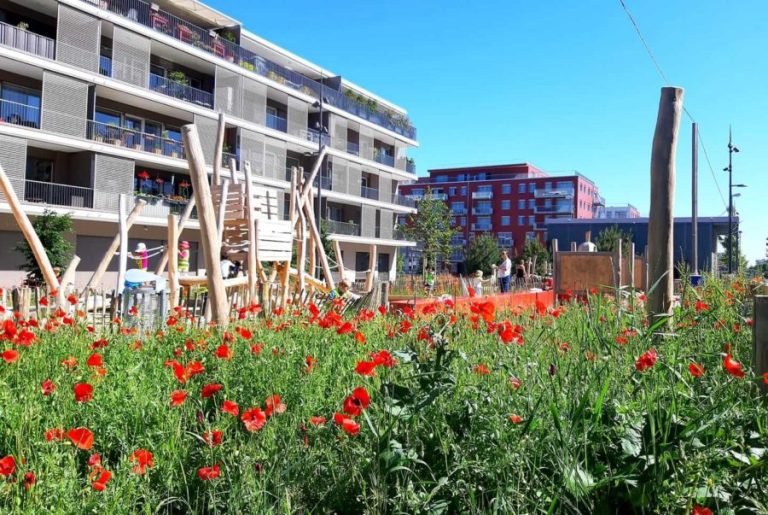
The school is located in Meyrin, about 5kms from central Geneva. In the summer of 2017, the school moved to a new building in the eco-neighbourhood of Les Vergers, ready for the school start in August. The new premises give the children more space, and there are horses, chickens and rabbits living next door!

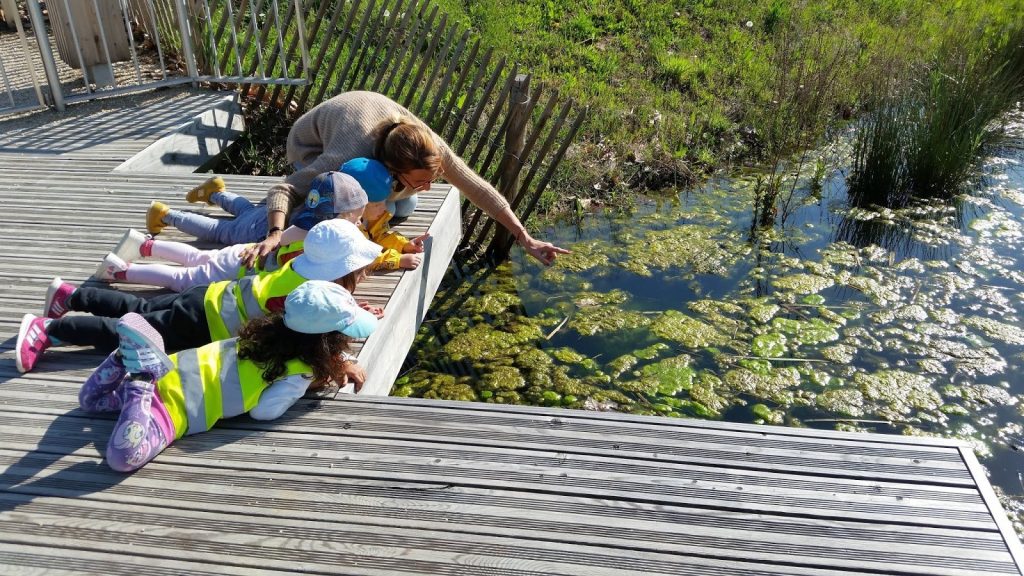
Les Vergers has been built with respect for the environment, and is surrounded by natural beauty. There is also easy access to a lake, swimming pool, ice rink and sports fields.

Swedish School of Geneva, edited by Tor Kjolberg

All images © Swedish International School of Geneva

Nordic Hotel Chain Launches Climate Fund

Nordic Choice Hotels launches its Climate Fund to accelerate its sustainability work. The fund is intended to finance the development of climate-friendly solutions for the hotel industry with the aim of creating a greener future. Now, the Nordic hotel chain launches climate fund.

“For us, sustainability has always been at the top of the agenda. We want to pave the way, be a rebel and a challenger in the industry. We do not want to sit and wait for the EU to come up with new climate regulations, we want to drive the development of these instead,” says Harald Bjugstad-Holm, sustainability director at Nordic Choice Hotels.

Related:  Portrait of Scandinavia’s “King of Hotels”

Green Stay Project

Nordic Hotel Chain Launches Climate Fund
Harald Bjugstad-Holm, sustainability director at Nordic Choice Hotels.

Money to the climate fund comes through various initiatives – including the Green Stay Project, where you as a guest can choose to say no to room cleaning and donate money to the climate fund. On average across all Nordic Choice Hotels, each room cleaned generates 23 liters of water, energy consumption of 1 kwh and 6 ml of chemicals, in addition to the climate impact from dry cleaning of sheets and towels. By renouncing cleaning, guests therefore contribute in two steps to a more sustainable world.

Related: Sweet Dreams in Scandinavian Hotels

Driving the technological innovations forward

Nordic Hotel Chain Launches Climate Fund
“With a clearer goal and management of the climate fund, we will be able to run larger and more successful sustainability projects, ” says Bjugstad-Holm.

“With a clearer goal and management of the climate fund, we will be able to run larger and more successful sustainability projects. We will be able to work more actively with hotels to reduce their climate footprint, and work more strategically and long-term with suppliers to reduce our carbon dioxide emissions. And by doing so, we drive technological innovations for the hospitality industry forward,” says Bjugstad-Holm.

Related: Classical Post Office in Copenhagen will be converted into Luxury Hotel

Nordic Choice Hotels

Nordic Hotel Chain Launches Climate Fund
Nordic Choice Hotels, Fredrik Stangs gate, Oslo.

Nordic Choice Hotels is one of the largest hotel groups in the Nordic region with over 200 hotels and 15 000 employees in the Nordic and Baltic countries. The company markets the Comfort Hotel, Quality Hotel, Clarion Hotel and Clarion Collection chains, as well as 39 independent hotels and the long-stay brand Strawberry Living.

Nordic Hotel Chain Launches Climate Fund, based on a press release from Mynewsdesk.

Benefits Of Renting An Electric Car In Scandinavia

Although Norway is not the most obvious country to start a transportation revolution, electric vehicles (EVs) have suddenly become commonplace in this country. If Norway can achieve it, any nation can. But why are they so popular in the country of long driving distances, rugged mountains and a very cold climate? Today we will tell you about all the pros and cons of a decision to switch to Evs. Learn more about the benefits of renting an electric car in Scandinavia.

Driving pleasure

Electric cars are more fun to drive because they are faster at speed. Even the second-generation Nissan Leaf Plus can run up to 100 km/h in 6.5 seconds. In addition, they are easier to control, because the battery pack reduces the center of gravity of the car. This helps to distribute the weight and make the car more stable. In turns, the risk of overturning is reduced. In addition, many people report no noise.

Related: Norway – Undisputed Leader for Electric Cars

We recommend you check tesla prices uae and rent electric iron horse for long-term use. On the online rental platform, you will find not only electric cars but also sports cars, luxury cars, crossovers, pickups, and many other models of various brands for hiring. New electric cars are quite expensive, and by renting them you will be able to enjoy their advantages at an affordable price.

No spending on fuel

Benefits Of Renting An Electric Car In Scandinavia
There are plenty of places where cars can be charged. Photo: Oxana/Unsplash

Electricity is much cheaper than gasoline and gas. In some cases – half cheaper. Some drivers charge their cars home at night. By the way, in some countries, rates are lower at night. But there are also places, where an electric car can even be charged for free. For example, in hotels, service points, or gas stations.

Related: Environment Friendly Norway Loves Plug-In Electric Cars

There are plenty of such places. For convenience, you can install a special application that shows public charging.

Some very pleasant perks

There are a number of incentives in place in Norway as well, like reduced road tolls, limited access to bus lanes, and cheaper public parking for EV drivers, but this is the most significant and effective action that any nation can take

Global mission

Greenhouse gases have a significant impact on climate change. The environmental situation in many cities is unsanitary. This particularly affects the well-being of children and the elderly.

Electric vehicles do not emit exhaust. Even when electricity consumption is taken into account, they significantly reduce smog and greenhouse gas emissions. The air is getting cleaner and health is getting better. Future generations will be grateful for it.

In the event of an accident, the car does not ignite and explodes.

Related: The Norwegian Electric Vehicle Success Story

Quick charge

Benefits Of Renting An Electric Car In Scandinavia
At the official charging stations, it takes 20-40 minutes to charge the motor at 80%. Photo: myenergi/Unsplash

How fast the electric car will charge depends on the volume of the battery, the power of the electric current, and the features of the charging point itself. You can also connect to a conventional electrical socket, but the car will charge up to 12 hours. At the official charging stations, it takes 20-40 minutes to charge the motor at 80%. This process may take 10 minutes in the near future.

On average, the full charge is enough for 250 km.

Disadvantages of electric cars

The drawbacks often include long charging of the accumulator, like 20 minutes – it is much longer than just pouring gasoline into the tank. There may also be charging problems. Especially if you are going out of town.

The battery stock may not be enough if you are going on a long trip. In this case, it is advisable to plan the route so that it is possible to recharge.

Many also complain about the size of electric cars, as they are mostly double-seated. There are not many large models.

Be prepared for the fact that too hot or cold weather can reduce the capacity of the battery, as it leads to heating.

However, taking into account all these drawbacks, theNorwegian parliament has decided that all sales of new cars and vans shall be zero emission by 2025, which is saying something about this tech.

Benefits Of Renting An Electric Car In Scandinavia, written exclusively for Daily Scandinavian by Evelina Brown. Evelina is a digital marketer with more than 10 years of experience. She is a contributor to Content Marketing Institute and regularly quoted as an expert in large media outlets. Her job is to make your business known all over the Internet.

Feature image (on top): © Photo by redcharlie / Unsplash

Traditional Danish Shuttle Station Transformed Into a Gourmet Destination

0

Back in the 1700s, people traveling the Danish highways were looked after with fare from the tiny smallholding and farms, locally brewed beer and schnapps. Hanne Kirkeby Kro, established in 1790, became later the hub of hunting parties and the place of choice for the Danish painter Johannes Larsen.
Today, the traditional Danish shuttle station has been transformed into a gourmet destination.

A handful of kilometers from Denmark’s west coast, an hour north of the oil town of Esbjerg and a quarter of an hour’s drive from the nearest small town, Varde, with 13,000 inhabitants, lies Henne Kirkeby, a place so desolate that no one would believe that it would be possible to run a gourmet restaurant there. However, since 2007, the inn has been owned by Flemming Skoubo and under the management of chef Paul Cunningham, was titled the best restaurant in the Nordics in 2012 and awarded a Michelin star in 2016 and a second in 2017.

Traditional Danish Shuttle Station Transformed Into a Gourmet Destination
Paul Cunningham. Photo: BBC

Related: Discover the Danish Region of Gastronomy

With interiors in a modern, “quasi-minimalist” style, including bed covers by Paul Smith, armchairs by Hans Wegner and photographs by Astrid Kruse Jensen, and later added a new guest building, Hunting Lodge (completed in 2013), increasing the number of guest rooms by seven to twelve, Henne Kirkeby Kro was transformed into a gourmet destination.

Paul Cunningham was previously chef at The Paul restaurant in Copenhagen Tivoli where he served celebrities such as supermodel Helena Christensen, Paris Hilton, Bill Clinton and Metallica among others.

Traditional Danish Shuttle Station Transformed Into a Gourmet Destination
The Hunting Lodge was completed in 2013 and increased the number of guest rooms by seven to twelve

Related: Copenhagen Gourmet

The restaurant has twelve tables. The inn raises its own lamb, pigs, chicken and rabbits, and has the largest kitchen garden in Denmark, including an orchard and beehives. It also receives wild game from Skouboe’s private island, Fænø, and is near Hvide Sande, the country’s primary fish market.  Cunningham serves an eclectic, classically-based cuisine emphasizing fresh ingredients, and fish and chips on Fridays.

“I don’t cook for my guests,” says Cunningham. “I cook for myself. I don’t know other people’s tastes, so all the food I serve is the way I like it. When you eat with me, the menus are like a Russian roulette of gastronomy.”

Traditional Danish Shuttle Station Transformed Into a Gourmet Destination
The restaurant has only 12 tables.

Related: Luxury by the Sea in Denmark

In 2015 the photographer Per Nagel published a book on the inn, Henne Kirkeby Kro: Exploring Taste and Senses.

The inn is complete according to the plans, and must now be allowed to develop on its own terms, while the standards rise year by year. So, the whole staff is continuing ceaselessly to send people home with their stomachs full of good food and a desire to return before too long.

Traditional Danish Shuttle Station Transformed Into a Gourmet Destination, written by Tor Kjolberg
All images (except photo of Paul Cunningham) © Henne Kirkeby Kro

Troll Hunting in Denmark

0

The Nordic concept of friluftsliv, or unwinding the outdoors, includes troll hunting. Denmark is a country of fairy tales, and trolls are everywhere in Denmark, so troll hunting in Denmark has become a popular activity for Danes as well as visitors.

The Good Luck Troll was created by Thomas Dam in the 1930s and has been a symbol of happiness in the country ever since. It’s the inspiration behind the Trolls and Trolls World Tour films. Why not join us in a tour of the best places in Denmark to spot them?

Troll Hunting in Denmark
Good Luck trolls, by Thomas Dam

During the pandemic in Denmark, Danes were lured outdoors in an inventive way – by trolls. World-renowned recycle artist Thomas Dambo created 10 new sculptures around the country in a project he called The Great Troll Folk Fest. Dambo also placed a series of “giants” around Copenhagen in 2016 and 2017. His goal was to encourage Danes to explore nature through a troll treasure hunt, complete with a troll map.

Troll Hunting in Denmark
North Jutland’s Troll Museum is the Home of the good luck troll

The Troll Museum

North Jutland’s Troll Museum is the Home of the good luck troll, and tells the story of how Thomas Dam created them. Housed in the old troll factory at Gjøl, this is a fun museum where you can see plenty of examples of these magical characters through the ages.

In Copenhagen’s Nordhavn (North Harbour) you find the gigantic troll sculpture Kaptajn Nalle, looking tired from dragging his boat on a rope.  In a fairy tale in Dambo’s book, Trail of a 1000 Trolls, Kaptajn Nalle wakes up from a long nap to discover that while he was sleeping, urban development caused the harbor to fill up with rubble and now the shoreline moved three miles out. “That is why Kaptajn Nalle is pulling his boat back to the shore,” says Thomas Dambo.

Troll Hunting in Denmark
Thomas Dambo with his sculpture Zach -the shaman and an onlooker created in Suwannee, Florida, 2018. Photo: Stirworld

Related: People and Trolls in Copenhagen

Another terrific troll to seek out in Copenhagen is Hilltop Trine, located in Hvidovre, a suburb eight miles from the tourist bustle of Nyhavn. She is lying on a ridge next to a serene farmhouse, with chickens scarpering past her feet and two children sitting in her outstretched hands.

To hunt for Dambo’s first pandemic troll, you can take the M4 metro to the last stop, Orientkaj, and walk through industrial areas filled with shipping containers to an open area. The old harbour of Copenhagen is undergoing commercial development, and a highway tunnel will be built in the area where Dambo’s old workshop is located, not far from Kaptajn Nalle

Troll Hunting in Denmark
Recycled troll by Thomas Dambo.

There’s a delightful picture of a troll sitting outside his cave in the Hirschsprung Collection in Copenhagen. It’s included as part of a trail during the Christmas period – children can search for the troll with his red hat through the gallery and typically get a small gift when they find its hiding place.

In Vallensbæk Mose nature reserve you can meet the oversized eyes of a 15ft troll made of recycled scrap, wood and peering through the forest.

Related: Ten Hours With the Trolls in Norway

The Troll Forest

If there’s anywhere you’re likely to see a troll in the wild, it’s in the Troll Forest near Tisvildeleje in North Zealand. Twisted trees bend and curve around forest paths, and date back to the last years of the 18th century. The strange formations are due to a combination of the wind and the effect of pine worm larvae, and have been protected for over a hundred years.

Krølle Bølle

The local troll on Bornholm is called Krølle Bølle and he lives in Sandvig in the north of the island. If you’re out late, you might see him – he tends to come out at midnight and he’s about the size of an eight-year-old, with a red hat on.

Troll Hunting in Denmark
Trolls, gnomes and pixies thrive at Etly Klarborg Gammelbo near Aalborg in North Jutland. Here from outside the shop.

Etly Klarborg Gammelbo

Trolls, gnomes and pixies thrive at Etly Klarborg Gammelbo near Aalborg in North Jutland. It’s the location where some popular Danish trolls and pixie figurines are made, and you can see art exhibitions on the same theme here too. Every Sunday in Advent, you can take a walk here to discover the ‘Nisse’, Denmark’s Christmas Pixies, who hide in the woods.

Troll Hunting in Denmark, compiled by Tor Kjolberg

Feature image (on top): Captain Nalle


17th-Century Warship Discovered In Sweden

0

The long-lost sister ship of the Vasa, the 17th century warship considered one of the Swedish navy’s biggest achievement that sank soon after setting sail, has been discovered by Swedish archeologists. Learn more about the 17th-century warship discovered in Sweden.

A hulking warship called the Vasa began its highly anticipated maiden voyage in August 1628. King Gustav II Adolf had wanted the vessel to be massive at an unprecedented scale, and builders never quite landed on the correct proportions for such a task. The future crown jewel of the Swedish navy, carrying 64 cannons, containing 3 masts and over 700 hand-carved wooden sculptures and ornaments, sank before it even hit the one-mile mark outside Beckholmen, in the capital of Stockholm.

17th-Century Warship Discovered In Sweden
“Our pulses raced when we saw how similar the wreck was to Vasa,” said Jim Hansson, a maritime archaeologist. Photo: Sveriges radio

Related: Best Museums in Scandinavia

The Apple (Äplet) was launched a year later and was built by the same shipbuilder. Äplet had better luck. Taking notes from his recent failure, master shipbuilder Hein Jakobsson tweaked the shape of the hull and widened the whole ship to better accommodate its bulk. Overall, its size wasn’t exactly a selling point: As Sweden’s Vrak – Museum of Wrecks explains, huge vessels required costlier upkeep and were also harder to sail than their smaller counterparts; thus, Äpplet likely spent a considerable portion of its naval career just sitting around.

However, it did at least stay afloat well enough to participate in the Thirty Years’ War and remain in service until 1658. After that, it’s said that the ship was intentionally sunk to help create underwater spike strips, forming a barricade in the waters off the coast of Vaxholm that could damage enemy vessels.

The precise location of Äpplet’s final resting place has been a mystery for the last few centuries. “Our pulses raced when we saw how similar the wreck was to Vasa,” said Jim Hansson, a maritime archaeologist at the museum, in a statement. “Both the construction and the powerful dimensions seemed very familiar. The hope of finding one of Vasa’s sister ships was sparked within us.”

17th-Century Warship Discovered In Sweden
it’s said that the ‘Apple’ was intentionally sunk to help create underwater spike strips

The huge shipwreck was discovered in December 2021 in a strait off the island of Vaxholm, just outside Stockholm, according to the museum. A more thorough survey was carried out in the spring of 2022, which revealed details that had previously been seen only on Vasa.

Related: Stockholm Bloodbath

The search has been carried through by archaeologists from Vrak – Museum of Wrecks as part of Stockholm University’s “The Forgotten Fleet” program — an initiative that maps and studies ships from Swedish naval history.

“With Äpplet, we can add another key piece of the puzzle in the development of Swedish shipbuilding,” Hansson said, adding that this enabled researchers to study the differences between Äpplet and Vasa.

17th-Century Warship Discovered In Sweden
The huge shipwreck was discovered in December 2021. Photo: Jim Hansson

In order to preserve the wreck, there are currently no plans to remove it from its grave. Instead, archaeologists will study digital data collected underwater. A key focus of the research is to pinpoint exactly how Äpplet differed from its ill-fated predecessor.

Three other ships were ordered from the same shipwright: Äpplet, Kronan (the Crown) and Scepter, and unlike their predecessor they served in the Swedish navy and participated in naval battles.

17th-Century Warship Discovered In Sweden, written by Tor Kjolberg
Photos by Jim Hansson (except portrait photo)