Hunting The Black Gold in Sweden

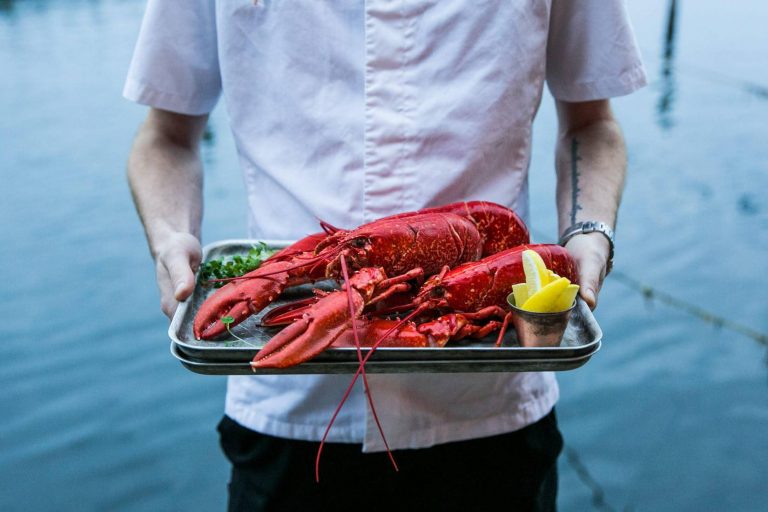
Autumn’s lobster premiere is like an early Christmas Eve on the Swedish west coast. Join us in the hunt of the sea’s black gold in Bohuslän.

On the first Monday after September 20, it’s lobster premiere in Bohuslän on the Swedish west coast. This is a genuine premiere because it is a statutory one – unlike the crayfish or surströmming (“sour herring”) premieres that are now only based on traditions. The last day of the season is April 30th. After the close of lobster season, lobsters may not be fished or held in any form.

The beautiful Swedish west coast
The Swedish west coast is beautiful in the autumn, painted with a palette of orange, red and yellow trees, blustery clouds and blue skies. Bohuslän has received considerable attention in recent years in international media. Among other things, Bohuslän has been named the world’s seventh most beautiful wilderness area by ​​CNN. The region has also been written about in The Times, Lonely Planet Traveller Magazine, and National Geographic Traveller.

Hunting The Black Gold in Sweden
The reddish-brown boathouses and shiny slopes of naked rocks combined with seagulls’ screams and crashing waves create a magical atmosphere . Here, from Smogen. Photo: Bohuslanguide

Related: Shellfish Safaris in West Sweden

The reddish-brown boathouses and shiny slopes of naked rocks combined with seagulls’ screams and crashing waves create a magical atmosphere – not to forget, the intoxicating smell of one-year-old fermented mackerel – regarded as a recipe for success to attract the ocean’s black gold into their pots.

The fishermen are ready to start in the early hours. All lobster fishermen have their ideas about lobster pot sizes, fishing spots and bait. Wherever you go, there is endless discussion about bait tips, water temperature and fishing spots. In particular, tension is linked to weather conditions.


Perfect conditions for rich and tasty lobster stocks
Bohuslän is mostly ice-free coastline. Here salty Atlantic water comes in with the Gulf Stream. The clean and warm water creates perfect conditions for rich and tasty lobster stocks – it’s one of the reasons that Bohuslän has become a real lobster paradise. Eating your own catch at the end of the day paired with a special release of lobster beer from the Grebbestadsbryggeri brewery, you feel you’re in paradise.

Lobsters found along the Swedish coast are known as Black Gold due to their black color in the wild.

Grönemad is an idyllic row of piers and boathouses two kilometers north of Grebbestad center. Almost half of the lobster caught in Sweden is hauled up by this archipelago. The same applies to 70 per cent of caged crayfish and as much as 90 per cent of all oysters.

Hunting The Black Gold in Sweden
The clean and warm water creates perfect conditions for a rich and tasty lobster stocks, Photo: Marstrand Event

Related: Scandinavian Shellfish & Molluscs

A thriving livelihood for lobster and shellfish
The seabed In this part of Bohuslän is hard and rich in hiding places making it a thriving livelihood for lobster and shellfish.  Along large parts of the Swedish coast, sediments from agriculture have been washed out into the sea and made the seabed soft, but it is not the case in this area.

According to traditional recipes lobsters are often cooked in dark beer to produce a savory flavor and lift the flavors of the seafood. Lobsters are luxury goods. At Gothenburg’s fish auction the first lobsters are usually sold for approximately SEK 7,000/kg during the first week of the season. In 2010 the first lobsters came in at 7,300 kronor per kilogram. 2012 was a peak of 102,000 SEK!

Hunting The Black Gold in Sweden
Bohuslän has been named the world’s seventh most beautiful wilderness area by CNN. Here, from Grundsund. Photo: Jonas Ingman/Väst Sverige

The Swedish Lobster Academy
The locals are so serious about lobster that in 1996 they established the Swedish Lobster Academy in Hunnebostrand. The academy promotes knowledge about lobsters’ living conditions, distribution, movement patterns, and reproduction. Members focus on sustainability and they collaborate with fishermen to address issues such as trapping and farming opportunities. The academy promotes quality assurance of lobster with respect to size, breed, and appearance.

The lobster premiere draws visitors from all over Europe. The first lobster safaris, on the other hand, do not start until the pots have been on the seabed for at least 24 hours. From September to December, many fishermen offer lobster safaris for tourists. Professional fishermen are allowed to release maximum 40 lobster pots only.

However, the vast majority of lobster pots you see in the Bohuslän archipelago belong to private individuals, and not just local residents. People throw their boats at trailers and pilgrimages from all over Sweden to hunt for the black gold. Commercial fishermen make up only a small part.

Hunting The Black Gold in Sweden
Fisherman throwing a cage. Photo: Västsverige

Lobster fishing in perspective
To give some perspective, remember that people have been fishing this coast since the Stone Age. Fishing has been a source of livelihood for generations. The sea and seafood have a culture all its own. To protect the species fishermen today are not allowed to catch small lobsters that have not yet reproduced itself. There is a minimum size to comply with: 8 centimeters measured from the rear edge of the eye cavity to the rear edge of the back. If the lobster is smaller, it has to be released back into the sea immediately. This also applies to females with external roe, according to the Swedish Board of Fisheries regulations.

Since 2011 hobby fishermen are no longer allowed to sell lobsters.

There have been many positive measures to safeguard and improve the lobster stock in Sweden, but it is still important to fish them with moderation.

A Swedish lobster is different from an American; it has clearer colors and larger claws. The water in northern Europe is colder, so the fish and shellfish grow less quickly, and therefore develop a richer flavor and better texture. The lobster season is based on protection of the species—making sure it is able to reproduce before being caught—and the time of year when it tastes the best.

Hunting The Black Gold in Sweden, written by Tor Kjolberg
Nordic Architecture in High Demand in China

The Sustainable Solutions of the Future are Sought After in China. Great opportunities lie ahead for Nordic architectural firms ready to explore the Chinese market. Nordic Architecture is in High Demand in China.

Nordic firms have proven to be excellent at creating high-quality, sustainable, and innovative architecture and city planning – something that is in high demand in rapidly developing China.

The five Nordic trade promotion organizations in China have interviewed three different Nordic firms with representation in China for their perspectives on the advantages of entering the Chinese market and their best advice for Nordic firms looking to get established abroad.

Demand for Nordic sustainability
Nordic solutions are in demand on China’s growing markets, and that opens opportunities for architecture firms and innovative companies with an eye to the Asian market.

Øivind Eftestøl, CEO at Polybo AS, a Norwegian construction technology firm, has experienced this first hand. When he established his first contact with China in 2013, he felt very well-received, and he was quickly motivated by the possibilities in the large Chinese market.

“I highly recommend looking toward the great market in China,” Øivind Eftestøl says today.

With Polybo AS, Øivind Eftestøl has developed a sustainable, modular system for the construction industry. When it comes to sustainability, in particular, China has a huge demand for new solutions – something worth noting as a Nordic firm looking for international adventures.

“China has, as most markets in the world, a big goal for a greener construction industry and for new and innovative solutions. These are very important selling points to bring to China,” explains Øivind Eftestøl, adding that Nordic firms can benefit from this: “It’s a great help to Nordic companies that China is very open to Nordic architecture and Nordic solutions.”

Nordic Architecture in High Demand in China
Øivind Eftestøl, CEO at Polybo AS

Zhao Jinyan is the Executive President of VELUX China, and he knows the Chinese market from within. When talking about the development China has experienced, Zhao Jinyan also emphasizes how crucial sustainable innovations are to the future of the country, and how this creates strong demand for Nordic solutions.

Nordic Architecture in High Demand in China
Zhao Jinyan, Executive President of VELUX China

“Nordic solutions are really good at being sustainable – in knowledge, in product, and in service. And especially knowledge and service are something that the Chinese market is looking for,” Zhao Jinyan says. According to Zhao Jinyan, this demand for sustainable innovations combined with the sheer size of the Chinese market makes for great opportunities.

“There is, in many areas and in many industries, a wide scope of opportunities. I think many Nordic companies would benefit from starting in China; we have a population of 1.4 billion, and that makes for a huge potential,” he explains.

Related: Reclaiming China in Denmark

High-quality solutions
China’s rapid development has created not only strong demand for sustainable innovations, but also for high-quality solutions.

“China is a huge country, and we have experienced robust development over the past 40 years. But now the growth speed has slowed down, so we are reaching a turning point. Our focus for the future is changing from quantity to quality,” Zhao Jinyan explains.

According to Zhao Jinyan, one reason for the success of Velux in the Chinese market can be found in precisely this focus on both quality and sustainability when it comes to architecture and building components. The Danish firm has been active in China for more than 25 years, and throughout that time, the focus at Velux has been on offering high-quality products that improve quality of life in the built environment.

“At Velux we want to offer not only a better living environment, but also sustainable and environmental building solutions for the Chinese market,” explains Zhao Jinyan, adding: “China has huge potential in this area.”

In 2020 this demand in China for high-quality, sustainable solutions secured Swedish architecture and engineering firm, Sweco, a contract to develop a new sustainable urban district, the Hainan Future Industry Park, in southern China. Sweco has been working with sustainable projects in China for the last 20 years, and the Hainan project is no exception to the firm’s positive experiences working in a dynamic and quickly developing environment. According to Johannes Tüll, Chief Design Architect, Studio Director and International Director Stockholm at Sweco Architects, the opportunities in a forward-looking China actually motivated their work on the project.

“We want to be involved where the development in the world takes place. Where we can make a good and sustainable impact,” says Johannes Tüll. “For me, personally, I’m grateful to have the opportunity to work on a project like this. It has a sustainability focus, we have a client that is forward-thinking, we have a location that is fantastic, and a chance to do a great project. As a company, and as a group of architects and engineers, we are very grateful to be a part of this,” he explains.

Related: How Individual Scandinavian Hotels Can Benefit from a Stream of Chinese Travelers

Nordic Architecture in High Demand in China
China has, as most markets in the world, a big goal for a greener construction industry and for new and innovative solutions. Photo by Unsplash

Creating an international network
Establishing your firm as a foreigner in China requires both cultural understanding and a Chinese network that can introduce you to the local market. Øivind Eftestøl explains that his firm, Polybo AS, benefitted greatly from the network offered by the Norwegian embassy to newcomers in China.

“Before entering the huge market in China, you need to do your homework,” says Øivind Eftestøl.

“Use the Nordic network, like the embassies and the Nordic trade councils, to get input. They can help with all kinds of questions relating to cultural understanding, language and pitfalls, and how to protect the intellectual property rights of your product. To develop our network, including both Nordic countries that are already in China and Chinese companies, and to gain an even better understanding of the Chinese market and funding instruments, Polybo participated in several conferences and networks, both in Norway and China, hosted by the Nordic countries,” he explains.

Related: Liveable Scandinavian Cities

Nordic Sustainable Cities
Through Nordic Sustainable Cities, Nordic Innovation is working on behalf of the five Nordic prime ministers to promote Nordic solutions for sustainable, livable and smart cities on a global scale. Part of the program is about showcasing and promoting export of Nordic solutions to urban sustainable development challenges in three major markets; North America, India and China.

Zhao Jinyan also emphasizes the importance of connecting with Chinese partners when entering the Chinese market as a Nordic firm.

“It’s a good idea to get a Chinese partner to help you in the beginning to gain a better understanding of this market more quickly,” Zhao Jinyan explains, continuing: “There are a lot of professional companies that can help new players to gain experience. Just be aware that for different companies and different industries, you will need to contact different market players.”

Nordic Architecture in High Demand in China
Hainan landscape. Photo: Sweco architects

Learning from China
An expanded international network can potentially lead to new inventions and fresh inspiration. This is what the architects at Sweco’s offices in China have experienced. For them, one key learning was the importance of teaming up with and learning from Chinese partners. Carlo Negri, Chief Design Architect and International Director at Sweco Architects, explains how the design process for the Hainan office project has been defined not only by interdisciplinary collaborations within Sweco, but also by a fruitful dialogue with local partners.

“Our process is very much about an integrated process. We work together with our experts here at Sweco; our energy experts, water experts, and building engineers who design together with the architects. It is important that we don’t just do that from within Sweco, but that we also do it together with our local design institute and our partners on this project. This is key to ensuring that our unique design meets all the requirements of the project, but also merges the international mindset with innovations that are already within China itself,” explains Carlo Negri.

Anders Neregård, Chief Design Architect, Studio Director and Chief Digital Officer at Sweco Architects, also stresses the benefits of working in an international milieu. He is convinced that working in China has expanded the team’s way of thinking – a learning they will bring back with them to Sweden.

“When we work in China, it’s an interesting and different kind of process than when we work in Europe or in Sweden. And for us, I think, that has been the most challenging part, and that has helped us. We will bring that mindset back to Europe as well,” Anders Neregård concludes.

Nordic Architecture in High Demand, written by Danish Architecture Center for Nordic Innovation. Republished by permission from Nordic Innovation.

Feature image (on top): Photo by Toby Yang on Unsplash

A Guide to Outdoor Sports In Scandinavia

The Scandinavian countries are home to some of the finest outdoor pursuits on Earth. The region’s outdoors and wilderness beckon many travelers and sports enthusiasts every year and, while there is never a shortage of things to do in Denmark, Norway, Sweden (the three countries that makeup Scandinavia), it can be hard to know where to start when choosing from such a vast range of activities. This guide is to help you get started with your outdoor pursuits in Scandinavia. Here’s your guide to outdoor sports in Scandinavia.

This guide will focus on major sports that are available throughout the region, like hiking, biking and some winter sports. You can find more information about each sport under its own heading at the end of the guide.

While each country has its own unique culture and language, they are all relatively small in terms of area, meaning that it often makes sense to start your research for where to go with one particular Scandinavian country in mind. For many outdoor pursuits, though, you can do most activities just about anywhere in Scandinavia.

The weather in the region can be a challenge for outdoor sports, but all Scandinavians are used to it. In warmer months, you will generally need lots of sunscreen and insect repellent. In the colder seasons, bring warm clothing, sturdy footwear and rain gear. If you plan well in advance, you might even want to try some of the winter sports that are on offer in Scandinavia.

A Guide to Outdoor Sports In Scandinavia
Sailing in the Aarhus Bay. Photo: Wikipedia

Sailing in Denmark
One of the top priorities for most travellers coming to Copenhagen is finding somewhere close by to rent a boat and explore the city’s surrounding canals. There are many rental companies dotted around the harbour front in the Nyhavn district, and most of these will rent you a traditional wooden ’17-footer’ style boat for an hour or two at a time (Rates start from about 500 Danish kroner.

A Guide to Outdoor Sports In Scandinavia
Photo by Simon Paulin

Biking in Sweden
Sweden’s extensive network of walking and cycling paths makes it one of the best countries to explore by bike or on foot. You can hire bikes for anywhere between a couple of hours and several days; check out the rates at your accommodation, but expect to pay around 200 kroner (approx. AU$40) for a day’s hire. Read more

A Guide to Outdoor Sports In Scandinavia
Kayaking Reine in Lofoten. Photo by Mattias Fredriksson/VisitNorway

Kayaking in Norway
The fjords and lakes of Western Norway offer some of the most challenging and breathtaking kayaking routes on Earth. The Nidelva river is particularly popular, where you can paddle your way along past waterfalls, through narrow channels and into the heart of Norway’s fourth-largest city, Trondheim.
Read more.

A Guide to Outdoor Sports In Scandinavia
Photo by Photo by Sébastien Goldberg/Unsplash

Campervan Hire in Denmark
If you really want to explore the country and see its quiet corners and picturesque towns at your own pace, then campervan hire is one of the best ways to do it. There are many campervan companies dotted along the Danish coastline, so it’s easy enough to pick one up in Copenhagen or another major city and head out into nature at your leisure.

A Guide to Outdoor Sports In Scandinavia
Photo by Jeremy Bezanger/Unsplash

Kitesurfing in Denmark
The shores of Greenland, Norway’s Lofoten Islands and the west coast of Sweden are some of the top spots in all of Scandinavia to learn to kitesurf.

A Guide to Outdoor Sports In Scandinavia
Mountain biking in Beia, Hallingdal. Photo by Lars Storheim/Visit Norway

Mountain Biking in Norway
There is more than 1,000km worth of mountain bike trails throughout Norway that offers both scenic beauty and endless excitement. The country is also home to the world-famous Laerdal Global Routes, a 450km touring route through some of Norway’s most peaceful and spectacular scenery. Read more.

A Guide to Outdoor Sports In Scandinavia
Scuba diving in Æræsund. Photo by Lars Kirkegaard/Visit Fyn

Scuba Diving in Denmark
 The waters surrounding Denmark’s coastline are so clear that you can often see for up to 13m under the surface. There are plenty of diving centres dotted around the country that will teach you how to explore this underwater world.

A Guide to Outdoor Sports In Scandinavia
Sailing in Sweden. Photo by Visit Sweden

Sailing in Sweden
 You can find boat rental companies all over Sweden, with most located close to the ferry ports of the southern and western coasts (e.g. Gothenburg, Trelleborg, Karlskrona). If you want to explore some of the country’s beautiful natural harbours, then this is one of the best ways to do it. Read more.

A Guide to Outdoor Sports In Scandinavia
Snowboarding in Norway. Photo by Fjord Norway

Snowboarding in Norway
 There are several ski resorts throughout northern Norway, but Norefjell Ski Resort near Lillehammer offers an incredibly scenic setting against the deep blue waters of the fjords.

A Guide to Outdoor Sports In Scandinavia
Surfinng in Ervik.

Surfing in Norway
There are plenty of surf schools throughout Norway that will teach you everything you need to know about conquering the waves. Some are even located close to incredibly picturesque beaches, such as Røstvik, where you can take a breather from surfing and admire the picturesque views of mountains and fishing boats. Read more.

A Guide to Outdoor Sports In Scandinavia
Copenhagen Harbor Bath. Photo: Bjarke Ingels Group

Swimming in Denmark
 You can swim throughout Denmark – even in the sea – thanks to the water being so clean that it’s safe for swimming year-round. The clear, fresh waters are made up of melted glacial ice from Scandinavia’s countless glaciers, giving them their sparkling blue hue. Read more.

A Guide to Outdoor Sports In Scandinavia
Snowmobile safari in beautiful northern Lyngen Alps. Photo: Visit Tromsø

Snowmobiling in Norway
 You can hire a snowmobile for short periods of time from countless rental companies dotted throughout southern Norway, either at one of the larger resorts or amidst some truly spectacular scenery. If you want to explore beyond the resort lifts, then this is one of the best ways to do it.

A Guide to Outdoor Sports In Scandinavia
Waterskiing at Norsjø ferieland. Photo by Visit Norway

Waterskiing in Norway
This is a favourite activity for most Scandinavians, whether it’s just for fun or to show off their impressive skills to friends and family. You can find waterski centers all over southern Norway, including locations in Oslo, Kristiansand and Bergen.

A Guide to Outdoor Sports In Scandinavia
White water rafting at Sjoa rafting

White Water Rafting in Norway
The glaciers of Norway are not only responsible for giving the country its stunning green landscapes but also the many raging rivers that flow down from them. You can experience this wild environment first-hand by taking part in one of Scandinavia’s many white-water rafting trips. Read more.

A Guide to Outdoor Sports In Scandinavia
Casey Harward

Your Guide to Outdoor Sports in Scandinavia is compiled by Casey Harward. Casey is an editor at Researchprospect and essay writing website. She manages a team of writers and editors, creates academic courses and provides thesis consultations.

Feature image (on top): Hiking at Higravtindan, Lofoten northern Norway Photo by Kristin Folsland Olsen / visitnorway.com

The Norwegian Knitting Guys – In Love With Birds

0

In the past, people knitted to make warm clothes. Some years ago, a Norwegian knitting duo started knitting Christmas balls. Arne & Carlos set no boundaries. They began knitting birds. The Norwegian knitting guys are now in love with birds.

Their book “A Field Guide to Knitted Birds” (Fugler – Fargerike og fantasifulle) has been translated into  Danish, Dutch, German, English, French and Finnish – and probably some more. With their trademark style, clarity and humor, Arne & Carlos guides you on a journey into a delightfully knitted bird kingdom. Inspired by the nature of their native Norway as well as far-off fantastic places, they’ve made an ideal guide for knitting bird lovers, whether creating with decorative purpose or just for fun.

The Norwegian Knitting Guys - In Love With Birds
Their book “A Field Guide to Knitted Birds” (Fugler – Fargerike og fantasifulle) has been translated into Danish, Dutch, German, English, French and Finnish – and probably some more.

Related: Faroese Knitting Festival

The creative duo from Etnedal in Valdres, Arne Nerjordet and Carlos Zachrison have knitted slippers, dolls and garden decorations. Their latest mission is birds – some adorned with sequins, others with feathers and some with scarves and hats. Many of them thrive extremely well in Christmas trees.

“We are very happy with the design we came up with, and in no way were we ever thinking of “hiding” the birds feet inside the body of the bird. Our version of the birds in the book is more of an abstract “designer bird” and we don’t want to copy anything from nature, but create our own version. We really love how the feet came out, although they do remind us a little bit of walkers for the elderly,” explains the duo.

The Norwegian Knitting Guys - In Love With Birds
Arne & Carlos’ latest mission is birds

Arne and Carlos don’t take themselves too seriously and are happiest when they see the light. “We like that ‘nerdy’ style, which is something that we have had throughout our career in fashion, and now in handknitting. When designing knit-wear we always focus more on the patterns and colorwork than the silhouettes. This comes from a Norwegian way of thinking that if you make something by hand it should have a longevity beyond fashion trends, so that it lasts for generations. So, we aim to design with simple, classic shapes that will still be beautiful in fifty years’ time.”

The Norwegian Knitting Guys - In Love With Birds
Many of the birds thrive extremely well in Christmas trees.

Related: The “Black Sheep” of Norway

“I find it hard focusing on one thing at a time, I’m always all over the place and thinking about many projects at the same time, but then I lose control and I can’t finish any of them,” says Arne and adds, “so that’s why it’s good to work together, so we can edit each other and have a continuous discussion.”

The Norwegian Knitting Guys – In Love With Birds, written by Tor Kjolberg

World’s Longest Undersea Power Cable Linking Norway And UK

0

The world’s longest undersea power connection was switched on last month, allowing Norway and the UK to share renewable energy. Read more about the world’s longest undersea power cable linking Norway and UK.

National Grid is a joint venture with Norwegian system operator Statnett. The €1.6 billion ($1.86 billion) project is a major contribution to UK’s journey to net zero. British National Grid has dubbed the North Sea Link “the world’s longest subsea electricity interconnector.”

World's Longest Undersea Power Cable Linking Norway And UK
The North Sea Link connects Blyth in Northumberland with the Norwegian village of Kvilldal, near Stavanger

Related: Norwegian Zero Emissions Ship Without Crew

The North Sea Link should see the UK reduce its carbon emissions by 23 million tons by 2030. The 450-mile-long 720 kilometer) cable, which connects Blyth in Northumberland with the Norwegian village of Kvilldal, near Stavanger, opened with a maximum capacity of 700MW and will increase to the link’s full capacity of 1400MW over a three-month period.

According to National Grid, when Britain’s wind production is high and demand for electricity is low, the system will facilitate exports to Norway. This will in turn help to conserve water in the latter’s reservoirs. The North Sea Link should provide enough clean electricity to power 1.4 million homes.

World's Longest Undersea Power Cable Linking Norway And UK
The world’s longest undersea power cable

Related: Norway – The Poster Child For Electric Vehicle Adoption

Norwegian power generation is sourced from hydropower plants connected to large reservoirs, which can respond faster to fluctuations in demand compared to other major generation technologies. However, as the water level in reservoirs is subject to weather conditions, production varies throughout seasons and years.

National Grid has previously described interconnectors as “high voltage cables that are used to connect the electricity systems of neighboring countries,” facilitating the trade of surplus power.

“North Sea Link is a truly remarkable feat of engineering. We had to go through mountains, fjords and across the North Sea to make this happen. But as we look forward to COP26, North Sea Link is also a great example of two countries working together to maximize renewable energy resources for mutual benefit,” said Cordi O’Hara, President of National Grid Ventures.

World's Longest Undersea Power Cable Linking Norway And UK
“We had to go through mountains, fjords and across the North Sea to make this happen,” said Cordi O’Hara, President of National Grid Ventures. Photo: North Sea Link

Related: Norway – First Country in the World to Ban Use of Gas to Heat Buildings

NSL is the fifth interconnector for National Grid, which also operates links to Belgium, France and the Netherlands. By 2030, 90% of electricity imported via National Grid’s interconnectors will be from zero-carbon sources, saving 100 million tons of carbon.

Statnett refers to the three first operational months as a “trial period”. In a comment published by National Grid, Statnett’s CEO Hilde Tonne said: “As North Sea Link goes into trial operations, I am proud of the engineering feat produced by our joint team.”

World’s Longest Undersea Power Cable Linking Norway And UK, written by Tor Kjolberg

Feature image (on top): Photo North Sea Link: Saga Subsea

Chervil in Scandinavia

Chervil is a very old herb in Nordic cuisine, but almost impossible to buy. People who love it and know how to use it are almost gone, and young cooks have yet to discover its virtues – so even in Scandinavia you have to grow your own. Learn more about chervil in Scandinavia.

How it grows
Chervil is a winter annual, so it can be sown in autumn and be the first plentiful herb to appear in spring. Sow it again in early spring and you can enjoy a supply of chervil all summer long.

Chervil in Scandinavia
Chervil is a winter annual, so it can be sown in autumn and be the first plentiful herb to appear in spring. Photo: Jacobs

Related: Scandinavian Herbs

Appearance and taste
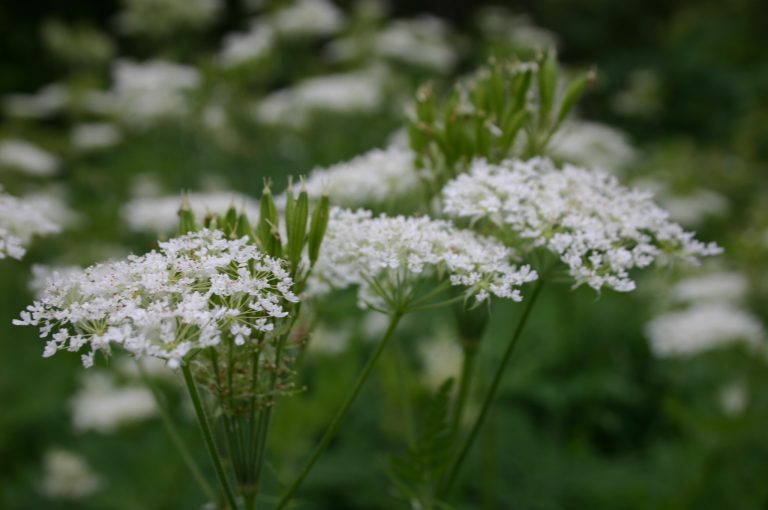
Chervil has light green, fern-like leaves that are not dissimilar to parsley in appearance, and clusters of tiny white flowers from spring to summer. The leaves are the subtlest of the aniseed-flavored herbs; the mild anise flavor is never overwhelming, as tarragon, for example, can be.

Chervil in Scandinavia
Chervil has light green, fern-like leaves that are not dissimilar to parsley in appearance, and clusters of tiny white flowers. Photo: Store norske leksikon

Related: Tarragon in Scandinavia

Culinary uses
The classic use of chervil is with eggs, and it goes perfectly with ramsons in an omelet. Alternatively, try mixing it with almonds, new garlic, olive oil, salt and lemon juice to make an unusual pesto to go with fish, salted meats or new vegetables.

Sweet cicely (an easily grown and beautiful perennial herb) is a good alternative to chervil, even if it’s not quite as delicate.

Related: Scandinavian Poor Man’s Asparagus

Chervil in Scandinavia
Chervil cream

Chervil cream
The easiest and most versatile sauce of all, chervil cream, will add a spring-like lightheartedness to all fried, grilled and baked fish, shellfish and new vegetables.

1 large bunch of chervil
250ml crème fraîche
Salt and pepper

Serves 6

Simply chop the chervil very finely, almost to a mush, and then mix with the crème fraiche. Season with some salt and a little pepper, to taste. The result is an incredibly flavorful, light green cream sauce.

Chervil in Scandinavian, written by Tor Kjolberg

Feature image (on top): Photo by Wikipedia

Norway – The World’s Fourth Largest Shipping Nation

0

Norway is currently the world’s fourth largest shipping nation measured by value with almost a tenth of the total global trading tonnage. Norway is also one of the nations with the highest share of its fleet under its own flag. Norwegian shipowners are particularly active in the international tanker, bulk-carrier, chemical-carrier, gas-carrier, car-ferry and cruise markets.

Norway’s coastline is embraced by the sea from the northernmost point to the southernmost tip. The sea has shaped the country’s history as well as its economy. Seamarks have a long history in Norway. As early as the year 869, Vikings on their way home were able to steer their ships towards the mouth of the Hardangerfjord guided by a bonfire built on a clifftop cairn. Without seamarks and lighthouses, safe travel along the coast or through narrow coastal channels would be impossible. A total of 21 000 lighthouses and seamarks safeguard navigation along the Norwegian coast.

Norway - The World’s Fourth Largest Shipping Nation
Measured by value, China, Japan and Greece are by far the three largest shipping nations, followed by Norway and the United States. Photo: Norsk digitalt museum

Related: Sustainable Shipping In Norway

Norway – The World’s Fourth Largest Shipping Nation
Measured by value, China, Japan and Greece are by far the three largest shipping nations, followed by Norway and the United States. International shipping is characterized by free competition and few restrictions. To improve the competitive situation for ships operating abroad under Norwegian flag, the Norwegian International Ship Register (NIS) was formed in 1987. In January 2021, the fleet consisted of 1783 ships totaling 51.1 million deadweight tons.

The Norwegians carry with them a long and rich history of living from and with the sea – from the seafarers of the medieval Saga Age to the present international shipping companies. For centuries, the shipping route along the coast was Norwegians’ lifeline.  The Norwegian shipping adventure is the sailors’ adventure.

Related: World’s Largest Electric Ferry Now Operational In Norway

Norway - The World’s Fourth Largest Shipping Nation
SS Norway. Photo: Norsk maritimt museum

The Norwegian Shipping Adventure
In a book from 2015, «The shipping adventure. A photographic story 1875-1975 » (Original title “Skipsfartseventyret. En fotografisk fortelling 1875-1975”) the authors Silje Een de Amoriza and Ingrid Myrstad have collected photographs from the heyday of Norwegian international maritime history. The book is not about the shipowners and the ships, but the sailors, deck boys, electricians, sailors, helmsmen and cooks who went to sea. The interest in life at sea has been growing in recent years. The author Jon Michelet’s novel series “The Hero of the Sea” (Sjøens helt) is about Norwegian war sailors during World War II.

The 100-year period 1875-1975 is often called the golden age of Norwegian maritime history. Seamen became one of Norway’s largest occupational groups in the second half of the 19th century. In one of the first large censuses of Norwegian seafarers in 1878, 63,000 men, about every sixth man between the ages of 15 and 55, were employed in the merchant navy.

Related: Norwegian Zero Emissions Ship Without Crew

Norway - The World’s Fourth Largest Shipping Nation
Crew. Photo: Norsk maritimt museum

Shipping generates more business
Shipping is important both to the Norwegian transport industry and for transporting export products. Shipping is also a key part of Norway’s wide-ranging maritime environment. A broad range of companies in areas such as shipbuilding, the equipment industry, shipbroking, ship financing and insurance, etc, has grown up around the shipping companies. The annual export revenues from the shipping industry are around NOK 52 billion.

“For several years, we have seen a positive trend in the NIS register, which is very gratifying. This is important, not only to us, but to the entire Norwegian maritime cluster. We all benefit from the fact that more ships are flying the Norwegian flag, as this implies a higher level of competence and increased international influence,” says Acting Director General of Navigation and Shipping, Lars Alvestad. He explains that increased tonnage gives Norway the opportunity of flexing its muscles when promoting a cause, and especially when legislative amendments are ratified, in the UN’s International Maritime Organization (IMO).

Norway - The World’s Fourth Largest Shipping Nation
The author Jon Michelet’s novel series “The Hero of the Sea” (Sjøens helt) is about Norwegian war sailors during World War II. Photo: Norsk maritimt museum

A thousand years history
For over a thousand years, the sea has been the source of Norwegian wealth and the basis of Norwegians contact with the rest of the world. New industries and new technology are redefining the coastal and maritime economy. When the Norwegian economy has been hit by waves, the country has used the force of those waves to move forward. And Norwegians will continue to do so in the years ahead.

The shipping industry is one of the world’s most advanced in terms of developing energy-efficient vessels. The pharmaceutical industry is conducting research into the effect of marine-derived products on a variety of diseases. Wind and wave power will be sources of clean and renewable energy.

Norway – The World’s Fourth Largest Shipping Nation, written by Tor Kjolberg

Feature image (on top): Battery driven ships. Photo: DNV – Det norske Veritas

Top 5 Research Areas in Scandinavia

Scandinavian countries house some of the most prestigious universities with so many benefits that if you want to study abroad, it is a must to apply to one of the institutes there. Learn more about the top 5 research areas in Scandinavia.

If one word could describe the Scandinavian nations, ‘innovation’ would undoubtedly be a strong contender. All these Northern European countries, as well as Finland and Iceland, routinely do highly in worldwide polls designed to assess how inventive and innovation-friendly countries are. Sweden, for example, was rated second (losing only by Switzerland) in INSEAD’s Global Innovation Index 2017, with Denmark sixth, Norway 19th, Finland eighth, and Iceland 13th.

Scandinavian  universities
Scandinavian universities provide their best for students interested in research. Sweden, the origin of the Nobel Prize, Volvo, ABBA, and IKEA, provides students with the opportunity to connect with a distinctive culture of forward-thinking and creativity. However, three notable study alternatives should be considered while applying to study due to the country’s innovative brilliance, inventiveness, and progressive social attitudes.

Related: An Introduction To Studying In Scandinavia

Academic courses equip students with the knowledge and abilities they need to succeed in their chosen fields. Courses in Scandinavia cover a wide range of subjects, including design, management, psychology, and business, to mention a few. The innovative programs in Scandinavia include unique learning techniques such as group work, practical applications, interactive sessions, and technology integration, and study possibilities may consist of a regular classroom environment, distance learning, or online.

Here are the top 5 research areas if you are considering applying to one of the Scandinavian institutes.

Top 5 Research Areas in Scandinavia
Engineering is one of the most rising fields all over the world. Photo: Shane Rounce/Unsplash

Engineering
Engineering is one of the most rising fields all over the world, so in the Scandinavian institutes. Students interested in primary vs secondary Research or creative mindsets can look for their field of interest in universities like Lund and Stockholm.

Graduates gain knowledge on how to manage and repair equipment. Their problem-solving and pragmatic analytical thinking abilities are strengthened through traditional classrooms and lab exercises. Students also learn verbal and written communication skills necessary for following job instructions and reading engineering drawings. The usage of standard safety equipment and best practices in the workplace are also taught.

Related: How To Apply To Top 5 Swedish Universities

Top 5 Research Areas in Scandinavia
Scandinavia is a technical powerhouse. Photo: thisisengineering Raeng/Unsplash

Technology
Scandinavia is a technical powerhouse, having invented the adjustable wrench, dynamite, and the controversial file-sharing site The Pirate Bay. Swedish inventions include Soundcloud, Skype, Spotify, and Ericsson, as well as a slew of cool devices like Zaplox, a smartphone app that allows you to electrically open doors, and hövding, an inflated collar that functions as an airbag if you’re ever in a bike crash.

With a couple of crucial international investors flocking to Scandinavia searching for the next Spotify, opportunities, and advancements in the technology sector are only poised to expand. That is a piece of great news for students studying Technology and General Engineering and other related Engineering, Computer Programming, and IT fields.

Top 5 Research Areas in Scandinavia
Four Swedish universities rank among the top 200 in the world for Politics and Internal Studies. Photo: Ross Findon/Unsplash

Social sciences
Scandinavia has the most significant wealth equality globally, thanks to its socially progressive stance and egalitarian cultural ideals. Sweden was recently named the world’s most advanced and tolerant country by the Social Progress Index, a title mirrored in its high-caliber academic programs: four Swedish universities rank among the top 200 in the world for Politics and International Studies.

Top 5 Research Areas in Scandinavia
Everybody can recognize Swedish design’s clean, practical style. Photo: Fakurian Design/Unsplash

Designing
Scandinavians are not just innovative in technology; everybody can recognize Swedish design’s clean, practical style. Pieces from Swedish furniture giant IKEA and apparel company H&M have caught the globe by storm for their innovative take on combining simplicity with functionality. The possibilities for new paths in Scandinavian design are limitless, thanks to a broad creative focus on the potential of resources, contemporary technology, and sustainable development.

Top 5 Research Areas in Scandinavia
Universities in Scandinavia provide the world’s best finance courses for students. Photo: Carlos Muza/Unsplash

Analytical finance
Financial analytics is the process of developing ad hoc analysis to address particular business problems and anticipate probable future economic scenarios. Financial analytics’ objective is to shape corporate strategy through dependable, factual knowledge rather than intuition.

Universities in Scandinavia provide the world’s best finance courses for students. The Bachelor of Science in Analytical Finance degree prepares you for a rewarding career in the worldwide world of finance. By providing you with a solid mathematical basis, you will be able to do quantitative analyses of financial markets and effectively manage financial portfolios.

Top 5 Research Areas in Scandinavia
Enimee Ejaaz

Top 5 Research Areas in Scandinavia, written exclusively for Daily Scandinavian by Enimee Ejaaz. Enimee has been a Content Manager at his prestigious organization, assisting students for a long time. Since its inception, Enimee have been part of Essays.uk provide in depth details about custom essays uk and have seen all the ups and downs it has faced in all those years.

Feature image (on top): Photo © Lucas Vasques / Unsplash

The Most Beautiful And Content-Rich Spa Department In The Nordic Region

What do playwrights Henrik Ibsen, authors Helma Lagerlöf, Bjørnstjerne Bjørnson and Knut Hamsun have in common? They all stayed at the Farris Bad many times, bathed there, ate and danced. The bubbling, health-giving water from Larvik was known all over Europe. This is considered the most beautiful and content-rich spa department in the Nordic region.

The story of the bubbling, health-giving water goes 100 000 years back in history when the Ice Age shaped the moraine that Larvik and Norway’s largest beech forest rests on. 10 000 years ago, the ice drew back, and the water trickled through the rock masses and gathered into a purified, nutritious source.

The Most Beautiful And Content-Rich Spa Department In The Nordic Region
Farris Bad 1916. Photo: Per Nyhus/The Most Beautiful And Content-Rich Spa Department In The Nordic RegionlLokalhistorisk samling

The history
In 1843, Karen Linaae established the first bath on this source and in 1880, Dr. Ingebrigt Holm founded a new bath. The existing Farris Bad was built on the same spot and today a steady flow of Norwegian and international visitors travel to the quant port town of Larvik less than two hours by car south of the capital of Norway. There is one good reason for the migration – to spend a few days frolicking and reinvigorating at the Farris Bad resort and spa.

Related: A World of Luxury and Wellness at The Well Spa and Hotel in Oslo

The Most Beautiful And Content-Rich Spa Department In The Nordic Region
Hotel director Ane Johansen says that she is passionate about the visitors.
getting a unique guest experience. Photo: Nordic Choice Hotel

At Farris Bad, we are welcomed by hotel director Ane Johansen who says that she is passionate about the visitors getting a unique guest experience. She is proud to be responsible for the Nordic region’s most beautiful spa hotel. “However, our bath master Lasse Eriksen has been here since the opening in 2009, so I leave the storytelling to him,” she says.

Chief therapist Lasse Eriksen (46) became Norway’s first aromatherapist when he was 18 years old, and was for several years engaged at the Elite Sports Center (Toppidrettssenteret) in Oslo. He tells us that Mille Marie Treschow already in the 90s dreamed of rebuilding Larvik Bad. Then she met the enterprising businessman Stein-Erik Hagen, and he said: “Let’s do it!”

The Most Beautiful And Content-Rich Spa Department In The Nordic Region
“There is a connection between art and wellness,” says chief therapist Lasse Eriksen

Farris Bad Opens
After many years of struggle for building permit, the construction started in 2007. In March 2009, Farris Bad spa hotel opened with 176 rooms and suites, a 2,500 sqm spa and conference facilities for up to 400 people.

The Most Beautiful And Content-Rich Spa Department In The Nordic Region
Outside area at Farris Bad

The ultra-modern building contains tastefully objects d’art; sculptures, photography, and artwork of the human form at every turn. Guests can enjoy 150 art objects found throughout the building, all part of the private collection of co-founder Stein Erik Hagen. Some of the art, include Norwegian artists such as Nico Widerberg and Morten Krogvoll, which is part of the permanent exhibitions but there is also itinerant art. Lasse Eriksen has become a self-appointed dedicated curator.

The Most Beautiful And Content-Rich Spa Department In The Nordic Region
The ultra-modern building contains tastefully objects d’art
The Most Beautiful And Content-Rich Spa Department In The Nordic Region
Nos Queadamos o Nos, painting by Antonio Segui

Inside Farris Bad the colors are monotone browns and cement gray in order to contrast with the natural beauty of the outdoors as well as the provocative art adorning the space. The façade is covered with the domestic beautiful Larvikite stone, used only in a few international iconic buildings in Norway and around the world, for instance the UN building in New York.

Related: Sound of Silence in Luxury Spa Hotel Outside Oslo, Norway

The Most Beautiful And Content-Rich Spa Department In The Nordic Region
Sculpture by Nico Widerberg
The Most Beautiful And Content-Rich Spa Department In The Nordic Region
Room at Farris Bad. Photo: Nordic Choice Hotels

New life to harbor area
“We try to maintain Mille Marie Treschows spirit and what she has done for this city,” says Eriksen. She has reopened Treschow’s industrial area by the harbor. She wanted to give it back to the town’s inhabitants and today it’s a sector of the town with spa hotel, cultural centers, restaurants and modern apartments.

The Most Beautiful And Content-Rich Spa Department In The Nordic Region
Reception area
The Most Beautiful And Content-Rich Spa Department In The Nordic Region
Room with a view. Photo: Nordic Choice Hotels

“My main task is to make sure that construction and operation follow her dreams” Eriksen continues. “We need good therapists with the right education. There is a connection between art and wellness. Both provide peace in the body, and at Farris Bad we conduct continuous experimentation. Soon we will launch a world premiere – an event lasting 1 ½ hour in the sauna. It is not about suffering, but about making a deep spiritual journey. ”

The Most Beautiful And Content-Rich Spa Department In The Nordic Region
Straight lines at Farris Bad

He explains that short times in the sauna is on its way out. Now it’s all about giving yourself more time. «Before the corona, it was common for guests to book in for one night», says Eriksen. “Now it is more common with three or four nights.”

The Most Beautiful And Content-Rich Spa Department In The Nordic Region
Spa Haram. Photo: Nordic Choice Hotels
The Most Beautiful And Content-Rich Spa Department In The Nordic Region
Farris Bad sauna. Photo: Nordic Choice Hotels

Space Age Farris Bad
Farris Bad has been named the most beautiful and content-rich spa department in the Nordic region and is the only hotel that has established its spa on a true mineral-containing source. Every day, fresh, nutritious, health-giving spring water from 55 meters deep swirls into the spring water cave. The water uses 20 years on its journey under the beech forest and into Farris Bad.

The Most Beautiful And Content-Rich Spa Department In The Nordic Region
View from Farris Bad. Photo: Nordic Choice Hotel

The space-age structure of the five-story building is literally built over the beach and has become one of the town’s most iconic buildings. Locals say that the resort has one foot on land and one in the water.

The Most Beautiful And Content-Rich Spa Department In The Nordic Region
Main restaurant
The Most Beautiful And Content-Rich Spa Department In The Nordic Region
Our knowledgeable and serviceminded waiter

Fine dining at Farris Bad
The main restaurant at Farris Bad in Larvik is a stylish hotel restaurant, open and at the same time intimate, with large windows facing the sea that extend for eternity in the direction of the coast of Denmark. It offers excellent cuisine to match the fantastic view and the menu has a focus on Nordic and international dishes with seafood sourced on daily basis from the area around Svenner, and game from the forests around Larvik.

The Most Beautiful And Content-Rich Spa Department In The Nordic Region
Beef tenderloin
The Most Beautiful And Content-Rich Spa Department In The Nordic Region
Trout

We enjoyed beef tenderloin with roasted potato and bearnaise sauce and trout miso with pak choi, rice and spring onion respectively. For dessert we had fresh strawberries with ice.

The Most Beautiful And Content-Rich Spa Department In The Nordic Region
In the lounge bar you can enjoy imaginative cocktails by their talented mixologists

Farris Bad has several wine and dine outlets as well. Adjacent to the lobby there is a lounge serving imaginative cocktails by their talented mixologists. We were offered free sparkling wine to celebrate the reopening after the Covid-19 limitations.

Related: Magnificent Mountain Hotel in Norway

The Most Beautiful And Content-Rich Spa Department In The Nordic Region
Farris Bad neighboring area
The Most Beautiful And Content-Rich Spa Department In The Nordic Region
From the beach

The most beautiful and content-rich spa department in the Nordic region
Guests have access to the medicinal thermal spa and covered swimming pool, the open-air wave pool and sun terrace during their stay at the hotel, including spa wellness lessons and training by a team of highly talented therapists.

Staff at Farris Bad, from room maidens to front desk staff, always have a smile on their faces and ready and willing to assist patrons in any way they can. It’s due to professional management.

The Most Beautiful And Content-Rich Spa Department In The Nordic Region, written by Tor Kjolberg.

All photos by Tor Kjolberg if not otherwise noted.

The Scandinavian Ski Directory

0

It’s soon that time of the year again, so we’ve rounded up the experts to produce The Scandinavian Ski Directory.

From gear to resorts, we found up the stuff that will be big in the mountains this year.
The Scandinavian Ski Directory
Scandic Lillehammer Hotel in winter

The place to stay
Scandic Lillehammer Hotel, on the hill behind Lillehammer town, just a stone’s throw from the ski jumps where Norwegian ski jumpers harvested medals during the Winter Olympics in 1994, has 303 guest rooms of which 3 are junior suites and 1 is the Champagne suite. It’s THE place to stay for wonderful ski experiences in Norwegian winter wonderland.

Festival of Light
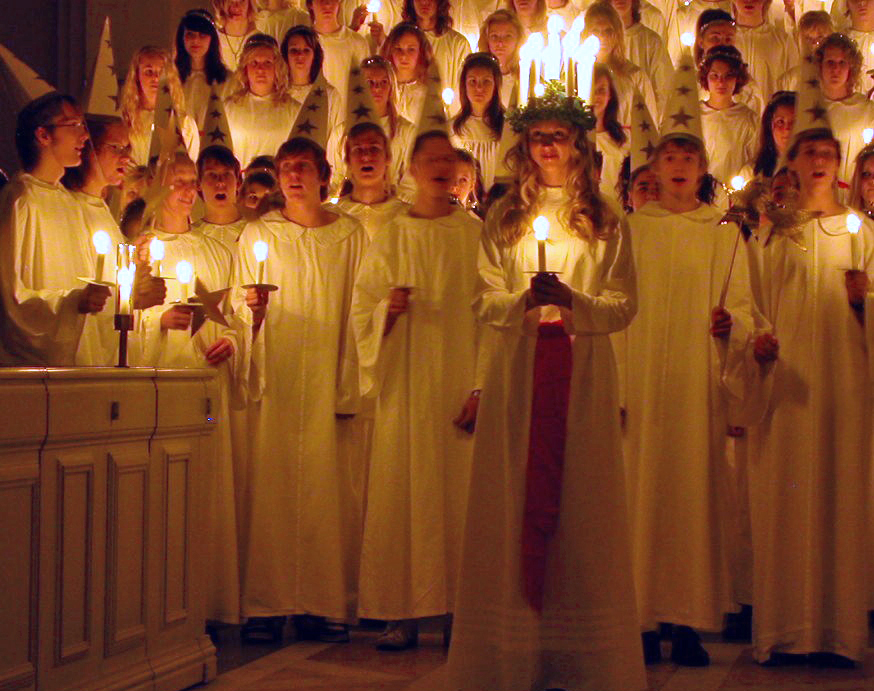
St. Lucia Day, a festival of light in the long, dark Scandinavian winter takes place on December 13. It is one of the most famous of all Swedish celebrations:

Traditionally the oldest girl in a family rises early on St. Lucia Day. Dressed in a white gown with a red sash around her waist and a wreath of candles on her head – these days electric crowns are often used, especially for small children – she goes from room to room singing carols and bearing her tray of lussekatter (saffron buns), gingerbread cookies, coffee, and glögg (hot spiced mulled wine).

The Scandinavian Ski Directory
Lucia choir. Photo: Wikipedia

Although St. Lucy’s Day is not an official holiday in Sweden, it is a popular occasion in Sweden. At many universities, students hold big formal dinner parties since this is the last chance to celebrate together before most students go home to their families for Christmas.

Cross country skiing – Vasaloppet

Vasaloppet
One of the world’s greatest skiing competitions, Vasaloppet takes place in Mora, in the Dalarna region of Sweden every March. The Vasaloppet is a 90 km (56-mile) cross-country skiing race, and the most popular sporting event in Sweden.

It is held to commemorate King Gustav Vasa’s flight from the enemies in the 16th century. Each year the race includes the present Swedish king, Carl XVI Gustav.

Photography
The long hot days of summer are a distant memory and the ski season is soon here. if you’ve been skiing in the last couple of years you can’t have missed the numerous helmet-mounted GoPros. It seems that just about every skier has one.

Skiing is one of the primary subjects that GoPro has in mind for its cameras and you can use any model. The GoPro Fusion, GoPro Max GoPro Session, GoPro Hero5 Session, GoPro Hero5 Black, GoPro Hero6 Black, GoPro Hero7 Black, Silver and White, and GoPro Hero8 Black are waterproof so they are ideal for videoing skiing without a housing.

The bag
The idea of the bags with its really terrible name the Douchebags are intended to be your do-everything and go-everywhere workhorse bag. The name, to my knowledge, means a basic jerk, a person that does shitty, insensitive, and hurtful things without caring. However, the bags have become an improvement to the existing bulky, heavy and awkward gear bags.

The Scandinavian Ski Directory
Skiers in Oslo. Photo: Odd Stansen/Visit Oslo

The Resorts
The Daily Scandinavian team has explored the best ski resorts in Norway. Norwegians’ passion for snow sports makes the country a superb winter holiday destination, for beginners as well as seasoned ski enthusiasts. Here’s our One Stop Guide to Skiing in Norway.

The Scandinavian Ski Directory
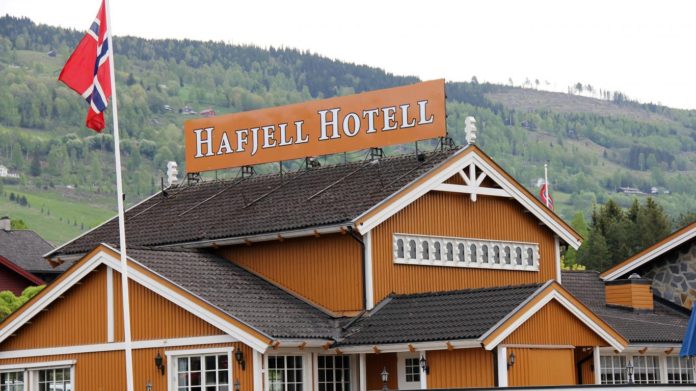
Hafjell Hotel

The foodie resort
Twining’s Best Breakfast awarded Norway’s best breakfast. Hafjell Hotell became county winner in Oppland in 2017 and 2018 as the hotel with the best hotel breakfast. Hafjell is also one of Norway’s most popular skiing resort. Read more about the best hotel breakfasts in Norway.

The Scandinavian Ski Directory
Sweet Protection

Protection
Sweet Protection helmets is a brand created by industrial designer Ståle Norman Møller and snowboard legend Terje Håkonsen. Today, Sweet Protection from Norway is an internationally recognized brand.

The Scandinavian Ski Directory
Norwegian company Fjord Norway offers brilliant information and assistance. on ski excursions

The tour operator
Ski touring in Norway is not just for expert skiers, but it does demand being in good physical shape and that you have a reasonable level of skiing skill.

Going freeride skiing alone, without a guide, also demands knowledge about the risk of avalanche, first-aid and navigation. If you are exploring an area for the first time, we strongly recommend that you ask a local guide to come with you. There are numerous certified guides in the area. A guide can also tailor the trip according to your wishes and skills. Norwegian company Fjord Norway offers brilliant information and assistance.

The Scandinavian Ski Directory
Helly Hansen gear

Outerwear
Helly Hansen gear is worn and trusted by professional athletes skiing down mountains as well as professional sailors on oceans, , and workers getting the job done at worksites all around the world.

All the way back in 1877, a sea captain called Helly Juell Hansen, and his wife Margrethe launched a business. They made waterproof oilskin jackets, trousers, sou’westers, and tarpaulins made from coarse linen soaked in linseed oil, a great innovation at the time.

The Scandinavian Ski Directory
Skiing in Geilo

Norwegian ski holidays
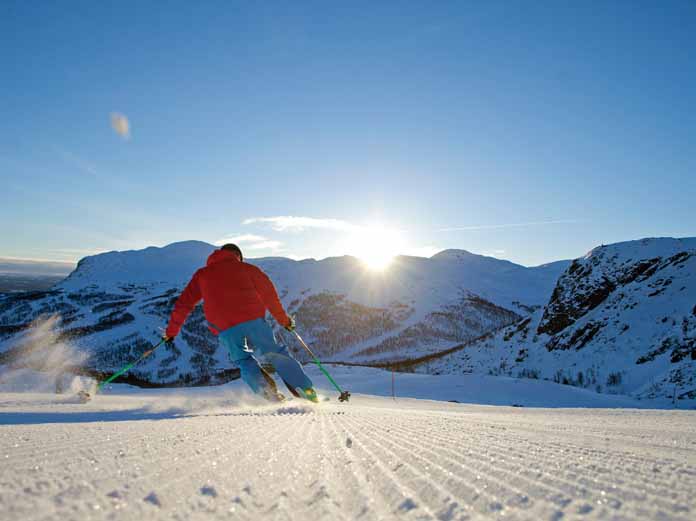
When it comes to superb snow quality, perfect groomed runs and very reliable snow you can’t beat Norway, it’s a beginner and intermediates paradise, with resorts like Geilo and Hemsedal having some great runs for the more advanced skier too. Looking for Norwegian ski holidays? You’ve come to the right place!

The Norwegian Ski Directory, compiled by the Daily Scandinavian team