According to a customer survey conducted by Opinion for Destinaston Trysil, as many as 25 percent of Norwegians over the age of 18 have never skied downhill or on a ski board. Now, Destination Trysil seeks to do something about this and is looking for a Norwegian who is not born with skis on. Learn more about Norwegians who are not born with skis on.
Trysil consists of four contiguous ski areas with 78 kilometers of skiing pleasure spread over 68 well-groomed slopes in three directions. Now, Trysil wants to recruit more Norwegian skiers. In the survey conducted by Opinion in November 2020, Trysil mapped Norwegians’ alpine skiing experience.
Trysil consists of four contiguous ski areas with 78 kilometers of skiing pleasure spread over 68 well-groomed slopes in three directions
“We think the proportion of Norwegians who have never skied on skis or boards is too high. Think of all the skiing, mastering and nature enjoyment they miss,” says Gudrun Sanaker Lohne, who is tourism manager at Norway’s largest ski resort.
Nature experiences and health benefits
Trysil wants more people to discover how much fun it is to go downhill skiing, and is now looking for Norwegians who are not born with skis on their feet. “Trysil is the place where everyone finds slopes that suit their level. That’s why we now are looking for Norwegians who have never skied downhill or on a ski board. Together with either family or friends, we invite the chosen one to a dream ski holiday in Trysil,” says Turid Backe-Viken in Skistar Trysil.
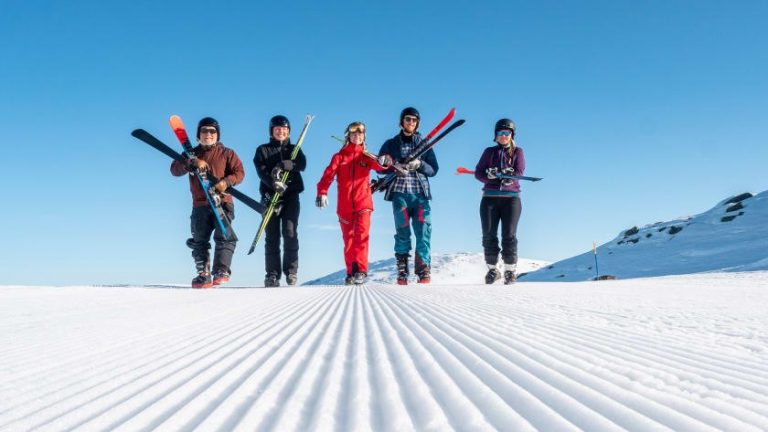
Skiinstructors are undervaluated. Photo: Destination Trysil
“We believe that everyone can enjoy alpine skiing. On skis, you get nature experiences and happy memories with your family. The health benefits of skiing may not be something that many people think about when they enjoy themselves on the ski slopes, but it’s also a fact.”
Experience the pleasure of skiing with ski instructors A newbie will receive ski passes, free ski rental and all meals covered, not to forget SPA, sleigh rides and a stay in ski hotels right on the ski slopes. And the Norwegian who is not born with skis on his feet will of course be guided by ski instructors.
Trysil wants more people to discover how much fun it is to go downhill skiing. Photo: Destination Trysil
“Ski instruction is underestimated by Norwegians. Only six percent of the customers of Trysilguidene, a team of ski instructors in Trysil, are Norwegians. Because Norwegians believe they are born with skis on their feet,” laughs Backe-Viken.
“The truth is that ski instructors are important whether you are a beginner or experienced, and now more Norwegians understand the importance. Sweden and Denmark have been doing this for many years. The same survey from Opinion shows that 66 percent of Norwegians have not experienced an alpine skiing holiday for the last three years. Norwegians do not have the same tradition as the Swedes and Danes who often travel several generations together on a ski holiday, and often several times a year.
“We believe that everyone can enjoy alpine skiing,” says Turid Backe-Viken in Skistar Trysil. Photo: Mynewsdesk
“We believe that more Norwegians will try skiing holidays for the first time this season, since they due to the corona situation cannot enjoy their southern European holidays or city weekends. And should it be a year for beginners or rusty skiers to take the trip to Trysil, it’s the present season,” says Backe-Viken.
“There will be plenty of space in Norway’s largest ski resort this year, which in a normal season has 80 percent foreign visitors. And we have prepared well for a safe winter with a focus on infection control from all players in the Trysil area.”
Norwegians Are Not Born With Skis on Their Feet, based on a press release from Destination Trysil
Feature image (on top): Photo by Johan-Huczkowsky-Skistar-AB.
Apart from being on a vacation, the other thing that might interest most employees is a shorter workday. A study conducted by the Bureau of Labor and Statistics found out that Americans work an average of 44 hours a week –that’s around 8.8 hours each day. Learn more about how 6-hour workdays in Sweden boost productivity, energy, and happiness.
The problem is hard work doesn’t always lead to more productivity. The Bureau of Labor Statistics found out that during the 8.8-hour workday, most people were truly productive for less than three hours. If you want to boost the productivity of your enterprise, then you should consider shortening your workday. The six-hour workday has not only boosted productivity but also happiness and energy. Here’s why!
The Six-Hour Experiment The Swedish government had a puzzling question back in 2015. The question was: if people worked for only six hours a day and got paid for eight, would this make them more productive? They experimented and got an interesting answer.
The government ran a controlled experiment at the Svartedalens retirement home in Gothenburg, Sweden where they had their staff working for six hours in a day but got paid for eight. They compared the data with another group in a similar facility and the results were surprising.
The Discovery The Swedish government discovered that the six-hour workday has lots of benefits for the employees. Some of these benefits include:
Productivity boost. Photo: Krisna IV / Unsplash
Productivity boost The nurses working six hours a day were 64 percent more productive than those who worked for hours. They also provided high-quality care to their patients. While the experiment was done in a nursing home, it doesn’t mean that the results cannot be translated into the world of business. A boost in productivity is likely to lead to enhanced creativity, teamwork, and energy.
Improved health Another fascinating finding of the six-hour study was that employees took half the amount of sick time that their eight-hour colleagues took in a year. This gave them more energy at work and helped them engage with their patients. Scientific studies conducted by assignment writing have shown that overworked employees have a higher chance of falling into depression. Therefore, shorter hours signify improved mood and confidence in your employees. Healthy workers have a healthy relationship with their vendors, clients, and employees.
Stress reduction In the United States, close to one million workers fail to show up to work due to stress. Around 66 percent of Americans report that work is one of their major sources of stress in life. With fewer working hours, stress levels go down naturally. And this makes it easier for employees to meet their job expectations and deadlines. Plus, they can balance between work and home. And this makes them happier.
More engaged employees Do your employees come to work because they are interested in the mission of your organization or is it just a means to an end? Wouldn’t it be great if they thought about your mission? With a six-hour workday, employees tend to be more engaged and invested in the organization’s objectives. And this leads to great success for both the employer and employee since both are committed to common values.
With the majority of Americans working more than 40 hours per week, it’s easy to determine how reducing this burden can make people productive at work and also make it easier for them to achieve their personal goals.
Tips to boost productivity Track and limit time spent on tasks
According to writing assignment, most people think that they are great at gauging how much time they spend on different tasks. However, research studies show that only 17 percent of people can accurately estimate how much time they spend on tasks. You should consider using apps like Rescue Time to know exactly how much time you are spending on different tasks such as email, social media, and word processing to name a few.
Take regular breaks While this sounds counterintuitive, taking scheduled breaks can help in enhancing concentration. Taking short breaks regularly will help you maintain your performance all day long. Working continuously without taking short breaks leads to a decline in productivity and performance in the long run.
Avoid multitasking Multitasking is one of the top productivity killers. Research studies have shown that switching tasks reduced productivity by as much as 40 percent. Another study conducted by the University of Sussex found out that multitasking harms your brain. People who multitask have lower gray matter in the brain which is linked to empathy, decision-making, and rewards. Therefore, stop trying to do two or more things at once. Focus on one task at a time.
Make your to-do list the day before. Photo: Kelly Sikkema / Unsplash
Write down your to-do list the night before To-do lists are essential productivity aids. They help you get organized while rewarding you with feelings of fulfillment and satisfaction when you cross off things that you’ve accomplished. Creating your to-do list means that you won’t be wasting time in the morning trying to figure out which task you should work on.
Forget about perfection According to best assignment help, it’s common for most people to get caught up trying to perfect a task. However, you’ll never do anything perfectly. Instead of wasting time and energy chasing after an illusion, do your tasks to the best of your abilities and move forward. Instead of focusing on perfection, focus on progress. Remember, you can always revisit a particular task and improve on it.
Increasing your productivity is essential if you want to promote your business. Photo: Isaac Smith / Unsplash
Be proactive You should not allow phone calls and emails to dictate how you spend your time. You’ll never accomplish anything of value if you spend your entire day answering phone calls and replying to your emails. You need to set a particular time of the day to respond to others. However, don’t let them run your day.
Turn off notifications It’s not easy to resist an email, text, or voicemail notification. While working, turn off your notifications and allocate a specific period during the day to check messages and email.
6-Hour Workdays in Sweden Boost Productivity, Energy, and Happiness – Conclusion
Increasing your productivity is essential if you want to promote your business. You can do it by implementing the six-hour workday policy and using the tips that we’ve discussed.
6-Hour Workdays in Sweden Boost Productivity, Energy, and Happiness, written exclusively for Daily Scandinavian by Charlie Svensson. Charlie is fast, engaging freelance writer at essay writing service reviews, dissertation help and EssayWritingLand. Skilled in content writing and blogging. The favorite topics of his posts are education, social media, marketing, SEO, motivation blogging and self-growth. Excellent adaptability of skills to reach diverse audiences.
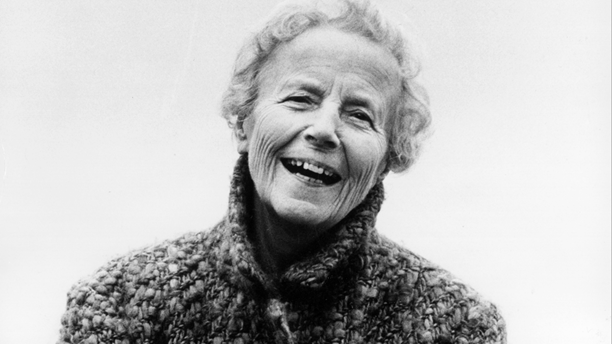
Norwegian-born sex-educator, journalist and anarchist agitator Elise Ottesen-Jensen (2 January 1886 – 4 September 1973), also known as Ottar, was fighting for women’s rights to understand and control their own body and sexuality. Her followers consider her a pioneer in the field of women’s rights and feminism. Learn more about the Scandinavian sex educator.
Elise Ottesen-Jensen became the leading advocate of sex education and sex law reform in Sweden (1920s – 1950s) and a leader in the international family planning movement. She was the 17th of 18 children. Later in life, her father sent away her little sister Magnhild to give birth in Denmark, so that she could be forced to give up her child. Maghild was told nothing about pregnancy or birth, and for nine months she feared that her stomach would just split.
Elise-Ottesen Jensen became the leading advocate of sex education and sex law reform in Sweden (1920s – 1950s). Photo: Ifwea
Struggle for women’s rights
Back home, having borne a child out of wedlock, Magnhild was barred from enrolling in a nurse’s training program; thus, she could never advance beyond working as a nurse’s aide. A few years later, after her child died, Magnhild’s mental state deteriorated, and she was institutionalized in an asylum for the mentally disturbed. There, fixated by the loss of her child, she spent her time sewing baby clothes, and committed suicide in 1934, only 44 years old.
Ottesen Jensen was a leader in the international family planning movement
For this, Ottar could never forgive her father, and the fate of her sister became a strong driving force for her commitment to the struggle for women’s rights.
Although both her parents were relatively liberal for their day, even allowing their children to dance, Norwegians then tended to be pietistic and guilt-ridden, regarding even innocent pleasures as potentially sinful.
Ottar (her journalist pseudonym) made several attempts to organize working class women. The name Ottar has also been used to name the Norwegian feminist group Kvinnegruppa Ottar. Photo: Johanna Engen
Journalist pseudonym Ottar
The name Ottar was her journalist pseudonym and was an abbreviation of her last name, but also a reference to the Norwegian Viking chief Ohthere of Hålogaland (Norwegian: Ottar fra Hålogaland).
Her dream was in fact to become a physician, but family finances made this impossible, so she settled on becoming a dentist. While studying, however, she lost three fingers in a laboratory explosion, forever ruling out dentistry as a career. After working for a short time as a stenographer at the national Parliament, she decided to take up journalism.
Ottesen-Jensen was a charismatic public speaker
In the 1920s, Ottar was a regular writer for Arbetaren, with her own column focusing on feminist issues. After a disagreement with the other editors of Arbetaren in 1925, she started her own paper, Vi kvinnor. The paper did however not last for long. A few years later, she also wrote for the anarchist magazine Brand.
Sex educator She had always questioned the preaching of her father, and early arrived at the conclusion that she was not a Christian. She now found that her sympathies were with the socialists, and it was with them she would struggle for the rest of her life. She became a member of the Swedish anarcho-syndicalist union Central Organization of the Workers of Sweden
Ottar made several attempts to organize working class women. But soon they started asking her for advice in sexual matters, asking her questions like “Do I always have to when my husband wants to?” and “What can I do to avoid getting pregnant?”.
By the end of the First World War, in 1913, Ottar met and developed a close friendship with the Swedish anarcho-syndicalist peace agitator Albert Jensen. They married in 1931, and Elise Ottesen changed her surname to Ottesen-Jensen. When Albert Jensen was expelled from Norway because of their opposition to World War I, she came with him to Denmark. There, she gave birth to their child, who died soon after birth.
Association for Sexuality Education
Ottar and Albert moved to Sweden, and she came to know a doctor who amongst other things taught her how to use a diaphragm. She then set out for her first nationwide tour, in Sweden. She travelled from Skåne to Norrland, teaching female workers how to avoid pregnancy. She agitated for the right for women to experience sexual pleasure, for free abortion, for the repealing of the laws against contraceptives, for gay rights, and more. What she did was illegal and she risked harsh penalties.
In 1933, Ottar, together with a number of radical medical doctors and trade union representatives, founded the Swedish Association for Sexuality Education (In Swedish: Riksförbundet för sexuell upplysning, RFSU). She became its first President, and held this post until 1956. Ottesen-Jensen was also one of the founders of the International Planned Parenthood Federation (IPPF) in 1953. The paper “RFSU bulletin” changed its name to “Ottar” to honor Elise Ottesen-Jensen. The name Ottar has also been used to name the Norwegian feminist group Kvinnegruppa Ottar, who were officially founded in 2006.
Screen print
A charismatic public speaker
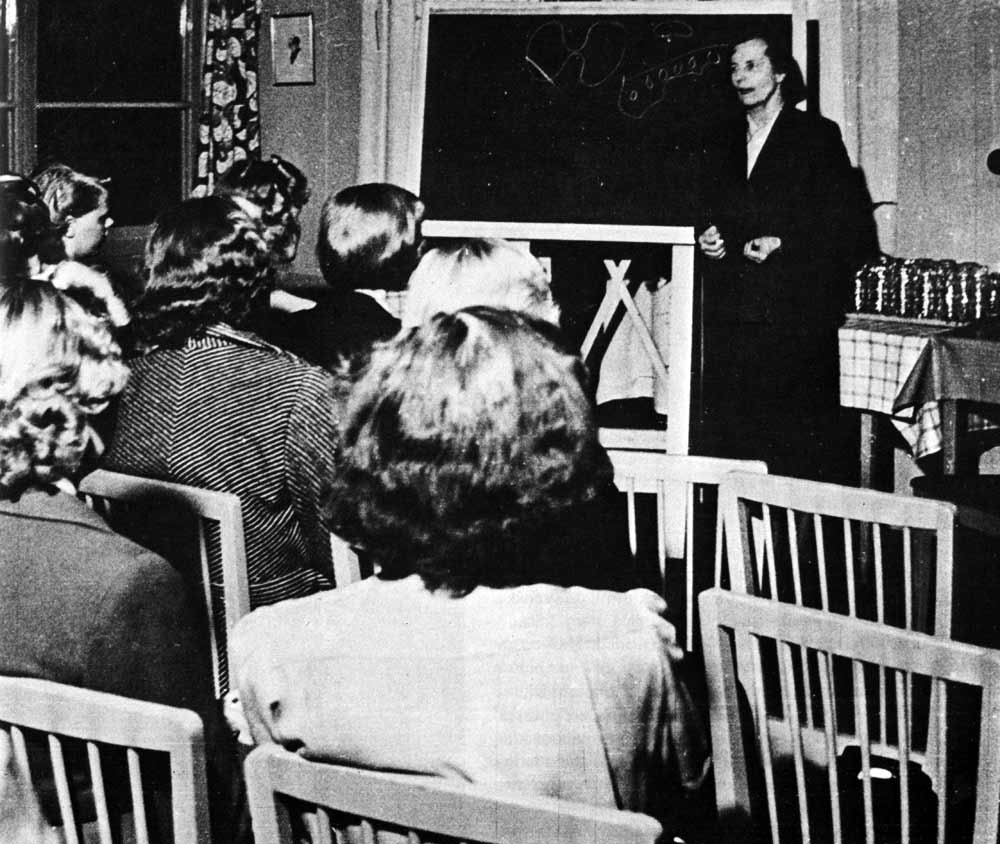
Ottesen-Jensen was a charismatic public speaker who made a powerful impact on her audiences. In 1945, sex education became obligatory in Sweden’s school system. The following year, Ottesen-Jensen convened an international conference in Stockholm that resulted in the founding of the International Committee on Planned Parenthood. America’s Margaret Sanger was chosen as first president of this organization, which was to become the International Planned Parenthood Federation (IPPF) at a conference held in India in 1952.
After being ill with uterine cancer for several years, Ottesen-Jensen died in Stockholm on September 4, 1973. In a newspaper tribute, her friend Greta Bolin recalled what Elise had said as long back as 1933: “I dream of the day when every child that is born is welcome, when men and women are equal, and sexuality is an expression of intimacy, pleasure and tenderness.”
The Scandinavian Sex Educator, written by Tor Kjolberg
Sources: Wikipedia, Linder, Doris H. Crusader for Sex Education: Elise Ottesen-Jensen (1886–1973) in Scandinavia and on the International Scene. Lanham, MD: University Press of America, 1996,.
Around 1.6 million people enjoy recreational fishing in Sweden. Good quality water is abundant – there are 95,700 lakes across the country, the majority of which are suitable for fishing. What may come as a surprise however is that the city of Stockholm has some excellent spots for fishing. Learn more about the top fishing spots in Stockholm.
The Söderström that runs through Stockholm to Lake Mälaren and then out to the Baltic sea, is popular with seasoned fishermen as well as families looking to spend the day catching the odd fish whilst watching the world go by.
There are also plenty of lakes and waterways that offer more secluded fishing. If you are new to fishing, it is also worth booking a fishing tour where a guide can show you the best places in the archipelago.
The Stockholm archipelago of Gålö is often known as Stockholm’s Garden of Paradise. Photo: Gålö Atchipelago Foundation
Gålö Archipelago The Stockholm archipelago of Gålö, often known as Stockholm’s Garden of Paradise, is a beautiful nature reserve. It is the perfect place to spend time fishing with your family, teaching children basic fishing skills like how to cast. The waters are generally very calm and you won’t find big crowds of people, even in the summer months. You don’t need a special fishing licence to fish at Gålö and there are several places to purchase bait or equipment if you need it. The waters are abundant with herring and perch. Gålö also has the reputation for having the world’s best pike. In the summer and autumn months you will also find plenty of sea trout.
Sunset over Ringsjön. Photo: Wikipedia
Ringsjön Lake Ringsjön Lake is a lovely secluded spot that is perfect for fishing away from the crowds. It is a great place to spend the day fishing and if you don’t manage to catch anything, there is an outstanding deli on the shores where you can stop by for lunch. The lake is open for fishing all year round, but if you’re looking for pike or perch, you’re best to visit between June and September. Eel and bream are also plentiful at Ringsjön as well as rainbow trout.
The waters at Hammarsby Sjöstad are now pristine too and full of fish. Photo: Wikimedia Commons
Hammarby Sjöstad Hammarby Sjöstad is actually part of Stockholm’s inner city. During the 1990s, “Hammarby Lake City” was a very run down residential and industrial area, but thanks to a major urban development project, Hammarby has now become one of Stockholm’s coolest places to live. The waters are now pristine too and full of fish. You don’t need a licence to fish in the area and can easily set up for the day from the banks of the water or from one of the bridges. You will find plenty of trout in and around Hammarby Sjöstad and if you’re really lucky you’ll be able to catch a salmon that is just passing through.
The waters in and around Stockholm are pristine and full of beautiful fish. Whether you are a keen fisherman or just looking for a fun day out with your family, there are plenty of places where you can enjoy the fishing experience and maybe even catch something special.
Karoline Gore
Top Fishing Spots in Stockholm, written exclusively for Daily Scandinavian by Karoline Gore. Karoline is a freelance writer from Stoke on Trent in the UK who left the corporate grind when she started a family and has never looked back. She enjoys contributing to a range of online publications on the topics that are important to her.
Feature image (on top): Gålö, Photo: Visit Stockholm
In Norway, there are 12 sheep breeds, of which six are endangered. Several of the breeds have speckled gray, black or brown color shades and the quality of the bottom hairs is different than that of the cover hairs. Norwegian mass producers refuse to use this wool. For them, only Norwegian white sheep apply, since It does not need dyeing, bleaching or other processing. The Norwegian company Varp & Verft thinks differntly.
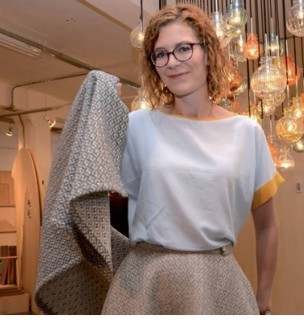
“While nursing my first son I came across a research study called “Valuing Norwegian wool”. Basically, the conclusion was that we are underutilizing a wonderful natural resource at the expense of biodiversity,” says economist and designer Carina Sandsmark Øvestad, who founded the company Varp & Veft with private and government funding in 2013.
Norway Cloth™ Grey Trønder has changed Norwegian wool from mass production to batch production
From shearing to hand grading, spinning and finally weaving & finishing, every element of the company’s Norway Cloth™ Grey Trønder wool collection is produced locally and from start to finish takes many months.
At the 2015 design fair 100% Norway in London, she exhibited the company’s first product series together with textile designer Jon Petterson. They realized that English dealers were interested in the niche product and wanted to collaborate with British architects and use it in public environments.
“We believe in the importance of preserving local manufacturing know-how,” says Carina Sandsmark Øvestad, who founded the company Varp & Veft with private and government funding in 2013
“We believe in the importance of preserving local manufacturing know-how as well as the lovely, yet longtime neglected, pigmented wool of old breeds of sheep. This is why we source handpicked raw wool from dedicated farmers and process this natural resource into high quality fabrics and finished items such as cushions,” says Øvestad.
In the old days the Norwegian Vikings knew how to best utilize the different wool qualities for the different usages. Each fleece would be hand sorted so that the long, coarse and almost waterproof hair would be used for sails and rugs, while the soft undercoat was spun into a softer yarn used for knitting garments.
Nowadays the Norwegian industry seems to prefer importing homogeneous wool for easier processing, while the wool of the modern white “meat sheep” is exported for the making of durable carpets. As a result, many old Norwegian sheep breeds are vulnerable to extinction.
Norway Cloth™ Grey Trønder wool collection is produced locally and from start to finish takes many months
“I wanted to change that,” says Øvestad who run the family-owned business with the help and inspiration of her children and husband.
By involving all segments in the wool industry, from the farmer and sorting machinery, to the weavers, spinners and designers, the result is added value, and Norwegian wool industry would change from mass production to batch production.
The “Black Sheep” of Norway, written by Tor Kjolberg.
Meta Description: In Stockholm and all over Europe, it’s a usual practice to remodel old ships into lodgings. This article describes leading boat hotels in the Swedish capital. Meals, drinks, and accommodation — you will get all the services! Let’s go exploring the finest boat hotels in Stockholm.
Is Stockholm your next destination? From food and parks to Stockholm’s museums and art exhibitions, you can never go wrong with it. However, the experience isn’t complete until you stay in a boat hotel. You don’t have to be a tourist to enjoy the boatel atmosphere. Even Stockholm locals can explore the possibility of eating and sleeping at sea.
During your trip, you can unwind with your favorite Ghost Slider games, choosing from a variety of titles. You can play it on any device, whether it’s a Mac, tablet, or mobile phone. Who knows, you could land huge winnings and extend your stay at one of these boat hotels in Stockholm.
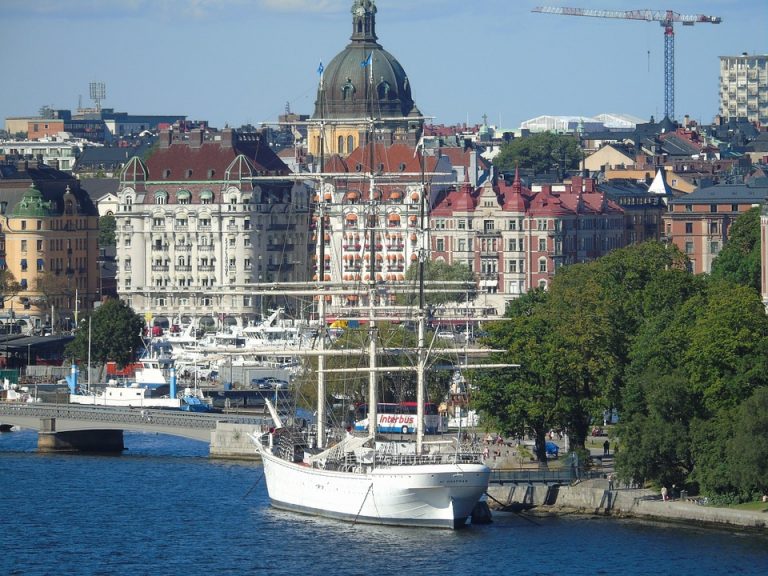
Built in 1888, af Chapman had its fair share of traveling before becoming one of the top hostels in Stockholm
Af Chapman Built in 1888, the ship had its fair share of traveling before becoming one of the top hostels in Stockholm. After serving as a trading vessel for 25 years, it sailed to Gothenburg, where it continued as a private training boat from 1915 to 1923.
That’s when the Swedish Navy called it “Af Chapman” and used it for training until its last voyage in 1934. In 1937, the navy towed it to Skeppsholmen, Stockholm, and used it for their accommodation. It’s only in 1949 when it was turned into a hostel.
So, what do you get when you book this option? First off, most cabins maintain their original design, preserving the history of past sailors. This style extends to the towering masts on the exterior. Furthermore, you can see the Royal Castle from some rooms. You can choose between singles, doubles, and the dormitory. Apart from rooms and bathroom amenities on the ship, the common area, TV lounge, and kitchen are offshore. The best part is that workers are polite and familiar with Stockholm and its environs.
Mälardrottningen it’s minutes away from Stockholm’s major attractions. Photo: Wikipedia
Mälardrottningen When you arrive, the experience starts with a gangplank ushering you into the reception containing a nautical theme and teak panels. The entertainment lounge sits over the engine compartment, which is visible through the transparent floor.
When it comes to the cabins, they boast of mahogany finishes and maritime artwork. This goes hand in hand with the restaurant on the deck and the open terrace. If you’re in Stockholm for a business meeting, the hotel is the perfect hideout thanks to its free Wi-Fi.
What’s more, it’s minutes away from Stockholm’s major attractions, for instance, Stockholm Central Station and Gamla Stan. But Mälardrottningen wasn’t always a hostel. Built in 1924, the boat has changed ownership from C.K.G Billings, his daughter Barbara Hutton, even the English Navy. After its reconstruction between 1980 and 1982, the ship was permanently anchored at Riddarfjärden, Stockholm.
Red Boat at Mälaren. Photo: Wikipedia
Red Boat Mälaren True to its name, this hotel is a red vessel on Lake Mälaren. Together with a second boat, it features 34 guestrooms, with dorm and private accommodations. The individual cabins contain three sections, namely, Officers, Captains, and Admirals. You could also choose between the Navigators and Mates’ units in the landslide quarters. Hanging lanterns, nautical clocks, wood wall paneling, you name it; its décor makes the Red Boat a famous floating hostel in Stockholm.
Private accommodations also have televisions, personal bathrooms, and breakfast. Not mentioning the 24-hour reception and luggage store. You can also relax in the lounge with your favorite drink and a newspaper. Another selling point is its location. Found in Northern Södermalm, the spot is approximately 10 minutes from the heart of Gamla Stan, allowing you to explore the nightlife and Stockholm’s Old Town. Note that the Red Boat doesn’t admit children below ten years.
Situated in Northern Södermalm, this hostel borders Stockholm’s Old Town
Ånedin Hostel Situated in Northern Södermalm, this hostel borders Stockholm’s Old Town. Its affordable rates set it apart from other boat hotels in Stockholm. That notwithstanding, the services remain unmatched. The rooms may be small, and the corridors narrow, but the beds are still cozy. Although you share bathrooms in the cheaper cabins, the luxurious alternatives are en-suite and include a balcony and sitting area.
They also have complimentary Wi-Fi, queen size, and couch beds. You could also sample the buffet restaurant for sumptuous meals or have a drink at the bar as you soak in the breathtaking view. Don’t panic when you return from your Stockholm adventures in the afternoon and miss your boat; the captain might have taken a sightseeing tour to the Stockholm Archipelago. You can enjoy this trip for free as a hostel guest.
Overlooking Riddarfjärden and Stockholm’s Old Town, the hotel is on a ship called Kronprinsesse Märtha
Rygerfjord Simplicity is a constant theme of this three-decker hostel/hotel. Instead of screaming colors and fancy paintings, expect plain walls and sheets in the cabins.
The simplicity extends to public spaces like the lounge, with its checkered curtains, oriental carpets, and leather chairs. You can also book the lounge for meetings, conferences, and other special events. On summer days, you can sit on the picnic tables on the deck to enjoy the sea breeze and look at Stockholm.
While couples prefer the Captain and Standard cabins, the hostel side is excellent for smaller groups touring Stockholm on a budget. The restaurant also serves breakfast (separate from the room charge) and Swedish delicacies for lunch and supper. Moreover, Rygerfjord is accessible to Stockholm’s significant points, like the Stockholm palace and Stockholm Central Station.
Overlooking Riddarfjärden and Stockholm’s Old Town, the hotel is on a ship called Kronprinsesse Märtha. This boat took the name of Swedish Princess Martha, the wife of Prince Olav. You can visit Stockholm Royal Palace, which is 1.1 kilometers away. Likewise, Sergels Torg Square and Stockholm Bromma Airport are 1.3 and 7 kilometers from the property. Some of the rooms’ features include Wi-Fi, private bathrooms, air conditioning, and if you’re lucky, the sea view.
You also get daily housekeeping, newspapers, storage, and photocopying services. The lounge is also cozy, presenting antique furniture and a TV. Best of all, the area is secure, thanks to the guards, CCTV cameras, and security alarms. You don’t have to leave the hotel for a decent meal. You can eat at the on-site restaurant and have a drink. Note that the property doesn’t allow pets.
Choosing Boat Hotels in the City of Stockholm Your hotel choice determines whether your trip will be successful or a disaster. For starters, weigh the boat hotel’s amenities against its cost. This goes together with the hotel’s proximity to the areas you want to visit. For example, you can book a place near Stockholm’s city hall if you’re interested in the town’s landmarks. Do you know other fun locations in Stockholm?
Thomas Quarry
Exploring the Finest Boat Hotels in Stockholm is written exclusively for Daily Scandinavian by Thomas Quarry. Thomas is a data scientist expert and avid lover of technology. He refers to real life treasure hunters. Currently enjoying his retirement life, he enjoys blogging and sharing his experiences working behind the camera.
Feature image (on top): af Chapman at shore Stockholm
The predicting of 2021 trends is unlike anything we have ever experienced before. Usually, the trends are based on past patterns and data samples. But the year 2020 has been a curveball for many. Experts are still trying to understand how it will affect lives globally as we move into the New Year. While the Covid-19 pandemic was a disaster for most sectors of the economy, it hit some more severely than others. Travel was one of them. Learn about the 8 popular business trends in Scandinavian travel
The Scandinavian countries, like the rest of the world, closed their borders and ceased all international travel as the pandemic started wreaking its havoc.
Things are, somewhat, returning to normal even as we fight the second wave of the coronavirus. We have new vaccines, we have acclimated ourselves to living in a socially distant environment, and we are adapting to our new normal. Travel restrictions have also eased up, and the Scandinavian travelers who had postponed their trips in 2020, are expected to resume their plans in 2021.
Things are, somewhat, returning to normal even as we fight the second wave of the coronavirus. Photo: Visit Oslo
So, what these new plans will look like for Nordic travelers and what you, as a travel business, can do to make sure you are an active part of it – let’s find out.
Leisure Travelers Scandinavians have always loved traveling for business. But unlike many business travelers from other parts of the world, they like to spend time exploring the local culture, cuisine, and scenes. As the economic activities pick up from all across the world, expect the Nordic travelers to continue mixing pleasure with business. Arriving a few days early or staying for a few days more after their conference ends will be a usual occurrence.
Take Away: As a travel management company, lure these professionals by designing holiday packages that pay the best value for the buck and can pack up a lot of local culture in a short amount of time.
Scandinavian business travelers like to spend time exploring the local culture, cuisine, and scenes. Photo: Schengen Visa
Digital Nomads Employers and employees have finally realized that remote work is possible. It has given rise to a specific kind of travel trend where people are looking to book longer stays and continue to work from remote locations. We are expecting the Nordic travelers to join this trend. The Scandinavian countries have a substantial population of freelancers who work from home or use online tools such as travel logo maker, customer relationship applications, and content dashboards. With lockdown restrictions in place, most regular employees are also working from home. This means, as a travel expert running your own agency, you may have a large influx of travelers who wish to adopt the digital nomad lifestyle.
Take Away: Design strategies to lure digital nomads who wish to stay for long durations. Learn, do research, and get informed about places that issue digital nomad visas and what it entails.
Create Sustainable Travel Plans Eco-tourism and sustainable travels are going to be huge trends for the upcoming year. Consumers are becoming conscientious about how they travel, how their travel affects the local economy and culture, and what they take back from it. Sustainable travel is increasingly becoming more popular in Nordic countries and both inbound and outbound travel is being affected by it. If you can create travel plans that take into account carbon footprint offsetting and other sustainable measures, you’re golden.
Take Away: Create travel itineraries that promote responsible tourism, conscious use of energy and other resources, waste and recycling management, support of the local economy, and transparency at every step of the way.
Ulvik, Hardanger. Photo: Fjord Norway
Adventure Destinations & Nature-Exploring Because of the sheer and varied beauty of the Nordic landscape, the area is famous for adventure travels and exploring nature in all its untouched glory. With most of us shut up in our houses for the better part of a year, expect a lot of travelers to look for holidays where they’ll either want to go big or stay at home.
For the ‘going big’ travelers, adventure tours are going to be a huge attraction. Exploring untouched parts of the landscape, eating food that they have never heard of before, solo traveling, and staying in remote locations, etc., is going to be all the rage for these travelers.
Take Away: Explore your local community and culture and discover what adventure tours you can offer your customers. The more unique and tailored packages you offer, the more murmurs for you through the grapevine.
Authentic, Off-Beaten Paths We expect off-the-path adventures as being the next big trend in the travel industry. Looking to immerse in travel scenarios that are unique and personal, and exploring areas that have not seen many tourists approach is a joy like no other.
Travel to these less-visited areas is also an attempt at sustainability. Consumers are becoming more conscious of preserving local culture, history, and locations. And therefore, they are looking for ways to not put too much pressure on well-known tourist locations. Mountain walk trails, ski resorts that see lower tourist turn out, beaches that not many people know about, and other such remote, authentic locations will see a surge in incoming tourist traffic.
Take Away: Large companies and tour operators will do well to connect with travel experts at the micro-local levels. Only then we can create authentic experiences for travelers that will bring them to us over and over again.
Scandinavian tech payment solutions that allow customers to pay via digital solutions
Digital Payment Solutions Another trend that will help the Scandinavian travel market to find its footing again is its increasing immersion with technology. Tech payment solutions that allow customers to pay via digital solutions or an app will help different segments of the market, not just travel. Food, leisure, entertainment, retail, and more will benefit if foreign travelers can make safe and secure transactions in a cashless manner.
Take Away: Become a travel company that makes it easy for consumers to pay for things. Allow your customers the freedom to travel without financial worry in the remotest of areas with all of their transactions taken care of in the safest ways possible.
Traveling Within Nordic Countries While Scandinavians love to travel outside their region – Germany, Japan, and Thailand, for example – they also love to take advantage of the strong relations with each other and travel to sister countries. The government-run railways, similar local languages, strong cultural ties, and still plenty to explore are some of the factors behind this accelerating trend. According to a travel market report for Norway, its sister country Denmark was its #1 guest in 2019 (over 90,000 visits), closely followed by Sweden (over 80,000 visits).
Take Away: Create unique travel plans for Nordic travelers visiting neighboring countries. Perhaps something unique that no other travel agent is offering. Think of family travel bonanzas, tailored trips, and never-before-seen locations.
People are not taking any chances when they eventually leave their homes to travel abroad. Photo: Hygien of Sweden
Health, Hygiene, And Safety Unsurprisingly, the most dominant travel trend for Scandinavia, and other countries, is going to be an insistence on travel conditions that are safe, hygienic, and according to the latest health standards. People are not taking any chances when they eventually leave their homes to travel abroad. Social distancing protocols, travel restrictions, health and safety concerns, any compulsory isolation policy in place by any government, and other details like that need to be communicated clearly and openly to customers visiting the area.
Take Away: As you create tourist packages and travel plans, be sure to gather as much information as you can about the latest on the health and safety front amid the global pandemic. Make sure to offer your customers a travel experience that they can enjoy in complete safety and with no health concerns whatsoever.
8 popular business trends in Scandinavian travel – In summary The business trends for the Scandinavian travel industry mirror a lot of patterns for other European countries like the UK, Germany, and Belgium, etc. To make the most of these trends and emerge as a leader in your market, you need to have a proactive approach. Sustainable travel that’s more local, business travel that offers sufficient personal time, and the ability to create vacation plans that are adventurous and authentic are going to be some of the driving factors for the 2021 travel.
Steward Hudson
8 Popular Business Trends in Scandinavian Travel, written exclusively for Daily Scandinavian by Steward Hudson. Steward is a marketer by profession and a blogger by passion. He takes pride in the years he has spent writing and marketing for various businesses and organizations. Apart from this, he loves traveling and trying exquisite cuisines.
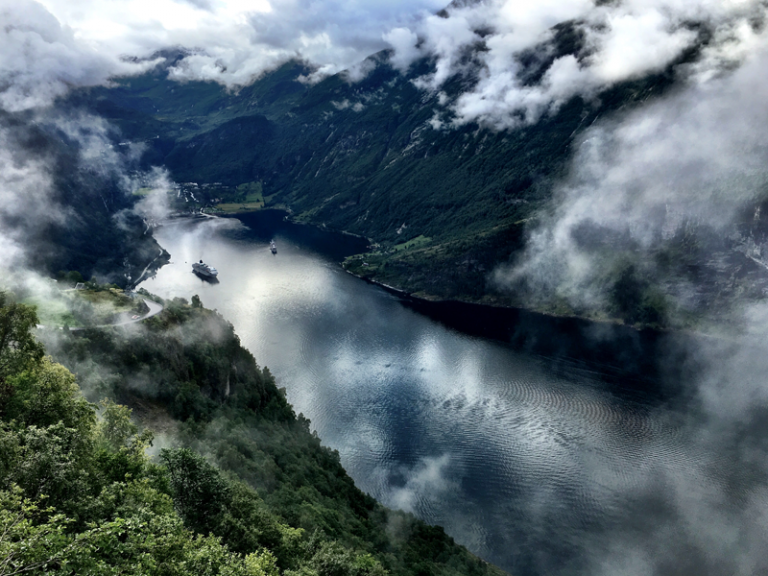
Feature image (on top): Geirangerfjord. Photo:Gultyayeva / Fjord Norway
In the three Scandinavia countries, Denmark, Norway and Sweden, with a modest total population of about 21 million people, the thirst for rap music is huge. Here we present a mini encyclopedia of fascinating Scandinavian rappers in alphabetic order. From rap legends to fresh talents, some may be omitted, but that’s not our intention.
Here is our list of the most noteworthy Scandinavian rappers and talents in alphabetic order:
Arif. Photo: Wikipedia
Arif – Norway Arif Salum, known by his stage name Arif and former Phil T. Rich, is a rapper from Oslo.
His first EP, Kom, Så, Tok, Færdiih (2012) made it big after winning the radio station NRK URT’s new talent competition. And from that point, he was free to spread his underground sound across the country.
With praise and plays from Norway’s biggest radio channels, a sequel EP and a record deal in his pocket, things were just in their humble beginnings for Arif. And within a short amount of time, the promising young artist proved to be one of Norway’s most important contributions to the rap and r&b genre.
With his figuratively choice of words and flows, ability to tell the stories of today’s generation and grasping productions from label mates «Aksel “Axxe” Carlson» and «Filip Kollseter», it made necks turn, heads nod and feet move with joy and fascination.
His last record (2017) Meg & Deg Mot Alle (or Me & You Against All in English) was a fast-paced rap beast that sonically feels like A$AP Rocky went full pop rap. He has embraced his position as a mainstream power now, and you can regularly see him linking up with the Lars Vaular (see below) and trap kid Unge Ferrari (Young Ferrari).
Cezinando. Photo: MyNewsDesk
Cezinando – Norway Born Kristoffer Karlsen in Norway’s capital city of Oslo, Cezinando spent the past half decade rising to the upper echelons of his country’s rap scene. He has a Norwegian mother and a Portuguese father, and spent a part of his childhood in Lisbon. He has won two P3 Gold awards for his work. His album Noen ganger og andre (Some times and others) was the best-selling Norwegian-language album of 2017 in Norway. It was nominated for IMPALA’s European Album of the Year Award. Known for the way he flits between rap bars and soulfully sung lyrics, his music deals with everything from heartbreak to hip-hop’s sillier, throwaway themes – and he’s gained a massive following for it so far.
Dutty Dior – Norway
One of the most promising members of the new wave of Norwegian hip-hop and member of the SDKT collective is Dutty Dior. At just 21-years-old, the autotune-favoring rapper, born Kristoffer Eriemo, tore up the Vice party at the 2019 OYA Festival, and is already getting some serious support from Spotify in Norway. He’s perceived to be the Scandi version of Playboy Carti. ‘HALLO’ was the summer hit of 2019.
Songs like “Famous” have that pre-set air of arrogance and selfbelief that feels vital when it comes to making it big in Nordic rap, while the production on “Fantasi” in which he link up with Isah (see below), is giving us real Drake feels. If you like your rap music big, unambiguous, and catchy, Dutty Dior might be your boy.
Emil Stabil. Photo: YouTube
Emil Stabil – Norway This deliberately loose sounding and knowingly weird rapper comes from the same school of odd as Young Thug and 2 Chainz. If you like old-school lyrical rap you will probably hate him – but if you like no-f**ks-given new-school trap stuff, then this is for you.
Erik Lundin. Photo: Red Bull
Erik Lundin – Sweden
Rapping in both Swedish and English (under the name Eboi), Erik Lundin is known for being a wickedly talented storyteller; a rap that was verified when he took home the award for Best Lyrics at last year’s Grammis Gala (yes, that’s the Swedish Grammys).
Born to a Gambian father and Swedish mother, Lundin’s lyrics tackle immigration and the political climate, all with a biting sense of humor. If Mwuana (see below) is the Swedish Drake, Lundin is the Swedish Kendrick Lamar. Just listen to 1999’s “Välkommen Hem,” which, of course, translates to “Welcome Home” if you don’t believe us.
Sivas. Photo: Wikipedia
Gilli and Sivas – Denmark These two rappers are probably the biggest stars of the new school. Sivas is very future-inspired in his breezy, autotuned trap universe, while Gilli incorporates lots of North African and Middle Eastern vibes in his music – a huge trend that he started, with inspiration from French rappers such as Jul. Sivas displayed his trap and autotune chops on his neo-classic DAUDA EP while Gilli gave the sound a unique twist with his big hits Cest La Vie and the ballad Tidligt Op.
Hesterv75. Photo: YouTube
Hester V75 – Norway
This hip-hop collective from Bergen is comprised of a bright bunch of rappers, singers and producers. With a self-run label called Vibbefanger (which is the talk of the music scene in Norway right now), their sound is gentle, soulful and differs from everything else out there. Typically rapping about the everyday experiences of young Norwegians, their distinct and cool DIY identity sets them out as an act to watch.
Isak Shorty. Photo: YouTube
Isak Shorty – Norway Born and raised in Ålesund, a sleepy port town on Norway’s West Coast, he started making music in his bedroom, collaborating with producer Halvard Ivarjord over the internet before eventually winding up meeting in real life. Together, they make slickly-produced hip-hop that’s harnessed by Isak’s tongue-in-cheek and ironic style of lyricism.
When this dude burst out onto the stage at OYA 2019, decked out in a beanie, Beatles tee and paint-spattered denim, he might’ve looked no older than 14 but had a flow and stage presence we could really fuck with.
Recently, the powers that be in Norway’s music scene stepped up and took note. He might be one of the few artists not signed to a major label in the country, but he’s already been blessed with an accolade courtesy of Momentium, a huge festival promoter in Norway, and it’s helped his tracks becoming minor streaming hits on Spotify.
Ivan Ave – Norway,
Ivan Ave is a Norwegian rapper who credits his sisters’ CD collections, something he scoured through as a kid as an important experience in the formation of his sound. He’s spent the past five years breaking out of the notoriously small Norwegian music scene, making waves internationally, and performing for the revered YouTube music show, COLORS.
He’s known for his ability to mix flexing lyrics about wooing women with the more existential shit, and his style is significantly old school – a true homage to the rappers of a bygone era that taught him how to make it through their work. Three LPs in – all released by Berlin’s supercool label JAKARTA – and he’s showing no signs of slowing down.
Jamaika. Press photo by Sony music.
Jamaika – Denmark
The biggest new rapper/singer on the Danish scene, Jamaika’s trademark sound is his incredibly beautiful and vulnerable voice. A sensitive soul, his stock in trade is very powerful and personal lyrics which shine thanks to his strong songwriting skills.
Kamelen. Photo: YouTube
Kamelen – Norway The young rapper Kamelen, born Marcus Mosele and raised in Bergen can also be found working under the name ‘Slim Kamel’. He’s a hard one to keep track of. Part of the NMG/G-House roster alongside Myra, Kamelen has had a bunch of monikers lately.
He’s one of the scene’s few controversial faces too. Rising to fame back in 2015 with a millions-streamed breakout track “Si Ingeting” his success coincided with him running into legal troubles; Kamelen was arrested at a gig on charges related to car theft and violence. He’s taken the time to consider redemption, and released a record titled Ambivalence in the process. About the changing nature of modern life, it’s a part-party, part-redemption record that fans of his have been bumping for the past few months, waiting patiently for its follow-up.
Karpe Diem. Promophoto by Akam1k3
Karpe Diem – Norway Karpe Diem is the country’s most prolific hip-hop group, something of an inescapable force in Norwegian rap. Formed of two friends who met while studying in Oslo – Magdi Omar Ytreeide Abdelmaguid, who’s half-Egyptian, and Chirag Rashmikant Patel, who’s Indian by heritage – have become glowing symbols of unity and diversity in a rap scene that’s prolifically and traditionally dominated by white voices.
First joining forces back in 2000, the duo has come to dominate the Norwegian scene for the past two decades with their brand of slow-burning, often sung hip-hop that will resonate with anybody who’s a fan of Drake and The Weeknd’s piercing R&B. Imagine that, laced with a sonic championing of a background that’s so far flung from the rest of Norway’s hip-hop crowd, and you’ll have a good idea of what Karpe Diem do so well.
Lars Vaular – Norway Described as ‘alt hip-hop’, Lars is definitively not the ordinary kind. His grimacing electro production and frantic delivery makes him sound a bit like Tommy Cash, if he came up during the dubstep era. It’s bizarre, but brilliantly catchy.
Linni. Photo: YouTube
Linni – Norway
Previously a member of the mysterious rap group Yoguttene, Linni has now gone solo and delivered two-thirds of a conceptual album series. His is a darker sound than many on this list, but his complex lyrics – touching on personal issues and experiences – are something everybody can relate to.
Madi Banja. Photo: Red Bull
Madi Banja – Sweden
Born in Gambia, Madi Banja moved to Stockholm when he was a teenager, so at least part of his singular sound can be attributed to his atypical accent. His tracks are heavy on the autotune and trippy trap beats, which have, unsurprisingly, led to comparisons to Future. He, however, would rather characterize what he does as “Madi Banja Sound.”
Michel Dida. Photo: Red Bull
Michel Dida – Sweden
Michel Dida grew up in a Stockholm suburb on “the outskirts of the blue line, between two hoods,” an area that boasts its very own, very specific lingo (Stockholm-dwellers often describe their surrounding suburbs as being off either the blue or red subway line). Dida is known to incorporate his area-specific slang into his rap, which is heavy on clever wordplay and turns of phrase.
His less-than-serious lyrics on tracks like the recently released “Gucci Song” are juxtaposed against trap beats and hard-hitting bass. It’s no surprise that Dida is a local favorite among Swedish rap fans and other artists alike – he’s collaborated with just about everyone on this list. Clever as his lyrics may be, Dida insists that he’s “just having a good time” with his music, and what could be better than that?
Mwuana. Photo: Mymnewsdesk
Mwuana – Sweden
With his softer, more lyrical style, Mwuana, whose name translates loosely to “brat,” might just be the Drake of Sweden. He even boasts vintage Caribbean influences and groovy afro-beats (though we’d argue that he pulls them off more naturally than Drake does). Just listen to one of his most recent singles, “Allting” (which translates to “Everything”) and you’ll know exactly what we mean.
After a string of popular mixtapes, he dropped his debut album, Triller, in May 2000. It’s a culmination of what he’s been building since his first mixtape came out in 2015: proof that eclectic influences and big, catchy tunes can effortlessly go hand in hand.
Myra. Photo: Wikipedia
Myra – Norway Growing up in Bergen, a hotbed of new Nordic musical talent, it was the arrival of Nicki Minaj and her early mixtapes that hooked Myra, real name Regina Tucker, on to hip-hop in the first place. But her IDGAF aura doesn’t feel like the by-product of those who came before her, it’s strong enough to help more young women in Norway step into the rap spotlight.
Not to be confused with the short-lived noughties American pop star, Myra is one of the few women in Norwegian hip-hop making a name for herself on her own terms. Famed for her intuitive flow and poppy, seductive beats, she’s become notorious on the scene as a deliverer of knockout live sets. In the past, she’s both jumped out to deliver verses in the crowd and rocked up on stage riding an effing superbike!
Noah Carter. Photo: Red Bull
Noah Carter – Denmark
This newbie Danish rapper has a very melodic Drake-inspired sound. His first-ever show was with Red Bull Sound Select in November 1999 and he released his debut track, Do You, around the same time. With 2.7 million Spotify streams and a guest gig at Roskilde Festival in the summer, expect to hear much more from this guy.
Sammy and Johnny Bennett. Photo: YouTube
Sammy & Johnny Bennett – Sweden
With their glitchy, distinctly UK vibe and laid-back swag, it’s no surprise that brothers Sammy & Johnny Bennett have international appeal. One look at their YouTube videos, which juxtapose covetable streetwear against various Gothenburg backdrops and you’ll be sold. It’s hard to pick just one standout track off their latest offering, ST. RECK, but “Titta Fram,” is especially vibey.
Silvana Imam. Photo: YouTube
Silvana Imam – Sweden
We hesitate to label Silvana Imam a rapper, just as we hesitate to open with the labels lesbian, feminist, activist and Sweden-born daughter of a Lithuanian mother and Syrian father. Of course, Silvana is all of those things, but the term she best embodies is artist.
Silvana’s lyrics pull no punches, as she takes on the patriarchy, racism and queer issues. “You say my love is breaking the law / I say you have super thin dick / Go kiss your fucking swastika,” she raps on her track “IMAM COBAIN.” Her tracks are hard as nails and is on track to become the queer feminist icon we didn’t know we needed.
“In the beginning, it was really annoying because it wasn’t about my lyrics or the music, it was like, so you’re a female rapper,” she says. “But it’s different now, thank god. I answered all those questions so the next generation won’t have to answer those stupid questions.”
Softcore Untd. Photo: YouTube
Softcore Untd. – Norway If you listen to rap music to party, these guys might not be your thing, but their experimental production and somber sound has us thinking that they’re making some of the most fascinating and complex rap music we’ve heard in a while now – period. They’re based between Bergen and Oslo, but we predict mad things internationally for these guys in future.
Their single “Skolebenken” sounds part inspired by both UK garage and rulers of sleepy indie-electro, The XX.
Suspekt. Photo: Red Bull
Suspekt – Denmark
Initially known as the naughty boys of Danish rap – thanks to a propensity for explicit lyrics – they’re now the biggest and most long-lasting Danish hip-hop act. With an incredible producer in Rune Rask (who’s produced for Kendrick Lamar among others), they continue to go from strength to strength.
Fascinating Scandinavian Rappers, compiled and edited by Tor Kjolberg
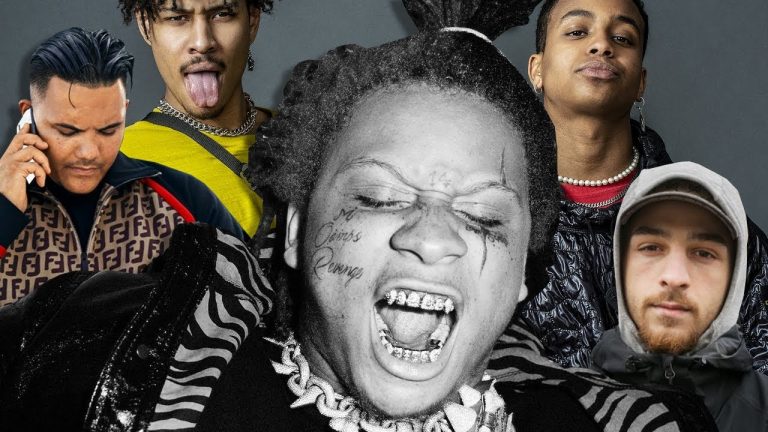
Feature image (on top) Fascinating Scandinavian rappers, photo: YouTube
Thousands of years ago, people were very superstitious, and believed in supernatural powers. With minimum medical knowledge, people would relate illnesses to several unrelated events. It is quite difficult for us to fully comprehend the ancient history of medicine and health in the 21st century. Mostly because all we know about that era is the tip of an iceberg. Learn more abouthealth and medicine in the Viking Scandinavia.
We know for a fact that this was an underdeveloped era so people had no idea about germs, functions of human organs, and the different processes carrying out inside the human body. Therefore, whenever an illness would come, they would try to cure it using different remedies and quackeries.
Scandinavian Vikings had developed various unique ways to cure the illness
In this article, we will look closely at the history of health and medicine in the Viking Scandinavia. But before that, let’s have a brief introduction of the time period.
The Vikings of Scandinavia The Viking culture has always been an interesting chapter for many historians, archeologists, and people from the entertainment industry. With some remarkable discoveries leading to the ancient Vikings period, history unfolds some amazing aspects of that age.
The Scandinavian Vikings were portrayed as brutal invaders and raiders. Well, it is very difficult for us to figure out what is true, false, or exaggerated. But we can surely say that the Vikings of Scandinavian origin were great adventurers and very much modern.
Looking back at the year 800s, we see that the Scandinavian Vikings had developed various unique ways to cure the illness. Let’s look at a few.
Vikings had a well-balanced diet
Health Many studies from the 11th and 12th centuries show that the people of Skeljastaðir, Iceland were mostly in good health. However, it does not mean that the diseases never existed at that time. It’s just that the ancient remains of Skeljastaðir depicted that people were mostly long-lived and possessed good oral health.
Further detailed analysis proved that those Vikings had a well-balanced diet as compared to modern diets. They used less sugar, took unprocessed food, and ate lesser refined meals. The dental record showed considerable wear with very less decaying. The only serious dental problem was calculus that results in losing teeth and building-up infections in the jaws.
People of that age used to intake all the necessary nutrients required for their body.
Some of the skeletal remains of aged people show healed bone fractures. This means the Vikings used to take good care of their elders. There were very few dietary deficiencies observed in the remains that shows that people of that age used to intake all the necessary nutrients required for their body.
Rituals to cure diseases
The Scandinavian Vikings used to live in trading towns as most of the trading happened by either sea or land. The dense population of trading towns causes difficulty in adequate sanitation. Hence, resulting in growing diseases. The trading town at Birka showed eggs of human parasites. Scientists claim that people might have suffered from diarrhea and nausea due to poor sanitary conditions.
While there were some ancient methods to deal with the illness, people also used to perform rituals to cure the disease. Back then, people thought that music and delightful poetry can heal the wound. The preventative medications were chants and charms to bring good fortune to the person. The wicked people used to take help from magic to cure the ill. The runic inscriptions were carved over the whalebone and placed under the sick person’s bed to regain health.
Viking ship body
Medicine he people in the Norse era were practicing both magical and medical arts to deal with health issues. Different remedies utilized local herbs to cure the wound, fix a broken bone, in anointing, and bandaging. In some cases, the Vikings would trade herbs to different regions to overcome a certain disease.
Cannabis sativa seeds
The history of CBD creams used nowadays, goes back to the ancient Norse age where they were first used as painkillers. During the digging of some ancient sites, the Cannabis sativa seeds were found in the pouches buried along with the dead bodies. These Cannabis seeds were the primary ingredient of the pain-relieving balms. This brought the scientists to the conclusion that the Scandinavian Vikings made use of Cannabis, marijuana, and hemp for medical purposes.
The skeletal studies revealed that people used some ancient techniques to fix the fractured legs, arms, and ribs. Whereas, in some studies, manipulation of the broken limbs was evident.
The Norse age has also witnessed epidemics such as smallpox, leprosy, and dysentery. Due to the thick population in the trading town, the burst of the epidemics could not be controlled. Therefore, the only way left is to abandon the infected ones.
Educated medical specialists were very rare at that time, so people rely on their own. Few people in every area have some specific skills in dealing with different health conditions. Mostly, medical knowledge was passed on to the precedents because there were not enough literature studies at that time.
Health and Medicine in the Viking Scandinavia – Final Thoughts The ancient history of Scandinavian Vikings reveals that certain herbal remedies they use at that time are still effective even after thousands of years. They were living a much healthier life and were very conscious of their diet. These hardcore Vikings had incredible medical skills despite the lack of scientific knowledge.
Shawn Mack
Health and Medicine in the Viking Scandinavia is written exclusively for Daily Scandinavian by Shawn Mack. Shawn is a content writer who offers ghostwriting, copy-writing, and blogging services. His educational background in business and technical field has given him a broad base from which to approach many topics.
COVID-19 has dramatically impacted the world as we know it, and every aspect of life has been affected as a result. Mental health, for many, continues to deteriorate due to factors like isolation, loss of income, fear, uncertainty, and more. The World Health Organization reports that “the pandemic is increasing demand for mental health services” across the globe, as well as exacerbating existing mental health conditions. Examining Scandinavian mental health, read the full story.
To combat the effects and frequency of poor mental health stemming from COVID, world leaders are increasingly looking towards Scandinavia for inspiration. The region has long boasted impressive mental health services, including free mental health ambulances, which drastically reduced suicide rates. What’s more, Norway, Sweden, Finland, and Denmark virtually eliminated the mental health stigma that plagues most countries, including the U.S.
Mental health ambulance in Sweden
In America and elsewhere, a significant number of individuals believe that disclosing a mental illness hinders the job search process, and may cause others to think less of them. Those living with mental illness in certain countries may be unfairly labelled as irrational, untrustworthy, or even violent. Fear of public stigma and judgment, unfortunately, keeps many people from seeking treatment for a mental health condition or turning to illicit substances for symptom relief.
Conversely, in Scandinavia, mental illness is overwhelmingly looked upon as a treatable medical condition, rather than a weakness or something to be ashamed of. Let’s take a look at what Scandinavian countries do right, and consider the future of mental health services worldwide.
An image issued by and made during Gustav Vasa’s reign, showing him (in dark brown clothing and cap) (Wikimedia commons)
Mental Health Challenges Across History In the last century, humans have gained extensive knowledge of the various mental conditions that plague humanity. We have also come a long way in terms of mental health treatment, and no longer look upon the mentally ill as “insane.” Into the early 20th century, those with serious mental health disorders such as schizophrenia and bipolar depression were typically locked in asylums. Control, rather than treatment, was the primary objective.
Interestingly, the earliest mental hospitals in Scandinavia date to the 1400s, marking Sweden as an early leader in mental health. Research indicates that King Gustav Vasa, in particular, was a champion of mental health care, ruling that various religious buildings be converted into state hospitals, and medical texts, are printed in Swedish instead of Latin. King Vasa’s reign lasted from 1523 until he died in 1560, and his legacy continues into the present day.
Modern healthcare providers understand more about mental illness than ever before. Photo: norden.org
Generally speaking, modern healthcare providers understand more about mental illness than ever before, from particular symptoms to the prevalence of various conditions. For instance, the condition long referred to as manic depression is now called bipolar disorder, and is further divided into two main types – bipolar I and bipolar II. Frequent bouts of depression, mood swings, and manic episodes are some of the common symptoms of bipolar disorder.
The Link Between Mental Health and Happiness For many living with bipolar disorder or any other debilitating mental health condition, happiness is often a fleeting emotion. Yet that’s only part of the story for Scandinavians, who are widely considered some of the world’s happiest people. Denmark, in particular, is known as “the happiest country in the world,” in part because of its radical and free healthcare system.
In countries where the national healthcare system is privatized, public health is often compromised in favor of profits. According to The Conversation, private health insurance is expensive and contributes to healthcare inequality. Patients who are required to pay out of pocket, or who have a high deductible, may ultimately put mental health care to the wayside due to costs.
To combat the effects and frequency of poor mental health stemming from COVID, world leaders are increasingly looking towards Scandinavia for inspiration. Photo: regjeringen.no
This is especially common among people who lack universal healthcare and already have substantial amounts of medical debt. In the U.S. and similar countries that lack universal healthcare, medical bills can quickly pile up. As many citizens are forced to make difficult decisions in terms of paying off that medical debt, even sometimes turning to credit cards, seeking mental health care may seem frivolous.
Mental Health Treatment Challenges Free mental healthcare may seem like a given to Scandinavians, however, it’s an anomaly for countries with privatized healthcare systems. Along with the high costs associated with treatment, from cognitive behavioral therapy to pharmaceutical medications, there’s also the previously discussed stigma to consider. Americans in particular may feel shame when seeking mental health care.
Yet data indicates that the bulk of U.S. citizens who have received treatment for a mental health disorder found it to be a positive experience. Bradley University reports that 82% of psychotherapy patients found it to be an effective method towards symptom relief. Further, cognitive behavioral therapy has been shown to positively benefit those patients living with various conditions, including panic disorders, depression, and borderline personality disorder.
It’s no wonder that Scandinavians are so happy, considering that the citizens of Sweden, Norway and Denmark don’t have to choose between taking on mountains of debt or seeking mental health treatment. As the world continues to adapt to the changes related to COVID, including higher rates of mental illness, government leaders should thus consider emulating Scandinavia in terms of healthcare.
Examining Scandinavian Mental Health, written exclusively for Daily Scandinavian by Beau Peters. Beau is a creative professional with a lifetime of experience in service and care. As a manager, he’s learned a slew of tricks of the trade that he enjoys sharing with others who have the same passion and dedication that he brings to his work. When he is not writing, he enjoys reading and trying new things.






 6-Hour Workdays in Sweden Boost Productivity, Energy, and Happiness, written exclusively for Daily Scandinavian by Charlie Svensson. Charlie is fast, engaging freelance writer at