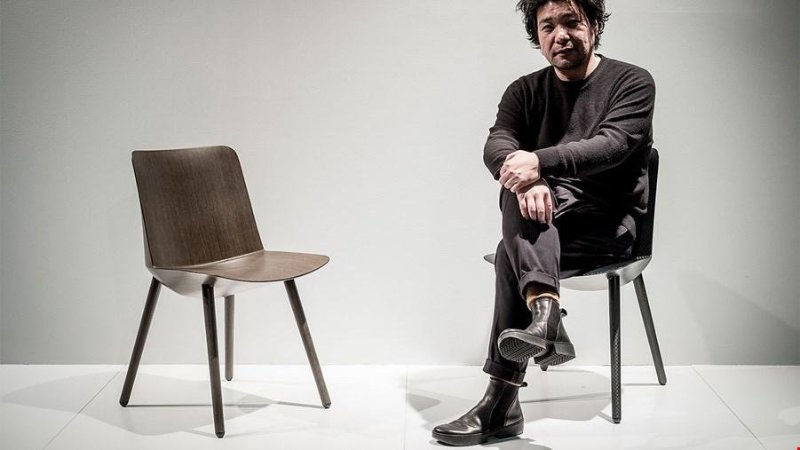
According to editors at Stockholm Furniture Fair 2018, the chair Jin was winner of the Best Product of the Year.
The unique structure of Jin has ideally been realized by shaping thin layers of Flax fibres on top of each other, forming a strong shell around a core of air, making the surface the actual structure of the chair. Offecct is also planning to launch Jin with upholstery during 2018.
Offecct AB is a entrepreneur- led company with its headquarters and production in Tibro, Sweden
«The material discussions with Jin Kuramoto were held for several years. Numerous experiments were carried out. Flax fibre (Linen) has the advantage of being biological, strong and light,» explains Offecct’s Design Manager Anders Englund. “Add to that Jin Kuramoto’s ingenious construction and futuristic design, and there were many reasons why Jin attracted as much attention as he did. Now Jin has been awarded “Best Product” at Stockholm Furniture Fair which is a great honor,” concludes Anders Englund.
The Jin chair garnered a great deal of attention when it, as a prototype under development in Offecct Lab, was exhibited at the Salone del Mobile in Milan in 2017. Now it is part of Offecct’s range presented in biobased flax fibre, and an upholstered version is being planned during 2018.
Jin Kuramoto
“This chair is what Offecct Lab and our Lifecircle philosophy is all about: engineers and designers working closely together to explore new and sustainable horizons of the furniture industry”, says Englund.
Offecct AB is a entrepreneur- led company with its headquarters and production in Tibro, Sweden. The company was founded in 1990 by Kurt Tingdal (CEO) and Anders Englund (Design Manager). They are both still actively involved in the company. The group has 75 employees and sales of SEK 180 million. The business is run in own premises which have a total area of around 20 000 m 2. The company has showrooms in Stockholm, Gothenburg and Tibro (SE), Oslo (NO), Copenhagen (DK), London (UK), Rotterdam (NL) and Milan (IT). Offecct is since 2017 a part of the Flokk Group – the market leader in the design, development and production of workplace furniture in Europe.
Best Product at Stockholm Furniture Fair 2018, source Offect AB
Last month Oslo International Hub officially opened the Bærum International Hub in Oslo’s neighbor municipality Bærum.
Oslo International Hub, now in its 5th year, is a symposium of internationally-minded entrepreneurs in an exclusive co-working space, aiming to foster innovation in an excellent working environment. Last month Bærum International Hub and Bærum International Conference Center were officially opened in the presence of ribbon-cutting Mayor Lisbeth Krogh Hammer.
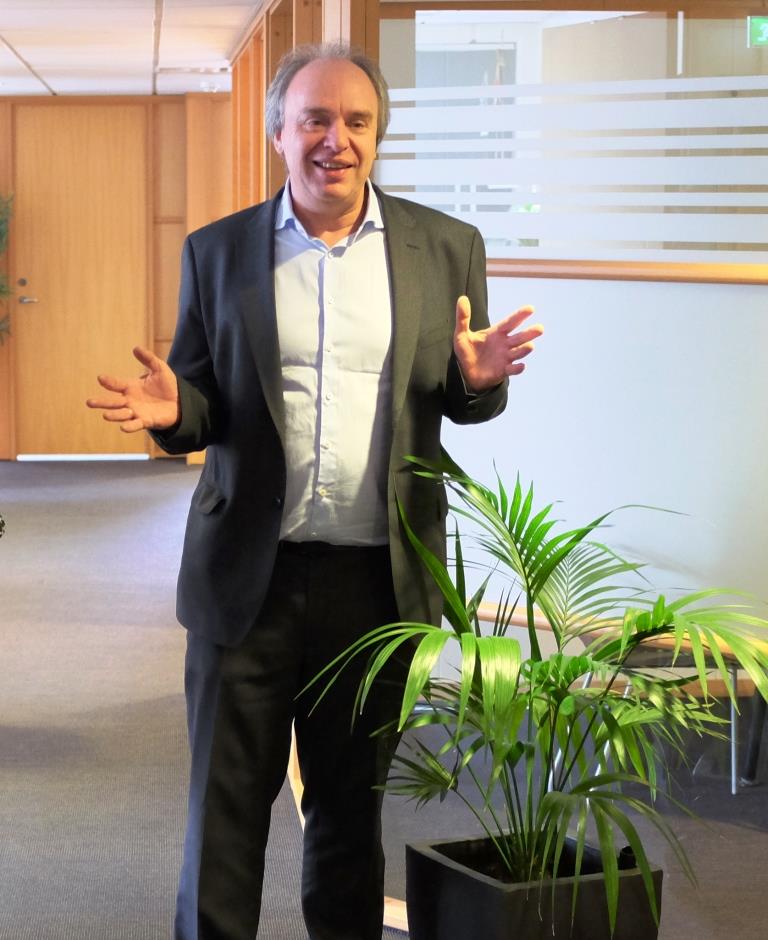
Co-founder of Baerum International Hub, Tore Borthen
Bærum International Hub will focus on forward leaning ecosystems emphasizing on health, green, international and social entrepreneurship. “We hope it will be an innovative business cluster for smart and sustainable healthcare solutions,” said co-founder Tore Borthen. One of the most cutting-edge training centers is already in place, offering 4×4 training for endurance and strength, developed by professors Jan Hoff and Jan Helgerud, both from NTNU.
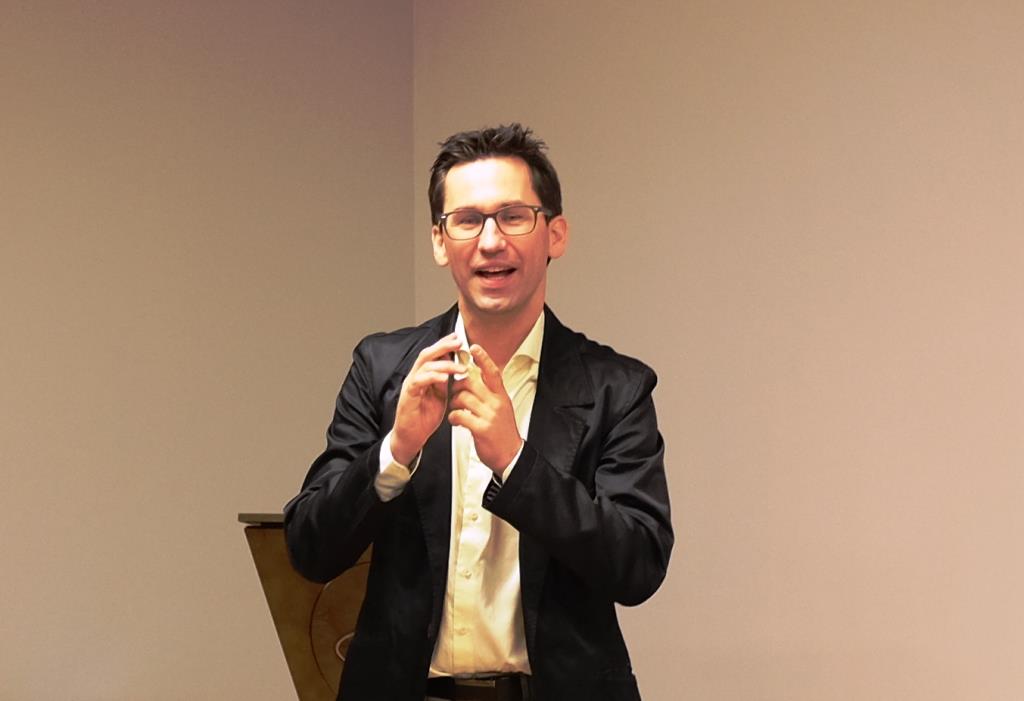
Co-founder Jørn Lein-Mathisen
«Welcome home» said co-founder Jørn Lein-Mathisen in his welcome speech. “Home – because you belong here. You create values, and now national companies can grow internationally since the International Hub is the ‘missing link’ in startups.
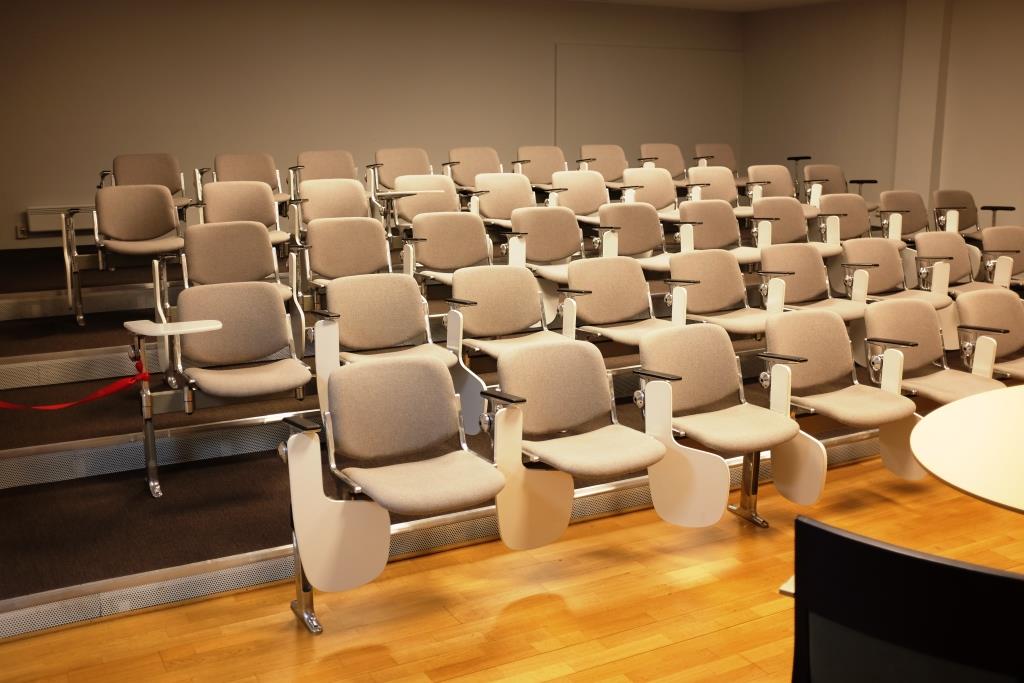
The auditorium at Bærum International Hub
Around 500 startups in all thinkable industries have been incubated in Oslo International Hub, an average of 100 a year. The idea is that Norwegian entrepreneurs need to be more visible.
A state of the art training centers is already in place
“Bærum is probably the most international municipality in Norway per capita. Business environment, entrepreneurship mentality and brainpower are present here. Now we have the opportunity,” said Tore Gulli, head of business, Bærum Kommune.
The official opening of Bærum International Hub. From left: Jørn Lein-Mathisen, Bærum, Municipality Mayor Lisbeth Krogh Hammer and Per Borthen.
Norwegians have a tendency of undervaluing themselves, they don’t broadcast. Now it’s time to getting involved in more conversations. A Swiss business angel once said, “The average Norwegian person seems to be very average.”
The present generation is probably more extrovert and more willing to take risks. Bærum has now become the odd belt for startups.
Sparkling wine, tapas and marzipan cake were served at the opening of Bærum International Hub
“After the oil – taking care of people’s health in new creative ways is an important initiative,” said Tore Borthen.
Oslo International Hub Is Ramping Up and Expanding, written by Tor Kjolberg
Located in the heart of the capital, in the last section of Strøget, from the Crane Fountain to Kongens Nytorv, you find the home of the exclusive and expensive: fashion shops, furriers and jewellers.
Now, the name of the square is highly appropriate, since it for several years have been affected by the construction of a nearby metro station. Again, it is one of the loveliest places you could visit in Copenhagen.
The construction of a nearby metro station is soon to be ended at Kongens Nytorv
With its history starting as early as the mid-17th century, the square features many architecturally beautiful and interesting houses along its main area paved by cobblestone.
At the end of Strøget, facing the square, stands the grand old hotel of the city, Hotel D’Angeleterre. The majestic building dominating the square are the Royal Theatre.
The statue of the popular King Christian V at Kongens Nytorv
The square also showcases the oldest equestrian statue, which is at the same time also the oldest sculpture if a royal in the whole od Scandinavia. The statue, made in 1688, showed the popular king Christian V, dressed in the garment that victorious generals wore for celebration in ancient Rome, riding a horse.
The majestic buildings dominating the square are the Royal Theatre (Det Kongelige Teater) – the national stage for ballet, opera and drama. The present building was designed in the 1870s, taking the Paris Opera Garnier as its idea.
Royal Danish Theatre at Kongens Nytorv
Next door is Charlottenborg, since 1754 the home of the Royal Academy of Fine Arts, where painters, sculptors and architects receive their formal training.
During the winter season, a large ice-skating rink springs up on the square. Skate rental is available and skating there is for free. In summer, there is a flea market every Saturday, approximately from 10 am to 5 pm.
King’s New Square in Copenhagen, written by Tor Kjolberg
The extraterrestrial warriors from the Omega Leonos Star System has landed in Sweden. The “Visit Qo’noS” Klingon Tourist Center opened at the Turteatern in Stockholm in February and will give ordinary humans live-act presentation of Klingon culture and customs in collaboration with The Klingon Institute of Cultural Exchange.
At the Turteatern you will get the possibility to try cuisine, participate in sing-along opera, and a chance to acquire useful lifesavings tips in your everyday interaction with Klingon and Klingon customs. The opera adaption of ‘Romyo je joloywI’ is better known on Earth as Romeo and Juliet’. Until 25 March you may plan your holiday to the great empire and the ‘First City on the planet Qo’noS without risking any discomfort or premature death.
Turteatern is a small theatre in Stockholm which now has been transformed into the world’s first “Klingon tourist center” . AP-photo: David Keyton
The Klingons are the extraterrestrial warriors eager to build bridges with humans and attract them to their planet. According to the Turteatern the performances will be held in both Klingon and English.
Turteatern is a small theatre in Stockholm which now has been transformed into the world’s first “Klingon tourist center” in a playful bid to boost tourism in Qo’noS (pronounced “Kronos”). Qo’noS is the fictional home planet of the alien species from the “Star Trek” franchise.
Visitors will be given tourist information upon arrival, like a map of First City, brochures and visa application material. But be warned: The Klingon ambassadors, Ban’Shee, Mara, Morath and Klag are all from the House of Duras and don’t exactly have the best track record for being nice to humans or the Federation. According to artistic director, Nils Poletti, the “Klingon Ambassadors feel like the image of themselves spreading through the TV series Star Trek: Discovery is misleading and incorrect.” So, tread lightly, this is a delicate alliance.
Qo’noS is the fictional home planet of the alien species from the “Star Trek” franchise
“The Klingons have sent drawings of what they would like the center to look like. And we have a human team that has tried to create that,” says Nils Poletti, artistic director at Turteatern.
The Klingon Empire has landed in Sweden, written by Tor Kjolberg
Operation Gunnerside: The Norwegian attack on heavy water that deprived the Nazis of the atomic bomb
After handing them their suicide capsules, Norwegian Royal Army Colonel Leif Tronstad informed his soldiers, “I cannot tell you why this mission is so important, but if you succeed, it will live in Norway’s memory for a hundred years.”
These commandos did know, however, that an earlier attempt at the same mission by British soldiers had been a complete failure. Two gliders transporting the men had both crashed while en route to their target. The survivors were quickly captured by German soldiers, tortured and executed. If similarly captured, these Norwegians could expect the same fate as their British counterparts, hence the suicide pills.
The Nazi atomic effort relied on work done in this remote lab. grob831, CC BY Timothy J. Jorgensen, Georgetown University
Feb. 28 marks the 75th anniversary of Operation Gunnerside, and though it hasn’t yet been 100 years, the memory of this successful Norwegian mission remains strong both within Norway and beyond. Memorialized in movies, books and TV mini-series, the winter sabotage of the Vemork chemical plant in Telemark County of Nazi-occupied Norway was one of the most dramatic and important military missions of World War II. It put the German nuclear scientists months behind and allowed the United States to overtake the Germans in the quest to produce the first atomic bomb.
While people tend to associate the United States’ atomic bomb efforts with Japan and the war in the Pacific, the Manhattan Project – the American program to produce an atomic bomb – was actually undertaken in reaction to Allied suspicions that the Germans were actively pursuing such a weapon. Yet the fighting in Europe ended before either side had a working atomic bomb. In fact, a rehearsal for Trinity – America’s first atomic bomb test detonation – was conducted on May 7, 1945, the very day that Germany surrendered.
So the U.S. atomic bomb arrived weeks too late for use against Germany. Nevertheless, had the Germans developed their own bomb just a few months earlier, the outcome of the war in Europe might have been completely different. The months of setback caused by the Norwegians’ sabotage of the Vemork chemical plant may very well have prevented a German victory.
Nazi bomb effort relied on heavy water
What Colonel Tronstad, himself a prewar chemistry professor, was able to tell his men was that the Vemork chemical plant made “heavy water,” an important ingredient for the Germans’ weapons research. Beyond that, the Norwegian troops knew nothing of atomic bombs or how the heavy water was used. Even today, when many people have at least a rudimentary understanding of atomic bombs and know that the source of their vast energy is the splitting of atoms, few have any idea what heavy water is or its role in splitting those atoms. Still fewer know why the German nuclear scientists needed it, while the Americans didn’t.
Normal hydrogen, left, has just a proton; deuterium, the heavy form of hydrogen, right, has a proton and a neutron. Nicolae Coman, CC BY-SA
“Heavy water” is just that: water with a molecular weight of 20 rather than the normal 18 atomic mass units, or amu. It’s heavier than normal because each of the two hydrogen atoms in heavy H2O weighs two rather than one amu. (The one oxygen atom in H2O weighs 16 amu.) While the nucleus of a normal hydrogen atom has a single subatomic particle called a proton, the nuclei of the hydrogen atoms in heavy water have both a proton and a neutron – another type of subatomic particle that weighs the same as a proton. Water molecules with heavy hydrogen atoms are extremely rare in nature (less than one in a billion natural water molecules are heavy), so the Germans had to artificially produce all the heavy water that they needed.
In terms of their chemistries, heavy water and normal water behave very similarly, and you wouldn’t detect any differences in your own cooking, drinking or bathing if heavy water were to suddenly start coming out of your tap. But you would notice that ice cubes made from heavy water sink rather than float when you put them in a glass of normal drinking water, because of their increased density.
Those differences are subtle, but there is something heavy water does that normal water can’t. When fast neutrons released by the splitting of atoms (that is, nuclear fission) pass through heavy water, interactions with the heavy water molecules cause those neutrons to slow down, or moderate. This is important because slowly moving neutrons are more efficient at splitting uranium atoms than fast moving neutrons. Since neutrons traveling through heavy water split atoms more efficiently, less uranium should be needed to achieve a critical mass; that’s the minimum amount of uranium required to start a spontaneous chain reaction of atoms splitting in rapid succession. It is this chain reaction, within the critical mass, that releases the explosive energy of the bomb. That’s why the Germans needed the heavy water; their strategy for producing an atomic explosion depended upon it.
The American scientists, in contrast, had chosen a different approach to achieve a critical mass. As I explain in my book, “Strange Glow: The Story of Radiation,” the U.S. atomic bomb effort used enriched uranium – uranium that has an increased concentration of the easily split uranium-235 – while the Germans used unenriched uranium. And the Americans chose to slow the neutrons emitted from their enriched uranium with more readily available graphite, rather than heavy water. Each approach had its technological trade-offs, but the U.S. approach did not rely on having to synthesize the extremely scarce heavy water. Its rarity made heavy water the Achilles’ heel of the German nuclear bomb program.
The Norwegian army has a long history of soldiers on skis, which continues to the present day.
Stealthy approach by the Norwegians
Rather than repeating the British strategy of sending dozens of men in gliders, flying with heavy weapons and equipment (including bicycles!) to traverse the snow-covered roads, and making a direct assault at the plant’s front gates, the Norwegians would rely on an alternate strategy. They’d parachute a small group of expert skiers into the wilderness that surrounded the plant. The lightly armed skiers would then quickly ski their way to the plant, and use stealth rather than force to gain entry to the heavy water production room in order to destroy it with explosives.
Six Norwegian soldiers were dropped in to meet up with four others already on location. (The four had parachuted in weeks earlier to set up a lighted runway on a lake for the British gliders that never arrived.) On the ground, they were joined by a Norwegian spy. The 11-man group was initially slowed by severe weather conditions, but once the weather finally cleared, the men made rapid progress toward their target across the snow-covered countryside.
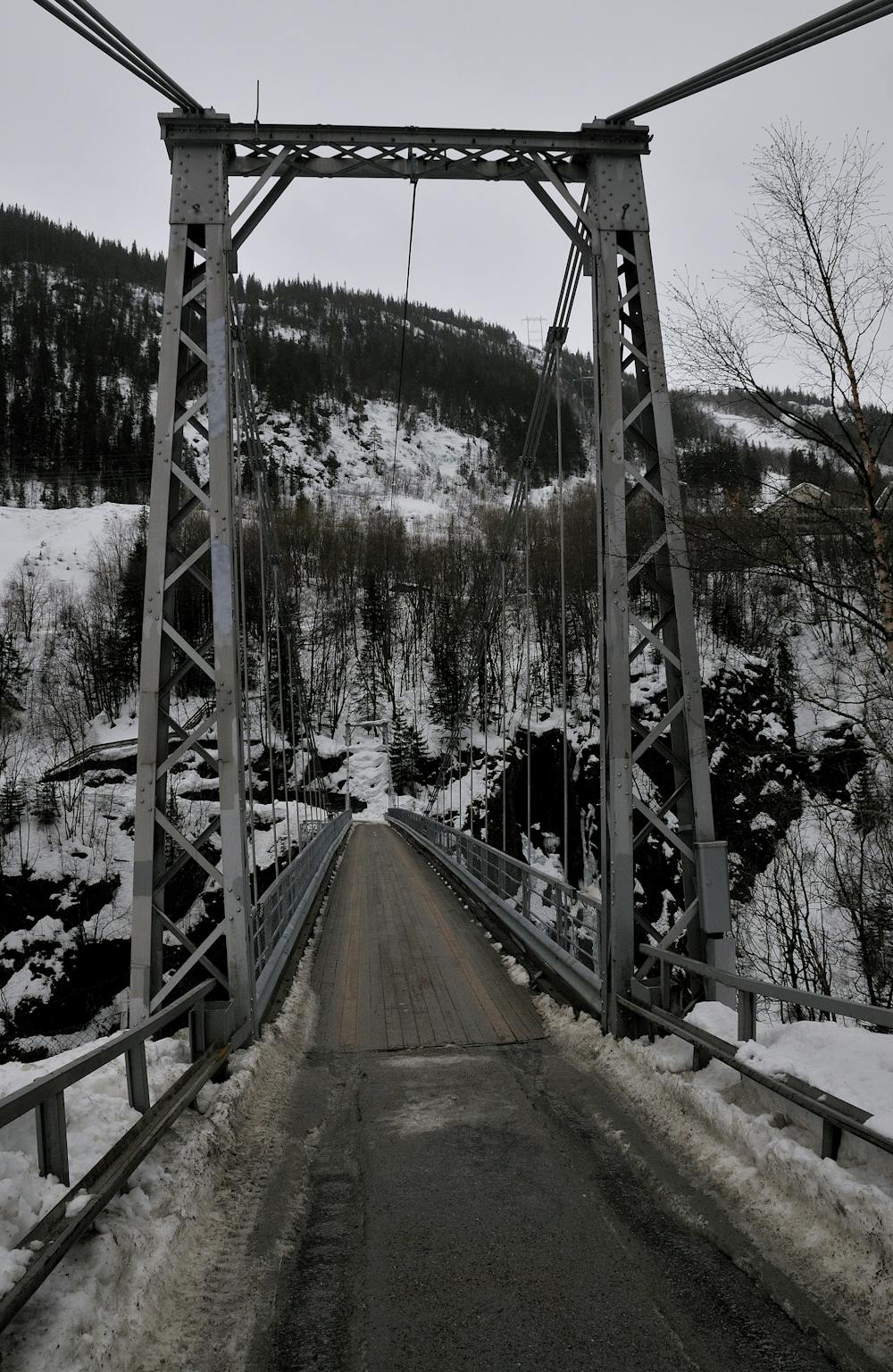
Bridge in to the Vemork site. martin_vmorris, CC BY-SA
The Vemork plant clung to a steep hillside. Upon arriving at the ravine that served as a kind of protective moat, the soldiers could see that attempting to cross the heavily guarded bridge would be futile. So under the cover of darkness they descended to the bottom of the ravine, crossed the frozen stream, and climbed up the steep cliffs to the plant, thus completely bypassing the bridge. The Germans had thought the ravine impassible, so hadn’t guarded against such an approach.
The Norwegians were then able to sneak past sentries and find their way to the heavy water production room, relying on maps of the plant provided by Norwegian resistance workers. Upon entering the heavy water room, they quickly set their timed explosives and left. They escaped the scene during the chaotic aftermath of the explosion. No lives were lost, and not a single shot was fired by either side.
Outside the plant, the men backtracked through the ravine and then split into small groups that independently skied eastward toward the safety of neutral Sweden. Eventually, each made his way back to their Norwegian unit stationed in Britain.
The Germans were later able to rebuild their plant and resume making heavy water. Subsequent Allied bomber raids on the plant were not effective in stopping production due to the plant’s heavy walls. But the damage had already been done. The German atomic bomb effort had been slowed to the point that it would never be finished in time to influence the outcome of the war.
Today, we don’t hear much about heavy water. Modern nuclear bomb technology has taken other routes. But it was once one of the most rare and dangerous substances in the world, and brave soldiers – both British and Norwegian – fought courageously to stop its production.
New sushi restaurants open in a steady stream, and the healthy and artfully fished fish has become one of Copenhagen’s favorite take-aways. Here we guide you to some of our Copenhagen favorites.
Sticks’n’Sushi and Letz Sushi are the big players when it comes to delicious fish delicacies. Combined the two chains have over 30 restaurants.
Damindra sushi restaurant, Copenhagen
But there are also smaller places where fish plays a dominant role. Damindra On the corner of Holbergsgade and Herluf Trollesgade, you find one of our favorite Japanese sushi restaurants. The elegant Damindra at Gammelholm maintains the original Japanese sushi tradition.
In addition to mastering the traditional sushi, Damindra also gives you the opportunity to explore the Japanese cuisine in different ways. The pieces are served relatively large and full of flavor and taste.
Here you can get around in Japanese cuisine, but they still master the traditional sushi. At Damindra the pieces are served relatively large and full of flavor and taste.
Hatoba Hatoba means pier in Japanese, an appropriate name since the restaurant is located on Islands Brygge (Island’s Pier), opposite the skatepark.
The interior design is futuristic with black, white and grass green as dominant colors. In summer the facades can be opened, enabling you to eat sushi and enjoy the evening sun. You can either order sushi or try one of Hatoba’s tasting menus, which also includes different sticks and rice paper rolls.
Izumi sushi restaurants has three branches in Copenhagen
Izumi Vesterbrogade Izumi is actually a small chain with three restaurants – one in Charlottenlund, onne on Østerbro and one in Vesterbro.
Izumi was in fact the first restaurant to introduce the concept ad libitum in Denmark. Usually ad libitum is considered quantity before quality, but not at Izumi. Skilled chefs have a professional attitude to both tastes and raw materials.
In addition to sushi, the ad libitum concept covers a wide range of crisp, well-tasting snacks (Japanese tapas) which make you wonder how they can offer it for only 198 kroner per person.
Sushi Lovers restaurant, Torvhallerne in Copenhagen
Sushi Lovers The restaurant offers visually inviting and tasteful fish bites in Torvehallernes Hall 1. The restaurant is built around an open kitchen on one side and high tables in the other. There are bar stools along the bar, from which you can carefully follow the cooks’ creations.
The sushi style here is inspired by modern Danish cuisine and the western United States. Sushi Lovers uses modern cooking techniques and seasons the food with homemade sauces, creams and mayonnaises and other flavors.
Watami sushi restraurant, Copenhagen
Watami The sushi-darling at Gentofte serves Japanese food of high quality. All sauces and dressings are homemade, seasoned with different types of dashi, kombu and miso to obtain the optimal soft balance.
The menu is extensive, the dishes are well balanced and crispy and the price tag allows you to visit Watami several rimes a week.
The interior is well thought out. The handmade soya candles from the Academy of Fine Arts testifies that quality applies to both the food and the surroundings.
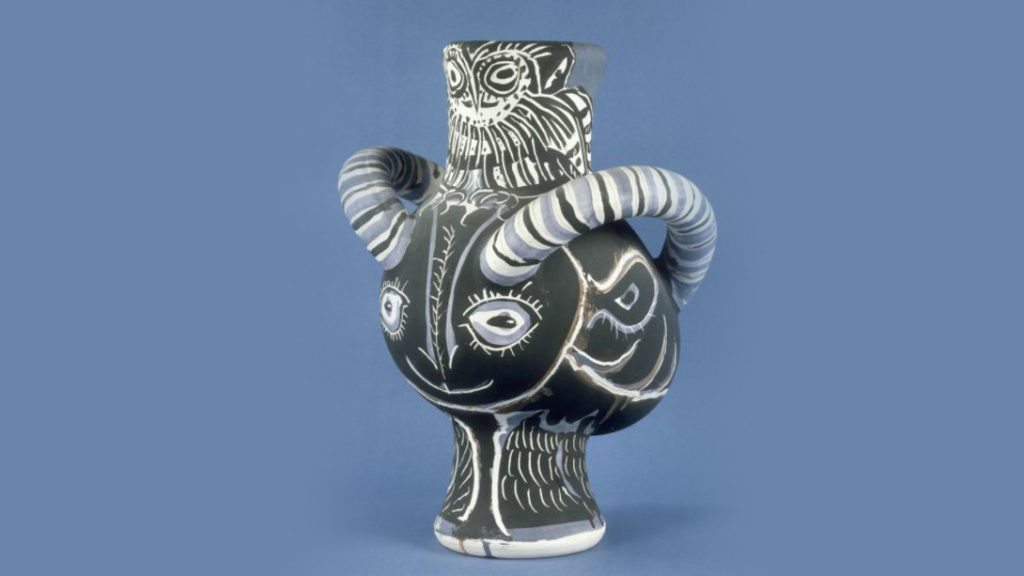
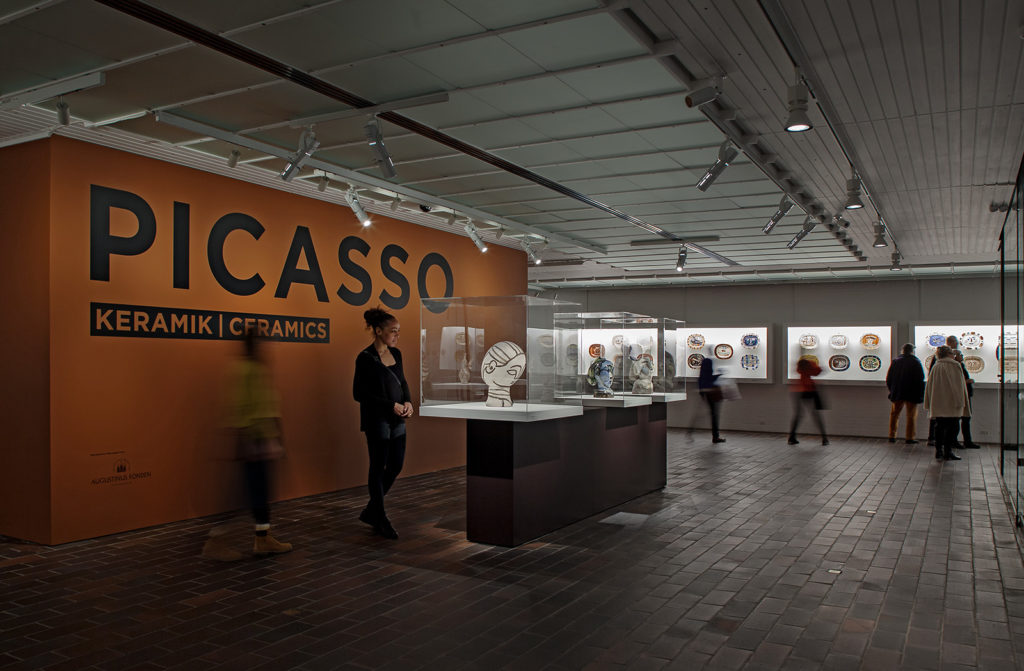
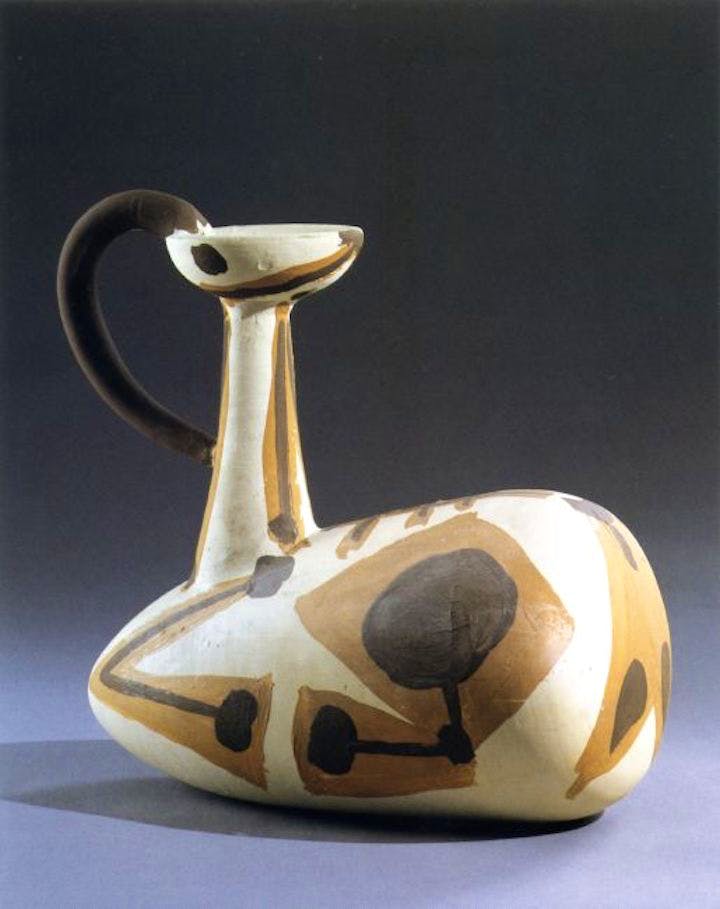
More than 160 pieces of Picasso ceramics are represented in the first major exhibition in Scandinavia focusing on a late, fortunate and highly imaginative part of Picasso’s work.
According to the New York Times, this is one of the top exhibitions to see for 2018.
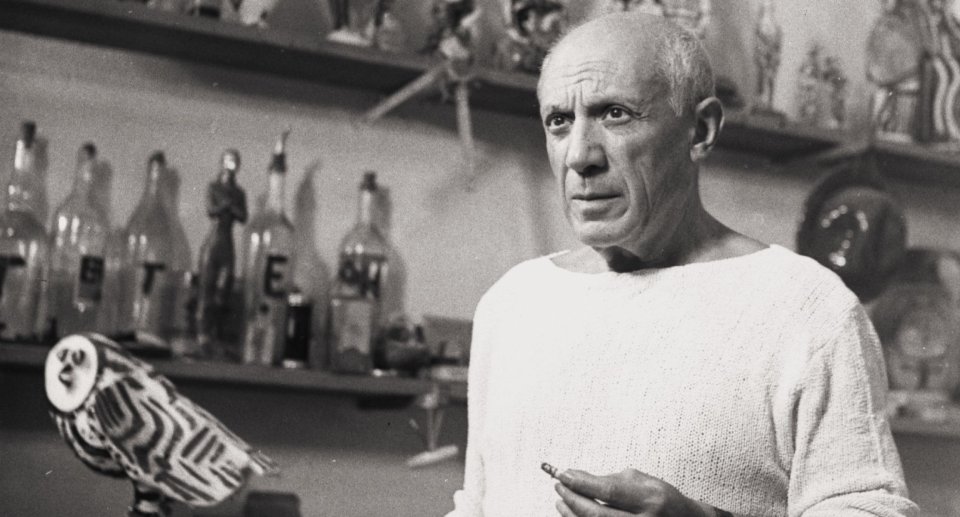
Pablo Picasso with owl, le Fournas Vallauris, 1953
Pablo Picasso is best known for his cube paintings and drawings, but now the art center north of Copenhagen presents a major ceramics exhibition by the world-renowned artist.
Picasso Ceramics, courtesy of Louisiana Museum of Modern Art
In the summer of 1946 Picasso sojourns at Golfe-Juan in the south of France and attends a ceramics exhibition in Vallauris, an area well known for its many ceramic workshops. This experience is a turning-point for Picasso, who throughout his life sought new artistic challenges in all possible kinds of materials. Picasso immediately starts experimenting with ceramic materials, oxides and glazes, and the ceramic processes and techniques – especially the unpredictable elements in the actual firing process, mainly because the colors are so difficult to control – clearly presents him with a rich and interesting new challenge.
More than 160 pieces of Picasso ceramics are represented in the first major exhibition in Scandinavia
The Picasso exhibition at Louisiana lasts through 25 May
Since its inception, the Art Center has had close cooperation with Picasso’s descendants. Over the years Louisiana has presented several exhibitions focusing on special periods or themes in his oeuvre.
Man in a suit, Ceramics by Picasso
Past exhibitions at Louisiana: Louisiana On Paper; Picasso before Picasso in 2016, Picasso: Peace and Freedom in 2011, Picasso and the Mediterranean in 1996-97, Picasso 1960-1973 in 1988-89, Picasso in 1981 og Picasso in 1968.
The present exhibition, generously supported by Musée national Picasso-Paris, is based on loans from the Picasso family and the Picasso museums in Antibes and Barcelona.
The exhibition runs through 27 May.
Head of a Woman, Ceramics by Picasso
Louisiana Museum of Modern Art in Copenhagen Celebrates its 60th Anniversary Year with Pablo Picasso Exhibition, Source: Louisiana Museum of Modern Art
Nirvan Richter, founder, CEO and designer at furniture maker Norrgavel, believes that furniture should not be too intrusive.
Established in Malmö, Sweden 1991, Norrgavel is a design brand built on sustainability. Richter began to create a name synonymous with timeless, functional design, extolling the virtues of locally sourced wood such as birch, beech and oak. In addition to function, Richter also wanted to design collections made from renewable raw materials that could be reused and passed down through the generations.
Nirvan Richter began to create a name synonymous with timeless, functional design
Today the brand is known for solid craftsmanship, creativity, knowledge of the subject and a rebellious playfulness. It can be characterized with words like simplicity, feeling and presence, honesty and sagaciousness.
Blue sofa from Norrgavel sustainable Swedish furniture producer
“I want to create furniture that gives us a gateway to what’s important in life and that brings us closer to the essence of life,” says Nirvan Richter. And we believe it is the honesty behind the furniture that is part of the brand’s success. Originally rejecting the confines of modernism, today it embraces certain elements of the modernist idea in its own updated version.
Blue dining table from Norrgavel Swedish sustainable design
Norrgavel is not primarily selling furniture, but rather an attitude to interior design, actually to life in general, emphasizing on natural materials that breathe. This is furniture that should easily blend into existing surroundings and look a part of the home without any effort. Wood is allowed to behave in exactly the way it should, untreated, or instead painted with an egg oil tempera which allows the grain to breathe over time.
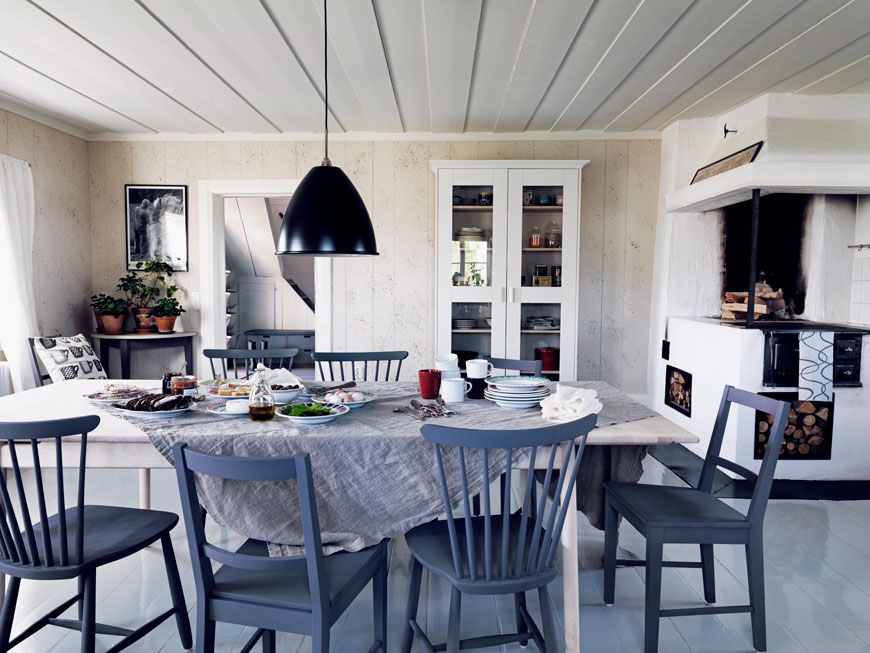
High-backed armchairs from Norrgavel sustainable Swedish design
It’s hardly surprising then that they received the acclaimed Nordic Swan Ecolabel as a mark of the brands commitment to the environment. As stated on their website, at Norrgavel, “they want to create relationships with our customers. Rather than encourage passive consumption, we try to make it easy for customers to be present in the purchasing moment and to have a relationship with the things they choose to surround themselves with – encouraging them, quite simply, to consume less but to give themselves permission to have things of greater quality”.
Sofa and chairs from Norrgavel sustainable Swedish design
Norrgavel has tried to capture this holistic view of interior design in the description of their values as humanist, ecological and existential.
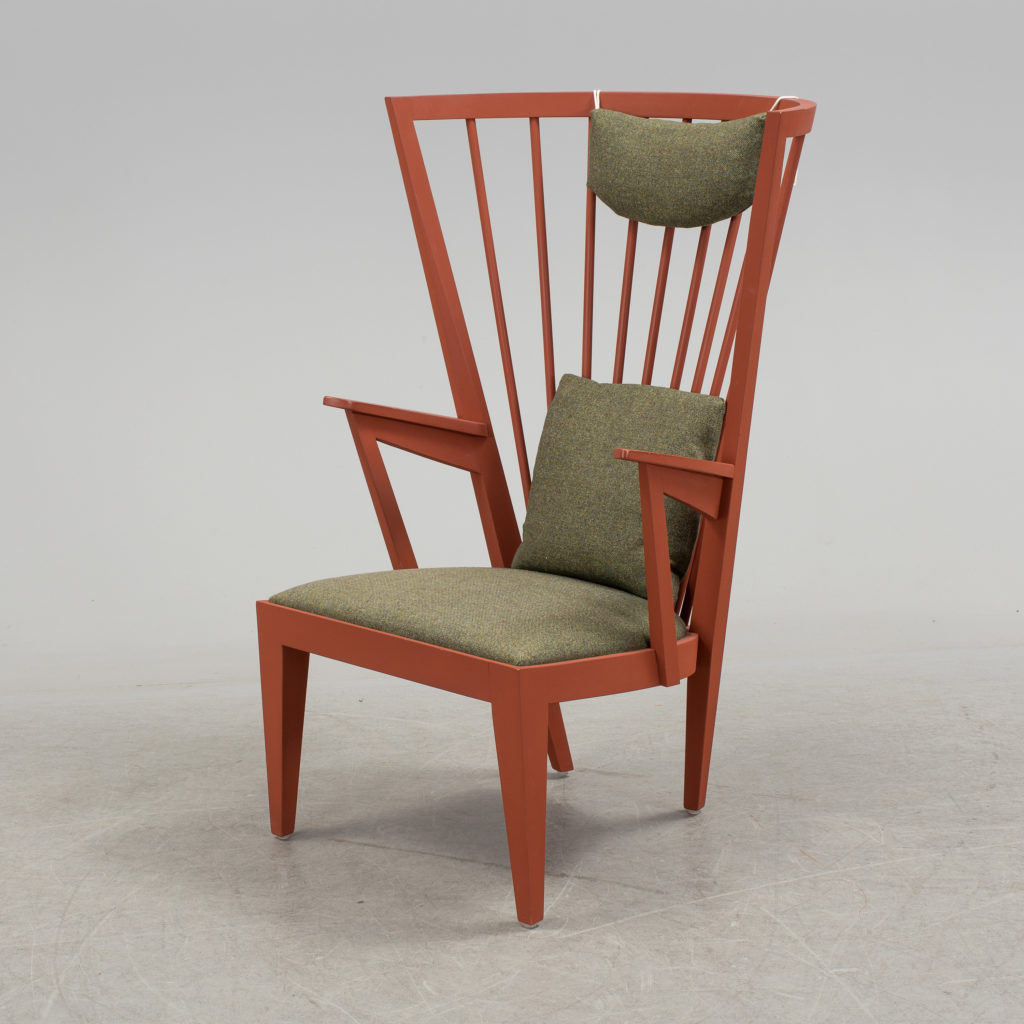
The high-backed spine arm chair was one of the first pieces designed by Richter
Having created furniture for more than 25 years, Richter’s inspiration comes from the peasants in Swedish Dalarne, the Shakers in the US and the Wabi-Sabi in Japan. The high-backed spine arm chair was one of the first pieces designed by Richter.
Birch sofa, designed by Nirvan Richter
“The consistent selection of natural materials in our offering is ultimately about a deep respect for nature and its lifecycle. Our furniture is allowed to age beautifully, which is the hallmark of the Wabi-Sabi aesthetic,” says Richter.
Nirvan Richter is an architect from the Royal Institute of Technology, and trained in carpentry at the Carl Malmsten School. Ecological thinking permeated the company right from the start.
Swedish Furniture Rooted in Nature, written by Tor Kjolberg
Julie Andem, the creator of the Norwegian web and television series Skam (Shame) intended to tell the stories about and to teenage girls only. It became a sensation across Scandinavia and Skam has now been remade in seven countries around the world, including an American remake that will be broadcast on Facebook’s new video streaming service.
This racy, emotionally intense, true-to-life Norwegian production, follows a group of Oslo teenagers as they navigate sex, school, drinking, depression, rape, religion and the pains of status anxiety in the real life and online.
Shame may be described as a mix between a traditional drama and a blog
Julie Andem believes the reason for the great success is due to the narrow target group and a tailor-made theme. “If you try to go wide and reach many, you reach nobody. If you are completely uncompromising on a target audience you can reach everyone,” she says.
Shame follows a cast of teenage characters, telling the story from their perspective
In the summer of 2014, Norway’s license-fee funded public sector broadcaster NRK wanted to make something that would bring teenagers back to the channel. They wanted to do something dramatic to make NRK cool to teenagers again. That’s how Shame, a global phenomenon, was born.
Shame may be described as a mix between a traditional drama and a blog. It follows a cast of teenage characters, telling the story from their perspective. Thanks to a clever multi-platform and social media strategy, Shame has reached viewers of many ages. Each week, four to six short scenes were posted on the broadcaster’s website, without warning, at the same time the scenes are set and then bundled into a full episode each Friday.
The show followed the lives of students at the prestigious Hartvig Nissen school in Oslo for four seasons
The show followed the lives of students at the prestigious Hartvig Nissen school in Oslo for four seasons, with each season focusing on a different protagonist. In season one, Shame centered on 16-year-old Eva and her friends Chris, Sana, Vilde and Noora, all first-year students. The series follows the girls through their heartbreak, parties and all the challenges young people face as they begin high school.
Shame found a global audience thanks to sheer dedication of its fans: Norwegian viewers created subtitled versions of new episodes in English or other languages, which were shared through a series of underground Google Drive networks. The new official English-language version will have new characters and actors but use the show’s format, and NRK will consult.
Julie Andem, the creator of Skam
Creator Julie Andem had previously made shows for NRK, including Girls, which was aimed at girls aged seven to 12. It was such a big success that the broadcaster asked her if she could write a show for a slightly older audience, specifically 16-year-old girls.
Shame – the Successful Voice of Youth in Norway, written by Tor Kjolberg
Oysters are the hallmark seafood of Grebbestad on the Swedish west coast. The shellfish season has started at Tanum Strand and the brothers Peter and Bengt Klemming from Grebbestad work as oyster divers and perform their craft from start to finish – resulting in the world’s best oysters.
The Swedish province of Bohuslän is famous for its shellfish, salt baths and swabs. Grebbestad can also boast of its amazing oysters. The Oyster Academy is headquartered there, and those who participate will meet experts and hear fascinating anecdotes about “Ostrea Edulis”.
Oyster safari at Grebbestad
“Oysters have been picked here since the Bronze Age,” says licensed oyster fisher Peter Klemming, “but it’s only the last 10-15 years that our oysters have been available for the common people.”
The Klemming brothers deliver about 1000 oysters per week to Tanum Strand and a number of selected luxury restaurants around the country. The oysters are wiped by hand and manually handled.
“The oyster grows wild in our clean sea water, giving them the finest quality and flavor in the world, “says Peter Klemming. The brothers have made Grebbestad known as the center for Swedish oyster fishing. Since they started, both journalists and famous TV cooks have invaded this oyster metropolis.
“Now in winter time, the oyster tastes the best,” says Peter.
Tanum Strand often organizes an “oyster school” on Fridays, in conjunction with the Friday’s seafood buffet. More information on the oyster school is available at the hotel reception.
There you have the opportunity to learn how to open oysters like the pros, ask questions about the Klemmings oysters and of course try these salty, delicious delicacies.
Tanum Strand. 90 percent of all oysters in Sweden comes from Grebbestad
At TanumStrand there are 165 hotel rooms and 97 fully equipped, detached cottages. A total of 1100 beds.
The World’s Best Oyster – A Wild Swedish Delicacy, written by Tor Kjolberg












 Today, we don’t hear much about heavy water. Modern nuclear bomb technology has taken other routes. But it was once one of the most rare and dangerous substances in the world, and brave soldiers – both