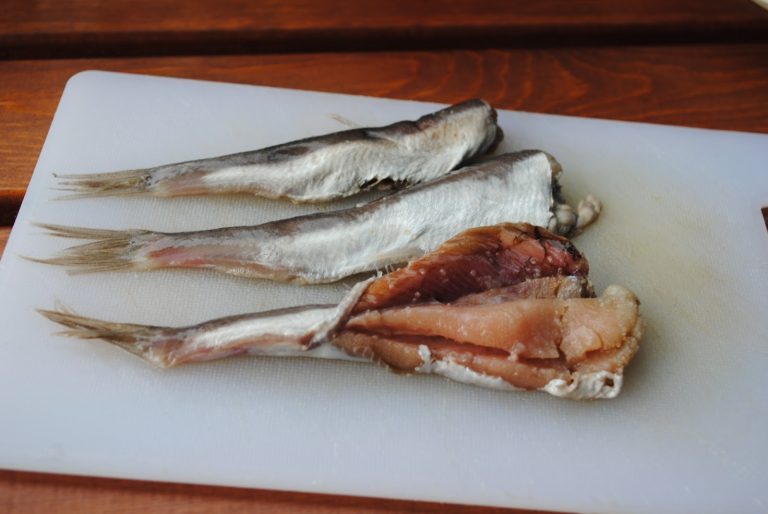
The fermented Baltic herring, known as surströmming, is so pungent it should be opened outdoors. Three days after you’ve opened a can of surströmming, the smell will hang in the air. Read more about the pungent Swedish fish dish.
More or less every country in the world has a local delicacy which from the outside look somewhat unusual. However, one of the most unusual is the infamous Swedish delicacy of surströmming. The delicacy which smells of rotten eggs has gained a following online of daring gastronomes filming themselves trying the seafood.
If you believe YouTube videos are nothing more than exaggerated click bait, you should think twice. How is this something humans could eat?
Surströmming has been a part of the local Swedish cuisine since the 16th century and possibly earlier and has acquired something of an enigma status due to its reputation for overpowering odor. To produce Surströmming requires a minimum of 6 months fermenting of the Baltic herring, which is a smaller cousin of the more common Atlantic Herring. To ferment, the fish is placed in a weak brine solution and kept in barrels, while producers add in just enough salt to prevent the raw fish from rotting during the process.
Directly translated surströmming means “sour herring”. Packaged in cans, the release of smell when a can is opened has been called the most overwhelming food smell in the world. Therefore manufacturers usually recommend opening the cans outside regardless of where it will be eaten.
To produce Surströmming requires a minimum of 6 months fermenting. Photo: Wikipedia
Surstromming hails from northern Sweden, where it is most commonly eaten, but tins of the seafood are available from most large supermarkets across Sweden. In spring, the spawning fish are caught between Sweden and Finland, then the heads are removed and the bodies are stored in a series of salted water solutions. After roughly two months, the partially preserved herrings are transferred to airtight tins where they continue to ferment for up to another year.
As a food, it is very different to a fish-based meal that most people are used to. However, the native Swedes calmly enjoy their own can of surströmming. In recent years a museum has been dedicated to the divisive dish, and some restaurants dedicate a whole day to eating it to avoid offending other customers’ noses.
Each year’s batch of surströmming could not be sold before the third Thursday in August by royal decree. The mid-20th century ordinance was meant to tackle fermentation corner-cutting. While this rule is no longer on the books, the date is still celebrated as the delicacy’s premiere day. Surströmming Day is celebrated particularly in Sweden’s High Coast region, the birthplace of the dish.
It is great entertainment, seeing people both be shocked and surprised at surströmming. The first is the odor, then how it tastes but many are surprised by the dish once they get past the initial shock.
There are a few narratives around the history of surströmming and how it came to be. One theory comes from the evidence of humans fermenting fish some nine-thousand, two hundred years ago — 80 centuries before the age of the Vikings — as discovered by researcher Adam Boethius of Lund University and his team of 16 archaeologists. At a site in southern Sweden, they unearthed close to 200,000 fish bones, contained in bundles with pine bark and seal fat and covered in wild boar skin. The fish weren’t salted, as the discovery predates salt, but they were placed in the ground to ferment.
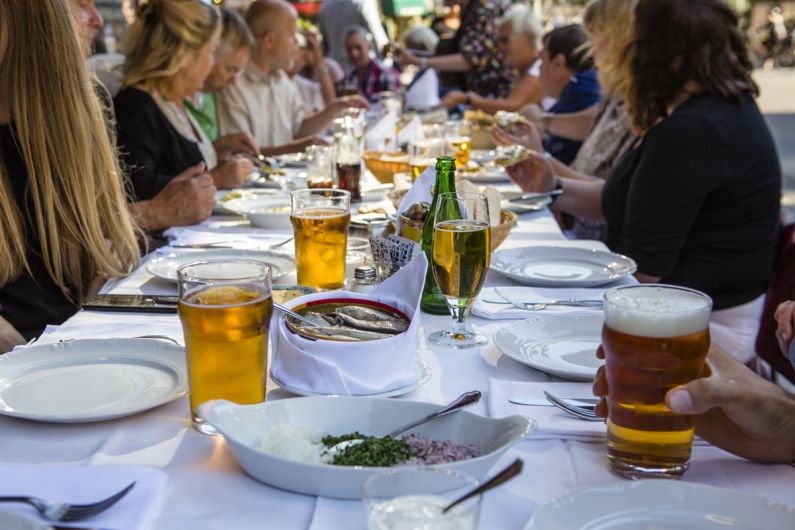
Life is all about discovery and trying new thingsPhoto: Visit Stockholm
The sophistication and scale of the endeavor has caused archaeologists to rethink the idea that people in Scandinavia at the time were nomadic hunters and gatherers.
Life is all about discovery and trying new things. Why not try the dish yourself and see just what this Swedish delicacy is and how nice it can be. Get your can and see for yourself just what people talk about, and open yourself to a new eating experience.
The Stinky Swedish Fish Dish, written by Tor Kjolberg
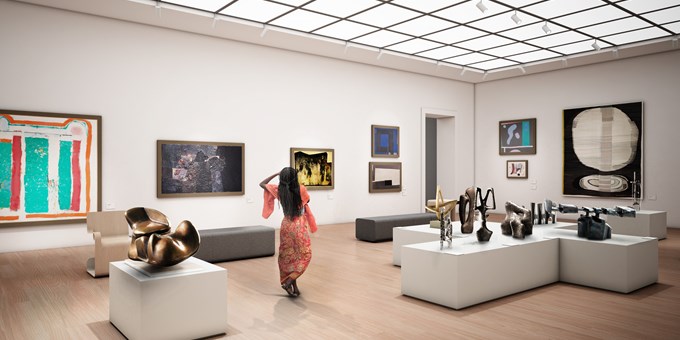
In 2021, the largest art museum in the Nordic countries will open in Oslo. Here you can experience older and modern art, contemporary art, architecture and design all under one roof and in completely new ways. Read more about the new National Museum in Oslo.
10,600 square meters and 91 rooms – the man behind the new museum is the Italian architect and exhibition designer Marco Magni. The National Museum for Art, Architecture and Design houses Norway’s most extensive collection of historical and modern art, design, handicrafts and architecture.
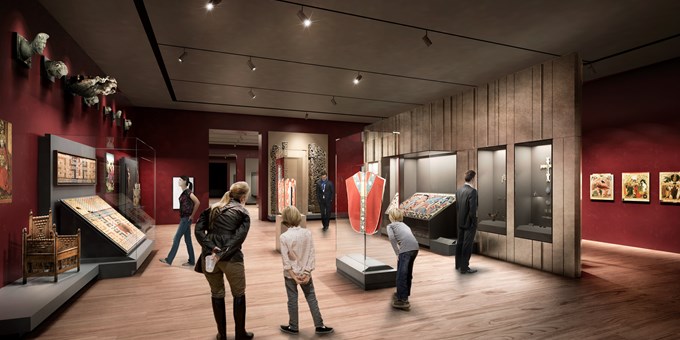
National Museum, Oslo – Atrium (illustration)
In 2013, Norway’s parliament approved the plans and the 5.3 billion Norwegian kroner bill for a new National Museum. Until 2018, the National Museum was divided into four different departments in various museum buildings in Oslo. Next year, these departments will gather under one roof. The museum will be situated by the harbor, at the inner part of the Oslo fjord.
The museum’s permanent exhibition comprises over 6000 works and objects from over 5,000 years of art, design and architecture from around the world. Oslo’s new National Museum has been on the horizon for some time now. Unfortunately, the project has been hit by delays, but when it opens sometimes next year it will be a place for new ideas, inspiration and compelling cultural experiences. The aim is to make art accessible to everyone and reflect the society and the times we live in.
The museum’s permanent exhibition comprises over 6000 works and objects from over 5,000 years of art, design and architecture from around the world (illustration)
23 companies from all over the world applied for the tender to design the group exhibition, and the Italian architectural studio Guicciardini & Magno unanimously won the competition. Thus, Marco Magno, founder of the studio, won the largest exhibition assignment in Norway ever. In the new collection exhibition, older and modern art, architecture, design, arts and crafts, and contemporary art will be presented under one roof and in new settings.
In addition to the main exhibition halls, the museum has two temporary exhibition halls, plus a vast art hall of 2,700 m² for guest exhibitions. These will provide new exhibition opportunities for Norway and Scandinavia. There will also be a comprehensive library and archives section, study rooms and offices available for all museum employees.
However, the new building has not escaped criticism by some and a source of excitement for those eager for the modern new gallery to open.
In the years to come, Marco Magni will be responsible for the exhibitions in the 91 rooms, of which five are outdoors. The rooms will function both individually and as a whole.
With such large exhibition areas, the National Museum will be able to showcase twice as many works from the art, architecture and design collections than ever before, as well as presenting a rich program of temporary exhibitions with Norwegian and international artists.
The new National Museum in Oslo 10,600 square meters and 91 rooms
The National Museum is an established institution with a public mandate and is state-owned and controlled by the Norwegian Ministry of Culture. Every country with an art, architecture or design history should have one main location befitting of the diverse array of precious collections in its possession. Norway is no different in this respect. Something new and modern is coming to Oslo’s waterfront.
60 people – from curators and mediators to project managers, technicians, librarians and security managers – are working hard to retouch paintings, repair frames, clean sculptures and find out which works of art will be displayed in the different rooms – and what is actually affordable to pose, from plaster busts to wallpapers.
The New National Museum will provide new exhibition opportunities for Norway and Scandinavia (illustration)
The new museum with a total surface of 54 600 m² is more than just a venue for art, design and architecture. It also serves as an essential research, management and dissemination environment for each discipline. The museum shall, therefore, represent a broadness and diversity to the highest degree of the population.
Similar to the Opera House in the city, a viewing spectrum on the roof will be accessible to visitors. From the roof terrace, views of Akershus Fortress, Rådhusplassen and Oslo fjord can be enjoyed. Finally, the new museum will have all the usually amenities such as a restaurant, cafés and several boutique shops.
The New National Museum in Oslo, written by Tor Kjolberg
In a country where from the end of May until the end of July, the sun never sets! Norway is regarded as one of the happiest places in the world by the United Nations, with dramatic landscapes, a midnight sun, and the northern lights the country is becoming a popular place to visit. Read more about Norway Bucket list and check out these golf courses in the land of the midnight sun.
Norway has quite a substantial number of golf courses, certainly in relation to the size of its population, and is becoming ever more popular with over 170 courses and 100,000 affiliated golfers.
Although COVID-19 is causing many of us to stay indoors and wear down our putting mats. It could be a good time to think about your next overseas golf trip.
Most golf courses are found in and around Oslo and near other larger cities such as Bergen, Stavanger and Trondheim.
You can play golf in the evening and experience the Northern Lights on Lofoten Links from the end of August to mid October. Photo: Leading Courses
Lofoten Links Located next to the sea Lofoten Links is the number 1 course in Norway, and opened in 2015.
From the end of August to mid October you can play golf in the evening and experience the Northern Lights.
Where the ocean is a water hazard on several holes and sandy beaches act as natural bunkers, you can enjoy playing and walking the course.
Take in some Viking history as the course is also located at Hov on Gimsøy, an island which showcases many historical relics.
So you can enjoy everything Lofoten Links has to offer you can choose to stay on the course at the Lofoten Links Lodges.
A number of tournaments have been held at Stiklestad Golf Club including the Scandinavian title in 2016
Stiklestad Golfklubb Located in central north Norway Stiklestad Golfklubb stands by the Trondheim fjord. Several burial grounds can be seen as you walk the course, as it was regarded as one of the centres of Viking power.
A number of tournaments have been held here, including the Scandinavian title in 2016.
The 18-hole course plays 5901 meters, and is located on the Trones peninsula just north of Verdal city centre and 1 hour’s drive from Trondheim Airport Værnes.
Named “The “Norwegian Beauty” Bjåvatn Golf Club is unique standing against the North Sea
Bjaavann Golfklubb-Kristiansand At 6,889-yard the course is a fair walk. Named “The “Norwegian Beauty” the course is unique standing against the North Sea. The designer Robert Trent Jones II has given you 6 tees to choose from, and with plenty of water around the course, you’ll need to bring your ‘A’ game.
In addition to a unique course, there is a clubhouse with a convenience store, pro shop and changing rooms. Training facilities include driving range, short play area (under construction), warm-up net and putting green. Golf carts, trolleys and golf equipment are available.
Trysilfjellet is rated as the top 5 courses in Norway. Photo: Leading Courses
Trysilfjellet Golf Course In a beautiful location at the foot of the Trysilfjellet mountain in Hedmark, and bordering Trøndelag to the north, Oppland to the west and Akershus to the south lies the Trysilfjellet 18 hole (par-72) golf course. With varied holes and narrow fairways the course is a joy to play.
A newly built clubhouse stands next to the stunning practice facilities include a large driving range, putting green, chipping area and practice bunker. Trysilfjellet is rated as the top 5 courses in Norway.
At Norsjø Golf Park, a challenging 18 hole course features an extra 6 hole training course for those who need to practice. Photo: Leading Courses
Norsjø Golfpark
Located in the south-easterly region of Telemark by the Norsjø lake is the Norsjø Golfpark which is also a part of the Telemark Canal.
A challenging 18-hole course features an extra 6 hole training course for those who need to practice. This demanding course has open fairways and difficult greens is set in wonderful views of the surrounding forest and lake.
Ben Thompson
Norway Bucket List: Check out these golf courses in the land of the midnight sun, written exclusively for Daily Scandinavian by Ben Thompson. Ben is a golf coach and editor of golfled.com a website sharing golf tips and advice.
There’s no need to bundle up your kids in excessive layers this winter. Joha’s woolen undies will keep them warm and dry. For 50 years, the Danish company has supplied the very best for the little ones. So, all you need is Scandinavian wool.
Every parent knows that dressing your child for winter – especially in colder climes – is hugely important. It’s also immensely difficult. If you don’t get it right, they’ll be shivering outside, too hot indoors, or absolutely steaming when they decide to race around the playground.
JOHA was one of the first Danish businesses approved to use the EU ECOLABEL
Danish company Joha offers solution to make your life easier. Its range of 100% natural underwear for children regulates body heat, keeping your kids at the perfect temperature at all times.
An odd material for underwear?
Wool might seem an odd material to choose for underwear, but forget any preconceptions you might have about itchiness. Joha’s garments aren’t akin to the scratchy hand-knitted jumpers your granny gave you for Christmas – they’re made from quality merino wool that’s gentle on the skin. Plus, for thos with really sensitive skin, Joha produces a range of wool blend pajamas and underwear, where the wool is combined with silk or cotton.
Joha is one of the largest producers of wool and cotton underwear and sleepwear for babies and children in Scandinavia
With its isolating properties, this miracle material retains warmth even at very low temperatures. It also absorbs the body’s perspired moisture, and can take in up to 40% of its own weight in moisture without its warming abilities being affected.
To reason those parents who tend to avoid wool because it’s difficult to wash, Joha’s products are machine washable. In fact, the family-owned company was the first in the world to make machine washable wool undergarments. It’s been leading the market for the past 40 years.
Underwear and pajamas
The Danish company doesn’t just make underwear either. You can also buy woolen pajamas for your little ones, keeping them cozy but comfortable during chilly winter nights. Joha also makes adult lines for both men and women (after all, we’ve got to stay warm too) as well as a wide range of other wool and cotton garments for children.
Every parent knows that dressing your child for winter – especially in colder climes – is hugely important
EU Ecolabel
Underneath it all, Joha is a company that cares, and this extends to the environment too. It uses environmentally responsible production methods, and it was one of the first Danish businesses approved to use the EU ECOLABEL, which certifies its products are produced in accordance with the strict environmental standards of the EU.
Joha is one of the largest producers of wool and cotton underwear and sleepwear for babies and children in Scandinavia. The company was established in 1963.
So next time you’re in a flap about keeping your kiddies at the right temperature, start at the bottom layer and wrap them up in Joha’s soft and effective woolen underwear.
Cabbage is one of the old Nordic vegetables, and is considered as one of the most important. It has been grown in some form or other for thousands of years in Scandinavia. Read more about Scandinavian cabbage & kale.
In the Viking age, it was the only vegetable grown, and kitchen gardens around the houses were simply called kale-yards. Cabbages and kale are perfect winter food even in extreme climates. Historically, cabbage was eaten in unbelievable quantities, and its wholesome, vitamin-packed leaves have been a means of survival during many winters, long before the potato reached Scandinavian shores.
After the arrival of the potato, it became a winter staple alongside cabbage. The total amount of vegetables eaten was much larger then even though these were mainly cabbages and potatoes. This is evident in the variety and abundance of recipes for these vegetables, and in the use of cabbage as an accompaniment to everything, except fish. There are countless regional recipes for kale and white cabbage, and some are worth preserving, though others are too fatty or labor intensive to make except at Christmas, when old traditions are still kept very much alive.
In the Viking age, kale was the only vegetable grown, and kitchen gardens around the houses were simply called kale-yards. Photo: Bama
Cabbage has always been cheap, and this simple fact made the vegetable increasingly unpopular among the bourgeoisie in the 19th century who considered it far too low and common for their dinner tables. This meant that they introduced and grew a lot of new vegetables, and there was a decline in cabbage eating, except by country dwellers and the very poor. Cabbage eating was considered as unthinkable as wearing diamonds in the morning, the very smell of boiling cabbage became the smell of poverty, and nobody ate cabbage if they did not have to up to the 1950s-70s. As new leafy and imported vegetables had become popular, the total amount of vegetables eaten has declined dramatically, so Scandinavians eat a far greater variety of vegetables now, but far fewer of them. The heavy cabbage has been replaced by much less lettuce and other greens.
Green brassicas. Photo: Wikipedia
The health food movement and growing environmental concerns have brought a change in attitudes over the past 25 or 35 years. Young cooks, eager for indigenous originality, health nuts and foodies have rediscovered kale, cabbage and other brassicas. Small farms are growing interesting cultivars again, and an increasing number of Scandinavians are tiring of tasteless import, and are sourcing local, seasonal foods. There has been a small revolution in cabbage eating. Cabbage is once again becoming all the rage, and is seen far too good not to eat every day, at the same time it is one of the cheapest ways of making sure your family is well fed.
How it grows Kale is extremely hardy, and well suited for the harsh growing conditions in the north. Kale and Brussels sprouts are not usually all harvested at once, but left in the ground to be gathered when needed. Kale leaves sticking out of the snow in private gardens, even in deepest winter, are a familiar sight. Headed cabbages are not nearly as hardy, and must be harvested and stored before the first severe frosts.
Cabbage has always been cheap, and this simple fact made the vegetable increasingly unpopular among the bourgeoisie in the 19th century
All brassicas are greedy and need a great deal of watering and nurturing to grow to the enormous size they can accomplish. Kale, for winter, and leafy summer cabbages for eating straight away should be in every kitchen garden. Winter cabbages on the other hand, can be bought at ridiculously low prices, and only if you have lots of space are they worth growing and storing.
Appearance and taste All the varied and strange cabbages we now grow stem from a single wild biennial Brassica oleracea, which still grows all over southern Europe. Through the ages, expert gardeners have domesticated and selected cabbages so that we now have a huge amount of choice. Every part of the plant has been carefully selected, by watchful breeders over time, until flower heads, unfurled shoots, stems and leaves have become new cultivars in their own right, such as cauliflower, Brussels sprouts and kohlrabi.
Broccoli. Photo: Bama
Wild cabbages consisting mostly of large green leaves, have been selected for their beauty, coloring, growing habit and taste to create all the different types of kale we now grow. Kale (also known as borecole) is the oldest form of domesticated cabbage, very close to its wild ancestor, but an enormous improvement on the incredibly coarse and bitter original. These cabbages have been with us since the Romans efficiently spread them all over Europe.
The cultivation of round and pointed red green and white cabbages is not nearly so old. There are such a number of forms that they probably evolved in several places at once, but white cabbage is believed to have originated in Germany during the Middle Ages. Savoy cabbages are a couple of centuries younger.
The origins of cabbages chosen for their enlarged flowers such as cauliflowers, are not clear, but cauliflower was probably selected in the Arab world during the Middle Ages. It spread very fast, reaching Europe in only a hundred years, and was grown in northern Europe by the 17th century. Cauliflower has always been considered a fine thing, even by the rich.
The origins of cabbages chosen for their enlarged flowers such as cauliflowers, are not clear, but cauliflower was probably elected in the Arab world during the Middle Ages. Photo: Meny
Calabrese, broccoli and sprouting broccoli come from Italy and have been known to the rest of the world only for some 200 years. Brussel sprouts are essentially cabbages whose unopened new buds along the stem are what’s eaten. They were first cultivated in Belgium (not surprisingly) only 200 years ago.
Eating habits have spread slowly, throughout history, and it’s fair to conclude that the region in which the plant is most prolifically grown and consumed is likely to be where it first originated. There is something awe-inspiring about a plant that bears in it the possibilities of such enormous variation, and about the tremendous amount of human insight and labor which goes into making the variation happen.
Brussels sprouts., Photo: Bama
Buying and storing Kale can be bought as a whole beautiful uprooted plant; it will be very decorative for weeks in a bucket of water by your front door. Or you can buy the washed leaves, in plastic bags, or chopped and frozen. Winter cabbage are easy to store, as long as you choose a cold place, not necessarily the fridge. Leafy cabbages must be very fresh and juicy. If they are limp, with yellowing leaves, they are past their prime. When buying green summer cabbages, check that they are well filled and not just green leaves surrounding emptiness. You can eat the tenderest of the outer leaves, but the inner ones are best.
Health benefits Green brassicas are bursting with beta-carotene, the red cultivates with anthocyan, both powerful antioxidants, and some B vitamins which are not readily obtainable in other foods. They also contain lots of calcium, phosphorus, iron and a considerable amount of vitamin C. In other words, brassicas in some form should be eaten every day.
Red cabbage. Photo: Rema
Culinary uses We have many lovely cabbage dishes, some more and some less traditional, in which meat, cabbage and onions synthesize in melting ways.
Some, such as creamed kale and pickled red cabbage, are indispensable for traditional Christmas, while some dishes are pure comfort food: creamed cabbage for frikadeller, or creamy cabbage soup topped with crispy bacon and mace, which will make you feel like a child again, even if you are actually still a child.
Other dishes are for every day, but must be cooked in large quantities to make any sense; for example slow-cooked caramelized brown cabbage with pork ribs, or får I kål, a Norwegian favorite originally made with mutton, but more palatable for touchy modern taste buds if made with lamb. Winter cabbage salads are also popular, such as red cabbage and fruit, kale with soured cream, or Brussels sprout salad with nuts.
Kohlrabi. Photo: Bama
In summer, Scandinavians eat fine young pointed cabbages barely cooked with dill or bacon, perfect with smoked fish and light meats. Scandinavians eat cauliflower as a velvet soup (prepared exactly like asparagus soup) or lightly steamed and dressed with small shrimp, dill and melted butter.
Cabbage is infamous for the smelly fumes it emits while cooking and for the uncompromising way it makes you fart. Many cabbage recipes include caraway seeds, both for their taste and because they keep the flatulence to a minimum. It is a matter of habit, however, and if you eat cabbage frequently, your bowels get used to it.
Kale is bitter, and also rather tough, which is not a problem if it is cooked; it just needs a long time in the pot to cook to perfect tender creaminess. If used as a salad, kale must be cut into very fine strips.
Sea kale. Photo: Wikipedia
Sea kale (Crambe maritima) is a huge white-flowering perennial with giant, glaucous leaves and billions of fawn seeds in autumn, is a different species from cabbage. It is protected wherever it grows, and you cannot pick the leaves or even the seeds, as it is endangered. Sea kale was grown as a luxurious spring vegetable in Victorian times, cut and blanched in early spring. You can buy seeds for a white and purple-tinged cultivate.
Feature image (on top) Cabbage. Photo: Wikipedia
Scandinavian Cabbage & Kale, written by Tor Kjolberg
Education has always been of fundamental importance to the people of Scandinavia. In fact, some of the world’s oldest universities can be found in the region. According to some scholars, universities are a distinctly European institution, dating back to medieval times. The tradition continues to this day, and careers in higher education are highly coveted by countless job seekers across Scandinavia, and around the world.
Higher learning institutions first sprang up in Scandinavia in the late 1400s. Sweden’s Uppsala University, founded in 1477 via papal decree, is the region’s oldest. The University of Copenhagen, in Denmark, was established two years later. Both institutions have become world renowned, even ranking among the best universities in the world, and providing myriad opportunities for students and prospective professionals alike.
Much like the application process for acceptance to a university, securing a job in higher education involves numerous steps
If your career aspirations are rooted in academia, here’s what you need to know about securing employment in the competitive landscape that is higher education in Scandinavia.
Intro to the Application Process.
In many ways, higher education can be a cutthroat industry. Much like the application process for acceptance to a university, securing a job in higher education involves numerous steps. Not only should you have relevant experience and a strong academic record; you’ll also want to find a way to stand out from the crowd.
Your first opportunity to wow potential employers in academia is via the application process itself. Rather than simply submitting a concise resume, consider using a Curriculum Vitae instead. Commonly known as a CV, this type of document includes a comprehensive run-down of your professional achievements, academic accomplishments, and relevant skills. In general, CVs are much longer than a traditional resume, encompassing between 3-6 pages of information.
But before you write that eye-catching CV, you’ll need to have a potential career path in mind. While teaching may initially come to mind as you consider your higher education job options, you could also opt for a career involving education policy or scientific research. The following are just a few of the job opportunities available in higher education, whether you hope to secure work in Denmark, Sweden, or Norway.
No matter where you are in the world, teaching can be a rewarding career
Teaching Professional (Professor or Similar Position) No matter where you are in the world, teaching can be a rewarding career, as well as a lucrative one. On average, the median salary for lecturers in Sweden just starting out is 36,900 SEK per month. In Denmark, introductory salary numbers are similar, and pay is often dependent on job rank and seniority.
Keep in mind that it could take years for you to rise to the rank of “Professor.” Further, your teaching position in Sweden is highly dependent on your education level. You can likely secure an Adjunct teaching position, for example, with only a bachelor’s degree on your resume. The equivalent position in Norway is that of Universitetslektor, who bring in an average of 565,418 NOK on an annual basis.
For the bulk of Scandinavian teaching positions, however, a Ph.D. is generally required.
In Scandinavia and beyond, education policy analysts “perform detailed research on current issues affecting schools
Education Policy Analyst While teaching jobs are arguably the most popular in the realm of higher education, work opportunities are nonetheless myriad. If you hope to facilitate lasting change at a higher learning institution, perhaps you’re well suited for an administrative position, such as that of education policy analyst.
In Scandinavia and beyond, education policy analysts “perform detailed research on current issues affecting schools, and then test hypotheses on how to improve conditions through legislation,” reports Bradley University. In this way, a career in education policy allows you to advocate for issues that are personally important to you, and perhaps facilitate lasting change at your institution.
As for compensation, you can expect to bring in around $58,828 USD annually, which is equal to more than 514,000 SEK.
Scandinavia has always been at the forefront of global scientific innovation and research
Lab Technician/Researcher Scandinavia has always been at the forefront of global scientific innovation and research, and the tradition spans millennia. Today, Sweden ranks fifth in the world in the realm of scientific research and development, spending an estimated 3.4% of its gross domestic product (GDP) towards scientific innovation.
A large chunk of that scientific research happens at the university level. Fellowships are widely available to post-doctoral candidates looking to enter the field of academic research, and span virtually every discipline. For example, you could apply for a fellowship in psychology, sociology, medical anthropology, astrophysics, or another industry altogether.
A fellowship position provides an ideal stepping stone to full-time employment in higher education. Research work also affords you a more nuanced set of opportunities once your fellowship is complete. Fellows can opt to remain on the research career pathway, or embark on one that integrates research with teaching.
From Bergen, Norway
Careers in Higher Education in Scandinavia – Final Thoughts
As we face an uncertain future, job security is of paramount importance. In Scandinavia, higher education careers can give you long-term employment stability and plenty of opportunity for advancement. You’re also likely to find plenty of personal fulfillment, no matter if you aspire to teach and mold the young minds of the future, or hope to become a scientific pioneer at the forefront of academic research and innovation.
Beau Peters
Careers in Higher Education in Scandinavia, is written exclusively for Daily Scandinavian by Beau Peters. Beau is a creative professional with a lifetime of experience in service and care. As a manager, he’s learned a slew of tricks of the trade that he enjoys sharing with others who have the same passion and dedication that he brings to his work. When he is not writing, he enjoys reading and trying new things.
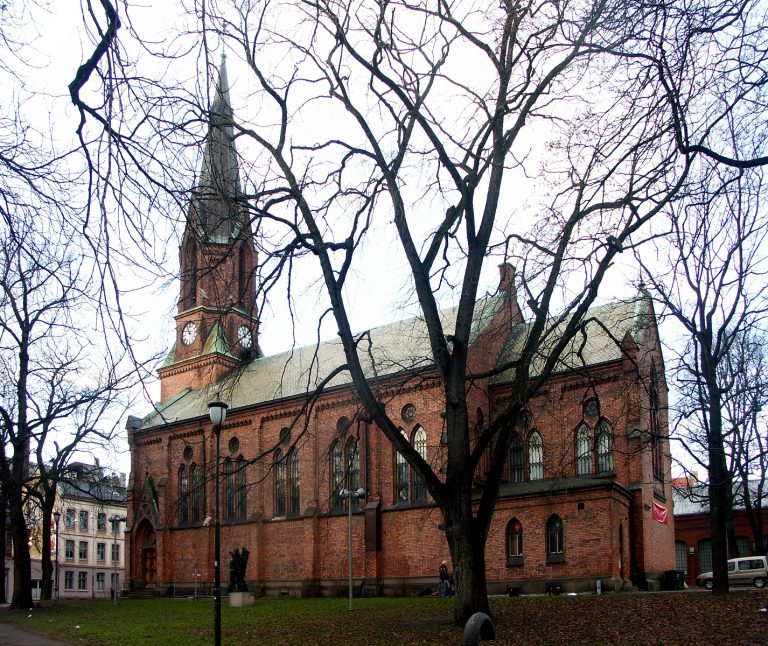
Jacob’s Church (Original name St. James Church) of Culture in the capital of Norway was designed by architect Georg Andreas Bull and built in 1889. It lost its role as a parish church in 1985 and fell into disrepair before becoming the site for illegal raves. In 2000 the building was granted a reprieve by an Oslo-based record company (Kirkelig kulturverksted) and converted into an unusual cultural venue that’s also part museum of ecclesiastical art.
Kulturkirken Jacob is a neo-Gothic church, typical of many in Scandinavia. It is known for its surprisingly large capacity (up to five hundred worshipers) and excellent acoustics. As a result, the church has forged a reputation as a venue for cultural events – hence the name ‘kulturkirken’.
On 18 February 2000, after14 years of hard work, the church was resurrected and reopened in its new format
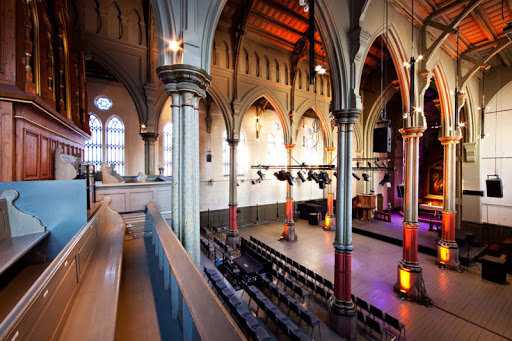
On 18 February 2000, after14 years of hard work, the church was resurrected and reopened in its new format, a professional cultural arena, still with strong ties to Lutheran Christianity and with the best sound and lighting system you are likely to find in any church.
The church is named after the Apostle James (the Great), in Norwegian language, Apostelen Jacob. The building hosts concerts, art exhibitions and plays. Many events carry a religious context, but the church is keen to promote local and global art and culture, regardless of its religious ties.
The altar piece of the building was painted in Rome 1880-81 by Eilif Peterssen and shows the adoring shepherds. In the porch hangs a relief of the Archangel Michael. Its neo-Gothic colonnaded interior still retains its original carved woodwork and the apse is now a softly candlelit venue for performances of contemporary dance, drama, and concerts.
Kulturkirken is a professional cultural arena, still with strong ties to Lutheran Christianity
Galleries are held in a 250 square meter exhibition room, with a bar attached. The church’s main hall, 18 meters in height, has proved a popular concert venue. While the church may look like many others around Oslo, what goes on inside the redeveloped building make it a unique attraction.
Depending on preferences, the church can provide anything from small intimate settings to a grand, scenic concert hall housing as many as 530 guests. Every Sunday night at 10pm from September through April there is a special Jacob mass in flickering candlelight where professional musicians collaborate to create a church service unlike any other.
Sound and lighting play a big role in these services, which has run continuously since the church reopened 20 years ago. The church is one of the few pure churches of culture, with performances of theater, dance and other cultural expressions. The basement has showrooms for exhibitions.
Be sure and check out the calendar of events on their website.
During the German occupation of Norway from 1940 to 1945, Hitler wanted to build an “Aryan” society with gleaming highways and ideal cities. The Nazis wanted to reshape occupied Norway with a remarkable building campaign.
In a new book, HITLER’S NORTHERN UTOPIA: Building the New Order in Occupied Norway, published by Princeton University Press, Despina Stratigakos tells the story of how Nazi architects and planners began to build a Nordic empire in Norway during World War II. Under the swastika, Hitler and his planners envisioned a modern world and began to reconstruct Norway, and the Nazis wasted no time leaving their mark as the Greater German Reich expanded and stretched beyond the Arctic Circle.
Despina Stratigakos tells the story of how Nazi architects and planners began to build a Nordic empire in Norway during World War II
Despina Stratigagos tells the largely unknown story of how German occupiers transformed Norway into a vast construction zone and turned the Scandinavian country into a racial utopia. Architect Albert Speer and other Nazi leaders believed they would improve their genetic stock and confirm their destiny as a new order of Vikings.
The construction campaign involved building ideal new cities as well as a scenic superhighway stretching from Berlin to northern Norway. The Nazis believed that Norwegians were racially, although not culturally, superior to Germans.
With ambitious architecture and infrastructure projects, Hitler sought to literally and figuratively build bridges to Norway’s citizens, bringing them into the fold of his Greater German Reich.
Despina Stratigagos tells the largely unknown story of how German occupiers transformed Norway into a vast construction zone and turned the Scandinavian country into a racial utopia
Drawing on extraordinary unpublished diaries, photographs, and maps, as well as newspapers from the period, Hitler’s Northern Utopia tells the story of a broad range of completed and unrealized architectural and infrastructure projects far beyond the well-known German military defenses built on Norway’s Atlantic coast. A plan to create quintessential National Socialist communities out of twenty-three towns damaged in the German invasion, was an overhaul Norwegian architects were expected to lead.
In spite of the official building campaign, the most ambitious scheme – a German cultural capital and naval base – remained a closely guarded secret for fear of provoking Norwegian resistance.
The Nazis began to develop sweeping plans for the transformation of Norway within months of the April 1940 invasion. Photo: Architectural Digest
The Nazis began to develop sweeping plans for the transformation of Norway within months of the April 1940 invasion. The Nazis had also no intention of withdrawing, even as they publicly promised the Norwegians that the occupation was only a temporary measure to “protect” them from British aggression.
Despina Stratigakos’ book conveys a gripping story of the rise of a Nazi landscape in occupied Norway. Hitler’s Northern Utopia reveals a haunting vision of what might have been – a world colonized under the swastika.
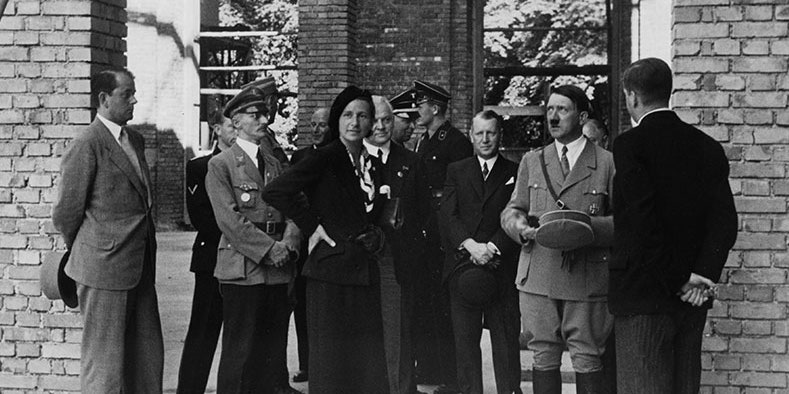
Feature image (on top) Albert Speer and Adolf Hitler. Photo: World Architecture
The Nazis Wanted to Reshape Occupied Norway, written by Tor Kjolberg
Saying that COVID-19 changed the way we do business would be a serious understatement. The coronavirus pandemic totally disrupted traditional business patterns and seriously affected companies of all forms and sizes. What is the Future of Small Business in Norway After COVID-19?
However, it looks like small businesses in Norway are struggling the most. Almost 20% of Norwegian enterprises experience a substantial risk of bankruptcy, while 23% claim they lack money to pay bills that are due shortly. Other reports prove the same trend, but the only thing that matters is that small and medium-sized firms are hurt.
So, what exactly is the future of small business in Norway after COVID-19? The answer to that question depends on two factors – the Government’s response to the crisis and your ability to adapt to new market conditions. In this post, we will analyze both factors and explain the impact of coronavirus on the Norwegian business sector.
It is important to notice that Norway saw the first COVID-19 patient back in February
How Does the Government Respond to the Crisis? The first part of the puzzle comes from state authorities that issued a whole set of measures to support small business owners and their employees.
It is important to notice that Norway saw the first COVID-19 patient back in February, so the Government reacted promptly and defined a series of business assistance mechanisms. They already issued four economic packages in March and April, but we will focus on the latest support plan that was adopted in late May 2020.
Norway issued four economic packages in March and April
We are not going to discuss each measure individually, but rather concentrate on the most notable solutions related to small businesses:
The Government approved about $400 thousand for businesses ready to bring back temporarily laid-off workers.
The same amount has been granted to construction companies to support their activities.
The Government has provided help for seasonal businesses unable to prevent significant revenue decreases.
The Government approved about $400 thousand for businesses ready to bring back temporarily laid-off workers
There is also the so-called green transition support scheme worth around $100 thousand.
Norway supports education-related organizations with $100 thousand.
Jake Gardner, a business analyst at UK dissertation, adds that local authorities also decided to activate a number of tax-relief mechanisms to help endangered companies: “For example, it is possible to postpone VAT and wealth tax payments.”
It is important to notice that the Government of Norway designed a special guarantee plan for banks, so entrepreneurs can land money without the fear of not being able to pay it off.
How Small Businesses Can Respond to the Crisis? Now you know what the Government of Norway did to support small business owners, but it is also important to learn what you can do to prepare for the post-coronavirus market. We have five practical tips for you:
Local authorities also decided to activate a number of tax-relief mechanisms to help endangered companies
See what you can get from the Government In case you haven’t done it already, now is the right time to check the Government’s grants and support schemes. Consult with state officials to see how your business fits in and what you can get from all the funds provided by the system. It’s the first step you should take because it guarantees to keep your business alive during the crisis.
Try to move your business online Some companies will not find this tip to be very practical, but the majority of small businesses can indeed move their operations online. If you are running a physical store selling tangible products, there is always the chance to build an eShop and keep doing the same sort of business.
The situation is even simpler for small businesses offering a specific service. You can do it on the Internet and keep in touch with the clients through online conferencing platforms.
If you are running a physical store selling tangible products, there is always the chance to build an eShop
Focus on loyal customers According to the famous Pareto principle, only 20% of customers make 80% of your sales. This is why we recommend focusing on loyal clients who represent the core of your business.
Do your best to assure them that nothing serious is happening with the firm during the pandemic and help them realize that there is nothing to worry about. You will continue working as usual and keep delivering as promised.
Strengthen digital marketing activities People in isolation spend much more time on the Internet, so you ought to strengthen digital marketing activities as soon as possible. Learn where your customers are active online and serve them with some high-quality content.
For example, you can probably reach them via location-based Google ads or through your social media pages. The only thing that matters here is not to waste time and money on irrelevant communication platforms.
Prepare for market changes The last suggestion is to be ready for the new business environment once the pandemic is over. Some small businesses will fade away and some consumers will switch brands, so do your best to react on time and handle the changes properly.
People in isolation spend much more time on the Internet
What is the Future of Small Business in Norway After COVID-19? The Bottom Line Coronavirus initiated a gigantic disruption in our personal and professional lives, but it seems to be hurting small businesses the most. While it is true that entrepreneurs still don’t know when the whole mess is going to end, they can certainly make the first move and find sustainable ways to adjust to the situation.
In this article, we showed you a brief overview of measures the Norwegian Government has issued to help small businesses. We also discussed a few practical steps your company could take to overcome the existing problems.
Are you ready to react and adjust to the post-coronavirus business environment? Let us know in the comments!
John Peterson
What is the Future of Small Business in Norway After COVID-19? is written exclusively for Daily Scandinavian by John Peterson. John Peterson is a journalist with 4 years’ experience working in London magazine “Shop&buy”. He is a professional mini-tennis player and he has written a novel “His heart”. You can find him at fb.
Swedish fashion has gone from everyday gray minimalism to glittering creations for the elite. Swedish fashion of today also offers haute couture. Here’s your ultimate guide to Swedish fashion
With a history of quality and clean design, Swedes have always had an inherent sense of style, either it’s about having an eye for timeless vintage, appreciation of delicious denim or in recent years, being part of the haute couture family of designers.
The Swedisg Fashion Miracle
The Swedes speak of the Swedish “modeundret” or “modemiraklet” which means the Swedish fashion miracle, which is said to have begun with the jeans companies Acne and Nudie. Fashion is a big part of daily life in Sweden and Swedes spend an awful lot of time to worry about what to wear.
Step off the plane in Sweden and it’ll hit you like a sack of potatoes: Swedes have style. Fashion is a big part of daily life here and for a nation that’s famously open about nudity, locals spend an awful lot of time worrying about what to wear.
Utility without function
“Utility without function”, said Hernández Corner about his collection in the spring of 2013. It is a good description of the uniformed everyday style Swedish fashion is known for. Functionalism that is not functional, and sober minimalism that is sometimes affected by artistic delirium. In addition, there’s often imitations of what is happening in the big fashion metropolises.
Swedish design has traveled across the globe, with household names like H&M and Acne dominating most high streets and fashion weeks, although they have always kept their “Nordic coolness”. The Swedes were certainly not born looking stylish. However, H&M gave the Swedes – and the world – plenty of affordable fashion stores and in big cities like Stockholm there’s a thriving market for vintage and second-hand clothing.
Your Ultimate Guide to Swedish Fashion However, something has happened. The Swedish “clothes for everybody” philosophy, with roots in the building of social democracy, had to give way to something else: unique garments for the elite. Possibly it began when the fashion duo Altewai Saome debuted in 2011 and refined craftmanship was woven into the garments. It was an exclusivity that seemed so foreign that the designers themselves called it “un-Swedish”. As if it was impossible to imagine such a sophisticated style in folksy Sweden. Did this woman really exist in reality?
In this guide, we’re diving into all things Swedish fashion, from denim brands and retro clogs to designer splurges with links to their websites. We checked and updated this list in August 2020. We have not included brands that seemed inactive.
Acne studios
ACNE STUDIOS
Acne Studios is a Stockholm-based fashion house with a multidisciplinary approach. Through founder and Creative Director Jonny Johansson’s interest in photography, art, architecture and contemporary culture, an alternative path has been found, turning Acne Studios into a well-respected creator of ready-to-wear, magazines, furniture, books and exhibitions.
ARKET
As a member of the H&M family, ARKET offers contemporary and quality basics and essential products, plus trend-driven pieces that can fit in a capsule wardrobe. There is an emphasis on recycling (in production but also through an in-store incentive to return old clothes) and transparency, as ARKET lists its suppliers openly onsite.
ASKET
Aiming to slow down consumption with their “meaningful essentials”, ASKET creates beautiful basics designed to last. They’re fully transparent and offer a traceability percentage for each garment, working towards full traceability.
ATP ATELIER
Super chic leather goods, all handcrafted in Italy. Ethically sourced, sophisticated women’s shoes (and bags) are all in line with the brand’s Smart Luxury ethos: inspiring women to make smart choices – both for themselves and for the sake of the world they live in.
Bjørn Borg
BJÖRN BORG
Hitting the sweet spot between athleisurewear and Royal Tenenbaum fancy dress, the eponymous brand from the 70s tennis star and heartthrob is full of athletic performance wear, athleisure, and undergarments.
BOOB
Boob’s patented nursing collection has become a favourite among mothers all over the world. Today Boob makes clothes for all stages of motherhood, with smart double function for pregnancy and nursing.
BOOMERANG
Boomerang, from Stockholm, produces colourful and natural basics for the whole family, including children. It was founded in 1976.
CARIN WESTER
Carin Wester designs classic and casual fashion. She uses playful substances in very subtle colors, as well as black, white and grey. Is sold through the Zalando online store.
CHAMBERS
The story started in 2012 when Sandra Näsström designed and made a super-light and very sensual slip for the models to wear under their couture gowns at a fashion show. The girls insisted on wearing them as dresses when they went out dancing that evening. Sandra was inspired by the idea of creating something adaptable that could be worn 24/7. She decided to name her new slip-dress Natalie, after the first model who wore it.
Cos, Stavanger, Norway
COS
A contemporary, minimalist brand heavily inspired by art and design. COS’s approach to design is one that includes “buy less wear more,” as beautifully designed basics are meant to fill wardrobe gaps for years. Get your COS 20% off coupon here.
CRAFT
Craft is a Swedish brand specializing in functional clothing for endurance sports where performance and comfort are crucial for a good result. Craft works closely with elite athletes.
DIANA ORVING
Stockholm-based DIANA ORVING Collections has presented women’s wear collections at fashion shows and exhibitions in Sweden and internationally since spring 2007.
DIDRIKSONS
Julius and Hanna Didrikson started making workwear for the fishermen in Grundsund, on the rim of Sweden’s western coastline, back in 1913. Today Didrikson is the leading brand of functional, rain- and weatherproof garments in Scandinavia.
DR. DENIM
Don’t let the “family-owned” element of Dr Denim fool you – this brand is anything but quaint. Founded by brothers Alexander and Johannes, who inherited their obsession from their denim-tastemaker father, the brand has been on “a personal quest to be the global cure for half-baked denim” since 2004.
DRKN
DRKN is a street fashion brand out of Stockholm that launched in May 2015. Their mission is to promote digital culture by way of clothing and style inspired by games, hacking, electronic music, digital art, and science fiction.
DUGHULT OF SWEDEN
Creates “superior quality clothing with the finest feel and a timeless, contemporary classic style. And only dresses, skirts, jackets and coats.”
ELVINE
No-nonsense Gothenburg brand making cool clothes for men and women.
EYTYS
Uber cool Stockholm-based Eytys blend 90s nostalgia with cyber punk for sneakers, loafers, and boots with attitude. Likely to chime with those who follow the Balenciaga “ugly shoe” school of thought, these bold designs are anything but minimal, but a comfortable cork footbed and considered manufacturing techniques make for a high quality shoe with confident proportions that’s easy to wear.
Wool from Filippa K
FILIPPA K
Timeless, minimalist design that’s true to Swedish style and sustainable, Filippa K is a classic Swedish brand. Launched in 1993, Filippa K is the epitome of Swedish style, as the versatility and comfort of the collections make them ideal for office–bike–evening transitional looks.
FJÄLLRÄVEN
Fjällräven originates from Örnsjöldsvik, a place where the mountains meet the forest and the sea. They make clothes and equipment for outdoor use, and are dedicated to making nature more accessible. Their bags are durable and long-lasting, but they’re also very sweet.
FLATTERED
Finely-crafted women’s shoes that reflect contemporary trends, Flattered is the place to go for slick everyday basics and high-fashion inspired designs.
GRAM
A playful brand for men and women, Gram makes shoes that look like something you would’ve wanted as a child but grown up.
GUDRUN SJÖDÉN
From Stockholm. Successful in many countries, especially Germany, Switzerland and Austria. All the textiles are made from natural materials.
HAGLÖFS
Northern Europe’s largest manufacturer of outdoor products. Their range includes backpacks, sleeping bags, functional clothing and shoes.
HEDE FASHION OUTLET
Save money on Swedish fashion brands in this outlet near Gothenburg (also known as Freeport).
Hestra gloves
HESTRA
If you need heavy duty gloves, Swedish brand Hestra is where you go. These ones are made from Elk leather and have a thick fleece lining, as well as touchscreen pads on the thumb and index fingers so you can still use your smartphone while you’re out in the cold. These are the kind of gloves you have for decades – they’re really that good.
HOPE
A brand loved in Sweden that hasn’t had the recognition it deserves from outside yet, HOPE is for the unisex, minimalist, and androgynous design fans. Plenty of oversized yet sleek tailoring lifts wardrobe staples from standard to Scandi.
Read also: Swedish Fashion Hope
HOUSE OF DAGMAR
Founded in 2005 by three sisters, Karin Söderlind, Kristina Tjäder and Sofia Wallenstam, the brand continues the sartorial legacy of their late grandmother, Dagmar. Inspired by their grandmother’s confidence and timeless style, the sisters create considered womenswear collections full of extraordinary craftsmanship. The pieces themselves are imbued with quiet elegance, architectural shapes, and feminine form.
IDA SJÖSTEDT
From Stockholm. For “beautiful, sexy clothes for women who do not take dressing up too seriously”.
ISBJÖRN OF SWEDEN
The brand was founded in 2005 by Maria Frykman Forsberg and Camilla Schmidt. The business idea was born when they had their first babies, not finding proper outdoor gear for their little ones. The ISBJÖRN of Sweden collection covers the age from 0-14 years, offering all necessary layers kids will need for being active outdoors, at day care center or in the spare time with the family.
J. Lindeberg
J LINDBERG
The Swedes are an active bunch, so it’s only fitting that one of their major 3 fashion houses is also a designer of golf and ski clothing. Alongside activewear, J Lindberg also designs contemporary men’s and womenswear, focusing on simple tailoring and quality basics.
KRISS
Considered as classic, exclusive, wearable and feminine. The collections are designed in the countryside near Uppsala.
LAZOSCHMIDL
Gender-fluid raver kid of the early aughts grows up but stays the same; that’s the vibe from this cooler-than-cool Swedish brand. Lazoschmidl knows how to rock a pattern, a mesh, and a ruffle – all in the “menswear” category.
LJUNG
Men’s fashion from Stockholm, favoured by dandies and successful young people. Clever, practical and multifunctional.
MINI MARKET
Began as a pure clothing label, but today also makes shoes. The designers and founders are three sisters from Stockholm. I am unsure if they are still active because they have a web shop without https.
MISTRA FUTURE FASHION
Mistra future fashion was a research program focusing on circular economy aiming at a future positive fashion industry. The program held a unique system perspective operating cross disciplinary in a consortium with over 60 partners 2011-2019.
Monki shop. Photo: Wikipedia
MONKI
Dressing Gen Z and Millennial Swedes in Instagram pinks and teddy bear coats.
MYRQVIST
Launched from a Kickstarter campaign, Myrqvist produces Goodyear Welted shoes for men. This is a complex and labor-intensive form of shoe construction: it stops water from leaking through but most importantly, it enables the possibility to replace the outsole when needed. Consequently, Myrqvist shoes can be worn for decades.
NA-KD
One of Sweden’s hottest brands right now (2020).
NAKKNA
Avant-garde, but wearable – that is what people say about Nakkna. The label comes from Stockholm.
NATHALIE SACHUTERMAN
High-end fashion from Stockholm for the rich and famous, particularly people in fashionable Stureplan square who like to wear her designs.
NEUW
Technically based in Australia but started by three friends from Melbourne and Stockholm, NEUW is a testament to the far-reaching appeal of Swedish denim culture. The brand is inspired by vintage denim so all styles feature details like “repair stitches” or “revision darts,” soaking the collections in the rich variety denim can take.
NUDIE JEANS
Lagom is a Swedish word for ‘just the right amount’. It’s their version of Yin and Yang.
ODD MOLLY
Odd Molly really is a little “odd”: it is wayward, beautiful, humane, warm and playful. The designers at Odd Molly like to go their own way in fashion.
OSCAR JACOBSEN
A 110-year-old menswear brand, which includes golf apparel.
OUR LEGACY
Swedish menswear brand Our Legacy is all about pared-down, high-quality, and timeless design. They specialize in button down shirts; they’re the epitome of contemporary Swedish style. Their other wardrobe pieces, however, are just as well-made.
PEAK PERFORMANCE
Born out of a need for practical skiwear in the 80s that didn’t succumb to the flashy trends of the time, Peak Performance is still ubiquitous with skiing in Sweden. Selling a wide range for men, women, and children, their outerwear is second to none when it comes to staying warm in the northern parts of the country.
PELLE P
Functional clothing for sailing and skiing.
RAVE REVIEW
Entirely recycled collections that speak truth to climate crisis denying powers. Sustainability is at the core of everything head designers …. do.
RESTERÖDS
Produces not only underwear, but also chic, casual fashion. Founded in 1935 as “Resteröds Trikåfabrik”.
Carin Rodebjer
RODEBJER
A brand beloved by fashion-forward women who want a comfortable silhouette while still looking put-together, Rodebjer is The Swedish Look at its peak. Incredibly modern and compelling, Rodebjer’s pieces are always the right combination of timeless and on-trend.
SANDQVIST
Swedish brand Sandqvist makes timeless bags that will last for ages and look good the whole time. Their bags are often made of recyclable materials, and you can bring them back to their stores for repairs.
SÄTILA
Sätila of Sweden was founded in 1896 in the village of the same name deep in the Västergötland countryside. Since that day Sätila has designed, knitted and delivered hats, scarves and mittens worldwide.
SELAM FEZZAHAYE
Named Sveriges modemirakel, or Sweden’s “fashion miracle”, Fessahaye is a Swedish-Eritrean designer pushing for greater diversity in Scandinavian fashion through her poetic and bold collections, worn by “one of the most diversely casted runways in Copenhagen Fashion Week history”. Her work is exaggerated and personal, as she plays with proportion and takes inspiration from her Eritrean heritage. Although this is not classic Swedish design, it is definitely the future of it.
STOCKHOLM QUALITY OUTLET
Out-of-town retail parks sell clothes and accessories by Swedish fashion brands at deeply discounted prices – depending on the item, you can expect to get 30–70% off the recommended retail price. You should try this one.
STUTTERHEIM
Scandinavia is lovely, but it doesn’t half rain a lot… Stutterheim is a popular choice with men, women, children, and dogs when it comes to keeping dry. The handmade raincoats are crafted using rubberized cotton and feature double-welded seams, snap closures, and cotton drawstrings. They also make boots that look great and keep toes dry.
STYLEIN
Stylein launched in 2001 by founder and chief designer Elin Alemdar. They always stay true to their core aesthetic – sophisticated, sleek, and elegant – while finding a way to hit trends so that the collection feels timely.
SWEDISH ECO
The brand was born in Gothenburg with the idea of offering premium organic underwear. Swedish Eco products are made from certified organic cotton which is durable, soft and good for your body.
SWEDISH FASHION COUNCIL
Press release, March 25th 2020: The Swedish fashion industry is facing a serious crisis. The ongoing paradigm shift driven by the climate crisis, digitalization and a rapid change in consumer behavior has already created enormous challenges for the fashion industry. Now the main focus is on how we best can help the Swedish fashion industry to survive this crisis and to still be operating in the future. The future for many Swedish fashion companies can be determined within such a short period of time as a few weeks.
SWEDISH HASBEENS
Inspired by the enigmatic “Anita”, a mother in 1970s southern Sweden who rocked a clog and whose impressive collection found in a factory basement was the basis of their first collection. The environmentally conscious shoes are made using chrome-free tanning and EU regulated wood.
Tiger of Sweden
TIGER OF SWEDEN
Tiger of Sweden is a Stockholm-based fashion house established in 1903 with a heritage in tailoring. For more than a century Tiger of Sweden has stood for style with purpose, dressing men and women for whom true style is about the confidence to be themselves. The brand founders Marcus Schwarzman and Hjalmar Nordström built the company on the Scandinavian principles of equality and fairness.
TRETORN
Founded in Helsingborg in 1891, Tretorn started as a rubber factory, producing galoshes for farmers to protect their feet. Over time, it has since become a producer of high-quality boots and sneakers, artfully marrying style with practicality.
TWIST & TANGO
Produces fashionable everyday clothes, which are meant to be fun. The successful brand comes from Haga, the Old Town district of Gothenburg.
VAGABOND
What started as a men’s shoe company has grown to be a global shoemaker for everyone, with fashion-forward and classic designs available for reasonable prices and uncompromising quality.
Veronica Virta
VERONICA VIRTA
Clothes that are feminine and classic with a touch of color, both for business professionals and the everyday woman. Timeless elegance with a luxurious feeling and with an endless possibility of combinations.
WEEKDAY
Home of the infamous Zeitgeist t-shirt, a weekly print project that creates a design reflecting pop culture and sold with limited availability.
WESC
WeSC creates street fashion and street wear. The label comes from skateboard culture.
WHYRED
Whyred, from Stockholm, combines clean lines, neat shapes and idiosyncratic details. The major orientation is modernist.
& OTHER STORIES
With ateliers in Paris, Stockholm, and LA, & Other Stories offers designs that range from romantic to ranch hand. They also have a hugely popular beauty range, favored for its fragrances and hand creams.
Hope fashion, Stockholm
The future of Swedish fashion Given that it is home to multiple, enormous fast-fashion brands, it’s undeniable that Swedish fashion is an important country in terms of the globalization of fashion and rethinking damaging structures, but Sweden could have more influence if it joined forces with other Scandinavian fashion powers – rather than trying to carve out a new identity in an already saturated market.
Your Ultimate Guide to Swedish Fashion, compiled by Tor Kjolberg