
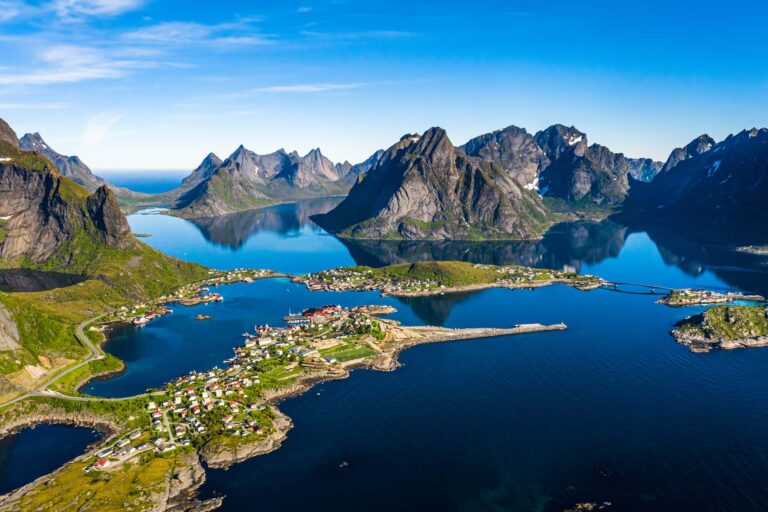
The World’s Most Beautiful Archipelago

Suddenly, the world discovered Lofoten. No Norwegian tourist destination is growing faster. For centuries, the Lofoten archipelago fed a famine-stricken Europe with cod. Today, an insatiable tourism industry circles one of the world’s most beautiful archipelagos.

The Lofoten archipelago in Northern Norway is a breathtaking Arctic destination renowned for dramatic, steep mountains rising from turquoise fjords, picturesque red fishing villages (rorbuer), and white sandy beaches. But as the islands face overtourism for the first time, residents have an important message for visitors.

“We don’t want the strong market forces to become even stronger, for turbo tourism to destroy everything real. We want people to be inspired to make their own choices,” said filmmaker Eivind Drivflaadt in 2005 during the filming of the nature film “Loop.”

Situated above the Arctic Circle, Lofoten offers the Midnight Sun in summer and the Northern Lights from September to April, making it a premier destination for hiking, kayaking, surfing, and photography.

Visitors here are nothing new. The islands were home to northern Norway’s earliest Viking settlement, drawing traders from as far away as Iceland. For centuries, tens of thousands of sailors journeyed here each winter to fish for Arctic cod, a tradition still reflected in the red rorbuers (fishermen’s cabins) that now host tourists rather than seafarers.

Situated at the far end of the ocean, surrounded by moody weather gods and almost forgotten by the Ministry of Transport, the world’s most beautiful archipelago was long written off by the tourist industry. The sight of Lofoten’s Northern Lights, powder snow, killer whales, and stunning peaks rising above the waters was reserved for fishermen with more important things to do than looking up.

Then, at the turn of the millennium, the snowball started to roll. The roads became wider, the bridges more numerous, the airfares cheaper. Today, it is the shoals of both winter and summer tourists, not cod, that generate the greatest enthusiasm in the archipelago. Or maybe not?
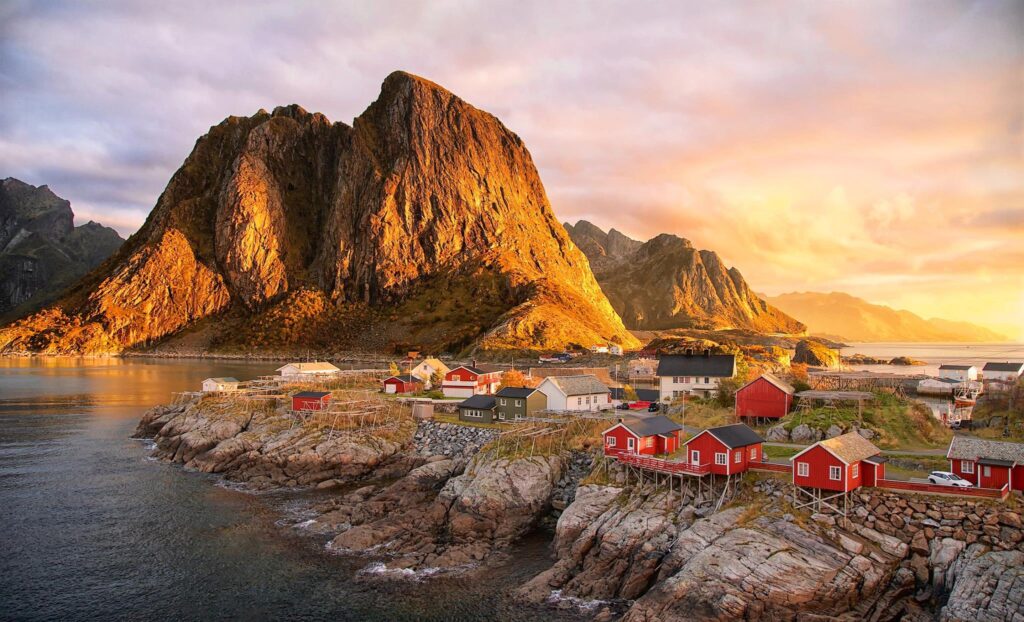
Visitors here are nothing new. The islands were home to northern Norway’s earliest Viking settlement, drawing traders from as far away as Iceland. For centuries, tens of thousands of sailors journeyed here each winter to fish for Arctic cod, a tradition still reflected in the red rorbuers (fishermen’s cabins) that now host tourists rather than seafarers.

Situated at the far end of the ocean, surrounded by moody weather gods and almost forgotten by the Ministry of Transport, the world’s most beautiful archipelago was long written off by the tourist industry. The sight of Lofoten’s northern lights, powder snow, killer whales, and stunning peaks rising above the waters was reserved for fishermen with more important things to do than looking up.

Then, at the turn of the millennium, the snowball started to roll. The roads became wider, the bridges more numerous, the airfares cheaper. Today, it is the shoals of both winter and summer tourists, not cod, that generate the greatest enthusiasm in the archipelago. Or maybe not?

The World's Most Beautiful Archipelago
Rorbuer at Svinøya. Photo: Reidar Hernes.

Lofoten’s beauty is no longer a secret. What was once a seasonal outpost for survival and commerce has become one of Norway’s most popular destinations. In 2023, the islands welcomed about one million visitors, roughly 40 times Lofoten’s permanent population of 25,000. In 2025, Condé Nast highlighted Vesterålen in Lofoten, making waves in the culinary world.

As European heatwaves drive travelers further north and new seasonal flights from Paris, Frankfurt, and Zurich have launched, tourism is set to rise further. A weaker Norwegian krone is helping seal the deal.

Lofoten has seen stronger visitor growth than any other travel destination since the turn of the millennium. The increase is greatest in winter, at almost 60 percent.

Media tell stories without context

“CHAOS IN LOFOTEN!” and “CAR QUEUES EVERYWHERE!”

True, it happens, but very seldom. Perhaps during a few peak weeks, and only at certain times of day, like just after the ferry from Bodø docks.
The World's Most Beautiful Archipelago
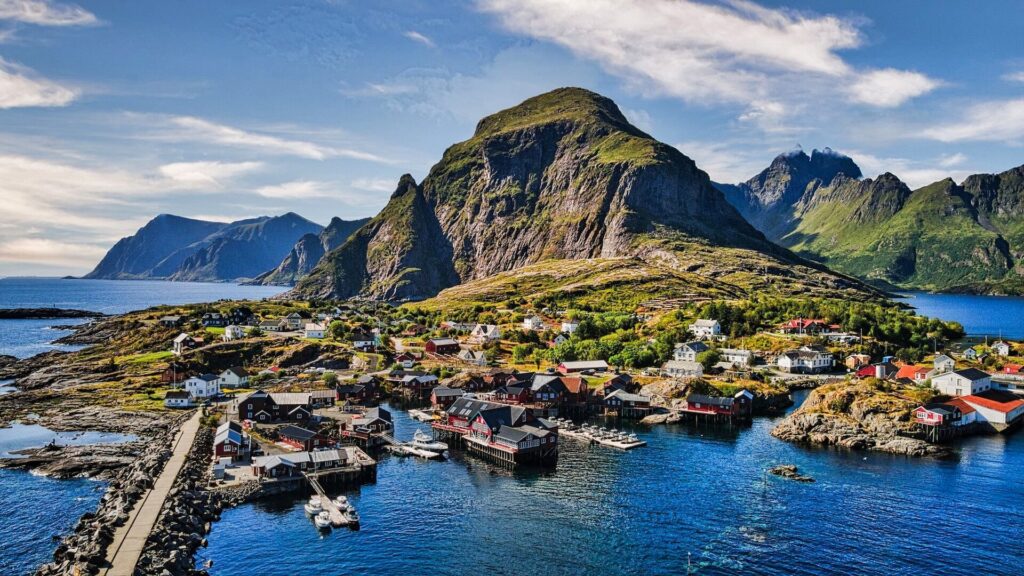
What was once a seasonal outpost for survival and commerce has become one of Norway’s most popular destinations. Photo: Visit Lofoten.

What about the locals?

They have to deal with very real and valid tourism-related issues that deserve to be heard and addressed. It’s frustrating to live with something day after day, speak up about it, and be told it’s “not such a big deal.”

What about the tourism industry?

Parts of the tourism industry have been downplaying these problems for years, worried that the word “overtourism” will scare away the responsible visitors locals actually want to keep.

According to the Guide to Lofoten, no one seems willing to take real responsibility. Instead of sitting down together to discuss solutions and how to get there, discussions often devolve into a blame game, with fingers pointed in every direction and little concrete action.

Lofoten residents claim they’re proud to share their home and welcome new jobs, attractions, bars, and restaurants brought by tourism, but they wonder whether the infrastructure can keep up. They also worry whether this influx of visitors will affect the landscape and fragile ecosystem that makes Lofoten so special.

The world’s most beautiful archipelago, Tor Kjolberg reporting
Feature image (top) © Lofoten Havfiske

The Nordic Garrison on Gotland

A strategic military installation of the Swedish Armed Forces, located on the island of Gotland in the Baltic Sea, is often referred to as P 18 or the Gotland Regiment. Following a period of demilitarization, the Nordic garrison on Gotland was officially re-established in 2018 to strengthen Sweden’s defense capabilities in the region.

The Swedish government decided in March 2015 to begin reestablishing a permanent military presence on the island, starting with an initial 150-troop garrison, consisting primarily of elements from the Swedish Army.

After winning a 2024 competition from the Swedish Fortifications Agency to design a new base for the P18 armored regiment on the Baltic island of Gotland, the team at the Stockholm-based architecture firm CF Møller decided to reimagine what a military complex could look like.

The Nordic Garrison on Gotland
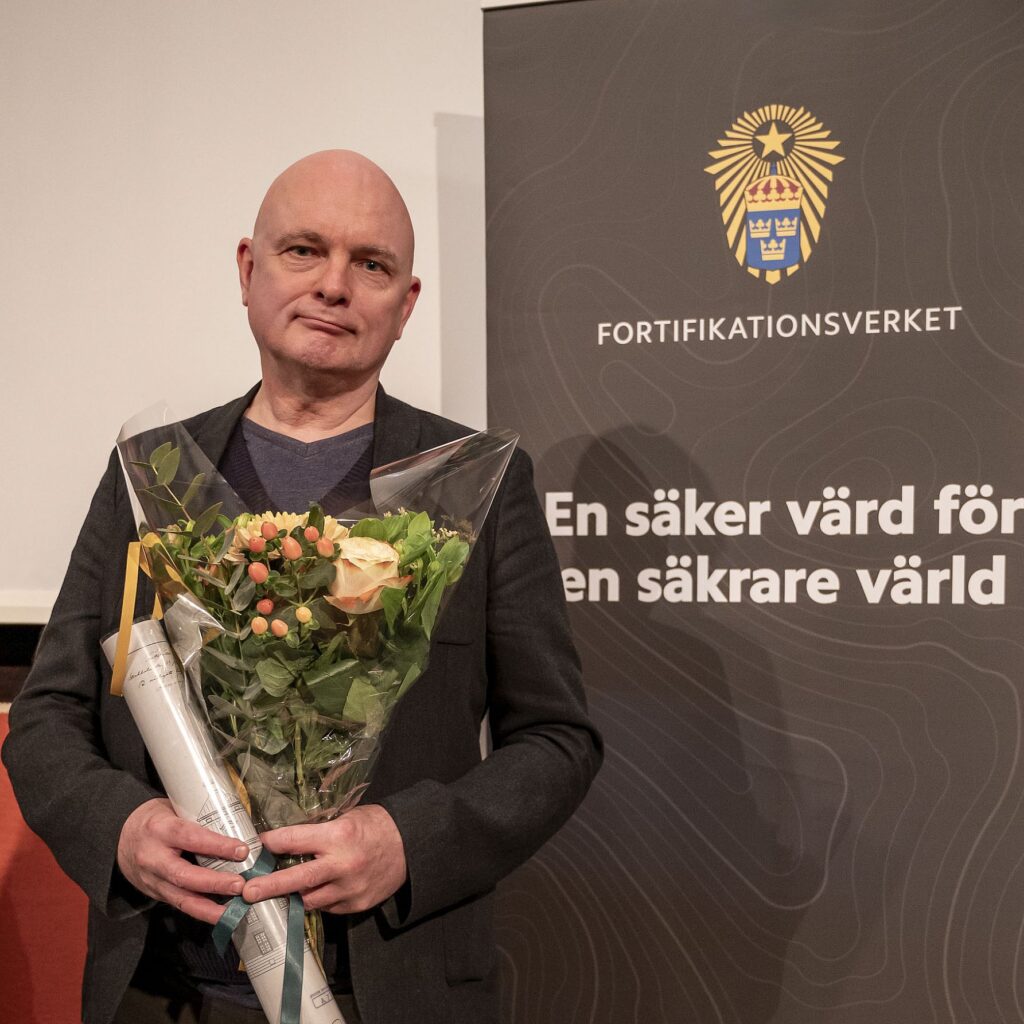
Fortifications Agency’s project manager Per Falkgren.

“We are proud and happy to have two projects in the final, and even more so to end up as winners. An important basis for the architectural quality can be found in the Fortifications Agency’s high ambitions for the re-establishment of the Armed Forces on Gotland,” says Henrik Linton, architect at C.F. Møller Architects, which has worked on the project together with the Fortifications Agency’s project manager Per Falkgren, among others.

**********************************************
You may also like to read Sweden’s Culinary Island Gotland
**********************************************

The Nordic Garrison on Gotland
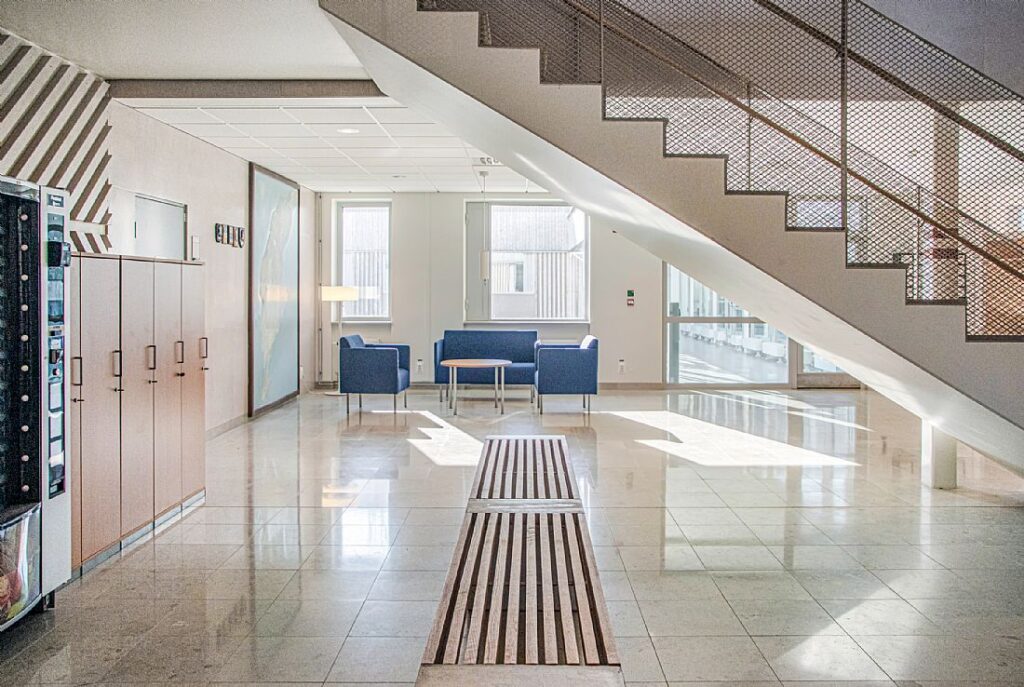
Inerior from the Nordic Garrison.

Following the 2022 Russian invasion of Ukraine and Sweden’s accession to NATO, military readiness on Gotland increased, with the Swedish government spending 150 million euros to expand military infrastructure on the island.

The result is a garrison that defies convention, blending elements of functionality, security, and architectural distinction into a striking, understatedly Scandinavian visual identity.

The Nordic Garrison on Gotland
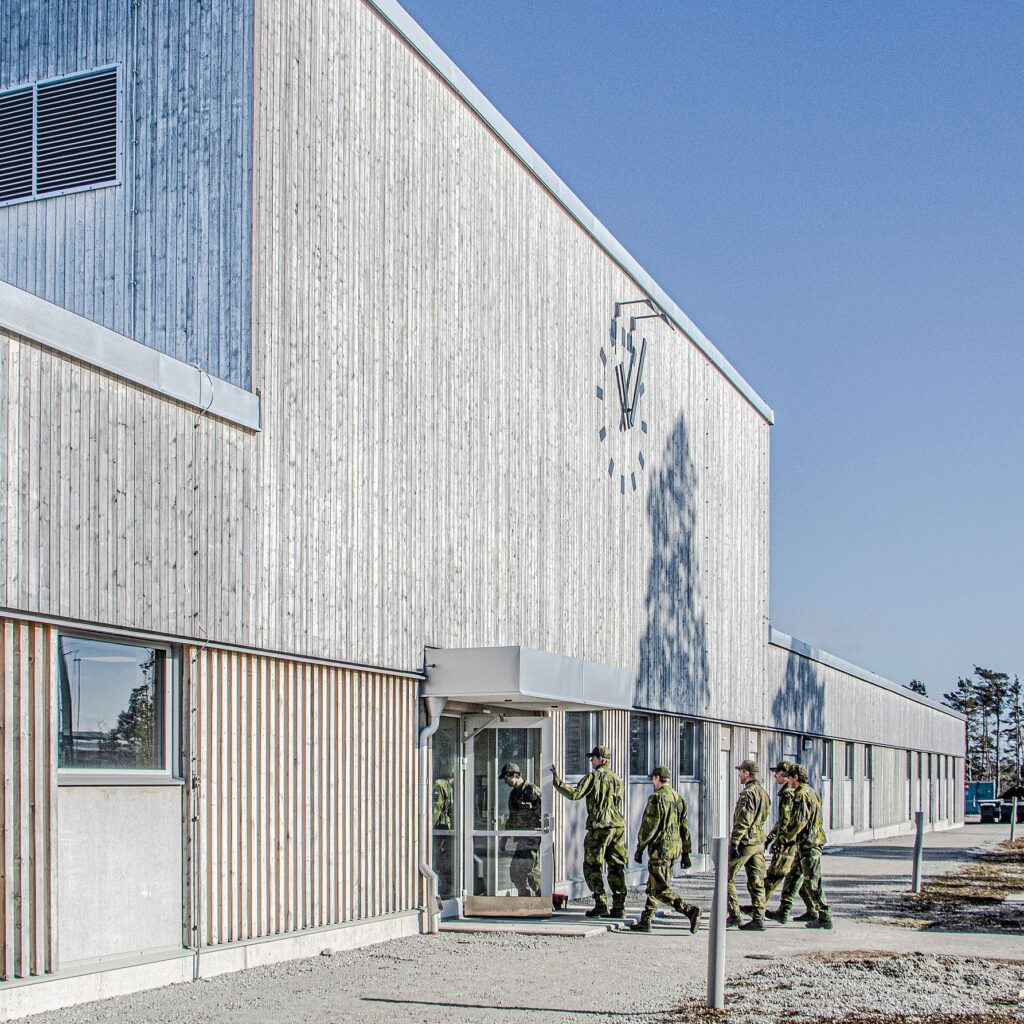
Dining hall, sports hall, administration, and other activities with people at the center have facades dominated by graying wood.

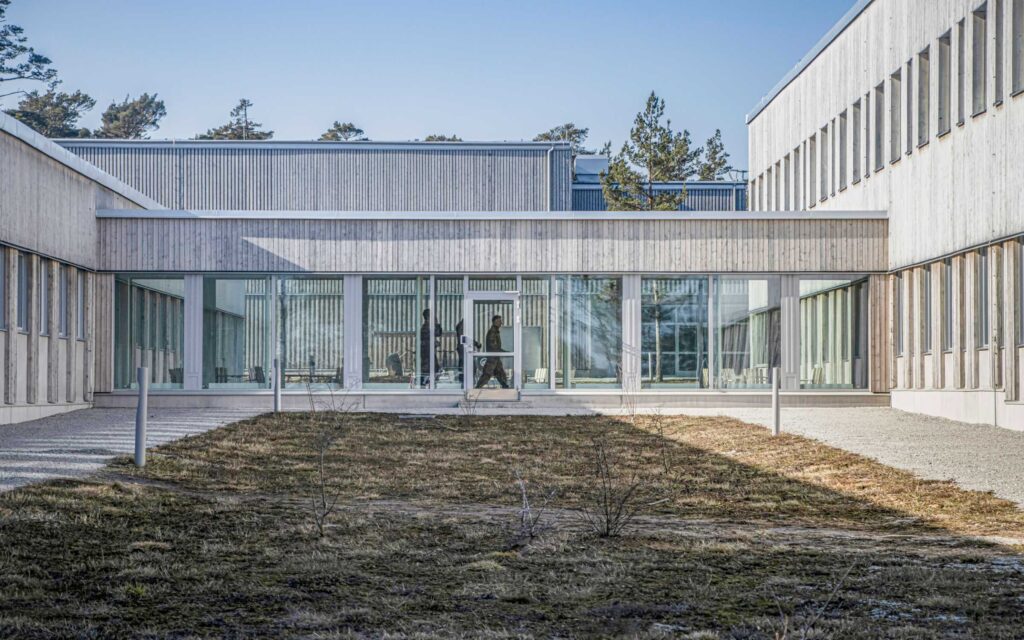
Buildings for vehicles and machinery are clear volumes where the folded sheet metal of the facades reflects the verticality of the pines and the play of light. Dining hall, sports hall, administration, and other activities with people at the center have facades dominated by graying wood. The pine material engages with the colors and light of the limestone bedrock. Buildings with high safety requirements are constructed directly from the ground limestone and are made with light-pigmented concrete.

The Nordic Garrison on Gotland
The team at the Stockholm-based architecture firm CF Møller decided to reimagine what a military complex could look like.

Thomas Ängshammar, a spokesman for the P18 regiment, says, “The challenge we’re now facing is that the geopolitical situation keeps changing. But we can be flexible in how we’ll respond to that, thanks to this location.”

The Nordic Garrison on Gotland, Tor Kjolberg reporting.
All images © CF Møller Architects (except photo of Per Falkgren).

Rethink How Destinations Are Experienced

A traveler arrives late in the evening. At first glance, the street seems unremarkable—just another row of buildings, another quiet corner of a city they’ve never visited before. But in the morning, they step into a small café and overhear a story—a story that might lead you, as part of a DMC, to rethink how destinations are experienced.

The story the travelers overheard was about the old woman who used to bake there before dawn, about fishermen who once traded secrets over strong coffee, about a winter storm that changed the harbor forever.

Rethink How Destinations Are Experienced
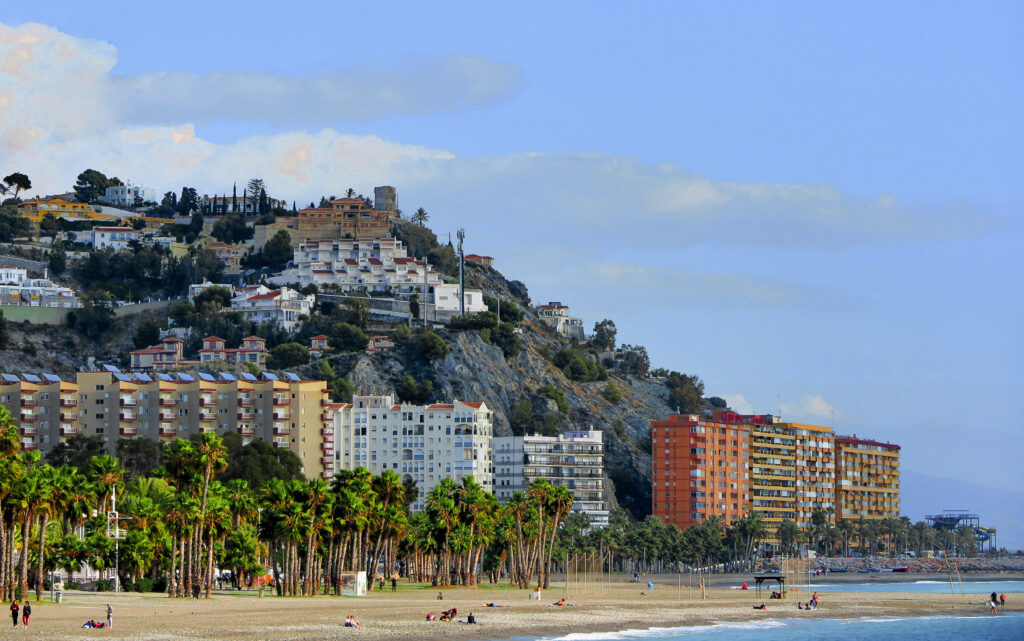
Playa de Almunecar. Photo: Wikipedia

By the time the traveler leaves, the street is no longer anonymous. It has become a place. And more importantly, it has become a place worth returning to, and worth talking about.

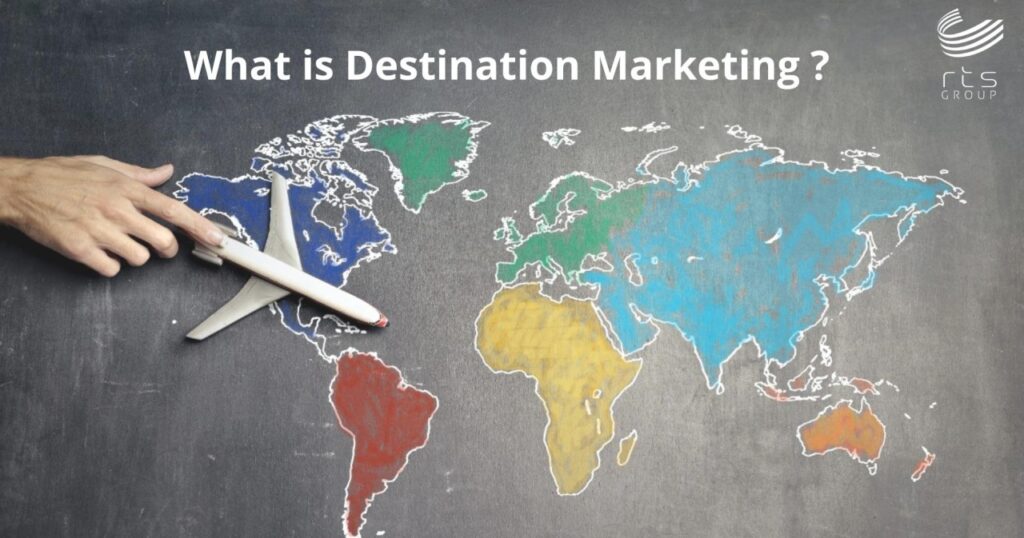
Destination marketing starts with becoming a better storyteller. The value of storytelling transcends language and culture. Stories still represent the most compelling platform we have for managing our imaginations – and our infinite data.

The difference between information and storytelling is a destination people visit, and a destination people remember.

Rethink How Destinations Are Experienced
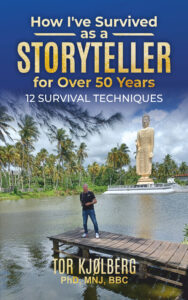
Get your free copy og my book.

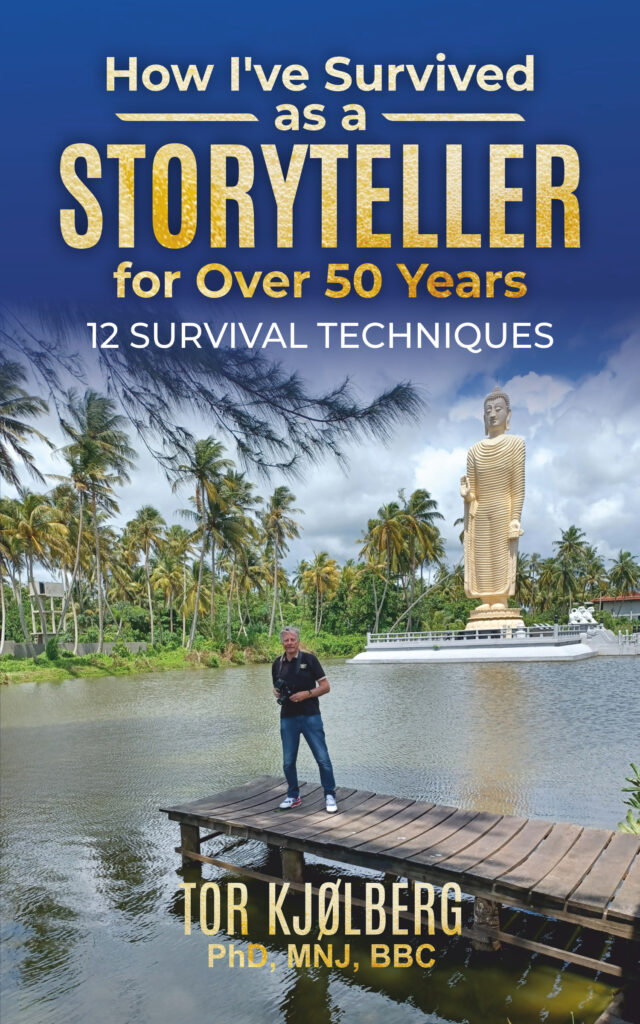
I have acted as a storyteller for brands for most of my professional life. I have written a book, “How I’ve Survived as a STORYTELLER for Over 50 Years: 12 Survival Techniques”.
I offer you a free digital copy of my book. The only thing you have to do is send an email to editor@dailyscandinavian.com with “Storytelling” in the subject line.

Storytelling as Strategy: Shaping Destinations People Choose—and Share

The book is not about Destination marketing, but about incorporating storytelling in marketing in general. In later years, I’ve been fortunate to work in the tourism industry and have seen how many organizations (DMCs, hotels, attractions, travel agencies, transport companies, etc.) could benefit from incorporating storytelling into their marketing campaigns.

If your destination is to stand out—not just be seen, but felt—storytelling is becoming essential. More than any form of communication, the art of telling stories is an integral part of the human experience. Those who master it are often afforded great influence and an enduring legacy.

Rethink How Destinations Are Experienced
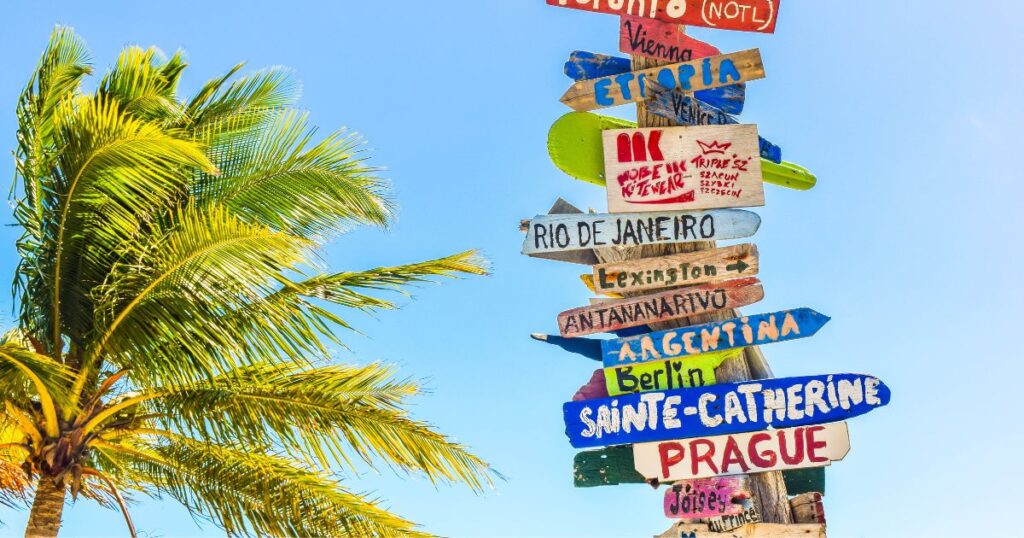
The value of storytelling transcends language and culture.

A destination can have everything

It might have mountains, a coastline, culture, and infrastructure, yet it still struggles to grow demand.

Another place, with fewer obvious advantages, somehow attracts attention, extends stays, and keeps showing up in conversations long after visitors return home.

The difference is rarely the product. It is the story people step into—and the one they carry with them when they leave.

A visitor doesn’t remember “a well-organized destination.” They remember the feeling of discovering something meant for them. They remember meaning. This leads to recommendations, repeat visits, and measurable demand.

When I discuss this topic with industry leaders, I stress that this is not about adding “nice stories” to marketing. It is about using narrative as a strategic tool for growth.

For DMCs, the key is to frame storytelling as an economic lever: demand generation, seasonality smoothing, and stakeholder alignment.

Rethink How Destinations Are Experienced
“Tell and Sell” is destination marketing at its best.

For DMCs, I’ve created a product called “Tell and Sell”.  Turn your destination’s story into measurable demand—through guaranteed high-value media placement.

“Tell and Sell” is a targeted service created for destinations that want more than just visibility— they seek results from the right audiences.

I identify the stories within your destination that have the highest potential to travel—then place them where they influence decision-making.

This is not press release distribution. It is engineered storytelling designed for conversion.

Rethink How Destinations Are Experienced
If your destination is to stand out—not just be seen, but felt—storytelling is becoming essential.

What makes it different

  • Guaranteed placement, not just outreach
    You don’t pay for attempts—you invest in confirmed visibility in publications that matter to your target audience.
  • Audience-first media selection
    Every placement is chosen for its ability to influence specific traveler segments—not just its prestige.
  • Narrative aligned with demand goals
    Stories are built to support measurable outcomes: increased interest, longer stays, and higher-value visitors.

If you want more details about how this works, I am more than willing to present my ideas to you personally. This can initially be done by mail.

“I don’t just tell your story. I place it where it drives demand.”

Rethink How Destinations Are Experienced, written by Tor Kjolberg
Previous articles on Storytelling:

We Remember a Good Story
What Makes a Story Stick?   
10 Best Books on Storytelling for Brands
Why Storytelling in Brand Marketing Is More Important Than Ever—and Why It Can No Longer Belong to Marketing Alone
How Storytelling Can Help Launch Your Product in Scandinavia

Cool Scandinavian Dads

Modern Scandinavian fathers have changed significantly over the past 50 years, shifting from the traditional role of provider to being active, hands-on caregivers. Keep reading to learn more about today’s cool Scandinavian dads.

Modern Scandinavian dads sacrifice their careers, choose pacifiers over pub visits, and spend more time with their children than ever before. Today’s Scandinavian fathers don’t just play the role of dad.

A Swedish friend shared how he had stood at the finish line many times, observing his father’s distant, wild look as he crossed the line of the Vasaloppet—a famous annual 90km cross-country ski race through the forests of northern Sweden—his face covered in ice, snot, and spit. “He never noticed us, no matter how much we screamed and waved,” he said.

While 1970s fathers were often detached from daily child-rearing, today’s dads frequently take extended paternity leave, share housework equally, and prioritize emotional bonding.

Cool Scandinavian Dads
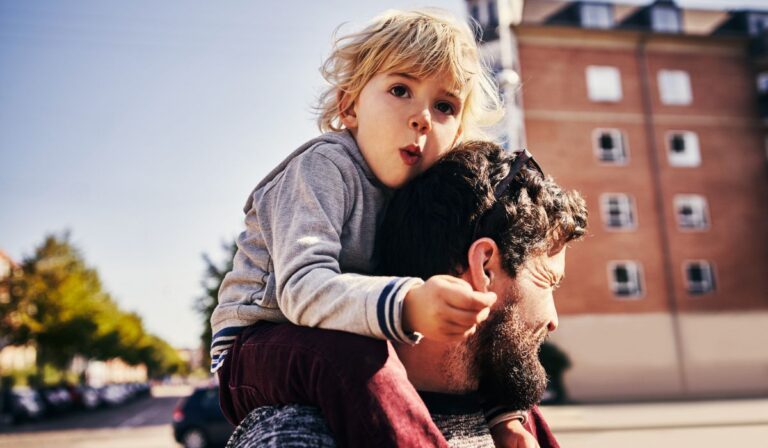
Today’s dads frequently take extended paternity leave, share housework equally, and prioritize emotional bonding. Photo: Fatherly

****************************************
Related: Leaders in Gender Enlightenment
****************************************

Key Changes Over the Past 50 Years:

Paternity Leave Uptake: In the mid-1970s, less than 1% of parental leave was used by men in Sweden. Today, Nordic fathers take roughly 20-30% of the total leave, with Sweden and Iceland showing particularly high rates of involvement.

Cultural “Recoding” of Manhood: Behaviors like changing diapers, taking children to daycare, and pushing prams—once seen as unmanly or solely maternal tasks—are now normal and expected of dads.

Active Involvement vs. Absenteeism: Parenting in the 1970s was often authoritarian, with fathers maintaining a distant relationship with their children. Modern Scandinavian fatherhood emphasizes warmth, involvement, and being a “dual-carer.”

Legal Frameworks: Sweden was the first country to introduce gender-neutral paid leave in 1974, but a significant shift occurred only after the implementation of earmarked “daddy quotas” (starting in 1993).

Cool Scandinavian Dads
Fathers in Nordic countries are unique, often spending more time with their children during their early years than in almost any other part of the world. Photo: SVT

In the old ‘housewife society,’ patriarchal norms made fathers the Patriarch: The one who provided food was seen as reliable, but emotionally reserved—a distant, tacit observer of the child’s upbringing.

“A father was a breadwinner. Until well into the seventies, there was no other way to be a Norwegian father,” wrote men’s researcher Knut Oftung, who studied divorced fathers.

Fathers in Nordic countries are unique, often spending more time with their children during their early years than in almost any other part of the world. Today, most men and women in the Nordics agree that parental leave should be shared equally.

Scandinavia’s family-friendly policies rank among the world’s best, yet only a small number of parents actually split their leave equally. Fathers claim about a third of the total parental benefits, mostly by the university-educated middle class.

Despite these shifts, studies suggest that while dads are much more involved, true equality—an equal 50/50 split—remains uncommon, and mothers often shoulder more of the overall responsibility. Modern dads also face higher pressures to be both perfect employees and perfect present fathers, which some cite as a reason for declining birth rates.

Today, Norwegian fathers are leading in childcare in Europe. According to the EU agency Eurofound, they spend over two hours daily with their children—more than double the time Swedish fathers spend and far more than the 15 minutes daily European fathers spent in the 1970s.

Cool Scandinavian Dads
Today, Norwegian fathers are leading in childcare in Europe. Photo: Fatherly

*******************************************
Related: Gender-neutral Swedish Preschools Produce More Successful Children
*******************************************

Figures from Statistics Norway (2000-2024) highlight these trends:

Working hours: Fathers still work the most, but the number working very long hours has decreased.

Overtime: Men account for a large share of overtime, but fathers with young children are working fewer hours so they can spend more time at home.

Increased participation at home: Fathers are doing more housework and child care, though mothers still do the majority.

Parental leave: With the paternity quota, nearly all fathers eligible for leave take on an active role early on—nine out of ten fathers utilize their paternity quota.

Educational differences: Fathers with higher levels of education tend to spend more time with their children than those with lower levels of education.

Literature often features absent fathers who left long ago, rarely portraying present fathers—reflecting current reality. Many books by fathers focus on keeping kids alive until mom arrives. Recently, there’s been a rise in “dadsplotation” or “dad lit,” where talented authors explore fatherhood in a post-patriarchal world.

Cool Scandinavian Dads
Talented authors explore fatherhood in a post-patriarchal world.

Some notable titles include:

Home Game – An Accidental Guide to Fatherhood by Michael Lewis: Addresses the joys and challenges of having kids.

Uppdrag: Pappa – edited by Hannes Dükler: Thirteen personal stories from fathers about life’s biggest transition (in Swedish).

The Perfect Book For Dad – The Astonishingly Complete Guide to Fatherhood by Paul Barker: Celebrates fatherhood.

The Book of Dads – edited by Ben George: An anthology of poignant and humorous insights from writers.

Dad Is Fat by Jim Gaffigan: A humorous take on parenting for dads.

Pops by Michael Chabon: Heartfelt essays on fatherhood.

The New One by Mike Birbiglia: A humorous memoir on embracing parenthood.

Patrimony by Philip Roth: A memoir about caring for an elderly father.

Being Dad (Various Authors): Short stories about modern fatherhood.

More “dad-lit” books for you to read.

An emerging trait of the “new dad” is greater concern about his role as a father compared to his own father. He reads, talks about, and sometimes writes about it.

Cool Scandinavian Dads, written by Tor Kjolberg

Eclipse of the Century in Iceland

On 12 August 2026, Iceland will see its first and only 21st-century eclipse, with a four-day festival planned to mark the occasion. Experience the eclipse of the century in Iceland.

This is a big moment for all of Iceland, but especially for the capital. Partial solar eclipses happen more often. But in Reykjavík? The last time Icelanders saw a total solar eclipse in the city was all the way back in 1433.

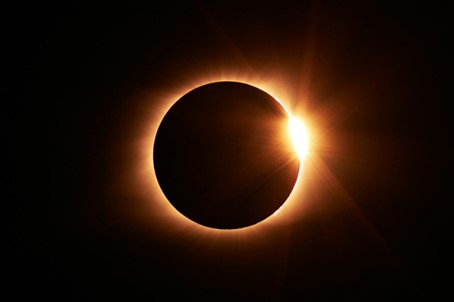
A solar eclipse occurs when the Moon passes between the Earth and the Sun, and totally or partly obscures the view of the Sun for a viewer on Earth. A total solar eclipse occurs when the Moon’s apparent diameter is larger than the Sun’s, blocking all direct sunlight. Totality occurs along a narrow path across Earth’s surface, while a partial solar eclipse is visible over a surrounding region thousands of kilometers wide. Because the eclipse will occur about 2.2 days after perigee (on August 10, 2026, at 12:15 UTC), the Moon’s apparent diameter will be larger.

Eclipse of the Century in Iceland
The last time Icelanders saw a total solar eclipse in Reykjavik was all the way back in 1433.

******************************************************
You might also like to read Iceland’s Extraordinary Women
******************************************************

When Is the Solar Eclipse in Iceland and How Long Will It Last?

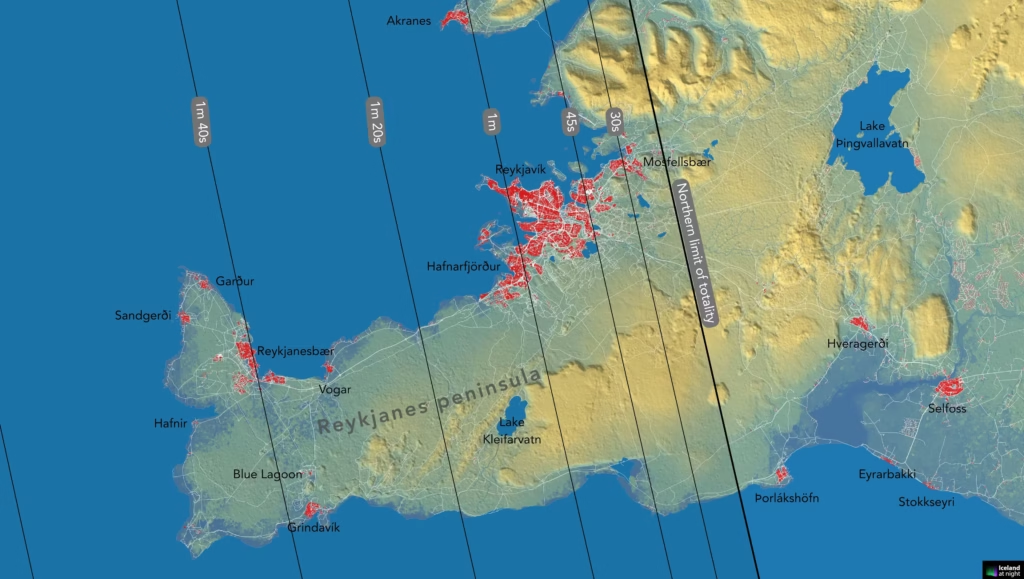
The 2026 total solar eclipse will take place in the late afternoon on Wednesday, August 12. The full event lasts about two hours from start to finish, but the “total” darkness is brief.

In Reykjavík, the timing is expected to be:

  • Partial phase begins: 16:47 GMT
  • Totality begins: 17:48:12 GMT
  • Maximum eclipse: 17:48:48 GMT
  • Totality ends: 17:49:18 GMT
  • Partial phase ends: 18:47 GMT
Eclipse of the Century in Iceland
The longest the eclipse will last on land will be at Látrabjarg in Iceland.

Eclipse tourism is booming

The 2024 event in the US generated an estimated $1.6 billion in direct revenue and around $6 billion in overall revenue, according to Perryman Group analysts, and the solar totality events in 2026 and 2027 are likewise predicted to be big business.

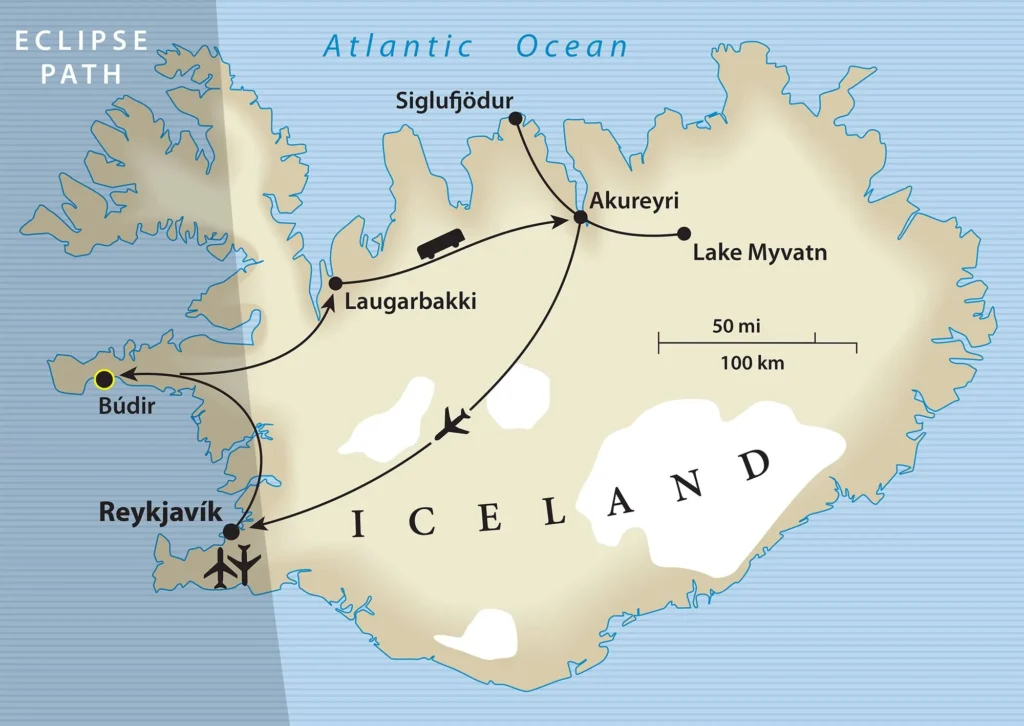
On 12 August 2026, Iceland will see its first and only 21st-century eclipse, with a four-day festival planned to mark the occasion. Billed as a “global celebration of the solar eclipse with music, art, science, and tech,” the Iceland Eclipse Festival will take place from 12 to 15 August 2026 in Hellissandur on the Snæfellsnes Peninsula in the country’s north-west.

The longest the eclipse will last on land will be at Látrabjarg in Iceland. It is therefore expected that many people will make their way there that day. Plans are underway to ensure safety in the area, but many of the roads leading to Látrabjarg are very narrow and dangerous. There has been talk of closing the area to car traffic and ferrying people by bus. Work has started on repairing parts of the road to Látrabjarg, partly for routine maintenance and partly due to the eclipse.

*********************************************
You might also like to read Re-unification of Iceland and Norway
*********************************************

Eclipse of the Century in Iceland
In Reykjavik, you don’t need to stand on a remote cliff or drive for hours to witness the 2026 total solar eclipse.

Why You Can’t Miss the 2026 Total Solar Eclipse in Iceland

This event is incredibly rare. The last time a total solar eclipse was visible anywhere in Iceland was in 1954. In Reykjavík, you have to go back nearly 600 years, to 1433. Miss this one, and the next total solar eclipse here won’t arrive until June 26, 2196.

The eclipse path passes over Greenland, touches the western coast of Iceland, and then continues south toward northern Spain and Portugal. Skies may be clearer in southern Europe. However, Iceland offers something different: open horizons, lava fields, sea cliffs, and Atlantic views as the solar corona appears overhead.

The last total eclipse in continental Europe occurred on March 29, 2006, and in the continental part of the European Union, it occurred on August 11, 1999. It will be the first total solar eclipse visible in Iceland since June 30, 1954, and the first in the Solar Saros series 126 (descending node), and the only one to occur in the 21st century.  The last total solar eclipse in Spain happened on August 30, 1905, and followed a similar path across the country. The next total eclipse visible in Spain will happen less than a year later on August 2, 2027.

Speaking to Euronews Travel, Dr. Kelly Korreck, a program scientist for eclipses at NASA Headquarters, noted the experiential side of the phenomenon—something that is in lockstep with today’s trends in travel: “It’s hard to explain, especially in this digital world, why it actually is worth going out and experiencing this in real life,” Dr. Korreck said, adding: “The pictures are beautiful, but they don’t do the whole body experience justice.”

What Makes Reykjavík an Ideal Place to See the Solar Eclipse

Reykjavík makes this easy. You don’t need to stand on a remote cliff or drive for hours to witness the 2026 total solar eclipse. The city gives you comfort, access, and wide open views of the sky all at once.

Here’s why Reykjavík works so well:

  • Everything you need is close by: Cafés, restaurants, shops, hotels, and services are all within reach. For visitors flying to Reykjavík, Isavia ensures smooth arrivals and departures around eclipse day.
  • Easy to get around: Many excellent viewing spots are within walking distance of the city center, or a short ride on Strætó buses.
  • A festive atmosphere: Expect watch parties, scientific talks, and community events that turn the eclipse into a week-long celebration.
  • A natural starting point: Reykjavík is the main hub for 2026 total solar eclipse tours. If you want to head farther west, most operators, such as Special Tours, depart directly from the city.
  • Watch from the water: For those who want a unique experience, some boat tour operators like Elding will take visitors out into Reykjavík’s coast. From the water, you get open horizons, a view of the skyline, and uninterrupted sky as daylight fades. You might even spot a whale while you wait.

Eclipse of the Century in Iceland, Tor Kjolberg reporting.

The Finnish Embassy in New Delhi – A Beauty of a Building

Architects Reima and Raili Pietilä won the 1963 competition for the Finnish Embassy, to be built in the diplomatic enclave of Chanakyapuri, with a striking and memorable entry titled “Snow speaks on the mountains.” The Finnish embassy in New Delhi is a beauty of a building.

Officially opened in 1986 and extensively renovated by ALA Architects between 2013 and 2018, the building combines Nordic architectural traditions with Indian elements, featuring a distinctive “Snow speaks on the mountains” roof design. It functions as a key diplomatic hub under Ambassador Kimmo Lähdevirta.

The Finnish Embassy in New Delhi – A Beauty of a Building
The Finnish Ambassador to India, Kimmo Lähdevirta.

“This is undoubtedly Finland’s best overseas mission,” says the country’s ambassador to India. The complex features six side buildings surrounded by a landscaped garden.

********************************************
Related: Finnish Iconic Architectural Creation – The Finlandia Hall
********************************************

The Finnish Embassy in New Delhi – A Beauty of a Building
The compound’s landscape design was created by landscape architect Maj-Lis Rosenbröijer and the Pietiläs.

The interiors were designed by interior architect Antti Nurmesniemi in collaboration with the Pietiläs, and the compound’s landscape design was created by landscape architect Maj-Lis Rosenbröijer and the Pietiläs. The large ceramic bas-relief in the ambassador’s residence was made by ceramic artist Rut Bryk. The interiors are furnished with Nordic pieces, including Artek furniture and glass art by Oiva Toikka.

In the 20 years from conception to completion, the original design—with a single roof—was changed, breaking up the single white plane into six side buildings, evoking the collegial atmosphere of an Indian ashram.

The Finnish Embassy in New Delhi – A Beauty of a Building
The embassy’s swimming pool.

********************************************
Related: One of the World’s 100 Most Incredible Places – In Helsinki
********************************************

Led by ALA Architects, the five-year project (2013-2018) updated the compound to improve sustainability, security, and working conditions while preserving the original design ethos.

The renovation of this mythical masterpiece of Finnish modernism has brought the ingenious building complex back to its original glory. The 2-stage project consisted of a complete overhaul of technical systems, functional updates, changes to the compound’s entrance gates, and architectural work focused on restoring the original spirit of the design and repairing misguided maintenance efforts both indoors and outdoors.

The Finnish Embassy in New Delhi – A Beauty of a Building, Tor Kjolberg reporting.
All images (except photo of the Ambassador) © Tuomas Uusheimo.

How Storytelling Can Help Launch Your Product in Scandinavia

Traditional media remains the most trusted source for information on decision-making in the Nordics. Norway, Sweden, Denmark, and Finland are among the highest-trust societies globally. Find out how storytelling can help launch your product in Scandinavia.

In the Nordics, the media still serves as a primary input for decision-making, whereas globally it is just one of many. That’s why you should incorporate storytelling when you want to reach out to Scandinavian clients.

Whether you’re marketing a destination, a financial service, or a physical product, a trustworthy and engaging story lets you tell a story in an informative way with a human voice, which will shorten the sales cycle and increase the ROI. In fact, the highest-performing marketing isn’t “story vs ad”—it’s ads structured as stories.

How Storytelling Can Help Launch Your Product in Scandinavia
A story lowers that guard because it doesn’t feel like a pitch.

Stories bypass resistance

People are naturally skeptical of ads—they recognize persuasive intent and put up cognitive defenses (“this is trying to sell me something”). A story lowers that guard because it doesn’t feel like a pitch. Instead of arguing, it demonstrates.

The brain is wired for narrative structure—setup, conflict, resolution. This creates what’s called narrative transportation, where attention is sustained, and distractions drop. Compare that to ads, which are often fragmented and interruptive.

Result:

Emotion → Memory → Action

Stories activate emotional processing, which is tightly linked to memory formation. Ads often rely on claims (“best quality,” “lowest price”), but stories create felt experiences. People don’t remember features. They remember the struggle, the transformation, and the outcome.

Stories provide context, not just claims

An ad tells you what to think: “This product is great.” A story shows you why it matters: “Here’s a person like you, facing a problem, and what changed.”

That context reduces ambiguity and increases perceived credibility.

Identification and self-projection

In a story, the audience maps itself onto the protagonist. This creates empathy, relevance, and personal meaning.

Ads talk to people. Stories let people see themselves inside the message.

How Storytelling Can Help Launch Your Product in ScandinaviaStories scale socially

People share stories, not ads. Why?

Stories carry social value (“this is interesting/relatable”) while ads carry commercial intent (“this is trying to sell me something”)

That distinction is critical for organic reach and word-of-mouth.

The most recent synthesis of data from the Edelman Trust Barometer, the Pew Research Center, and regional studies (Nordic media institutes, Eurobarometer, etc.) shows that 60-70% of people in the Nordics trust news from local established newspapers. Globally, these figures range from 30% to 50%.

The pattern is that Nordics retain a functional “license to operate”, while globally, institutions must continuously re-earn legitimacy.

How Storytelling Can Help Launch Your Product in ScandinaviaInterpreting the research data

My conclusion is that hierarchical credibility in the Nordics still remains intact, whereas globally, it is a flattened credibility structure.

Having this in mind, you might consider hiring a journalist to help you construct the optimal story for your product or service. I can offer you a reasonable 10 Step Test Package.

How Storytelling Can Help Launch Your Product in Scandinavia
I offer you a 10 points marketing test package.

The package consists of:
1. Clarifying Your Strategic Foundation
2. Precisely Defining Your Audience
3. Identifying the Core Narrative Tension
4. Define Your Brand’s Role in the Story
5. Crafting the Narrative Arc
6. Establishing a Distinctive Voice and Tone
7. Grounding the Story in Proof and Authenticity
8. Translating the Story Across Channels
9. Testing, Measuring, and Iterating
10. Operationalizing Your Story Internally

Just write a note to editore@dailyscandinavian.com and ask for a provisional offer.

How Storytelling Can Help Launch Your Product in Scandinavia
Order a free copy of my latest book.

During my career, I have had the privilege of working on several successful storytelling campaigns. I have worked in several businesses, from fashion and cosmetics to construction and tourism.

If you want a free copy of my new book, How I’ve Survived as a STORYTELLER for Over 50 Years: 12 Survival Techniques, just contact me. The only thing you have to do is to write your name, your email address, and Storytelling in the subject line.

Here’s the list of my previous articles on STORYTELLING for BRANDS (published every Monday):

The Story of Storytelling in Marketing
We Remember a Good Story
What Makes a Story Stick?   
10 Best Books on Storytelling for Brands
Why Storytelling in Brand Marketing Is More Important Than Ever—and Why It Can No Longer Belong to Marketing Alone

How Storytelling Can Help Launch Your Product in Scandinavia, written by Tor Kjolberg

The Scandinavian Easter Convergence Event

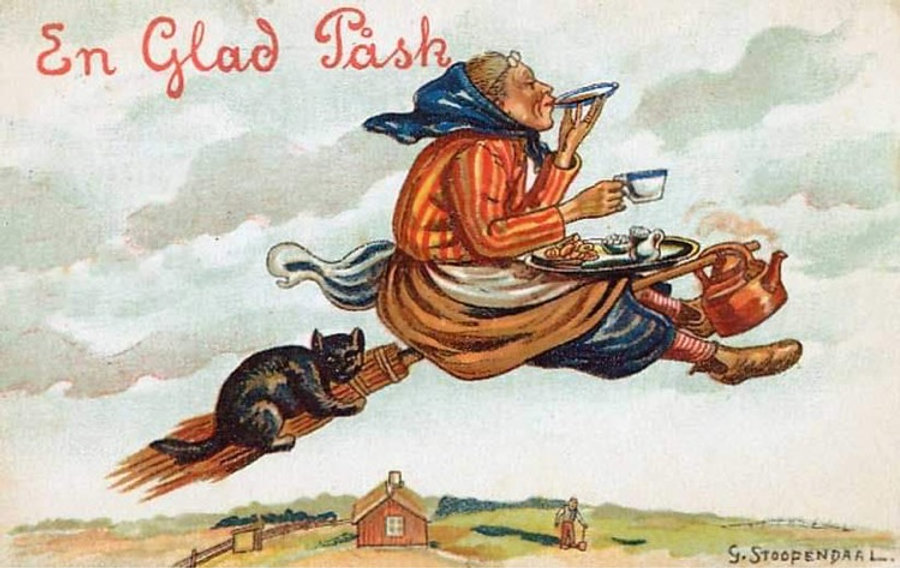
In Norway, Easter begins when the last human sound is sealed under snow and replaced by the soft, accusatory rustle of a crime novel. In Denmark, Easter begins when lunch achieves sentience; in Sweden, when the witches receive their municipal permits. No one remembers scheduling the Scandinavian Easter Convergence Event, but it simply appeared one year, some time ago.  

It appeared in the official calendars one year, between Maundy Thursday and Good Friday, announcing “Pan-Scandinavian Easter Alignment (mandatory, bring your own tradition).”

Erik from Norway arrived first, slaloming from a cabin that may or may not still exist.

“I have brought silence,” he announced, placing it carefully on the table. It hummed faintly, like distant snow.

“And suspicion.”

The Scandinavian Easter Convergence Event
The event takes place in a cabin that may or may not still exist. Photo: Fantastic Norway.

From his backpack, he removed seventeen identical crime novels. Each had a different title. Each had the same plot. “No one leaves,” he added, mostly to an orange.

Lars from Denmark did not arrive so much as continue.

The table unfolded with him—an infinite extension of herring, bread, schnapps, and decisions that had been made hours ago and could not be undone.

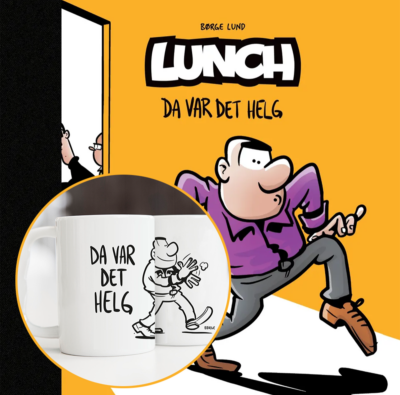
“We are slightly behind schedule,” Lars said, consulting a document labeled Lunch (Draft 14).
“We are only at Course 9 of 43.”

“Is there an end?” Erik asked.

Lars looked genuinely confused. “End?”

The Scandinavian Easter Convergence Event
Anna from Sweden descended from the sky in a slow, orderly drift.

Anna from Sweden descended from the sky in a slow, orderly drift, followed by a formation of children dressed as witches, each holding a clipboard.

“We apologize for the delay,” Anna said. “There was a queue system.”

One witch stepped forward. “We have categorized all available sweets into three groups: acceptable, optimal, and strategically acquirable.”

Another added, “We’ve also unionized the feathers.”

At that moment, a birch branch decorated with pastel plumes began negotiating.

Reality adjusted itself slightly to accommodate the meeting.

Time stretched. Snow fell upward. A faint choir sang something that might have been ABBA played backwards.

“Let us begin,” Anna said.

The Scandinavian Easter Convergence Event
“We are slightly behind schedule,” Lars said, consulting a document labeled Lunch (Draft 14).

Erik opened a book. Lars poured something that legally qualified as both drink and philosophy. The witches formed a semicircle of mild but persistent judgment.

Erik read:

The victim was found in a locked cabin—

“There are no unlocked cabins,” Lars said.

“—surrounded by clues that made no sense—”

“Ah,” said Anna. “Like this meeting.”

A witch raised her hand. “We believe the murderer is… the concept of leisure.”

Silence deepened. Erik wrote that down.

Lunch progressed.

It always progresses.

The Scandinavian Easter Convergence Event
The event simply appeared one year, some time ago.

Dishes appeared that had not been prepared. Toasts were made to ideas no one fully supported. At some point, everyone realized they had always been at this table.

Lars leaned toward Erik. “Have you noticed,” he whispered, “that no one has stood up?”

Erik nodded. “Classic closed-room scenario.”

Anna flipped through a binder labeled Festive Procedures, Vol. 7: Seasonal Mysticism.

“According to protocol,” she said, “we must now introduce symbolic absurdity.”

The witches nodded and released a chicken into the room.

It lay a painted egg labeled “CLUE.”

Erik picked it up carefully. “This changes everything.”

“Does it?” Lars asked.

“No,” Erik admitted. “But it feels important.”

Outside, the landscape had reorganized into something vaguely Scandinavian but slightly incorrect. Mountains looped. Forests repeated. A fjord appeared indoors and politely waited to be acknowledged.

The Scandinavian Easter Convergence Event
Somewhere, an orange remained under investigation.

A witch approached it, presenting a form.

“Are you natural or conceptual?” she asked.

The fjord declined to answer.

Hours—or centuries—passed.

The crime novel reached its conclusion for the twelfth time.

The killer,” Erik read slowly, “was… everyone.

Lars raised his glass. “That seems inefficient.”

Anna shook her head. “No, that’s consensus.”

The witches applauded politely.

At last, the Event reached its natural endpoint, which, like the Danish lunch, did not exist but was widely agreed upon.

Erik packed his silence. Lars folded a small portion of the table into his coat. Anna stamped the air “COMPLETED.”

“Same time next year?” Lars asked.

“There is no next year,” Erik said. “Only recurring narrative structure.”

Anna smiled. “Booked anyway.”

And as they dispersed—into snow, into lunch, into orderly witch-flight—the calendar quietly updated itself:

“Pan-Scandinavian Easter Alignment (successful, slightly unsettling).”

Somewhere, an orange remained under investigation.

We wish you all a Happy Easter!

The Scandinavian Easter Convergence Event, written by Tor Kjolberg, who admits he is not a Hans Christian Andersen, just a storyteller.


Germany’s Premier Island Vacation Destinations

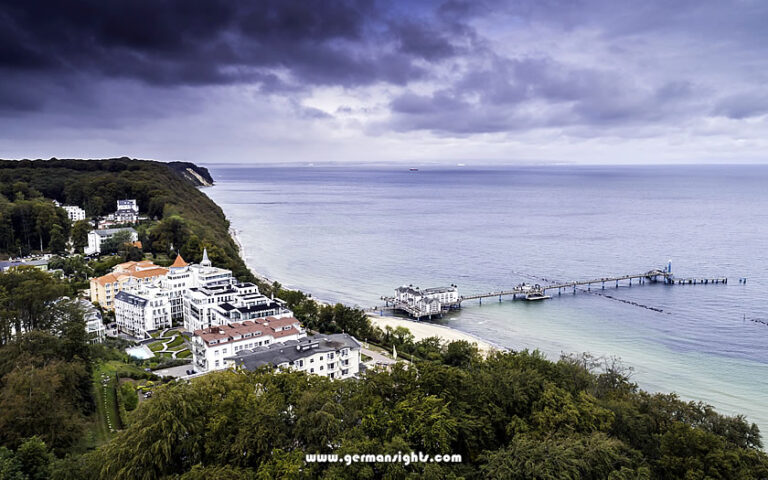
Rügen and Usedom, located in the Baltic Sea, were once a holiday paradise for East German union members. Today, they are popular vacation destinations, renowned for their long, white-sand beaches, historic seaside architecture, and natural beauty. Read on and learn more about Germany’s premier island vacation destinations.

Rügen offers dramatic chalk cliffs and rustic charm, while Usedom, the “Sunny Island,” features elegant imperial spas and a 45-km-long sandy beach that extends into Poland. Both islands are known for their serenity — those quiet postcard-perfect days during the summer when the calm ocean waters reflect a cloudless sky.

Germany’s Premier Island Vacation Destinations
Map of Rügen

**********************************************
Related: This year, You Can Go by Train from Copenhagen to Prague
**********************************************

On Rügen, the biggest German island, you can explore the smallest German national park, where the largest beech forests on the Baltic coast stretch across hills and stream valleys, enclosing sparse bogs and springs. On the famous white chalk coast, shady green forests meet the blue of the sea. UNESCO designated the rustic old beech forests in the heart of the national park as a World Heritage Site.

Germany’s Premier Island Vacation Destinations
From Rügen

A landmark of the island is the 118-meter-high Königsstuhl. Its viewing plateau offers sweeping views over the sea. Binz, the star among the seaside resorts on Rügen, has probably the most beautiful beach, very good hotels, and, above all, particularly attractive spa architecture. Sassnitz is a little quieter, and Göhren is known for its Victorian-era architecture.

The important traffic junction on the island has a charming old town full of winding alleys and white buildings, in the most beautiful seaside resort architecture. The listed “Colossus of Prora”, a former vacation complex more than four kilometers long, is now used as a museum, a documentation center, an apartment complex, and a youth hostel. Exciting insights into the world between and above the treetops are offered by the treetop path in the Rügen Natural Heritage Center.

Don’t miss the “Rasender Roland” historic narrow-gauge steam train.

**********************************************
Related: Future Road and Rail Tunnel Linking Denmark to Germany
**********************************************

Germany’s Premier Island Vacation Destinations
Map of Usedom

The Island of Usedom is known for serenity. On Usedom’s legendary promenade, you can experience the Art Deco villas confiscated from Jewish owners during World War II or the unsightly DDR-Turm, a remnant of the East German times.

To manage traffic on the single main road of Usedom, especially during peak season, they offer flexible arrival and departure days, and even a pick-up service for guests arriving by train. Its houseboats achieve an impressive occupancy rate of over 300 nights, so there’s not much room for more tourists. There’s also an emphasis on authentic, nature-based activities like canoeing and hiking.

Germany’s Premier Island Vacation Destinations
Beacvh on Usedom. Photo: Wikipedia

Usedom is not without reason one of the most popular German vacation islands. First and foremost, of course, there are the three imperial resorts of Ahlbeck, Heringsdorf, and Bansin. Numerous mansions and villas with whitewashed facades, small turrets, curved gables, and filigree ornaments give the three places their unmistakable flair. In addition, you can stroll along the longest pier in Heringsdorf and the oldest in Ahlbeck. And the 8.5-km-long European promenade from Ahlbeck, Germany, to Swinemünde, Poland, also runs here.

Germany’s Premier Island Vacation Destinations
Mecklemburg, Usedom

Away from the three seaside resorts, there are still Europe’s largest butterfly farm in Trassenheide or the Historical-Technical Museum in Peenemünde to visit. Large parts of the island are under nature protection. The best way to explore the surprisingly wooded and lake-rich interior of the island is on one of the many hiking or biking trails.

This area is quietly redefining what it means to be a sustainable tourist destination. Far from mere buzzwords, sustainability here is integrated into the DNA of business operations, nature preservation, and strategic planning, driven by local pioneers committed to a greener future.

Germany’s Premier Island Vacation Destinations, compiled by Tor Kjolberg

Why Storytelling in Brand Marketing Is More Important Than Ever—and Why It Can No Longer Belong to Marketing Alone

Storytelling has been around for centuries. The earliest humans gathered around the campfire and figured out that effective storytelling was the best way to pass on information vital for survival. Today, storytelling in brand marketing is more important than ever—and it can no longer belong to marketing alone.

Fast-forward 10,000 years or so, and we see that the emergence of the web, mobile accessibility, social media, and artificial intelligence has changed some of the ways we tell stories.

Today, it is essential to help our teams to understand that if we think and act like a publisher, we will create more of the content our customers are looking for.

For years, storytelling in brand marketing was treated as a creative layer—a way to make campaigns more engaging, emotional, and memorable. Today, that framing is obsolete. Storytelling is no longer a surface-level tactic. It is a core strategic capability, and increasingly, a defining factor in whether a brand is trusted, differentiated, and ultimately chosen.

However, there is a critical shift that many organizations have yet to fully internalize: storytelling is no longer something marketing can own in isolation. In a complex, multi-touchpoint world, a brand’s story is only as strong as its ability to be consistently delivered across the entire organization.

In other words, storytelling has become an operational discipline.

Why Storytelling in Brand Marketing Is More Important Than Ever—and Why It Can No Longer Belong to Marketing AloneThe End of Attention, the Rise of Narrative

We operate in an environment of extreme content saturation. Audiences are exposed to thousands of messages daily, most of which are ignored within seconds. Traditional value propositions—faster, better, cheaper—rarely break through on their own. What does cut through is narrative: something that creates meaning, context, and emotional resonance.

Stories do what isolated messages cannot. They build memory structures. They give customers a reason to care, not just a reason to buy.

At the same time, trust dynamics have shifted. Consumers are more skeptical, more informed, and more sensitive to inconsistencies. A brand can no longer rely on polished campaigns to shape perception if the lived experience tells a different story. Credibility now depends on coherence—on whether what a brand says aligns with what it does.


The Illusion of Marketing-Controlled Storytelling

Many organizations still operate under an outdated model: marketing defines the brand story, and the rest of the business executes independently. This creates a fundamental disconnect.

Marketing may articulate a compelling narrative about simplicity, innovation, or customer-centricity. But that narrative is not experienced through ads alone. It is experienced through product interfaces, sales conversations, onboarding flows, and support interactions.

When those touchpoints are misaligned, the story collapses.

A company that claims simplicity but delivers a confusing product experience undermines itself. A brand that promises partnership but pushes aggressive sales tactics erodes trust before the relationship begins. A narrative built externally but unsupported internally quickly reveals itself as fiction.

The consequence is what can be described as a “brand gap”—the distance between what is promised and what is delivered. In today’s environment, that gap is both visible and costly.

Why Storytelling in Brand Marketing Is More Important Than Ever—and Why It Can No Longer Belong to Marketing AloneWhy Storytelling Must Become Cross-Functional
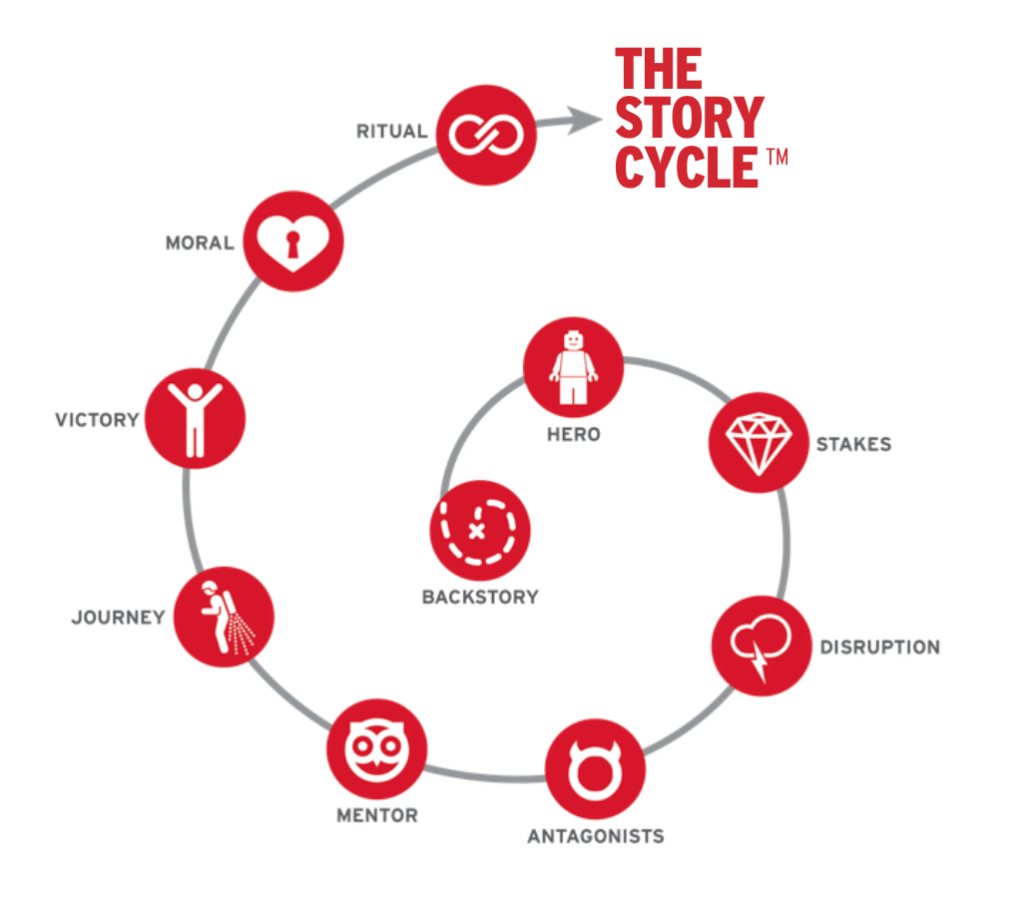
To close that gap, storytelling must extend beyond marketing and into the core of how the organization operates.

Product teams, for example, are not just building features; they are shaping the most tangible expression of the brand. Every design decision, every workflow, every prioritization either reinforces or contradicts the narrative. A brand story about empowerment must be reflected in intuitive, enabling user experiences—not just in messaging.

Sales teams, meanwhile, are often the first human interface with the brand. They translate the story into dialogue, framing how prospects understand value and intent. If their materials, tone, or incentives diverge from the brand narrative, credibility is lost at the point of entry.

Customer support plays an equally critical role. It is where promises are tested under pressure. Responsiveness, empathy, and clarity are not just service metrics—they are narrative proof points. When support experiences align with the brand story, trust is reinforced. When they do not, even the strongest campaigns cannot compensate.

Internally, the role of HR and leadership is foundational. Employees are not just executors of strategy; they are carriers of the story. If they do not understand it, believe in it, or see it reflected in the culture, it will not scale externally. Employer branding and customer branding are no longer separate domains—they are expressions of the same underlying narrative.

Why Storytelling in Brand Marketing Is More Important Than Ever—and Why It Can No Longer Belong to Marketing AloneFrom Output to Infrastructure

What emerges is a different way of thinking about storytelling—not as content, but as infrastructure.

Organizations that succeed in this environment treat storytelling as a shared system. They define a clear narrative framework—mission, positioning, values, tone—and ensure it is not confined to a brand book, but embedded in how teams operate.

This requires deliberate cross-functional alignment. Teams need to understand not just the story itself, but their role in delivering it. The product must ask how features express the narrative. Sales must align with how they frame conversations. Support must reflect it in every interaction.

It also requires governance. Stories are not static; they evolve with the business and the market. Continuous feedback loops between customer insights, product development, and brand strategy are essential to maintain coherence over time.

Perhaps most importantly, it requires internal storytelling before external amplification. Organizations that fail to align internally often overcompensate externally—producing increasingly polished narratives that the actual experience cannot sustain.Why Storytelling in Brand Marketing Is More Important Than Ever—and Why It Can No Longer Belong to Marketing AloneMaking It Practical

For leaders, the implications are clear. Storytelling must be operationalized.

This starts by involving multiple functions in creating the brand narrative, not just marketing. It continues by developing usable guidelines—tools that translate abstract positioning into practical decisions across teams.

Cross-functional workshops can be particularly effective, forcing teams to answer a simple but powerful question: how does our function deliver this story in practice?

Regular audits are equally important. Every customer touchpoint should be evaluated not only for performance, but for narrative alignment. Does the experience match the promise?

Finally, incentives matter. If teams are measured solely on functional metrics—conversion rates, ticket resolution times, feature velocity—without regard for consistency of experience, misalignment will persist. Storytelling must be reflected, directly or indirectly, in how success is defined.

Why Storytelling in Brand Marketing Is More Important Than Ever—and Why It Can No Longer Belong to Marketing AloneThe New Standard

In a world where every brand can publish, differentiation no longer comes from having a story. It comes from living one.

The organizations that will stand out are not those with the most creative campaigns, but those with the highest degree of internal alignment—where narrative and experience are inseparable.

Storytelling, in this context, is not a marketing function. It is an organizational discipline. And for companies willing to treat it as such, it becomes a durable competitive advantage.

Why Storytelling in Brand Marketing Is More Important Than Ever—and Why It Can No Longer Belong to Marketing Alone, written by Tor Kjolberg

My articles on storytelling are published every Monday. Here is the complete list:
The Story of Storytelling in Marketing
We Remember a Good Story
What Makes a Story Stick?   
10 Best Books on Storytelling for Brands