

Simon’s Golf Club: Denmark’s 27-Hole Coastal Challenge

0

Most golfers who visit Copenhagen stick to the city’s more well-known courses. But 35 kilometers north, tucked into the countryside of Helsingør Municipality, sits a course that changed Danish golf forever: Simon’s Golf Club: Denmark’s 27-Hole Coastal Challenge 

Simon’s Golf Club opened in 1993. Founder Arne Simonsen, a shipping magnate, wanted to build something that could match the championship courses of Britain. He hired Martin Hawtree to design 27 holes, and 10 years later, the course hosted Denmark’s first European Tour event.

The engineering here matters as much as the design. Denmark’s weather can be bad enough to shut down most courses, but an advanced drainage system keeps these greens and tees playable year-round. That’s rare. It means Simon’s never closes for long stretches, unlike other Nordic courses.

Greats like Ian Poulter and Colin Montgomerie have won on these fairways. But the course welcomes weekend players too. If you’re in Copenhagen, don’t overlook this beauty. Its history and playability make it bucket-list-worthy.

Simon’s Golf Club: Denmark’s 27-Hole Coastal Challenge
When Arne Simonsen commissioned the British architect Martin Hawtree, he asked for a course that could challenge Europe’s best players but still be quite easily playable for club members.

Martin Hawtree’s 27-Hole Design 

When Arne Simonsen commissioned the British architect, he asked for a course that could challenge Europe’s best players but still be quite easily playable for club members. Hawtree delivered something unusual for Scandinavia: three distinct 9-hole loops that could be mixed and matched depending on the wind, specific tournament needs, or just for a bit of variety.

The A, B, and C Loops 

The A and B loops are the main championship combination, measuring 6,453 meters from the back tees and par 72. Both nines flow through similar terrain but offer different strategic puzzles. The C loop, which was added in 2007, stretches to 3,265 meters and holds its own as a championship-length nine.

Players can choose from six different 18-hole combinations: 

  • A+B
  • B+C
  • C+A
  • 2x any single loop

Most visitors play A+B, which is exciting because it hosted the 2003 Nordic Open. The flexibility of this layout means the course never feels repetitive, even for members who play several times a week.

Simon’s Golf Club: Denmark’s 27-Hole Coastal Challenge
Simons A and B loops.

Playing Character: Open Parkland with Coastal Influences 

Simon’s was made to be open parkland rather than traditional links, but the coastal location makes quite a big difference to how the course plays. Gently curvy fairways roll through rural countryside, framed by stretches of woodland that look beautiful, but deceivingly funnel wind on blustery days. The terrain climbs and falls just enough to add interest without being exhausting.

Strategic bunkering guards the greens, which tend to be on the large side with a fair bit of internal contouring. Hawtree used water selectively. The C-nine features more water hazards than the original loops, including carries that need careful club selection. Ladehøj Lake takes up most of the visual landscape around the clubhouse, appearing on several holes as both a scenic backdrop and a strategic threat if your game is less confident.

All-Season Nordic Golf 

Most Scandinavian courses close for months during winter or become unplayable after heavy rain. Simon’s stays open except during snow cover or severe frost. The subsurface drainage system moves water off the greens and tees quickly enough that play can resume within a few hours of a storm.
Simon’s Golf Club: Denmark’s 27-Hole Coastal Challenge
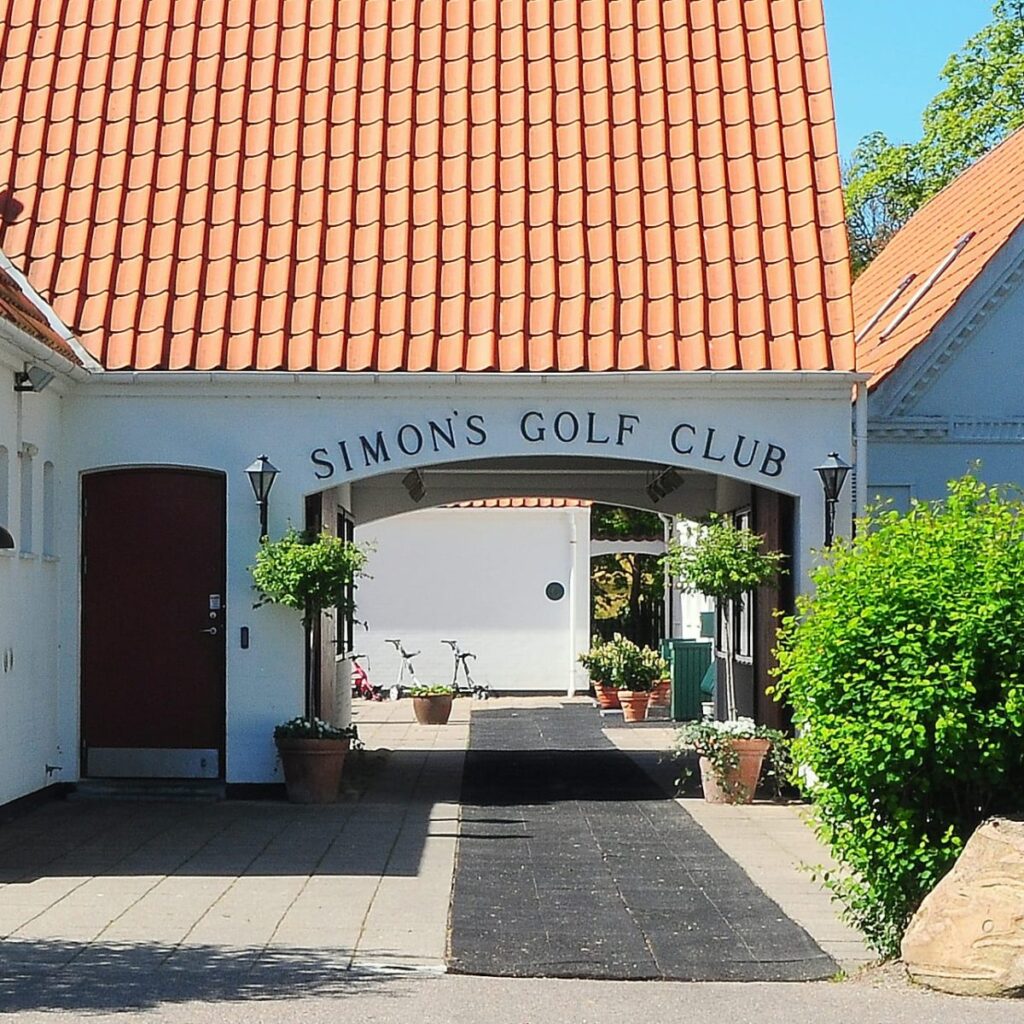
The clubhouse sits at the meeting point of the 9th and 18th greens.

Clubhouse Life, Hospitality, and Stay & Play 

Golf courses often treat their clubhouses as afterthoughts. But not Simon’s. The clubhouse sits at the meeting point of the 9th and 18th greens, and every window frames either Ladehøj Lake or the course. It’s designed to be a destination in itself.

English-Style Clubhouse and Albatross Bar 

The Albatross Bar spans two floors, with interiors that lean heavily into the English golf tradition. High-backed leather chairs cluster around a fireplace at ground level, giving it an upmarket yet warm feel. Upstairs, more private tables overlook the lake and finishing holes.
Simon’s Golf Club: Denmark’s 27-Hole Coastal Challenge
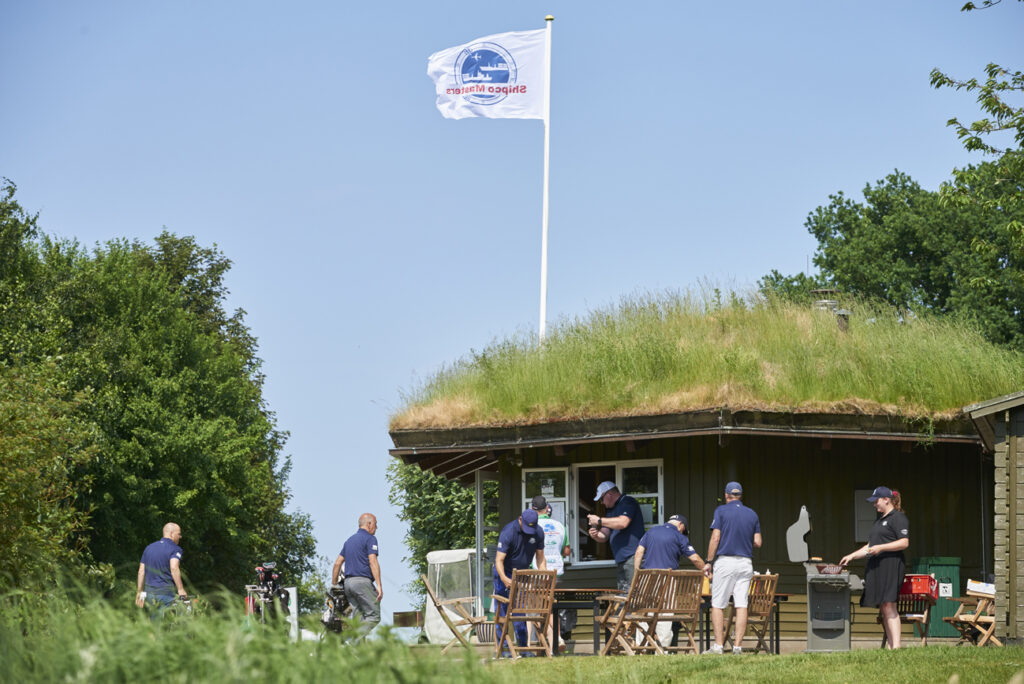
From Simons facilities.

Lakeside Restaurant 

Lakeside Restaurant operates separately from the bar, offering full dining with terrace seating when weather permits. The menu is nicely balanced between Danish and international dishes, scaled for both quick post-round meals and longer celebrations.

Off-Course Comforts 

The pro shop stocks equipment and apparel, and Head Golf Professional James Petts is available for lessons.

Spacious changing rooms feature full shower facilities and a dedicated bag storage and drying room for wet weather gear, so you don’t have to worry about going home with damp clothing. A VIP room adds bath and sauna facilities for members and special events.

Simon’s Golf Club: Denmark’s 27-Hole Coastal Challenge
Hotel Nybogaard. Photo: Tripadvisor.

Hotel Nybogaard and Corporate Golf Days 

Hotel Nybogaard sits right by the 1st green, in historic buildings that date back to 1688. The 36-room property has a “manor house” character while offering modern amenities. Guests can walk directly onto the course, which is one of the things golfers love about this place.

Corporate golf days are a major part of Simon’s business model. Companies can book packages combining meetings, championship golf, and dining at Lakeside Restaurant or the hotel’s banquet facilities.

Planning Your Round at Simon’s 

Simon’s Golf Club welcomes visitors but keeps high standards that protect the course and pace of play. Understanding the access rules and local expectations helps ensure a smooth experience.

Visitor Access and Practicalities 

Weekdays are the most straightforward access for visitors. You can book tee times in advance by contacting the pro shop directly. Proof of handicap and club membership are mandatory (maximum 25 for junior golfers, men and women, though Hotel Nybogaard guests receive a slight concession at 30).

Simon’s Golf Club: Denmark’s 27-Hole Coastal Challenge 

Weekend play is limited for guests. You need to either be a guest at the hotel, or have a member join you for your round. This policy keeps weekend play manageable for members while still allowing serious golfers who’ve booked accommodation to experience the course.

Players generally walk at Simon’s, following the Nordic tradition of treating golf as both sport and exercise, but golf carts are available for hire if needed. Soft spikes are mandatory regardless of the conditions.

Training and Practice 

There’s a driving range, chipping green, putting green, and a 3-hole course for training something specific or warming up. If you’re a guest, you’ll get golf balls for the range built into your green fees.

There’s also a well-kitted-out Indoor Training Center, but it’s only available to members. Guests can’t access it even as a guest of a member, so if you’re here often, consider becoming a member to enjoy this special perk.

When to Go and What Else to See 

Simon’s drainage system makes it playable nearly year-round, but late spring through early autumn is the best combination of weather and course conditions. May and September have fewer crowds than peak summer, and you’ll still get long daylight hours and comfortable temperatures.

Don’t miss some of the other exciting attractions nearby. Fredensborg Palace, the Danish royal family’s summer residence, sits close enough for an afternoon visit. The Louisiana Museum of Modern Art is well worth a visit for anyone interested in artwork and architecture.

Simon’s Golf Club: Denmark’s 27-Hole Coastal Challenge 

Kronborg Castle, the actual setting of Elsinore in Shakespeare’s Hamlet, overlooks the sound between Denmark and Sweden. Sandy beaches stretch along the coast, giving you some pretty walking routes when you need a break from golf.

Why Simon’s Belongs on Your Scandinavian Golf List 

Championship courses can intimidate casual players, but Simon’s avoids that through its “build-your-own-course” structure, which allows players to match their round to their ability. The 27-hole layout means six different combinations, giving you several days of golf from one base while balancing rounds with the cultural richness and natural beauty that define this corner of Denmark.

Simon’s fits naturally into a broader Scandinavian golf itinerary. Pair it with Royal Copenhagen, or build a Nordic loop that includes Sweden’s coastal courses.

Simon’s Golf Club: Denmark’s 27-Hole Coastal Challenge
Jordan Fuller

About the Author 

Simon’s Golf Club: Denmark’s 27-Hole Coastal Challenge, written explicitly for Daily Scandinavian by Jordan Fuller. Jordan is a retired golfer and businessman. When he’s not on the course working on his own game or mentoring young golfers, he writes in-depth articles for his website, Golf Influence. He is a regular writer for Daily Scandinavian.
You might also like to read Golf and Wellness Retreats in Scandinavia: The Perfect Balance, written by Jordan Fuller.

Feature image (top) © Simon’s Golf Club’s Facebook page

Finding Peace in Times of Internal or External Conflict

Whether uncertainty exists in our personal lives or in the broader events unfolding across the world, it can sometimes feel as though the weight of it all bears heavily on both mind and body. Here is some advice on finding peace in times of internal or external conflict.

  In moments like these, having practical strategies to steady ourselves can make a meaningful difference. As a health professional specializing in mind-body connections, I recognize two especially helpful techniques in uncertain times: emotional regulation and somatic practices for well-being. I hope readers may find these useful.

Sitting with emotions: validating sadness, anger, or numbness

When difficult emotions arise, our instinct is often to push them away. Many people cope by turning to behaviors that temporarily numb discomfort, such as overeating, drinking alcohol, overworking, spending too much time without physical activity, or withdrawing from social connections. These things prevent us from fully processing our feelings. Even if one is not engaging in unhealthy behaviors per se, suppressing emotions can be detrimental to well-being. Learning to sit with our emotions is an important part of emotional regulation and feeling healthy overall.

This practice involves observing emotions with curiosity rather than judgment. Instead of thinking, “Something is wrong with me for feeling this way,” we can shift toward a more balanced perspective, such as “this is what sadness feels like right now, emotions naturally ebb and flow.” This mindset reflects mindful awareness, a concept widely supported in psychology as a means of building emotional resilience. When we acknowledge emotions without immediately reacting to or suppressing them, we allow space for those feelings to move through us rather than becoming overwhelming.

Approach the feeling with curiosity and ask yourself where it might be coming from, rate the level of discomfort it brings, and maybe locate where on your body you are holding this emotion (tight neck, etc.). The goal is not to fix the emotion immediately, but to allow it to exist without resistance. With time, emotions tend to pass on their own. When we allow them to ebb and flow naturally, they are less likely to linger or quietly build beneath the surface.

Finding Peace in Times of Internal or External Conflict
Sacred rage: an excersise designed release excess anger from the body. Photo: Neurofit

Somatic practices: Somatic techniques are mindful, body-centered approaches focused on breathwork, awareness of internal sensations, and other practices designed to improve well-being. They are helpful when practicing sitting with emotions as well. Somatic techniques help the body to help regulate the nervous system during internal or external conflicts. When we encounter stress, the body often shifts into a heightened sympathetic state, commonly known as the “fight-or-flight” response.

This can manifest physically as muscle tension, shallow breathing, restlessness, or a racing heart. Somatic practices work by engaging the body directly to signal safety to the nervous system and restore a sense of balance. One simple technique is diaphragmatic breathing, in which slow, deep breaths expand the belly rather than the chest, helping to lower heart rate and reduce cortisol levels. Another effective practice is progressive muscle relaxation, which involves intentionally tensing and then slowly releasing different muscle groups from head to toe to reduce physical tension and increase awareness of where stress may be stored in the body.

Grounding exercises, such as the “5-4-3-2-1” sensory technique, are a great somatic practice in which a person identifies five things seen, four things felt, three things heard, two things smelled, and one thing tasted. This helps to anchor attention to the present moment and intercepts anxious thought cycles. Gentle movement practices like slow stretching or somatic shaking (often found in qi gong, involving light shaking of the arms, legs, or shoulders for a few minutes along with deep breathing) can also help release accumulated tension and reestablish a sense of physical ease. Yoga is another practice that can relax the body and mind and bring overall awareness. Regularly engaging in these somatic mind-body techniques can improve emotional regulation, helping individuals respond to stress with greater clarity, stability, and resilience.

In our current world, we are experiencing rising levels of both internal and external stress. Implementing techniques such as sitting with emotions and other somatic practices can be greatly beneficial. Try them out, stay consistent for positive results, and remember to be gentle on yourself.

Finding Peace in Times of Internal or External Conflict
Nicole Hammond

Finding Peace in Times of Internal or External Conflict, written explicitly for Daily Scandinavian by Nicole Hammond. Nicole is a health educator, coach, and wellness writer with a Master of Science in Health and Human Performance and a Bachelor of Science in Health Science.  She also holds certifications in stress management, coaching, and feng shui design.  She enjoys writing, researching, creating, and facilitating in the areas of health and creating balance in mind, body, and the home.  In her spare time, Nicole enjoys reading, cooking, traveling, exercising, and spending time with her family, including her two golden retrievers and cocker spaniel.

Other articles by Nicole Hammond:
Finding Peace and Calm in the Home Through Hygge and Feng Shui
A Balance Blueprint: From Mind and Body Connection to Blood Sugar in 2026

Unique Scandinavian Festivals And What They Mean Today

Scandinavia bursts to life with festivals that celebrate culture, nature, and community in unforgettable ways. From the fiery spectacle of Walpurgis Night to the joyful whirl around the Midsummer maypole, these unique Scandinavian festivals weave together generations and centuries-old traditions. Learn more about the unique Scandinavian festivals and what they mean today.

Towns and cities come alive with parades, music, and seasonal feasts that showcase local heritage. Revelers don traditional costumes, sing folk songs, and savor foods tied to the land, creating moments of pure joy and connection. While modern tourism adds excitement, communities carefully preserve the customs that define them. Dive into the magic of these festivals and experience firsthand the vibrant blend of tradition, celebration, and togetherness that makes Scandinavia truly unforgettable.

Fire and Light: The Meaning of Walpurgis Night in Modern Scandinavia

Fire lights up the Nordic sky, and crowds gather to celebrate unique Scandinavian festivals that honor spring and shared heritage. Walpurgis Night grew from pagan spring rituals that praised light and growth. Today, people in Sweden and Finland build towering bonfires to ward off the winter. Flames crackle, choirs sing, and students lead joyful processions through city squares. Villages host smaller gatherings filled with local songs and stories. In fact, the celebration now strengthens social unity across generations. However, urban concerts create a different mood than quiet rural events. Young people embrace the festival for connection and cultural pride. Families share traditions with purpose and energy each year.

Dancing Around the Maypole: Midsummer as a Cultural Identity Marker

In Sweden, Midsummer brings communities together to honor summer and seasonal cycles. Villagers raise a maypole decorated with greenery and flowers, and families join hands to dance in circles while singing folk songs. Children run through fields wearing floral crowns, and adults wear traditional clothing that reflects local heritage. Seasonal foods like fresh potatoes, herring, and strawberries appear on every table, connecting meals to the land. Similarly, rituals celebrate sunlight, nature, and communal life, encouraging pride in heritage. Tourists attend the events each year, adding energy while respecting customs. Music, laughter, and shared stories keep the tradition alive. Families teach younger generations the songs, dances, and practices that define Midsummer, ensuring continuity for years to come.

A Midsummer statue
Midsummer unites families through maypole dances, floral crowns, and seasonal feasts. Image: Mikael Kristenson/Unsplash

Ice, Snow, and Art: Creativity at the Icehotel Winter Events

In northern Sweden, artists and builders create an entire hotel from ice and snow, which stands as a temporary masterpiece each winter. Guests explore intricately carved rooms, art installations, and themed suites that showcase Arctic creativity. Sculptures melt each spring, reminding visitors of nature’s impermanence. Hence, the Icehotel encourages reflection on climate, creativity, and cultural identity. Every corridor and artwork tells a story of adaptation and imagination. Visitors also gain practical advice for traveling in northern regions. If you decide to make a visit, you should find short-term storage solutions for professionals traveling abroad to ensure a worry-free overseas trip. This way you will be combining artistry with convenience. Guides will explain local history, while artists interact with guests to share inspiration. Visitors also gain practical advice for traveling in northern regions.

Between Pagan Roots and Christian Faith: St. Lucia Day

Each December, communities in Norway and Sweden honor Saint Lucia by celebrating light during the darkest season. Girls dress in white robes, and one wears a crown of candles to lead processions through schools and town halls. Choirs perform ancient songs that link winter solstice rituals with Christian tradition, and families gather to enjoy saffron buns and warm drinks. In contrast, some events focus more on cultural heritage than religion. Nevertheless, hope and light remain central themes, connecting generations. Children learn songs and practices, while communities host workshops to engage participants.

Three girls in white dresses dancing in the nature
St. Lucia Day stands out in unique Scandinavian festivals, blending winter solstice customs with Christian traditions. Photo: Mikka Luotio/Unsplash

Viking Echoes: The Legacy of Up Helly Aa

Each winter in Shetland, locals honor their Norse ancestry with a torch-lit procession that lights up the long nights. During Up Helly Aa Day, many people in costumes carry torches through Shetland’s capital. Participants craft detailed Viking costumes and rehearse processions for months, while communities gather to watch as a wooden longship burns. The flames celebrate history, courage, and communal pride. On the other hand, the festival draws tourists who enjoy the spectacle and local culture. Organizers carefully balance heritage with visitor safety. Students and young residents join the squads to learn teamwork, storytelling, and tradition. Through songs, speeches, and shared meals, the festival passes knowledge from older to younger generations.

A wooden statue burning
Up Helly Aa honors Norse heritage with torch-lit processions and Viking longship burnings. Photo: Ella Peebles/Unsplash.

Tradition Meets Modern Values: The Future of Nordic Celebrations

Nordic festivals continue to evolve as communities embrace sustainability and environmental awareness. Organizers introduce eco-friendly practices at events, from renewable energy to zero-waste initiatives, while maintaining traditional performances and rituals. For this reason, celebrations balance heritage with modern responsibility. Communities also focus on inclusion and diversity, ensuring that everyone can participate in cultural activities regardless of background. Technology plays a growing role, with live streams, interactive apps, and digital guides enhancing engagement without replacing hands-on experiences. Governments and local organizations provide support to keep these events thriving. Younger generations influence the direction of celebrations, experimenting with creative interpretations and new ideas.

Celebrating Heritage and the Lasting Impact of Unique Scandinavian Festivals

Unique Scandinavian festivals continue to bring communities together, blending centuries-old traditions with modern celebrations. From fire rituals to summer dances, these events preserve cultural identity while welcoming new generations. In short, they inspire connection, joy, and pride. Celebrate the heritage and energy of these festivals wherever you travel next.

Meta Description: Discover unique Scandinavian festivals and their meaning today, from Viking fire rituals to Arctic traditions shaping Nordic identity.

Unique Scandinavian Festivals And What They Mean Today
Mark Anderson

Unique Scandinavian Festivals And What They Mean Today, written explicitly for Daily Scandinavian by Mark Anderson. Mark is a cultural travel writer who explores traditions and festivals across Europe. He specializes in Scandinavian heritage, sharing insights on local customs and seasonal celebrations. His work inspires readers to experience authentic cultural events and connect with communities around the world.
Feature image (top): © Anna Delliou/Unsplash

The Nordic Art of Slow Creating: How Scandinavian Culture Inspires Mindful Making

Long before wellness apps existed, Scandinavians had already figured out how to survive the dark months — by making something beautiful. In this article, you can learn about the Nordic art of slow creating: How Scandinavian culture inspires mindful making.

In farming communities across Norway, Sweden, and Finland, the arrival of winter didn’t signal a retreat from life. It signaled an invitation to create.

That tradition is older than most of us realize, and it carries a quiet wisdom that feels more relevant today than ever.

A Tradition Born from Long Winters

From roughly the 17th century onward, Scandinavian folk artists filled their winter hours with intricate handwork. Norwegian rosemaling — the sweeping floral scroll painting that decorated furniture, walls, and wooden household objects — emerged around 1750 as a way for rural communities to bring beauty into the long, dim months. Swedish craftspeople carved and painted Dala horses, those iconic red wooden figurines that were originally made to entertain children and decorate homes. In Finland, Himmeli — delicate geometric mobiles woven from rye straw — hung from ceilings to mark the rhythm of seasons.

None of this was “fine art” in the gallery sense. It was purposeful making: hands occupied, mind focused, something tangible and beautiful taking shape from raw materials. The craft itself was the point.

This spirit maps almost perfectly onto what we now call hygge — the Danish and Norwegian concept of cozy, restorative presence. Hygge is often described as the antidote to hustle culture: slowing down, returning to simple pleasures, letting the nervous system settle. And what better embodies that than sitting quietly at a table, brush in hand, building something, patient stroke by patient stroke?

The Nordic Art of Slow Creating: How Scandinavian Culture Inspires Mindful Making
Cozy Scandinavian interior with warm candlelight, wooden table, art supplies, and a half-finished painting — evoking hygge and slow creative evenings.

What Nordic Wellness Philosophy Tells Us About Making Art

Scandinavian cultures have given us a remarkable cluster of concepts that all point in the same direction. Hygge (Denmark/Norway) centers warmth and togetherness. Lagom (Sweden) counsels balance — not too little, not too much, just the right amount of everything. Friluftsliv (Norway) champions connection to nature and unhurried outdoor time as essential nourishment.

What ties these ideas together is a deep resistance to perfectionism. None of them demands excellence. They demand presence.

That resistance to perfectionism is what makes art-making so fitting a vessel for these values. The folk artists of earlier centuries were not competing for gallery placement. They were practicing something closer to what psychologists today call a “flow state” — a condition of absorbed, effortful attention where self-consciousness dissolves and time moves differently. Research suggests that this kind of focused creative engagement lowers cortisol levels and activates the brain’s reward circuitry. Denmark consistently ranks among the happiest countries in the world despite its long dark winters, and hygge-oriented practices are widely credited as part of the reason why.

Art-making, in this framing, is not a hobby. It is a wellness practice with centuries of Nordic precedent.

The Modern Heir to the Folk Art Tradition

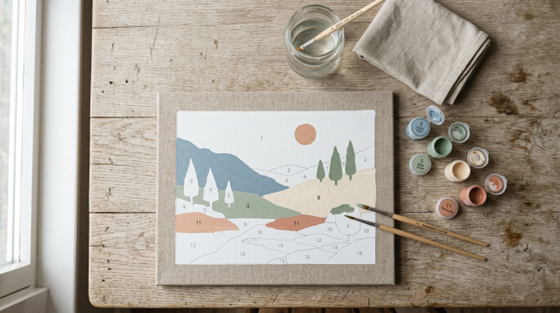
Today’s DIY art movement carries on this tradition in a form that anyone can access. Modern calming DIY art kits — paint-by-numbers sets designed for adults — are built on the same principle as rosemaling or Dala horse carving: guided, pressure-free creativity that prioritizes the act of making over the quality of the result. The numbered sections and pre-mixed paints remove the intimidation of the blank canvas. What remains is the meditative rhythm of brush on surface, color filling shape, and a growing sense of quiet accomplishment.

For people overwhelmed by screens and constant digital input, this kind of hands-on creating offers something increasingly rare: a screen-free hour that genuinely restores. Art therapists and wellness writers increasingly describe painting as “the new meditation” — particularly effective for people who find traditional seated meditation difficult, because the hands give the restless mind somewhere to go.

This is precisely the logic that Nordic folk crafters understood intuitively. The work was never separate from the rest of life. It was woven into evenings, into winter, into the domestic rhythms that gave the year its texture and meaning.

The Nordic Art of Slow Creating: How Scandinavian Culture Inspires Mindful Making
Overhead flat-lay of a paint-by-numbers kit in progress on a wooden table — brushes, numbered canvas, small paint pots — warm neutral tones evoking Scandinavian interior style.

The Emotional Language of Nordic Abstract Art

The Nordic tradition is not only about quiet, guided craft. It also produced some of the most emotionally raw and daring abstract art in history.

Sweden’s Hilma af Klint was painting large-scale geometric abstractions in the early 1900s — well before Kandinsky or Mondrian — driven by a belief that art could channel invisible truths about human consciousness. Norway’s Edvard Munch famously turned away from depicting outer reality to paint inner emotional states: anxiety, longing, grief rendered in swirling color and line. This emotional directness, the willingness to use abstraction as a language for feeling rather than description, runs deep in Nordic creative culture.

That lineage continues in contemporary Nordic-influenced abstract work. Art by Maudsch carries forward this tradition of bold color and emotional expressiveness — abstract paintings that speak in the same register as the Nordic masters: feeling-first, form as vehicle for inner life.

Where DIY art kits offer a structured, meditative entry point into making, abstract painting offers the other end of the creative spectrum: raw expression, color as emotion, the canvas as a place to put what words cannot hold. Both belong to the same long Scandinavian story about why humans need to make things.

The Nordic Art of Slow Creating: How Scandinavian Culture Inspires Mindful Making
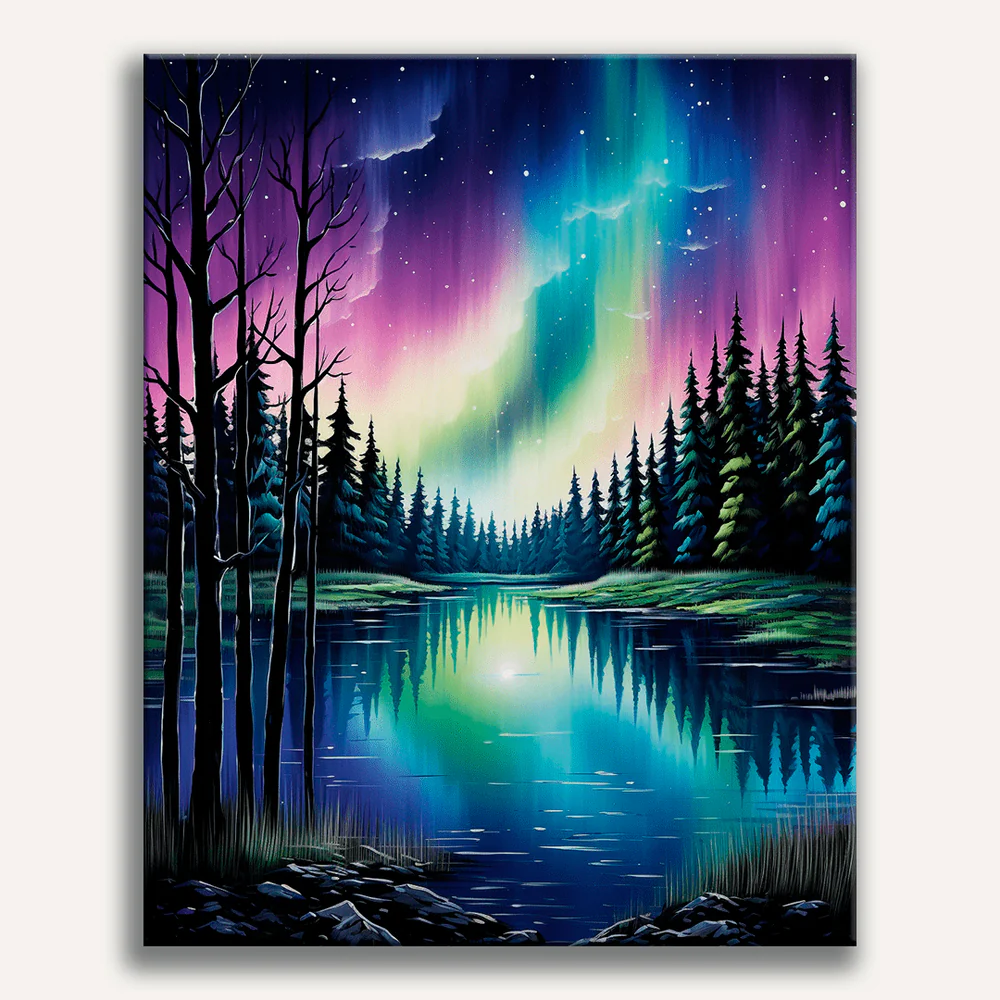
Aurora borealis, painting by NumberArtist.

Bringing the Tradition Home

You do not need to live through a Nordic winter to adopt its creative philosophy. The invitation is simpler than that: set aside an evening, put down the phone, and make something with your hands.

Whether you begin with a guided kit or hang an expressive abstract painting where you can absorb its mood daily, you are participating in something that Scandinavians have known for centuries. The act of creating — slowly, deliberately, without pressure — is not a luxury or a distraction from real life. It is one of the oldest and most effective ways to feel like yourself again.

In that sense, the Nordic art of slow creating was never just an art practice. It was always a practice of being.

The Nordic Art of Slow Creating: How Scandinavian Culture Inspires Mindful Making, written for Daily Scandinavian by NumberArtist. Feature image (top) © Unsplash.


10 Best Books on Storytelling for Brands

When brands use storytelling in their campaigns, they will not only create impact but will also move people to action. I have studied and practiced storytelling almost all my professional life, and in this presentation, I have selected what I consider the 10 best books on storytelling for brands.

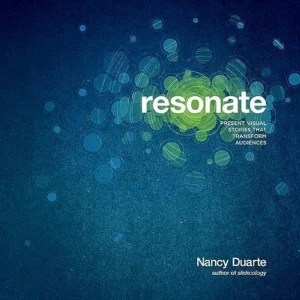
10 Best Books on Storytelling for Brands1. Nancy Duarte: Resonate – Present Visual Stories that Transform Audiences

This book is not only about storytelling, but it also reveals the underlying story form of all great presentations that will not only create impact but also move people to action.

Presentations are meant to inform, inspire, and persuade audiences. So why then do so many audiences leave feeling like they’ve wasted their time? All too often, presentations don’t resonate with the audience and move them to transformative action.

Resonate helps you make a strong connection with your audience and lead them to purposeful action. The author’s approach is simple: building a presentation today is a bit like writing a documentary. Using this approach, you’ll convey your content with passion, persuasion, and impact.

The author has a proven track record, including creating the slides for Al Gore’s Oscar-winning An Inconvenient Truth.

This book focuses on content development methodologies that are not only fundamental but will move.

*******************************************
Related: The Story of Storytelling in Marketing
*******************************************

10 Best Books on Storytelling for Brands2. Donald Miller: Building a StoryBrand – Clarify Your Message So Customers Will Listen

In this book, New York Times best-selling author Donald Miller uses the seven universal elements of powerful stories to teach listeners how to dramatically improve their connection with customers and grow their businesses.

3. Chip and Dan Heath: Made to Stick

”This book is a gift to anyone who needs to get a message across and make it stick,” wrote The New Statesman.

”Smart, lively . . . such fun to read” according to Guardian.

Mark Twain once observed, ”A lie can get halfway around the world before the truth can even get its boots on.” His observation rings true: urban legends, conspiracy theories, and bogus news stories circulate effortlessly. Meanwhile, people with important ideas – entrepreneurs, teachers, politicians, and journalists – struggle to make them ”stick”.

10 Best Books on Storytelling for BrandsIn Made to Stick, Chip and Dan Heath reveal the anatomy of ideas that stick and explain how to make ideas stickier, such as applying the Velcro Theory of Memory, using the human scale principle, and creating curiosity gaps. Along the way, they reveal that sticky messages of all kinds – from the infamous ”kidney theft ring” hoax, to a coach’s lessons on sportsmanship, to a vision for a new product at Sony – draw their power from the same six traits.
Made to Stick reveals the vital principles behind winning ideas – and tells us how we can apply these rules to making our own messages stick. It will transform the way you communicate.

”An entertaining, practical guide to communication,” wrote Financial Times.

”Anyone interested in influencing others… can learn from this book,’ according to the Washington Post

**********************************
Related: What Makes a Story Stick?
**********************************

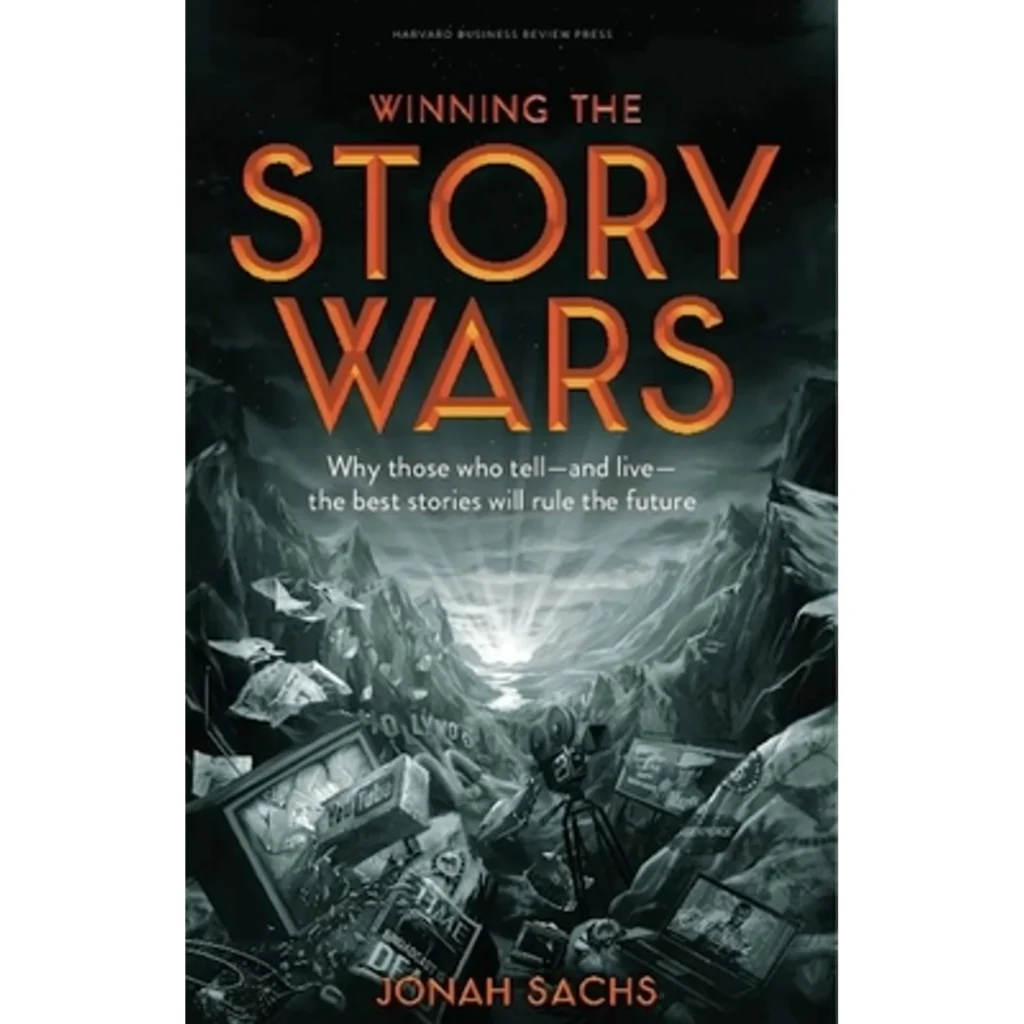
10 Best Books on Storytelling for Brands4. Jonah Sachs: Winning the Story Wars

The story wars are all around us. They are struggling to be heard amid the noise and clamor of the media. Today, most brand messages and mass appeals for causes are drowned out before they even reach us. But a few consistently break through the din, using the only tool that has ever moved minds and changed behavior: great stories.

With insights from mythology, advertising history, evolutionary biology, and psychology, viral storyteller and advertising expert Jonah Sachs takes readers into a fascinating world of seemingly insurmountable challenges and enormous opportunity.

This book is a call to arms for business communicators to cast aside broken traditions and join a revolution to build the iconic brands of the future. It puts marketers in the role of heroes with a chance to transform not just their craft but the enterprises they represent. After all, success in the story wars doesn’t come just from telling great stories, but from learning to live them.

10 Best Books on Storytelling for Brands5. John Truby: The Anatomy of Story 

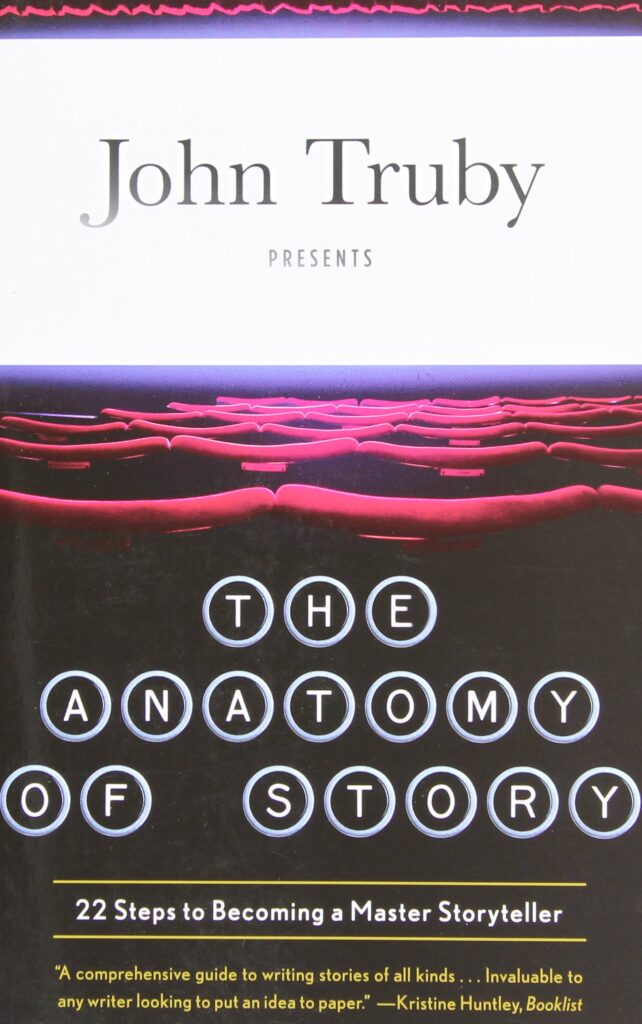
John Truby is one of the most respected and sought-after story consultants in the film industry, and his students have gone on to pen some of Hollywood’s most successful films, including Sleepless in SeattleScream, and ShrekThe Anatomy of Story is his long-awaited first book, and it shares all his secrets for writing a compelling script. Based on the lessons in his award-winning class, Great Screenwriting, The Anatomy of Story draws on a broad range of philosophy and mythology, offering fresh techniques and insightful anecdotes alongside Truby’s own unique approach to building an effective, multifaceted narrative.

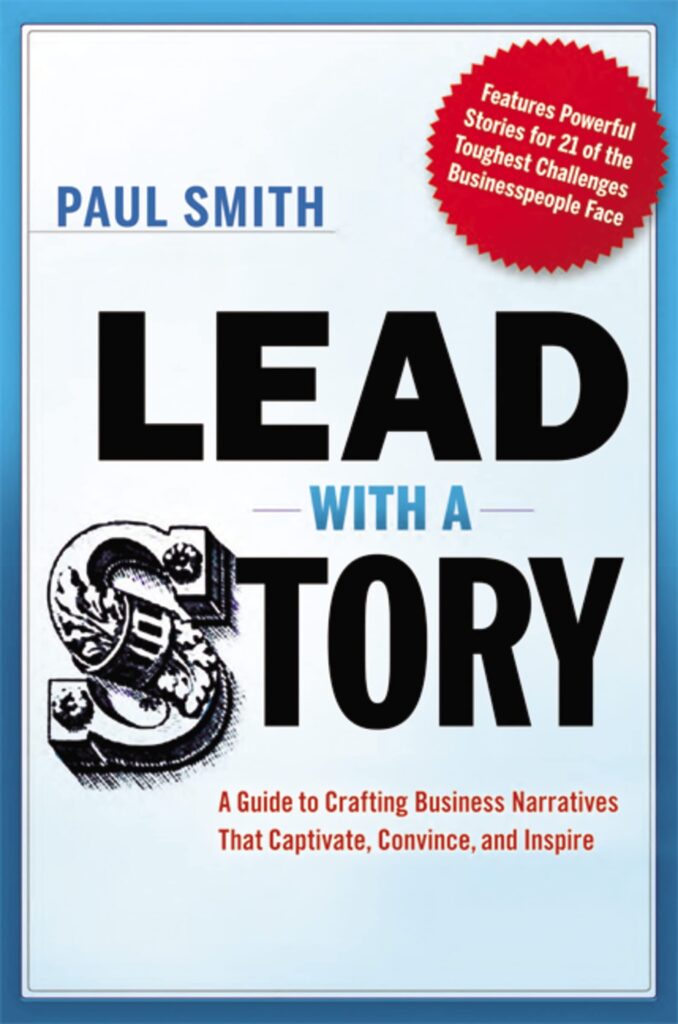
10 Best Books on Storytelling for Brands6. Paul Smith: Lead with a Story: A Guide to Crafting Business Narratives That Captivate, Convince, and Inspire
With clarity around your message, you will energize those you lead and create a vision they can buy into. But first, you must write the story that will get them excited and ready to execute.

Clarity is key for any successful leader, so much so that top corporations, such as Microsoft. Nike, Procter & Gamble, Kimberly-Clark, and many more have incorporated storytelling into their leadership training programs. These companies know that before you can become a strong leader, you must first master the art of storytelling to communicate your vision to your team and inspire them to execute on objectives.

If you want to be a leader others want to follow, you must master storytelling and use it to communicate a vision your team can support.

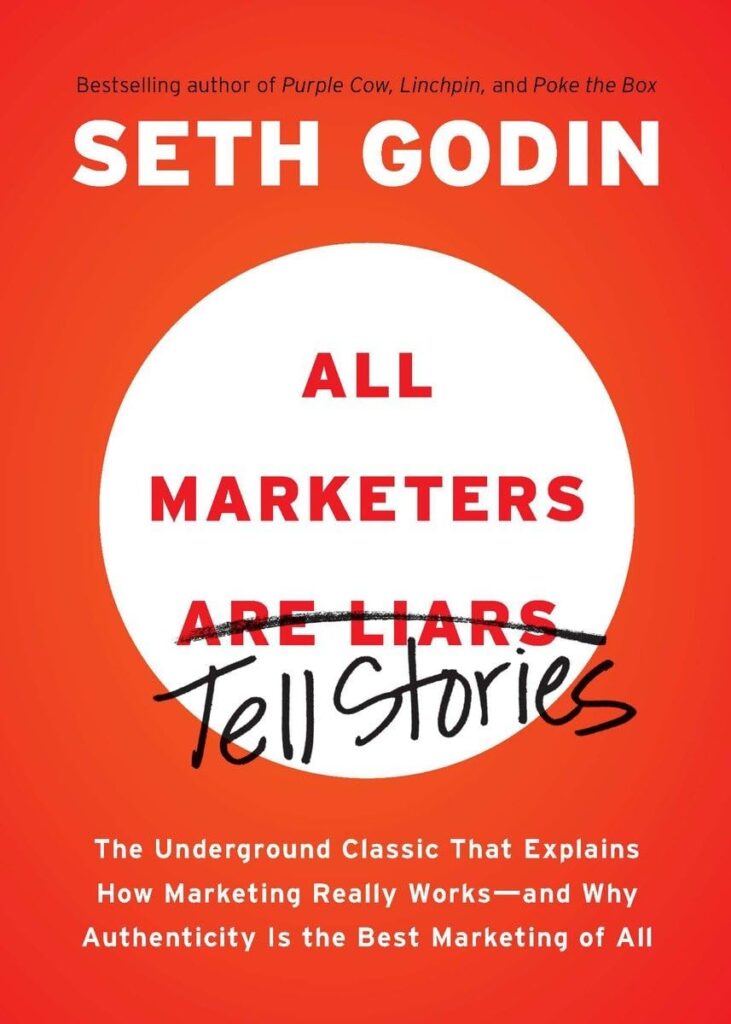
10 Best Books on Storytelling for Brands7. Seth Godin: All Marketers are Liars – The Underground Classic That Explains How Marketing Really Works–and Why Authenticity Is the Best Marketing of All
All marketers tell stories. And if they do it right, we believe them. We believe that wine tastes better in a $20 glass than in a $1 glass. We believe that an $80,000 Porsche is vastly superior to a $36,000 Volkswagen that’s virtually the same car. We believe that $225 sneakers make our feet feel better—and look cooler—than a $25 brand. And believing it makes it true.

Seth Godin’s books are easy to read, written in a funny style and effortless to understand.

As Seth Godin has taught hundreds of thousands of marketers and students around the world, great marketers don’t talk about features or even benefits. Instead, they tell a story—a story we want to believe, whether it’s factual or not. In a world where most people have an infinite number of choices and no time to make them, every organization is a marketer, and all marketing is about telling stories.

Marketers succeed when they tell us a story that fits our worldview, one we intuitively embrace and then share with our friends. Think of the Dyson vacuum cleaner, or Fiji water, or the iPod.

But beware: If your stories are inauthentic, you cross the line from fib to fraud. Marketers fail when they are selfish and scurrilous, when they abuse the tools of their trade, and when they make the world worse. That’s a lesson learned the hard way by telemarketers, cigarette companies, and sleazy politicians.

But for the rest of us, it’s time to embrace the power of the story. As Godin writes, “Stories make it easier to understand the world. Stories are the only way we know to spread an idea. Marketers didn’t invent storytelling. They just perfected it.”

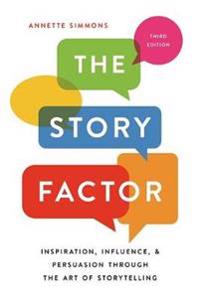
10 Best Books on Storytelling for Brands8. Annette Simmons: The Story Factor

A fully revised, updated, and expanded version of this modern classic will teach you to use the art of storytelling to persuade, motivate, and inspire in life and business.

Anyone seeking to influence others must first know their own story and how to tell it properly. Whether you’re proposing a risky new venture, trying to close a deal, or leading a charge against injustice, you have a story to tell. Tell it well, and you will create a shared experience with your listeners that can have profound results.

In this modern classic, Annette Simmons reminds us that the oldest tool of influence is also the most powerful. Fully revised and updated to account for new technology and social media, along with two new chapters on the role of stories in the development of civilization and how to adjust your story to your specific goal, Simmons showcases over a hundred examples of effective storytelling drawn from the front lines of business and government, as well as myths, fables, and parables from around the world. Whether writing a screenplay or announcing a corporate reorganization, Simmons illustrates how story can be used in ways that cold facts, bullet points, and directives can’t. These stories, combined with practical storytelling techniques, show anyone how to become a more effective communicator and achieve their goals.

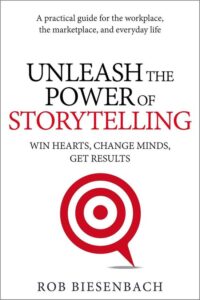
10 Best Books on Storytelling for Brands9. Rob Biesenbach: Unleash the Power of Storytelling: Win Hearts, Change Minds, Get Results 

Unleash the Power of Storytelling offers a practical roadmap for crafting and delivering more powerful, persuasive stories to get more of what you want in your career and life.

Study after study confirms that stories have unparalleled power to break down walls, build trust, and influence people to act. More than facts and data alone, stories are fundamental to capturing and expressing our ideas, wishes, and beliefs … and getting the results we want.

The right story can help you: nail a job, interview, earn a raise, close a sale, build trust with an employee or colleague, strengthen relationships with customers, become a more comfortable networker, win over a skeptic, rally a team, align people with a strategy, promote your brand, raise a toast, deliver a eulogy, get out of a speeding ticket, and more.

The market is flooded with a dizzying array of books, experts, and resources on business storytelling. This book, however, cuts through the hype to clarify and demystify the storytelling process.

Unleash the Power of Storytelling offers step-by-step instructions for finding, shaping, and telling powerful stories. You’ll learn about the essential ingredients that go into any good story and how to avoid common storytelling pitfalls.

The book also contains tons of practical examples showing you how to use stories in job interviews, presentations, customer calls, employee meetings — even how to craft the right story for a wedding toast or eulogy!

10 Best Books on Storytelling for Brands10. Tor Kjolberg: How I Survived as a STORYTELLER for Over 50 Years. 12 Survival Techniques.
Is my own book on a list of the 10 best books on storytelling for brands? I couldn’t resist placing it on the list because I believe I have an important message for everyone struggling to get their product (or destination) to attract more people.

The book presents a set of “home-truths” to help you harness its power to enhance your storytelling, creativity, collaboration, and profitability. Best of all, you can get a free digital copy. Just send me a message and include your name and email address, and write “ebook” in the subject line.

Reading only three of these books will get you a long way toward becoming a better and truly convincing communicator.

10 Best Books on Storytelling for Brands, compiled by Tor Kjolberg.

Feature image (top): © StoryBistro.com

The Number One Hotel in Kristiansand

Clarion Hotel Ernst is a historic, newly renovated, and centrally located hotel in Kristiansand, Norway, operating since 1858. According to Tripadvisor, it is the number one hotel in Kristiansand.

Clarion Hotel® Ernst is a classic hotel with a long history situated right in the center of Kristiansand, between Bystranden (beach), Torget (square), and shops. It offers a stylish, classic atmosphere with a popular atrium, The Social Bar & Bistro, and a 24-hour reception. The hotel is known for its classic style, and during the summer, it is tailored for families with children.

The Number One Hotel in Kristiansand
From one of the standard rooms.
The Number One Hotel in Kristiansand
The Social Bar & Bistro.

The Ernst Hotel was founded by German Ernst Probsthahn and has been a staple in Kristiansand since May 1, 1858. The hotel combines historic details with modern art and interior design, creating a wonderful setting for both business and leisure travelers. Regardless of whether you’re here to explore the vibrant city center or host a meeting, the hotel has everything you need for a comfortable stay.

If you’re staying in Kristiansand during the summer, consider participating in a lighthouse kayaking.

The Number One Hotel in Kristiansand
The hotel is known for its classic style.
The Number One Hotel in Kristiansand
From the impressing lobby.

Erns Hotel features The Social Bar & Bistro, a popular atrium, and a wellness area with steam and dry saunas, an ice shower, and a gym. The chefs are passionate about locally-produced food. The breakfast buffet is very popular and offers a wide range of hot and cold dishes, with plenty of organic options.

The Number One Hotel in Kristiansand
The breakfast buffet is very popular and offers a wide range of hot and cold dishes, with plenty of organic options.

Within walking distance, you find Markens Street, local cafes, and the Kristiansand Cathedral.

Number One Hotel in Kristiansand, Tor Kjolberg reporting.
All images © Clarion Hotel® Ernst.

World’s Largest, Most Expensive, and Most Luxurious Cookbook Written by A Technology Genius of Norwegian Descent

Inventor and physicist Nathan Myhrvoll, of Norwegian descent, left Microsoft for the kitchen laboratory. Four years after the swap, the technology genius has written the world’s largest, most expensive, and most luxurious cookbook.

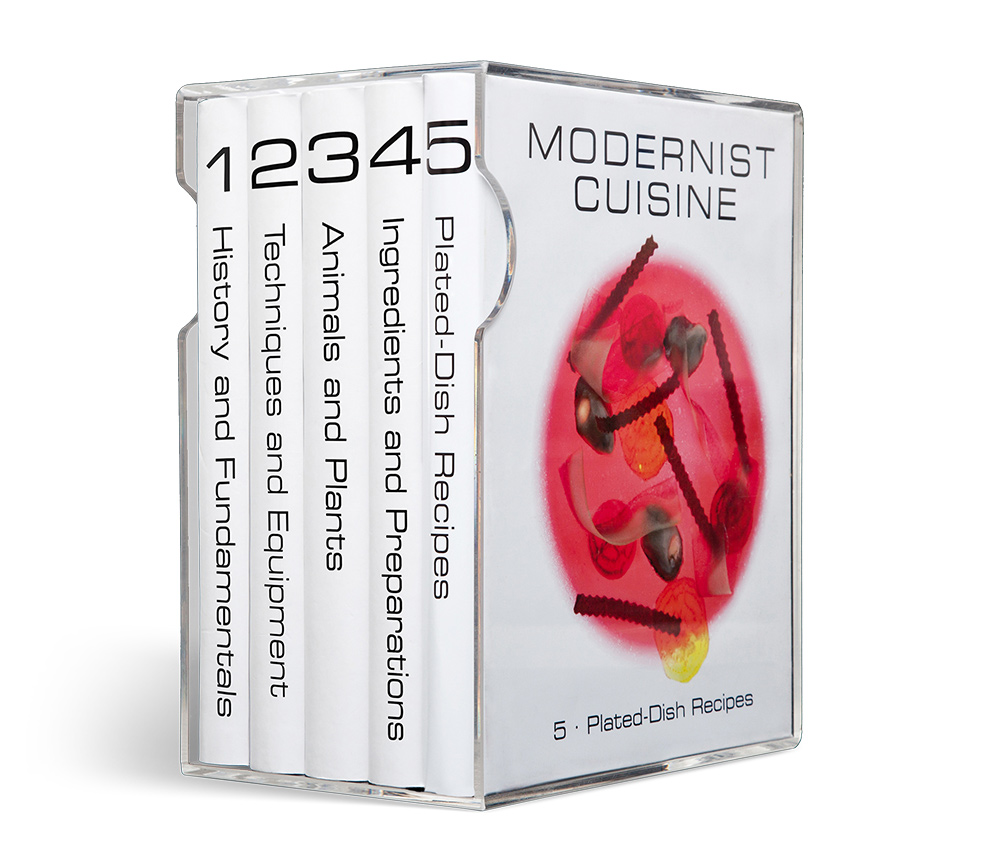
When Nathan Myhrvoll left Microsoft as its chief technology officer in 1999, he had become known as “Microsoft’s brain” and was worth $650 million, according to Forbes. Four years later, he splashed out on a cookbook, Modernist Cuisine: The Art and Science of Cooking (2011), which is widely recognized as one of the world’s most luxurious, expensive, and scientifically ambitious cookbooks. It is a 6-volume, 2,438-page, 40+ pound masterpiece that originally retailed for $625.

************************************************
You might also like to read The Norwegian Doctor Butter Sauce

************************************************

The book was self-published through Myhrvold’s “The Cooking Lab” and was produced on high-end paper, with thousands of original photographs, some taken with specialized, cutaway equipment, such as slicing stoves and pots in half.

It is not a traditional cookbook but a “techno-encyclopedia” covering food science, molecular gastronomy, and 1,500 recipes, designed for techniques such as sous vide, liquid nitrogen, and centrifuges.

World's Largest, Most Expensive, and Most Luxurious Cookbook Written byA Technology Genius of Norwegian Descent
It is a 5-volume, 2,438-page, 40+ pound masterpiece that originally retailed for $625.

Myhrvold led a team of over 36 researchers, chefs, and editors to produce the book over three years. The team included chefs and researchers, such as Chris Young and Maxime Bilet, who previously worked in high-end research kitchens.

The project began as a smaller, 150-page book on sous vide, but grew into an encyclopedic work over several years.

Modernist Cuisine has been recognized as a “cult favorite” by top chefs and won the James Beard Award for Cookbook of the Year in 2012.

***************************************************
You might also like to read Monday Aperitivo in Copenhagen
***************************************************

World's Largest, Most Expensive, and Most Luxurious Cookbook Written byA Technology Genius of Norwegian Descent
The bookscontain thousands of original photographs

Follow-up Works

Following the success of Modernist Cuisine, which sold tens of thousands of copies (grossing roughly $30 million as of 2013), Myhrvold published several other “luxurious”, in-depth, topic-specific series:

  • Modernist Cuisine at Home (2012): A two-volume set tailored for home kitchens.
  • The Photography of Modernist Cuisine (2013): A coffee-table book highlighting the technical, artistic photography from the original set.
  • Modernist Bread (2017): A five-volume, 2,600+ page set focusing on the science and history of bread.
  • Modernist Pizza: An in-depth investigation into pizza, published later.
World's Largest, Most Expensive, and Most Luxurious Cookbook Written byA Technology Genius of Norwegian Descent
Inventor and physicist Nathan Myhrvoll.

About Nathan Myhrvold

Myhrvold holds two master’s degrees and a doctorate from Princeton University. He researched astrophysics under Steven Hawking. He founded the patent company Intellectual Inventions. According to The New York Times, Intellectual Ventures at one point controlled nearly 70,000 intellectual property assets (patents and patents pending) that it has used to generate approximately $3 billion in revenues, primarily in the form of license fees from large corporations. The company responds that it has returned more than $500 million to individual inventors and that most of the remaining revenue has gone to its investors.

World's Largest, Most Expensive, and Most Luxurious Cookbook Written byA Technology Genius of Norwegian Descent
The cookboks are a “techno-encyclopedia” covering food science, molecular gastronomy, and 1,500 recipes, designed for techniques such as sous vide, liquid nitrogen, and centrifuges.

Relationship with Jeffrey Epstein

Myhrvold is best friends with Bill Gates and Warren Buffett. He was also an acquaintance of the convicted sex offender Jeffrey Epstein and attended dinner at his house. According to an anonymous source, Myhrvold was among those who introduced Epstein to Bill Gates. According to Vanity Fair writer Gabriel Sherman, Epstein allegedly visited Myhrvold’s investment company, Intellectual Ventures, and brought young girls with him. Myhrvold denied being involved in Epstein’s criminal activities or ever having known about them. His spokesperson stated, “Back in the day, Epstein was a regular at TED conferences, and he was a large donor to basic scientific research, so while Nathan knew him and had socialized with him, that’s exactly where their association ends. “His name appears over a thousand times in the Epstein files released in 2025/6 by the U.S. Justice Department. Details corroborate earlier claims that Epstein had met with Myhrvold at his company, with an e-mail exchange detailing visitation and the appearance of a woman/girl at the request of Myhrvold.

World’s Largest, Most Expensive, and Most Luxurious Cookbook Written by
A Technology Genius of Norwegian Descent, Tor Kjolberg reporting.
Feature image (top) © YouTube.

A Hotel for Pleasure-Seeking Connoisseurs and Conscious Travelers in Stockholm

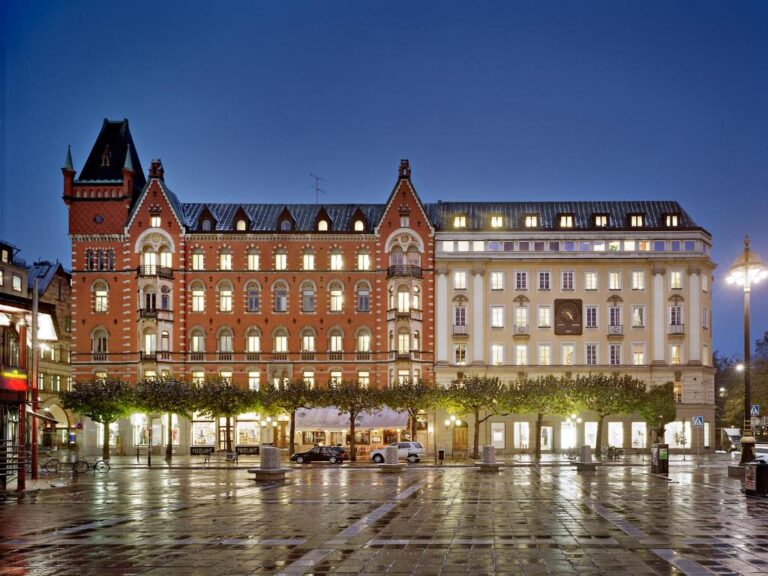
The 201-room Nobis hotel is located in two historic, interconnected 19th-century buildings and occupies a prime spot at Norrmalmstorg Square in downtown Stockholm. It’s a hotel suited for pleasure-seeking connoisseurs and conscious travelers in Stockholm.

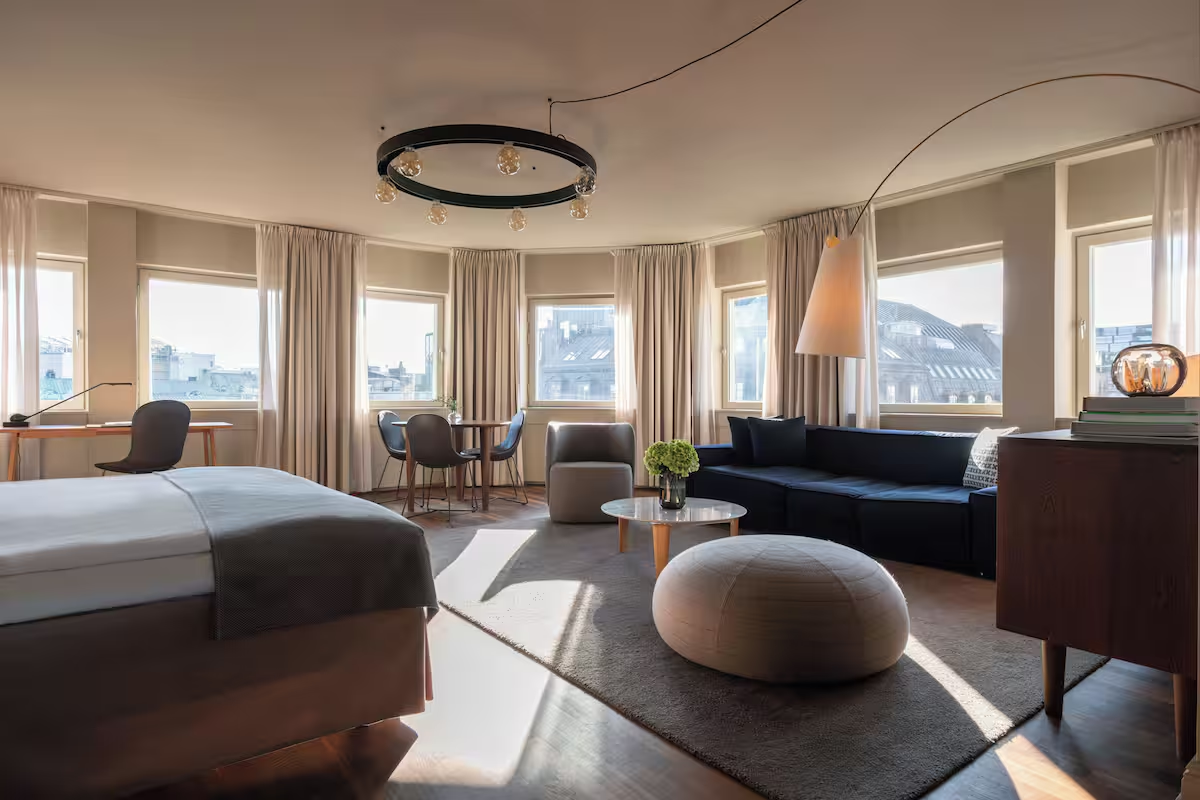
When the house was built in the late 19th century, there were apartments here, but more recently, there have been offices. The architects Claesson Koivisto Rune did not move walls but designed bathrooms in some of the rooms. The ceiling height in the Nobis hotel is still 3.20 meters. When it comes to furniture, the architects have considered both traditional and modern styles.

A Hotel for Pleasure-Seeking Connoisseurs and Conscious Travelers in Stockholm
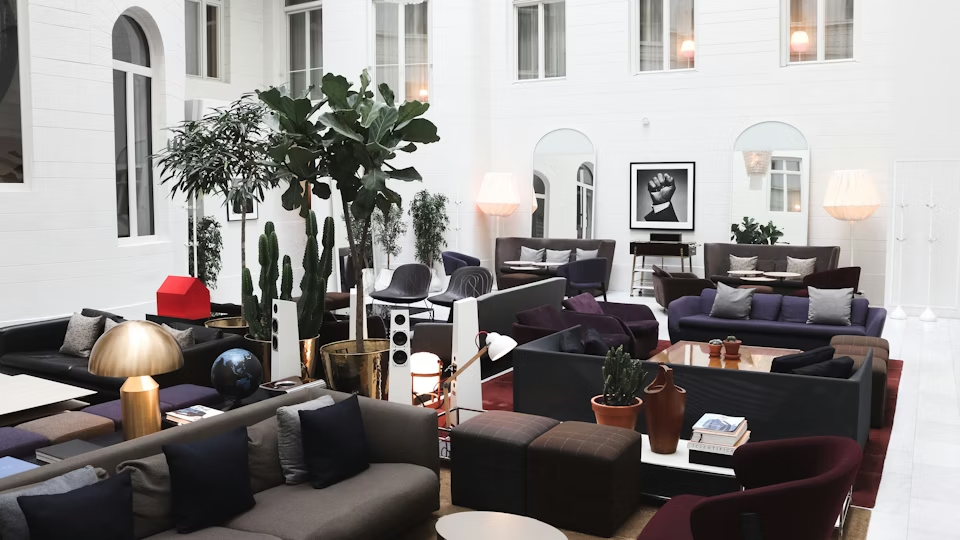
When it comes to furniture, the architects have considered both traditional and modern styles.

***************************************
Related: Stockholm Stadshotell Restored
***************************************

Guests can enjoy lunch in the bistro, unwind in the magnificent lounge, order an exquisite drink in the beautiful Gold Bar, and visit our popular restaurant, NOI. After a long day at Nobis Hotel, you’ll enjoy a good night’s sleep in comfortable DUX beds, made with Egyptian cotton linens, in rooms designed by the architecture and design studio Claesson Koivisto Rune.

A Hotel for Pleasure-Seeking Connoisseurs and Conscious Travelers in Stockholm
Guests can unwind in the magnificent lounge. Photo: Rachel Pagen.

****************************************
Alternative accommodation: Stockholm Layover in a Jumbo Jet
****************************************

Outstanding personal service and unique experiences in gastronomy, accommodation, and atmosphere are the key characteristics of this new hotel. “Our hotel is extremely comfortable but without unnecessary excesses. It is elegant and timeless, a contemporary classic, never trendy. The quality of everything we offer to our guests is superior, frequently something out of the ordinary. The same goes for our service, which is meticulous and highly professional,” says Alessandro Catenacci, owner of Nobis.

A Hotel for Pleasure-Seeking Connoisseurs and Conscious Travelers in Stockholm, Tor Kjolberg reporting. All images © Nobis hotel.

New Direct Train Malmö–Oslo

New Malmö–Oslo train route along Sweden’s west coast to be launched in the summer of 2026.

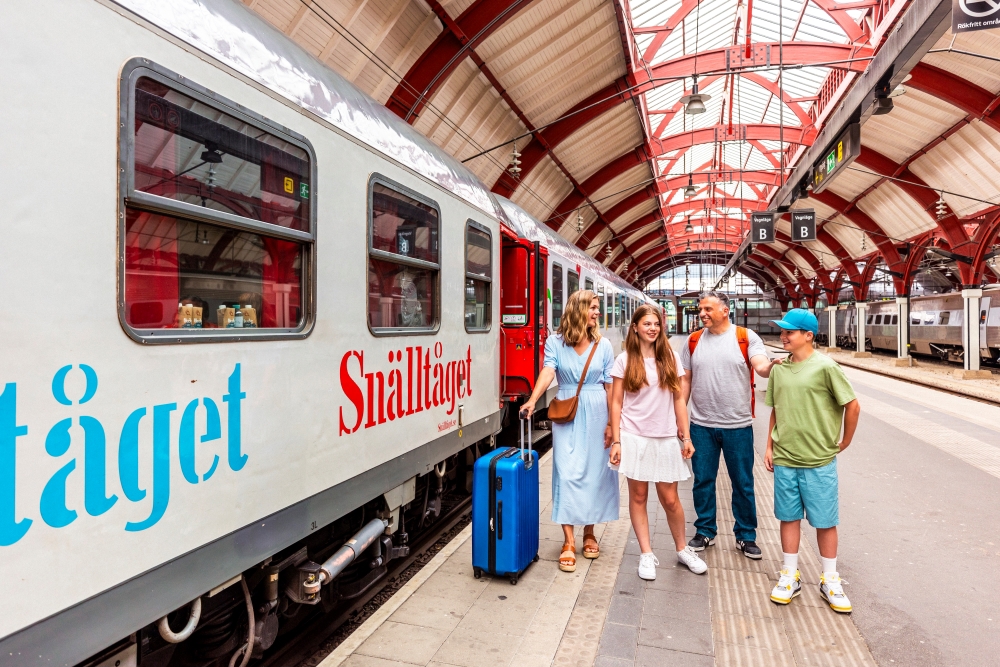
This summer, rail operator Snälltåget will launch a daily daytime service between Sweden and Norway, with on-board dining and onward links to Berlin. Travelers planning a multi-destination summer break in Scandinavia will be able to book a new direct train route between two of the region’s most popular cities.

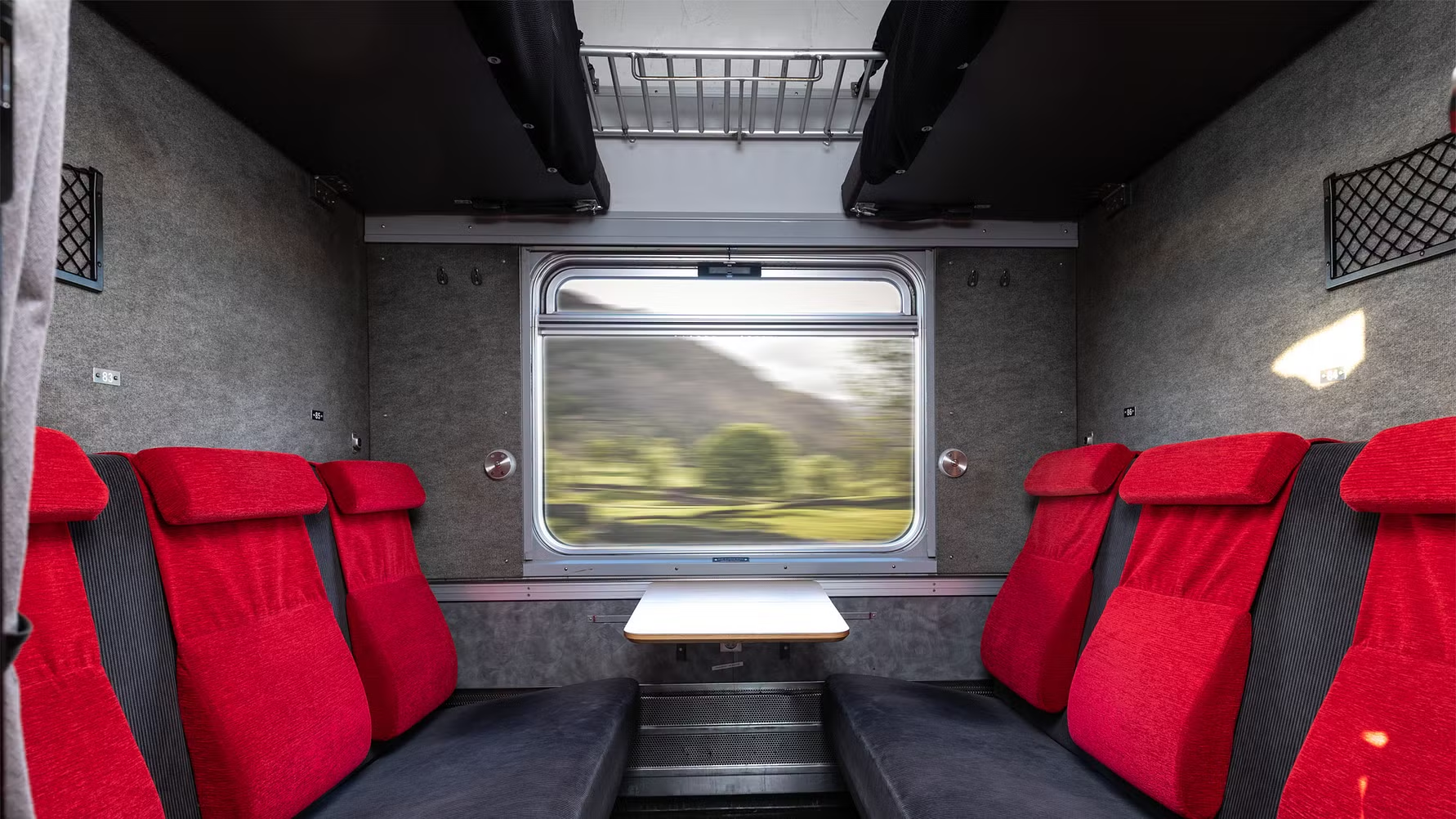
Sit back, relax, enjoy the company, or treat yourself to a good meal in the restaurant Krogen. A comfortable and sustainable way to travel to and from Oslo, where culture, modern architecture, and a vibrant city center meet fjord landscapes and outdoor experiences.

New Direct Train Malmö–Oslo
A comfortable and sustainable way to travel to and from Oslo.

A daily service will also connect with Copenhagen and Hamburg from May, as well as Berlin trains, meaning Europe is effectively poised to gain a significant four-country addition to its network.

It’s already possible to go by train from or to the Swedish capital to the Norwegian capital. It is not only cheaper than flying; you may even save time, since you’re departing and arriving in the city centers. 

From 15 June 2026, the northbound service will depart Malmö Central Station at 6:38 am and reach Oslo Central Station at 1:13 pm. Southbound services then leave Oslo at 2.48 pm and arrive in Malmö at 9:25 pm.

Swedish rail firm Snälltåget is behind the initiative, which promises access not only to the Norwegian capital. Stops will include the medieval city of Lund, one of Sweden’s oldest, as well as Helsingborg, Halmstad, the seaside resort town of Varberg, and Trollhättan, near Sweden’s largest lake, Vänern. Although central Gothenburg is not on the route, connections heading there can be made instead at Mölndal or Gamlestaden. The service will also call at Norway’s Sarpsborg and Fredrikstad—voted the country’s most attractive city in 2017.

New Direct Train Malmö–Oslo
Snälltoget in Berlin.

From 4 May 2026, Snälltåget will also launch a new international daytime service linking Stockholm, Malmö, Copenhagen, and Hamburg. Travelers will be able to board in the Swedish capital and journey south via Malmö, then cross the Øresund to Copenhagen and continue onward to Hamburg, creating a direct rail spine between Scandinavia and mainland Europe.

New Direct Train Malmö–Oslo, Tor Kjolberg reporting

What Makes a Story Stick?

A story sticks when it combines emotional connection, relatable characters, and a clear, simple conflict with a satisfying resolution. Memorable narratives often include vivid details, surprises, and universal themes that prompt action or deep reflection. There are several elements that make a story stick. Read on and learn more.
What Makes a Story Stick?
Emotional connection is essential in a story because it transforms a passive narrative into an immersive experience that resonates with readers. It hooks the audience, builds empathy, drives engagement with character, and ensures the content is memorable. Without emotion, stories can feel flat, while emotional depth creates lasting, impactful connections.

Emotional intimacy allows readers to understand and relate to characters, making them care about the story’s outcome. When characters share universal feelings like joy, fear, or vulnerability, readers can see themselves in the story, fostering a personal connection.

Facts are often forgotten, but emotional experiences (such as those in stories) are better retained in the brain, making them more memorable. Emotional stakes, such as high-stakes, life-or-death situations, make the audience feel, rather than just read, the story’s events.

*******************************************
Related: The Story of Storytelling in Marketing
*******************************************

A strong emotional connection compels readers to keep turning pages and can even influence their actions. By evoking feelings, a story can help readers understand different perspectives, fostering empathy.

For example, a character’s vulnerability—showing weaknesses rather than just strengths—helps build a stronger, more relatable, and realistic connection with the audience.

Here is why relatable characters are important in a story

When characters share human experiences like fear, love, or sorrow, readers feel understood and emotionally invested in their journey. Relatable, three-dimensional characters feel real, making the fictional world more immersive.

Audiences want to root for, understand, or even despise characters who feel human. This emotional engagement keeps them turning pages. Characters with flaws, fears, and vulnerabilities allow readers to see parts of themselves, often helping them process their own experiences.

Even if a character is not likable, their motivations and challenges can be understood, which is more important for engagement than simply being “nice”.

Relatable characters bridge the gap between the audience and the story’s world, making the narrative more impactful and memorable.

*******************************************
Related: Social Media’s New Role in Travel Promotion
*******************************************

What Makes a Story Stick?Conflict and resolution are fundamental to storytelling

Conflict and resolution are fundamental to storytelling because they provide the engine for plot, character development, and reader engagement. Conflict introduces tension and stakes—the “what if” and “what’s at risk”—while resolution provides necessary closure, allowing the audience to process the narrative as a complete experience.

Why Conflict is Important

Conflict is considered the “lifeblood of storytelling” or the “beating heart” of a narrative. It serves as the catalyst for action, pushing characters to make decisions and move the story forward. Without conflict, stories are stagnant and dull. It creates anticipation, keeping readers invested in the outcome.

How a character reacts to obstacles defines their true nature, strengths, weaknesses, and desires. It clearly defines what the character stands to gain or lose, which increases emotional investment. Because human beings experience struggle, the act of navigating conflict makes characters relatable.

Why Resolution is Important

If conflict is the engine, resolution is the destination. It provides the “payoff” for the tension built throughout the story. Conflicts resolve major plot threads and answer the questions raised, preventing the audience from feeling unsatisfied or stranded.

A well-earned resolution demonstrates how the character has changed or evolved through the conflict. The way a conflict is resolved often highlights the story’s deeper message or meaning.

Following the tension of the conflict, the resolution brings emotional relief or a sense of peace.

The Relationship Between Conflict and Resolution

A story generally follows a structure where a “normal life” is disrupted, leading to a central conflict (or multiple smaller ones), which builds to a climax and, finally, a resolution. Conflicts should force characters to react, ensuring the story moves forward through cause-and-effect (“because of”) rather than a series of random events (“and then”).

An effective resolution feels both surprising yet inevitable, rewarding the audience for following the journey. Conflict hooks the reader, and resolution provides the satisfaction.

What Makes a Story Stick?Simplicity and focus are critical in storytelling

Simplicity and focus are critical in storytelling because they cut through information overload, making narratives more engaging, memorable, and emotionally resonant for the audience. By reducing clutter and focusing on the essential core of a story, writers ensure their message is clear and impactful, allowing the audience to connect deeply without getting distracted by unnecessary details.

Complex stories can confuse the audience. Simple, straightforward narratives are easier to grasp, allowing the audience to follow the plot and understand the message quickly. Readers have limited capacity to process information; simplicity helps the brain absorb the story without working too hard, making the experience more enjoyable.

By removing unnecessary elements (the “fat”), the story’s core emotional theme becomes more powerful and poignant. A focused, simple story leaves space for the audience to fill in the gaps with their own emotions and experiences, making it feel both personal and universal.

Simple, focused stories are much easier to remember. They often boil down to a core message (like “slow and steady wins the race”) that sticks with the audience long after they finish.

Simplicity is about removing what doesn’t matter and focusing on the “heart” of the story, leaving a lasting impression. In a world bombarded with information, simple, direct stories grab attention more effectively. It cuts through the noise.

A focused story also avoids unnecessary subplots and rambling, preventing the reader or viewer from getting bored. Focus helps the story move along the “straightest path,” ensuring the narrative does not feel disjointed or chaotic. Short, focused sentences and scenes create a better rhythm that holds the reader’s attention.

As noted in the research, simplicity is not about “dumbing things down” but rather about “stripping them down” to their most potent form. As Steve Jobs once noted, “Simple can be harder than complex: You have to work hard to get your thinking clean to make it simple. But it’s worth it in the end.”

What Makes a Story Stick?Concrete and vivid details are essential
Concrete and vivid details are essential in storytelling because they transform abstract ideas into tangible experiences, allowing readers to visualize scenes, connect emotionally with characters, and become fully immersed in the fictional world. Instead of just telling the reader what is happening, these details use sensory input—sight, sound, smell, taste, and touch—to “show” the story, making it more engaging and memorable.

The details create immersion and realism. Specific, sensory-rich descriptions transport readers directly into the scene, acting as “fishing hooks” that grab attention and keep them reading. Rather than simply saying “it was cold,” describing “the icy wind blowing through the cracks in the cabin wall” allows the reader to feel the scene.

Concrete details reveal character personality better than exposition. For example, describing a character’s “worn-out, patched-up shoes” tells the reader more about their economic situation and personality than simply stating they are “down on their luck”.

Such details enable the writer to illustrate, not just explain. Instead of telling the reader that a character is nervous, a writer can show it through “trembling hands” or “biting their lip,” which triggers a stronger, more personal response.

Specific, unique details (e.g., “a yellow cat with a missing ear”) stick in the reader’s mind much better than vague, general terms (e.g., “a cat”). Vivid descriptions of settings (e.g., “a dark, dank, mold-creeping room”) immediately set a moody, high-stakes atmosphere.

A concrete language reduces ambiguity. By providing precise details, writers ensure readers visualize exactly what is happening, preventing confusion and disengagement.

The most effective stories use a balanced mix of concrete language—to ground the reader—and abstract ideas—to provide thematic depth.

Forbes Magazine has published a really good article on writing Sticky Marketing Copy.

Why Stories Stick (Neuroscience & Psychology)

Stories are more memorable than facts because they trigger neural coupling, aligning the reader’s brain with the storyteller’s. They often release neurochemicals, such as oxytocin, which deepen empathy and improve memory retention.

The Five Ps

People, Place, Pictures (vivid imagery), Personalization, and Peril.

The Five Cs

Character, Context, Conflict, Climax, and Closure.

AIDA
A – Attention  I – Interest  D – Desire  A – Action
To make your story sell, the most important thing is to grab the readers’ attention. Then your task is to raise interest. Thirdly, you must create a desire to know more (or to buy/own your product), and, last but not least, prompt the prospect to take action (purchase, ask for more information, subscribe to your newsletter, etc.).

What Makes a Story Stick?
Order a free digital version of my new book, “How I’ve Survived as a STORYTELLER for Over 50 Years: 12 Survival Rules”.

How I’ve Survived as a STORYTELLER for Over 50 Years

If you have completed reading this article, you must be more than averagely interested in storytelling. I will reward you with a free gift, a digital version of my new book, “How I’ve Survived as a STORYTELLER for Over 50 Years: 12 Survival Rules”. Just click here and type your name and e-mail address, and write e-book in the subject line. Enjoy!

What Makes a Story Stick? written by Tor Kjolberg