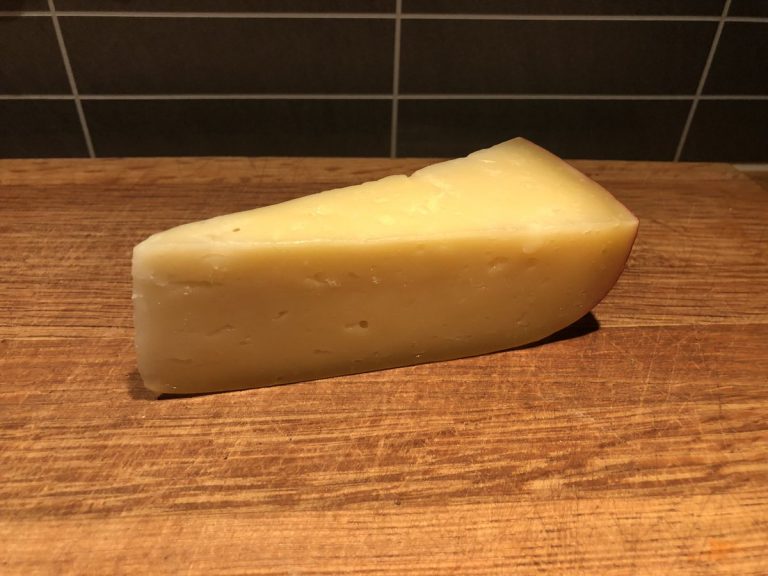
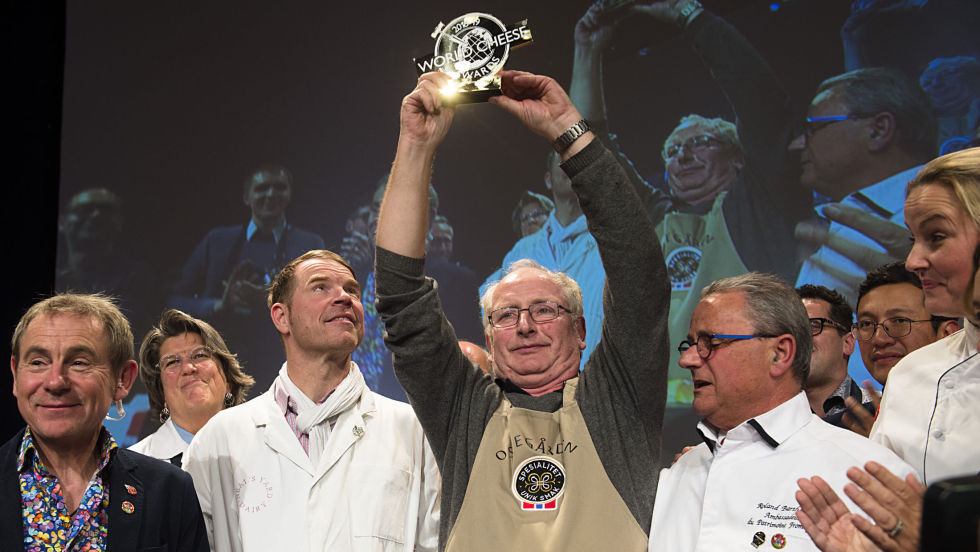
The Norwegian cheese Fanaost from the producer Ostegården in Bergen was named the world’s best cheese during the World Cheese Awards in Bergen last November.
Over 3,400 cheeses were lined up in Bergen’s iconic Grieg Hall, a 15% increase on last
year’s record. A truly global cheese event, the World Cheese Awards has been bringing together cheesemakers, retailers, buyers, consumers and food commentators worldwide for over three decades.
Over 3,400 cheeses were lined up in Bergen’s iconic Grieg Hall
The planet’s biggest cheese-only event judged entries from 41 different countries from six continents. The judging team represented more countries than in any previous edition of the competition, as cheese makers, cheese-mongers, buyers, chefs, retailers and writers from 30 countries came together to hand out the Bronze, Silver, Gold and Super Gold awards.
Jørn Hafslund, Ostegården Fana, winner of World Class Award 2018
A truly international celebration
This truly international celebration of all things cheese was set against the backdrop of Norway’s finest food and drink event, Bergen’s brand-new festival, Matnasjonen Norge (Food Nation Norway), nestled between the North Sea and the Seven Mountains that frame the city.
Matnasjonen Norge
Matnasjonen Norge is a brand-new consumer and trade event, which took place on Friday 2 and Saturday 3 November at the Grieg Hall in Bergen. Featuring a food festival, conference sessions, presentations and tasting tours, the event gave the country’s producers and chefs a platform to showcase their food and drink and shine a spotlight on the quiet culinary revolution that has taken place in Norway over recent years.
Norway is the World’s Finest Cheese-maker
Among the challengers were a soft goat’s cheese from Kenya, made with banana leaf ash, an Australian feta made with river mint, a mixed milk cheese from Italy, made using donkey, cow, sheep and goat milk, a hard cow’s milk cheese from the UK, containing elderflower and a Belgian semi soft cheese, with a layer of ground coffee.
The winner of 2018, Fanaost, is according to the manufacturer a mild, round and semi-solid cheese that reminds Gouda, made from pasteurized cow milk. Genuine brown goat cheese from Stordalen Gardsbruk in Tinn, Norway shared the silver medal with a French cheese. However, It is not the first time Norwegian cheeses make it to the top in the competition.
Judging underway at the 2018 World Cheese Awards in Bergen, Norway
World Cheese Awards A firm date in every cheese lover’s calendar, the World Cheese Awards has been bringing together cheesemakers, retailers, buyers, consumers and food commentators worldwide for three decades, in a celebration of tradition, innovation and excellence in cheese. It’s the biggest cheese-only event in the world, with no yoghurt, cream, butter or other dairy able to enter, championing the world’s best cheesemakers, from tiny artisans to global heavyweights.
Judges work in teams of three to four, identifying any cheeses worthy of a Bronze, Silver or Gold award. They look at the rind and the body of the cheese, its color, texture, consistency and, above all, its taste. Each team then nominates one exceptional cheese as the Super Gold from their table.
Winner Jørn Hafslund in action at Ostegården Fana
These 78 cheeses are the best in the world and are judged a second time by the Super Jury of 16 internationally recognized experts, who each select a cheese to champion in the final round of judging. The Super Jury, representing all four corners of the globe, then debates the final 16 in front of a live consumer and trade audience, before choosing the World Champion Cheese live on WCA TV.
World Cheese Award 2019 This year, the World Cheese Awards will visit Italy for the first time, taking place in Bergamo on Friday 18 October 2019, as part of the city’s annual FORME cheese festival.
Norway is the World’s Finest Cheese-maker, written by Tor Kjolberg
Norwegian furniture design duo Anderssen & Voll works within various fields of interior, but the term function seems to be their number one trademark.
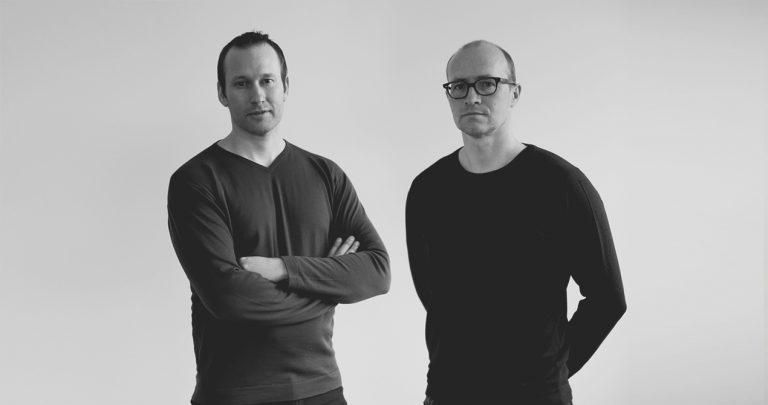
Torbjørn Anderssen and Espen Voll established their studio in 2009 in the heart of Oslo, housed in one of the oldest buildings in the area dating back to 1802 next to the beautiful river of Akerselva, an area that is home to several design studios and art schools.
Torbjørn Anderssen and Espen Voll established their studio in 2009 in the heart of Oslo
The Oslo-based duo wants to create products that will last a lifetime in their function and aesthetic. According to the duo, design means being receptive to cultural and market influences and applying this knowledge in forward-thinking ways to generate groundbreaking and desirable products for the clients.
Prominent and Successful Norwegian Designer Duo Anderssen & Voll have been named both Norwegian and Scandinavian designers of the year and have received numerous international awards for their work within furniture, lighting, and home accessories, including Wallpaper Award, Red Dot Award, IF Award, DOGA Award and Honorary Award for best Design in Norway.
Hector Lowres, by Andressen & Voll
Espen Voll comes from a family of architects and artists and says that his way into design was a natural progression from his upbringing.
Torbjørn Anderssen comes from a family of musicians. “I come from a family of musicians. I gravitated towards design from an idea of transforming my time into something that would be more tangible, as well as, hopefully, meaningful,” he said in an interwiew on his design for the Danish furniture company Muuto.
The Oslo-based duo, Anderssen & Voll, wants to create products that will last a lifetime in their function and aesthetic
Their design philosophy
“A good product builds and expands on tradition while simultaneously breaking the rules of said tradition. Modifications and elements of surprise, even changes that are less radical, stimulate thought and reflection, also for whom may not hold a particular interest in design. This tiny second of reflection is the window of opportunity where we can communicate with the users and that’s what we strive to tap into.”
Anderssen & Voll, 3 seat compose sofa for Muuto
Abour Anderssen & Voll
Torbjørn Anderssen (b. 1976) and Espen Voll (b. 1965) have studied at the Oslo National Academy of Art and Bergen Academy of Art and Design, where Anderssen currently works as a professor.
Bow. by Anderssen & Voll
They were co-founders of the design group Norway Says in 2000.
Called Kumo, this piece of furniture is available with up to four seats. But it arrives as a series of constructed pieces, which can be simply slotted together.
The duo has designed furniture, lighting, textiles and other products for brands such as Muuto, Menu, &Tradition, New Works, Connect, Compose, Oslo, Outline, Rest and Guesthouse Nedre Foss.
Prominent and Successful Norwegian Designer Duo, written by Tor Kjolberg
Looking for sacred moments and great music experiences? Oslo International Church Music Festival offers international performers in unique venues such as the medieval church Gamle Aker and other beautiful churches in the capital of Norway. Oslo International Church Music Festival 2019 starts on Friday 22 March.
The festival is held annually over the course of ten days in March. This year, it’s 22–31 March. The string of concerts is held in the capital’s churches, with Oslo Cathedral as the main arena.
Oslo International Church Music Festival was founded in 2000 by artistic and festival director Bente Johnsrud, who took the initiative and developed the concept for the festival. Thus, 2019 marks the nineteenth festival with over 600 projects of which 90 have been world premieres of new works.
Oslo International Church Music Festival was founded in 2000 by artistic and festival director Bente Johnsrud
Some of this year’s highlights:
Dunedin Consort: Johann Sebastian Bach’s Mass in B minor, BWV 232
Die Kölner Akademie: Ernst Wilhelm Wolf’s Passion oratorio Jesu, deine Passion will ich jetzt bedenken
KORK & the Norwegian Soloists’ Choir: Haydn, Strauss and Bruckner
BL!NDMAN [sax]: Bach’s organ works on five saxophones
Voces Suaves: Roma, città sacra
Kölner Akademia is visiting Oslo Church Music Festival this year
More than church music
Although ‘church music’ may sound like a narrow genre, it has much more to offer than organ music and choirs singing hymns. This is a festival for different people regardless of affiliation or belief. It is a central institution in the development of church music nationwide, and an important player when it comes to mark Oslo as an international music capital of the European format.
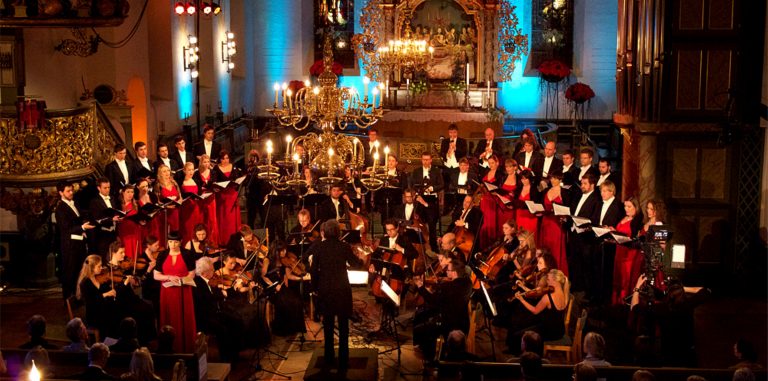
The string of concerts at Oslo International Church Music Festival is held in the capital’s churches
Oslo International Church Music Festival
The festival is Norway’s largest exhibition of early music and associated international specialist performers, but the aim is also to make contemporary music more visible and accessible through development efforts and educational initiatives. Oslo International Church Music Festival proves that contemporary music is very much alive in Norway.
Feature image (on top): Photo: Lars Flydal
Oslo International Church Music Festival, compiled by Tor Kjolberg
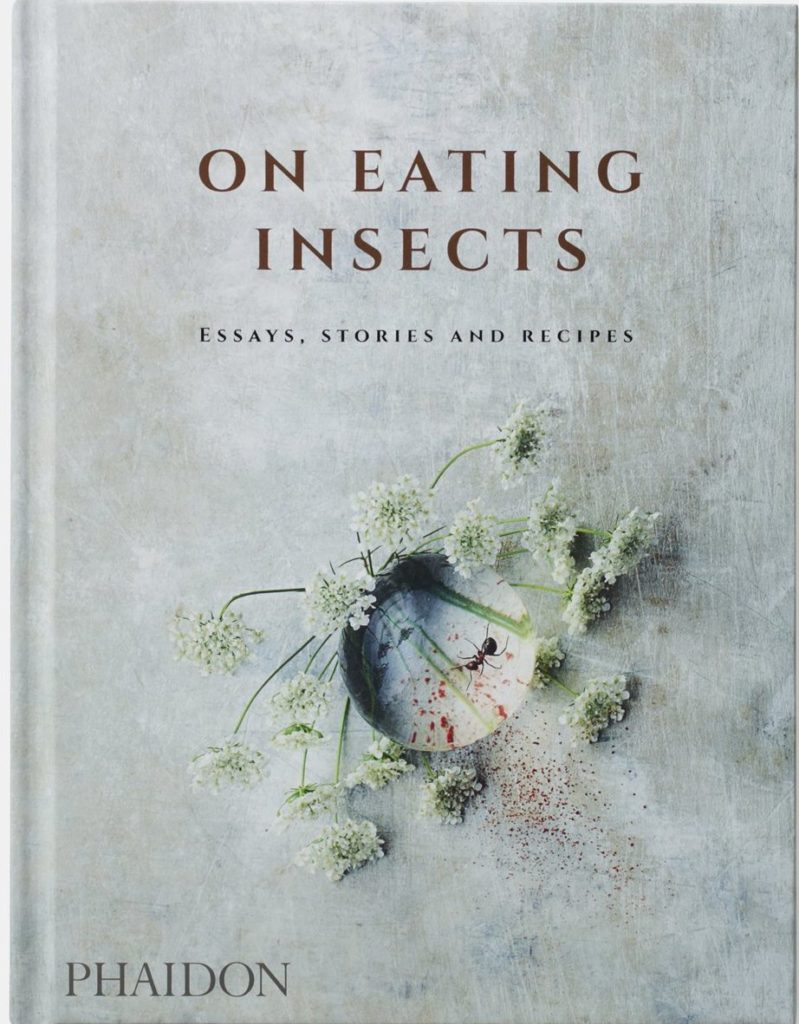
The Nordic Food Lab in Copenhagen which was founded by René Redzepi and Claus Meyer in 2008 is a non-profit foundation for research into food and its culture “dedicated to fresh and bold ideas”. In 2012, the Nordic Food Lab seriously began to experiment with insects. Today, Redzepi has left the project and Roberto Flore, the food lab manager, has instead involved the department for food science at the University of Copenhagen. The result is the book On Eating Insects.
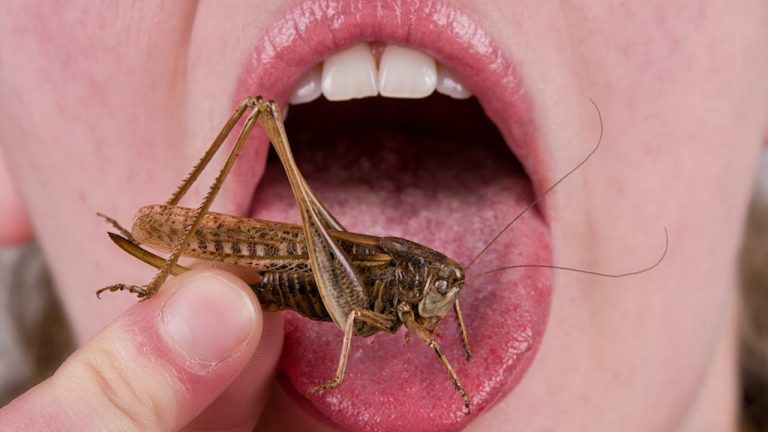
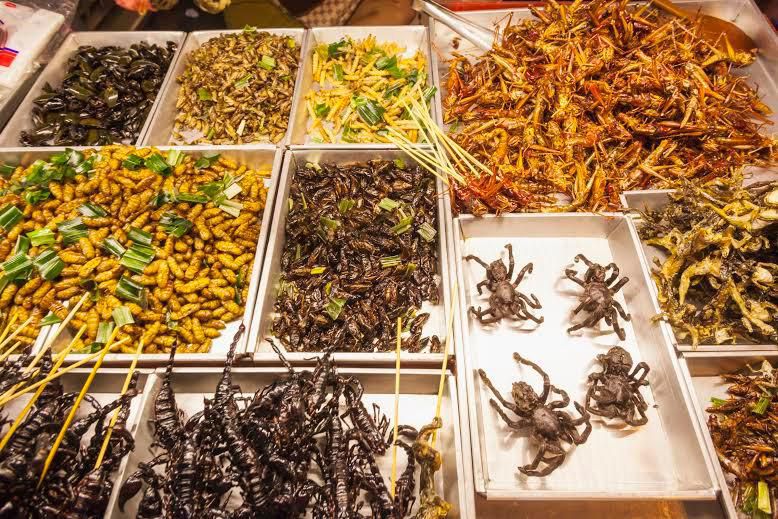
Entomophagy (eating insects) is probably the sustainable protein source of the future. If the human population reaches the estimated nine billion by 2050, our current environment trashing rates and methods of meat production won’t keep up. Compared to beef and pork, insects are a healthy choice: low in fat and high in calcium.
Entomophagy (eating insects) is probably the sustainable protein source of the future
“The book On Eating Insects: Essays, Stories and Recipes published by Phaidon might be the most authoritative book to explore the science, ethics, culture, and increasingly popular gastronomy of insects,” wrote the A.V. Club.
“The book On Eating Insects: Essays, Stories and Recipes published by Phaidon might be the most authoritative book to explore the science, ethics, culture, and increasingly popular gastronomy of insects.”
Book from Scandinavia: On Eating Insects
However, insects are not the miraculous future salvation, and Mark Bomford is clear about this up front in the book’s introduction. Bomford, who is director of the Yale Sustainable Food Project, says the problems we face as ‘a moderately successful social animal with a poor feed-conversion ratio’ are far too complex to be solved so easily. Although entomophagy would cause far less environmental damage than cattle farming, he thinks we can do better. He goes on to make the surprising claim that we’d be more humane, take far fewer lives and cause much less environmental damage if we could find a sensible way to eat large whales.
Nark Bomford, director of the Yale Sustainable Food Project
“From Bee Bread Butter to Moth Mousse, On Eating Insects will change the way you look at Nature’s most plentiful animals… absolutely crawling with data and details, providing a rich wealth of insights into infinite possibilities,” wrote CraveOnline
On Eating Insects will change the way you look at Nature’s most plentiful animals
Why don’t we eat insects in the West?
The question underpinned in the book is a simple one: why don’t we eat insects in the West, and how do we get people to eat them? For four years Nordic Food Lab has brought experts from multiple fields together to work and investigate the subject of insects as food and how in a rigorous and scientific way. Apart from being a fascinating look into the subject complete with recipes, the book is also a work of huge importance.
The chefs and academics of the Nordic Food Lab collective have assembled a series of essays, travelogues and recipes designed to take readers on a journey through ‘land, life, culture, ecology, meaning and mystery’.
Why don’t we eat insects in the West, and how do we get people to eat them?
“Once every decade or so there is a book that deserves to be read, and read carefully and considered seriously by people and policymakers from a wide spectrum of backgrounds… Insects will not save us, but that doesn’t mean they shouldn’t be eaten; we just have to be realistic about them and the role they could play. This book has the ability to start a truthful conversation about the issue. Chefs, food professionals, and those interested in ecosystems, sustainability and cultural and human diversity will find it engaging and of huge interest,” wrote InGoodTastesUK.com.
An almost scientific approach
The work that Ben Reade, Josh Evans, Roberto Flore and Michael Bom Frøst have undertaken with the Lab has a rigorous and almost scientific approach. From investigating how politics and power relate to insects, how people perceive the idea of eating them, how to get people to eat them, to the actual entomology, the team focused on all of it, and their conclusions are laid out in essays by the team members. There are also tales from their time in the field studying first-hand how different cultures view and eat insects, and the cultural significance they attach to them. The team travelled from Scandinavia to Australia, and across Africa, South America, and South East Asia in the course of their work. With ‘open hearts and mouths’ they investigated ‘where and when specific insects can help cultivate more diverse, resilient local food-systems’.
On Eating Insects is a fascinating look into the subject complete with recipes
“A vast-ranging study into the culture and cuisines that already eat insects and what we can learn from them as well as investigating the sustainable issues around what would happen if we all switched to eating grubs and grasshoppers,” wrote PebbleMag.com
This book has the ability to start a truthful conversation about the issue.
“The first publication to take a comprehensive culinary view on eating insects and how to prepare, cook and enjoy them,” wrote Port-Magazine.com
Book from Scandinavia: On Eating Insects, written by Tor Kjolberg
The Moss-Horten car ferry connects Østfold (east mainland of the Oslo fjord) and Vestfold (west mainland of the Oslo fjord) in just under an hour. And there you have it – the Viking Vestfold in Norway.
Highlights in Horten
The Naval Museum at Horten, home port of the Royal Norwegian Navy, bulges with maritime history.
Home to the Vikings …
To the south of Horten lies the heart of eastern Viking country, and Borre National Park en route to Tønsberg, contains large turf-crossed mounds concealing the graves of Viking kings, keeping to the coastline along Route 311.
Borre mound Cementry
… and a world famous painter Edvard Munch’s house at Åsgårdstrand is where the artist lived most of the time when in Norway. It was the setting for many of his paintings.
Oseberghaugen in Vestfold
Between Åsgårdstrand and Tønsberg is a burial mound, Oseberghaugen, the most important Viking site yet discovered. Oslo’s Viking Ship Museum contains the finds, including the 20-meter (65ft) arch-ended wooden ship.
Tønsberg. Photo: Bernt Rostad / Flickr
Norway’s oldest town
Just south is Norway’s oldest town, Tønsberg, established in the 9th century. On the 65-meter (200ft) high Slottsfjellet (Castke mountain) are the fortress remains, and tower. The main street, Storgata, is flanked by Viking graves. These were excavated and incorporated under glass, into the ground floor of the new library.
Map of south Norway
The most renowned king to hold court in Tønsberg was Harald Håkonsson IV (1204-63). The ruins of his court can be seen on Nordbyen, a street with historic houses.
Steam-ship Kysten I
Polar explorer Roald Amundsen
A more recent native person is Roald Amundsen, the polar explorer. The steamship Kysten I (built 1903), moored on Byfjord near the old custom house, operates a three-hour islands tour, but in July only, out to the skerries and it is a great way to see Norway.
Viking Vestfold in Norway, compiled by Tor Kjolberg
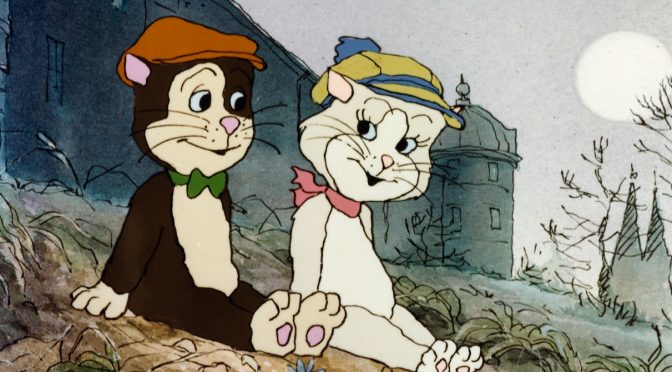
Pelle Svansløs (Peter No Tail in English) is a cat who was born without a proper tail. He compensates this by studying hard and, much to the dismay of his archrival Måns, receives a fancy degree very few cats in Sweden have obtained. The Pelle Svanslös series, consisting of 12 books in total, was written by Gösta Knutsson between 1939 and 1972.
As his name suggests, Pelle has no tail. A rat bit his tail off when he was a kitten. But despite this mean mishap, Pelle grows into a kind-hearted young cat. He has been loved by many Swedish children for decades.
Every summer, Gösta Knutsson spent a lot of time in Småland, and it was there that he came across a cat whose tail had been bitten off by a rat. That was the inspiration for the stories of Peter No-Tail. The first book was published in 1939 and was followed over the years by eleven more books. Each of the feline characters is based on a real person who Gösta knew well. The idea was that adults could have fun figuring out which real people were hidden behind these furry personae, while their children could just enjoy listening to the stories of Peter No-Tail.
The Story of Peter No-Tail
Once upon a time, there was a kind and naive cat, who was born on a farm outside Uppsala. When he was little, he had his tail bitten off by a big rat, and so everyone called him Peter No-Tail. One day, Peter lay down in a car to take a nap, and when he woke up, he found himself in Uppsala. There he was adopted by a family who lived in an apartment near the corner of Åsgränd and Övre Slottsgatan streets.
Peter No Tail goes to America
Later in life Peter was visited by his relative Pelle Swanson who invites him over to visit his new home country America. There everything is bigger, even the rats are much fatter. Everything seems possible in America, even the prospect of finally having a proper tail and a sweetheart to call one’s own. That’s what the animated film from 1985 is all about.
The Pelle Svanslös series, consisting of 12 books in total, was written by Gösta Knutsson between 1939 and 1972
Uppsala pays homage Peter No Tail
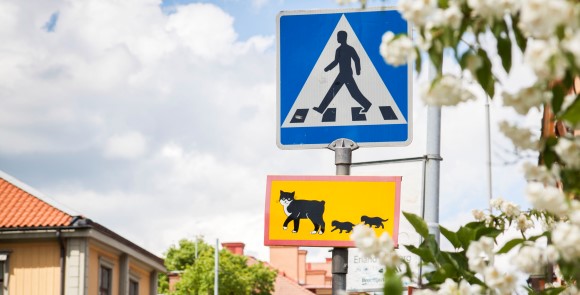
To mark the cat’s popularity, there are many traces related to the children’s literature star around the city, such as a statue, a peep-hole (his residence), and crossing signs.
A Peter No Tail crossing sign in Uppsala
No wonder that Peter has become a celebrity in Uppsala. The road signs in front of Carolina Rediviva Library have something unusual: cats. On closer look, you might notice the adult cat leading kittens has no tail. He isn’t just an ordinary bobtail cat.
Check also out Peter’s peep-hole in Åsgränd Street or go on a Peter No-Tail walking tour.
Do You Know Peter No Tail from Sweden? written by Tor Kjolberg
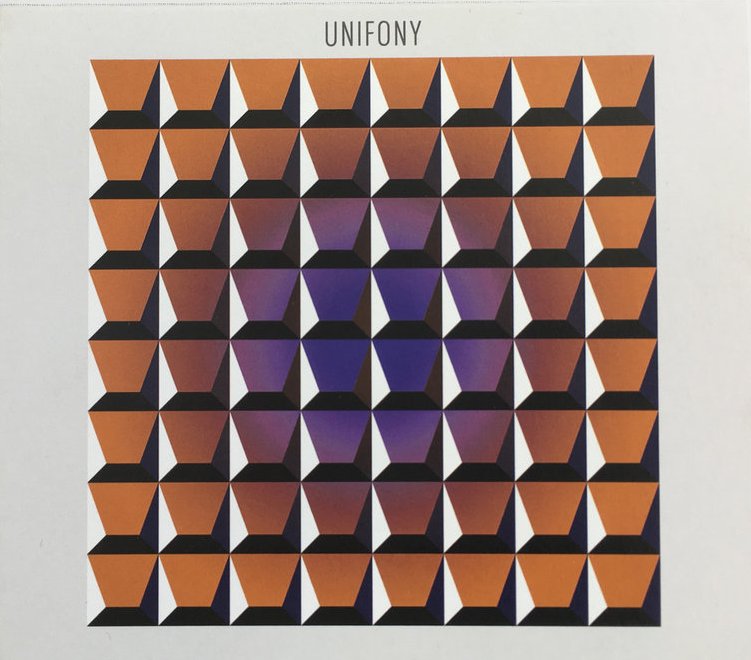
Some years ago Dutch Minco Eggersman and Theodoore Borger started to collaborate with the Norwegian trumpet player Mathias Eick. The result is the jazz group UNIFONY and release of a new album.
The UNIFONY project started when Minco and Theodoor worked together on Minco’s album ‘RESERVOIRS’ and found out they shared a love for this specific music and sound from the 80s. Later on, this album found its way to James March which in turn led to Minco writing an essay for the ‘Spirit of Talk Talk’ project. The method was recognized and appreciated by others which in the end led to Mathias, Phil, James and Bob joining forces.
“By listening to UNIFONY, we hope you will join our friendship,” says the musicians.
Soft and Ambient Moods from Dutch-Norwegian Jazz Group
UNIFONY is the end result of all the talent. Soft and ambient moods with trumpeter Mathias Eick teaming with Minco Eggersman and Theodoor Borger for a collection of intuitive interactions. The moods range from soft pitter patter percussion and piano on “Whisper” and “Ghostly” alongside sighing and fragile trumpet work for “Drive.” A mix of drama and sonic wallpaper meld on “Glow” with long shadows of the full moon being cast on “Blur.” This is pure tone poems and meditations.
What does UNIFONY mean? There is no literal meaning to the word UNIFONY, but the name shows that it is the result of something commonly shared (UNIVERSAL) and that it is not based on notes but rather on sounds (PHONIC). Friendship, harmony, meeting, focus, experiment, kindred spirits, vulnerability and universality all come to mind but this is probably as far as the group can go when explaining, as musical and poetical freedom is what it has to offer.
“By listening to our music, we hope you will join our friendship,” says the musicians.
The UNIFONY musicians Minco Eggersman is a Dutch musician, producer and composer. Apart from being singer and drummer, he’s been focusing on writing scores the last few years. Last year he released the critically acclaimed ‘KAVASAKIA’.
Theordor Borger is also a Dutch producer, musician, composer and engineer. He is the owner of a recording studio and has worked on albums by artists like Kim Janssen and Lärus Sigurddson.
Mathias Eick is a Norwegian jazz musician. He is mainly known from his releases on the jazz label ECM Records. His main instrument is the trumpet, but he also plays upright bass, vibraphone, piano and guitar. He has performed with several well-known musicians such as Pat Melheny, Chick Corea and Manu Katché.
‘Labour of love’, says studio engineer Phill Brown
‘I’m a fan’ writes British film and documentary director James Marsh
‘A fabulous group, reminds me of the latest Ryuichi Sakamoto’ says American mastering engineer Bob Ludwig
There are many good reasons to visit the winter wonderland Norway. Here we list only a few of them. And this is a true love letter to Norway’s winter wonderland.
Light and fluffy snow
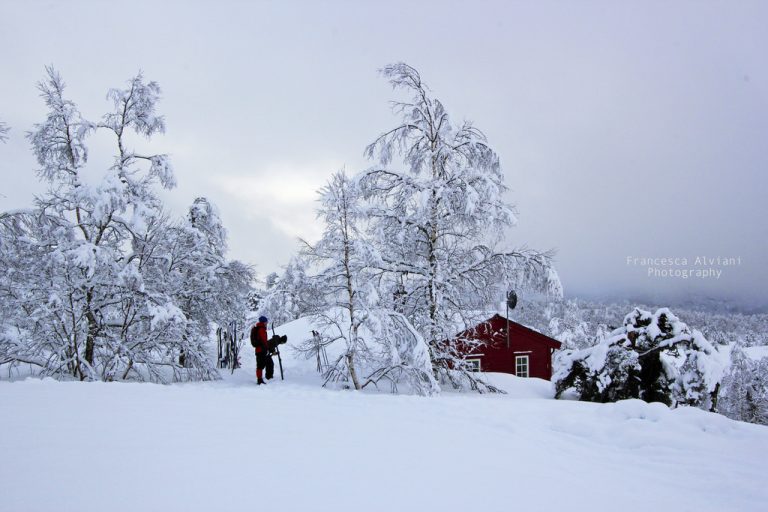
Enjoy the pure magic of snow in January or February in the mountains of Norway. You are guaranteed a winter wonderland. Whether you are a ski enthusiast or just want to feel the highest quality snow, you’ve come to the right place. The true raw beauty of Norway is greeting you every day. Particular cold days are full of glittering snow – it’s basically fairy dust.
Enjoy the pure magic of snow in January or February in the mountains of Norway
The winter in Norway is not nearly as dark and cold as many people seem to believe. The glistening snow makes everything lighter. And it is not as cold as many people seem to believe. Thanks to the magic of the Gulf Stream, temperatures in many areas are rarely dropping below zero.
An ocean cruise in search for the Northern Lights
Going on an ocean cruise is only one good reason. Viking Ocean Cruises offers a new kind of adventure that really appeals to those seeking to go to new places and check a few items off their lifetime wish list. The 930-passenger Viking Sky has become extremely popular and is drawing passengers from all over the world searching for the Northern Lights (nordlys).
Northern lights over Tromsø
People from all over the world are visiting the northern regions to watch these amazing lights showing in one place, dance across the sky, disappear, and immediately show up again somewhere else. If you ever get the chance to witness something like this, it is a scene that will never leave you and will bring you joy deep into the core of your being every time you think about it.
Several companies in Norway have specialized on excursions taking passengers out in coaches with specially trained guides to head off the spots where the skies are clear and offer the best chance to get great sightings and photo opportunities.
Sailing the Norwegian fjords The stunning physical features along the coastline of western Norway are for many visitors a definite highlight. Visitors are treated to breathtaking views all along the way – snow-capped mountains high above the fjords, small lighthouses, hillside homes and fishing villages.
The stunning physical features along the coastline of western Norway are for many visitors a definite highlight
A Taste of Norway
Try the flavors associated with the Norwegian regions, for instance cooking fresh reindeer sausages or a reindeer stew on an open flame inside a Sami tent. Lutefisk is another Norwegian traditional seafood dish which for many good reasons you should try. Some fall in love with it, but I must admit – many don’t. The same goes for the Norwegian brown goat cheese.
Norwegian waffles, however, with jam and sour cream, are favorites for children as well as adults.
Norwegian Christmas food
When it comes to drinking, you should probably think twice before you drink in Norway. Alcohol in Norway is a complicated thing, especially if you want anything heavier than 4.7%. Alcohol is state regulated and strong alcohol is only sold in state-run Vinmonopolet. However, Norwegian beer is very tasty and there are many brands and several micro-breweries. Drink it together with the traditional Norwegian snaps – the aquavit.
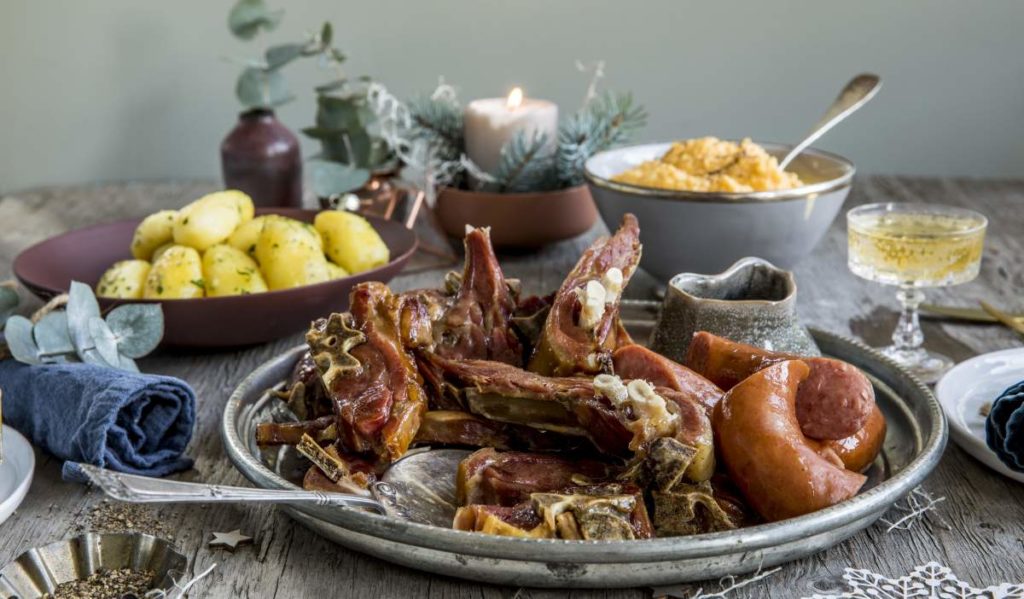
Christmas in Norway You don’t mess with Christmas in Norway. It is a synonym for love, chaos and memories. The Norwegians love Christmas time, a season rich with traditions, good food and at least seven sorts of cakes, among them kransekake – and funny Christmas stories. Different regions have different food traditions. Up noth and on the southern coast cod is the favourite Christmas dish. On the west coast, pinnekjøtt and smalahoved are the preferred main dishes. In the rest out the country lutefisk or ribs of pork with Christmas sausages and surkål (sweet sauerkraut) are common.
Cgristmas in Norway. Photo: Baard Løken
Add to that a beautiful decorated Christmas tree and a burning fire place – life can’t get any better. A proper Norwegian Christmas is unlike anything else in the world. You simply must experience it to understand.
At the Norwegian Christmas markets most everybody is drinking the wonderful spiced wine Gløgg, baked treats and are buying handmade crafts and other gifts. Christmas markets in Norway are really great places to enjoy with family or friends.
Cozy Norwegian homes
Norwegian homes
The dark winters are no excuse not to visit Norway during wintertime. The fact is that just because of the dark winters, the Norwegians make their homes beautifully charming. Many homes look like wooden cottages built into the sides of mountains so they look much smaller than they really are.
They might appear fairly simple and are usually one of about three-color choices. It’s a bit of a reversal of another country’s love of elaborate mansions decorated with expensive cars out front, while the insides are left strangely bare. Norwegian homes, on the other hand, positively glow with warmth. Norwegians love lamps, candles, fireplaces, and any other source of light, and are not afraid to use them all at once.
In my opinion, nothing is cozier than looking across a frozen landscape and seeing clusters of cottages twinkling through the snow.
Dog sledding in Tromsø. Photo: Baard Løken
Outdoors fun and adventure The traditions of working with reindeer (husbandry) is a typical Sami way of life. They raise the animals and utilize them for transportation, clothing, crafts and food. The interaction with the animals is important. The Samis welcome visitors and are keen to share their traditions. Experience a day of cross-country skiing in the wilderness and learn the proper techniques from the residents to get up and down gentle hills.
Dog sledding with a team of huskies is a popular outdoor activity in Norway and so is cod-fishing, especially in the Lofoten archipelago. However, fishing is popular all along Norway, whether it is in the lakes or at the shore. And in winter time when there are fewer competitors out fishing, you can really get lucky.
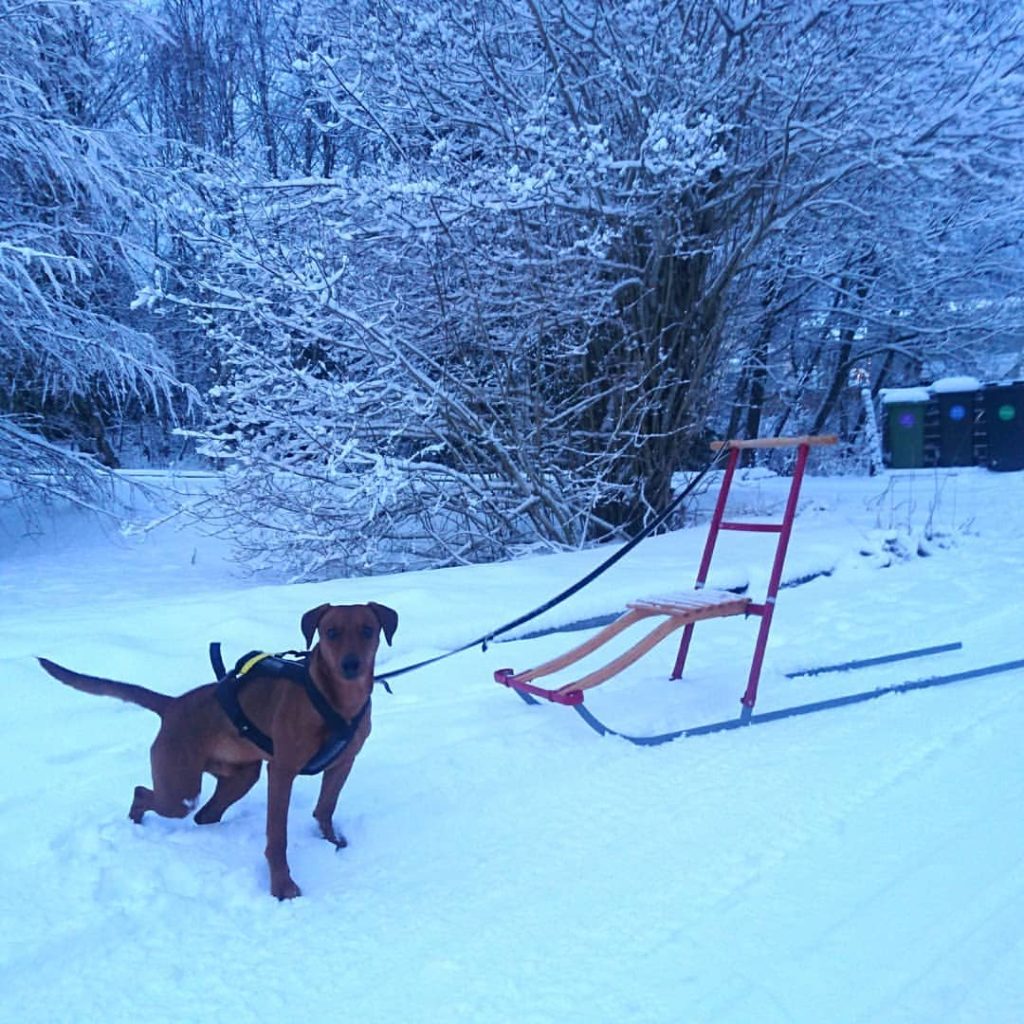
In Norway people use their skis and sleds or sparks everywhere. Many people are still skiing to school or the post office. And what better way you make it to work on time than sledding down the hill into town?
Sparks are super fun, but you should know how to handle the sled.
Even if you’re not a fan of partaking in winter sports, it’s pretty hard to ignore the contagious excitement with which Norwegians follow any sport on skis. Especially when the Winter Olympics roll around! The town of Lillehammer hosted the Winter Olympics in 1994.
Lillehammer is called the Town of sparks (a spark being a chair sled where one person sits on the chair and the other person stands behind and kicks and steers the sled. It’s super fun, but you should know how to handle the sled.
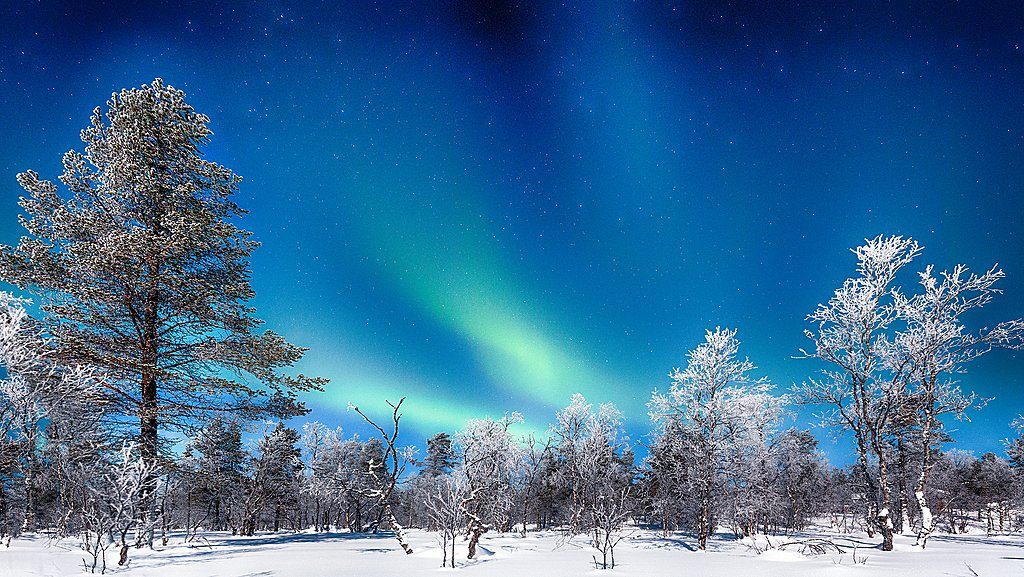
Panoramic view of amazing Aurora Borealis northern lights over beautiful winter wonderland scenery with trees and snow on a scenic cold night in Alta,, northern Norway
A Love Letter to Norway’s Winter Wonderland Winters in Norway are a perfect time to gather together with family and friends and truly appreciate the meaning of koselig. Turn away from the distractions, enjoy each other’s company and have a cup of coffee.
The truth is that whether or not you ski or even enjoy winter at all, this time of year is perfect for focusing on what matters most: quality time with loved ones.
Bottom line: if you can learn to appreciate the harsh and cold winters of Norway, you are guaranteed to be rewarded with incredible scenery and amazing memories.
The winter season in central Norway is from December through March. Farther north you can add a month on both sides.
Feature image (on top): From Kvamskogen A Love Letter to Norway’s Winter Wonderland, written by Tor Kjolberg
The Spring at Louisiana Museum of Modern Art begins with a blast full of colors, immersive images and sensuous dreamscapes.With the first major presentation in Scandinavia of Swiss artist Pipilotti Rist, the exhibition in the museum’s South Wing presents the work of one of visual art’s most conspicuous researchers of the senses in moving pictures.
Pipilotti Rist is a Swiss contemporary video artist who is best known for her vividly colorful work exploring the female body—namely her own. Rist’s work engages in lighthearted play, frequently combining a camera-specific aesthetic and technique with a message of social critique or commentary. “When I close my eyes, my imagination roams free,” she has explained.
Explores, challenges and explodes her potentials Born Elizabeth Rist in 1962 in Rheintal, Switzerland, Pipilotti Rist combined her childhood nickname, Lotti, with the first name of the Swedish children’s story character Pippi Longstocking to create her artistic moniker in 1982. She attended the Hochschule für Angewandte Kunst in Vienna from 1982 to 1986 and the Schule für Gestaltung Basel from 1986 to 1988.
Since the middle of the 1980s Pipilotti Rist has continuously explored, challenged and exploded the potentials, rules, conventions and limitations of a constantly evolving palette of video technologies. In her works, video is not just video, but also painting and space.
Rethinking the video medium
“In the same way I want to create spaces for video art that rethink the very nature of the medium itself, I want to discover new ways of configuring the world, both the world outside and the world within,” she says.
She produced her first video, “I’m Not the Girl Who Misses Much” (1986), while still at school in Basel. In it, she bounces up and down, falling out of her dress, as she repeatedly sings the title line (derived from the lyrics to a Beatles song).
Internationally recognized
Pipilotti Rist’s work is at one and the same time high-tech and sensual, radiantly colorful and critical, weightless and body-bound. The camera is brush, eye and sense of touch, and the fusion of major themes revolves around the body, technology, the sensory and the sensual, gender, nature, inner and outer space, our arrangement of and being in the world.
Gaining acclaim for her work in the 1997 Venice Biennial, during which she received the Premio 2000 Prize, Rist continued her upward trajectory of international recognition, teaching at the University of California, Los Angeles with Paul McCarthy in 2002–2003, and being awarded the Joan Miró Prize in 2009.
Enjoy the Moving Pictures of Pipilotti Rist in Copenhagen
The exhibition ‘Åbn min lysning’ (Open My Glade) is the first major presentation of the artist’s work in Scandinavia and will span the whole output of the artist’s oeuvre — from early works in the TV format to large spatial video and audio installations with projections on ceilings, walls and floors. The exhibition, created for Louisiana in close collaboration with the artist herself, takes on the character of a site-specific immersive installation and continues out into the museum park.
She currently lives and works between Zurich and the mountains of Switzerland.
The exhibition runs: 1.3.2019 – 23.6.2019
Enjoy the Moving Pictures of Pipilotti Rist in Copenhagen, written by Tor Kjolberg
“Edvard Munch will impress Chinese audiences with more representative works of the painting master,” said Yang Zhigang, curator of the Shanghai Museum, in a comment on the Norwegian painter’s exhibitions in Beijing and Shanghai from the summer of 2019 to the spring of 2020.
Chinese edition of four volume work on Edvard Munch
The exhibition will be jointly held by the National Museum of China in Beijing, the Shanghai Museum and the Munch Museum in Oslo to promote cultural exchanges between China and Norway. The Munch exhibition will feature roughly 100 works from the Munch Museum collection, including 50 to 60 paintings.
One of the world’s largest museums The National Museum in Beijing is one of the world’s largest museums, with over eight million visitors in 2017. It will be the fourth time Edvard Munch’s works have been displayed in China.
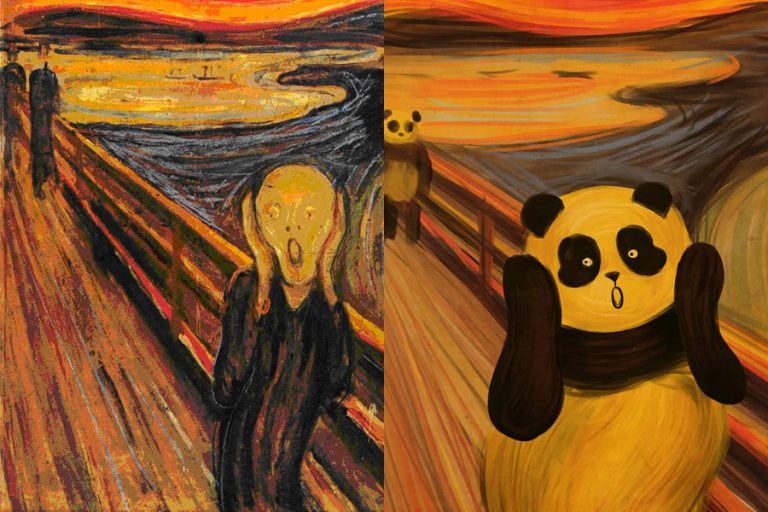
The first was in 1961. During the Norwegian royals’ visit to China in 1997, over 50 works of Edward Munch were displayed at the Shanghai Museum, including his best-known work ‘The Scream’.
King Harald and Queen Sonja of Norway at the conference “China and Norway – a wealth of opportunities” in Beijing, October 2018
Tremendous Interest in World Famous Norwegian Artist in China
“There is a tremendous interest in Edvard Munch in China,” says director Stein Olav-Henrichsen at the Munch Museum in Oslo. He adds that the museum has strengthened its international publication strategy. “We notice that there is a great demand for books about Munch throughout the world,” he says.
Tremendous Interest in World Famous Norwegian Artist in China, written by Tor Kjolberg