Our “Brand Masters of Storytelling” series continues. The recent “Korea Unlocks More of You” campaign by the Korea Tourism Organization (KTO) and the agency Reborn is designed to position South Korea as a transformative destination that brings out travelers’ bolder, more curious sides.
The campaign marks the third year of REBORN’s partnership with KTO’s Sydney office and represents the agency’s most ambitious project for the tourism body to date, spanning strategy, creative development, production, media planning, and influencer partnerships.
REBORN built the campaign around the idea that Korea’s food, culture, trends, nightlife, and nature encourage travelers to engage more deeply with their surroundings.
REBORN built the campaign around the idea that Korea’s food, culture, trends, nightlife, and nature encourage travelers to engage more deeply with their surroundings. The target group is primarily Australian travelers, with national rollouts across premium BVOD (Broadcast Video on Demand), digital, social, and search channels.
Starring actor and social media personality Maddy MacRae
The campaign, filmed on location in Korea and starring actor and social media personality Maddy MacRae, captures Korea as “layered, sensory and constantly moving – from centuries-old traditions to the latest trends, addictive street food, nightlife and pop culture,” REBORN chief executive officer David Easton said. “We wanted to capture not just what Australians can do in Korea, but what time in Korea does to them.”
The target group is primarily Australian travelers.
Pausanias, the Greek traveler and geographer, wrote a ten-book account describing Greece, focusing on sights of historical and cultural interest in the Peloponnese and central Greece. This article is the fourth in our series of ‘Historical Travel Stories’.
This lengthy work describes ancient Greece based on his firsthand observations. The Description of Greece provides crucial information for linking classical literature and modern archaeology, offering evidence for the sites and cultural details he mentions, even though knowledge of their existence may have been lost or relegated to myth or legend.
Pausanias was the Greek writer who flourished in the 2nd century A.D.
Pausanias was the Greek writer who flourished in the 2nd century A.D. Before visiting Greece, he had traveled widely throughout Asia Minor, Syria, Palestine, Egypt, Macedonia, Epirus (now in Greece and Albania), and parts of Italy. His Description takes the form of a tour of Greece, beginning in Attica. The first book seems to have been completed after 143 but before 161. No event after 176 is mentioned in the work. He provides a comprehensive catalog of temples and shrines in the region, along with frequent discussions of local myth and cult practice.
Pausanias traveled throughout mainland Greece, seeking to compile a lasting written account of “all things Greek,”
All things Greek
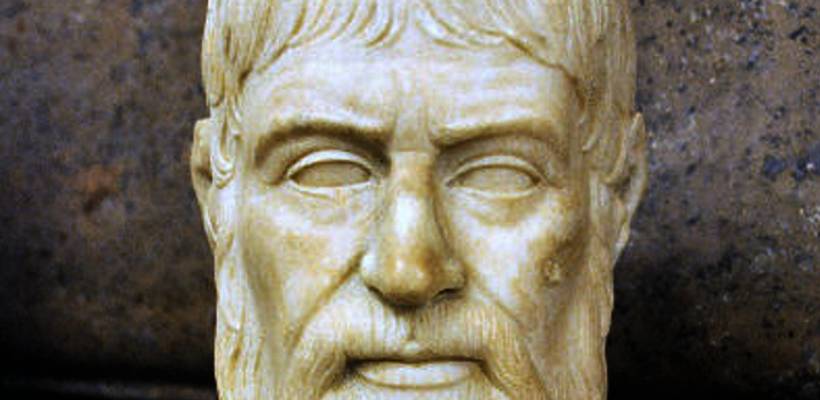
Nothing is known about Pausanias except what historians can piece together from his own writings. However, it is probable that he was born c. 110 AD into a Greek family and was a native of Lydia in Asia Minor. From c. 150 until his death around 180, Pausanias traveled throughout mainland Greece, seeking to compile a lasting written account of “all things Greek,” or panta ta hellenika.
His account of each important city begins with a sketch of its history; his descriptive narration follows a topographical order. He offers a few glimpses into the daily life, ceremonial rites, and superstitious customs of the inhabitants and frequently introduces legends and folklore.
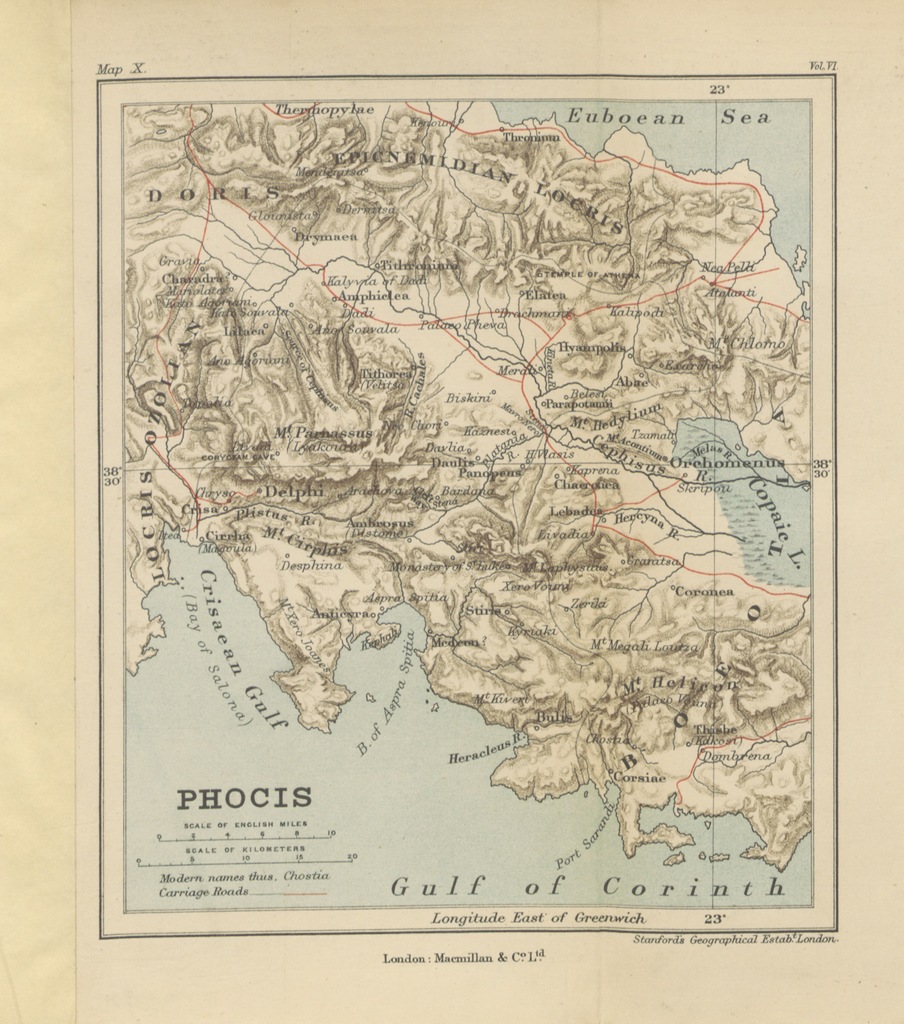
Map from Pausanias’s description of Greece.
Inspired by the ancient glories of Greece
Works of art are his primary concern: inspired by the ancient glories of Greece, Pausanias is most at home describing the religious art and architecture of Olympia and Delphi. At Athens, he is intrigued by pictures, portraits, and inscriptions recording the laws of Solon; on the Acropolis, the great gold-and-ivory statue of Athena; and outside the city, the monuments to famous men and to Athenians fallen in battle. The accuracy of his descriptions has been confirmed by the remains of buildings throughout Greece.
The five-volume Pausanias set in the Loeb series is still in print and available new from Amazon.com. In addition to the translation, the books include the original Greek text, Jones’s introduction and footnotes, and an index of proper names. The final volume also includes maps and a collection of photos of the archaeological remains of the places and buildings described by the ancient author.
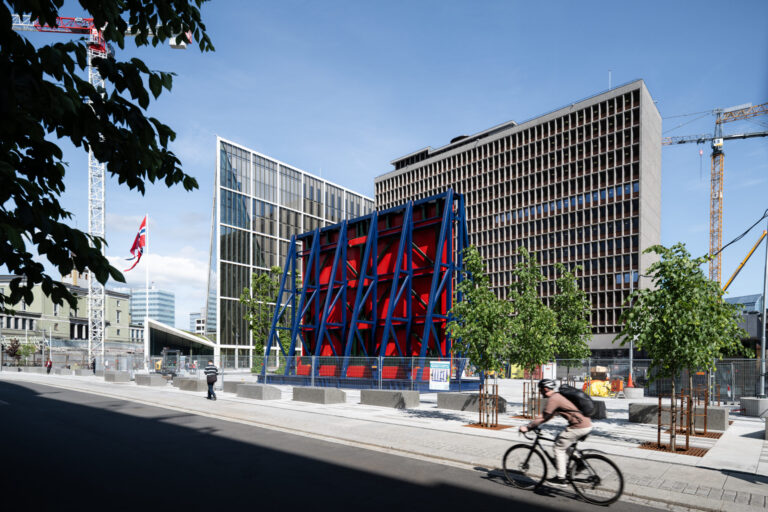
In commemoration of the July 22, 2011, terrorist attacks, Norway has established a national memorial in the New Government Quarter in central Oslo. The artist Matias Faldbakken has been commissioned to create his sculpture “Upholding.” The National Memorial for July 22 opened in Oslo’s New Government Quarter.
The Matias Faldbakken sculpture consists of a building and a large mosaic image that connects the two sites of the terror attack: Utøya and the Government Quarter. KORO and Statsbygg are supervising the project, which was unveiled in July, 2026.
With his proposal titled Upholding, the Norwegian artist Matias Faldbakken won the international competition to design the National 22 July Memorial in Oslo‘s new Government Quarter.
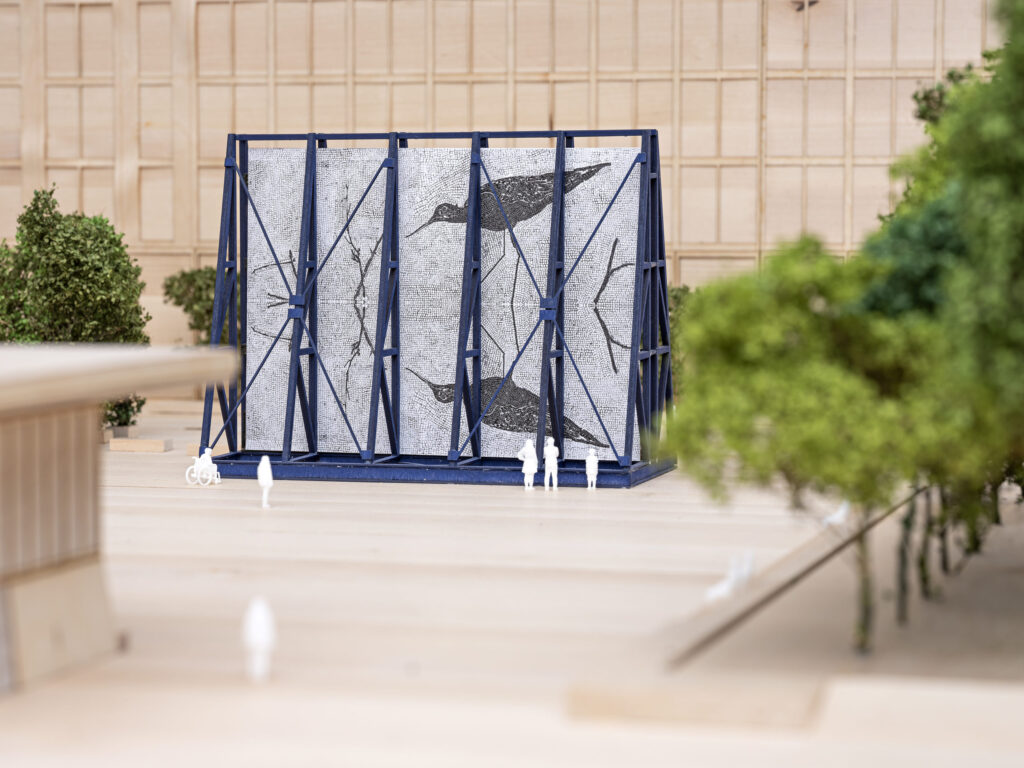
The mosaic’s imagery is drawn from the island of Utøya – a drawing of a small wader and some reeds and twigs reflected in the waters of the Tyrifjord. Photo: KORO.
Monumental and caring
Matias Faldbakken’s Upholding is based on re-erecting the large steel rig built to cut out and relocate Pablo Picasso’s The Fishermen from the demolished Y-block to the new A-block. In this version, the rig will be filled with a monumental stone mosaic.
The mosaic’s imagery is drawn from the island of Utøya – a drawing of a small wader and some reeds and twigs reflected in the waters of the Tyrifjord. The other side of the rig shows the pattern of the braced frame once used to hold The Fishermen, rendered as a geometric relief painted in deep blue, deep green, and vivid red.
The rig and the mosaic serve as a link between the two scenes of the terrorist attack, the Government Quarter and Utøya.
The rig and the mosaic serve as a link between the two scenes of the terrorist attack, the Government Quarter and Utøya.
As part of the work on the national memorial, the artist initiated a collaborative process to finalize the mosaic image. Together with the 22 July Center and KORO, Faldbakken invited survivors, the bereaved, teenagers, and members of the public to lay stones in the memorial mosaic alongside Faldbakken.
Over a three-week period, about 2,000 people contributed to adding the last 7,000 stones in a provisional workshop at the new memorial site. The final stone was laid by Merete Stamneshagen, chair of The National Support Group, after July 22, whose daughter was killed at Utøya. The collaborative effort marked the end of a long process that has involved many participants.
Background
The bombing in Oslo and the massacre on the island of Utøya on July 22, 2011, were the worst terrorist attacks in modern Norwegian history. Eight people were killed in the Government Quarter in central Oslo, and 69 were killed on Utøya, an island outside the capital that is the historic home of a summer camp organized by the Norwegian Labor Party’s youth wing (AUF). Most of the victims were young people. Many more were injured and faced life-threatening danger, both in the Government Quarter and on Utøya. The damage was enormous.
View of Oslo after the bombing in July 2011. Photo: Wikipedia.
The attacks were politically motivated and carried out by a Norwegian right-wing extremist who targeted democratic institutions, particularly the Labor Party, and politically active youth. The terrorist’s atrocities have no precedent in Norwegian history.
In 2012, the government decided to establish two official memorials, one at Utøya and the other in the Government Quarter in Oslo.
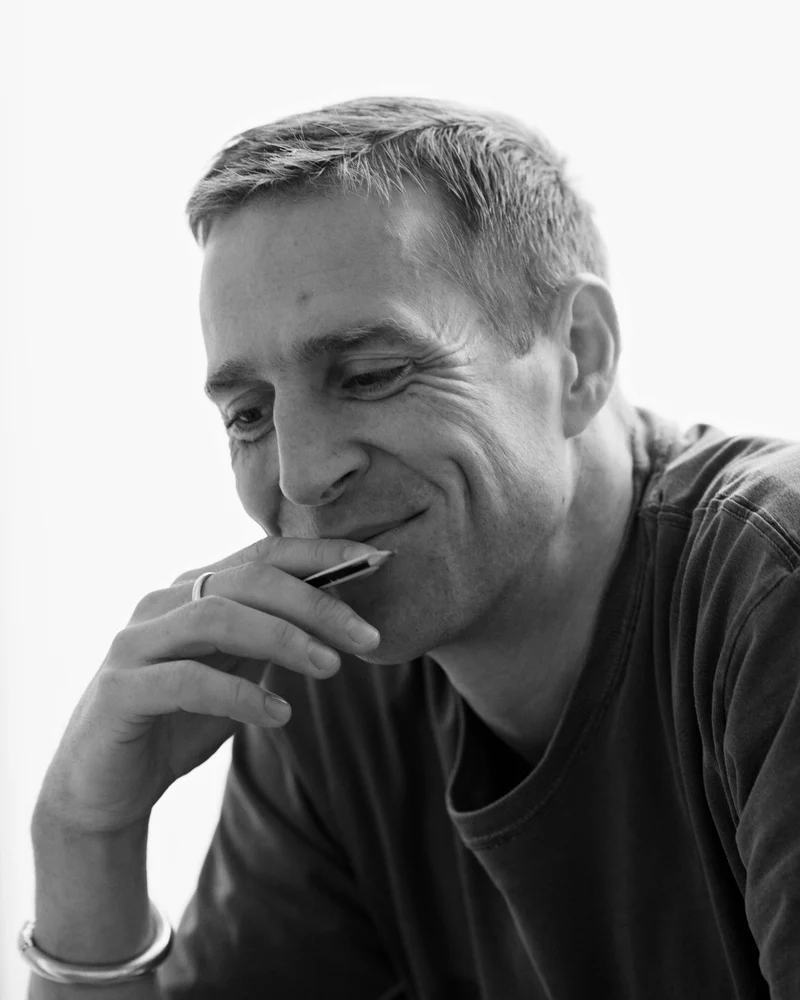
Matias Faldbakken (born 1973) is a prominent Norwegian contemporary artist and author based in Oslo. Known for conceptual works that subvert industrial objects and graffiti, he represented Norway at the 2005 Venice Biennale.
Matias Faldbakken. Photo: Ivar Kvaal/norden.org
Faldbakken’s multidisciplinary practice frequently explores the tension among vandalism, readymade materials, and formal abstraction.
Notable highlights of his career include:
The 22 July Memorial: Selected to create the monumental “Upholding” sculpture for the July 22 memorial site in central Oslo.
International Exhibitions: Featured in Documenta 13 (2012) and held solo exhibitions at the Fridericianum (Kassel) and WIELS (Brussels).
Literary Work: Alongside his visual art, he is an acclaimed author who has published several novels (often under the pseudonym Abo Rasul).
Representation: His work is showcased globally and is held in the collections of major institutions such as the Centre Pompidou and the Museum of Contemporary Art, Los Angeles.
There is something about the start of a new school year that feels a little like a second New Year. Summer schedules fade, alarm clocks are reset, backpacks return to their hooks, and families settle back into the rhythm of school, work, activities, meals, and homework. Continue reading to learn more about new school-year wellness routine ideas for 2026.
For parents, however, that rhythm can quickly turn into a race.
Rather than trying to overhaul family life overnight, the start of the school year can be an opportunity to return to simple routines that support physical and emotional well-being and allow the nervous system to slow down for children and parents alike.
Begin With Rhythm, Not Perfection
Children and teenagers often thrive on predictability. After the freedom and long days of summer, gradually returning to consistent morning routines, scheduled mealtimes, and a good nighttime routine can ease the transition back to school.
Photo from Fintness Nation.
Get Outside and Move
Let’s start with something Scandinavians do notoriously well: getting outside regardless of the weather. One of the healthiest aspects of this philosophy is also one of the simplest. Incorporating walking, outdoor play, cycling, and simply spending time in nature or with a pet into the daily routine can help expend excess energy, provide a mental break, and improve focus.
Make Mealtime a Time to Reconnect
Sitting down together can be hard with busy family schedules, yet the simple act of sharing food remains one of the easiest ways to reconnect. Breakfast can be quick, such as a bowl of oatmeal with fruit, nuts, and seeds, or rye toast with an egg. School lunches can be prepared and packed the night before. Even dinner need not be elaborate to be nourishing. Soup and bread, open-faced sandwiches, roasted vegetables and potatoes, a grain bowl, or leftovers from the night before can all do the job. What matters just as much is what happens around the table. This is a time for the family to relax, put phones aside if possible, reconnect, and talk about the day. Some fun dinner conversation ideas include asking each person to share a favorite part of the day, playing a little trivia, or learning a new vocabulary word together. The options are endless.
Have a Healthy After-School Snack Ready
A favorite healthy snack of mine is loaded hummus. It is colorful, satisfying, easy to prepare, and simple enough to keep in the refrigerator for when everyone gets home.
Photo: Nicole Hammond.
Use whatever you have on hand, but I love to layer diced tomatoes, red onion, and feta cheese over hummus and serve it with cucumbers, carrots, or any favorite vegetable for dipping. It is an easy way to add a variety of colorful vegetables to an afternoon snack.
Photo: Healthline.
Create a Calming Sleep Routine
Dim the lights, put away devices, take a warm shower, read, talk, or simply let the house settle. Sleep deserves special attention during the transition back to school. Adequate sleep supports learning, memory, emotional regulation, immune function, and overall health. Rather than imposing a much earlier bedtime the night before school begins, families can gradually shift sleep and wake times, allowing evenings to grow quieter as the first day approaches. A warm, caffeine-free drink can also be part of a calming nighttime ritual. Depending on a child’s age and individual health needs, parents may want to ask their pediatrician which herbal teas are appropriate for children.
Give Children Room to Do Things for Themselves
Another healthy habit worth protecting as the school year begins is independence. Children can participate in their own wellness routines in age-appropriate ways. A younger child might fill a water bottle or choose fruit for tomorrow’s lunch. An older child might prepare an after-school snack, help with dinner, walk or bike to an appropriate place, or take responsibility for part of the morning routine. Healthy habits become more meaningful when children participate in them rather than simply having them managed by adults. And perhaps parents benefit from this too, as we do not have to do everything for everyone.
A Message to Parents, Children, and Anyone Getting Back Into a Routine
Maybe the best back-to-school advice has nothing to do with what goes into a lunchbox. It is remembering that things are rarely perfect. Not every meal will be perfectly balanced. Some mornings will be rushed. Children will occasionally stay up too late. We will, too. There will be forgotten assignments, takeout dinners, missed activities, and weeks when the family calendar feels overwhelming. It is okay; we do the best we can.
Another important reminder is that health is neither built nor lost in a single day. It develops through patterns repeated over time: sleeping well most nights, eating nourishing foods often, moving regularly, spending time outdoors, connecting with others, and giving the mind and body opportunities to rest.
As another school year begins, perhaps the question is not how to fit everything in, but how to do our best while knowing when enough is enough. Enough activity to keep children engaged, but enough free time to let them breathe. Enough structure to provide security, but enough flexibility to enjoy life. After all, a healthy routine does not have to be perfect. Sometimes it simply needs to be one that works for you and your family.
New School Year Wellness Routine Ideas 2026, written explicitly for Daily Scandinavian by Nicole Hammond. Nicole is a health educator, coach, and wellness writer with a Master of Science in Health and Human Performance and a Bachelor of Science in Health Science. She also holds certifications in stress management, coaching, and feng shui design. She enjoys writing, researching, creating, and facilitating in the areas of health and creating balance in mind, body, and the home. In her spare time, Nicole enjoys reading, cooking, traveling, exercising, and spending time with her family, including her two golden retrievers and cocker spaniel.
Operated jointly by Norway’s Vy, Denmark’s DSB, and Germany’s Deutsche Bahn, the 14- to 15-hour journey will use the new ICE L trains, marking the first direct rail link between Norway and Denmark in over 20 years. A direct train from Oslo to Berlin is scheduled to launch in summer 2028.
The new service will run year-round, with two departures a day between Oslo and Berlin, with stops (in north-to-south order) in Moss, Fredrikstad, Sarpsborg, Halden, Trollhättan, Gothenburg, Halmstad, Helsingborg, Lund, Malmo, Copenhagen airport and Copenhagen H, Odense, Kolding, Padborg, Hamburg, and Berlin.
‘We are proud that, together with Vy and DB, we will soon be able to offer one of the longest train routes in Europe,” says Michael Peterson, CEO of DB Fernverkehr, Deutsche Bahn’s long-distance division.
*************************************
Related: New Direct Train Malmö–Oslo
*************************************
‘It is great that we can now introduce a new, regular rail service between Oslo, Copenhagen, Hamburg, and Berlin,” says Gro Bakstad, CEO of Vy.
‘It is great that we can now introduce a new, regular rail service between Oslo, Copenhagen, Hamburg, and Berlin. Working with DSB and Deutsche Bahn allows us to connect Norway more closely to Europe, and over time this could open direct train services to even more European cities,’ says Gro Bakstad, CEO of Vy.
Until this route launches, no direct trains are available. The current alternative is to book a multi-leg journey with several transfers:
Oslo to Gothenburg: Vy regional train.
Gothenburg to Malmö: Öresundståg or SJ train.
Malmö to Copenhagen / Hamburg / Berlin: SJ trains connecting to EuroCity or ICE trains via DSB/Deutsche Bahn.
Crossing four countries, from Norway to Sweden, Denmark, and Germany, the full journey is expected to take between 14 and 15 hours, but it will be cut by an hour and a half when the new Fehmarn Belt tunnel between Germany and Denmark opens. That’s set for 2029 at the earliest, though it’s more likely to be sometime in 2031, meaning the train service, which is slated to launch in 2028, could operate for up to three years with the longer duration. Ahead of that, a shorter version of the trip between Hamburg and Copenhagen will start as soon as winter 2027.
The new service will run year-round, with two departures a day between Oslo and Berlin.
‘We are proud that, together with Vy and DB, we will soon be able to offer one of the longest train routes in Europe. This is not something we can achieve on our own – strong rail connections in Europe depend on strong partnerships between railway companies,’ says Michael Peterson, CEO of DB Fernverkehr, Deutsche Bahn’s long-distance division. He also looks forward to the launch:
‘If you want to experience Europe, take the train. With high fuel prices, long-distance rail is a good alternative to both cars and flights. With this new international route from Berlin via Copenhagen to Oslo, we are connecting Northern Europe and three capital cities by rail.’
Trip planning is often portrayed as exciting, but for many travelers, it begins with uncertainty. The destination is unknown, information is overwhelming, and every decision feels like it could lead to disappointment or wasted money. When you’re planning your next journey, remember that it does not begin at the airport. Following these five ways to plan your next trip is just the start.
People rarely fear booking a flight. They fear making the wrong choice.Travel planning is not a logistics problem. It is a confidence problem.
The most common hassles are:
Too much information. Hundreds of articles, videos, reviews, and social media posts can lead to decision paralysis.
Fear of missing out. Travelers worry they will choose the wrong hotel, miss the “must-see” attraction, or overlook a hidden gem.
Uncertainty about cost. They fear unexpected expenses and blowing their budget.
Conflicting advice. One review calls a destination magical; another calls it overrated.
Safety concerns. Health, crime, transportation, language barriers, and unfamiliar customs can create anxiety.
Planning for different personalities. Families, couples, or groups often want different experiences.
Time pressure. Limited vacation days make every choice feel more important.
Fear of disappointment. The destination has lived in their imagination for months or years. Reality may not match expectations.
You may have other concerns, but when I plan my next journey, I follow a very simple narrative structure.
Start with the dream
Do not start with flights or hotel rates. Start with one question: “What story do you want to tell when you come home?” People remember stories, not itineraries. They remember:
“We watched elephants at sunrise.”
“We met a fisherman who invited us for tea.”
“Three generations traveled together.”
The desired memory becomes the compass for every later decision.
Define your travel character
Every traveler is a character in a story. One may be an explorer; another, a learner. Maybe you are a luxury seeker or a family memory-maker? Some just want to relax; others are adventurers.
When travelers understand who they are, many decisions fall into place.
Identify the villains
Every story has obstacles. The villains of travel planning include information overload, unrealistic expectations, trying to see everything, comparing your trip to someone else’s, and waiting for the perfect plan.
Naming the obstacles reduces much of their power and makes your planning easier.
Build around three moments
Instead of planning every hour, choose one unforgettable experience, one meaningful local encounter, or one unplanned day.
This creates structure without eliminating spontaneity.
Accept imperfection
Great travel stories often come from mistakes. If everything goes smoothly, that’s fine. But the stories to tell family and friends come from the missed train, the wrong turn, the unexpected conversation, or the rainy day that changed everything.
A perfect trip is memorable. An imperfect trip is often unforgettable.
Your Next Journey Does Not Begin at the Airport – Conclusion
If you follow the five steps above, your planning shifts from a stressful checklist to an adventure that starts long before departure.
“The journey does not begin at the airport. It begins the moment curiosity overcomes uncertainty. Planning is not paperwork; it is the first chapter of the story.”
Your Next Journey Does Not Begin at the Airport: Five Ways to Plan Your Next Trip, written by Tor Kjolberg.
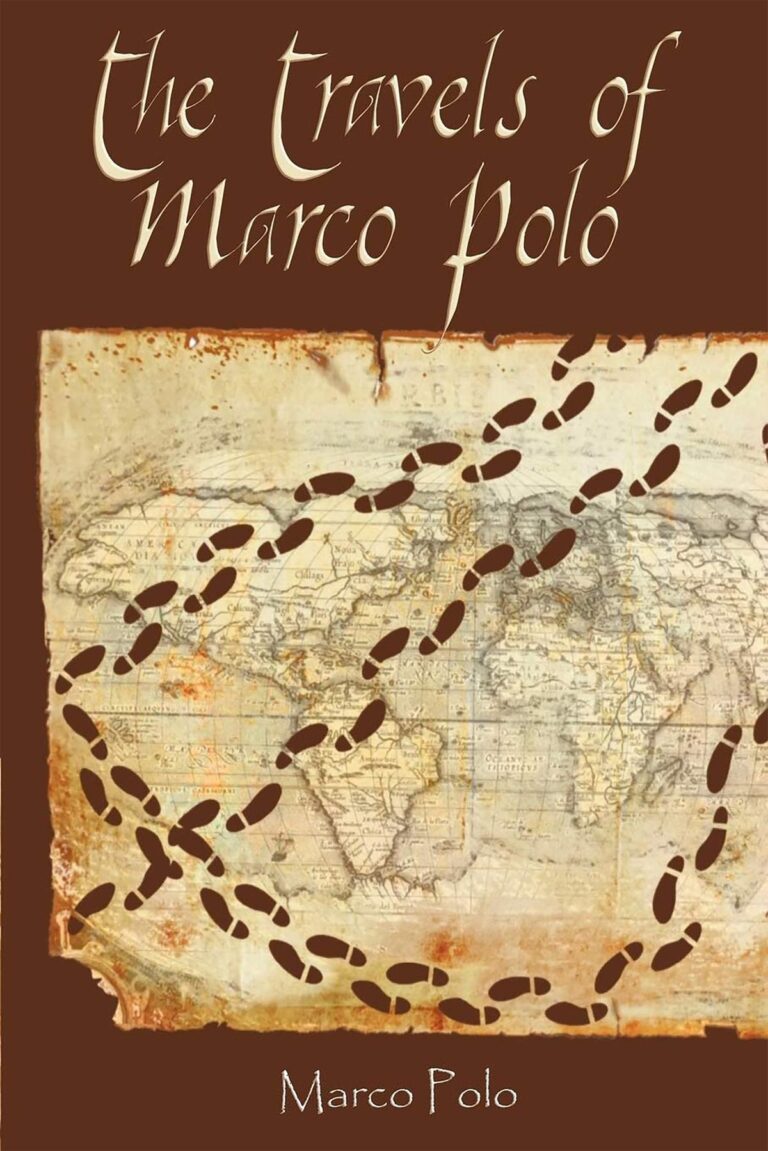
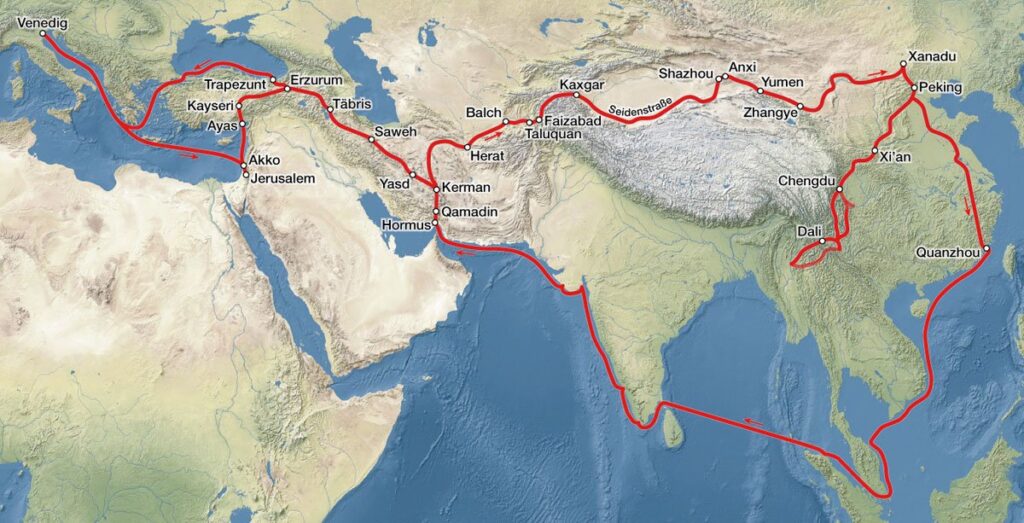
The Travels of Marco Polo is a 13th-century travelogue written by Rustichello da Pisa based on stories told by the Venetian explorer Marco Polo. It describes Polo’s travels through Asia between 1271 and 1295, and his experiences at the court of Kublai Khan.
Filled with wonders, Marco Polo’s tales are the first European account of the Silk Road. But 700 years after the famed Venetian merchant and explorer’s death, can they be trusted?
Marco Polo’s 24-year journey revolutionized East-West relations by introducing medieval Europe to the East’s wealth and advanced civilization. His co-authored book, The Travels, replaced mythical stereotypes with concrete geographic and commercial knowledge, directly inspiring Christopher Columbus and sparking the Age of Exploration.
From the beginning, there has been skepticism about Polo’s sometimes fabulous stories
From the beginning, there has been skepticism about Polo’s sometimes fabulous stories, as well as a scholarly debate in recent times. Some have questioned whether Marco had actually traveled to China or was merely repeating stories he had heard from other travelers. Economic historian Mark Elvin concludes that recent work “demonstrates by specific example the ultimately overwhelming probability of the broad authenticity” of Polo’s account, and that the book is, “in essence, authentic, and, when used with care, in broad terms to be trusted as a serious though obviously not always final, witness”.
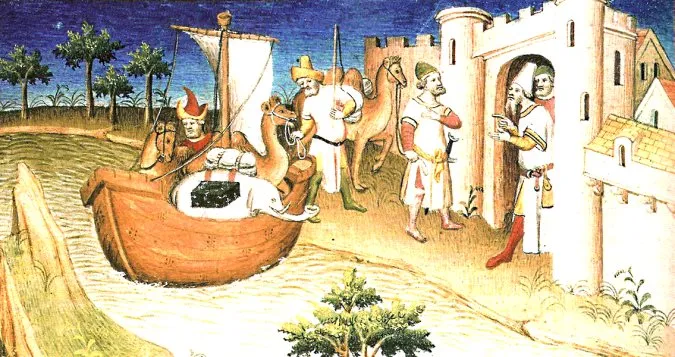
Venetian Marco Polo
Breaking the European Bubble
Before Marco Polo’s account, Europe’s understanding of the East was heavily clouded by folklore, religious superstition, and hearsay. Marco Polo’s detailed observations of Kublai Khan’s court in modern-day Beijing, as well as in regions such as India and Japan, gave Europeans their first real glimpse of massive cities, sophisticated paper currency, and advanced infrastructure.
The intelligence his family brought back gave the Republic of Venice a major strategic and economic advantage in controlling East-West commerce.
Driving Global Trade
By documenting the vast resources and trade networks along the Silk Road—such as spices, silk, and precious gems—Polo’s journeys significantly stimulated Europe’s appetite for Asian commodities. The intelligence his family brought back gave the Republic of Venice a major strategic and economic advantage in controlling East-West commerce.
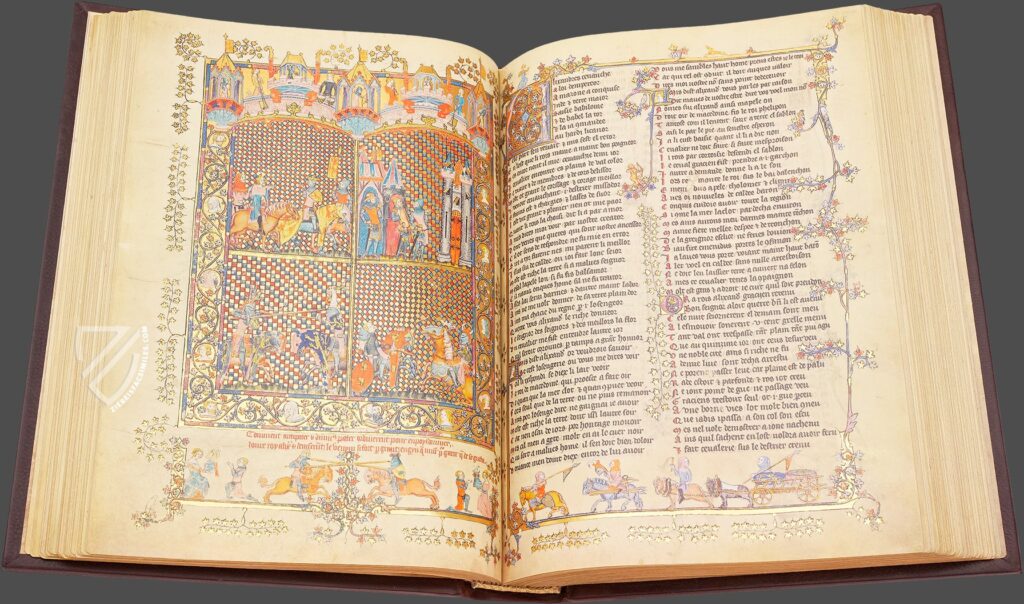
The origin of the title Il Milione is debated. One view holds that it derives from the Polo family’s use of the name Emilione to distinguish themselves from the numerous other Venetian families bearing the name Polo. A more common view holds that the name refers to the medieval reception of the travelog, namely that it was full of “a million” lies.
Did Marco actually travel to China?
Can a man who claimed to have seen a unicorn on the Indonesian island of Sumatra be trusted? This and other similar valid questions have cast doubt on Marco Polo’s truthfulness since the 14th Century, when his book The Travels of Marco Polo became a bestseller, was translated into dozens of languages, hand-copied in countless manuscripts, and was available at any lavish court in Europe.
Polo was among the first Westerners to provide eyewitness accounts of places that were blank spots on European maps.
Mapping the Unknown
Polo was among the first Westerners to provide eyewitness accounts of places that were blank spots on European maps. His accounts of sea routes, monsoons, and diverse cultures across the Indian Ocean and Africa formed the foundational geographic intelligence European cartographers would rely on for centuries. The Travels of Marco Polo, compiled by Tor Kjolberg
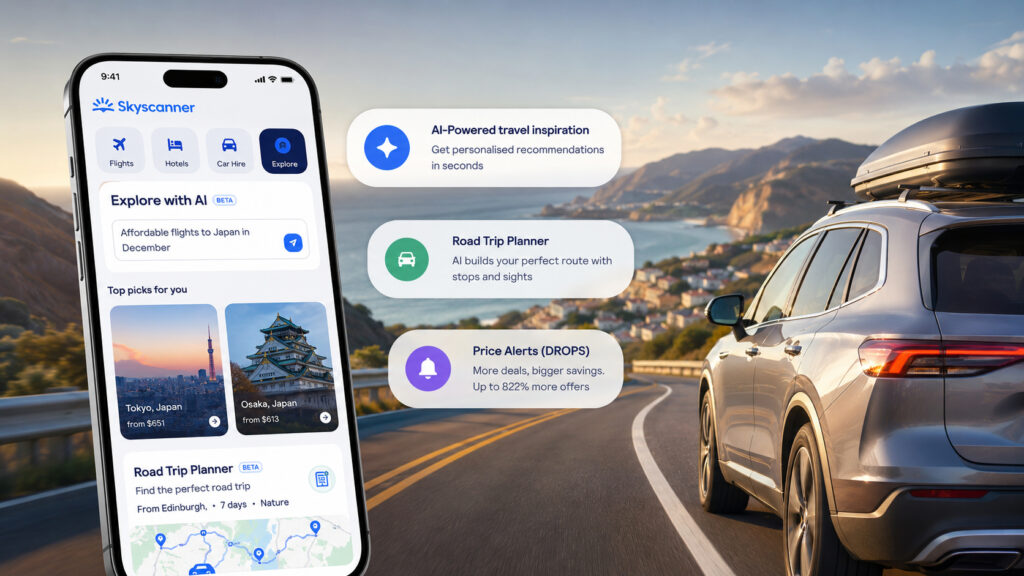
Travel platform Skyscanner has introduced ‘Explore with AI’ and ‘Road Trip Planner’, two new beta AI tools to help customers plan their next trip. The aim is to provide travelers with an intuitive, personalized experience. Continue reading to learn more about Skyscanner’s new AI travel planning tools.
AI is everywhere, and the travel industry is no exception. AI tools are increasingly popular for trip planning, with many travelers asking ChatGPT for personalized holiday recommendations.
The Skyscanner AI provides curated destination recommendations, trip duration, weather, and AI-generated insights.
1. Explore with AI
Instead of entering strict parameters such as fixed dates or airports, you can use conversational prompts (e.g., “help me find cheap flights to Japan in December” or “a warm holiday with beaches and family trips”).
Personalized suggestions: The AI provides curated destination recommendations, trip duration, weather, and AI-generated insights (e.g., “September is typically 24% cheaper than December”).
This tool generates tailored driving itineraries based on your route preferences.
2. AI Road Trip Planner
Available in the desktop beta, this tool generates tailored driving itineraries based on your route preferences.
Route styles: You can select themes such as scenic, cultural, adventure, or relaxed.
Recommendations: The AI builds your route with suggested stops and points of interest, and pairs it with suitable car rental options for the journey.
“For more than 20 years, innovation has been at the heart of Skyscanner’s mission to be the world’s leading travel ally. As travelers navigate an increasingly complex travel landscape, we’re focused on building tools that help them plan and book with confidence. We’re experimenting with how AI can make every stage of the journey simpler and more intuitive, from discovering new destinations to planning road trips,” said Bryan Batista, CEO of Skyscanner.
“For more than 20 years, innovation has been at the heart of Skyscanner’s mission to be the world’s leading travel ally,” says Bryan Batista, CEO of Skyscanner.
Additional AI-Driven Features
Expanded DROPS: Skyscanner’s price drop feature analyzes 100 billion daily prices to surface flights that have dropped by at least 20% over the past seven days, triggering more frequent fare alerts.
Enhanced Flight Tracker: Upgraded to provide real-time gate numbers, terminal details, and baggage belt information for millions of flights worldwide.
The tool is currently available across all English-speaking markets and on all devices, including desktops and mobile applications. Early testing showed strong engagement, with 60% of users viewing Explore with AI flight search results.
New AI Travel Planning Tools From Skyscanner, Tor Kjolberg reporting.
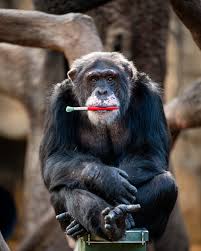
“Staring into those eyes is a pretty harrowing feeling. You notice that there is something there, in a completely different way than with other animals,” says Alfred Fidjestøl, the author of the book “Almost Human,” a biography of Julius, the popular Norwegian chimpanzee who has lived among humans his entire life.
Julius was born on Boxing Day in 1979 at the Kristiansand Zoo and Amusement Park (Dyreparken). Every Norwegian, young and old, loves this almost human chimpanzee. Rejected by his mother as an infant, he was raised by the zoo director’s family and became a national celebrity after a hit children’s television documentary. He inspired books, his own hit song, and merchandise.
Early Fame
After his mother abandoned him, he lived with a human family for a year, a period that was documented by the Norwegian Broadcasting Corporation (NRK). Returning him to his own species proved difficult. He spent years trying to escape and faced isolation before successfully rejoining the zoo’s chimpanzee troop and eventually becoming its alpha leader.
Every Norwegian, young and old, loves this almost human chimpanzee. Photo: Dyreparken.
Julius, the escape artist
Julius escaped from his holding pens and island habitat a staggering five times during his turbulent adolescence and early adulthood. Because he was raised in human homes, Julius entirely lacked the natural fear of water and open spaces that usually keeps chimpanzees contained, making him an exceptionally clever and dangerous escape artist.
His notable escape methods and the crises they caused include wading through the moat. In his early escapes, Julius routinely bypassed the zoo’s primary defense—a surrounding water moat. While wild chimps avoid deep water due to their heavy bone density and inability to swim, Julius simply waded straight through the waterway to reach the public areas.
He also bypassed live electric fences. During another escape, Julius scaled and crossed a barrier despite it being fully charged with live electrical wiring.
His fifth and final escape on June 7, 1992, was the most violent. Julius had grown deeply irritated by the loud noise from the zoo’s garbage collector, Oddvar Ivarson, which he interpreted as a direct challenge to his authority. Julius sneaked off Chimp Island, hid behind a souvenir kiosk, and ambushed the garbage truck as it moved. He swung through the open driver’s-side window and severely bit the driver before he could be subdued.
These incidents forced Kristiansand Zoo to officially declare Julius too dangerous to free-roam. This led directly to his decade-long isolation in a heavily reinforced solitary cage. He finally matured enough to successfully take over and lead the main chimp troop in 2005.
In December 1997, when Julius turned 18, he reached legal adulthood by human standards.
The 18th Birthday and the Symbolic Driver’s License
In December 1997, when Julius turned 18, he reached legal adulthood by human standards. Because of his immense celebrity, the milestone was treated as a major national event in Norway, culminating in a highly publicized and bizarre birthday celebration. Representatives from the Norwegian Public Roads Administration (Statens vegvesen) visited the zoo and officially presented Julius with a custom-made, oversized symbolic driver’s license.
The gesture was a humorous nod to Julius’s ongoing identity crisis and his obsession with human vehicles. As a young chimp living with humans, he had developed a deep love of riding in cars and tractors. Even after being returned to the zoo, he was notorious for trying to steal keys from keepers and for attempting to drive or interact with maintenance vehicles, including his infamous garbage truck attack.
Along with the license, he received a cake and various human treats. While it was a lighthearted PR stunt for the public, it highlighted the strange, bittersweet reality documented in Fidjestøl’s biography: Julius was legally recognized as an adult human, yet he remained locked in a cage, trying to figure out how to be a chimpanzee.
The Iconic Julius Song
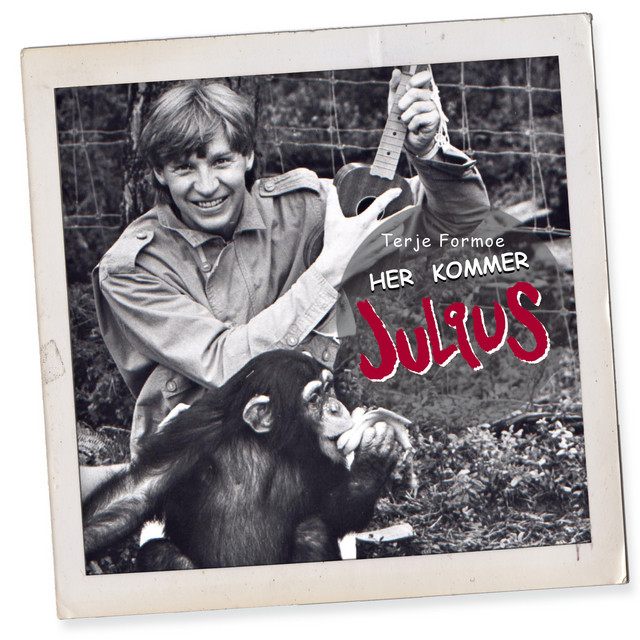
In the spring of 1983, the renowned Norwegian singer-songwriter Terje Formoe pitched the idea of a zoo-themed music cassette to Kristiansand Zoo director Edvard Moseid. Moseid declined the album but famously told Formoe, “You can write a song about Julius.”
The upbeat, catchy song “Her kommer Julius” became an instant national hit, topping the Norsktoppen radio charts and turning Julius into a pop-culture phenomenon.
Formoe, the composer of the fictional pirate Captain Sabertooth (Kaptein Sabeltann), wrote the lyrics and melody in just two hours. “Her kommer Julius” (“Here Comes Julius”) was rushed into production as the theme song for the fourth and final episode of NRK’s massive television documentary series about Julius. The upbeat, catchy track became an instant national hit, topping the Norsktoppen radio charts and turning Julius into a pop-culture phenomenon. Decades later, it remains an essential childhood anthem across Norway.
Children’s Books about Julius
The Original Hit (1983) was written by Trygve Klingsheim and Arild Jakobsen, the first children’s book documenting Julius’s early years living in human homes. Accompanied by full-color photographs, it sold over 50,000 copies, turning the chimp into an official merchandise powerhouse. Som ein bror (Like a Brother, 2019) was written by Alfred Fidjestøl and is an illustrated non-fiction book tailored for older children and young adults. It handles his complex life with nuance, showing how his human foster siblings still view Julius as a brother while exploring the history of captive chimpanzees and scientific research.
He survived a severe, intentional poisoning in 2019 when a visitor threw a bottle of liquid narcotics into his enclosure. Now well into his 40s—an advanced age for a chimpanzee—Julius still lives at the Kristiansand Zoo and Amusement Park, where he remains the park’s main attraction.
The book “Almost Human” serves as a historical mirror reflecting how our collective morality has shifted.
Alfred Fidjestøl’s Critically Acclaimed Biography
In 2017, award-winning journalist and biographer Alfred Fidjestøl took a revolutionary literary approach by publishing Almost Human: A Biography of Julius the Chimpanzee. It marked the first time in Norwegian history that an animal was granted a full-scale, rigorous biography, held to the same scholarly, archival, and journalistic standards as a prominent human figure.
The book serves as a historical mirror reflecting how our collective morality has shifted. It documents the transformation of the Kristiansand Zoo from a small, 1970s animal-behind-bars attraction into a modern institution grappling with complex animal-rights and wildlife-preservation standards.
The book has been translated into English by Becky L. Crook for international publication via Greystone Books.
Julius survived a severe poisoning incident in 2019 and enjoys his later years as a respected patriarch with an expanded family. Photo: IFLScience.
The final chapters
Julius survived a severe poisoning incident in 2019 and enjoys his later years as a respected patriarch with an expanded family. Today, he continues to live out his later years as a key figure in conservation and the main attraction at his home facility.
Julius – the Popular Norwegian Chimpanzee, written by Tor Kjolberg
The Svalbard Global Seed Vault, the backup facility on the Norwegian archipelago, has a noisy new neighbor with a similar objective: the Global Music Vault.
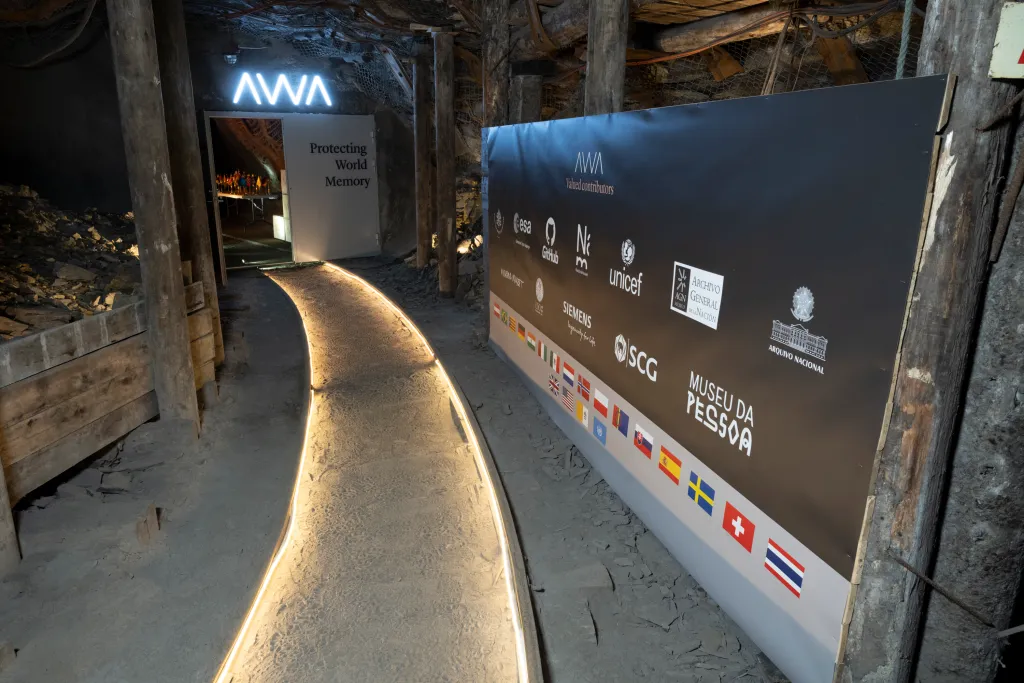
The Global Music Vault is an Arctic doomsday vault located 1,000 feet inside a mountain on the Svalbard archipelago in Norway. Managed in partnership with the International Music Council (IMC), it is designed to preserve human musical heritage—from Indigenous tracks to global pop hits—for more than 1,000 years.
Location and Physical Security
Located near the famous Global Seed Vault, the facility takes advantage of Svalbard’s remote, demilitarized, and politically neutral status. The vault is nestled deep within a decommissioned coal mine, where natural permafrost maintains optimal cool, dry storage conditions. This setup guarantees the preservation of the vault’s contents even in the event of severe natural disasters or man-made catastrophes, such as electromagnetic pulses (EMPs).
Musical data is converted into high-density QR codes and analog binary code. Photo: Cool Hunting.
Storage Technology
Rather than relying on modern hard drives or cloud servers that can degrade or be hacked, the vault uses an innovative storage medium developed by the Norwegian company Piql. Musical data is converted into high-density QR codes and analog binary code, then etched onto ultra-durable, multi-layered polyester film. The film requires no ongoing power or active maintenance to survive and is designed to last at least a millennium.
What is Stored?
The vault’s mission is to serve as a comprehensive and inclusive time capsule rather than a collection limited to Western classical or popular music. It includes:
Traditional and Indigenous folk songs from various regions
Master tracks by contemporary and legendary artists
Historically and culturally significant recordings championed by individual nations
Artists and countries submit their music to the Global Music Vault via a decentralized, community-driven curation process coordinated by the International Music Council (IMC). Rather than functioning as a traditional music label, the vault relies on global networks and national selection systems to build its digital time capsules.
The vault gathers its collection in staggered batches through global campaigns, such as Project ARV. Photo: Singularity Hub.
The Role of the International Music Council (IMC)
The vault’s managing entity, Elire Management Group, partners directly with the IMC—a UNESCO-founded body representing 600 million members across 1,000 organizations in 150 countries.
Global Network Access: The IMC serves as the official operational arm for handling submission callouts.
Local Representation: Countries participate through their respective National Music Councils or regional organizations associated with the IMC.
Country-Led National Curation
The vault does not rely on a single centralized jury to judge artistic merit. Instead, it asks individual nations and regions to determine which music best shapes and represents their culture.
Localized Voting: In many cases, nations are encouraged to let the local public vote directly on which tracks and cultural recordings should make the final cut.
Global Committee Supervision: A global committee oversees the final collection to ensure balance and representation across all historical human eras and genres.
Open Callouts and “Project ARV”
The vault gathers its collection in staggered batches through global campaigns, such as Project ARV.
Open Sourcing: During active callout phases, organizers allow anyone, anywhere to submit ideas and digital files for consideration.
Phased Rollouts: Submission priority began with Indigenous and traditional folk music to ensure endangered cultural expressions were safeguarded first. Subsequent phases encompass global pop hits, classical tracks, and contemporary commercial music.
The Discovery Portal. Photo: Cool Hunting.
Copyright and Submission Requirements
Clearance: For commercial music and pop hits, music can be accepted and etched into the vault only if rights holders provide direct clearance.
No Loss of Rights: Artists retain 100% ownership and copyright of their work; archiving a track does not transfer any royalties or publishing rights to the vault.
Funding Model: While initial cultural and Indigenous preservation is subsidized, the business model includes charging commercial entities, music labels, and major institutions fees for depositing and archiving their masters.















 A Message to Parents, Children, and Anyone Getting Back Into a Routine



 Travel planning is not a logistics problem. It is a